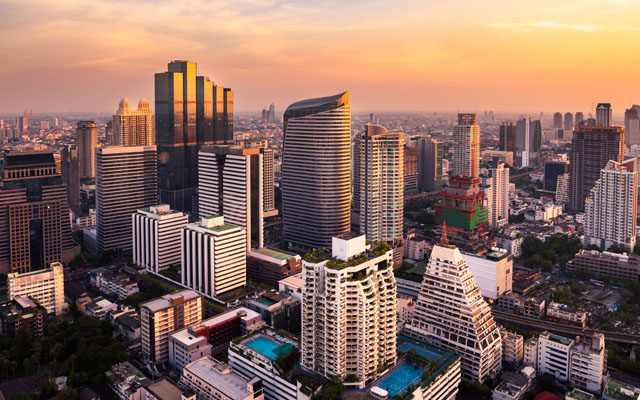
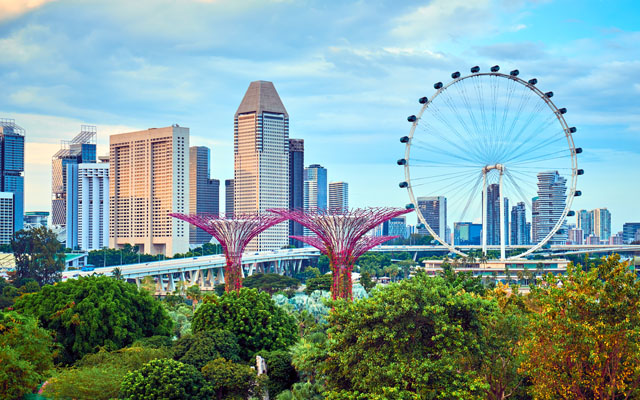
The Singapore Tourism Board (STB) has forecasted international visitor arrivals (IVA) to be between four to six million visitors this year, following the city’s reopening of its borders on April 1, 2022,
In 1H2022, Singapore clocked 1.5 million visitor arrivals, nearly 12 times more compared to the same period in 2021 (119,000), and tourism receipts (TR) reached an estimated S$1.3 billion (US$925.7 million) in 1Q2022. While IVA and TR remain a fraction of Singapore’s pre-pandemic numbers, STB remains optimistic that tourism flows will recover to pre-Covid levels by 2025.
Singapore Tourism Board remains optimistic that tourism flows will recover to pre-Covid levels by 2025
STB’s chief executive Keith Tan said that the numbers signal “strong pent-up demand”, and underscores Singapore’s continued appeal as a destination. He remains confident that Singapore’s “rich calendar of events, as well as new and refreshed tourism offerings, will continue to attract visitors for the rest of 2022 and beyond”.
Singapore’s top five international visitor-generating markets, accounting for 56 per cent of total IVA from January to June 2022, came from Indonesia, India, Malaysia, Australia and the Philippines. Registering the largest absolute year-on-year growth were Indonesia, India and Malaysia.
The Republic currently boasts a healthy roster of events such as Formula 1 Singapore Airlines Singapore Grand Prix 2022, Tour de France Singapore Criterium, Bloomberg New Economy Forum, and Sail Grand Prix in 2023.
Fresh offerings like Hell’s Museum at Haw Par Villa, the Museum of Ice Cream, SkyHelix Sentosa, and the Avatar: The Experience at Gardens by the Bay later this year are also set to attract more visitors.
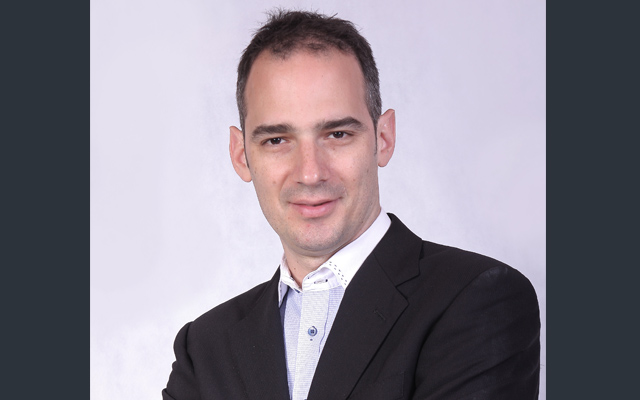
Katrina Group has named Andreas Lorenz as chief operating officer for its hospitality subsidiary, in a move aimed at rekindling the company’s accommodation business.
In his new role, he will oversee ST Hospitality’s operations while spearheading its expansion in Singapore and beyond, including identifying new properties to manage.
The German joined the company in February this year as general manager of ST Hospitality, Katrina Group’s wholly-owned subsidiary.
ST Hospitality operates four boutique co-living hotels, a block of serviced apartments comprising 38 units, and more than 50 fully serviced condominium rental units in Singapore. It expects to add more fully serviced condo units and hotel rooms to its portfolio in Singapore before the end of the year.
Before joining ST Hospitality, Lorenz was vice-president of asset management at The Garcha Group. Prior to that, he managed two hotels in Singapore – Six Senses Maxwell and Six Senses Duxton – from 2017 to 2019.
KKday has secured funding in a Series C+ round, bringing the total Series C round raised to US$95 million. Led by major tech Asia private equity firm TGVest Capital to accelerate technology, the injection will be used to expand KKday’s team globally, and deepen its domestic footprint, particularly in markets where there is a focus on domestic travel and tech innovation to meet the increasing demands of OTAs and local merchants.
KKday’s chief executive officer and founder Ming Chen said: “We remain steadfast in our value proposition on providing unique hyperlocal experiences to travellers who are becoming more digital.
KKday has plans to scale and build new rezio features to automate and streamline solutions for merchants
“Hyperlocalisation and digitisation will be our north star for scaling and building our user and merchant base. Over the past year, we have laid the groundwork and seen our domestic travel business growing steadily in key markets like Taiwan, Japan, Hong Kong, Korea, and South-east Asia.”
Claire Lai, managing director, TGVest Capital said: “With this funding round, KKday will be in a strong position to capture market share and value as travel continues to reopen and digital transformation continues to be a long-term trend.”
KKday has plans to aggressively hire across regions and roles including software engineers, R&D, business development and operations, and marketing, as well as scale and build new rezio features to automate and streamline solutions for merchants.
As borders reopen, the company also plans to relaunch its in-demand owned and operated signature tours to provide travellers with curated quality local experiences.
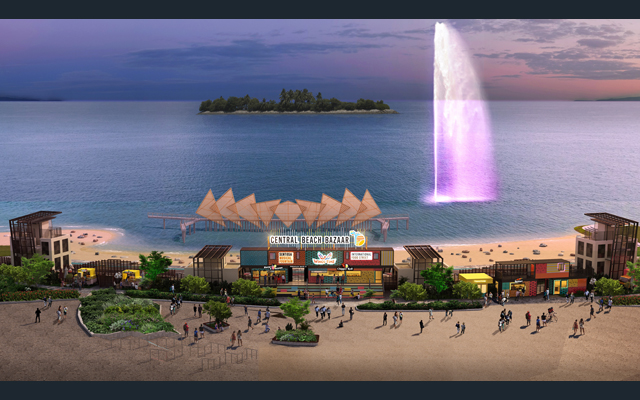
Mount Faber Leisure Group (MFLG) is set to debut this September a new cluster of F&B and entertainment that will give beach goers an enhanced experience from day to night in the heart of Sentosa’s beach district.
The Central Beach Bazaar, located between the popular Palawan and Siloso beaches and at the foot of Beach Station, will take in the 80-metre high Sentosa SkyJet, said to be the tallest fountain in South-east Asia; a revival of the iconic Sentosa Musical Fountain from the early 1980s but now with a new musical score; and the International Food Street, a collection of eight F&B street food concepts presented through food trucks, kombi vans and upcycled shipping containers.
The Central Beach Bazaar will join the Wings of Time outdoor night show with upgrades like refreshed pyrotechnic effects
Sentosa visitors can enjoy the Musical Fountain and Sentosa SkyJet up close in the day with a minimum spend of S$5 (US$3.55) at the International Food Street. The Musical Fountain comprises two five-minute performances – one with musical numbers that the attraction used to play in the 1990s, and the other a medley of the nation’s beloved National Day songs like Home and Count on me Singapore.
The Central Beach Bazaar will join the Wings of Time outdoor night show, an established attraction in the beach district that has been upgraded recently with refreshed pyrotechnic effects and a more spectacular finale.
A third new attraction, to be revealed at a later time, will offer simulation ride experiences and carnival games.
Thien Kwee Eng, CEO of Sentosa Development Corporation, said in a press statement: “The Central Beach Bazaar is a key milestone in the series of new leisure experiences coming onstream along Sentosa’s beaches. Together with the upcoming Palawan Sands and other novel offerings, the Central Beach Bazaar will give our guests a reimagined beach experience.”
According to Buhdy Bok, managing director of MFLG, the Central Beach Bazaar is one of the visitor experience innovations that were developed during the travel disruption.
In an interview with TTG Asia ahead of the press launch, Bok said MFLG had continued to invest in product development even during “the toughest period” when the pandemic had impacted international travel
He said: “Our approach was to remain mindful of the situation while still planning ahead. Six months ago, we opened SkyHelix Sentosa, which was also planned for and built during the pandemic.”
Bok said international visitorship has been on the mend since Singapore established the Vaccinated Travel Lanes in September 2021.
“There is a sizeable return of tourists, mostly from the region, but we are nowhere near pre-pandemic levels. This will take time, as our recovery is dependent on how airlift and airport operations are being rebuilt,” he said.
However, he has refrained from projecting visitorship to Sentosa, saying that it is “no longer possible to give a very long forecast these days due to so many unknowns”. A three-month outlook is more realistic, he said, adding that his team continues to be “very aggressive” with development and marketing while staying “practical and nimble” to face any situations that present themselves.
In response to TTG Asia’s question on how MLFG is dealing with the hospitality industry’s prevalent labour shortage, Bok said it is still actively recruiting while tweaking operations to minimise pressure on the existing team. Measures include adjusting menus, automating some food preparation processes, and outsourcing some functions.
“These changes will be permanent, as Singapore will always be operating in a tight labour situation so businesses will have to be more efficient with available resources,” he concluded.
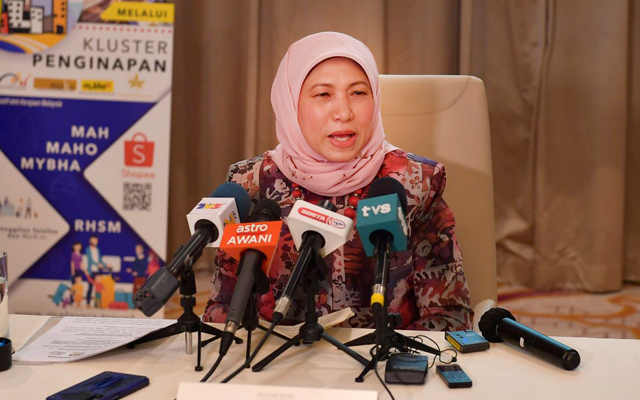
The Ministry of Tourism, Arts and Culture (MOTAC) through Tourism Malaysia has launched the Tourism Recovery Plan 2022 (PRE2.0) for the Accommodation Cluster in an effort to boost domestic tourism as it transitions to the endemic phase.
The Tourism Recovery Plan 2022, which is a continuation of the Economic Stimulus Package, is one of the initiatives under the Tourism Industry Recovery Plan which involves the distribution of incentives to Malaysians in the form of discounts, vouchers and rebates.
Nancy: this initiative aims to attract Malaysian families to continue booking hotel rooms at discounted prices
Under the Accommodation Cluster, an estimated 33,830 Malaysians have the opportunity to redeem e-vouchers worth RM50 (US$11) to RM100 through the purchase of hotel accommodation online.
From July 15 to December 31, 2022, each person can make up to three redemptions for hotels throughout Malaysia under the Malaysian Association of Hotels (MAH), the Malaysian Association Hotel Owners (MAHO), the Malaysia Budget & Business Hotel Association (MyBHA) and Rangkaian Hotel Seri Malaysia (RHSM).
Minister of tourism, arts and culture, Nancy Shukri, said the launch of this initiative aims to attract the Malaysian public, especially families, to continue booking hotel rooms at discounted prices and subsequently implement domestic tourism activities.
She added: “The strategic co-operation established by Tourism Malaysia with these associations is aimed at stimulating the recovery of the tourism industry and thus contributing to the country’s overall economic recovery.”
MAH and MAHO will offer e-vouchers worth RM100 with a minimum purchase value of RM150 for the earliest 19,900 buyers while MyBHA will offer e-vouchers worth RM50 with a minimum purchase value RM60 for 7,960 buyers. All e-vouchers are available on the Shopee app.
RHSM is offering a rebate of RM50 with a minimum purchase value of RM170 (standard room) or RM210 (family room) for the first 5,970 buyers.
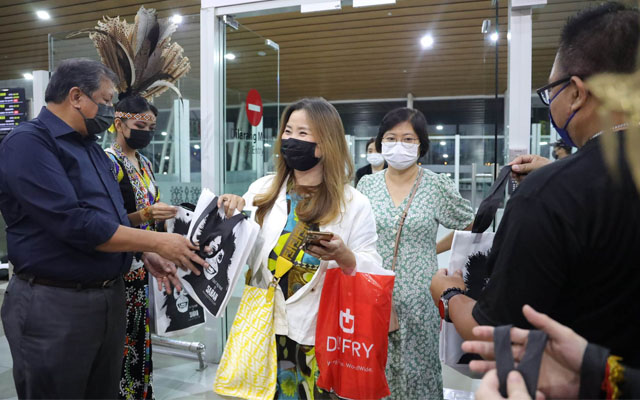
Air Busan is the latest airline to recommence flights to Kota Kinabalu since the pandemic, with the first flight back to the Malaysian city in Sabah on July 14 bringing 220 passengers.
The airline now flies twice weekly between Busan and Kota Kinabalu.
Welcoming the passengers on Air Busan’s first flight back to Sabah from Busan
State assistant minister of tourism, culture, and environment, and Sabah Tourism Board chairman, Joniston Bangkuai, who was part of the welcome entourage, said the ramping up in international direct frequency indicates significant demand for travel to Sabah, as well as airline interest in the Kota Kinabalu route.
Since the reopening of Malaysia’s borders on April 1, five foreign carriers have returned to Sabah. To date, there are 40 weekly direct international scheduled flight frequency into Sabah, with South Korea having the highest frequency.
LCCs have led the way in the travel recovery and will continue to do so, riding on their strength and reach in domestic and regional markets, finds Mike Barrera, vice president for product management, LCC segment at Sabre.
In this episode of TTG Conversations: Five Questions, Barrera talks about an increasingly competitive LCC landscape as a result of emerging start-ups and expansion of operations by existing players, diversification of Asian LCCs into businesses beyond flights, and how LCCs can disrupt themselves in this new era of travel.
Fusion Original Saigon Centre, Vietnam
The first Fusion Original, Fusion Original Saigon Centre, is situated in Saigon Centre, atop the Takashimaya Shopping Mall.
The property boasts 99 bespoke units over 10 floors in one of the city’s largest mixed-use developments, while facilities include a pool, garden, and lounge area. On every floor, there is the Reload Pantry & Barista Station which is refilled daily with a selection of goodies for guests’ convenience.
Wyndham Garden Sapporo Odori
Wyndham Garden Sapporo Odori, Japan
Wyndham Garden Sapporo Odori is the second Wyndham Garden hotel to open in Japan and is located in Sapporo’s central business district.
The 132-key hotel features a restaurant and cocktail bar on the ground floor. Meanwhile, attractions nearby include the Sapporo TV Tower, Sapporo Clock Tower, Sapporo Beer Museum, Chitosetsuru Sake Museum and Hōheikyō Hot Spring. For winter sports enthusiasts, there are nearby ski slopes such as Sapporo Teine and Sapporo Kokusai Ski Resorts.
Mövenpick Hotel Wellington
Mövenpick Hotel Wellington, New Zealand
Mövenpick Hotel Wellington is located on The Terrace, overlooking the Cuba Quarter.
With 114 guestrooms and suites, amenities include a pool, on-site and virtual gyms, library and conference rooms. The hotel is also home to Forage restaurant and bar, where its locally-crafted menu focuses on sustainable dining.
The brand also brings to New Zealand’s capital city signature hotel experiences such as the daily Chocolate Hour – decadent chocolate experience with live demonstrations staged every afternoon in the hotel lobby – and a 24-hour sundae service for kids throughout their stay.
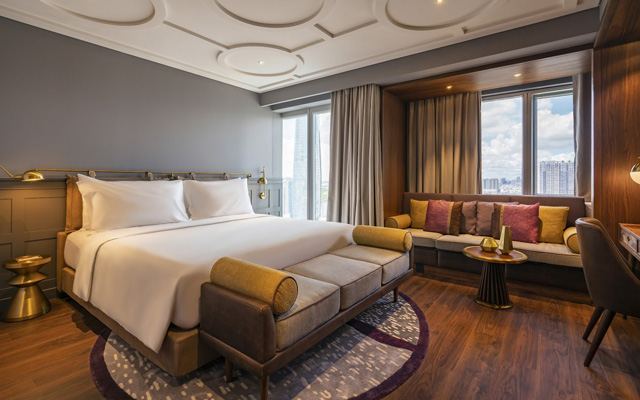
Park Hyatt Jakarta
Park Hyatt Jakarta, Indonesia
Park Hyatt Jakarta is located in the Menteng area in the heart of Jakarta’s CBD. The hotel occupies the top 17 floors of the 37-storey Park Tower, and has 220 rooms – including 36 suites – on offer. Guestroom sizes start from 57m², and go up to the 300m² Presidential Suite.
F&B options include the all-day Dining Room on level 22; the Conservatory for high-tea on level 23; and Kita Restaurant & Bar serving up authentic Japanese fare in tatami rooms. Other facilities include a pool, spa, fitness centre, and 10 indoor and outdoor event spaces.
The Thai government recently floated plans to introduce a split pricing structure for the country’s hotels.
If enacted, this scheme means that foreign travellers to Thailand will see hotel rates surge back to pre-Covid 19 levels, while domestic tourists will continue to receive discounted fees introduced during the height of the pandemic.
Foreign travellers to Thailand will see hotel rates surge back to pre-pandemic levels, while domestic tourists continue to receive discounted fees
Government spokeswoman, Traisuree Taisaranakul, outlined the administration’s reasons for introducing dual pricing.
“This is to maintain our standards of rates and services for foreign tourists, which affects the perception of the country’s tourism brand. Rates that have been reduced during Covid-19 will be maintained for Thais to sustain the momentum of domestic tourism,” she said.
Although Thailand’s tourism and sports minister Phiphat Ratchakitprakarn’s indicated that the directive is not compulsory and the government merely wants to encourage hospitality firms to shift room rates based on the market, the industry is apprehensive.
Marisa Sukosol Nunbhakdi, president of Thai Hotels Association, pointed out that the move was not pragmatic, stating that “hotels in each tier also use different strategies to set prices”, and “if demand increases to support hotel occupancy, then rates will automatically increase”.
“Every hotelier would like to operate with higher and fair rates to gain a larger margin, but it is difficult to do so because of heated competition and oversupply. Operators have to use pricing strategies to gain cash flow,” added Marisa.
Following the removal of the Thailand Pass on July 1, many hotels in Thailand have reduced their room rates to help lure foreign tourists back to the country and shore up their bottom line. Yet despite these offers, occupancy remains low, and is not expected to return to peak levels until 4Q2022 at the soonest.
Indonesia’s Ministry of Tourism and Creative Economy and online travel marketplace Wego have combined forces to help revive tourism to Bali, via the latter’s vast user base in Middle East and North Africa.
The tourism board will use Wego to promote Bali and drive more bookings to the destination, starting with the launch of an exhibition with the theme It’s Time for Bali.
Indonesia tourism board will work with Wego to promote Bali and drive more bookings to the destination
Mamoun Hmedan, chief commercial officer and managing director, Middle East, North Africa (MENA) and India, Wego, said: “We are expanding our partnerships to cover more destinations and offer our users more choices. Indonesia and particularly Bali is a hot spot for many travellers, especially from the MENA region. We look forward to working with the Indonesia Tourism Board to bring more travellers to the country.”
A recent study showed that Indonesia is set to welcome over 900,000 tourists by 3Q2022, and minister of tourism and creative economy Sandiaga Uno shared that the country has been synchronising and aligning future promotion plans to ensure Bali remains a top-of-mind destination.
He said: “With a new economic era through digital marketing, it is necessary to innovate in our patterns of promotion. There are several approaches to achieve the target of tourist numbers, namely by joint cooperation with our strategic partners in the market and organising various international-class events in Indonesia.”
Such programmes include sports tourism, business events, international meetings and tourism villages, he added.
This November, Indonesia will host the international G20 summit in Nusa Dua, Bali. Under the theme Recover Together, Recover Stronger, the event will be attended by the European Union and 19 countries, and will focus on progressing in a post-lockdown era.


 The German joined the company in February this year as general manager of ST Hospitality, Katrina Group’s wholly-owned subsidiary.