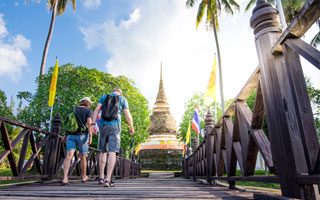
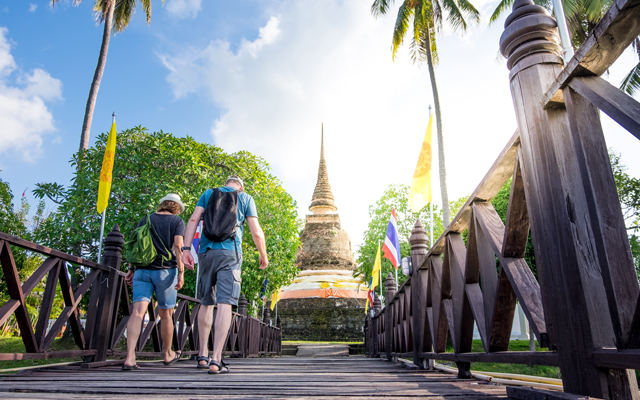
Thailand is seeing a steady tourism revival, with nearly two million foreign visitors coming on shore in the first six months of this year.
As of August 5, international flight and hotel searches are up 164 per cent and 111 per cent respectively compared to the start of the year, noted Sojern.
Thailand’s tourism is steadily recovering with almost two million foreign visitors in the first six months of 2022
All global regions demonstrate positive uplift in the lead-up to Thailand’s high season from November, with Thailand on its way to meeting its goal of expected tourism revenue of up to US$65 billion next year as compared to the US$62 billion achieved pre-pandemic in 2019.
Following the government’s classifying of the country as a green zone for Covid-19 in July, businesses, entertainment venues and tourist attractions have eased and eliminated pandemic-related restrictions. In response, travellers have been quick to return.
Based on flight bookings from the last 60 days, the top five origin countries are Thailand (domestic), Singapore, South Korea, the US and the UK, with India, Australia, Germany, Vietnam and Japan making up the remaining top ten.
The Indian government’s move to withdraw the five per cent Tax Collection At Source (TCS) levied on foreign tour agencies buying packages from Indian companies has drawn stakeholders’ approval.
Tour packages for neighbouring destinations like Bhutan, Nepal and Maldives are often purchased through Indian tour operators, but the TCS plus another five per cent Goods and Services Tax have made these products pricier and less attractive.
The Indian government has removed the five per cent Tax Collection At Source levied on foreign tour agencies buying packages from Indian companies; Himalayas pictured
The Indian Association of Tour Operators (IATO) had contested the TCS, filing requests with the government to withdraw the tax and issuing appeals to the finance ministry, citing the disadvantage it brought to its members.
According to Rajiv Mehra, president, IATO, the TCS eroded “precious foreign exchange as the business was going to other countries”.
In March 2022, the Indian government relaxed TCS conditions, waiving collection from overseas tour packages sold to non-residents of India.
Lally Mathews, managing director, Divine Voyages, said the full removal of TCS will “encourage travel bookings from Indian tour companies”.
“Considering the setbacks that small and medium tour operators have suffered because of the pandemic, we need such positive support from the government,” he added.
Conrad Bali has rolled out new signature guest experiences and stepped up community engagement and sustainability following its renovation.
The new programmes include The Art of Sound Healing held at the Infinity Chapel, which is a form of meditation using a series of sounds and vibrations as the medium; Forest Bathing and Speakeasy Foraging expedition; cooking classes or perfume creation at L’Atelier; and the Purnama Celebration, highlighting the Balinese full-moon ritual.
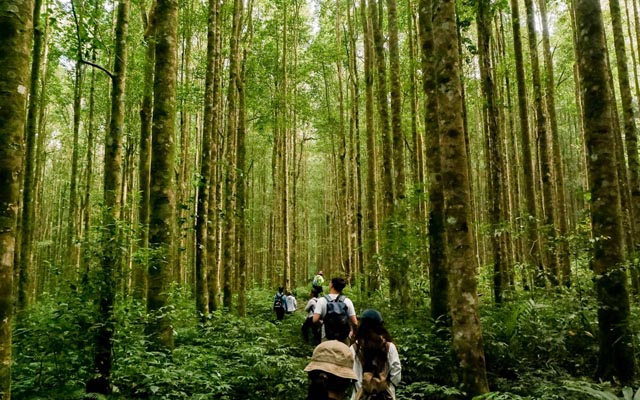
Conrad Bali lets guests commune with nature with its Forest Bathing and Speakeasy Foraging expedition
The Purnama Celebration is available once a month during full moon, where guests prepare the canangsari offering before the Purnama Ritual at the hotel’s Sari Sedana temple. After that, they can enjoy a three-course dinner at the Eight Degrees South restaurant and the Melukat purification ceremony by the beach.
These sensory experiences are inspired by resort staff who sought to heighten their own spirit of togetherness and moral support during the difficult pandemic.
Conrad Bali’s general manager Kevin Girard shared that guests had requested to join the team on these rituals, which led him to realise that these activities were “something that allows us to get connected with the guests and people around us”.
As the team evolved the Infinity Chapel to cater to the growing demand for wellness activities, they found an opportunity to take a deeper look at sustainable options for guests. As a result, they begun to source for local produce, such as salt, coffee, herbs and seafood harvested from around Jimbaran.
The hotel’s sustainability efforts include its partnership with NGOs like Bye Bye Plastic Bags, cleaning up mangrove areas in collaboration with Sungai Watch, and helping women in villages earn an income with proceeds from repurposing unused hotel linens.
All these initiatives are in line with Conrad Hotels & Resorts’ programmes in response to post-lockdown luxury travel trends.
Nils-Arne Schroeder, vice president, luxury and lifestyle, APAC and global brand head, Conrad Hotels & Resorts, noted that luxury travellers are craving reconnections through travel and to use travel as a medium to recharge after the lockdown.
He also noted that travellers want to make a positive impact on the community and the environment through their trips, and “more than half of travellers in Asia-Pacific are willing to pay a premium to get all those experiences that supports sustainability”.
When asked about Bali’s appeal among well-heeled travellers, Schroeder said the Indonesian province has been voted as a “beloved luxury destination of the world by Tripadvisor”.
“Bali is not a new destination for luxury travellers. Luxury hotels and villas have (increased in numbers) in the last couple of years – that means there is strong demand for luxury travel (among families and multi-generation travel groups) to Bali,” he said.
“In my view, Bali is one of the top five luxury destinations for consumers,” he added.
Mounting importance placed on responsible climate actions by governments and intensifying consumer expectations of sustainable corporate behaviour have led more companies to take their climate strategy more seriously, observes a climate strategy specialist.
Brayden Lai, senior business development manager at South Pole, told TTG Asia that there are many studies supporting the rising trend in consumption intention being shaped by sustainability concerns.
Lai pointed to a recent blog by South Pole, which stated that 60 per cent of Asian consumers are looking at sustainability as part of their purchasing decision, and are willing to pay to offset their emissions.
2021 saw a 29 per cent increase in the number of companies in the Asia-Pacific region reporting through CDP – an international non-profit organisation that runs a global disclosure system for investors, companies, cities, states and regions to manage their environmental impacts – compared to 2020, and a more than five-fold growth from fewer than 700 companies in 2016. One-third (32 per cent) were first-time responders, demonstrating a growing momentum among businesses towards embedding transparent environmental disclosure in their operations.
The report shows that climate action has risen to the C-suite level, with almost all respondents (98 per cent) having management-level oversight for climate-related issues. Three-quarters (76 per cent) of companies reported having a process for identifying, assessing and responding to climate-related risks and opportunities.
“Even here, at Digital Travel Summit APAC 2022, we are hearing so many conversations around sustainability and responsible tourism,” said Lai.
Lai was a speaker at the event’s An Action Plan for Sustainability panel on August 24, where he and fellow industry colleagues discussed how travel and tourism companies could tap into the new traveller consciousness around sustainable tourism.
He said: “Many governments have announced their own net zero targets, and more and more consumers are aware that their individual actions can help mitigate climate risks in the future. So, climate action is huge and very important.
“Companies now regard sustainability efforts as a way to engage consumers who are highly aware of environmental issues. Many are starting to disclose their carbon emissions and environment impact. And so, South Pole is looking to help more companies do this.”
Currently, South Pole’s website lists many major global firms across industries among its clients – such as Bentley, Nestle, Tetra Pak and eBay.
Within the travel and tourism industry, South Pole supports Hilton, FCM Travel Solutions and Contiki.
With Hilton, South Pole helps to facilitate carbon-neutral meetings at the group’s hotels. Hilton calculates emissions from onsite meetings and events hosted by its clients, and takes part in South Pole’s offsetting projects.
With FCM Travel Solutions, South Pole provides clients of the corporate travel agency with insights into their carbon emissions and facilitates carbon-offsetting through its projects.
Lai told TTG Asia that there is a “huge interest in this because business travel contributes to Scope 3 emissions, which is more challenging for companies to track”.
In Greenhouse Gas accounting, Scope 1 emissions are direct from an organisation’s operations, such as the use of the company’s vehicles; Scope 2 refers to energy consumption by the organisation; Scope 3 are indirect emissions, generated by the organisation’s suppliers and employers in their course of related work.
With Contiki, South Pole provides travellers with a view of the carbon footprint arising from the tours they choose, and to offset that through emission reduction projects.
While most of its current travel and tourism industry clients are large, global firms, Lai said there is keen interest among the local and regional players too.
“These are the companies that we are actively engaging now. We are participating in travel trade events to build our connections and to raise awareness of what South Pole can do for them,” Lai remarked.
When asked what a travel and tourism company could do should they want to get started on the responsible climate journey, Lai said they could begin by helping their customers understand their carbon footprint and make better choices, and by providing their customers with options to offset unavoidable emissions.
“While awareness of climate action is rising, there is still a lot of room for improvement, especially in education to facilitate understanding about impact. Which is what South Pole is through the education consumers, businesses and organisations through blogs, workshops and speaking opportunities at events,” he added.
Pan Pacific Hotels Group has announced a strategic partnership with Tokyu Hotels to launch two new hotels: Bellustar Tokyo, A Pan Pacific Hotel and Hotel Groove Shinjuku, A Parkroyal Hotel.
Slated to open 1H2023, Bellustar Tokyo, A Pan Pacific Hotel and Hotel Groove Shinjuku, A Parkroyal Hotel will present two unique hotel concepts within Tokyu Kabukicho Tower, Shinjuku’s new landmark skyscraper complex.
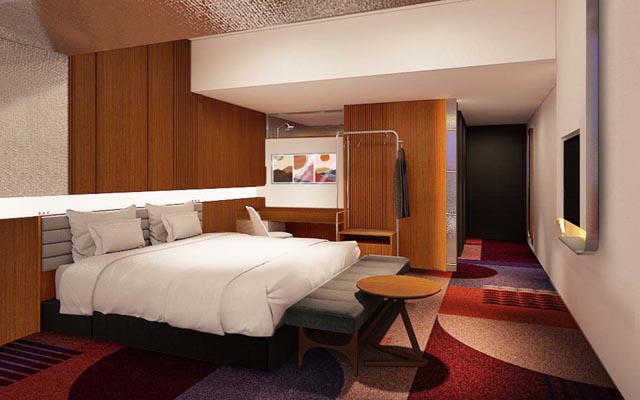
Hotel Groove Shinjuku, A Parkroyal Hotel, will offer 538 rooms when it opens next year
The 97-key Bellustar Tokyo, A Pan Pacific Hotel is situated on the uppermost 39th to 47th floors of Tokyu Kabukicho Tower, including five suites and a penthouse that comes with a personal spa treatment room for two, a kitchen and a jacuzzi with skyline vistas. There is even a double-storey duplex suite spanning the 45th and 46th floor, and boasts a living room, kitchen and bar. The hotel will also feature F&B offerings, sky spa and sky lounge.
Hotel Groove Shinjuku, A Parkroyal Hotel will occupy the 18th to 38th floors with a total of 538 rooms, including a family suite. It will house a restaurant, bar, indoor and outdoor event spaces, as well as access to Tokyu Kabukicho Tower’s entertainment facilities.
Choe Peng Sum, CEO, Pan Pacific Hotels Group, said: “Our two new hotels are situated right in the heart of Shinjuku, which will be a major draw for international travellers and a prime location for us to capture the global tourism demand.”
Jun Murai, president and representative director, Tokyu Hotels, shared: “Managed by Tokyu Hotels, Bellustar Tokyo and Hotel Groove Shinjuku will carry our strong service experience in Japanese hospitality, combined with Pan Pacific Hotels Group’s powerful global platforms.”
The two properties will also be added to the Pan Pacific Discovery loyalty programme, enabling powerful reach to a membership of 21 million worldwide.
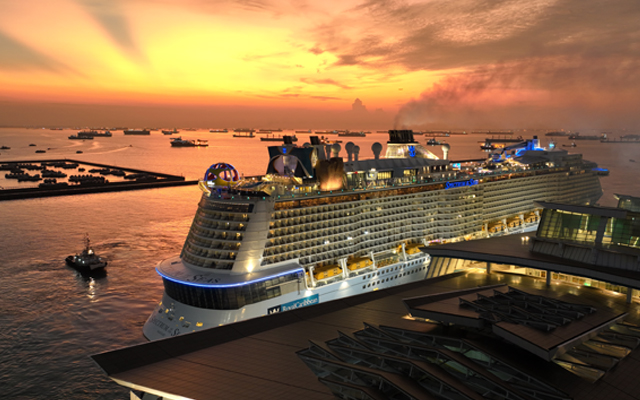
Royal Caribbean International has released its line-up of holidays on Spectrum of the Seas for 2023-2024, and longer cruises are making a comeback to new destinations including Hong Kong, Japan, the Philippines, Taiwan and Vietnam.
The longer cruises offer itineraries from five, seven, nine and 12 nights, allowing guests to visit as many as seven destinations across three countries, all in one holiday. Meanwhile, the popular three- and four-night getaways to Malaysia and Thailand round out the cruise line’s next year-round season.
The line-up of holidays on Spectrum of the Seas for 2023-2024 includes longer cruises
Angie Stephen, vice president and managing director, Asia-Pacific, Royal Caribbean International, said: “During Royal Caribbean’s first year-round season in Singapore, we’ve continued to see travellers return for more. Being able to visit international shores again has only increased that demand.
“Today’s holidaymakers seek unique experiences and a fuss-free vacation – they want to have a fun holiday without having to worry about confusing travel requirements and restrictions – and Spectrum of the Seas delivers exactly that.”
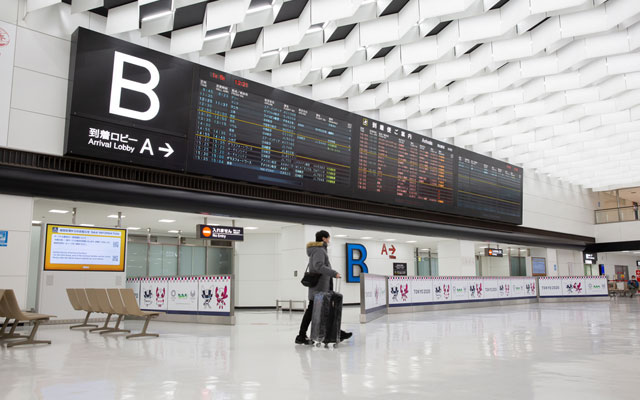
Japanese prime minister Fumio Kishida has confirmed the country’s move to cease pre-arrival Covid tests for vaccinated travellers from September 7.
Travellers from then will only be required to show proof of having received three doses of an approved Covid-19 vaccine.
Travellers entering Japan from September 7 will no longer need to perform a pre-arrival Covid test
According to news reports, Kishida acknowledged that the pre-arrival test has been an inconvenience for travellers, “especially those traveling abroad from Japan”.
Travel agencies have been urging the government to ease travel restrictions, including removing pre-arrival tests, a requirement that many other countries have scrapped to facilitate international travel and the resumption of economic activities.
In making this announcement on August 24, Kishida also affirms the government’s decision to raise the daily arrival caps from the current 20,000 once airports have the necessary staff and infrastructure to accommodate the spike in arrivals. He did not specify the new daily arrival cap.
He also made no mention of Japan possibly permitting FITs soon, something earlier news reports had suggested.
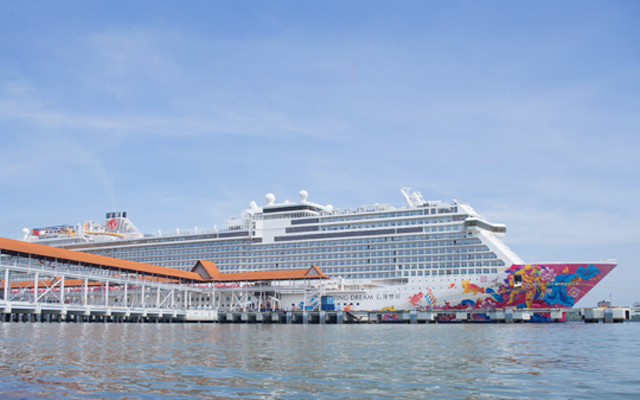
Since announcing its dual homeport in Singapore and Port Klang – said to be the region’s first – on July 18, Resorts World Cruises has secured more than 40,000 guest bookings until the year-end for its Port Klang departure.
In a press update, the young cruise company said Genting Dream’s three-night round-trip cruises from Port Klang to Penang and Singapore, and two-night from Port Klang to Singapore are increasingly popular among travellers departing from Malaysia.
Two- and three-night sailings from Port Klang are a hit with customers
Michael Goh, president of Resorts World Cruises, said: “We are delighted with the overwhelming and positive response from the Malaysian market and are encouraged to see so many Malaysians choosing to cruise with us from Port Klang.
“With the addition of Port Klang as part of the dual homeport, many Malaysians are already taking advantage of the convenience and easy access to explore cruising vacations on Genting Dream.”
Commenting on the success of the Genting Dream product, Azrul Shah Bin Mohamad, CEO of Tourism Selangor, said: “Selangor is a beautiful state with so much to offer and Port Klang itself is a strategic homeport that will allow many Malaysians and international travellers to explore cruising as a choice vacation. With Resorts World Cruises taking the lead in choosing Port Klang as one of its homeports, it will continue to play an important role in contributing towards the growth of both the domestic and regional cruise tourism sector.”
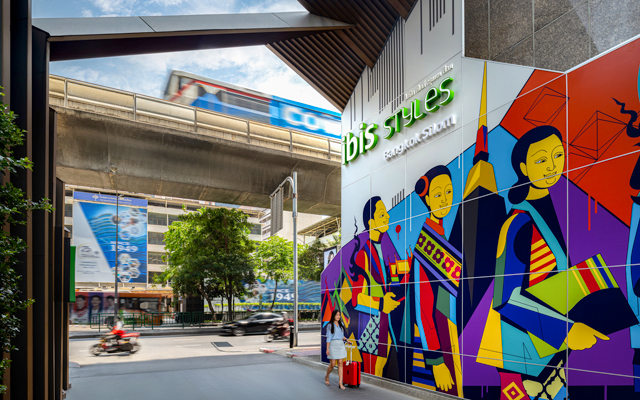
ibis Styles Bangkok Silom, Thailand
Spotting designs inspired by colourful Thai festivals, the new ibis Styles Bangkok Silom charms with a photogenic lobby, Instragrammable spots throughout, and groovy tunes.
The 264-key hotel collaborated with talented Thai artist, Tikkywow, to create an eye-catching mural at the entrance, with vivid pops of colour bursting onto Silom Road.
Promising travellers and locals an exciting spot to eat, drink, and socialise, the hotel is packed with all-day dining restaurant Prung Rod; open-concept bar POPUP – a co-working space by day and cocktail venue by night; and bohemian-style poolside rooftop bar BOHO. There is also a well-equipped gym, and the 300-pax Lumpini Ballroom.
The hotel boasts a great location in the heart of Silom, with easy access to Sala Daeng BTS Skytrain and Silom MRT subway stations.
Artotel TS Suites – Surabaya, Indonesia
Artotel Group, in partnership with Townsquare Group, has opened Artotel TS Suites – Surabaya. Located within Surabaya Town Square (Sutos), a culinary and entertainment centre, the hotel offers 126 rooms, nine Meetspace function rooms, Artspace art gallery, Deck gastropub, and Rooma all-day dining restaurant.
Artotel Batam
Artotel Batam, Indonesia
Located in the Penuin Centre shopping area, Artotel Batam features 138 keys across two room categories. The hotel has two F&B outlets, Eatspace and Barspace. Social and business functions can be held at one of three Meetspace meeting rooms. There is also a dedicated art gallery, Artspace.
Palace Beach Resort Fujairah, the UAE
The palatial beachfront Palace Beach Resort Fujairah welcomes guests into an Arabesque environment set amid the natural beauty of the Indian Ocean and surrounding mountains.
There are 167 rooms and suites on offer, along with a spa, gym and luxurious dining destinations. Young travellers can find entertainment at Qix Club.
Fazlani Natures Nest, tucked away in a tranquil hamlet called Takwe near the popular hill station towns of Lonavala and Khandala in Maharashtra, India, is well known for its integrated healing treatments built on recognised alternative healthcare principles like naturopathy and ayurveda.
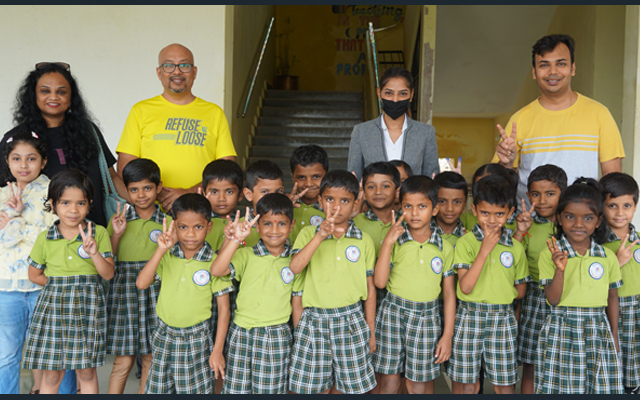
But look deeper and one will discover that the resort is also home to a school that provides free education to 150 homeless children, many of whom have gone on to excel in various areas of studies.
There are opportunities for students and resort guests to interact in meaningful ways
The Fazlani International School is registered with India’s Central Board of Secondary Education, and was started in 2006 by Abdul Kader Fazlani, a respected philanthropist and chairman of Fazlani Group.
School operations are managed by a trust. While there is no boundary to separate the school and resort areas, both co-exist with little interference.
Speaking to TTG Asia, Fazlani said the school aims to prepare students for admission into reputed institutes for higher studies. Students residing in the dormitory abide by a school curriculum and enjoy activities in areas demarcated for them.
However, there are opportunities for students and resort guests to interact in meaningful ways.
For example, resort guests can register to visit the Hobby Studios where they can participate in craft activities with the children. They can also join in sports activities with the children during game hours.
An even more valuable form of interaction involves resort customers who volunteer their knowledge as guest lecturers, subject to the school’s approval.
Fazlani remarked: “The school has become an important part of the retreat’s day-to-day activities, giving our guests who come for healing experiences an opportunity to engage with the children in different ways.”
Fazlani: committed to preparing homeless children for higher studies
Reflecting on the success of the school’s mission, Fazlani said many students have been successful in competitive exams set by famed Indian engineering, medical and architecture colleges. Some have also gone abroad for higher studies.
“We have trained a few children and provided them with employment in the resort. A number of our students have also excelled in sports like equestrian and skating on a national level,” he added proudly.