TTG Asia
Asia/Singapore Saturday, 11th April 2026
Page 1782

Asia sees rise in Western show clones

0

CONVENTION and exhibition specialists in Asia have continued to note a growing presence of western tradeshows making landfall in the region.

Executive vice president of Taiwan External Trade Development Council, Walter Yeh, said more exhibition firms from Europe and the US are branching out into Taiwan, China, India, Japan, the Philippines, Thailand, Singapore and Malaysia, encouraged by a growing number of event venues and an attractive market potential.

Rosalind Ng, managing director of Globe International Events Consultancy, told TTGmice e-Weekly that Asia is attractive as “its size is as big as the other side of the world” and its “economy is certainly more positive than Europe’s or the US’ at the moment”.

Ng said: “We have seen major international firms cloning their large-scale events in Asia. For example, international food exhibition SIAL (based in Paris) by COMEXPOSIUM Group has gone into China and the Philippines. The world’s largest building construction show in Munich BAUMA has also cloned a version in Shanghai.”

Besides cloned shows in Asia, newly launched events are coming to town too, added Ng.

China is a natural magnet for Western show owners, thanks to its massive population and strong purchasing power.

Sungoal Exhibition and Convention Co’s former executive president, Daben Mao, said western tradeshows had started to enter China since 2001, soon after the establishment of Shanghai New International Expo Center.

Mao said: “Some German organisers have been aggressively transplanting their brands into China over the past 15 years, and now run many trade fairs in the country.”

UFI’s managing director/CEO, Kai Hattendorf pointed out that Asia’s market appeal is also attracting delegates keen on making contact with partners in this part of the world. He shared that UFI’s events in Asia-Pacific draw people from all over the world.

Indonesia, which witnessed the budding of the trend two years ago, is expected to catch up with China in the next decade, remarked International Energy Credit Association’s chair, Effi Setiabudi.

“And in another 20 years, foreign show organisers may move to Vietnam,” Effi added.

Patina CEO joins Jumeirah Group as COO

0

DUBAI-BASED luxury operator Jumeirah Group, part of Dubai Holding, has appointed Marc Dardenne as group COO effective immediately.

Dardenne, who has more than 30 years of hospitality experience under his belt, was most recently CEO of Patina Hotels and Resorts based in Singapore, where he oversaw brand creation, development and asset management.

marc-dardenne-web-462x346

In his new role, which marks his return to Dubai since his stint as CEO of Emaar Hotel and Resorts, he will oversee Jumeirah’s operations across its international portfolio, including the famed Burj Al Arab Jumeirah.

Dardenne, a Belgian national, has lived and worked in Europe, Africa, Asia and the Middle East and is fluent in French, English and German.

New hotel openings: September 5 to 9, 2016

0

The latest hotel openings and announcements made this week

rendering_-_hotel_jen_beijing_-_coworking_space

Hotel Jen Beijing
Shangri-La Hotels and Resorts’ third Hotel Jen is set to open in January 2017. The 450-key property will be located on the first 22 floors of the new China World Trade Center development in Beijing’s Chaoyang district and boasts both standard rooms and suites. A co-working hub, the only gastropub in the CBD, an all-day-dining restaurant serving local and Asian cuisines, 13 flexible meeting spaces, a multifunction venue able to fit 300 pax as well as a 3,500m2 mega health club are also available.

kandima_maldives

Kandima Maldives
Pulse Hotels & Resorts, founded last year, will be opening its first property come December in the Maldives. Kandima Maldives, self-proclaimed to be the first lifestyle resort in the country, will boast 274 studios and villas spread across 11 categories of rooms starting at US$320 per night. Facilities include the longest pool in
 the Maldives with waterslides, 10 F&B outlets, tennis, badminton and squash courts, 24-hour gym with personal trainers, a spa, steam room and sauna, yoga studio, marine biology school, art studio, kids club, games room, photo studio and library. The property also features RFID wristbands for guests to use as a key and wallet.

ProEXR File Description =Attributes= cameraAperture (float): 36 cameraFNumber (float): 8 cameraFarClip (float): 1e+030 cameraFarRange (float): 1000 cameraFocalLength (float): 25.9979 cameraFov (float): 69.3215 cameraNearClip (float): 0 cameraNearRange (float): 0 cameraProjection (int): 0 cameraTargetDistance (float): 1910.42 cameraTransform (m44f): [{-0.84654, -0.531421, 0.0310163, -5527.06}, {-0.532325, 0.845102, -0.0493242, 7849.41}, {0, -0.0582656, -0.998301, 7746.62}, {0, 0, 0, 1}] channels (chlist) compression (compression): Zip dataWindow (box2i): [0, 0, 2999, 1499] displayWindow (box2i): [0, 0, 2999, 1499] lineOrder (lineOrder): Increasing Y name (string): "" pixelAspectRatio (float): 1 screenWindowCenter (v2f): [0, 0] screenWindowWidth (float): 1 type (string): "scanlineimage" =Channels= A (half) B (half) G (half) R (half) VRayDiffuseFilter.B (half) VRayDiffuseFilter.G (half) VRayDiffuseFilter.R (half) VRayExtraTex_Map__1.B (half) VRayExtraTex_Map__1.G (half) VRayExtraTex_Map__1.R (half) VRayGlobalIllumination.B (half) VRayGlobalIllumination.G (half) VRayGlobalIllumination.R (half) VRayIlluminance.B (half) VRayIlluminance.G (half) VRayIlluminance.R (half) VRayLighting.B (half) VRayLighting.G (half) VRayLighting.R (half) VRayMtlID.B (half) VRayMtlID.G (half) VRayMtlID.R (half) VRayNormals.X (half) VRayNormals.Y (half) VRayNormals.Z (half) VRayObjectID.B (half) VRayObjectID.G (half) VRayObjectID.R (half) VRayRawTotalLighting.B (half) VRayRawTotalLighting.G (half) VRayRawTotalLighting.R (half) VRayReflection.B (half) VRayReflection.G (half) VRayReflection.R (half) VRayReflectionFilter.B (half) VRayReflectionFilter.G (half) VRayReflectionFilter.R (half) VRayRefraction.B (half) VRayRefraction.G (half) VRayRefraction.R (half) VRayRefractionFilter.B (half) VRayRefractionFilter.G (half) VRayRefractionFilter.R (half) VRayRenderID (uint) VRayShadows.B (half) VRayShadows.G (half) VRayShadows.R (half) VRaySpecular.B (half) VRaySpecular.G (half) VRaySpecular.R (half) V

Banyan Tree Bodrum
Banyan Tree Holdings in partnership with developers Nef to establish the 70-key Banyan Tree Bodrum, a new luxury resort to open in Yalıkavak, Bodrum in spring 2017. The resort features a resort spa concept spanning over 2000m2 of space comprising 14 spa suites each with a private pool, 40 standard rooms and 30 branded suites. The signature Banyan Tree Spa will offer body care and facials in private treatment rooms and other venues. Other amenities include three restaurants, a private lounge and library, and a sunset bar.

Asia becoming more attractive for longhaul travellers

0

eurowings

COMPETITIVE airfares and concerns over safety issues in the wake of Europe’s recent terrorism incidents are driving more longhaul travellers to choose Asia as a preferred holiday destination, according to trade feedback at PATA Travel Mart.

Asia appears to be an unexpected winner resulting from Europe’s recent terror woes, Pacto COO Umberto Cadamuro observed, as the Indonesian DMC saw an 80 per cent year-to-date surge in volume from Europe.

“Tunisia, Libya, Egypt and Turkey are a no-go. The shorthaul operators in Europe are left with just Spain and Greece, so they have to start selling longhaul to survive,” he said. “There is always opportunity if you know where to look.”

For president of US-based Travelvision Jaishree Mehta, who deems Europe and Asia as equals in terms of travel costs for American travellers, what makes Asia more attractive now is the perception of Asia as “a safer destination” relative to Europe.

Furthermore, airlines’ aggressive promotions as well as the rise of longhaul budget carriers such as Eurowings have greatly boosted the affordability of a vacation in South-east Asia.

“Eurowings’ flights to Asia are very popular because Germans love a good deal and are willing to make a last-minute booking,” Urs Sandner, managing director, Zarva Travel Management remarked.

In a recent last-minute promotional deal from Germanwings during the low-season month of July, Urs told TTG Asia that he sold out the LCC’s Cologne-Phuket flights in just two weeks.

“With LCCs, travellers can choose between very affordable basic fares and more premium categories (unlike legacy carriers),” he elaborated.

This gels with Cadamuro’s observation of an emerging travel class from Europe. “There is a new wave of travellers who could not afford to travel longhaul before, but now they can travel,” he added.

Also seeing the relative affordability of Asia is Gene Harley, managing director of Chicago-based Advantage International. He said: “The taxes for a Europe round trip costs around US$700 to US$800 whereas the taxes for a similar trip to Asia is around US$100 to US$200.

“A 10-day holiday to Tokyo offers savings of (up to) US$1,000, compared with a trip to Rome,” he elaborated.

Shirish Trivedi, president of Travel Leaders based in Baltimore, said airfares from Washington to London and Rome were almost similar compared with airfares to Bangkok and Singapore – but what gives Asia an advantage is the lower cost of hotels.

He added: “A four-star hotel in Bangkok is 30 per cent cheaper compared with a hotel in London. When you spend 10 days or more on a holiday, the savings is significant.”

Trivedi has seen a 10 per cent increase in interest to Asia, with Cambodia and Myanmar topping the list of favourite Asian destinations.

Overall, trade members credit the Gulf airlines as a game-changer in the longhaul travel landscape by connecting their Middle Eastern home-bases with many cities in European countries.

Outbound travellers from Nice, for example, can now fly directly to the Middle East instead of transiting in Paris in order to connect to Asia, said Cadamuro. “Besides cutting flight time, it is also cheaper than the European and major Asian airlines.”

This has introduced pressure on legacy airlines to cut down on prices, making it more affordable to fly from Europe to Asia.

And amid the growing German interest in Asia, Sandner wants more budget connections to Asia. He said: “It is a good time for AirAsia X to launch direct flights from Malaysia to Germany to fill the gap that Malaysia Airlines had left behind.”

Additional reporting from Dannon Har, S Puvaneswary and Paige Lee Pei Qi

China airports rising up as mega transit hubs

0

air-china-beijing

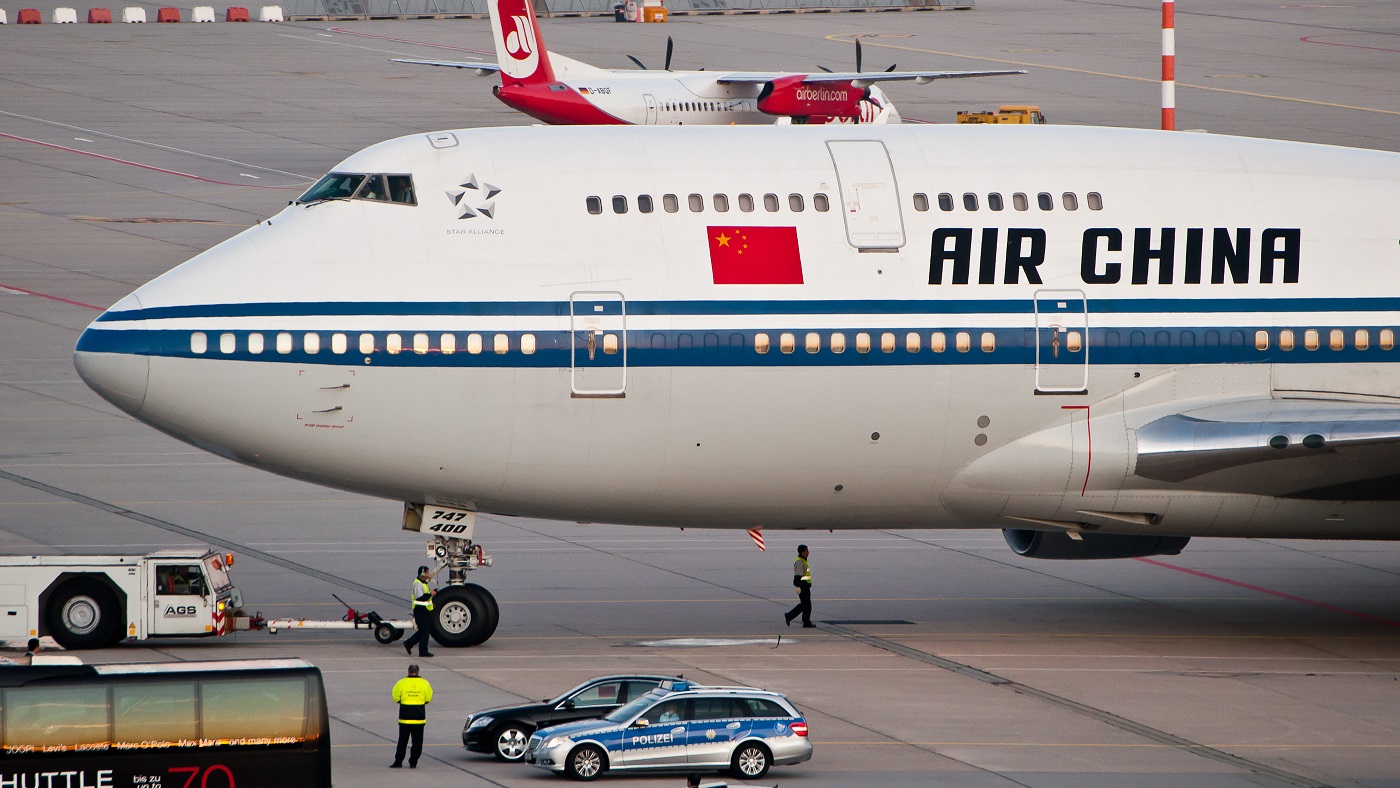
JUST as the Middle Eastern carriers are bridging links between Europe and South and South-east Asia, new longhaul services offered by Chinese carriers too are building China up as a major transit hub into Asia.

Beijing and Shanghai especially represent new – and arguably preferred – alternatives to the traditional transit stops like Tokyo, Seoul and Hong Kong in linking the US and Europe to Asia.

Air China became the first airline to launch a thrice-weekly Shanghai-San Jose service on September 1, bringing the number of China-US routes it operates up to six, the most of any airline worldwide.

Air China, along with other Chinese carriers like China Eastern Airlines as well as Hainan Airlines and its subsidiaries, appear to have succeeded in gaining hub status for China’s airports, including emerging ones in Chengdu and Chongqing, said buyers at PATA Travel Mart.

“(Chinese airports are becoming transit hubs) in recent years with the opening of more routes especially by Air China. They have been expanding their network very rapidly and this is good for us,” said Liu Shan, sales manager, Asia & Africa Region, CITS.

Bai Jing, director, reservation center division, e-commerce department at CITS said the added connections and competition from Chinese airlines will only be positive for Chinese outbound travellers.

“With competition there will be improvement. It is also not just about the price competitiveness as travellers look at a multitude of criteria when deciding which airline to take. Repeat travellers too are less price conscious,” she said.

Louisa Tsou, president of Ananan Tourist, said Taiwanese carriers have predicted and prepared for the rise of China as a competing hub. “Since 2008, China Airlines and Eva Air have been introducing many new links between Taiwan and China in anticipation of the competition,” she said.

Hence, while flights from South-east Asia to Taiwan have indeed declined due to its compromised trans-Pacific hub status, business has more than made up for itself through connections to China.

Most transit traffic go through Guangzhou, Shanghai and Beijing into Europe, added Tsou.

Tsou, who is also chairman of the Travel Quality Assurance Association in Taiwan, has seen a 1.8 per cent growth in transit traffic from Taiwan to China in July 2016 compared with the same period last year, and believes growth will only continue.

Unlike Liu’s observation that transit passengers from South-east Asia through the Beijing and Shanghai hubs are on the rise, Chris Ellis, Asia product manager at UK-based Explore Worldwide, believes the increase in connections into China is unlikely to benefit those hoping to visit South and South-east Asia due to the cumbersome routing. Rather, it benefits his European clientele visiting China.

Starwood debuts Tribute Portfolio, Luxury Collection in Singapore

0

rajit_sukumaran_senior_vice_president_acquisition_and_development
Rajit Sukumaran

STARWOOD Hotels & Resorts has brought two new brands to Singapore parked under the Tribute Portfolio and Luxury Collection umbrellas with the signing on of Hotel Vagabond and The Duxton Club.

Tribute Portfolio, Starwood’s 10th core brand launched last year is bringing the 41-room Hotel Vagabond into its fold.

“Tribute is meant to capture the opportunities within the upper upscale space. Not many people are aware that 60 per cent of hotels in this space are unbranded and unaffiliated. Hence, Tribute allows us to take on independent, designer-led hotels, and keep them independent,” said Rajit Sukumaran, senior vice president, acquisitions and development Asia-Pacific, Starwood Hotels and Resorts, when asked why Tribute was created.

While Sukumaran feels that independent hotels already do well on their own, he feels that in order for them to grow further, they would need global distribution systems, loyalty programmes and sales channels – which Starwood offers.

In return, Starwood can offer their Starwood Preferred Guest (SPG) members varied experiences and additional locations to stay in.

“Nine out of 10 of our SPG members said there would be times during their travel where they wanted to stay in a non-typical, independent hotel. Their qualm was that they were unsure about the quality, unable to obtain points and the issue of safety. We decided to solve their problem (by launching Tribute),” shared Sukumaran.

Regarding expansion plans, he expects that Tribute should “hit 100 Tribute hotels in five years, or even exceed this number should this trajectory carry on”. In Asia, soon to join Tribute is a new property in Shanghai that will open later this year.

As well, The Duxton Club will open under Starwood’s The Luxury Collection in 2017. The hotel will reside in two pre-war colonial heritage buildings – The Duxton House on Duxton Road and The Duxton Terrace on Murray Street – 200 metres apart from each other.

The Duxton House will feature 50 guestrooms in eight adjoining three-storey buildings and include an all-day dining restaurant, a bar and private cigar room. Meanwhile, The Duxton Terrace comprises 14 adjoining three- and four-storey colonial-era buildings, which will house 138 guestrooms, five F&B options, a pool, lobby bar and fitness centre. Guests will be able to enjoy full use of the facilities at both premises.

On this soon-to-open property, Sukumaran said: “The Duxton Club is opening in Tanjong Pagar, which is an up-and-coming area. Having this luxury offering there is going to sit very well with the whole expansion plan of the CBD. It’s a great location for us.”

When asked about The Luxury Collection’s expansion plans in Asia, Sukumaran said that there are three opening soon – Meishi Lake in Changsha next month, and two properties in India and Hakone, Japan, next year.

Overall, Sukumaran said: “Both Tribute and Luxury give the flexibility of not making hotels conform to hard-brand standards. (But in comparison) to Tribute, Luxury has certain service elements there, such as the presence of a concierge.”

With this, Singapore currently holds nine of Starwood’s brands – W Hotels, Four Points, Westin, Sheraton, St Regis, Le Meridien, Tribute Portfolio, The Luxury Collection, and an extended partnership with Design Hotels (which Starwood holds a majority stake in).

COMO hotels embarks on branding enhancement efforts

0

como-the-treasury-perthCOMO The Treasury, Perth

COMO Hotels and Resorts is embarking on a brand enhancement initiative in anticipation of its 25th anniversary in November.

The hospitality group will place ‘COMO’ at the beginning of each of its property’s name starting with its newest COMO The Treasury in Perth, Australia. Subtle changes will appear gradually across all collaterals from now through 2017. A fully redesigned website is also in the works.

As well, COMO has launched a two-month global competition starting September, which encourages social media followers to share their travel essentials when packing for a COMO destination.

Participants stand to win one of three prizes – a Club21 bag and a vacation of either a three-night wellness programme at COMO Shambhala Estate, Bali, a five-night service-focused experience at COMO Maalifushi, Maldives, or a two-night gourmet adventure at COMO Metropolitan London.

To participate, follow @COMOHotels on Instagram and share seven things in your travel bag via an Instagram post. Images must include the hashtags #COMO25th and #Club21 to qualify.

Asian Trails wins Finnish account handled by Asia World

0

laurent-kuenzle
Laurent Kuenzle

ASIAN Trails Thailand will be handling the clients of Finland’s leading tour operator Aurinkomatkat in South and Central Thailand from November 1, an opportunity that arose when DER Touristik, which bought Apollo (Kuoni Scandinavia), shifted the account to its subsidiary, Go Vacation Thailand.

“Losing the Apollo account to DER-owned DMC Go Vacation enabled us to look at options to work with other major tour operators in northern Europe and we are very happy that we could come to an agreement with such a reputable company as Aurinkomatkat,” said Laurent Kuenzle, Asian Trails Group’s CEO, in an email interview.

Aurinkomatkat, part of the Finnair Group, carried nearly 200,000 passengers to various destinations last year, with a total turnover of 172 million euros. Kuenzle would not reveal the size of the account, only saying Thailand is a “major destination” for Aurinkomatkat.

He added: “We believe that the Finnish market is very interesting for Thailand. Thailand sees a large number of repeat travellers from Finland and is by far their (Aurinkomatkat) number one destination in Asia. Thailand is excellent value for money and has quality beach properties available for every budget.”

Currently, the account is being handled by Asia World Thailand.

Janne Ohralahti, head of procurement category marketing, hotels & transportation of Finnair Plc, said: “We strongly believe that Asian Trails has not only the infrastructure in place in Thailand but also has demonstrated that on-the-ground service standards remain its highest priority in Thailand.

“Its extensive network of offices in key destinations in Thailand with employees who understand our needs were decisive factors to appoint Asian Trails Thailand as our partner.”

TTG Asia takes break for Hari Raya Haji celebrations

0

TTG Asia e-Daily will be taking a break on Monday, September 12, for the Hari Raya Haji public holiday.

News will resume on Tuesday, September 13.

From all of us at TTG Asia Media, Selamat Hari Raya Haji to our Muslim friends!

Indonesian OTAs ride on wave of mobile adopters

0

mobile-phone-man-hand

MOBILE is touted to be the most lucrative channel for OTAs in Indonesia to conquer the country’s swelling ranks of travellers, as the archipelago becomes the fastest-growing online travel market in Asia-Pacific.

Speaking at PATA Travel Innovation Forum yesterday, Chetan Kapoor, research analyst, Asia-Pacific at Phocuswright, shared: “Next year we estimate that Indonesia will account for one-third of the South-east Asian travel market, with online accounting for 25 per cent of them.”

This is a significant growth from 2012, when Indonesia accounted for just one-fifth of the South-east Asia’s travel market, of which online contributed only nine per cent, according to Phocuswright findings.

The growth of LCCs and emergence of local OTAs have been key factors driving travellers to migrate from offline to online, according to Kapoor.

“There are more than 12 (sharing economy) intermediaries mobilising Indonesians to shop and book travel services online and on mobile, and we believe that by 2020 (mobile) will account for between 20-25 per cent,” he said.

Indonesia’s major OTAs are also witnessing rapid growth in mobile shopping and booking.

Caesar Indra, head of product of Traveloka.com, said a majority of the OTA’s business is on mobile, echoing Google’s findings that 71 per cent of online bookings in Indonesia are made via mobile apps.

Similarly, mobile accounts for 70 per cent and 50 per cent of business at Pegipegi.com and Nusatrip.com respectively. Tiket.com, which launched its mobile apps last year, has seen mobile business increasing four-folds in the last six months.

This is a major change from merely two years ago, when Indonesians used mobile devices for chatting and texting only, a phenomenon that Tiket.com‘s co-founder and managing director Gaery Undarsa attributes to the government’s drive to implement 4G network across major cities in the country and the availability of cheap smartphones for the lower-end market.

Ryan Kartawidjaja, deputy CEO of Pegipegi.com, said: “Indonesians are very (price sensitive). We create promotions which are only available on apps to stimulate mobile (purchases).”

As well, Indonesian OTAs claim to have fared better than their global counterparts in capturing the growth of interest from both travel suppliers and customers over the last four years due to their agility in adjusting their services to meet domestic market preferences and needs.

One notable strategy is the flexibility between online and offline payments. Said Tiket.com’s Gaery: “We are not only selling online. We also partner more than 4,000 sub agents across Indonesia.

“If we look at Papua, Aceh and other remote areas, it is (hard) to get (Internet) connections, so we partner small travel agents there. They can use our system and sell our products.”

He also said that having a combination of air, rail and accommodation products also suit the needs of travellers in a diverse, archipelagic country.

Refunding and rescheduling for online bookings has been a challenge for customers, pointed out Traveloka’s Caesar.

“A client needs to go to (the airline) sales office or call their customer service to alter their bookings. This is a big inconvenience,” he said.

To tackle the problem, Traveloka recently launched the rescheduling channel as part of its after-sales service for online customers.

Caesar added: “Traveloka designs mobile apps not only as a means for transactions but (also) as a travel companion.”

Meanwhile, Pegipegi.com has reached out to more hotels by creating video training to operate its system.