TTG Asia
Asia/Singapore Tuesday, 7th April 2026
Page 1655

Taking the technology route to reach out to the Chinese

0

Tourism suppliers are focusing their marketing efforts on a growing new breed of technologically savvy millennial travellers from China, by catering to their needs and making it convenient for them to book and pay on the go, and to experience travel in unique ways.

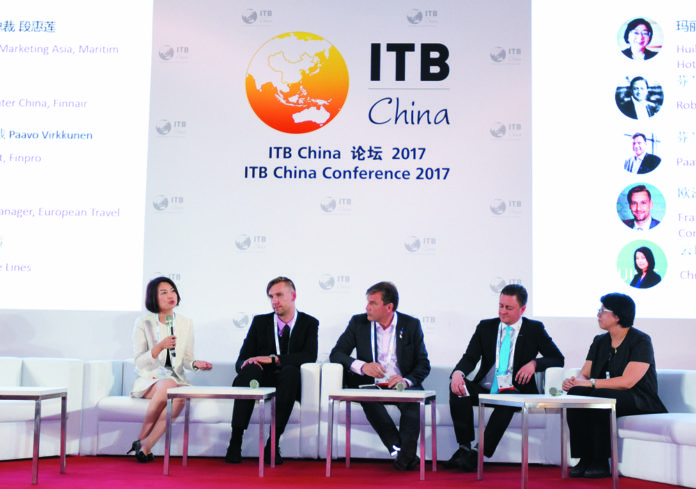
Sharing their experiences during a panel discussion during ITB China last week were senior representatives from Finnair, Genting Cruise Lines and Maritim Hotels.


Panellists (from left) Genting Cruise Lines’ Li;  European Travel Commission’s Frantisek Reismuller; Finpro’s Paavo Virkkunen; Finnair’s Öhrnberg; and Maritim Hotels’s Duan

Robert Ohrnberg, Finnair’s general manager for Greater China, said the company uses virtual reality (VR) to promote Finland, allowing customers to visualise the destination through VR headsets.

And when Finnair celebrated the first anniversary of its Helsinki-Shanghai flight in November 2016, it brought Santa Claus – an icon of Finland – onboard and streamed his movements including what he ate in business class, taking a nap and greeting our guests live through the popular Chinese Inke app. Santa’s life onboard the nine-hour flight generated 500,000 views on the app.

Finnair has also made it convenient for Chinese mobile users to make in-flight purchases by providing free Wi-Fi and facilitating payment through Alipay mobile solutions. First introduced on the Shanghai-Helsinki route in January, the service led to a spike in in-flight sales. This prompted Finnair to roll the service out on the Beijing-Helsinki route a month later, and to further introduce it to three more routes from China next month.

Recognising that “millennials cannot live without their mobile phones”, Christine Li, head of marketing senior vice president, Genting Cruise Lines, said her company has brought Alipay and UniPay as payment solutions on board its ships.

Huilian Duan, vice president of sales and marketing Asia with Maritim Hotels, shared that the company has built a large social media marketing team that has seen “huge success” in using WeChat to convert brand awareness into actual bookings made online.

Duan pointed out that studies have shown that mobile bookings incidences are high among the Chinese millennials.

Air New Zealand, Tourism New Zealand renew partnership

0

Air New Zealand and Tourism New Zealand have signed an MoU worth up to NZ$20 million (US$13.7 million) to promote New Zealand in key offshore markets, with a focus on growing international visitation throughout New Zealand and during off-peak periods.

At the signing, the two organisations outlined their intent to invest up to NZ$10 million each over 12 months for joint activities in Australia, China, North and South America, Japan, Singapore, the UK and Europe.


Cathedral Cove, Coromandel Peninsula, New Zealand

This is the fifth consecutive year Air New Zealand and Tourism New Zealand have coordinated their international market development and promotion, taking the total joint investment to NZ$100 million to date.

Air New Zealand’s CEO Christopher Luxon said the partnership aligns with the airline’s commitment to supercharge New Zealand’s success by growing tourism’s economic contribution to national and regional economies.

“Spreading tourists and their holiday spend more evenly throughout the year and beyond the main gateways is a clear way for our regions to share tourism’s benefits – such as increased year-round employment and trade opportunities,” he said.

“Working in partnership optimises our marketing spend and strategy, putting our strength behind campaigns to attract more premium travellers to our shores, who stay longer, explore more widely and enjoy our country in all seasons.”

Tourism New Zealand’s chief executive, Stephen England-Hall, added: “Our joint investment gives us greater impact on the world stage, as we share a consistent message about the ease of travelling here and the experiences on offer.

Air New Zealand and Tourism New Zealand’s collaboration in the past year includes increased marketing in the US, Argentina and Brazil, which saw success such as the airline’s addition of new services from Houston and Buenos Aires.

Tokyo brandishes new logo, slogan for global promotion

0

The Tokyo Metropolitan Government has created a new logo and slogan, “Tokyo Tokyo Old meets New”, which will be used in various promotional activities abroad.

The two fonts – one in brushstroke and the other in Gothic block typeface – are meant to impart an image of the city, where traditions dating back to the Edo period (1603-1867) coexist alongside the cutting-edge culture of today.

The logo also includes a traditional stamp that shows the one of Tokyo’s newest sightseeing landmarks, the Shibuya scramble crossing.

Mövenpick to have second hotel in rising Bangladesh

0

Mövenpick Hotels & Resorts will roll out its second property in Bangladesh in the north-eastern city of Sylhet when the Mövenpick Hotel Sylhet Bangladesh opens in 3Q2018.

The 210-room hotel will feature a rooftop infinity swimming pool, spa, fitness centre, tennis court and bowling alley, complementing the adjacent shopping area offering 1,170.6m2 of retail space. It is touted to house the city’s largest meeting rooms, and will feature an all-day dining restaurant, speciality bistro and lounge.


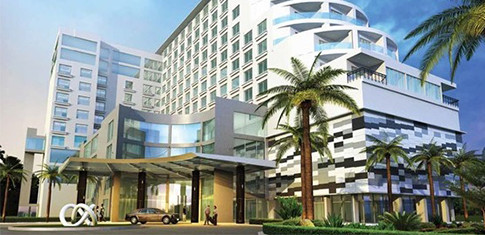
Concept art for the upcoming property

Mövenpick Hotel Syhlet Bangladesh is located a few minutes from Sylhet Osmani International Airport. Syhlet is also home to Pangthumai Waterfall, Jaflong hill station, and the largest tea garden in the world.

“This is the second Bangladesh property we have signed in the last 12 months and we look forward to establishing ourselves as the first international hotel chain in Sylhet,” said Andrew Langdon, Mövenpick Hotels & Resorts newly appointed chief development officer and senior vice president Asia, who added that the country’s developing economy will be an important driver to the group’s business.

According to the IMF, Bangladesh was the second-fastest growing major economy globally in 2016, at a rate of 7.1 per cent. The country recorded over 500,000 overseas arrivals last year.


Ctrip starts harvesting Skyscanner synergies

0

Ctrip is running an instant booking trial with Skyscanner, the metasearch site it bought recently, revealed its CEO Jane Jie Sun, in a live Q&A at ITB China Conference on Wednesday.

Interviewed on stage by Phocuswright founder Philip Wolf, Sun said: “We are doing a trial run with Skyscanner…originally, we planned to have the first transaction of direct booking by the end of the year but it has moved faster than expected.

“The reason we can do the test run is because we have invested in Skyscanner; we feel the two companies are one entity. The engineers day in and day out are talking to each other.”

Sun said metasearch sites have an advantage in that they can scale quickly, however the absence of a direct booking facility for customers means users need to jump to another site to finish the transaction.

When approached by TTG Asia for more details on the trial, Sun said: “It’s just a test run, so far it’s been positive.”


Sun: trial moving faster than expected

Google is also dabbling in instant bookings where, in the footsteps of TripAdvisor, users can complete a hotel room booking without ever leaving the search giant’s desktop interface. Skyscanner in March joined forces with Finnair and Amadeus to enable travellers to book Finnair directly with the airline without leaving Skyscanner.

One analyst report said though Ctrip offers metasearch options in China, Skyscanner being a global leader in metasearch will significantly increase Ctrip’s international reach. If Skyscanner’s capability is provided with Ctrip’s booking functionality, the synergy can increase bookings for Ctrip significantly.

But the jury is still out if instant booking on metasearch engines will work, with Wolf pointing out that TripAdvisor’s pivot to this is “by all indications a disaster”.

He said: “Ctrip manages its own successful future with an uncanny ability to make the right bold moves at the right time. They don’t follow anyone else’s footsteps. That’s the true sign of leadership. And I would keep watching out for pioneering breakthroughs on mobile apps for search/shop/buy/memorialise in travel.”

Ctrip’s unaudited financial results for the first quarter ending March shows a 46 per cent year-on-year net revenues increase to RMB6.1 billion (US$883 million). In a statement, executive chairman James Liang said: “This is the first quarter we consolidated Skyscanner results. By leveraging Skyscanner and other strategic overseas investments, we expect to further strengthen our international product offerings and improve user experiences for both Chinese and international travellers.”

Sun also gave insights into Ctrip’s culture during the Q&A. “We want the company to have the spirit of innovation and the innocence of a small company, but the discipline and focus of a big company,” she said, admitting this is a challenge as Ctrip grows bigger, with 33,000 employees. She said most of them are 25 to 26 years old. “Sometimes I feel we’re in a high school,” she said.

One way she keeps the innovation spirit up is through a “baby tiger” programme, where all young employees are able to pitch business plans to executive members. To-date, there are more than 30 baby tigers, which run as separate businesses.

On how Ctrip decides what to acquire, Sun said: “We’re very disciplined about our investments. First, it must be closely related to our core business, i.e. travel. A lot of people want us to buy a piece of land, for example, we’re not interested, even though it may be a good investment. Secondly, the target must be number one or two in its vertical. Thirdly, it must not only be the leader, the valuation must be reasonable.”

On what advice she has for females leaders, Sun said: “We women have lots of advantages.We are team players, for one, and we always try and strike win-win (results) in any negotiation. If we focus on our strengths, we will go a long way.”

Messe Berlin stays modest about ITB China growth

0

Messe Berlin is keeping modest about the future growth of ITB China even though the inaugural show this year sold out ahead of the event and early feedback shows some exhibitors want to expand their presence next year.

Interviewed by TTG Asia yesterday on how big ITB China could be next year, Messe Berlin’s senior vice president-travel & logistics, Martin Buck, said: “Based on demand, we can be hopeful.”


Buck: recent frequency of ‘incidents’ calls for flexibility 

ITB China this year fields 600 exhibitors from nearly 70 countries, occupying 12,000m2 of space, meeting around 600 hosted Chinese buyers and another 100 international buyers who make their own way here, beating other more established shows in China on the first salvo.

But Buck is keeping jubilation levels down, saying that the industry is more vulnerable than ever to geopolitics, safety & security issues, and huge changes, all of which have made it “difficult to forecast growth, even though we are optimistic”.

He pointed out how consolidation in the hotel industry, for example, could impact tradeshows. “Before you have two or three exhibitors. With consolidation, it’s not likely you will have three stands,” he said.

Added Buck: “(Before) we had only isolated incidents, say, the tsunami, one (incident) over 12 months. Now, there is a dramatic increase in frequency of incidents, be it geopolitical or terrorism, where certain destinations which are in could be out of the picture easily. The world is changing and we have to stay flexible and cautious about capacity and space. One never knows.”

He said he wasn’t surprised ITB China sold out ahead of the event. “We saw that the Chinese market has incredible potential but the shows available in China left room for improvement, especially when it comes to getting professional buyers and the right composition (tour operators, meeting planners, etc).”

He attributed ITB China’s success on this to “a certain proficiency” in the region that Messe Berlin has gained from launching ITB Asia in Singapore, and having the right partners who are well-connected to the market, like Travel Daily China.

When asked how ITB China might strengthen ITB Asia and ITB Berlin, he said for many Chinese, ITB China is the “gateway” to the ITB brand and that they could be participating in Berlin and Singapore too now that they have had seen the quality for themselves.

On launching more ITB spin-offs, possibly ITB India, Buck said: “I believe India’s potential should never be underrated. We have been trying for some time but it is difficult to find the right partners.”

Malaysia is official partner country of ITB Berlin 2019

0

While the official partner for the 2018 edition has yet to be confirmed, Malaysia has been confirmed as ITB Berlin’s official partner country in 2019 in an official signing of the contract at ITB China yesterday.

Mohamed Nazri bin Abdul Aziz, minister of tourism and culture for Malaysia, explained: “Our long-term target is to achieve 36 million tourist arrivals and RM168 billion (US$38.6 billion) in receipts by the year 2020, based on the Malaysia Tourism Transformation Plan. Building up to this year will be very much like a ‘crescendo’, which is why we wanted to plan a major partnership with ITB Berlin in 2019.”


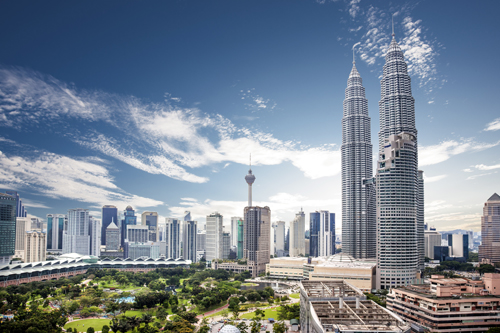
Kuala Lumpur

The 2019 Official Partner Country project is part of a much broader plan by Malaysia to increase awareness of the natural and human assets of the country over the next years. Kinabalu National Park and Gunung Mulu National Park in Malaysian Borneo and George Town cities and the archaeological heritage of the Lenggong Valley are four of the UNESCO designated World Heritage sites in Malaysia that will be highlighted.

In a statement, David Ruetz, head of ITB Berlin from Messe Berlin, said that negotiations are still under way with several “suitors” for the 2018 edition and the partner is expected to be announced shortly.

New chapter for SilverNeedle as it relaunches as Next Story Group

0

Having identified new media competency as a core need to “futureproof” asset owners, SilverNeedle Hospitality Group acquired Brand Karma and relaunched itself as the Next Story Group.

Its hotel management division has also been rebranded from SilverNeedle Hospitality to Next Hotels, which together with SilverNeedle’s existing in-house architecture and design agency Virsa and Brand Karma now form Next Story Group.

Anand Nadathur, CEO of Next Story Group, commented: “Over the past year we’ve developed in-house architecture and design capabilities via Virsa, identified new media marketing competency as a must-have which led to the acquisition of Brand Karma, strengthened our employees and board, and studied the impact of the sharing economy on urban spaces.

“We now have the right set of specialised services, and are ready to move forward to help asset owners futureproof their real estate by giving consumers something fresh and relevant.”

Added Morris Sim, previously CEO of marketing agency Brand Karma, now chief marketing officer for Next Story Group: “The hospitality and real estate industries are experiencing unprecedented shifts, with new consumer expectations giving quick rise to disruptors.

“It is difficult for asset owners to ensure what they have today will be relevant and monetisable for tomorrow’s consumers. Being a part of Next Story Group means asset owners can count on us to differentiate and respond to market changes faster.”

Along with the launch, the Singapore-based Next Story Group also appointed veteran hotelier Patrick Imbardelli to its board of directors.

China booms for Sharjah

0

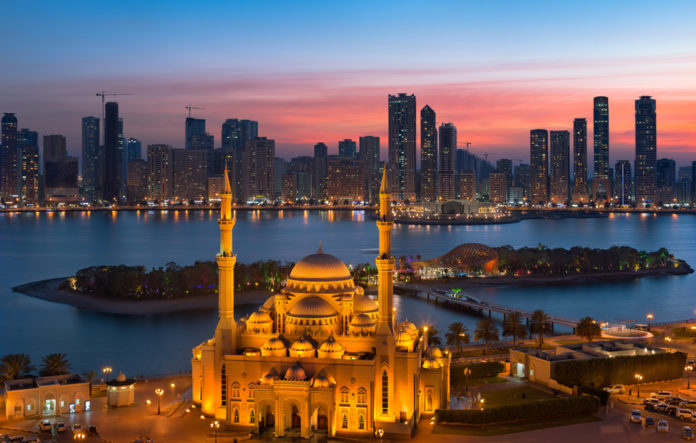
Sharjah is on a roll with Chinese arrivals, having benefitted from Dubai’s air connectivity and proximity, the UAE’s visa-on-arrival for Chinese visitors introduced in September 2016, AirArabia’s four weekly direct flights from Urumqi launched last year, and Sharjah Commerce and Tourism Development’s new representative office in Beijing opened in early 2016.

These development lifted the number of Chinese hotel guests in Sharjah by 63 per cent over 2015 to reach 86,069. Sharjah expects the numbers to grow to 200,000 in 2021.

Khalid Jasim Al Midfa, chairman, Sharjah Commerce and Tourism Development, said most Chinese visiting Sharjah were group travellers and the remaining 10 per cent were FITs. In 2015 and 2016, both India and China compensated for the decline in Russian arrivals when the ruble devaluated.

Sharjah attracts the Chinese with authentic cultural and heritage experiences and outdoor activities such as wildlife spotting, trekking, mountain biking, dune bashing and desert safari.

It has also been observed that Chinese families are drawn to Sharjah’s eco-tourism attractions, such as the Al Noor Island butterfly park and the Mleiha Archaelogical Centre. A new safari park slated to open by the end of this year will add to Sharjah’s eco-tourism lures.

Meanwhile, the Heart of Sharjah development is being registered as a UNESCO World Heritage Site, said Khalid Jasim, who expects the status within the next two years. The development will include Albait Hotel, a luxury heritage hotel.

Fairfield by Marriott to make Cambodia debut

0

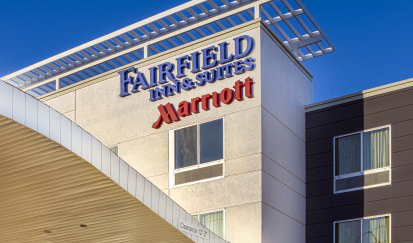
Cambodia’s first Fairfield by Marriott hotel is expected to open in Phnom Penh in 2021.

Paul Foskey, chief development officer, Asia-Pacific, Marriott International, said: “As Phnom Penh continues to grow into a prominent destination in the region, we will cater to the robust demand from business and leisure travellers for reliable, mid-range accommodations in the bustling city.”

Owned by Royal Field Development Company, a subsidiary of Cambodian conglomerate Chip Mong Group, Fairfield by Marriott Phnom Penh will be situated in the Russian Boulevard within the administrative centre of the city and a 20-minute drive from the airport.

The site is minutes away from the Peace Palace, which serves as the office of Cambodia’s prime minister; the Office of the Council of Ministers; the Ministry of National Defense and various other government offices.

Facilities at the mid-range accommodation will include a restaurant serving local and international flavours as well as a fitness centre.