TTG Asia
Asia/Singapore Friday, 3rd April 2026
Page 1616

Rise of the Chinese explorer

0

More Chinese travellers are now enabled and emboldened to seek out Australia’s regional gems, a far cry from how the market was when the tourist boom from China first took off in 2007. By Adelaine Ng


Uluru-Kata Tjuta National Park, Northern Territory

Chinese travellers are growing more confident about exploring Australia independently, and regional parts of Down Under are readily embracing them.

At 1.3 million entries in the year to March 2017, China is on the cusp of overtaking New Zealand’s long-held spot as top source market.

But the profile of today’s Chinese visitor is a far cry from their counterparts at the start of Australia’s Chinese tourist boom in 2007.

“The traditional stereotype of the Chinese visitor as someone who just comes to visit their relatives, eats at Chinese restaurants and shops a lot is changing,” said David Beirman, a destination marketing specialist and senior tourism lecturer at University Technology Sydney.

“Many of them are second- or third-time visitors so they want to have a more authentic Australian experience – to see the koala in the great outdoors and visit regional places, especially those with connections to Chinese history, e.g. where coal was discovered in Ballarat and Bendigo in Victoria or the mining gold fields in New South Wales and Queensland.”

David Tang, marketing manager at Grand City Tours, observed Chinese demand grow 20 or 30 per cent from the year before, for places like Uluru in the heart of the Australian outback.“This market doesn’t care about hotels or access to Chinese food,” he said. “They only want to see the beautiful views.”

Two key reasons underpin the confidence of the modern Chinese traveller, according to Andy Jiang, Tourism Australia’s country manager for China.

“One of the biggest enablers is the mobile phone and the ability to get information and stay connected,” he said.

“The second is the enormous progress China has made over the past 20 to 30 years as a global power. China’s confidence on the global stage is being reflected and embraced by Chinese consumers, allowing them to venture further, see more and do more.”

Moreover, Chinese travellers are less inhibited of not speaking perfect English, and they no longer crave for traditional tourism products. “They want to experience something unique that reflects their lifestyle, or aspirations of doing not just what everyone else is doing,” Jiang said.

The Chinese experiential trend is also driven in part by social media. Visits to Tasmania, for example, saw a spike after Chinese model Zhang Xinyu posted photos of herself clutching a lavender plushie bear that she and other celebrities acquired from Bridestowe Lavender Estate during a fam courtesy of Tourism Australia.

Zhang’s post garnered massive attention in China, driving many of her young FIT followers to emulate her journey in Tasmania and the lavender farm in particular, remarked Jiang.

As well, regional Australia is now better prepared to take on the cultural challenges that large groups of Chinese tourists might bring. Added Jiang: “A lot of the experiences in regional Australia are run by small- to medium-sized businesses who are very passionate about the market and what they do.”

They are also using the latest technologies that are changing consumer behaviour in China such as WeChat Pay and UnionPay, he observed.

However the farther travellers venture into the outback, the more they must be prepared to have less access to familiar comforts, in terms of language or otherwise, Bierman pointed out.


 

Hailey Shin, founder and CEO, Funtastic Korea

0

If I had my way, I would increase flight connectivity into South Korea. This would be the most important priority for the industry. We are effectively an island, and we need more routes. Flying has become much more affordable in the region, so we just need to provide the flights for people to get here.

If I had my way, I would improve English signage in South Korea. The biggest problem travellers face in the country is the language barrier, so we need more signs and information in English. Shops and restaurants that attract a lot of overseas visitors should make an effort to use English for their menus and signage, for example. This would make things easier for tourists.

If I had my way, I would promote the country in a more efficient and effective way. Too often, there is a duplication of efforts as the travel authorities focus too much on Seoul, Busan and Jeju Island for foreign visitors. There needs to be an effort to get tourists to visit other parts of the country that offer great things to see and do too. We are not making the most of our fantastic tourism resources.
I also believe that South Korea needs to promote its culture and content better through social media outlets such as YouTube and bloggers. Those play an important part in reaching out to today’s international travellers. That includes people in their 40s and 50s, who make up our main customer target.

Seizing a ‘mobile-first’ mindset critical for travel players

0

Discussions on the importance of adopting mobile solutions dominated the Travelport Live in Sydney conference, which concluded yesterday, with panellists in agreement that the travel industry must shed its traditional mindset and shift into a mobile-first thinking despite the challenges.

Caesar Indra, senior vice president of business development for Traveloka, stresses the importance of mobile solutions, especially as bookings made on the Traveloka app account for 70 per cent of its online transactions.

But mobile has to go “beyond the transactional”, and agencies must be engaged with the customer throughout their journey, he noted.

One example, Indra shared, was introducing a feature for users to reschedule or refund their purchases on their mobile phones. This cut the processing time from 30 minutes – when done through a call centre or physical store – to just five minutes.

But an agency’s mobile communication should extend beyond the agency and customers to also include ground staff such as tour providers and suppliers, advised Robin Yap, president, Asia, The Travel Corporation.

In what he called “a total communication” via mobile, the company launched an app for its trip directors to interact with customers before their trip. This allows the guides to learn the customers’ interests, feedback and requests, in order to provide more personalised service.

“This mobile app is really critical to delivering a great customer experience,” observed Yap.

Josephine Lim, managing director South-east Asia of Preferred Hotels & Resorts, chimed in to advise that as much as having a “mobile app is a must”, it should also have “an element of fun” and geared not only to millennial customers.

She observed that “older people are posting photos as much, if not even more, than teenagers”.

Indra added that the social aspect is especially important in Asian countries like Indonesia. When Traveloka incorporated WhatsApp into its mobile app for users to share their itineraries on the popular messaging service, it created a “network effect” among its clients and their friends, he shared.

50-year-old Indonesian agency finds new gear in multichannel strategy

0

For established Indonesian tour company Dwidayatour, adopting an online-offline approach is now key to its growth plan for the future.

Speaking to TTG Asia at its 50th founding anniversary press conference earlier this week, Dwidayatour’s vice president commercial Hendriyapto said the company’s survey of 1,000 respondents early this year showed that most customers are using multichannels for trip planning, either seeking information online and booking offline or vice versa.

“The interesting finding is that while 83 per cent of customers perceived that online prices were cheaper, 76 per cent said they still bought tickets through a travel agent.”

Hendriyapto also noted the rapid growth of online business, mostly driven by customers aged between 20 and 30 years old. “Last year we saw a 100 per cent growth of online transactions compared to 2015.”

“Although the volume still represents less than five per cent of our total business, the potential growth is big in the coming year,” he said, further necessitating the use of multiple channels.

The Hybrid Channel, which was launched last year to integrate offline and online channels alongside a 24-hour hotline, is a distribution strategy Hendriyapto is positive would give Dwidayatour a competitive edge.

By enhancing its technological capabilities, offline products can now be sold through both web and mobile channels.

At the same time, Dwidayatour is also growing its physical presence from its current 92 branches in Indonesia to 10 more outlets this year. The agency targets to achieve 30 per cent growth this year.

Philippine trade joins forces to beat cancellations

0

To make up for recent booking cancellations owing to safety and security concerns, a newly formed private sector-led working committee in the Philippines is firming up a programme of fresh and viable tour products.

Cesar Cruz, president of the Philippine Tour Operators Association (Philtoa), which is part of the committee, said the plan is for all Philippine sellers to promote the same packages for bookings between 4Q2017 and end-2018.

Banaue rice terraces

Key criteria influencing the choice of destinations include safety, accessibility, tourism infrastructure and sought-after tour products, including the stretch beginning from Ilocos to Cordillera and upland to Banaue and Sagada; Bicol; Pampanga; Batangas and Quezon, among others in Luzon and destinations in central Visayas.

Destinations included in ongoing travel advisories – Palawan, Cebu, Bohol and Boracay – will also feature in some packages.

Cruz told TTG Asia that the working committee will meet this month and have the mechanics ready by August for submission to the Department of Tourism and its marketing arm the Tourism Promotions Board, which will then help with in-market advertising through their overseas offices.

The packages will also be sold to global buyers during the Philippine Tourism Exchange in September.

Hong Kongers, Russians most forward-planning travellers: Agoda

0

An analysis of Agoda data from 2016 revealed that Hong Kongers book the furthest in advance and Saudi Arabians the most last minute, as the trend on the OTA shifts towards in-advance bookings.

Contrary to the perception of being in an age of ‘instant gratification’, lead-time for Agoda bookings on average increased by two days compared to 2015, said Andy Edwards, Agoda’s global director brand and communications.

“Price and choice play a driving factor when booking travel… Popular culture portrays this image of the adventurous, last-minute traveller, but in reality consumers are investing more time preparing for their holiday to get the most out of their well-deserved break,” he explained.

In Agoda’s ranking of forward planners by nationality, Hong Kongers took top spot for the second year running, on average booking 49.4 days prior to travel. In second place are Russians, who have moved up two rungs from fourth position in 2015, with a booking lead-time of 46 days.

Australia follows in third place (44.3 days), then Taiwan (43.3 days) and the UK (37.2 days) respectively.

In the bottom five spots are Malaysia (24.4 days), India (21.7 days), Vietnam (18.7 days), Indonesia (18 days) and Saudi Arabia (16.9 days).

Meanwhile, when it comes to booking accommodation overseas versus domestic travel, Singapore and Hong Kong took joint lead due to the city size, with nearly all bookings (99 per cent) being outbound. The UK came in third, with 38 per cent of hotel bookings outbound and 62 per cent booked domestically.

On the other hand, findings from the powerhouse markets of the US and China go in the other direction. In the US, just eight per cent of all hotel bookings support international travel and 92 per cent support domestic travel, while some 98 per cent of China’s bookings are placed domestically.

Self-drive a tuk tuk in Thailand’s rural north

0

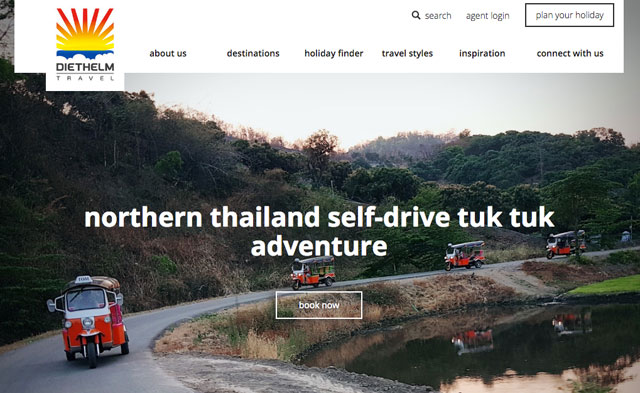
Diethelm Travel Group has launched the industry’s first tuk tuk self-drive tours to discover the rural outskirts of Chiang Mai.

The one-day Northern Thailand Self-Drive Tuk Tuk Adventure programme takes travellers on the three-seater rickshaws through the heart of northern Thailand’s jungle-covered hills and rice fields, with stops in rural villages and an ethical elephant sanctuary, a traditional Thai lunch and bamboo river rafting.

In addition to visiting the elephants and driving around the outskirts of Chiang Mai, the five-day Northern Thailand Self-Drive Tuk Tuk Adventure experience also takes travellers up to the top of Doi Inthanon, Thailand’s highest peak, with overnights in homestays and a day spent trekking.

The 11-day Northern Thailand Self-Drive Tuk Tuk Adventure itinerary builds on the five-day option by giving travellers more opportunities to drive through the mountainous north, plus plenty of time to explore at leisure, lounge by hotel pools and spend time in the town of Pai.

Drivers are required to be 18 years old or older and hold a valid manual driving licence from their home country, as well as attend a safety briefing and tuk tuk driving lesson.

Marriott announces new execs, reporting structure in Pacific

0

Marriott International has introduced new roles and reporting structures in its executive leadership team for the Pacific, in line with its goal to more than double its presence by 2020 and add 50 new hotels to the region.

Based at Marriott International’s Sydney head office at Sheraton on the Park, the team is led by Sean Hunt, area vice president Australia, New Zealand and Pacific. Reporting to Rajeev Menon, COO, Marriott International, APEC (Asia Pacific excluding Greater China), Hunt will oversee and drive the operations and financial performance of the property portfolio.

(Left to right from top) Hunt, Hansen, Aimo and Crawford

The hotel giant is also restructuring its regional sales and marketing team. Ashley Hansen, previously regional director for sales & marketing and sales organisation in the Pacific, has been appointed to area director of sales & distribution.

Florencia Aimo has been promoted from director of digital marketing for Marriott Australia to area director of marketing, and be tasked with delivering marketing initiatives to increase brand awareness and drive brand preference.

And to achieve its development target of 50 hotels for the region, Marriott International has appointed Richard Crawford senior director, development, Australia, New Zealand and Pacific, previously the development manager – acquisitions for Mantra Group.

Crawford will be supported in Australia by Maria Verner, formerly with Starwood’s Pacific development and acquisitions team and recently promoted to the role of manager, development for Marriott International.

Currently, Marriott International has 26 properties operating in the Pacific plus 22 in the pipeline. Beyond Australia, Marriott also has a presence in the wider Pacific region, with hotels operating in Fiji and Samoa.

Aviation roundup: Turkish Airlines, Thai Airways and more

0

Here’s our weekly roundup of new air routes.

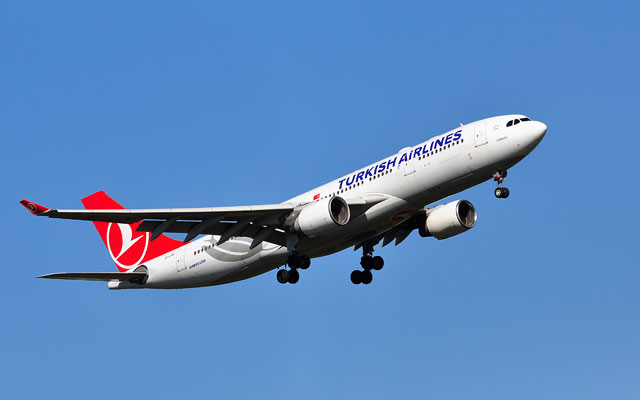
Turkish Airlines commences Phuket flights
On July 17, Turkish Airlines began four-times weekly flights from Istanbul to Phuket.

TK172 will depart Istanbul on Mondays, Thursdays, Saturdays and Sundays at 14.30, and land in Phuket International Airport at 04.00 the following day. Return flight TK173 will depart Phuket on Mondays, Tuesdays, Fridays and Sundays at 05.30, and arrive in Istanbul at 12.00.

Thai Airways connects Bangkok and Vienna
Beginning November 16, Thai Airways will begin four-times weekly flights between Bangkok and Vienna, deploying a Boeing B777-200ER aircraft with a capacity of 292 seats.

Flights will depart Bangkok on Mondays, Thursdays, Saturdays and Sundays at 01.30, and land in Vienna at 07.00. The return flight will depart Vienna at 13.30 and arrive back in Bangkok at 05.20.

New air link between China and Portugal
Capital Airlines, a joint venture established in 2010 between HNA Group and the Beijing municipal government, has launched a new Hangzhou-Beijing-Lisbon route. The inaugural flight will take place on July 25.

Utilising an Airbus A330, the thrice-weekly flights will be the airline’s first international route between the two countries.

Bangkok is Azerbaijan Airlines’ first destination in SE Asia
Azerbaijan Airlines will start flying from Baku, the capital of Azerbaijian, to Bangkok’s Suvarnabhumi Airport from October 29. This will the first regular direct passenger flight from Baku to South-east Asia.

Flights from Baku to Bangkok will be operated on Tuesdays and Sundays, while return flights will depart on Wednesdays and Mondays. The route will utilise a Boeing-767 aircraft.

Virgin flies HK agents to Melbourne

0

Tourism Australia partnered Virgin Australia and Visit Victoria to host a trade fam trip last week to introduce the airline’s new Melbourne-Hong Kong route.

A total of 13 travel agency senior executives from Hong Kong experienced Virgin Australia’s business class service and spent a week exploring food and wine in Melbourne city, plus aquatic and coastal experience along the Great Ocean Road and Mornington Peninsula.

Later this month, Tourism Australia and Virgin Australia will launch a joint consumer campaign to promote the new service in Hong Kong.