TTG Asia
Asia/Singapore Thursday, 2nd April 2026
Page 1596

Wanted: return visitors

0

Marissa Carruthers examines what the government needs to do in order to obtain repeat longhaul visitorship

Pumping more efforts into marketing Vietnam and having more tourist-friendly visa policies in place are some changes trade players would like to see to attract more repeat travellers to the country.
Hoang Minh Ngoc, Indochina Charm Travel’s Saigon office manager, said while France is the top repeat source market, followed by visitors from the US who tend to include Vietnam in South-east Asia multi-destination trips, travellers overall “do not tend to make repeat trips”.

She added this is partly to do with local operators failing to push the country’s growing diversity as more areas open up. However, the main issue lies with a lack of government support and tourism marketing promotions.

“To attract more visitors back to Vietnam, the government, together with travel agents, needs to invest in special promotions of the destination in potential and new markets,” she said.

But the authorities are not providing the monetary means. Figures from Vietnam National Administration of Tourism show that only US$2 million was allocated to their tourism promotion budget in 2016 – the equivalent of 1.9 per cent of Malaysia’s spend on marketing, 2.5 per cent of Singapore’s and 2.9 per cent of Thailand’s.

As well, travellers are opting to visit neighbouring countries, which are more accessible. In June, Vietnam renewed its visa-free exemption scheme to five key European countries for another year.

While the exemption, which has been in place since mid-2015, has led to double-digit growth in arrivals in the first four months of 2017, Bertrand Courtois, Sofitel Saigon Plaza’s general manager, said its single-entry conditions for a 15-day stay need to be relooked at to lure longhaul visitors back.

He said: “This is definitely a great start as it makes it easier for expats living in the region to visit during long weekends, and multiply their trips to Vietnam and discover new places.”

However, he added that a system similar to Thailand – with a large number of exempt countries – or a visa-on-arrival system like in Indonesia, would “greatly help”. Developing more attractive sightseeing and entertainment activities is needed too, he suggested.


This article was first published in TTG Asia August 2017 issue. To read more, please view our digital edition or click here to subscribe.

The dreary side of competition

0

S Puvaneswary looks at price slashing, depleting margins in Malaysia’s competitive inbound sector

Intense competition from new entrants, along with weakening bookings from most major markets in the past two years, are giving rise to price undercutting among Malaysian inbound tourism players.

Arokia Das, senior manager at Luxury Tours Malaysia, told TTG Asia that the weak inbound market in recent years has compelled some inbound agents, who traditionally handled longhaul markets, to diversify into new markets for survival.

As a result, price undercutting became the call of the day to break into a market and quickly build up clientele, he remarked.

“Prices have become so competitive that it’s now a volume game with razor-thin profit margins. In 2014, we (had) a profit margin of around 12 to 15 per cent. Now we are lucky to even get 10 per cent.

“Our package prices remain almost the same since 2014 although hotel rates, transportation, food and entrance fees increases annually,” he lamented.

Furthermore, some leisure players are also courting MICE groups in their quest to diversify business.

Abdul Rahman Mohamed, general manager, Mayflower Holidays, said: “Because GIT and FIT movements are slow, players are encroaching into the MICE sector targeting China, India and regional markets by selling at very (low prices).”

However, apart from the low prices, these players provide “no other value proposition”, he opined.

“They do not offer added value to the whole MICE experience. They may get first-time business, but it is not sustainable in the long run and will affect the reputation of Malaysia as a MICE destination in the long run.”

A local wholesaler, Ally Bhoonee, executive director of World Avenues, said: “Due to a soft market resulting in an oversupply of rooms in the capital, some local hoteliers have resorted to providing similar rates to OTAs as what was enjoyed by local wholesalers.”

On top of that, the OTAs get paid a 15 per cent commission upon meeting sales targets and are spared the country’s six per cent GST charge by being based overseas, he said.

When contacted, Malaysian Association of Tour and Travel Agents’ (MATTA) president KL Tan said: “We are aware of this issue and will sit down with the local hotel associations to find a solution.”

In 4Q2017, MATTA plans to organise roadshows to Nanning, Guilin, Shenzhen and Guangzhou in China; Bengaluru, Chennai and Kochi in India; Manila and Cebu in the Philippines; and Yogyakarta and Semarang in Indonesia.

Tan commented: “These roadshows, which are jointly organised with Tourism Malaysia’s overseas offices, are a cost-effective manner for small and big players to join and build their contacts, expand market share and ultimately draw more arrivals into Malaysia.”


This article was first published in TTG Asia August 2017 issue. To read more, please view our digital edition or click here to subscribe.
Tourism, trade boards tell a Singapore story about passion

0
Passion Made Possible to succeed the Your Singapore brand

The Singapore Tourism Board (STB) and the Singapore Economic Development Board (EDB) have launched a unified brand, Passion Made Possible, to market Singapore internationally for tourism and business purposes.

The new brand will be adopted by STB in its promotions targeted at leisure and business travellers, as well as other statutory boards and agencies under the Ministry of Trade and Industry to pull business operations into Singapore.

Passion Made Possible succeeds the Your Singapore brand

It will be launched globally on staggered dates, starting with Singapore: Inside Out Tokyo on August 25. It will then be rolled out across Asia-Pacific and longhaul markets such as Europe and the US from September 2017.

The new brand aims to tell “a fuller Singapore story beyond just tourism… about this destination and its people”, said STB chief executive Lionel Yeo. It is the successor to STB’s previous YourSingapore tourism campaign, which was coined in 2010.

In line with one of STB’s key thrusts in its Marketing Strategy 2020 of “telling a great Singapore story”, the Passion Made Possible campaign includes films and visuals featuring close to 100 Singaporeans, residents and personalities, as well as tours developed by partner operators.

These will revolve around themes such as food, outdoor adventure, entertainment and culture.

Developed after a survey of almost 4,500 respondents from 10 key markets – namely Japan, Indonesia, Malaysia, China, India, Australia, the US, the UK, Germany and Belgium – Passion Made Possible will also be incorporated into marketing campaigns and trade shows by statutory boards and agencies under the Ministry of Trade and Industry.

STB has also relaunched its website, VisitSingapore.com, and will target its key markets via content partners such as CNN, National Geographic, BuzzFeed, Mafengwo and WeChat.

The number of international visitor arrivals in Singapore in 1Q2017 climbed four per cent year-on-year to 4.3 million, reported STB.

With this development, the board is hopeful about meeting its projected medium-term growth rate of three to four per cent in international visitor arrivals, said Yeo.

Aviation roundup: Vietjet, AirAsia and more

0

Vietjet goes to Indonesia

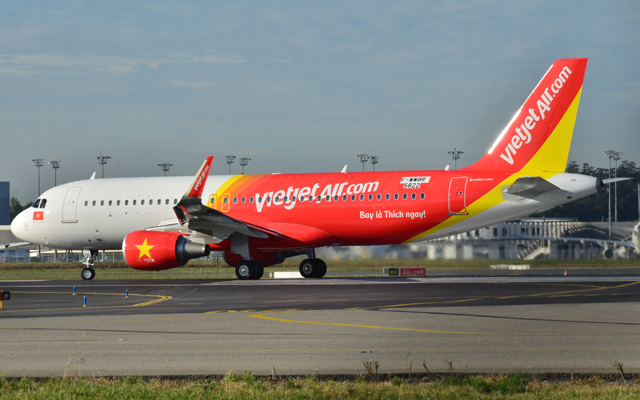
Vietjet will commence flights between Ho Chi Minh City (HCMC) and Jakarta on December 20.

Flights will depart HCMC at 20.40 and arrive in Jakarta at 23.40. The return flight will take off at 01.40 and land in HCMC at 04.40. The journey will take three hours.


AirAsia launches first route to India from Johor Bahru

Beginning November 28, AirAsia will fly five-times weekly – on Mondays, Tuesdays, Thursdays, Saturdays and Sundays – from Johor Bahru to Kolkata.

Flights will depart Johor Bahru at 21.30 and arrive in Kolkata at 23.10, while the return flight will depart Kolkata at 23.40 and arrive in Johor Bahru at 06.25.

In addition to this new international route, two domestic routes, Johor Bahru-Kuala Terengganu and Johor Bahru-Langkawi, were also added.


PAL to introduce Manila-Auckland flights

Philippine Airlines (PAL) will start thrice-weekly direct flights to Auckland on December 6.

On Wednesdays, Thursdays and Sundays, PR218 will depart Manila at 23.15 and arrive in Auckland 14.05 the following day. The return leg PR219 will depart Auckland every Friday, Saturday and Tuesday at 00.30, and arrive in Manila at 05.45.

The airline will be utilising twin-aisle dual-class A340s offering 254 seats, a 60 per cent increase from its single-aisle 156-seater A320s.

Travel time to Auckland will now be reduced from more than 12 hours to 10 hours. PAL currently operates flights to Auckland from Manila via Cairns, and will continue operating this flight until December 5. This will be suspended on December 6, in conjunction with the direct route.


Qatar Airways increases capacity on two routes

Qatar Airways will add a daily flight each to its Colombo and Dhaka routes on September 1.

Its Colombo service will be upped from four to five flights daily, just one month after the last frequency increase. The Dhaka service will also be increased from two to three flights per day.

The additional services will be utilising A320s that have 12 business class and 132 economy class seats, adding more than 1,000 seats to the current weekly capacity to and from both destinations.


Vietnam Airlines, Garuda Indonesia deepen partnership

Vietnam Airlines and Garuda Indonesia have signed an MoU to expand their existing codeshare agreement between Jakarta and Ho Chi Minh City – a route currently operated by the Vietnam Airlines – into the domestic services in Indonesia and Vietnam.

According to Pahala Mansury, president of Garuda Indonesia, the Indonesian flag carrier will now be able to sell Vietnam Airlines’ ticket from Jakarta to Ho Chi Minh City and on to Hanoi, and will serve Vietnam Airlines’ passengers between Jakarta and Bali.

Codesharing on the Jakarta-Surabaya sector is currently under discussion. The airlines are also studying the possibility of launching a joint venture to establish more flights between the two countries.


Malindo Air partners with ANA

Malindo Air has teamed up with All Nippon Airways (ANA) to offer passengers seamless travel with the convenience of a single reservation when travelling across both airlines’ network.

The partnership allows ANA passengers to tap into Malindo Air’s growing regional network out of its main hub in Kuala Lumpur International Airport (KLIA) which currently serves 46 cities across 16 countries. Meanwhile, ANA flies 87 international and 121 domestic routes through its hubs in Narita and Haneda.

ANA is the fifth addition to Malindo Air’s interline partners, after Turkish Airline, Qatar Airways, Etihad Airways and Oman Air.

Scowsill now leads AR and VR firm EON Reality

0
Scowsill

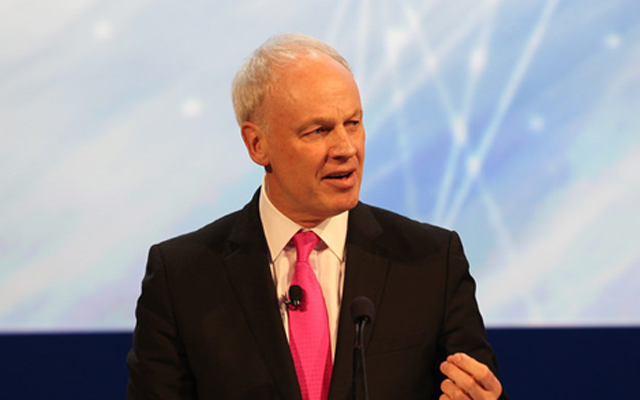
After recently concluding his six-year tenure as WTTC chief, David Scowsill has been appointed CEO of EON Reality, which provides augmented and virtual reality based knowledge transfer for industry and education.

He succeeds Mats Johansson, who will continue to serve on the board of directors and as president of EON Reality. Scowsill has also been appointed to the board.

Scowsill

Scowsill said he is joining EON Reality at “a critical stage, when the company is scaling rapidly, developing the technology platform and rolling out Interactive Digital Centers around the world”.

He most recently served as president and CEO of WTTC, where he doubled membership over the last five years, through an outreach to globally operating companies in Asia and bringing in a mix of online and technology businesses.

MakeMyTrip connects to Travelport

0

Indian OTA MakeMyTrip has signed an agreement with Travelport’s distributor for India, InterGlobe Technology Quotient (ITQ), for the use of its Travel Commerce Platform.

The agreement will see use of Travelport’s technology extended from the Ibibo Group, which MakeMyTrip acquired in January 2017, to the OTA’s other primary distribution channels starting 2H2017.

MakeMyTrip will get access to Travelport content and approximately 400 airlines, including the merchandised content of over half of these carriers such as fare families and ancillary products.

Travelport, which pioneered the inclusion of LCCs on its platform, went live with IndiGo in November 2016, now India’s largest passenger airline.

Seeing “enormous growth potential” in India, where air booking terms have grown 14 per cent and the GDS air market 11 per cent in 1H2017, Gordon Wilson, Travelport’s president and CEO, believes that securing a partnership with MakeMyTrip in the market will give “even further impetus to (the company’s) plans in the country”.

New Ramada in Phuket to bear Straits Chinese influence

0
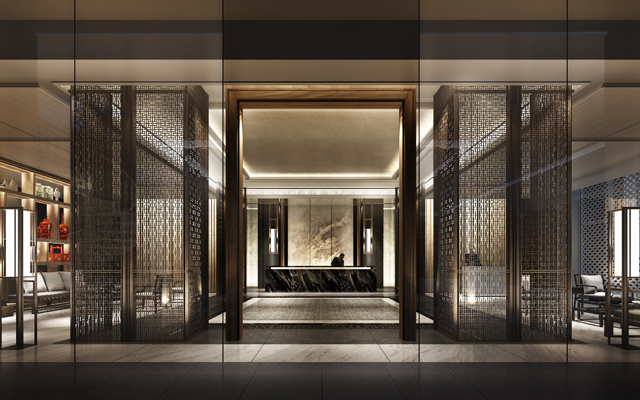
Artist impression of the Peranakan-inspired Ramada Plaza Chaofah Phuket

Wyndham Hotel Group will expand its Ramada brand in Thailand with the signing of Ramada Plaza Chaofah Phuket in a franchise deal with Southern Star Hotel, an affiliate of the CAS Group.

To be managed by Bangkok-based Kosmopolitan Hospitality, the 270-room hotel is scheduled to open in 2018 within the Muang Chaofah development, an “urban entertainment centre” expected to feature movie theatres, an international conference centre and retail outlets.

Artist impression of the Peranakan-inspired Ramada Plaza Chaofah Phuket

Ramada Plaza Chaofah will hark back to Phuket’s Peranakan culture, which had its beginnings in the 19th century tin-mining boom. The hotel will be located in Phuket’s Peranakan district with Old Phuket Town and Phuket Mining Museum within walking distance, according to a Wyndham statement.

Presently, plans are for the hotel to offer Thai-Nyonya styled cuisine in its all-day dining outlet and rooftop speciality restaurant, as well as a grand ballroom for up to 700 guests and fitness facilities.

There are 63 Ramada hotels currently operating across South-east Asia and the Pacific Rim.

Travellers more open to non-hotel stays in home continent: Agoda

0
Preference for different NHA types like B&Bs, private homes, guesthouses vary across markets

Travellers are more likely to opt for homestays when travelling close to home, the Agoda Travel & Tech Study on non-hotel accommodations (NHAs) has shown.

The report revealed that travellers from Indonesia (79 per cent), Singapore (71 per cent), the Philippines (82 per cent) and Thailand (80 per cent) will most likely consider booking homestays when travelling within Asia.

Preference for different NHA types like B&Bs, private homes, guesthouses vary across markets

Similarly, travellers from the UK (88 per cent), the US (84 per cent) and Australia (75 per cent) are most likely to book a privately-owned home within their home continent.

Reasons for opting for NHA vary across countries, Agoda further pointed out. Indonesians (55 per cent), Malaysians (54 per cent) and Filipinos (53 per cent) tend to book NHAs to accommodate families and large groups; while Singaporeans (57 per cent), Thais (54 per cent) and Australians (46 per cent) view NHAs as a less expensive option to a hotel room.

Chinese travellers, on the other hand, mostly look to NHAs for a more local travel experience (55 per cent).

Among non-hotel bookers, there is a clear trend in the most popular type of NHAs booked per market. B&Bs rank first for Filipino travellers, with 53 per cent of those surveyed having booked one in the past year. Private homes are among the favourites for travellers from Singapore (44 per cent), Malaysia (40 per cent) and Australia (38 per cent).

And among Indonesian (37 per cent, 36 per cent) and Thai (31 per cent, 32 per cent) travellers, Agoda observed a preference for villas and guesthouses.

Malaysian trade relentless in efforts to woo Chinese

0
Chinese arrivals set to hit three million this year

Malaysia is expected to hit its target of three million Chinese tourist arrivals this year, an increase from 2.1 million in 2016, a sentiment buoyed by visa relaxation, increased air connectivity and a series of in-market trade events.

Minister of tourism and culture, Mohamed Nazri Abdul Aziz, is confident that the target is within reach following the government’s introduction of the Electronic Travel Registration & Information (eNTRI) and e-visa facilities as well as improved air accessibility.

Chinese arrivals set to hit three million this year

This year alone, Malaysia Airlines has launched nine new routes to China, while AirAsia commenced thrice-weekly flights between Langkawi and Shenzhen in August and AirAsia X began daily Kuala Lumpur-Wuhan flights in March.

At press time, Malaysia enjoys 470 connections from China, the largest for countries in its mediumhaul network.

Meanwhile, the Malaysian Association of Tour and Travel Agents (MATTA) will collaborate with Malaysia-China Chamber of Commerce to participate in the 2017 Guangdong 21st Century Maritime Silk Road International Expo at Dongguan next month. MATTA is providing free booths, accommodation and transportation at the expo for its inbound members participating in the show.

MATTA president, KL Tan, said: “The expo is another potential platform for our members to create business opportunities and to increase arrivals from China to Malaysia.”

In 1H2018, MATTA will plan a sales mission to Nanning, Guilin, Shenzhen and Guangzhou, following an earlier sales mission collaboration with Tourism Malaysia earlier this year in Shenzhen and Guangzhou.

Tan shared: “These B2B sessions will be open to MATTA members as well as hoteliers and local attractions. The roadshows are a cost-effective manner for small and big players to join and build their contacts, expand market share and ultimately draw more arrivals into Malaysia.”

Malaysian Inbound Travel Association (MITA) is also looking at conducting seminars on the needs of the Chinese traveller, targeted at inbound agents seeking to expand business by venturing into the Chinese market, revealed MITA president, Uzaidi Udanis.

He added: “We also plan to offer basic Mandarin classes for the travel trade frontliners, which may include personnel from the immigration department, tourist police and taxi drivers.”

Despite surging arrivals, tepid demand for Japan’s ryokans

0
International tourists not warming up to ryokans

Japan’s ryokans are struggling to attract international tourists even as the country welcomes a record 2.3 million visitors in June 2017, up 18.2 per cent year-on-year.

While the hotel occupancy rate reached 75 per cent on average in 2015, up 12 per cent since 2011, the ryokan occupancy rate rose only two per cent to reach 37 per cent, according to the Japan Tourism Agency (JTA).

International tourists not warming up to ryokans

Hideyuki Sato, managing director of the Japan Ryokan and Hotel Association (JRHA), said: “There is little change in ryokan use nationwide because they are mostly in Japan’s regions and countryside, where tourists are not visiting. Japan’s regional charms are not well-known.”

According to JTA, nearly half of tourist stays in 2015 were concentrated in Tokyo, Kyoto and Osaka, which together with Hiroshima are referred to as the Golden Route.

Moreover, tourists now have greater choice of accommodation and cheaper options with the rise of minpaku and Airbnb in the country.

To boost ryokan occupancy, JTA and JRHA are jointly promoting regional areas, while JRHA is educating members about government grants for ryokan owners to install Wi-Fi, modernise facilities and market in other languages.

Yoshi Ogata, owner of Gem Japan Tours, which uses only countryside ryokans, said some property owners have made adjustments, such as adding western-style beds and chairs, to attract more tourists.

Tara Kennaway, regional product manager Asia at Intrepid Travel, said: “Our travellers generally enjoy the authentic experience of staying in traditional-style accommodation. However, some older travellers or those with mobility issues may prefer to have a western-style room with beds and chairs…. Some also prefer to have private bathroom facilities, which not all ryokans offer.”