TTG Asia
Asia/Singapore Friday, 3rd April 2026
Page 1426

Data is new oil in travel, but extracting its value still confounds agents

0
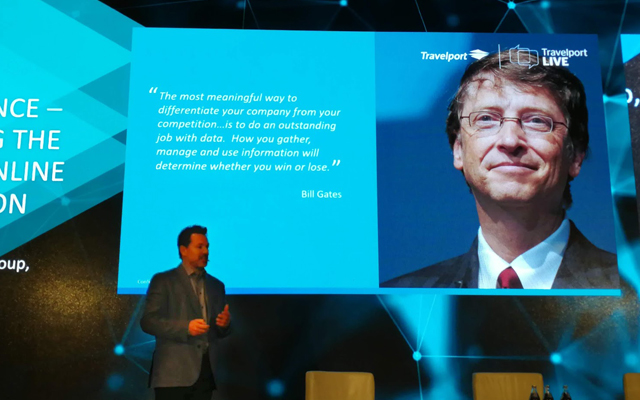
At Travelport Live, Brown quotes Bill Gates on the importance of data

Data in the 21st century, like oil in the 18th century, will offer huge rewards for those who see its fundamental value and learn to extract it. In travel, data has the transformative potential to drive growth and change in the sector.

“Data is the new oil in travel. With data explosion, we know so much in the last few years than the entire previous history of the human race,” said Mike Croucher, chief architect, Travelport, speaking at Travelport Live 2018, which took place in Bangkok last week.

The importance of data in this digital age was continually underscored throughout the two-day conference, with Travelport executives repeatedly urging travel agents to be more proactive in adopting technology into their business, including data-centric strategies.
At Travelport Live, Brown quotes Bill Gates on the importance of data

“It’s no longer about having a technology strategy but data strategy. If you don’t have a data strategy, you won’t be here long,” stressed Rob Brown, group vice president and managing director – OTA at Travelport.

Travelport’s business intelligence manager Matthew Webb also advised travel agencies to adopt “customer data first” strategies. In an age where travellers increasingly value experiences, having data will enable companies to differentiate themselves through personalisation and in turn earn loyalty, he explained.

Major OTA players like Expedia has already invested in data and the extraction of it for market intelligence. “We have invested a lot on data to make sure we are getting one source of truth, and that we’re talking in the same language,” said Expedia’s vice president partner services Asia-Pacific, James Marshall.

B2B travel consolidator Via.com also understands the importance of data mining as a backbone of the company’s growth. “Without data, we’re nothing,” noted product manager Syed Faizan Admed, as data is used to understand behaviour of agents, airline performance, market trends, among others.

Like oil, data needs refining before its true value can be unlocked. But for many agents, especially smaller players in the sector, what’s standing in their way is not their lack of appreciation of data as a valuable commodity but the costs of turning information into intelligence.

Mila B Suarez, executive vice-president, Classic Travelhaus, said her company has a “data strategy somewhat”. But automating the collection of data presents the greatest challenge for the Philippine outbound agency, and while there are solutions available on the market their costs are often prohibitive, she remarked.

Like Suarez, Kelli Hampstead, head of travel technology at Travel Beyond Group Australia, shared that the TMC has not been able to leverage data fully and that finding a most suitable solution to harness data are challenges faced.

And there’s also a dark side to data. Unbalanced data-mining can bring a whole set of problems – privacy issues as well as discrimination when the information is in the hands of a few people, industry members pointed out.

The EU’s new privacy law, which restricts how data is collected and handled, is a reflection of the morality issues surrounding the harnessing of data from customers.

“It’s a fine line,” Travelport’s Brown conceded.
Fatal boat disaster in Phuket highlights safety concerns

0
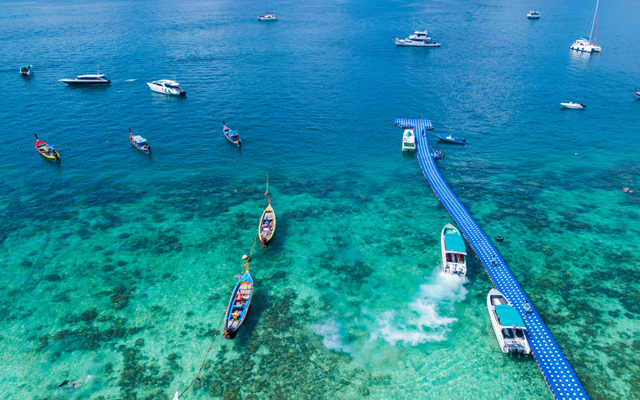
The cause of the accident off the coast of Phuket's Coral Island is still yet to be determined

While Thailand’s northernmost district of Mae Sai came under global attention for the ongoing rescue of 12 schoolboys and their coach trapped in a cave, Phuket in the south bore witness to a fatal boat disaster in the Andaman Sea.

The Phoenix, carrying 93 Chinese tourists and 12 Thai crew and tour guides, on Thursday capsized in rough waters off Koh Hei (Coral Island), south of Phuket.

The cause of the accident off the coast of Phuket’s Coral Island is still yet to be determined

So far, 49 people have been rescued, while 42 are confirmed dead and another 14 still missing, according to reports.

Officials have been ordered to start scouring the beaches at nearby islands and as far away as Koh Lanta and even Trang for bodies from the Phoenix boat disaster.

Questions have surfaced as to why the boat was at sea during bad weather, with both the Chinese and Thai governments pressing for a quick investigation of the cause of the accident.

Tourism Authority of Thailand (TAT) governor Yuthasak Supasorn issued a statement about the boat incidents in Phuket, saying that TAT would heighten safety measures for Chinese tourists in Thailand to prevent such events from occurring again in the future.

What To Do In Cambodia can help hotels to sell activities

0
Combre: allowing more local businesses to benefit directly from tourism

Ticket sales for activities and tours in Cambodia have received a transparency and visibility boost, thanks to the launch of a new software programme that allows hotels to sell activities.

To Do In Cambodia software developer, Stéphane Combre, was inspired to launch the project after noting guests at his hotel, The 252 in Phnom Penh, after were checking in for longer and seeking more things to do.

Hotels sign up to the platform, receiving their own page that runs in tandem with their website. A range of activities, entertainment and wellness options are selected by the hotel, which they can offer to guests through this page.

Combre: allowing more local businesses to benefit directly from tourism

These range from apsara performances and cookery classes to tours, spas and transport. Each activity is listed with a photograph, short description and set price, and can be booked online.

Since launching in March, about 100 leading hotels in Phnom Penh and Siem Reap have signed up to the platform, with over 1,000 activities, entertainment options, spa treatments and transport route listings offered by September. Signing up is free for hotels, with businesses paying a one-off fee of US$50.

The To Do Software aims to provide a service where visitors can be sure they are paying the right price, while also offering a platform for hotels to sell tours and activities and drive more customers towards locally-run businesses.

Said Combre: “Everyone benefits, from guests to hotel staff and managers, as well as the small companies offering new activities and adventures to tourists.”

He said: “The goal is to be transformative so that more Cambodian businesses can directly benefit from the influx of tourists to Cambodia. The idea is essentially that the new software is the DNA of a progressive, responsible and equitable tourism industry, which I believe is the model that will distinguish Cambodia regionally and globally.”

As well as providing transparency, To Do In Cambodia cuts down on the time hotel staff spend explaining activities available to guests and then making reservations.

The software also gives real-time tallies on earnings as well as which activities and services are popular with their guests. It also gives tourists the option to book activities before landing in the country.

The software’s success has already led to the To Do In Cambodia team looking to expand into other tourist hubs in Cambodia, such as Battambang, Sihanoukville and Kampot. And Combre hopes to roll out across other Southeast Asian countries in the future, such as Vietnam.

Airbnb teams up with Thai government agency to onboard local hosts

0

Airbnb has sealed its first partnership with a government agency in Thailand to train local provincial officials on hospitality, hosting and compliance standards, with a view to onboard existing homestays onto the global homesharing platform.

Joining forces with the Thai Ministry of Interior’s Department of Local Administration (DLA) as part of the Empowering Local Tourism Entrepreneurs initiative, both partners agree to conduct training sessions focused on sharing information about Airbnb, and how to use the platform to distribute tourism income to local communities across Thailand.

Both Airbnb and the Thai government aim to better spread tourism dollars and improve digital literacy across local communities in the country

Moreover, they will work to equip officials with the digital literacy skills to help locals create and manage their own listings on the platform, as well as build a local community of hosts in each province who can support and learn from each other.

Suttipong Juljarern, DLA director-general, Ministry of Interior, said: “Digital technology fosters real-time audiovisual communication and connections between local communities and guests around the world, and will surely encourage economic development in rural areas. This will help us achieve the UN and the Royal Thai Government’s goals to alleviate poverty, as this additional stream of revenue for locals means the improvement of their living standards in all respects.”

Mich Goh, Airbnb head of public policy for South-east Asia, added: “By promoting digital inclusion and the effective use of our platform to attract inbound guests domestically and abroad, we will help drive economic growth in areas that have not traditionally benefited from tourism.”

Commented Mike Orgill, Airbnb director of public policy for Asia-Pacific: “Through this partnership, we will empower the muang rong (secondary cities), the thesaban (municipalities) and the tambon (sub-districts) to transform themselves into communities of local hospitality entrepreneurs, which are an integral part of Thailand’s booming tourism industry. This new generation of local tourism entrepreneurs is something envisioned by nations around the globe as a new driving force of tourism.”

The launch of the initiative also saw a country-first joint training workshop conducted by three Airbnb Superhosts and Community Leaders, and guest speakers from the Ministry of Interior’s Department of Provincial Administration and the Thai Immigration Bureau.

Over 100 Thai officials attended the workshop including representatives from the Provincial Office for Local Administrations, and selected local administrative organisations in the tourism sector across 11 provinces. The provinces are: Chiang Mai, Chonburi, Chiang Rai, Nakhon Ratchasima, Buriram, Ayutthaya, Petchaburi, Songkhla, Satun, Ubon Ratchathani and Sukhothai.

Suttipong remarked: “The training workshop will help promote development in local areas by sustainably building accommodation capacity, and upskilling and empowering officials to become professional community managers. It also prepares locals to be ready to host and

New general manager for Dorsett Singapore

0

Jessie Khoo-Gan has been appointed general manager of Dorsett Singapore, a midscale hotel with 285 rooms in Chinatown.

Bringing more than 25 years of experience in the hospitality industry, Khoo-Gan was most recently the executive assistant manager, sales & marketing and rooms of One Farrer Hotel & Spa.

She has also worked for international hotel brands including Pan Pacific Hotels Group, Fairmont Raffles Hotels International, Shangri-La Hotel, Singapore and Pudong Shangri-La.

Resorts World uses IP to pull in international Halloween fans

0

Resorts World Sentosa’s (RWS) marquee event, Halloween Horror Nights, will this year feature its first haunted house with an international intellectual property collaboration.

The eighth edition sees the theme park tie-up with Netflix to create a Stranger Things-themed haunted house, which will feature recreated scenes from the television series.

The Stranger Things tie-in is expected to help attract more international and regional visitors to the event

Having this content from an internationally renowned show will help the event attract more global and regional visitors who are fans of the series and horror, explained Markham Gannon, assistant director, creative, RWS.

He described: “Halloween Horror Nights is a huge attraction for guests and visitors, and it forces us to raise the bar every year. It’s a huge coup for us.”

Content from Stranger Things will also be adopted at Halloween Horror Nights in Universal Studios Orlando and Hollywood, but Universal Studios Singapore’s will have its “own unique flair”, revealed Gannon.

One of the characters from the Killuminati, Lu Xi Fa

Additionally, RWS has extended its marketing efforts in the region to include social media engagements, collaborations with travel partners and digital marketing channels to target digitally engaged young adults. Key markets other than Singapore include China, Indonesia, Malaysia, Thailand and the Philippines.

Gannon added that this collaboration is also a way of reaching out to “a new breed” of younger audiences, who can now visit the event without their parents.

Besides the Stranger Things content, Halloween Horror Nights 8 will also bring back a showcase of Asian horror legends to appeal to South-east Asian visitors, two Western-themed scare zones and three live shows – including a parody of TED Talks, called DEAD Talks.

Emirates incorporates VR into digital booking experience

0
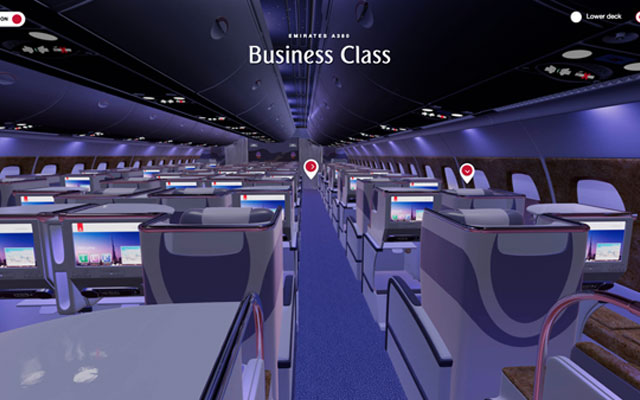
Emirates' business class

Emirates has introduced 3D seat models on its website, becoming the first airline to incorporate web virtual reality (VR) technology into its digital platform.

The visualisation engine displays a 3D 360-degree view of the Emirates’ aircraft interior, giving customers a chance to explore their seats, cabin and onboard products.

Emirates’ business class

The experience is now available for the three-class Emirates A380 but will soon include renderings of Emirates’ entire fleet comprising all configurations of the A380 and Boeing 777 aircraft.

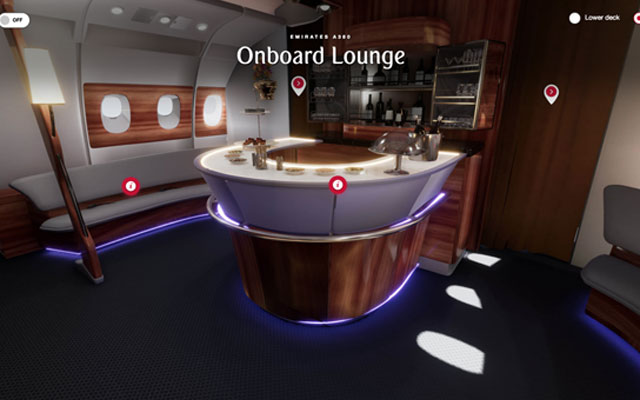
Using navigational hotspots, users can navigate through the economy, business and first class cabins, as well as the iconic onboard lounge and shower spa on the Emirates A380.

Emirates’ onboard lounge

Users can enjoy hands-free cabin navigation and seat selection by using any VR headset like Google Cardboard. This technology is compatible with all devices without the need for external applications or plugins.

The 3D seat models were created in partnership with Renacen.

Marco Polo Hotels names Helen Tan hotel manager for HK properties

0

Marco Polo Hotels – Hong Kong has appointed Helen Tan as hotel manager of its three Hong Kong properties: Marco Polo Hongkong Hotel, Prince Hotel and Gateway Hotel.

In her new role, Tan will be assisting the general manager in supervising the operations departments of all three properties and managing their day-to-day operations.

She was most recently with Marriott International as the pre-opening executive assistant manager – F&B of The Sanya Edition in China.

Tan brings more than 25 years of knowledge and hospitality industry experience to the table. She has worked with several international brands, including Marina Bay Sands, Shangri-La Hotels and Resorts, InterContinental Hotels & Resorts and The Ritz-Carlton Millennia Singapore.

Knowing the rules of the road

0
Arrow indicating side road in mountain landscape

Brought to you by Avis

In our last post, we shared that going on a self-drive holiday lets one get off-the-beaten path and see the world on one’s own terms; inspiring the desire for adventure and autonomy.

With more than 5,500 locations in over 170 countries, it is easy to pick up an Avis car and embark on a road journey to embrace more of life’s exploits.

Driving from place to place in a foreign land to uncover the gems of the country is a fundamental part of a self-drive holiday. To ensure that the holiday is a fun and rewarding one, it is important to understand that every country is different and has its own rules of the road.

To help you and your customers appreciate the country’s “driver culture”, spend a moment to unlock Avis’ top-line road rules in different parts of the world**. Knowing the key rubrics can simplify the journey, reduce the stress and anxieties, while leaving more time to take in the sights and sounds of the foreign land.

Did you know that in Bulgaria, parking is only on the left side of the road on one-way streets?

While in Germany, there are no tolls to pay on the Autobahns (highways/expressways). And contrary to common belief (joke or otherwise!), there are speed limits on some German autobahns!

When driving in Norway, it is important to note that vehicles approaching an intersection from the right have the right of way even if it is entering from a small road onto a major thoroughfare. There are however, exceptions to this rule and these are indicated with appropriate traffic signs on both the small roads (stop signs) and large roads (a yellow diamond-shaped sign).


There are historical areas in Italy in which one cannot drive. Look out for signs that read “Zona Traffico Limitato” (Limited Traffic Zones). And like they say, when in Rome, do as the Romans do!

Interestingly in Romania, it is against the law to drive an excessively dirty car! This can result in an on-the-spot-fine. In addition, any person who gets out of the car to walk on the road must wear a reflective jacket, day or night.

America is full of Toll Roads, also known as Turnpikes. Always set aside spare change in the car as not all payment booths accept Debit and Credit cards.


In Israel, children under 13 years old are not allowed to sit in the front of the car… and the STOP sign is denoted by a red octagon with a white hand.


In some countries, we drive on the left side of the road and in others, we drive on the right side… so what does driving on the left and on the right mean? The terms Right-hand Drive (RHD) and Left-hand Drive (LHD) can be rather confusing. In brief, a RHD vehicle drives on the LEFT hand side of the road, while a LHD vehicle drives on the RIGHT hand side of the road. So who is right and who is wrong?

Thus, in Australia and New Zealand, as in Hong Kong, India, Malaysia and Singapore (where their British colonial history probably led to British driving rules being adopted in these countries), one drives on the left; hence, it means that the driver’s seat is on the right side of the car (i.e. RHD vehicle) – and that implies that the centre line is always on the right or on the driver’s side of the car.

It probably comes as no surprise to learn that all countries have their own rules, regulations and laws. There may be many, which are similar to and applicable in several countries – drink-driving, mobile phone usage, and right-of-way at pedestrian crossings and for animals…


But like everything else, a little homework can go a long way to help avoid potential bumps on the road; and it pays to ask questions when in doubt!

The open road lies ahead… so, unlock the world of Avis for your customers here, go through our Road Rules and have your customers take on a road trip to discover more of Planet Earth!

Safe driving!

**These are road rules put together to help bring awareness of different driving laws in foreign countries. These rules are to be used only as a guide. Please be aware that rules are subject to change in each country and the country’s laws prevail. It is always best to verify directly with the destination country’s traffic authority or ask an Avis representative if any queries arise.


About Avis


Avis Car Rental and its subsidiaries operate one of the world’s best-known car rental brands with approximately 5,500 locations in more than 170 countries. Avis has a long history of innovation in the car rental industry and is one of the world’s top brands for customer loyalty.

(Photos: Avis, Pixabay)

Giving Pattaya a second chance

0

A bad reputation is hard to shake. Just look at Pattaya. Owing to its notoriety as the Sin City, what comes to mind when Pattaya is mentioned often doesn’t veer far from red-light districts, drunken parties or dirty beaches. Its image as a seedy destination is what made many travel buyers hesitant to sell and promote this destination to their clients.

But is this assessment of Pattaya still valid, I wondered, during my visit to the city last month to attend Thailand Travel Mart Plus (TTM+). The Tourism Authority of Thailand (TAT), as TTM+ organiser, was keen to show the international travel community the ‘new’ Pattaya by hosting its annual tradeshow in the Ocean Marina Yacht Club – a strategic move to not only dissociate Pattaya from its sleazy image but to also showcase it as a destination for yacht tourism, luxury and romance.

Perceptions of Pattaya from international buyers attending TTM+ were decidedly more mixed though; some were keen to include the city as a stop in an eastern Thailand itinerary while it remains a strictly no-go zone for others.

I too used to share the perception of Pattaya as one raucous party town, but recent visits to this seaside city as well as conversations with members of the local trade, many of whom are residents of Pattaya, are convincing me to think otherwise.

“It’s no longer fair to associate Pattaya as just a sex tourism destination. The ‘nasty’ image is no longer apt,” said Pathira Nakngam Riley, director of sales & marketing at InterContinental Pattaya Resort, pointing to the massive infrastructure improvements that have been poured into Pattaya, stepping up the pace of gentrification in the inner city and attracting a wider demographics.

Indeed, Pattaya has been morphing into a cosmopolitan city along the coast, with a new crop of lifestyle attractions – think water parks, trick-eye museums and zipline canopy tours – offering a wider selection of things to do, not just for single males but also for families, couples and groups of friends. International and Thai hotel brands like Mövenpick, Renaissance and X2 have sprung up in recent years, especially in the southern Jomtien district.

Granted that the unsavoury part of Pattaya still exists, but most visitors won’t see it unless they specifically go looking for it – just like in most cities in the world. On the streets nowadays, visitors are more likely to see Chinese, Indian and Russian tourists, many of whom come as families with kids in tow.

It is this family-friendly image of Pattaya that TAT and the local trade want visitors to associate the place as. Said Pathira: “We cannot change the history of Pattaya but we can certainly change travellers’ impressions (of the city).”

However, cleaning up Pattaya’s sleazy image is a major undertaking. Its bad reputation wasn’t formed in one day, and clearly it will take time to convince visitors of its family-friendly image.

That said, Pattaya’s historical baggage should not be a life sentence. The much-maligned city has shown determination in wanting to rise from the shadows of its unsavoury past, and for its positive efforts we should give it an opportunity to turn over a new leaf. The spirit of travel is very much about keeping an open mind and heart, so why not give Pattaya a second chance.