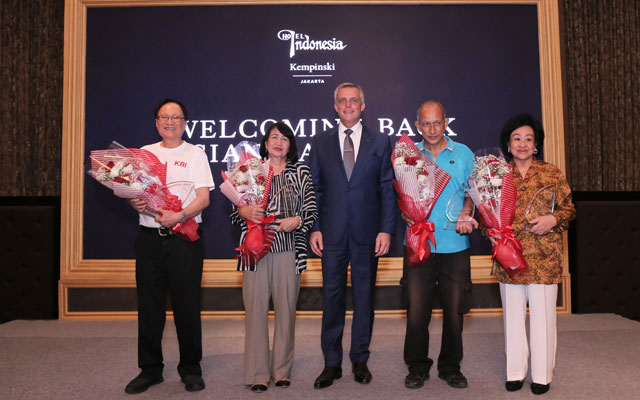
Foto 1; Legendary athletes (left to right) Tan Joe Hok - badminton, Lany Kaligis - tennis, Yustedjo Tarik - tennis, Lanny Gumulja - platform diving pictured together with General Manager Hotel Indonesia Kempinski Jakarta, Sjefke Jansen (middle)
With the Asian Games returning to Indonesia after five decades, the hotel that hosted the game delegates in 1962 is commemorating the event with the launch of an exhibition.
Hotel Indonesia opened in Jakarta in 1962 as the first international-standard hotel in South-east Asia, mere days before the Asian Games kicked off.
From left: Legendary athletes Tan Joe Hok – badminton, Lany Kaligis – tennis, Yustedjo Tarik – tennis, Lanny Gumulja – platform diving; pictured together with the general manager of Hotel Indonesia Kempinski Jakarta, Sjefke Jansen (middle)
Fifty-six years later, Hotel Indonesia, now a Kempinski, is staging a sports and heritage photo exhibition during the Asian Games, which takes place from August 18 to September 2 in Jakarta and Palembang (South Sumatra).
On display at the main lobby and Nirwana Lounge are medals and memorabilia of Indonesian legendary sports champions, traditional clothes of Palembang and historic photos, paintings, chinaware of the hotel.
The exhibition was launched yesterday, graced by several Indonesia’s sports living legends including Tan Joe Hok, a badminton athlete who won three medals at Asian Games 1962; Irma Hadisurya, the first Miss Indonesia (crowned in 1969); and Arifin Pasaribu, former public relations of Hotel Indonesia (1963-1988), who later became the director of the Indonesia Tourism Promotion Office in London.
Sjefke Jansen, general manager of Hotel Indonesia Kempinski Jakarta, commented: “The series of events is our way to welcome the Asian Games back to Indonesia, as we were a part of this international event (then).”
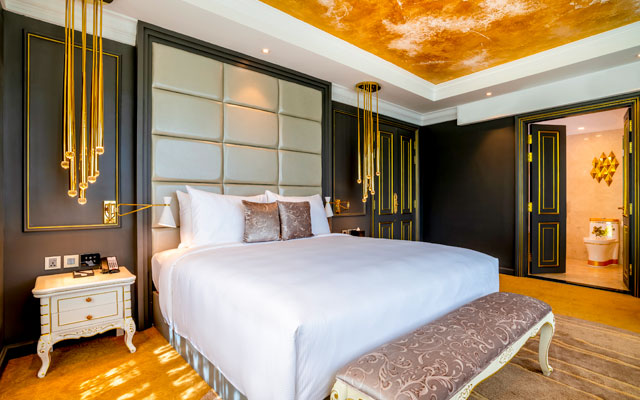
Grand Mercure Yangon Golden Empire, Myanmar
The first Grand Mercure in Myanmar, which overlooks the Schwedagon Pagoda, boasts 175 guest rooms and suites designed by local artist Pyar Dade, and sizes from 30m2 for superior rooms up to the 340m2 two-bedroom suites.
Amenities on-site include a restaurant, deli, pool bar, two state-of-the-art ballrooms that can host up to 400 guests with a large pre-event function area, and seven meeting rooms. The wellness area comprises an outdoor swimming pool, children’s pool and a fitness centre. There is also a spa complete with open-air Jacuzzi, sauna and steam bath, while a nearby golf course completes the suite of leisure facilities.
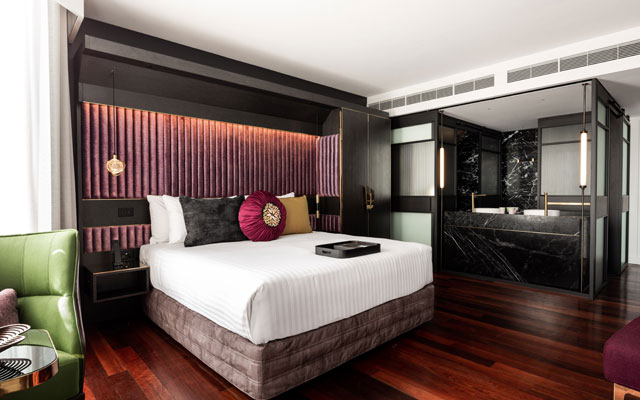
QT Perth, Australia
QT Hotels & Resorts’ first property on Australia’s West Coast is located on the doorstep of the Murray Street Mall and less than a minute walk to Perth’s shopping hub. The 18-storey hotel boasts 184 guestrooms, and facilities include a bar & grill restaurant concept, cafe and another bar on the rooftop which doubles up as a function venue. There are seven conference rooms, which can accommodate up to 315 people.
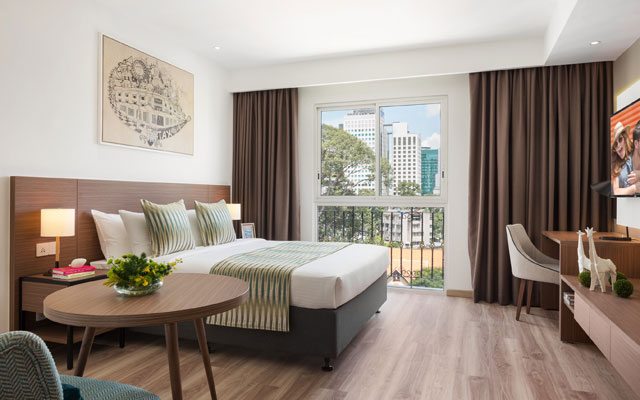
Citadines Regency Saigon, Vietnam
The serviced residence in Ho Chi Minh City’s District 3 offers 229 keys from classic rooms to one-bedroom apartments, some of which are connected. Facilities include a swimming pool, fitness centre, children’s wading pool, sauna room, café, restaurant and launderette. Citadines Regency Saigon is also within walking distance to tourist attractions such as the Reunification Palace, Notre Dame Cathedral and War Remnants Museum.
Dorsett Hartamas Kuala Lumpur, Malaysia
Located in the township of Hartamas, the four-star Dorsett Hartamas Kuala Lumpur boasts 290 guestrooms and suites. Facilities include all-day dining space Table Talk, fitness studio, kids’ play pen, and rooftop sky pool on level 27 (opening at a later stage). There are also three multifunctional venues which can take 40 to 120 people in a theatre set-up.
This article is taken from IDeaS eBook Revenue Perspectives: Quick Hits for Strategic Revenue Insights. Vol. 3 Enhancing Non-Room Revenue. Download a copy here.
Hotel revenue management today has a rather established set of tools, business processes, and expertise to support effective room revenue optimization. Revenue Managers are generally comfortable with the theory and technology in rooms revenue management for their strategic planning and day-to-day decisions. However, when it comes to managing meetings, events and other ancillary revenue streams which for most hotels makes up 40-60% of their revenue, the science of revenue management is still at its infancy.
With the advent of big data and new analytical technologies the current data-driven approach to optimizing revenue performance is no longer sufficient. Thus we hear many hotels beginning to talk about the emerging approach of the future, Total Revenue Performance (TRP). TRP builds upon rooms revenue management to add automated revenue management capabilities to other vital hotel revenue streams.
Total Revenue Performance Approach Introduces New Complexities
Total Revenue Performance has always been the aspirational vision for hotels worldwide and it is becoming increasingly within reach for hotels, beginning with meetings and events revenue management. Whilst there are several areas of overlap between guest rooms and meetings and events revenue management, there are many areas which are different. Examples include:
The mutual impact of the demand that exists for both guest rooms and function space on one another
There are many revenue streams with different levels of profitability
Function rooms accommodating different capacities in different set-up styles
Demand and Wash expectations are difficult to predict
Upgrades are not as desirable as they are in guest room bookings (nobody wants to have an intimate boardroom meeting in a ballroom)
Multiple internal teams are involved in the management of this inventory
Each of these items brings some key considerations for expanding your revenue management practice into function space revenue management.
Getting Started in Function Space Revenue Management
When getting started with function space revenue management, it is recommended that you take a holistic look at your team alignment, business processes, and technology requirements. Here is a quick list of questions to get your hotel thinking about function space revenue management:
Team Alignment:
Are your cross-functional teams of sales, catering, and revenue management aligned and working effectively?
What educational and training support is needed to ensure that your teams successfully manage your function space inventory in a scientific and methodological way?
Business Processes:
Do you prefer establishing sales and catering management processes into your revenue management team or expanding your revenue management practices into your salesn and catering team? How could you accomplish both of these?
Do you have effective market segmentation for meetings and events and is it being used consistently?
Are you regularly and reliably updating your systems as booking status changes?
Tools and Technology:
What tools, technology, and systems will be required to support my teams?
How will a new tool fit into the day-to-day operation and decision making?
Such questions are critical to answer for revenue managers, general managers, and sales and marketing teams to monitor all revenue information from a shared and centralized discipline. This perspective allows these teams to coalesce their efforts around a single, common goal: driving better revenue performance for the organization as a whole.
Interested in joining a free workshop on this topic? You can even bring your own data to work on during the workshop so that you can take home an action plan to start your meetings & events revenue journey!
The latest announcement brings relief to five-star hotels in Colombo and travel agents
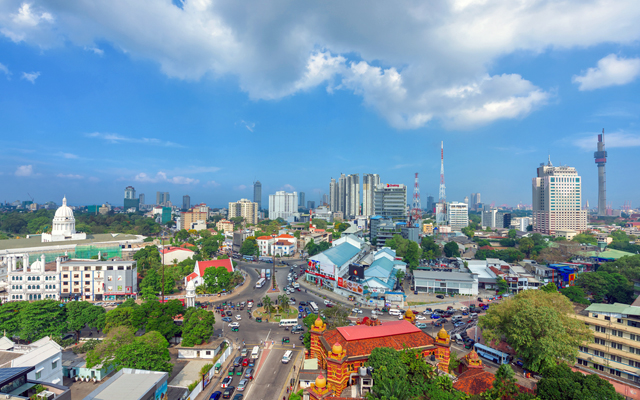
The Sri Lankan government has announced the removal of a nine-year-old minimum room rates scheme for hotels in Colombo, a move that is expected to be boon for five-star hoteliers in the capital city.
The scheme was unpopular with five-star hotels, which believed their competitiveness was diminished as a result, but found favour among lower hotel categories.
The latest announcement has brought relief to five-star hotels in Colombo and travel agents
Minimum room rates of US$125++(or around US$185, inclusive of taxes) for five-star hotels were enforced in late 2009 at the end of Sri Lanka’s bloody internal conflict, in anticipation of increasing tourist arrivals and following complaints by small hotels of price cutting by five-star hotels.
For four-star hotels the minimum room rate was US$95++ and three-star US$85++.
The scheme was a fitting move at the time it was imposed as room rates then were as low as US$40, said Hiran Cooray, a veteran hotelier whose family owns the Jetwing Hotels chain.
“But it’s high time this is removed as market forces should now determine prices,” he noted.
On Monday, chairman of Sri Lanka Tourism Development Authority (SLTDA) Kavan Ratnayaka announced the removal of the minimum room rates to “allow market forces to decide the room rates rather than (have) the SLTDA dictate terms to them”.
Harith Perera, president of the Sri Lanka Association of Inbound Tour Operators (SLAITO), welcomed the move, saying “we have always said (minimum rates) won’t work and were opposed to it.”
According to a spokesperson for the Sri Lanka Convention Bureau (SLCB), minimum rates also hindered progress in the meetings and business events sector as they were unable to get competitive rates from city hotels for delegates.
“Now with the freedom for the market to dictate rates, our MICE market can be more competitive,” she added.
Two years ago, tourism minister John Amaratunga announced that the scheme would be abolished in 2018. While this was not made official until now, some industry players told TTG Asia that the government has been lax about enforcing minimum rates in recent months.
The SLCB spokesperson shared that the gazette notification enforcing the minimum rates was allowed to lapse on March 31 this year and was not renewed.
In fact, she said the SLCB had sought and won government approval for special five-star rates of US$100++ for MICE travellers and US$90 ++ for four-star accommodation.
A Colombo hotel manager added that for the past few months, city hotels have been offering their own rates. “The authorities have not been strict on the minimum rates.”
Meanwhile, managers at two three-star hotels in Colombo, who declined to be named, expressed fears of an ensuing price war due to oversupply in the city.
Over past two years, more than 600 new rooms have been injected into Colombo’s supply while several hotels including the Sheraton and Grand Hyatt are due to open in the next two years.
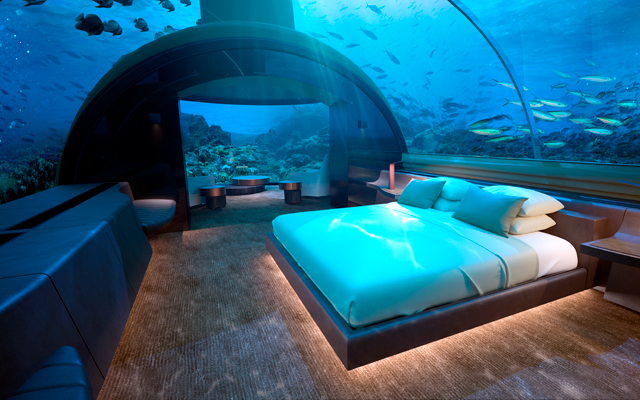
The undersea area of the two-level villa is a full suite
Conrad Maldives Rangali Island is now taking bookings for what is believed to be the world’s first undersea villa for stays starting in November.
The villa, named The Muraka (coral in Dhivehi), is a step ahead of other such accommodations – say Atlantis The Palm in Dubai, which is an aquarium-style underwater room, or The Manta Resort in Zanzibar, which features just a double-bed in the undersea level – in that its undersea area is a 105m2 suite featuring a king-size bedroom, living area, bathroom and spiral staircase that leads to the upper level.
The undersea area of the two-level villa is a full suite
The upper level, which is above-sea, features two additional bedrooms and bathrooms, powder room, gym, butler’s quarter, private security quarters, integrated living room, kitchen, bar and dining, and an infinity pool. The entire two-level residence is 650m2 in area and can accommodate nine guests. It costs US$15 million to develop.
Hilton’s APAC vice president for operations, luxury and lifestyle, Daniel Welk, would not give a rate although there were reports of a night costing as deep – we mean steep – as US$50,000.
“It’s about personalisation and hyper exclusivity, not about price but an experience that cannot be replicated. The rate really depends on the depth of the personalisation,” said Welk, in an interview at ILTM Asia Pacific in Singapore recently.
He added: “We’ve been humbled by the reaction to The Muraka. We’re seeing a lot of enquiries from the resort’s repeat guests and, outside of that, from people all around the world who love the Maldives and return year after year. For them, especially the millennials and instagramers, it’s something new, kind of bragging rights but I believe this isn’t a gimmick. The thought of sleeping under the sea is quite revolutionary. This isn’t an aquarium. You’re fully submersed in the ocean, with 180-degree panoramic views of the ocean.”
The villa is about 650m offshore and seven metres deep, where visibility “is typically good”, he said.
Architect and designer Ahmed Saleem, director of Crown Company, a local Maldivian firm that owns the hotel, envisioned The Muraka 13 years ago when he built Ithaa Undersea Restaurant at Conrad Rangali, according to Welk.
“We’re fortunate to have an owner who is as pioneering as Crown, whom we’ve worked with for 20 years. We were the first international brand to enter the Maldives, first as Hilton Rangali, which became Conrad Rangali, the first hotel to build overwater on stilts, and the first to launch the undersea restaurant 13 years ago,” he said.
“Ithaa did wonders for the Maldives as a destination and we’re continuing the spirit of revolutionising the travel experience with The Muraka.”
The first undersea residence, along with the first ice rink in the Maldives by Jumeirah Vittaveli and the first undersea art museum by Fairmont Maldives Sirru Fen Fushi, are among a new wave of innovations introduced by luxury chains in the Maldives, although the fate of Fairmont’s undersea sculptures is still uncertain at press time.
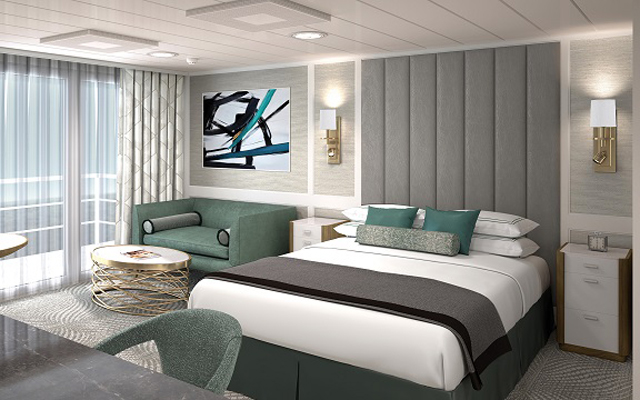
Rendering of the Penthouse Suite in the reimagined Regatta-class ships
Oceania Cruises has unveiled OceaniaNEXT, its most extensive product and service enhancement initiative to-date, which will kick off with a US$100 million upgrade of its four 684-guest ships, Regatta, Insignia, Sirena and Nautica.
The upgrades will result in 342 new suites and staterooms in each ship, as well as new décor in the restaurants, lounges and bars, inspired by the line’s 450 ports of call.
Rendering of the Penthouse Suite in the reimagined Regatta-class ships
Insignia will be the first to debut on December 7, followed by Sirena in May 2019, Regatta in September 2019 and Nautica in June 2020.
“OceaniaNEXT will be the most extensive and comprehensive suite of product and guest service enhancements that we have ever undertaken,” said Bob Binder, president and CEO of Oceania Cruises.
“The staterooms and suites are the most dramatic of the transformation,” said Yohandel Ruiz, founding partner of Studio DADO, a Miami-based design and concept studio helming the refurbishment work.
USB ports will also be incorporated in each of the staterooms, as well as a television system with movies on demand in multiple-languages, live stations and a programme guide, plus itinerary information and weather updates.
The Regatta-Class re-inspiration is the first in a line of announcements and enhancements to come in 2018, 2019 and beyond, according to Oceania Cruises.
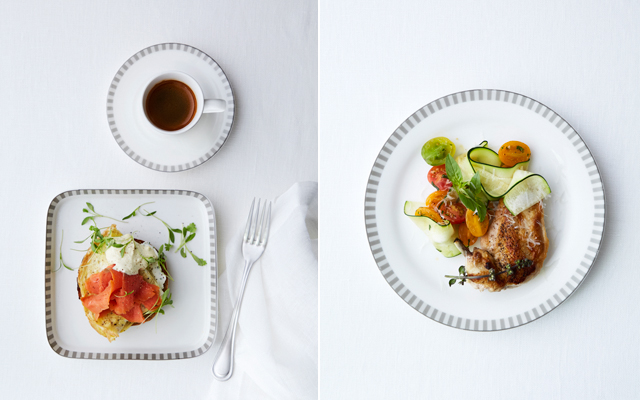
"Wellness cuisine" developed with long flight duration and reduced body movement in mind
Singapore Airlines (SIA) has partnered US wellness brand Canyon Ranch to introduce a new level of comfort and relaxation to ultra-longhaul travel.
The programme will be rolled out on SIA’s Singapore-New York service, which will launch on October 11 as the world’s longest commercial flight with a duration of 18 hours 45 minutes.
“Wellness cuisine” developed with long flight duration and reduced body movement in mind
The partners say this will also be extended to nonstop services from Singapore to Los Angeles and San Francisco.
Taking into consideration the longer flight duration and reduced body movement, SIA teamed up with Canyon Ranch experts and nutritionists, who will develop cuisine that focuses on nutrition and hydration. These will be offered in addition to SIA’s own meal selections.
The partners will also use sleep strategies designed to help customers in all cabin classes, improve the duration and quality of rest, as well as specific light settings to provide better cabin ambience for rest and relaxation.
Guided stretching exercises, led by Canyon Ranch exercise physiologists, will also be made accessible via personal seat-back entertainment systems to promote relaxation.
This will be the first time Canyon Ranch is taking its wellness methods to the air, after having serviced guests on land and at sea, according to CEO of Canyon Ranch, Susan Docherty.
The Canyon Ranch team of experts are from integrative medicine, exercise, nutrition and other disciplines – collectively known as Canyon Ranch Wellness Architects, and includes the 17th US surgeon general.
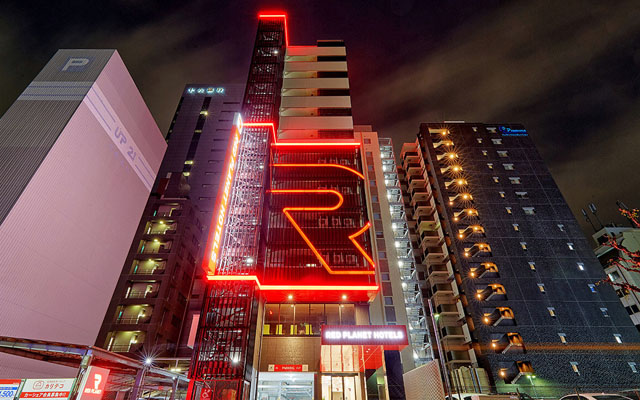
Red Planet Japan has acquired a land plot in the Nagarekawa district of Hiroshima for a Red Planet hotel, set to open in the months leading up to the 2020 Olympics.
The 160-room budget hotel will be Red Planet Japan’s seventh property in Japan, adding to its portfolio of hotels in Tokyo, Naha, Nagoya and Sapporo.
Red Planet Nagoya Nishiki
Red Planet’s CEO, Tim Hansing, said: “Our Hiroshima property takes on an important strategic role as we aim for a nationwide circuit tourism offering.”
Hiroshima, a gateway city to Western Japan for Asian tourists, is home to two UNESCO World Heritage Sites, the Island Shrine of Itsukushima and the Hiroshima Peace Memorial Museum, as well as other attractions such as Hiroshima Castle, the Shukkei-en Garden and the Hiroshima Museum of Art.
Simon Gerovich, chairman of Red Planet Japan, added: “Red Planet Japan is growing rapidly… Our business model is predicated on gaining scale and as our portfolio grows, we gain efficiencies and our margins expand.”
In 2019, Red Planet Japan will open its second hotel in Sapporo and its first hotel in Manila, followed by this Hiroshima property and a second hotel in Manila opening in 2020.
“These new hotels shall accelerate our earnings trajectory, and we continue to seek further sites in Japan, and beyond, to further grow our hotel portfolio,” Gerovich continued.
Red Planet Japan currently operates 704 rooms across Japan with a further 575 rooms being constructed in Manila, another 212 rooms in Sapporo, and 160 rooms in Hiroshima before the end of 2020.
Red Planet Japan’s new hotels would boost the number of rooms operating under the Red Planet brand in Asia to 6,552 over the next two years.
Getting lost tops the list of common reasons for couple to argue
Nearly one in five Hong Kong couples who have argued during travel have considered breaking up after arguments, while 13% argue about photo taking, according to a recent survey by Skyscanner.
With this year’s Double Seventh Festival, also dubbed the Chinese Valentine’s Day, falling on Friday, Skyscanner surveyed 1,100 travellers from Hong Kong who take trips with their partners to find out where the points of friction are.
Getting lost tops the list of common reasons for couple to argue
The survey shows that most couples travelled with their partner for the first time after dating for less than a year, with 36.6% saying their first trip with their partner happened in the first one to six months and 27.2% saying six months to a year. Only 4.6% waited less than one month to embark on their first trip together.
When it comes to arguments, these can take place at any time during the trip. 36% of respondents argue during the trip, while 12% fight about trip planning when creating travel itineraries and booking tickets.
A larger proportion of respondents (44%) said they had never argued with their partners for the trip.
However, among those who do argue during holidays, almost one in five (18.9%) said that the fights had been so serious that they had even thought of breaking up after the trip.
The findings reveal that not getting to attractions on time and getting lost tops the list of the most common reasons for couple to argue (17%), followed by different expectations on the travel experience (14%).
Notably, 13% of respondents either argued about their partner’s ability to take nice photos or that they were taking too many photos during the trip.
AirAsia to launch Chiang Mai-Hanoi flights
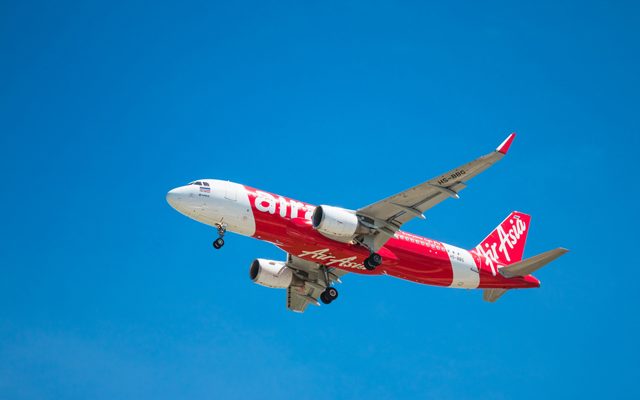
AirAsia has opened ticket sales for its four-times-weekly flights between Chiang Mai and Hanoi launching on October 28. On Mondays, Wednesdays, Fridays and Sundays, flight FD870 departs Chiang Mai at 13.20 for arrival in Hanoi at 14.50. FD871 leaves Hanoi the same day at 15.20, arriving in Chiang Mai at 16.55.
PAL goes to Sapporo
Philippine Airlines will commence thrice-weekly Manila-Sapporo service on September 10, utilising its new 168-seat Airbus A321neo aircraft. The six-hour direct flight will leave every Monday, Wednesday and Friday.
Korean Air advances partnership with Delta with new Boston service
On April 12, 2019, Korean Air will launch a nonstop service between Boston and Seoul in cooperation with joint venture partner, Delta Air Lines. The new Boston flight, along with new Minneapolis/St. Paul-Seoul service that Delta is launching in 2019, are the first additions to the joint venture’s Seoul-Incheon network since the two carriers launched their partnership in May.
On Tuesdays, Wednesdays, Fridays, Saturdays, and Sundays, flights depart Seoul at 9.30 and arrive in Boston at 10.30 on the same day. The return flight will depart from Boston at 13.30 and arrive in Seoul at 16.50 the following day.
Emirates updates schedule on Singapore sectors
Commencing October 28, Emirates will effect some changes to its schedule between Dubai (DXB), Singapore (SIN), Brisbane (BNE) and Melbourne (MEL).
Qatar Airways deploys latest wide-body Airbus on JFK route
Qatar will deploy the Airbus A350-1000 on its New York JFK route starting October 28. This will be the airline’s first commercial US route to be operated with Airbus’ latest wide-body aircraft, which currently services daily non-stop service between Doha and London.
The A350-1000 offers 327 seats across two cabins, with Qsuite Business Class seats and 18-inch extra wide Economy Class seats. The aircraft is said to emit the lowest twin-engine noise level of any aircraft.