TTG Asia
Asia/Singapore Friday, 3rd April 2026
Page 1394

Thailand visitor arrivals, spending see double-digit growth

0
Wat Arun, Bangkok
View of Wat Arun in Bangkok from across the river

Thailand welcomed nearly 22.7 million visitor arrivals in the January-July period this year, up 11% over the same period of 2017, according to preliminary figures tabulated by the Ministry of Tourism and Sports.

Estimated visitor expenditure also rose significantly, up 14.4 % to 1.2 trillion baht (US$36 billion).

The top 10 source markets of visitors were in order China (6.9 million, 21.4%); Malaysia (2.1 million, +6.8%); South Korea (1 million, +5.8%); Laos (991,679, +9.3%); India (919,130, +5.6%); Japan (908,059, +5.6%); Russia (900,712, +16.2%); the US (656,327, +5.8%); Vietnam (630,526, +7.8%) and Singapore (579,677, +3%).

Nok Air CEO resigns

0

Thai LCC Nok Air has announced the resignation of its CEO, Piya Yodmani, barely a year since he was appointed to the post.

Piya also steps down from the board and other committees of the company.

Pravej Ongartsittigul, director and chairman of the executive committee, has stepped into the role of acting CEO since August 27.

The Thai LCC will proceed to appoint the new board director and CEO at a later date.

Aviation roundup: Wow air, Hainan Airlines and more

0

Wow air to connect US with New Delhi
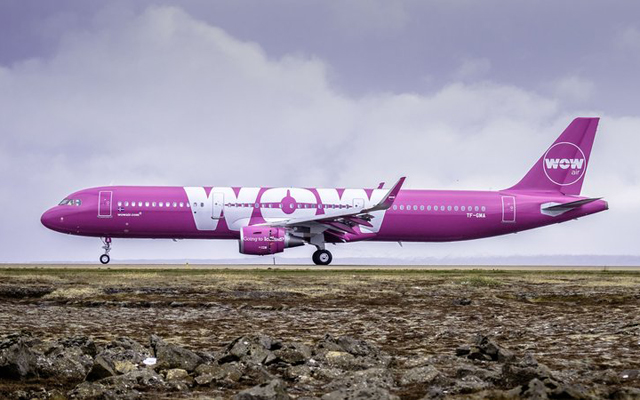
Icelandic LCC Wow air will commence flights from the US to Indira Gandhi International Airport (DEL) in New Delhi via Iceland beginning December 5, 2018.

At the end of 2018, the airline will offer service to New Delhi from Boston, Chicago, Detroit, New York, Los Angeles, Pittsburgh, San Francisco, St Louis, and Washington DC/Baltimore.

The Icelandic LCC will use brand new Airbus A330neo aircraft on the Delhi route, which are outfitted with Wow premium seats offering at least 37 inches of legroom.


Hainan Airlines launches Shenzhen-Zurich service
On August 27, Hainan Airlines launched a twice-weekly service between Shenzhen and Zurich, the first non-stop flight connecting China’s Guangzhou-Shenzhen area with Switzerland.

Operated with a Boeing 787 Dreamliner, flights take off from Shenzhen Bao’an International Airport on Mondays and Fridays at 01.20 and land at Zurich Airport at 07.55. On the return sector, flights depart Zurich at 11.40 and arrives back in Shenzhen at 05.00 the following day.


Cebu Pacific beefs up Clark hub with new routes
Starting November 9, 2018, Cebu Pacific will mount daily flights between its Clark and Davao hubs; as well as between Clark and Tagbilaran (Bohol).

Flight 5J613, bound for Tagbilaran, departs Clark at 09.55 daily for arrival at 11.20. The return flight, 5J614, departs Tagbilaran at 11.50 and arrives in Clark at 23.5pm. Meantime, Flight 5J985 departs from Clark to Davao daily at 13.45, with scheduled arrival at the Francisco Bangoy International Airport in Davao at 15.40. The return flight, 5J986, departs Davao at 16.10, for arrival at the Clark International Airport at 18.05.

On top of the new routes, Cebu Pacific will also add an additional daily flight between Clark and Cebu starting October 28, 2019. From once daily, Cebu Pacific will fly between Clark and Cebu once in the morning and another in the afternoon.


JAL unveils new frequency, fleet plans
Japan Airlines (JAL) has announced revisions to the flight frequency and fleet plans for FY2018 and on select international routes for FY2019.

On its international network, JAL will increase capacity on its Hawaii and East Asia routes. The airline will seasonally operate the Boeing 777-300ER aircraft during the year-end and New Year period on the Tokyo (Narita)-Honolulu route, which was provided during the same period last year. Additionally, JAL will continue to expand the operation of the JAL Sky Suite-configured Boeing 787-9 aircraft on routes between Japan and Hawaii.

In FY2019, JAL will seasonally increase flights between Tokyo (Narita) and Chicago (O’Hare) from June 8 to September 3, 2019, featuring 11 flights per week. On flights between Osaka (Kansai) and Los Angeles, JAL will now feature full-flat seats in business class, in addition to the introduction of premium economy class service with the JAL Sky Suite 787-9 aircraft. Meanwhile, the airline will decrease the flight frequency between Kansai and Taipei (Taoyuan) from March 31, 2019.

On domestic routes in Japan, JAL will increase the flight frequency on the Tokyo (Haneda)-Sapporo (New Chitose) and Tokyo (Haneda)-Okinawa (Naha) routes. On Kagoshima routes, the carrier will feature the new ATR 72-600 aircraft from December 2018. Additionally, the airline will start broadcasting Live TV Service as a new in-flight service from October 2018 on Japan domestic flights.


Thai tourism sector works to soften impact of Phuket boat tragedy

0
The cause of the accident off the coast of Phuket's Coral Island is still yet to be determined

Hopeful that the impact from the Phuket boat accident in July will eventually tide over, Thai tour operators and hotels specialised in the Chinese market are working hard to overcome business declines in the meantime.

Even though the recent disaster will likely take the shine off Chinese arrivals in 2H2018, the Thai Ministry of Tourism & Sports still expects the number of Chinese tourists to the country to reach its forecasted 10 million for the year.

From January to July, nearly 6.9 million Chinese visitors arrived in Thailand, marking a year-on-year increase of 21.4 per cent, although July’s figure was actually a drop of 0.9 per cent.

Waters off Phuket’s Coral Island

Adith Chairattananon, honorary secretary general of the Association of Thai Travel Agents (ATTA) and president of Golden Discovery Express, said that the number of Chinese arrivals to Bangkok from July to August has dropped 30 per cent since the Phuket boat tragedy.

However, he expects Chinese arrivals will increase during the Chinese Golden Week holidays this October, albeit to a lower number than was recorded last year.

To woo back Chinese travellers, ATTA will conduct roadshows in China’s Tianjin, Qingdao, Hefei, and Nanjing from September 16 to 21 to promote quality and safe tourism in Thailand.

“This is part of a strategy to stimulate the Chinese market in the last season of this year. The selected cities have a total population of 250 million, (and hence represent huge potential),” Adith explained.

Meanwhile, Kongsak Khoopongsakorn, president of Thai Hotels Association Southern Chapter, told TTG Asia that the number of Chinese groups has decreased by 50 per cent, based on feedback from hotels in Phuket that mainly welcome Chinese groups.

It remains to be seen if the Chinese market will rebound during the Golden Week peak, but Kongsak is positive FIT demand will remain strong.

In the short term, Kongsak recommends that hotel suppliers targeting Chinese tourists to promote their products in other markets at the same time to make up for any loss from the Chinese market.

He is confident that Chinese tourists will eventually return to Phuket as steps are being taken to beef up safety measures.

“The government and private sectors are cooperating to build trust among Chinese tourists by enforcing stricter laws and approving a budget to improve the Phuket port,” he shared.

“The Digital Economy Promotion Agency is now responsible for developing a system to check tourist information at the Phuket port. In doing so, officials will know the number and names of tourists before (boarding).”

Bookings to Indonesia tumble after Lombok quake

0
Bookings to Bali plummeted 42.9% since the second quake

There has been a 26% decline in bookings to Indonesia since the August 5 earthquake in Lombok, according to ForwardKeys.

Prior to the devastating earthquakes, Forwardkeys said Indonesia’s tourism was having a good year – bookings from January 1 were up 10% on the equivalent period in 2017. That growth all but ceased after the first quake; and following the second, bookings fell 26%.

Bookings to Bali plummeted 42.9% since the August 5 quake in Lombok

The tourist trade has been particularly badly affected because bookings to the country’s top tourist destination, Bali, which is adjacent to Lombok, have fallen more drastically than bookings to Indonesia as a whole.

From January 1 until the first earthquake, bookings for Bali were up 15.2%. However, since the second quake, they have fallen by 42.9%.

According to WTTC, travel and tourism accounts for 10% of total employment in Indonesia but the figure is considerably higher in the tourism hotspots such as Bali and Lombok. By comparison the Indonesian capital Jakarta, which is a regional commercial centre, has fared much better, with bookings down by just 2.2%.

Indonesia’s most important source market is China, accounting for 14% of all visitors. Prior to the second earthquake, bookings were up 3% on the previous year, and afterwards suffered a 59% flop.

Bookings from Australia, Indonesia’s second most important market, were up 28% before the second quake but they have since plummeted 19% down.

Similar setbacks have been seen in bookings from Hong Kong and Singapore but bookings from India are still 16% up on 2017, although they were 38% up prior to the second quake.

China Eastern gets Sabre tech on board next-gen operation centre

0
About 40,000 China Eastern and 10,000 Xiamen Airlines passengers reportedly affected

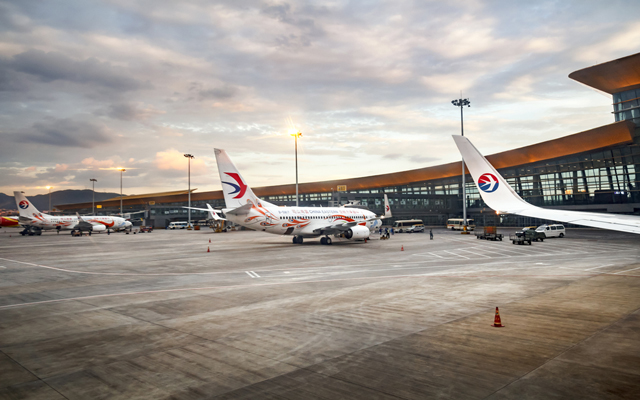
China Eastern Airlines has beefed up its next-generation Airline Operation Centre by signing on Sabre Corporation’s AirCentre suite at the Sabre Technology Exchange in Singapore yesterday.

AirCentre will be implemented in China Eastern’s new Airline Operation Centre, which is being developed to organise and manage flights, ensure constant flight monitoring operations and help control safety risks.

Airline Operation Centre developed to help organise and manage flights, ensure constant flight monitoring operations and control safety risks

On this control system, the AirCentre solutions will ensure schedule continuity – from planning to day-of operations – minimising the impact of disruptions to both operations and travellers.

Additionally, China Eastern has activated a dedicated team – comprising employees from ground operations to flight crew – who will implement Sabre’s solution in their operations, revealed Jiang Jiang, senior vice president, China Eastern.

He added: “According to IATA, the key (areas of) growth of the airline industry will shift to the East and its developing markets. This is encouraging airlines to improve their products.”

The two companies have been working together since 2003, with the airline group having adopted four Sabre solutions from flight to load management, said Jiang.

Dave Shirk, president of Sabre Travel Solutions, shared: “With access to our innovative technology and Sabre’s commitment to the China market, the airline will be well-equipped to address the highly competitive environment and meet its corporate growth objectives.”

Sabre is currently working with more than 100 airlines worldwide, with about half employing “more robust” and latest solutions, said Shirk. In Asia-Pacific, some 25 airlines are upgrading their technology portfolios to employ new-generation solutions.

Qatar Airways to fly Qsuite-fitted A350-1000 on Singapore, Tokyo routes

0

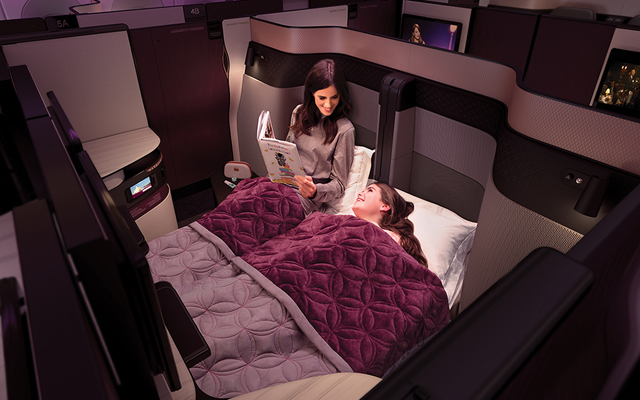
Qatar Airways will begin operating the A350-1000, equipped with its luxurious Qsuite, on flights to and from Singapore’s Changi Airport from November 1, 2018. The aircraft will also be introduced daily to Tokyo’s Haneda Airport from January 1, 2019.

The two cities will be the first destinations on Qatar Airways’ Far East network to receive the A350-1000.

On November 1, 2018, QR944 will depart Doha at 08.15 and arrive in Singapore at 21.15, with the return leg QR945 taking off from Singapore at 02.00 and arriving in Doha at 05.35 the following day.

From December 1, 2018, QR946 will take off from Doha at 01.55 and land in Singapore at 14.55, while the return flight QR947 will depart Singapore at 20.45 and arrive in Doha at 00.2. the following day.

Two of Singapore’s triple-daily A350-900 services will gradually transition to the A350-1000 from November 1, 2018, with the route expected to be served entirely with the A350-1000 by April 2019.

Beginning January 1, 2019 for the Tokyo route, QR812 will depart Doha at 07.05 to arrive in Haneda at 22.30. The Haneda-Doha route, QR813, will take off at 23.50 and land at 06.30 (+1).

The A350-1000 is the latest addition to the Airbus family of twin-aisle, widebody jetliners. It will have 327 seats across two cabins – 46 Qsuite Business Class seats and 281 extra-wide 18-inch seats in Economy Class.

Hertz partners Chailease to drive its brands in Taiwan

0
Hertz Asia Pacific's Eoin MacNeill (left), Chailease Group's Andre J.L

The Hertz Corporation has launched a referral partnership with Taiwanese car rental company Chailease Auto Rental.

Through the new alliance, Hertz, Dollar and Thrifty’s customers travelling to Taiwan will now have access to all of Chailease’s rental services in the market. These include a variety of car rental options as well as short- and long-term leasing at more than 19 locations, which will be co-branded with Hertz.

Hertz Asia Pacific’s Eoin MacNeill (left) and Chailease Group’s Andre J.L

Meanwhile, outbound customers of Chailease from Taiwan will be able to access Hertz’s full suite of mobility solutions across the globe.

To celebrate the launch, discounts of up to 30 per cent are available to customers who book online before September 30, 2018 for rentals by November 30, 2018, at participating locations in Taiwan.

Two discount codes can be used during this period: customers renting for three to seven days can quote promotional code (PC#) 204679 to apply a 25 per cent discount; while customers who rent for eight days or more can quote promotional code (PC#) 204680 to apply a 30 per cent discount.

New Novotel coming to Chiang Mai’s Nimman district

0
The agreement was signed between (middle two) AccorHotels' Patrick Basset and Boutique Corporation's Prab Thakral

Thai property developer Boutique Corporation has appointed AccorHotels to manage the 200-key Novotel Chiang Mai Nimman Journeyhub when it opens in 2019.

The ceremony was attended by Prab Thakral, president and group CEO of Boutique Corporation, and Patrick Basset, COO of AccorHotels for upper South-east & North-east Asia and the Maldives.

The agreement was signed between (middle two) AccorHotels’ Patrick Basset and Boutique Corporation’s Prab Thakral

“Chiang Mai is one of Thailand’s top tourist destination and continues to show an impressive growth in occupancy rates, year-on-year particularly, in the trendy Nimman district,” said Prab, outlining the signing as an opportunity for the company to strengthen its hotel portfolio.

For AccorHotels, the partnership represents “a significant milestone in expanding our reach further in northern Thailand”, said Basset.

Meet Pepper, TUI’s first robotic employee

0

The latest hire by TUI Nordic is not human, but a humanoid robot named Pepper 2E, which will work as a robot assistant and be a part of the company’s new Data Analytics and Machine Learning team.

Primarily based in TUI’s Stockholm office, Pepper 2E has started his new role since August 14. His main responsibility is to inspire innovation, curiosity and technological pioneering, in addition to helping visitors as well as colleagues and external customers with everyday questions and problems.

TUI Group’s Friedrich Joussen (left) and TUI Nordic’s Alexander Huber say hello to Pepper 

Like any TUI employee, Pepper 2E has a detailed job description as well as set “personal” goals he will be evaluated on. He will report to a manager who will incorporate him into the team’s day-to-day tasks. The robot assistant will also spend the first few months hovering around the office to know the company and his new human colleagues.

“Automation, AI and robotics are important elements of TUI’s future,” said Alexander Huber, managing director of TUI Nordic, said to be the first travel company in the world to incorporate robotics in this way. “I hope he sparks curiosity and engagement with all of our TUI Nordic colleagues.”

Elke Eller, HR director of TUI Group and member of the board, said: “Employees like Pepper 2E can support our teams. At the same time they give us an impression of what the work of the future might look like. The ‘hiring’ of Pepper 2E stands for curiosity about the future and openness for new technologies. These are important prerequisites for the success of the digital transformation of TUI.”

A semi-humanoid robot manufactured by SoftBank Robotics, Pepper understands and speaks in numerous languages and can understand human emotions. Pepper’s touch screen increases his capacity to interact and enables him to enhance communication by providing visual information. His entirely programmable platforms offers manifold usage possibilities to enrich the experience.