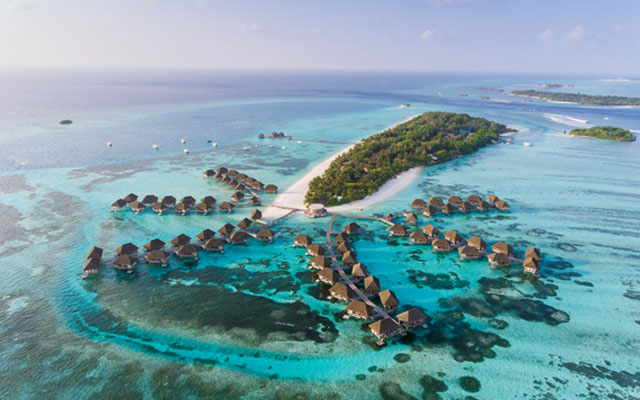
Things are looking up for Maldives' tourism sector
With political unrest leading up to the presidential elections blown over, optimism is now high in the Maldives’ inbound sector, further buoyed by hopes for a fattened tourism budget under the new government.
A 45-day state of emergency was declared in the country early this year, sending arrivals, particularly from China, on a decline.
Things are looking up for Maldives’ tourism sector
Industry officials now estimate the destination could record over five per cent growth in arrivals this year.
While expecting arrivals performance to match last year’s, Ahmed Karam, president of the Guesthouse Association of Maldives (GAM), pointed out that the rising bed count could be a problem.
Karam remarked that less than US$1 million was spent on destination promotion under the outgoing leadership, when it should have been more given the increasing number of beds and resorts.
The opposition party, which will take over the reins in mid November, has promised to increase the destination marketing budget by 400 per cent.
On September 28, the nation elected a new president, ousting Abdulla Yameen, who had been accused of corruption and human rights abuses. President Yameen will officially step down on November 17.
This has contributed to a overall buoyant mood in the inbound sector. Andrew Ashmore, chief commercial officer at Coco Collection Hotels & Resorts, said: “The EU, the US and India have (reacted) favourably on the result and this buoyancy may actually help tourism,” he said.
Meanwhile, Abdulla Ghiyas, president of the Maldives Association of Travel Agents and Tour Operators, said that tourism has been picking up in the past few months with new resorts opening. “Flights are also coming in and the forecast is looking good,” he said.
Ctrip, which says it sees 40 per cent of traffic opening its app in non-homebase destinations, is on a drive to make the “super app” the only one that users will use when they travel overseas.
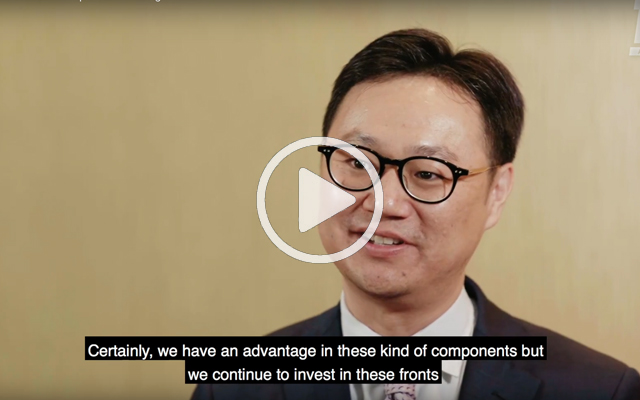
In a video interview on the sidelines of ITB Asia last week, Victor Tseng, Ctrip’s vice president corporate affairs, told TTG Asia: “We’ve been seeing a tremendous diversification in how users are using Ctrip. Now they’re using Ctrip throughout their whole itinerary. That’s been an important initiative for us to continue to push, particularly when users are travelling overseas.”
Ctrip is expanding its capabilities for users overseas, so they don’t have to open another app to seek the right information, user reviews or booking tools.
Issues such as a slowdown in China’s economy, foreign currency fluctuations and Sino-US trade tiff are creating “a macro overhang”, Tseng admitted, but pointed to the recent Golden Week which delivered around nine per cent growth as a reason to be optimistic.
“When you look at nine per cent relative to other parts of the world in terms of travel spend, that’s still very, very good growth,” he said.
Meanwhile, Ctrip’s ambitions to expand and tap global market sources through Trip.com are “making very good inroads”, Tseng said. Currently, the key markets Trip.com is focusing on include South Korea, Hong Kong, Japan, Singapore, Australia and Russia.
Localisation is one of the ways Trip.com is taking to attract users to the site. In Singapore, for instance, the team works with local hotels to target staycations, which Singaporeans love.
Watch the full video to hear the full initiatives Ctrip is taking to stay ahead in the global industry here.
Brand Expedia and the Indonesia Ministry of Tourism (MOT) are joining forces to promote and drive international travel demand to 15 key destinations in the country.
The agreements, which was signed in Singapore on October 19, were a renewal and enhancement of the partnership both organisations entered into since 2016.
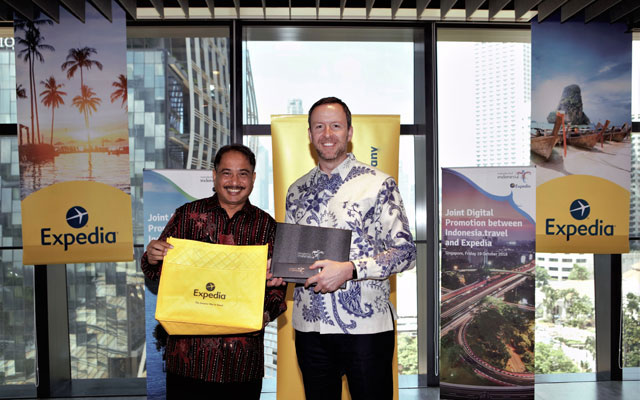
Indonesian minister of tourism Arief Yahya (left) and Expedia Group’s Greg Schulze seal cooperation on promoting travel to Indonesia
The first agreement involves a three-month digital marketing contract with Expedia Group Media Solutions to promote travellers to Indonesia, while a second agreement allows visitors to book trips to Indonesia on the Ministry of Tourism’s www.indonesia.travel website via Brand Expedia sites in Singapore, South Korea and Japan through an application programming interface (API).
Spanning a period of 12 months, the API agreement will focus on attracting visitors from 45 key cities across 18 target markets including Singapore, Japan, South Korea and Australia. It will also link potential travellers to Expedia via strategically-placed ad units on the www.indonesia.travel website.
This will enable international travellers to take advantage of a wider variety of travel booking options, including flight selections from more than 500 airlines and access to more than 750,000 properties.
Additionally, Brand Expedia will provide discounts and promotions for travel to Indonesia, to help boost international tourist arrivals to the key destinations of Jakarta and Bali, as well as other destinations including Lake Toba, Lombok, Bandung, Banyuwangi and Labuan Bajo.
Oerdula Oertel, director of partnership, Greater China, South-east Asia and India of Expedia, said: “API integration on the ministry’s website is completely new element of the agreement. That is a very progressive step in the MOT side, usually you would see a tourism website focusing on inspirational of the journey, showing the pictures of the beauty of the destination but when the customers want to book, they have to find another (site). Now, they will now find the opportunity to book hotels and tours on the MOT website, which is directly supplied through Expedia.”
The ongoing cooperation with Expedia is part of MOT’s digital marketing strategy.
Said Arief Yahya, Indonesian minister of tourism: “Our number one strategy initiative in tourism promotion is to go digital. There is no other choice of promotional media other than digital… Some 70 per cent of our customers search and share using digital.”
With the renewed cooperation, the tourism minister expects Expedia to promote Indonesia’s curated events and special deals while tracking the result of the promotions.
“I also have a difficult request to Expedia to become our B2B platform for travel agents and operators within Indonesia going forward,” Arief told TTG Asia.
Travelport becomes the first GDS to manage live flight bookings using NDC
Travelport says it is the first GDS operator to manage the live booking of flights using IATA’s New Distribution Capability (NDC) technical standard.
The first transaction was made by a British agency, Meon Valley Travel, on October 19 for a short-haul low-cost flight from London to Milan issued by a major European carrier, which was not named.
Travelport becomes the first GDS to manage live flight bookings using NDC standard
According to the travel commerce company, the booking was managed on the latest Travelport Smartpoint agency point of sale. The new capability allows bookings to be made for any services on the airline without incurring a surcharge, and marks the first of a series of products that the company is developing to accommodate changing airline distribution methods.
Gordon Wilson, Travelport’s president and CEO, said: “This is a landmark moment for airline distribution. We are delighted to have taken a lead in bringing the NDC era to life…. We are still at the very earliest stages of NDC deployment. Its evolution will continue to take time as we learn from the practical experience of its first use.”
Travelport’s NDC-enabled booking has also been hailed “a significant step toward a new era of airline retailing” by IATA’s senior vice president, financial and distribution services Aleks Popovich.
Travelport was the first GDS operator in December 2017 to acquire Level 3 certification from IATA as an aggregator.
Pansy Ho, chairman of Global Tourism Economy Research Centre (GTERC) and group executive chairman and managing director of Shun Tak Holdings, has been appointed UNWTO tourism ambassador for her contributions in promoting regional and global tourism cooperation and sustainable tourism.
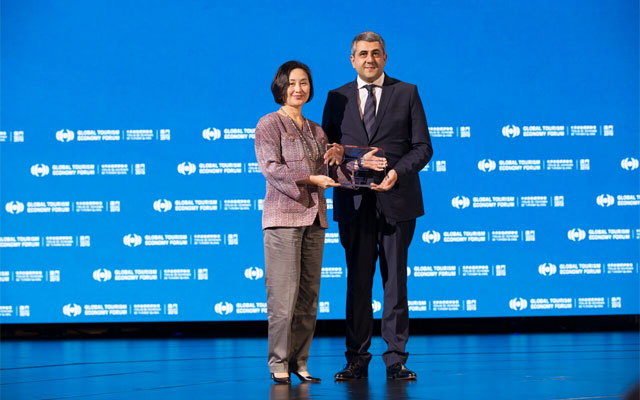
The appointment was announced by Zurab Pololikashvili, secretary-general of UNWTO during the opening ceremony of the Global Tourism Economy Forum (GTEF) 2018 in Macau on Monday.
GTERC’s Pansy Ho conferred with her latest tourism ambassador role by UNWTO’s Zurab Pololikashvili
Ho now joins the stellar list of UNWTO tourism ambassadors for promoting global tourism development, which includes legendary Spanish football coach Vicente del Bosque; former Spanish international and sporting director of Spain national team Fernando Hierro; five-time Ballon d’Or and European Golden Shoes recipient, Argentine football sensation Lionel Messi; Nigerian businessman and global philanthropist Aliko Dangote; decorated Spanish football wizard Andrés Iniesta; and highly popular Japanese cartoon character Hello Kitty.
An active participant in many of the world’s leading tourism organisations, Ho is executive committee member of WTTC and vice chairman of China Chamber of Tourism. She is also the first official PATA Foundation ambassador and the first ambassador for the Louvre in China.
Commenting on the accolade, Ho said: “The ambassador honour is indeed a recognition and affirmation of the efforts of GTERC and GTEF to facilitate global tourism cooperation. Rooted in Macau, the research centre and the forum have continued to receive support from UNWTO, and have in turn continued to create new offerings and inspire innovations and creativity for this vibrant international tourist city. We are extremely honoured to shoulder the mission of reshaping our future in a new era through tourism.”
Ho founded GTERC in 2011 and GTEF in 2012. GTEF has since become an annual tourism event in Macau, organised under the auspices of the All-China Federation of Industry and Commerce and in collaboration with UNWTO, to champion sustainable development of global tourism with a focus on China.
This year, GTEF 2018 takes place under the theme of Strategic Partnership in a New Era, Rising Momentum for a Shared Future, with the EU as its partner region and Guangdong as its featured Chinese province with a special focus on the Guangdong-Hong Kong-Macao Greater Bay Area.
Hilton has announced a new affordable lifestyle brand, Motto by Hilton, to meet the growing demand for reasonably priced, less traditional hotels in central locations.
“Following extensive market research that focused on consumers’ needs and wants, we discovered the opportunity for a brand that offers travellers a trifecta of centrally located, reasonably priced and less traditional lodging that provide a one-of-a-kind experience,” said Jon Witter, chief customer officer, Hilton, in a statement. “These findings led us to create Motto by Hilton, a flexible environment that allows guests to design their stay, their way.”
Queen bed room, Motto By Hilton
Motto by Hilton is described as “a micro-hotel with an urban vibe in prime global locations”. Guestrooms will have an average size of 14m2, and will include space-saving features such as wall-beds, lofted beds, segmented shower and toilet stalls, and multi-functional furniture that can be stowed when not in use.
All Motto by Hilton rooms will be outfitted with Hilton’s Connected Room technology – the first mobile-centric hotel offering that allows guests to control features in their room (i.e. temperature, lighting, TV, window coverings, etc.) from their Hilton Honors mobile app. The brand will also put emphasis on a premium sleep experience by providing blackout window shades, and providing sleep kits with eye masks.
The brand will also have the option for guests to book multiple connecting rooms in advance, as well as allow guests to split payments. While prices will vary by market, Hilton promises “competitive rates”.
Linked rooms, Motto By Hilton
According to Hilton, the brand will be made up of “a carefully curated portfolio of hotels in the most desirable urban destinations” throughout Europe, the Americas, the Middle East and Asia-Pacific.
Motto by Hilton hotels will be located in prime neighbourhoods, such as the 100-bed Motto by Hilton in Marylebone, London. Construction will start in January 2019, with a targeted 2020 opening. it will be one of the first Motto by Hilton properties.
Other Motto by Hilton hotels are in various stages of development in other urban destinations like Lima, Dublin, Savannah, San Diego, Boston and Washington, DC.
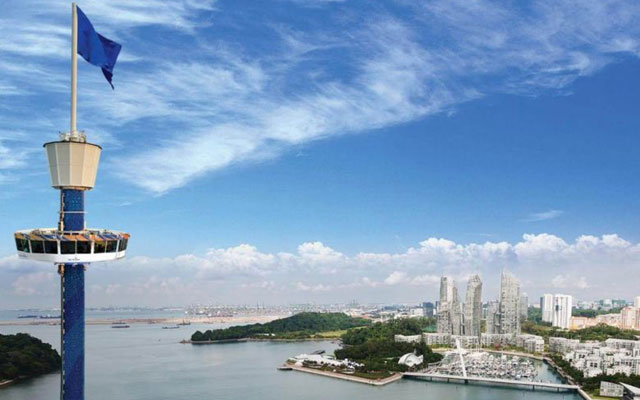
Tiger Sky Tower on Sentosa will cease operations permanently on December 28, after negotiations to renew its lease fell through.
The rotating observation tower’s closure is chalked up to a decision to not renew its lease with Sentosa Development Corporation, announced its operator Sky Tower.
The Sky Tower started operations in 2004
Alexander Melchers, managing director of Sky Tower, said: “The discussions with Sentosa Development Corporation were very sincere and detailed, but we could not agree on the commercial terms to continue operations. We have enjoyed a very good partnership with Sentosa.”
Melchers also debunked speculation that the tower is closed due to technical faults. It reopened about a year ago after a stalling incident two years ago.
“The Sky Tower still is a future-proof technology and could have been operated at Sentosa for many more years; therefore the company is now looking to find a new location for the Sky Tower outside of Singapore,” he clarified.
At 131m above sea level, Tiger Sky Tower – previously known as Carlsberg Sky Tower – has been in operation since 2004. It was the first foreign direct investment in an attraction on Sentosa under the 2002-Masterplan.
General manager of Sky Tower, Ken Lee, said that the attraction was particularly appreciated by tour group operators as it was “different from the Mount Faber Cable Car or the new Intra Cable Way”.
The Sky Tower will be moved and rebuilt in another country. From November 1, Sky Tower ticket prices will be lowered from S$18 (US$13) to S$8.80 per ride for adults, and from S$10 to S$4.80 for children.
After naming casino maestro Edward Tracy as CEO of Hard Rock Japan, which was launched last year, Hard Rock International has now appointed Ado Machida as the new president of its Japan unit to oversee the company’s integrated resort initiatives in the country.
With his vast experience in foreign affairs and expertise in international law, finance, business development and team building, Machida is expected to play a key role in leading Hard Rock Japan’s expansion efforts to develop a new luxurious integrated resort in the country.
Machida comes to Hard Rock Japan from Navigators Global, a management consulting organisation. Prior to Navigators Global, Machida was director of policy implementation for the Trump Transition effort. Additionally, he also served as chief domestic policy officer for vice president Cheney, as well as served in various leadership and advisory roles for senator Bob Dole.
He has also held positions with Goldman Sachs, both in New York and Tokyo, and also worked at the Boston Consulting Group based in Tokyo early in his career.
WTM London, the leading global event for the travel industry, and Travel Forward have opened registration for its 2018 editions.
WTM London 2018, which takes place between Monday 5 – Wednesday 7 November, is poised to be the most successful yet with more Ideas Arriving at WTM London than ever before.
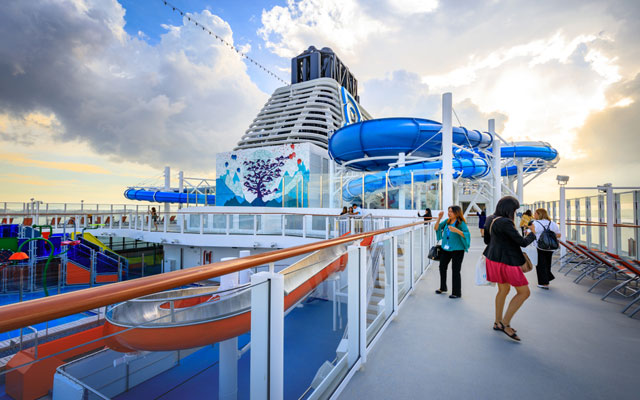
Tourists onboard the World Dream, one of Dream Cruises' ships
Amid the cruising boom in Asia, penetration rate in some fast-growing markets in South-east Asia remain as low as 0.02 per cent, underscoring the need for the region’s travel agents to enhance their product knowledge and marketing capabilities to tap the growth potentials.
Cruise passengers originating from Asia crossed the four million mark in 2017, up 20.6 per cent over 2016, and is now the world’s fourth largest cruising region, said Jiali Wong, regional manager, Asia, Cruise Line International Association (CLIA) during a travel agent seminar held by the association during ITB Asia last week.
While China is the region’s largest source market, Wong pointed out that “almost every market in Asia saw double-digit growth”.
Tourists onboard the World Dream, one of Dream Cruises’ ships
The statistics reflect healthy consumer interest in a region where travellers are starting to “recognise cruise holidays as a relaxing and value-for-money option”. It also helps that cruise is “a natural fit” for families, a key travel segment in Asia, she pointed out.
This cruising wave is translating into great opportunities for travel agents.
“Unlike a lot of travel segments, where consumers are starting to book direct, travel agents remain a key distribution channel for cruise lines. In fact, the majority of agents have over 80 per cent of their products listed by travel agencies. This translates to potential for travel agents to tap into the cruising segment to increase sales,” Wong said.
However, with penetration rates still low in many of Asia’s markets, Wong stressed that travel agents “need to be more cruise-educated by taking the next step to familiarise themselves with products”. CLIA is stepping up support for travel agents looking to sell cruises, through training and accreditation as well as sharing resources such as marketing toolkits.
In Indonesia, the outbound cruise market is showing an alluring 40.2 per cent year-on-year growth. Only one in 5,600 Indonesians are cruising, putting the penetration rate at only 0.017 per cent.
With the tremendous room for further growth, travel players are taking a greater interest in the cruise business, starting by sniffing out opportunities to hone their knowledge and expertise.
For example, Selayar Kepulauan Lestari – which has been offering yacht and cruise itineraries out of Bali, servicing mainly European travellers – now wants to foray into Indonesia’s outbound cruising market.
On the sidelines of the CLIA seminar, company spokesperson Iwan Syahlani shared with TTG Asia plans to undergo the association’s accreditation programme to pivot into the cruising market.
He said: “We now want to penetrate the outbound market. (As the numbers show), there is a large potential market of Indonesians wanting to enjoy cruising around the world.”
But the market is still nascent, said Iwan. “Unlike in Singapore, there is nothing happening in Indonesia to educate travel agents and help them better understand cruise tourism.
“I would like to learn more and be able to create marketing campaigns to penetrate big city markets like Jakarta, Medan and Surabaya.”
Apart from CLIA’s training and accreditation, Iwan also hopes to pursue learning opportunities with a Jakarta-based consultant in cruise line marketing.
Further highlighting the importance of education for travel agent is the proliferation of cruise products in the region, not only in terms of capacity but also the types of offerings available.
“Ships are moving more and more to the east. This year we’ll see almost 38 cruise lines represented in Asia with more than 78 ships. There is also more variation in the types of cruise products,” CLIA’s Wong pointed out.
For example, in addition to large ships, small luxury cruising is also catching on in Asia.
“This ties back to agents having to familiarise themselves with what products are out there. They need to leverage the unique selling points (of the relevant cruise product) and (how to target the different products) to customers,” Wong stressed.














Ctrip, which says it sees 40 per cent of traffic opening its app in non-homebase destinations, is on a drive to make the “super app” the only one that users will use when they travel overseas.
In a video interview on the sidelines of ITB Asia last week, Victor Tseng, Ctrip’s vice president corporate affairs, told TTG Asia: “We’ve been seeing a tremendous diversification in how users are using Ctrip. Now they’re using Ctrip throughout their whole itinerary. That’s been an important initiative for us to continue to push, particularly when users are travelling overseas.”
Ctrip is expanding its capabilities for users overseas, so they don’t have to open another app to seek the right information, user reviews or booking tools.
Issues such as a slowdown in China’s economy, foreign currency fluctuations and Sino-US trade tiff are creating “a macro overhang”, Tseng admitted, but pointed to the recent Golden Week which delivered around nine per cent growth as a reason to be optimistic.
“When you look at nine per cent relative to other parts of the world in terms of travel spend, that’s still very, very good growth,” he said.
Meanwhile, Ctrip’s ambitions to expand and tap global market sources through Trip.com are “making very good inroads”, Tseng said. Currently, the key markets Trip.com is focusing on include South Korea, Hong Kong, Japan, Singapore, Australia and Russia.
Localisation is one of the ways Trip.com is taking to attract users to the site. In Singapore, for instance, the team works with local hotels to target staycations, which Singaporeans love.
Watch the full video to hear the full initiatives Ctrip is taking to stay ahead in the global industry here.