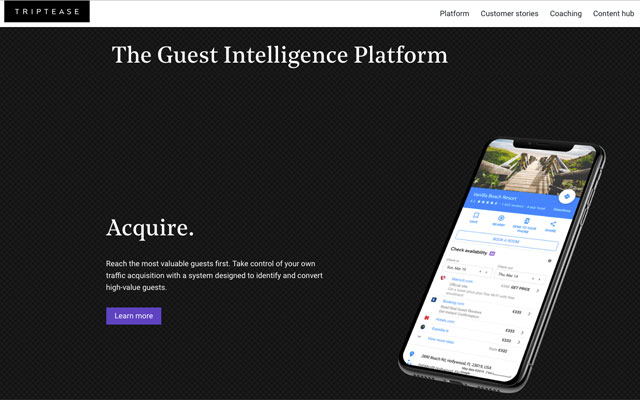
New traffic acquisition solution added to Triptease's suite of direct booking solution for hotels
Direct booking proponent Triptease has undergone a major rebrand to reflect its evolution “from an on-site conversion solution to full-funnel direct booking channel”, as the London-based company introduces a new guest intelligence platform that aims to give hotels more control over bookings.
Triptease’s new Guest Intelligence Platform identifies a hotel’s most valuable guests then works across the entire customer journey – from acquisition to conversion – to ensure they book directly at the hotel.
New traffic acquisition solution added to Triptease’s suite of direct booking solution for hotels
The latest traffic acquisition solution – launched in beta in October 2018 – now joins parity management, price comparison, tailored messaging and live chat on the Triptease Platform. The solution is driven by a Guest Value Index that applies onsite intelligence to offsite acquisition.
Triptease said its joined-up solution is already paying dividends for hotels, with the average cost of sale for a booking acquired through the acquisition platform under eight per cent, less than half the cost of the average OTA commission of 15 to 20 per cent. In addition, the platform aims to deliver over 10 per cent of hotel website revenue at under 10 per cent cost of sale.
Visually, the rebrand includes a pared-back colour scheme of black and white with accents of copper and violet for data visualisation and emphasis. Triptease’s coaching expertise has also been brought to the fore with a page dedicated to their Direct Booking Coaching programme, while its blog has been transformed into a content hub providing access to webinars, subscription series, videos and reports.
Founder and chief tease Charlie Osmond said in a statement: “With this rebrand, we’ve pulled back to our foundations and simplified our message to reflect our new product offering: a straightforward approach that joins together acquisition and conversion.”
Joibus is bringing Asian FIT harder to reach parts of Europe such as Strasbourg in France (pictured)
Amid the growing FIT wave in the travel industry, Miki Travel (Hong Kong), a DMC specialising in Europe, last week launched its new Seat-In-Coach (SIC) tours to help meet the increasing Asian demand for greater flexibility and “off-the-beaten-path” destinations.
Unlike package tours currently on the market, Joibus offers minimum purchasing sector of one-day, an average of three departures per week, and guaranteed departure regardless of the group size – allowing FITs to more easily incorporate the tours into their itinerary.
Joibus routes include harder to reach parts of Europe such as Strasbourg in France (pictured)
Each sector is a one-day tour comprising coach transportation, hotel accommodation, and entrance ticket to attractions. Prices range from €98 (US$113) to €128 per person, and are commissionable for travel agents.
The hop-on, hop-off concept is not new. Olivier Moeschler, Miki’s CEO – Asia division, stressed that what further sets Joibus apart is access to “hard-to-reach” locations. Joibus connects classic European cities, such as Paris and Madrid, to areas considered to be off-the-beaten-path for Asian travellers, including Strasbourg in France and Carmona in Spain.
“There are many options on the market. But the majority are (either) inflexible, requiring (customers to commit to seven to 10 days) or flexible but only visiting the main cities. For example, GoEUgo is probably the most flexible hop-on, hop-off option in Asia. But (to stay) competitive, they go from one big European city to another, and do not include sightseeing.”
While sticking to the main cities is most viable in the short term, Moescheler said that it pays to take the path less trodden to stay ahead of the curve.
“It’s more difficult to get volume when offering (lesser-known destinations). Plus, as SIC departures are guaranteed – they will run (even if there’s just one person on board), it’s much more difficult for us to turn a profit. There is definitely a risk selling (such a product) in Asia,” he admitted.
But given the direction that Asian travel preferences are going, he agreed that short-term risks are worth taking to gain an early mover advantage.
“Interestingly, South Korea is the topmost market for European rail passes, above even the US. The number of FITs travelling from South Korea to Europe is huge (and growing),” he shared.
“When introducing Joibus to the different markets, we got more traction from (agency) customers who service large numbers of FIT like those in South Korea. There was also good response in markets like Taiwan where travellers are looking for places that are difficult to reach.”
Miki is selling Joibus in Japan, South Korea, Taiwan, Hong Kong, Singapore, Thailand, Malaysia, the Philippines and Indonesia. Currently, travel agencies such as HanaTour and Tourtips in South Korea, and Lion Travel in Taiwan are already on board as partners and official sales agent of Joibus.
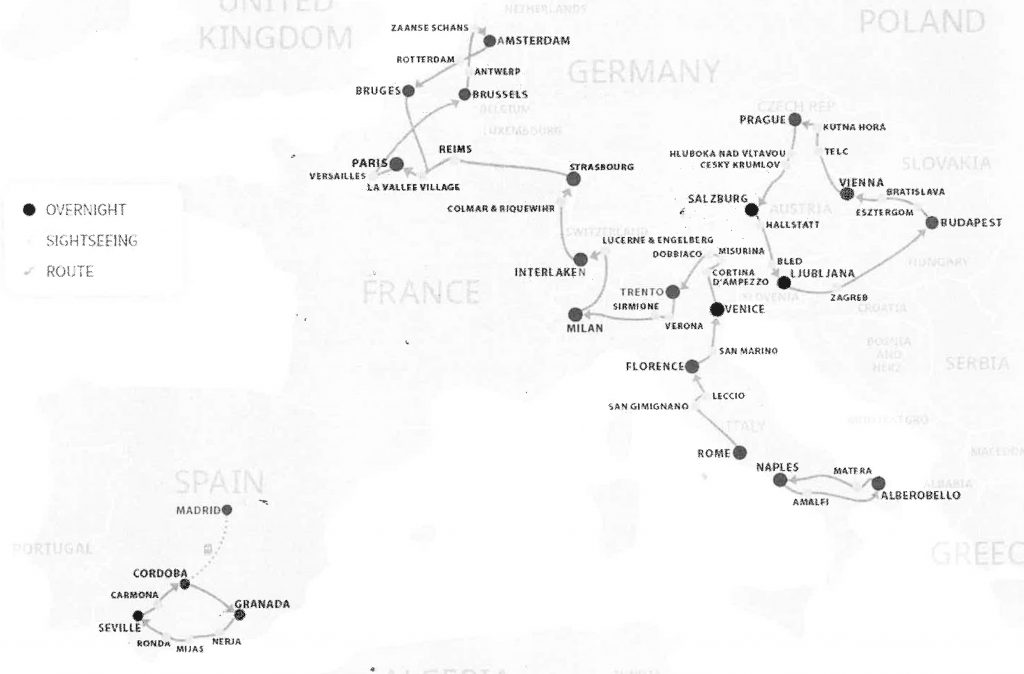
Joibus covers 22 tour sectors in 13 countries, namely Austria, Belgium, Croatia, Czech Republic, France, Hungary, Italy, Netherlands, San Marino, Slovakia, Slovenia, Spain and Switzerland. New sectors in Germany, Norway, South France and the UK are being added for travel in the summer season from April to October 2019. Within five years, Miki aims to have Joibus in the whole of Europe, with daily tour departures.
Joibus routes running this January
Moeschler, who was with Kuoni before it was broken up and acquired, joined the DMC two years ago “with the mandate to transform Miki Asia”. On top of developing new products such as Joibus, he has also undertaken to grow the core business by expanding into new Asian markets and adding new destinations, as well as to implement a digital strategy.
Other recent developments in line with this three-pronged approach include the addition of Balkan destinations to Miki’s portfolio through a partnership with Intours DMC, an Adriatic region expert based in Croatia and Slovenia.
As part of a digital strategy, the DMC this month partnered Tour Manage to release a mobile support app for tour leaders, replacing the traditional telephone hotlines. This follows the roll-out of an online bookings system that allows its representatives in Asia to deal directly with hotel suppliers in Europe.
The iconic Raffles Hotel Singapore has been confirmed for a mid-2019 reopening, and will boast refreshed interiors, layout and concierge service, revealed general manager Christian Westbeld.
Most prominently, the hotel will eliminate its front desk and check-in services from the lobby. Instead, guests will be served by dedicated butlers, who will provide services from in-suite check-in to running errands for guests.
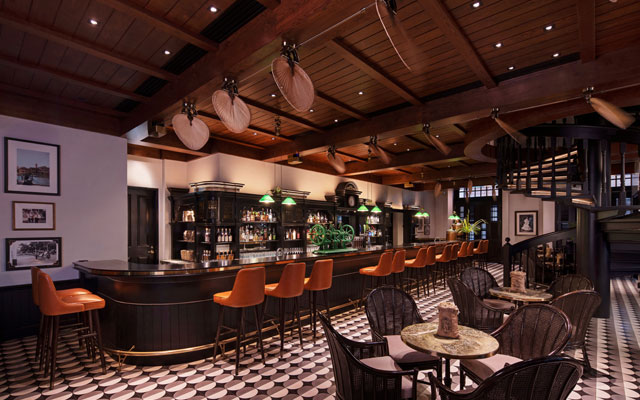
The refurbished Long Bar
This new concept will “revolutionise” the butler and concierge service in hospitality by providing guests “more focused, individualised and direct service”, explained Westbeld.
The hotel will have a team of 25 butlers fluent in a diverse range of languages such as English, Mandarin, Korean and Russian.
Room count will also be raised by 10 per cent from 103 to 115. Renders of the suites showed brighter colours and a more spacious and refined design, with some elements of new technology. For example, guests will have the option of operating the lights with manual switches or an iPad.
Westbeld also confirmed that accompanying these enhancements is a rise in the hotel’s room rates by some 25 to 30 per cent. Bookings are open and the hotel has already secured event reservations for August.
The hotel will also feature 10 dining establishments spread throughout the property, with overhauls done to the original restaurants such as Tiffin Room and Long Bar. The shopping arcade will also be “better integrated” into the hotel and feature 40 retail tenants, said Westbeld.
Long Bar will introduce an “elevated” and “health-conscious” recipe for the Singapore Sling, he shared, and the team hopes to craft another original beverage on the same level as the Singapore Sling.
Sri Lankan tourism authorities are likely to bring back an incentive scheme that supports foreign travel companies that bring in a minimum of 250 visitors.
According to marketing director of Sri Lanka Tourism Promotion Bureau (SLTPB), Madubhani Perera, any foreign operator bringing a minimum of 250 visitors will be entitled to US$10 per guest, plus more for guests over the 250-threshold.
High-producing foreign agents will receiving matching funds for advertising
The foreign agent will make their own US$10 per guest contribution, and the joint amount will go towards advertising support for the agent.
The scheme was in effect years ago until it was ceased in 2011. It is now in the process of being restored at the request of the Sri Lanka Association of Inbound Travel Agents (SLAITO), subject to approval by the Cabinet.
Mahen Kariyawasam, managing director, Andrews Travels and former president of SLAITO, said that strict criteria will be followed to ensure that the money from the joint incentive scheme is properly utilised.
“In the earlier scheme we had some issues but now we will have a committee that would go through all proposals to ensure a transparent and accountable process,” he said.
Once the scheme is approved, applications from foreign agents who brought in at least 250 guests in 2018 will be entertained.
Meanwhile the much-awaited US$16.6 million, three-year destination marketing promotion campaign has been further delayed and likely to take off only in May (launching at the Arabian Travel Mart). It was due to have been launched at the ITB in March.
The delay is due to tenders, approvals and other paper work which got caught up in the 52-day political crisis in October-November 2018.
While Sri Lanka recently gained endorsement from Lonely Planet, managing director of Aitken Spence Travels – Nalin Jayasundera, pointed out the destination is not reaping the full benefits of such international recognition.
Should there be further delays in the global campaign, he said the destination needs some kind of tactical marketing in at least the top 10 markets until the campaign takes off. “These latest endorsements (could be better taken advantage of) if the tourism authorities work together with the industry on an urgent basis to carry out joint marketing campaigns,” he asserted.
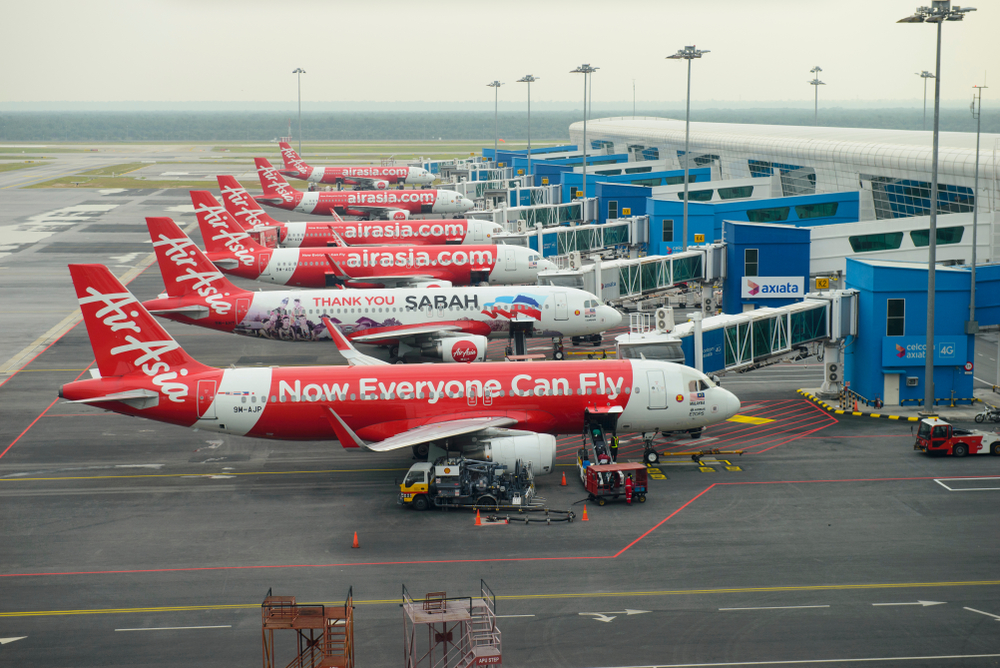
The legal wrangling between AirAsia and Malaysia Airports continues, with AirAsia throwing the latest blow when it served a notice on Malaysia Airports (Sepang) (MASSB), claiming almost RM480 million (US$117 million) for supposed losses incurred from operating at klia2.
MASSB’s parent company Malaysia Airports Holdings (MAHB) recently sued the LCC over unpaid passenger service charges. Malaysia Airports was claiming RM9.4 million from AirAsia and RM26.71 million from its longhaul affiliate, AirAsia X.
Numerous AirAsia Airbus 320-200s parked at their gates at KLIA2
AirAsia then begrudgingly scrapped the “klia2 fee” – an extra charge it passed on to consumers when MAHB levied new fees for operating from the new terminal – after aviation authorities said the fee would become illegal with the introduction of a new regulation.
AirAsia is now listing losses totalling nearly RM479.8 million, saying the bulk of which coming from loss of customers in the last four years owing to disruptions and poor condition of the terminal.
In the notice to commence mediation served on MASSB, AirAsia and its sister airline AirAsia X claimed that MASSB had provided a “poor level of service” at the terminal, resulting in losses and damage to the two carriers.
These include cancellations and loss of revenue from multiple runway closures, apron defects, damage to two aircraft due to malfunctions in MASSB’s infrastructure and sensors, a fuel line rupture at klia2 Pier P, Internet outages and loss of customers.
While stressing that they refrained from filing a counterclaim in court in favour of more amicable resolution, AirAsia and AirAsia X said they “reserve the rights to exhaust all avenues to recover the losses incurred, including the option to seek redress in the courts of law”.
The two are jointly seeking mediation in accordance with Section 74 of the Malaysian Aviation Commission (Mavcom), which requires the dispute to first be resolved in good faith through mediation. Under the Act, if mediation fails, Mavcom will arbitrate the dispute.
Japan, Thailand and Taiwan the top destinations for Chinese during the holidays
With Chinese New Year round the corner, travel companies reveal the top holiday picks in the Asia-Pacific markets during the holiday period starting on Monday, February 4.
At Hotelbeds, Chinese traveller booking data from its platform shows Thailand is the most popular destination, with Japan and Singapore ranked second and thirdly respectively.
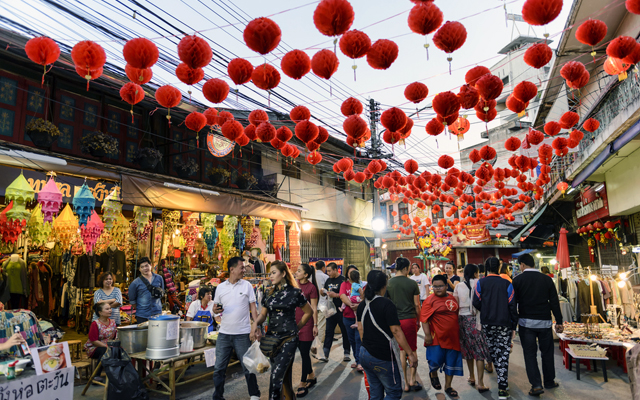
Chiang Mai shopping street during the festive period
These are followed in order by Malaysia, the US, Indonesia, Philippines, Australia, Vietnam and South Korea.
The wholesale giant also observes Chinese travellers visiting a wider range of countries, with hotels in 102 countries reserved, up from 88 last year.
Around seven million Chinese travellers are expected to venture abroad during this festive period.
Spain and Italy this year dropped out of the top 10 countries – replaced by Vietnam and South Korea – but remain popular at 11th and 12th spots respectively this year.
Meanwhile, in the Hong Kong market, the top longhaul destinations booked through GDSs are Australia, the US and Canada, according to analysis by Travelport.
For return flights between January 28 and February 13, the top 10 longer haul destinations (and corresponding number of GDS flight bookings from Hong Kong) are as follow:
1 Australia (17,103)
2 US (7,666)
3 Canada (5,608)
4 UK (5,279)
5 New Zealand (4,416)
6 UAE (2,590)
7 India (2,330)
8 Germany (2,230)
9 Italy (1,800)
10 Switzerland (1,729)
The top longhaul destinations which had seen the greatest year-on-year percentage increase in flight bookings around the Chinese New Year period were Germany, up 72% to 2,230 bookings (ranking from 12th to eighth); New Zealand, up 29% to 4,416 bookings (ranking from sixth to fifth); and the UAE, up 20% to 2,590 bookings (ranking from seventh to sixth).
Ming Foong, regional managing director of Asia, Travelport, said: “This year, long-distance travel has been particularly popular among Hong Kong travellers, because the almost full-week public holiday makes it easy for travelers to plan a long vacation.”
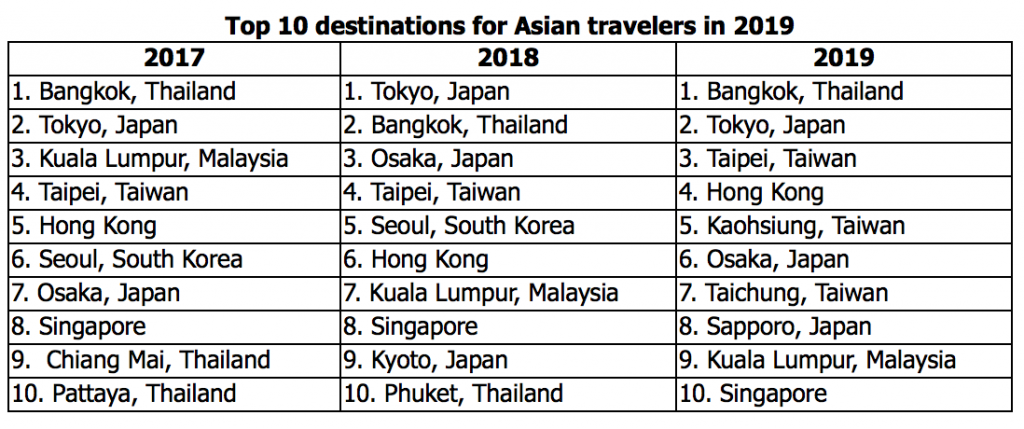
For Agoda, which analysed its own Asia-Pacific booking data, top destinations for the holiday period are Bangkok, Tokyo and Taipei.
This year, Osaka slipped from third spot in 2018 to sixth. Taiwan scooped three of the top 10 destinations with Taipei in third place, and Kaohsiung and Taichung in fifth and seventh respectively.
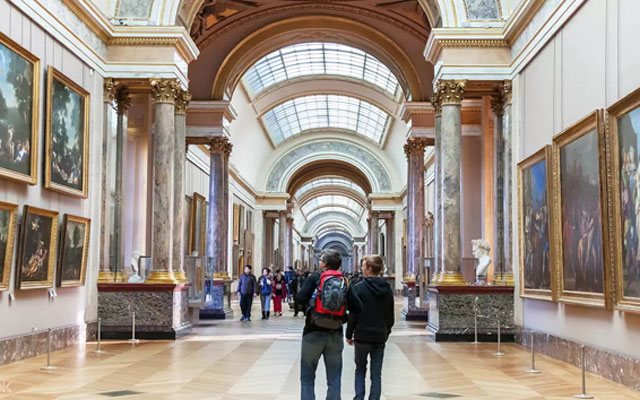
Travel around Europe with the rail pass, now bookable through Klook; Louvre Museum in Paris pictured
Klook has expanded its rail offerings beyond North Asia with its partnership with Rail Europe, the leading distributor of European rail products.
At the same time, Rail Europe may now leverage Klook’s mobile booking technology to connect with travellers in more than 100 markets around the world.
Travel around Europe with the rail pass, now bookable through Klook; Louvre Museum in Paris pictured
Beginning in late 2018, users have enjoyed access to Rail Europe’s services through Klook’s dedicated Europe Rail landing page. The booking services include point-to-point train tickets as well as rail passes, such as Swiss Travel Pass, Eurail Pass, BritRail Pass and German Rail Pass. Klook’s platforms support both e-ticket for users worldwide and physical tickets (via free mail delivery) to close to 20 markets.
To better serve travellers on-the-go, Klook has now launched a point-to-point booking site, available first on its mobile web and app, supports real-time city-to-city booking for train tickets as well as seat reservations for rail passes.
InterContinental Dhaka, Bangladesh
InterContinental Hotels Group has re-entered the Bangladeshi market with its latest opening in the capital. The hotel offers 226 guestrooms including 25 suites, and facilities such as a Club Lounge, temperature-controlled swimming pool overlooking Ramna park, a steam room, sauna and spa. Dining options include an all-day restaurant, speciality restaurant, lobby cafe and pool bar. For meetings, the property offers more than 1,950m2 of space across two ballrooms and seven meeting rooms, all equipped with the latest audiovisual technology.
Best Western Premier Sonasea Phu Quoc, Vietnam
Situated eight kilometres from the Phu Quoc International Airport on Phu Quoc’s western coast, the resort boasts 566 rooms, suites and villas, ranging from 35m2 Deluxe Rooms to the 245m2 Presidential Villa. Recreational facilities include a kids’ club, 300m-long lagoon pool, fitness centre, a 130m-long private beach and the Thala Spa. There are three F&B options – the all-day Essence Restaurant, Oasis pool bar and the rooftop C View Sky Bar. Event and meeting planners can avail any of the three function spaces, the largest of which can take 350 pax in theatre style or 110 in boardroom style.
The Peanuts Hotel, Japan
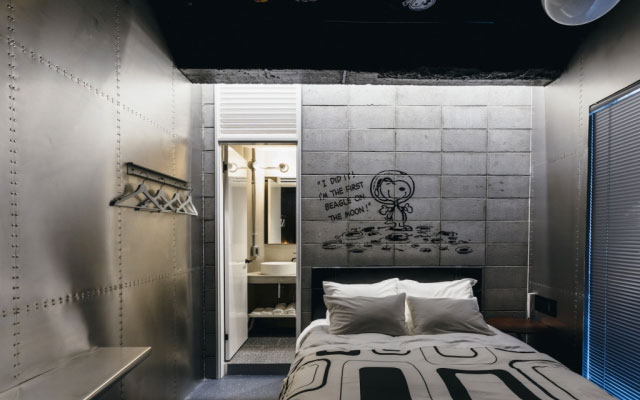
Fans of Snoopy, Charlie Brown and the rest of the gang from Charles Schultz’s comic strip can now stretch out in rooms themed on the characters’ adventures. Located near Sannomiya Station in Kobe, the boutique hotel has 18 uniquely-decorated rooms such as one depicting Snoopy on the moon, and another in Yosemite National Park. Each floor of the hotel also boasts a different concept – the fourth floor is Imagine, fifth floor is Happy, while the sixth floor is Love.
Swiss-Belinn Cibitung, Indonesia
The latest addition to Swiss-Belhotel International Hotels & Resorts’ Indonesian portfolio stands in Bekasi, a satellite city east of Jakarta. The hotel features 92 rooms and suites, all equipped with complimentary Wi-Fi, LED TVs with cable channels, tea- and coffee-making facilities, and laptop-sized safes. Leisure facilities include an all-day dining restaurant, bar, karaoke lounge, outdoor swimming pool and a fitness centre. Five individual meeting rooms supported by modern audio-visual technology and a dedicated banqueting team round up the property’s offerings.
DoubleTree by Hilton Huidong Resort, China
The resort, located north-east of Shenzhen, features 309 rooms, including 27 suites, with garden or sea views. Each room is outfitted with floor-to-ceiling windows and a private balcony, as well as a 50-inch HDTV, open-plan bathroom with separate tub and rainshower, plus Crabtree & Evelyn bath products. Aside from the three F&B venues, there is also a 24-hour fitness centre; kids’ club; an outdoor splash pool with water slide; an entertainment zone offering console games, karaoke, mahjong and a play zone with electronic games for kids; and 1,740m2 of indoor meeting space spanning eight function rooms and an outdoor terrace.
Oakwood Premier OUE Singapore has launched the Weekend Staycation package following its successful application of a hotel license, which allows the serviced residence to now offer daily stays as opposed to a minimum of six nights stay previously.
Studio Apartment
Starting with an introductory rate from S$280++ (US$208++) per night for a Studio or One-Bedroom Apartment, the package includes privileges such as complimentary room upgrade to the next sub-category and late check-out (subject to availability); complimentary breakfast for two persons at Se7enth; welcome cocktails for two; and 30 per cent off for a la carte dinner or a complimentary bottle of sparkling wine with a minimum spend of S$50++ at Se7enth (for dine-in only).
The Weekend Staycation is available for bookings and stays from now until June 30, 2019 on Fridays, Saturdays and Sundays. This offer is valid for the Studio, One-Bedroom Deluxe and One- Bedroom Executive Apartments. Other terms and conditions apply.