Guests receive vouchers to spend on Chiva-Som's wellness treatments
Thailand’s Chiva-Som International Health Resort is extending a special 24th anniversary offer to all guests who stay for a minimum of three nights during the month of April.
Guests of Chiva-Som will receive a voucher of 10,000 baht (US$315) per person, per stay, which can be used for health and wellness treatments (excluding Niranlada and visiting consultants) or Chiva-Som signature products. In addition, guests will receive complimentary VIP fast track service upon arrival and departure.
Guests receive vouchers to spend on Chiva-Som’s wellness treatments
This offer is available to guests staying from April 1-30, 2019 in any room type for a minimum of three nights. The rate code, 24ANNIVERSARY, should be referred to when making eligible bookings. Terms and conditions apply.
Chiva-Som will be closed for completion of its extensive refurbishment programme from May 1 to October 31, 2019.
For further information and reservation, email reservation@chivasom.comor call the resort at (66) 3253 6536.
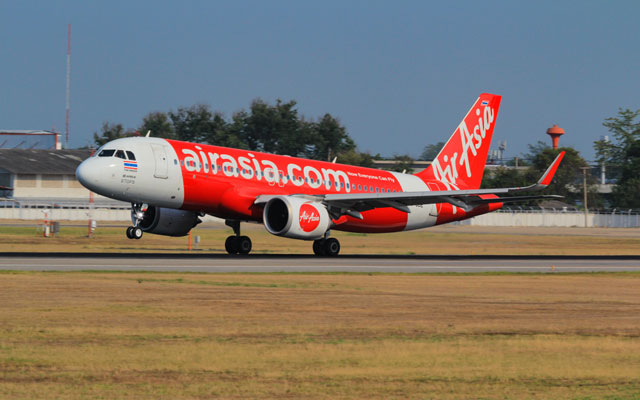
AirAsia launches flights between Bangkok and Ahmedabad
AirAsia has launched a new route connecting Bangkok with Ahmedabad, the capital of Gujarat state and India’s first UNESCO World Heritage City.
On Mondays, Wednesdays, Fridays and Sundays, FD144 takes off from Bangkok’s Don Mueang International Airport at 19.00 for arrival in Ahmedabad at 21.50. Flight FD145 leaves Ahmedabad at 22.20 the same day, arriving back in Bangkok’s Don Mueang at 04.15 the following day.
Firefly resumes flights to Singapore
Malaysian budget carrier Firefly will resume flights to Singapore on April 21, operating out of Seletar Airport, after the two countries agreed to work together to develop GPS-based instrument approach procedures to replace the Instrument Landing System. Before the flights were suspended last December, Firefly operated 20 daily flights between Singapore and Subang, Ipoh and Kuantan.
Yangon gets more flights from China
Sichuan Airlines has launched twice-weekly flights from Chengdu to Yangon International Airport’s (YIA) Terminal 1, utilising an Airbus A321-211A aircraft with total 189-seat capacity for the new service. Every Monday and Thursday, flights from Chengdu will arrive in Yangon at 00.20. Flights are scheduled to depart Yangon at 01.20 for arrival in Chengdu at 05.40. This is Sichuan Airlines’ third international destination operating from YIA.
In addition, China Eastern Airlines has launched thrice-weekly Hohhot-Kunming-Yangon flights at YIA Terminal 1.Using a Boeing 737-800 aircraft with a seat capacity of 184 for the new service, China Eastern Airlines round-trip flights arrive in Yangon at 15.10 every Tuesday, Thursday and Saturday, before departing on the roundtrip back to Hohhot at 01.20.
PAL takes off for Phnom Penh
Philippine Airlines has launched its first flights to Phnom Penh International Airport. Using a 156-seater Airbus 320 aircraft, the new service operates five-times-weekly flights (Mondays, Tuesdays, Thursdays, Fridays and Saturdays). The arrival time in Phnom Penh is at 23.45 while departing time back to Manila is scheduled one hour after.
Himalaya Airlines connects Abu Dhabi to Nepal
Himalaya Airlines has launched thrice weekly flights between Kathmandu’s Nepal Tribhuvan International Airport (KTM) and Abu Dhabi. Using its Airbus 320 aircraft, which includes eight premium economy and 150 economy seats, the flights operate on Sundays, Tuesdays and Thursdays.
Flights are scheduled to depart from Kathmandu at 20.45 to arrive at Abu Dhabi at 23.45. Returning flights to Kathmandu are scheduled to depart from Abu Dhabi on Mondays, Wednesdays and Fridays at 01.45, and arrive at Kathmandu at 08.00.
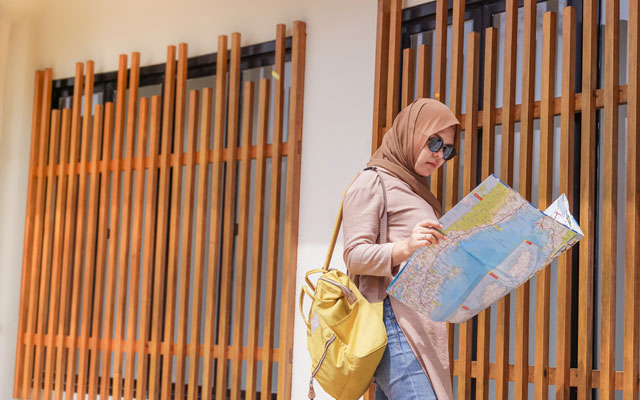
The Muslim travel market is one of the fastest -rowing tourism sectors in the world
Indonesia has for the first time joined Malaysia to take up the top spot on the Mastercard-CrescentRating Global Muslim Travel Index (GMTI) 2019, while Singapore retained its premier position as the top Muslim-friendly non-Organization of Islamic Cooperation (OIC) destination for Muslim travellers.
Climbing up from number two, Indonesia now shares the pole position with Malaysia, with a score of 78 on the GMTI, a reflection of the sustained efforts by the Indonesian Ministry of Tourism to invest in its tourism and travel industry, and develop Muslim-tourist friendly infrastructure.
The Muslim travel market is one of the fastest -rowing tourism sectors in the world
Other OIC countries including Turkey, Saudi Arabia, Morocco, Oman and Brunei continue to be popular with Muslim tourists. These destinations can continue to reap the benefits of their inherently Muslim-friendly environment by leveraging new technologies to strategically build services that better engage young, millennial Muslim travellers, the report stated.
Among non-OIC countries, Singapore, Thailand, the UK, Japan and Taiwan have retained their positions in the top five and have further improved their scores on the Index. In a first for South Korea and the Philippines, these countries have entered the top 10 non-OIC destinations, displacing Germany and Australia. Spain has also entered the list of top 10 non-OIC countries, emerging as a key halal-friendly European destination for Muslim travellers this year.
In an effort to attract more Muslim tourists, non-OIC destinations have been much more active, as compared with some OIC destinations, in developing their capacity and capability to attract Muslim travellers. For example, destinations such as Spain, South Korea and the Philippines have developed useful resources and travel guides that cater to Muslim preferences by listing best halal restaurants and nearby prayer facilities.
The GMTI tracks the health and growth of 130 destinations globally, within and outside the Organisation of Islamic Cooperation (OIC), in four strategic areas – access, communications, environment and services.
In 2018, there were an estimated 140 million Muslim visitors worldwide – up from 131 million in 2017 – representing 10 per cent of the global travel industry.
The Muslim travel market is one of the fastest -rowing tourism sectors in the world, but despite its huge potential, remains relatively untapped. By 2026, the halal travel sector’s contribution to the global economy is expected to jump 35 per cent to US$300 billion, up from US$220 billion in 2020. By that time, Muslim visitors globally are forecast to grow to 230 million visitors, to represent more than 10 percent of tourists worldwide.
The halal travel market has undergone significant changes in recent years. Driven by the rapid pace of digital and technological transformation, a new phase of Muslim travel is emerging, one that is defined by experience and connectivity – Halal Travel 2.0 – which leverages technologies such as artificial intelligence, augmented reality and virtual reality, to better engage Muslim travellers in the digital age.
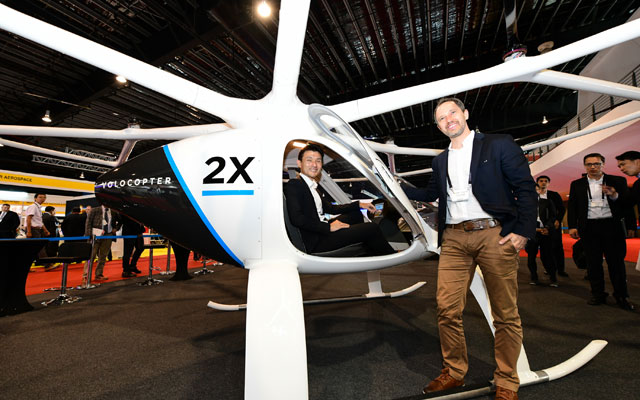
Posing with the Volocopter 2X aircraft, Baey Yam Keng, senior parliamentary secretary, Singapore's Ministry of Transport, with Volocopter's Florian Reuter
Come 3Q2019, Singapore will commence test flights for Asia’s first self-flying taxi service, featuring electrically powered short-distance aircraft operated by German company Volocopter.
Volocopter’s CEO Florian Reuter shared this timeline at Rotorcraft Asia 2019 and Unmanned Systems Asia 2019 yesterday, adding that the trials are supported by public and private entities including the Civil Aviation Authority of Singapore (CAAS) and ST Engineering.
Posing with the Volocopter 2X aircraft, Baey Yam Keng, senior parliamentary secretary, Singapore’s Ministry of Transport, with Volocopter’s Florian Reuter
Meant to complement existing transport systems – from international flights to the conventional taxis – the air taxi solution is similar to a ride-hailing platform, where passengers can access the service via a booking app.
Each aircraft flies two persons for a distance of less than 30km, and is powered by nine independent battery packs and 18 overhead propellers. While the aircraft can be manoeuvred autonomously, initial public flights will be operated with a certified pilot.
Reuter shared that the starting cost of each trip will be higher than regular taxi fares, but in the long run the pricing of Volocopter rides can be comparable to their land counterparts.
Allaying concerns about safety, he assured that the aircrafts are “as safe as commercial airlines”. He added that the vehicles are “extremely quiet”.
“We want this vehicle to be as minimally intrusive as possible. There’s a lot of thought that has gone into designing the Volocopter to make it perfect vehicle for urban air mobility,” said Reuter.
Tan Chun Wei, deputy director, transformation programmes, CAAS, confirmed that the test flights will be conducted in the southern region of Singapore and over water. Reuter said that discussions with involved parties could open up cross-border routes to popular nearby destinations such as Johor and Bintan.
“There’s a lot of interesting things to learn from Singapore and (see) how we can bring this to other cities as well. We are convinced Singapore is the perfect role model and showcase for other cities to replicate what Singapore is establishing,” expressed Reuter.
In September 2017, Volocopter put its first autonomous two-seater aircrafts to the test in Dubai. In February, Frankfurt Airport and Volocopter inked a deal to develop concepts for ground infrastructure and operations required for air taxi services. Volocopter opened its Singapore office in January.
Avis' car-sharing service rolls into Asia with Taipei as the launch city
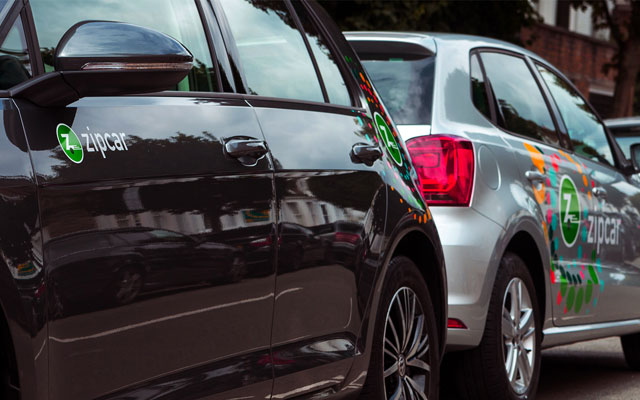
The car-sharing concept was rolled out to Asia when Avis Budget Group’s Zipcar Taiwan launched in 2018 with Taipei selected as the first major city in Asia for the launch, but agents are skeptical about the concept taking off among the region’s travellers.
Zipcar currently has almost 10,000 members sharing a fleet of 100 Volkswagen and Audi cars.
While there are no complete plans on where this service will be launched next, the group’s global sales and partnerships head, Juila Kemp, believes car-sharing is gaining momentum among the Chinese. She cited research by consumer insights firm JD Power showing that in 2017 more than half of the respondents (from mainland China and Hong Kong) know about timeshare car rentals and 70 per cent of them are willing to try them out.
Avis’ car-sharing service rolls into Asia with Taipei as the launch city for the region
She said: “Consumers in China and Hong Kong also have had good satisfaction from using ride-hailing apps, and we think this positive sentiment may make them more open to trying car-sharing.
For now, challenges in getting car-sharing off the ground in China and Hong Kong include the lack of industry standards, dedicated parking and safety regulations.
Government support is needed when it comes to managing dedicated parking as well as lifting restrictions on vehicle licences for shared vehicles.
For outbound travellers, industry stakeholders in China and Hong Kong are yet to see the car-sharing potentials.
Ctrip, chief business officer, overseas car rental business, Lei Fang, said: “While self-drive holiday is very popular in North America, Australia, New Zealand and Thailand, car-sharing concept is not mature for the Chinese. For sure, this will be a future trend but it has not taken off yet. It may take time to test the idea, just like with Airbnb (initially), I reckon FIT budget travel websites like qyer.com and www.lvy.cn better match with such demand. Still, the key challenge is to build customers’ trust first.”
Guangzhou-based Zuzuche.com, chairman of the board, Ben Lee, also does not see strong demand for car-sharing. He explained: “The majority of our clients travel with family or colleagues, (which requires additional seats). Also, there is the luggage issue when you share car with the others. Most car-sharing may happen for short distance so it may be relevant to backpackers’ point-to point services but Chinese travellers usually experience long-distance journey covering multi destinations.
Unlike car rental and other private transport options, car-sharing does not come with the option of hiring a chauffeur, which may be a requirement for those who are not comfortable with driving and navigating in a new country.
Connexus Travel, managing director, Gloria Slethaug, pointed out that the core market for car-sharing may be limited to those with short, fixed itineraries to specific destinations.
“Car-sharing is practically a taxi service with a variety of cars, however with some countries or cities being unregulated or without proper license – hence the target audience is different. Car-sharing service is usually for shorter time frame including one to two hours’ usage, while it is only available for some cities with usually electric car and a fixed parking bay.”
In comparison, existing car rental options offer the flexibility for pick up and drop off at more points in destination cities and airports.
Hertz Hong Kong, manager, Jo Law, similarly does not see a big market for the service in travel and tourism. “For business travellers handled by TMCs, car-sharing would not be a proper option due to current corporate policy and the grey area of insurance coverage. For leisure travellers, self-drive tour is more than transportation, it is an experience and travel style. Car-sharing is more targeted to local resident and to save transportation cost.”
Correction: The article earlier stated that Avis currently has almost 10,000 members sharing a fleet of 100 Volkswagen and Audi cars. It should be Zipcar. The story has been updated.
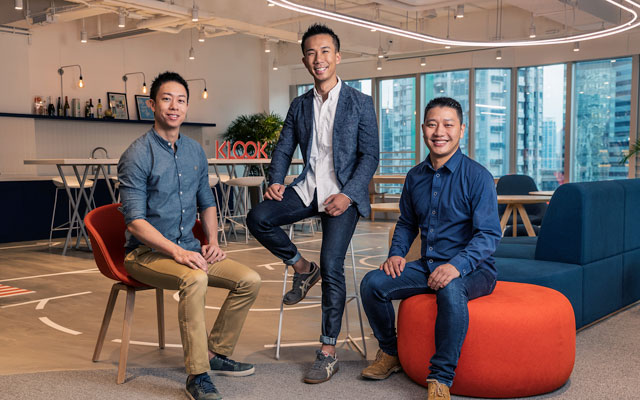
Klook’s co-founders (from left): COO Eric Gnock Fah, CEO Ethan Lin and CTO Bernie Xiong
Hong Kong-based travel activity booking platform Klook has raised US$225 million in Series D+ funding, coming just eight months after the company announced its US$200 million Series D funding last August.
This represents the largest financing in the global travel activities and services industry, which is led by the SoftBank Vision Fund with participation from existing investors, including Sequoia China, Matrix Partners, TCV and OurCrowd.
Klook’s co-founders (from left): COO Eric Gnock Fah, CEO Ethan Lin and CTO Bernie Xiong
With the additional funding, Klook will scale its operations into new geographies and continue its expansion in its existing Asian markets. The company plans to deepen its investments in Japan, deemed one of its most important markets, ahead of the 2020 Summer Olympics in Tokyo, and will expand into additional Japanese cities to better serve both inbound and outbound visitors.
“This latest investment is a true testament to the progress made by the Klook team in building the world’s number one super app for all in-destination needs,” added Eric Gnock Fah, COO and co-founder of Klook.
In just four years since its launch in 2014, Klook has become the most searched travel activities and services company on Google. In the last year, the Hong Kong-based company expanded its global footprint into Australia, Europe and the US, and has also entered into major global partnerships with Shangri-La Hotels and Resorts and Rail Europe.
The Ascott’s co-living lyf brand is gaining traction in Asia, making up a trio of signings among the hospitality company’s new 14 contracts clinched to manage 14 properties comprising over 2,000 units in eight countries – China, Germany, India, Indonesia, Japan, Malaysia, Thailand and Saudi Arabia.
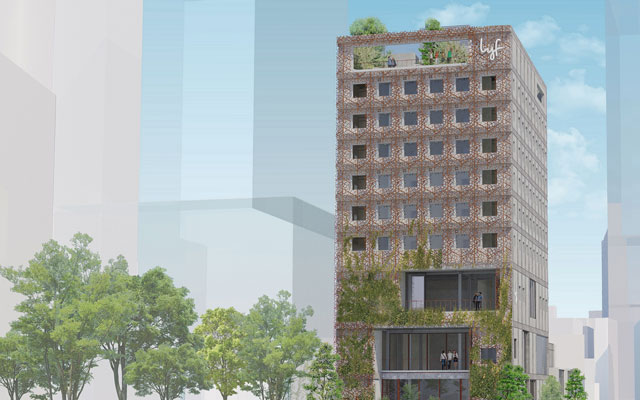
Three of the 14 new properties will be under Ascott’s co-living lyf brand, and will be located in the cities of Fukuoka, Kuala Lumpur and Shanghai.
lyf Fukuoka
Scheduled to open in 2020 are the 131-unit lyf Fukuoka, located in the city’s major retail and recreational centre, and lyf Raja Chulan Kuala Lumpur, part of the Golden Triangle. The 160-unit lyf Hongqiao Shanghai, located in Hongqiao’s CBD, is set to launch in 2022.
Kevin Goh, Ascott’s CEO, said: “Demand for our lyf-branded co-living properties is gaining ground. We are bringing lyf to Fukuoka, Kuala Lumpur, and Shanghai as the buzzing start-up ecosystems in these cities have given rise to a popular culture of living and co-creating as a community among the millennials.
“Millennials already account for a quarter of Ascott’s customer base; and with our lyf brand, we can seize opportunities presented by the booming millennial generation, set to become the largest spending travel demographic in the near future.”
Besides Singapore, China, Japan, Malaysia, Thailand and the Philippines where Ascott will be opening lyf properties, the company targets to expand the brand into potential markets like Australia, France, Germany, Indonesia and the UK.
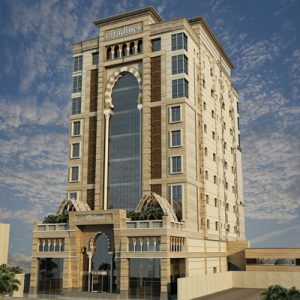
Citadines Al Aziziyah Al Khobar
The remaining 11 signings consist of a mix of Somerset and Citadines branded properties, which will progressively open between this year and 2023. They will be located in the following cities: Changchun, Foshan, Hong Kong, Shanghai and Shenzhen in Greater China; Frankfurt; Fukuoko; Gurgaon; Jakarta; Pattaya; and Al Khobar in Saudi Arabia.
One notable property the 100-unit Ascott Riverpark Tower Frankfurt, which will mark the first time Ascott is bringing its premier Ascott The Residence brand to Germany. Tabled for an opening in 2022, the property will be designed by world-famous architect Ole Scheeren.
Goh added: “In addition to the 14 new properties, we secured our first property in Australia under our recently launched Citadines Connect brand of select-service business hotels, extending our product offerings to owners and customers… we will fast-track Ascott’s expansion to achieve our global target of 160,000 units by 2023.”
Boutique luxury cruise line Aqua Expeditions is diversifying its business operations to enter the coastal cruises market in 4Q2019, after operating as a river cruise line for the past 12 years.
Scheduled to begin operations from November 2019, the explorer class vessel will serve three new destinations with year-round departures. The full announcement on vessel name, facts, destinations and itinerary details will be released globally on May 8, 2019.
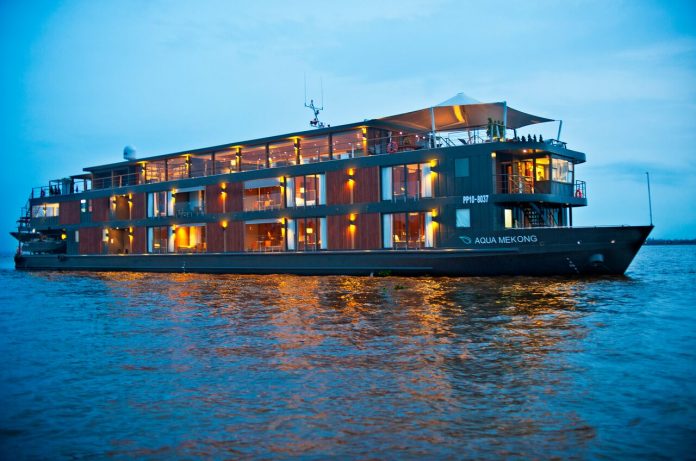
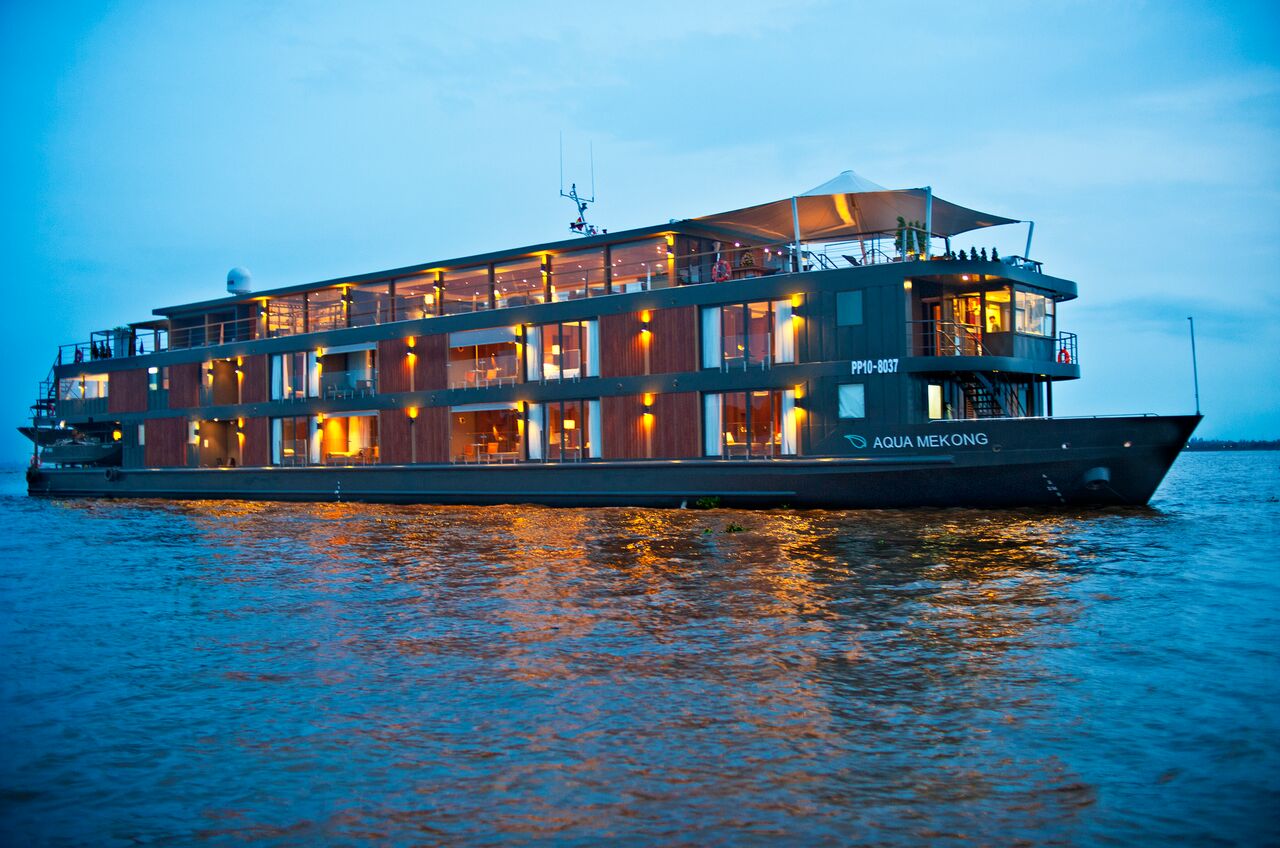
Aqua Mekong
CEO Francesco Galli Zugaro, said: “As with all Aqua Expeditions vessels, we will be partnering with a renowned designer and also a critically acclaimed chef to deliver a world-class culinary experience.”
A state-of-the-art, new-build luxury river cruise vessel will also be unveiled during its upcoming announcement. Together with a recently-purchased expedition vessel – bought in March 2019 and currently undergoing refurbishment – in operation, the cruise line will double its fleet from two to four vessels by mid-2020.
Why
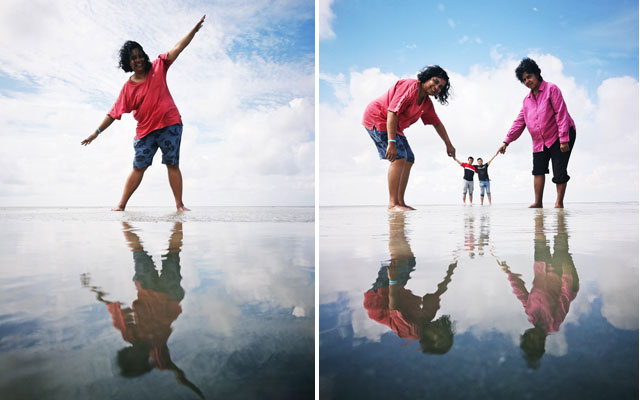
After hearing many stories about Sky Mirror and seeing stunning Instagram pictures shared by friends who had been there, where their reflections on water were as clear as in a mirror, I was determined to create some Instagram worthy moments there myself.
Sky Mirror is all the more an aspirational place to see and experience, given that it surfaces in its full glory only a few times a month. It is a seabed that appears above water only during low tide, exposing an expansive dark coloured sandbar as huge as 50 football fields. It takes about half an hour to walk from one end of the sandbar to another.
The best time to take photographs at Sky Mirror are on the first and 15th days of the lunar month, as well as four days before and after these dates. Outside of these dates, the reflection from the water may not be as clear, and picture quality not at the optimal best.
While in Kuala Selangor to experience Sky Mirror, I also had the option to do an enriching activity. Sky Mirror Tour & Travel offers a one-day do a tour of Bukit Melawati, which has a history dating back to the 16th century, and was the state’s first administrative centre. Bukit Melawati offers panoramic views of the countryside and the sunset.
As the foothill of Bukit Melawati was within walking distance from the jetty, it made sense that I should visit it before heading back to Petaling Jaya, about 1.5 hours away.
The one-day tour includes a delicious seafood lunch and dinner and opportunities to shop for local seafood produce made in Kuala Selangor.
Eiffel Tower prop provided by the tour operator
What
Visits to Sky Mirror on the Straits of Melaka were only promoted to tourists from 2H2017 onwards, after its main jetty was launched by the former chief minister of Selangor, Mohamed Azmin Ali.
Prior to this, it was a local haunt known only to the fishing community of Kuala Selangor.
For many locals living in Selangor, Bukit Melawati is a weekend getaway and the main attraction there is feeding the wild, silver-leafed monkeys that roam about freely. I personally feel that the authorities should put an end to this as it promotes over breeding. Our eco-conscious guide pointed this out and discouraged our group from purchasing leafy greens to feed the monkeys with.
Luckily, I had a guide who was a good storyteller, otherwise the significance of over-three-centuries-old artefacts used to fight wartime enemies would have been lost on me. He gave me a glimpse into the macabre past of Bukit Melawati through the numerous cannons, poisoned well, traitors’ grave and the chopping block where enemies were decapitated.
There is also a museum located near the lighthouse, known as Kuala Selangor Historical Museum, which is open free-of-charge to the public. It contains displays of weapons used in the olden days, specimens of old currencies, dioramas and information on the history of the place and its rulers.
However, I found the experience rather dry as it involved a lot of reading. Personally, a short video documentary would have been more effective.
How
My day tour started at the Kuala Selangor jetty, where I was greeted by a guide. He gave a brief introduction about Sky Mirror and Kuala Selangor in general, and mentally prepared us for the 30-minute speed boat ride to Sky Mirror, which he forewarned could get bumpy at points.
The speed boat has a maximum capacity of 12 people, and was full when I visited last Boxing Day. There were easily a few hundred people ahead of us when we reached our destination, but it didn’t feel crowded as the seabed was huge.
Our guide, Johnny Tee, told us to stick together as he led us to a clear area, which became the spot for the photography session that was to follow. Johnny guided us on how to pose, and created special effects with the props brought from his office. The end result was very impressive. In all, the photography session took about an hour.
We were also captivated by the sight of hermit crabs and sea clams that inhabit Sky Mirror.
The Sky Mirror experience was followed by a seafood lunch at Jeti Seafood Restaurant. Here we had the freshest of seafood, from the fishermen’s catch brought to shore just two hours before our arrival.
After lunch we stopped by some shops selling local produce opposite the restaurant. This was followed by a drive to Sri Shakti Dhevasthanam Temple in Bukit Rotan, a beautiful century-old attraction.
We then drove on to Bukit Melawati, where our guide brought history to life. He also showed us to walking treks known only to locals. Along these routes, we stopped to watch eagles soar against the setting sun and enjoyed beautiful panoramic views of the township below us.
Verdict
Sky Mirror sells itself, but what made the tour worthwhile were the individuals involved – the guide with great storytelling skills, and the excellent photographer who showed us tips and tricks to snap the perfect Instagram shot.
Operator: Sky Mirror Tour & Travel Price: RM300 (US$74) per person for a group of up to six people, or RM500 for a smaller group of two people; free of charge for children below the age of two.
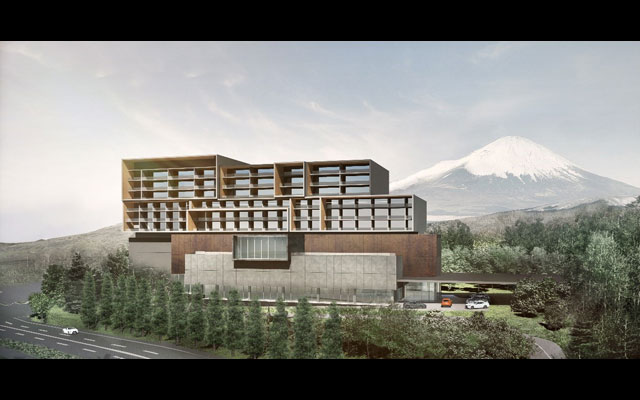
Hyatt Hotels Corporation has entered into a management agreement with Towa Real Estate, an affiliate of Toyota Group, to develop a 120-key hotel at the Fuji Speedway, Japan’s historic racing circuit.
Slated to open in 2022, the project will be the first in Japan under The Unbound Collection by Hyatt brand. Guestrooms will start from 45m2 and feature views of Mount Fuji.
Hotel amenities will include multiple fine dining restaurants and bars, as well as indoor pool, fitness centre, spa and natural onsen hot-spring bathing facilities. A 500m2 ballroom and a 200m2 conference room will cater to events.
A Motorsports Museum, housed within the property, will showcase the historic significance of Fuji Speedway with rare, historic automobiles making up its artefacts.
In addition, Towa Real Estate is also developing a Motorsports Village facility in the foothills of Mount Fuji. There will also be a Oyama Parking Area Smart Interchange opening in 2021.




 AirAsia launches flights between Bangkok and Ahmedabad