Idemia Public Security will roll out its PaXpress SmartLane, a frictionless biometric group processing innovation, at airports across Asia-Pacific in the next six to 12 months.
The product supports Idemia Public Security’s quest “to make the technology invisible but the trust visible” at airports.
PaXpress SmartLane’s differentiation from conventional kiosks and gates lies in its ability to identify multiple people as they pass through a control area and “help maintain the flow where conventional stop-and-check processes create queues”.
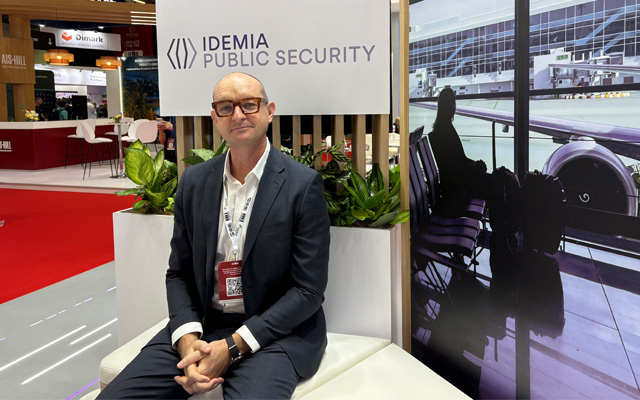
Tim Ferris, global head – Borders & Travel, speaking to TTG Asia at the inaugural Passenger Terminal Expo (PTE) Asia, held in Singapore last week, noted: “Automation has already improved individual steps, but the next opportunity is to connect the journey.
“Digital identity and biometrics can allow a traveller’s identity to be established once and securely verified at relevant touchpoints – from check-in and pre-security to border control and boarding – rather than repeating the same process at each step.”
Commenting on required airport infrastructure for PaXpress SmartLane’s adoption, Ferris said it depended on the scope of the journey, and a solution may require biometric capture devices, kiosks or gates, cameras, sensors, passenger guidance displays, and connections to existing airline, airport or border systems.
He said that the airport or airline could create a digital identity during check-in – for example through a smartphone app before the traveller reaches the airport. This securely links the traveller’s biometrics to their travel documents and journey information, and can support services such as self-service baggage drop-off, pre-security access and boarding.
There is no limit to the number of people the new system can verify at once. “Capacity depends on the touchpoints, their configuration, and the checks required,” he stated.
Ferris stressed cooperation between stakeholders is key, and airports, airlines, authorities and technology providers need to design the journey together. This becomes particularly important when border control is involved or when the ambition is an end-to-end journey across departure and destination.
There is also no fixed minimum daily passenger capacity for PaXpress SmartLane, and the business case depends on what an airport wants to achieve, rather than its size alone.
While large international gateways are strong candidates because high volumes, peak-hour congestion and space constraints can put significant pressure on both operations and the passenger experience, the new system also works for smaller airports that have a clear vision to elevate the passenger experience or want to address a specific bottleneck.
Ferris declined to name which airports in the region will be the first to deploy PaXpress SmartLane.