Destinations and hospitality companies are leveraging the magnetic power of sports to build interest and loyalty
A certain branch of tourism has been described by the UN Tourism as a “fundamental axis” that possesses the ability to “promote social, economic and environmental action” and “leave a long-lasting positive legacy” on communities.
This type of tourism activity triggers an adrenaline rush in both participants and observants alike, and inspires a trip even when activity is not the primary purpose.
This is sports tourism – a segment that is generating around 10 per cent of the world’s expenditure on tourism, with an estimated growth rate of 17.5 per cent between 2023 and 2030, according to UN Tourism’s Sports Tourism Market Size, Share & Trends Analysis Report.
The power of sports tourism is also observed by Visa, the global digital payments network. Visa’s 2026 Global Travel Intentions (GTI) study, which surveyed over 17,000 travellers across the Asia-Pacific region, found that 54 per cent of respondents intend to travel for sports events specifically.
“This intent is especially strong among affluent respondents at 67 per cent and Gen Z travellers at 62 per cent,” noted Danielle Jin, chief marketing officer, Visa Asia Pacific.
She added: “Importantly, major global sports events are massive magnets for tourism. According to the GTI study, around 65 per cent of the most-searched 2026 travel dates and destinations align with massive global sports competitions such as the FIFA World Cup.
“As the official payment technology partner for the FIFA World Cup since 2007 and a proud supporter of the world’s most prominent sports events like Formula 1 and the Olympics, we see these events as more than just competitions – they give fans an opportunity to be part of a global moment, connect with others in the fan communities, and in doing so, experience a destination through something they are passionate about.”

The tourism connection
Jin noted that sporting events have mass global appeal and attract a broad base of international travellers, with spending driven notably by travellers from highly connected, mobile and digital-first markets.
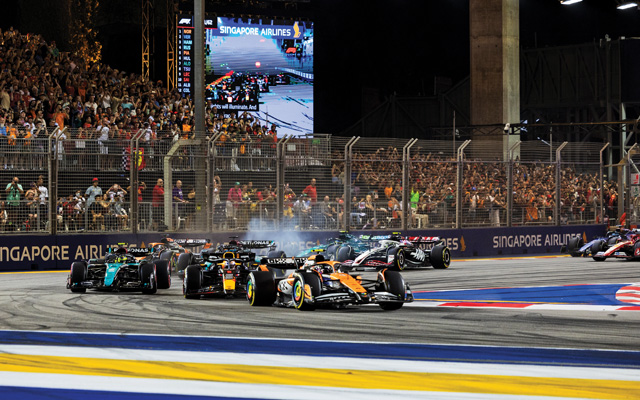
Citing VisaNet data from the Formula 1 Singapore Grand Prix in 2025, Jin said travellers from Australia, China, Indonesia and the US accounted for more than 40 per cent of all traveller spending during the week of the race.
“Going deeper into the data, we also found two emerging segments driving travel spending,” stated Jin.
The first are affluent travellers. Visa’s GTI study found that 67 per cent of affluent travellers intend to travel for sports and racing-related events, showing how premium segments see sporting events as a way to chase their passions and explore destinations in a new light.
“Their spending reflects this: during the F1 Singapore night race in 2025, Visa data found that affluent travellers were a major driver of traveller spending – accounting for around 30 per cent of visitors into the city but generating 40 per cent of total spending,” detailed Jin.
Second are business travellers. During the Singapore Grand Prix week in 2025, VisaNet data showed that business cardholder arrivals rose by around 80 per cent, while spending increased by approximately 170 per cent.
“This reflects a rising trend of business-leisure, or bleisure travel, where corporate travellers visiting a city for work or meetings also plan in advance to experience sporting events that match their interests,” she added.
Interestingly, it is more than just the action on the track or pitch that lures sports tourists. Festivalisation of the sporting event – the carnivals and concerts that come with the actual sport – is just as influential.
Jin told TTG Asia: “At the end of the day, sports fans who venture overseas are also travellers. Another emerging pattern in Asia-Pacific is the surge in travel for music and entertainment experiences – according to Visa research, 65.7 per cent of Asia-Pacific consumers intend to travel for global concert tours.
“This means that sporting events with festival elements represent a convergence of passions in Asia-Pacific that delivers a win-win for both the destination and the sport itself. Fans travelling to a sporting event can enjoy fresh and unique experiences on top of the competitions, while festival elements can provide a gateway to introduce new fans to the sport.
“The net result is an increase in tourism to the destination cities and this creates positive spillover for local businesses.”
VisaNet data showed that travel into Singapore during the Singapore Grand Prix week in 2025 grew by around 25 per cent compared to a typical week, and spending surged by about 45 per cent. Night-time spending in particular grew by over 90 per cent, showing how travellers who visited the city for the race also delivered a boost to businesses like restaurants and entertainment outlets.
Jin said: “From a tourism perspective, festivalisation can significantly broaden the appeal of sporting events beyond appealing purely to sports fans. By offering a wider mix of entertainment and lifestyle experiences, destinations can attract a more diverse traveller base, encourage longer stays, and create deeper connections with travellers.”
Sports tourism also encourages longer stays, as sporting events act as a “gateway” for fans to “explore more unique local experiences in the cities they visit”.
According to Visa intelligence, 49 per cent of travellers enjoy learning about host-country cultures via major tournaments – showing how sports events are a springboard for more travel and tourism. Around 53 per cent of respondents expressed interest in beach or resort holidays, 40 per cent indicated an interest in outdoor activities, 33 per cent wanted to explore museums and galleries, and nearly half were interested in exploring local culture.
She added: “We also see this reflected in actual spending through VisaNet data. During the Formula 1 races in Australia and Japan in 2024, we saw travellers who visited the race cities continue their travel even after the races. In Australia, one in four overseas travellers explored cities near Melbourne while in Japan, travellers were much more adventurous, visiting cities as far as Okinawa – 1,200km away from the race city of Suzuka – to explore more of the country.
“These point to a simple fact that travel is woven into the fabric of Asia-Pacific. Sports is an emerging area of interest, or what we at Visa call a ‘passion pillar’, sparking a new wave of travel patterns and preferences.”
Business opportunities
Hospitality companies recognise the complementary relationship sports and tourism share, and are clever to weave sports into their guests’ experiences.
A mix of exclusive invites to sporting events as a reward for top-tier loyalty guests and accommodation deals bundled with event tickets have proven to be a hit with Ascott’s customers.
In fact, according to Tan Bee Leng, chief commercial officer at Ascott, access to special deals and loyalty perks that bring guests closer to sports celebrities and high-demand events plays a crucial role in driving new member subscriptions to the Ascott Star Rewards (ASR) programme, which is on track to reach 10 million members by the end of this year.
The lodging specialist has run successful activations with Chelsea Football Club (CFC), Wimbledon Championships and Roland-Garros.
Tan pointed to studies that show more people are choosing to travel for experiences, and sports and entertainment are top motivations.
Hence, combining sports and entertainment with accommodation “makes a lot of sense”, remarked Tan, adding that packages and loyalty perks that feature sports exclusives helped customers to see Ascott as more than just a lodging provider.
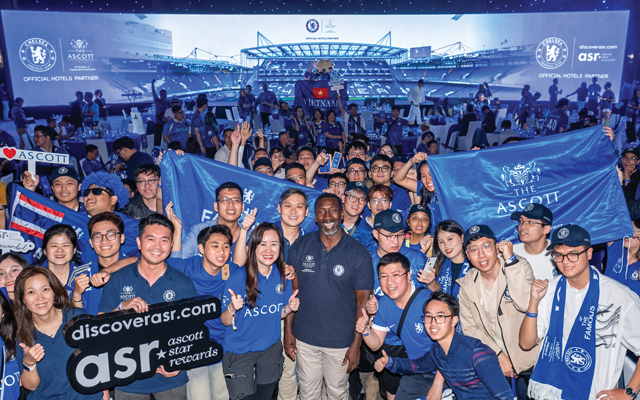
With CFC, Ascott is able to craft special guest experiences tied to celebrity engagements and lively watch parties. In April this year, Ascott brought football legend Jimmy Floyd Hasselbaink to Hanoi for a two-day exclusive international fan engagement event in Hanoi, Vietnam. The programme was held across Ascott Tay Ho Hanoi, Oakwood Residence Hanoi, and Somerset West Point Hanoi.
First inked in 2024, Ascott and CFC’s partnership allows both parties to collaborate on curating money-can’t-buy experiences for ASR members around the world, including exclusive access to matches at Stamford Bridge stadium, home of Chelsea FC, as well as VIP visits to The Blues Cobham Training Ground.
Tan said the CFC partnership appealed even to non-CFC fans and people who were new to the sport. “Our events facilitated the whole idea of coming together to enjoy the sport,” she remarked.
Meanwhile, Ascott’s Wimbledon Championships and Roland-Garros activations were motivated by affluent guests who had difficulties securing passes that were in high demand.
“So, we found access for them. We offered stay packages that included match tickets and quality hospitality – something that our affluent guests valued,” said Tan.
Ascott’s ability to feature sports celebrities, such as Hasselbaink and Chinese professional tennis player Zheng Qinwen at its guest engagement events reinforces its reputation for creating exclusive moments for its guests – something that existing and potential real estate owners also appreciate.
Ascott will continue to expand its sports exclusives. It will prioritise high-profile sports that many people will travel for; sports with a large, global fan base; and sports that guests show interest in.
Hyatt is also showing up for sports tourism. It is now the Official Regional Hotel Partner for Hyrox, a fitness race that combines a running race with workout stations and is all the rage now worldwide. Hyatt supports Hyrox athletes with stay-and-race packages that deliver comfort and exclusive hotel rates near race venues across Asia-Pacific.
These Hyrox race-cation packages include a special hotel room rate; in-hotel dining discounts so guests can eat well and comfortably before the race; quality breakfast options on race day; wellness and recovery touches afterwards; spa discounts; and ice buckets available on request. As a thoughtful perk, free laundry service is also offered while destination guides are distributed to encourage guests to explore beyond the competition.
Tammy Ng, vice president of brand & marketing, Hyatt Asia Pacific, told TTG Asia that Hyatt and Hyrox’s partnership was a perfect match, backed by shared values around community, personal achievement, and the idea of showing up for an activity of value.
Ng said: “We are seeing more people travelling specifically for fitness events, often training for months and then building a whole trip around race day. For many, wellness is no longer only about slowing down, going to a spa or taking a retreat. It is also about movement, performance, self-improvement and being part of a community.
“Hyrox also has a format that is accessible to everyday athletes, not just elite competitors. That made it a natural fit for World of Hyatt. For us, the opportunity is to support the full race journey, not just the overnight stay. Our hotels can become part of how guests prepare for the race, perform on the day, recover afterwards and celebrate with the people they travelled with.”
Hyatt’s race-cation packages have been a hit, particularly with those who travel to multiple races around the region, noted Ng, adding that Hyrox participants often “build a vacation around the event”.
“Beyond the competition itself, guests are looking for meaningful experiences that support both physical and emotional well-being. The race-cation offers a reliable and convenient experience across race cities that our members can rely on,” she said.
As a prominent sponsor for many sporting events around the world, Visa is well versed with leveraging exclusive sporting experiences for stronger customer connections.
Jin said: “We believe that when Visa can champion people’s passions and create the right platforms for them to be who they want to be, we can elevate experiences, deepen brand connections, and drive real growth.”
Visa aims to be “an enabler” of the positive outcomes of sports tourism. “Using our brand and trusted network, we strive to make the fan journey – ticketing, transport, dining, merchandise, and everyday spending – feel effortless,” she detailed.
During the FIFA World Cup 2026, Visa’s Tap In global campaign offered fans a chance to win limited-edition merchandise, signed memorabilia, and a trip to the final games. In Asia-Pacific, Visa hosted live watch parties for Visa guests and cardholders, and offered hospitality privileges for Visa Infinite cardholders in Tokyo.
Singapore: For the love of all sports
The tiny island state of Singapore packs a punch in the competition for sports tourism. It took home the Asia’s Leading Sport Tourism Destination award at the World Travel Awards in 2010, 2023 and 2025.
Lilian Chee, director, sports, Singapore Tourism Board (STB), believes that this repeated recognition “reflects a combination of strengths”.
She elaborated: “At its foundation is world-class infrastructure and seamless operational excellence, from our venues and transport connectivity to the end-to-end experience of hosting major events. This creates a reliable, high-quality environment that event organisers, athletes and spectators trust, and that keeps them coming back.
“Beyond the events, Singapore offers travelling fans something truly distinctive. As a compact, safe, and vibrant city, visitors can enjoy a world-class sporting event alongside everything else the destination has to offer: exceptional dining, rich culture, and world-class entertainment. This makes Singapore a compelling sports tourism package, not just a ticket to a game.
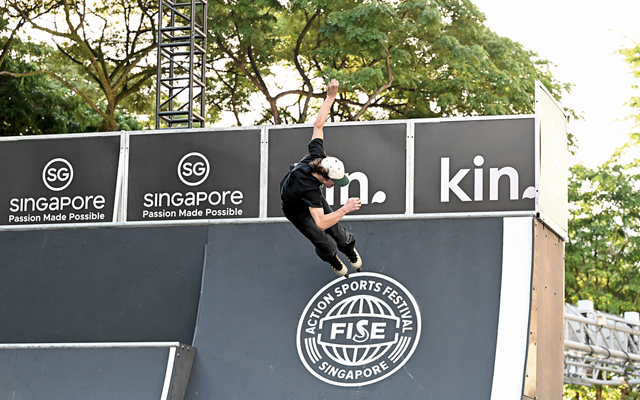
“Singapore has also built a strong track record as a test bed for innovation in sports and events management. Through initiatives such as the Kickstart Fund, which supports local businesses in test-bedding innovative concepts, products and events with untested tourism potential and scalability, Singapore has been able to nurture fresh ideas and bring them to life. Past events supported under the Fund include the largest urban sports festival FISE Singapore 2025, a testament to our openness to piloting new formats and fan engagement concepts that make us an attractive partner for rights holders looking to push boundaries in Asia.”
Although Singapore’s iconic Formula 1 night races come immediately to mind in a conversation about sports tourism, the city-state boasts a diverse line-up of sporting events, from golf and triathlon to pickleball and floorball.
Chee said it is Singapore’s ambition to become Asia’s premier events capital, and STB is focused on attracting a wide array of internationally renowned and compelling sports events that strengthen Singapore’s destination appeal, generate global branding value, and contribute to a rich and varied events calendar that keeps Singapore relevant and exciting to diverse groups of visitors year-round.
In 2026 alone, Singapore will host at least nine top sporting events. New to Singapore’s sports tourism gains are the Singapore Tennis Open, NBA Rising Stars Invitational (basketball), and PGL Singapore Major 2026 (esports). Singapore will host the only Tennis Open event in South-east Asia this year while NBA Rising Stars Invitational is the league’s first regional high school tournament and a first-in-Asia product. PGL Singapore Major will bring the first Counter-Strike 2 Major to South-east Asia.
When asked to define Singapore’s strategy in building an attractive sports tourism environment, Chee said STB does not target specific sports. Instead, it regularly assesses the sporting landscape to identify which genres, event formats, and concepts deliver the best tourism outcomes for Singapore.
“Key considerations include the international fan following a sport commands, the travel propensity of its audience, and the broader economic and reputational value it brings to Singapore as a destination. This keeps us responsive to evolving global trends, and ensures STB is always pursuing opportunities that best align with Singapore’s tourism goals,” said Chee.
Bangkok: Hyrox hot spot
The largest Hyrox race in Asia was recently held in Bangkok, Thailand, with more than 22,000 participants from Thailand and overseas taking to Queen Sirikit National Convention Center to complete gruelling fitness circuits.
This August competition is also significant because it is the second Hyrox edition in the same city in the same year. Furthermore, it was expanded from three days to four, reflecting strong and growing demand from both participants and the local fitness community.
Gary Wan, managing director of Hyrox Asia Pacific, explained that “Bangkok’s dynamic lifestyle, vibrant energy, and global tourism appeal make it a compelling destination for international participants and are key factors behind Hyrox’s decision to stage the event in the city for the second time this year, following BYD Hyrox Bangkok in March, which welcomed nearly 17,500 participants”.
The next big thing
Ascott and Visa are keeping an eye on the growth trajectory of participative sports.
Visa’s Jin told TTG Asia that “participative sports are an exciting development, reflecting yet another way for people not just to pursue their fitness journey alone, but with a community of like-minded others”.
“Athletes who train for these events often see these as personal milestones they train passionately for and build travel plans around,” she added.
Ascott has yet to feature any participative sports in its guest experiences, but its teams are studying the potential business influence of such events. Opportunities may lie in marathons; Ascott is considering the curation of unique experiences in the cities where famous marathons are scheduled.
At Hyatt, the partnership with Hyrox is expanding – just as the sport itself is. More than 110 Hyatt hotels are now participating in the experience, including recent expansion into China and India. Supporting races in key cities such as Singapore, Bangkok, Hong Kong and Shanghai, the partnership has enabled the international hotel group to connect with a growing population of active, community-minded travellers while introducing more guests to Hyatt in a meaningful manner.