Taiwan is encouraging visitors to look beyond its familiar cities and combine different destinations and experiences, seeking to give travellers more reasons to return and discover more of the island.
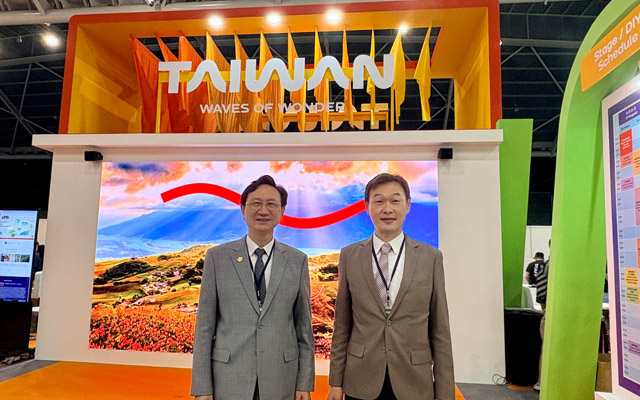
Tung Chen-Yuan, representative of the Taipei Representative Office in Singapore, said the aim is for visitors to experience the destination through diverse landscapes and activities, ranging from mountain hikes and biking to cultural exploration in museums.
He highlighted southern destinations for travellers to explore, including Nantou, Hsinchu, Chiayi, Tainan, Pingtung and Kaohsiung, alongside Taiwan’s offshore islands.
Beyond exploring new regions, Tung outlined how travellers can experience a full day in Taiwan, starting with a traditional local breakfast before moving on to nature or cultural activities, followed by shopping, night markets and evening dining.
For mature source markets such as Singapore, the strategy focuses on providing different reasons for travellers to return.
Paul Shih, director of the Taiwan Tourism Administration (TTA) Singapore Office, said the administration is promoting varying combinations of experiences, from forest walks to hot springs, and night markets.
Eastern Taiwan and the Rift Valley, for instance, offer travellers a slower pace and a different side of the destination. Railway tourism is another avenue for discovery, with specialised trains designed around specific themes, including a dessert-focused sightseeing service.
Wellness is also central to the proposition. Taiwan features 128 hot spring spots, while its accessible forest trails provide opportunities to experience nature in a cooler climate.
Taiwan’s transport infrastructure supports this deeper discovery. Tung noted that the high-speed rail connects Taipei and Kaohsiung in 96 minutes, while highways, charter buses and rental cars provide access to other regions.
Shih added that an upgraded transport pass connects high-speed rail and regular railway services with local buses and shuttles, simplifying travel between cities and regional destinations.
Sustainability is also being incorporated into tourism development. Shih said Taiwan is measuring carbon emissions associated with travel, while hotels have begun reducing single-use items such as toothbrushes and plastic bottled water, and attractions have installed waste separation bins.
To further incentivise arrivals, the TTA recently announced a campaign offering NT$5,000 (US$157) in travel credits for selected repeat foreign visitors. Launching on October 1, 2026, the lottery-based campaign applies to travellers entering Taiwan between October 10, 2026, and March 31, 2027.