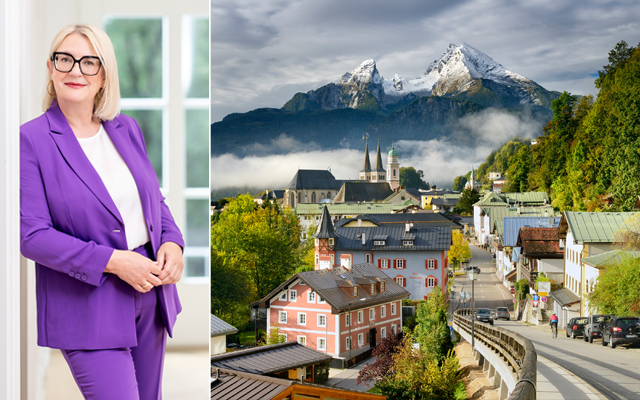
The German National Tourist Board (GNTB) has reopened its tourism office in Singapore to enhance destination presence and trade relationships around South-east Asia, as it recognises the long-term value of the region for Germany.
Petra Hedorfer, CEO of GNTB, told TTG Asia that as global travel flows shift, Asia-Pacific is becoming an increasingly important source market in global tourism.
Hedorfer pointed out that GNTB has long recognised the importance of Asia-Pacific, having made its first move into the region a decade ago with a sales agency in Singapore. Within a few short years, the office was able to establish strong regional networks and achieve significant increases in overnight stays.
However, the office was terminated in 2020 during the height of the Covid-19 pandemic.
The revival of the office is timely now as South-east Asia has “regained a strategic long-term growth” prospect for Germany.
According to the Federal Statistic Office of Germany, South-east Asia accounted for 1.73 million overnight stays in the country in 2025. The five priority markets of Singapore, Indonesia, Thailand, Malaysia and Vietnam have all recorded an increase in the number of trips to Germany, with Vietnam showing the biggest improvement (up 12.1 per cent between 2023 and 2025).
Travellers from the region spent 1.34 billion euros (US$1.56 billion) in the same year, according to IPK International. Singapore accounted for the largest share at 400 million euros, followed by Thailand and Indonesia at 300 million euros each, Malaysia at 200 million euros, and Vietnam at 100 million euros.
“A substantial share of this supports German tourism businesses – hotels, restaurants and the retail sector. With an average stay of 10.4 nights, visitors from the region also rank above average by international comparison,” detailed Hedorfer.
The South-east Asia office will strategically develop the five priority markets, and recognises that each is uniquely different.
“Singapore, for example, is a premium market with strong spending power. Malaysia shows very good potential, with visa-free travel and high daily spending. Thailand and Vietnam are seeing growing demand for leisure travel, while Indonesia offers significant long-term potential because of the size of its population,” she explained.
Hedorfer regards the reopening of the office as a crucial move in today’s volatile geopolitical landscape, as the team is able to “show our presence, build personal relationships, and nurture networks”.
“Personal encounters are key factors not only to peaceful cultural exchange, but also to stable economic relations,” she opined.
The office will activate a digital strategy, adopting coordinated B2C communications to support the travel industry. Global campaigns will consistently leverage the strengths of the destination brand to inspire travellers to choose Germany.
“From a competitive point of view, Germany is already in a strong position. In 2025, Germany ranked second among European destinations for Singapore, Thailand and Vietnam, and fourth for Indonesia and Malaysia,” she said.
Hedorfer noted that several travel trends today are advantageous for Germany. One of that is South-east Asian travellers’ move away from “classic sightseeing”.
“They want experiences that feel meaningful and authentic – historic cities, UNESCO World Heritage Sites, castles, festivals, local neighbourhoods, food culture and scenic routes. That fits Germany extremely well and connects closely with our Germany Simply Inspiring brand narrative, which presents Germany as a high-quality, service-oriented and very diverse travel destination,” she said.
The GNTB’s 2026 campaign, Next Stop: Travel Destination Germany, builds on the strong experiential travel trend by highlighting Germany’s urban diversity across both major cities and smaller towns, and focusing on authentic encounters, creative neighbourhoods, local markets, and living culture.
The GNTB’s Culinary Germany campaign taps into South-east Asian travellers’ love for food by positioning Germany as a diverse culinary destination, featuring regional specialities, seasonal produce, wine, beer, bread culture, weekly markets, festivals, and Michelin-starred cuisine.
Hedorfer is confident that her destination’s “extraordinary diversity” as well as hospitality will appeal to travellers from South-east Asia.