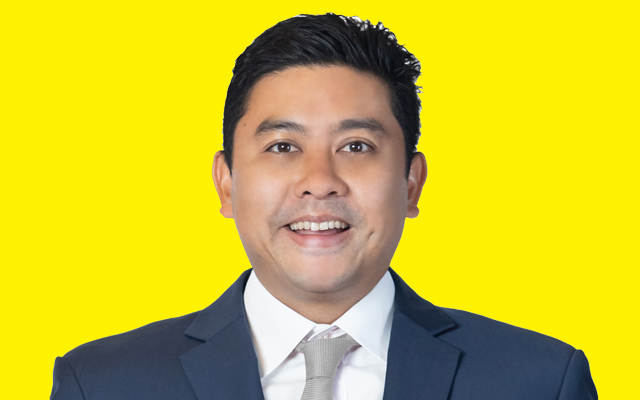
Yuthachai Charanachitta, CEO of Onyx Hospitality Group, discusses surviving crises, his disciplined push to have more than 75 properties by 2030, and ways to keep a Thai-rooted operator relevant across Asia-Pacific
Onyx Hospitality Group began as a construction company that became a hotelier in Pattaya six decades ago. How did the group get from that first lodge to today’s four-brand portfolio?
It started with my grandfather, who founded the group. We still run Italthai, one of the largest construction companies in Thailand, and 60 years ago, in the boom that followed the Second World War, the Eastern Seaboard was opening up and we had the chance to build a hotel in Pattaya. The foreign investor behind it wanted to exit, so we took the asset we had helped develop into our own hands.
That first property was Nipa Lodge, then Orchid Lodge nearby, and the Amari brand was effectively born in Pattaya. The company that began as Siam Lodge became Amari Hotels & Resorts, a single brand with 12 properties.
About 20 years ago, I rebranded it as Onyx Hospitality Group so we could carry more than one brand: Amari as the core, alongside Ozo, Shama serviced apartments, and Oriental Residence.
Why did you choose the name Onyx?
We worked with brand consultants two decades ago and wanted a common name that was not already registered. Onyx is a black mineral, solid, with a steady base, and it comes from the earth, so everything about it is grounded. Our business is hospitality, and hospitality has to be grounded, so the idea fitted.
For the first years the name was a blur, and it is really only in the past six years, since I took the chief executive’s seat, that you can see genuine traction and visibility for Onyx Hospitality Group. Then Covid hit. We survived it, and we have re-emerged as a company that is 60 years old but feels new, rejuvenated and reborn in how we run our assets inside Thailand and beyond.
As Onyx Hospitality Group marks its 60th anniversary, what are you most proud of?
For me it is surviving the fire. Never before in 60 years had a shareholder come in as an active chief executive, but the crisis forced me into operations, to dive into the pool of chaos and sort things out one by one. Covid forced us to see the real self, the people who genuinely wanted to turn the company around.
Much of the work was a clean-up. When I took over there were 60 active contracts, some carrying heavy future liability or weak returns, and I brought that down to fewer than 40 before rebuilding to today’s 45, deliberately balanced at half serviced apartments and half full-service hotels. I am not a hotelier by training; I am a developer, but learning to be an operator is not that hard once you are in it.
Many view hospitality as a scale game. Why do you place such a strong focus on disciplined growth?
For Italthai, we take a long-term view. A hospitality business takes time, and we call these generational assets, the kind you do not sell but protect, ensure it stays competitive and relevant, and hopefully profitable, and pass down. But it is not easy in this sector, because it is very competitive.
Everyone says it is all about scale. But comes back to focus. A healthy portfolio is about selecting the right partner and the right opportunity, in a market you truly understand, and not chasing scale for its own sake.
Too many hospitality companies overstretch on resources and people, and they treat mergers and acquisitions as the quickest way to expand.
The discipline is to grow through the right contracts, not for the sake of a bigger number.
I would rather take one 500-key MICE hotel in a capital city than a 120-key resort on an island away from the boom, because the former is where the volume and positive cash flow sit.
I go hunting for the whale, not the sardine. The whale is hard to find, but there is always one somewhere if you keep your pace and focus.
You have set out to become the best medium-sized hospitality management company in Asia-Pacific. Why not something bigger?
At first the dream was smaller, to be the best in South-east Asia, but as we have grown as a company, we’ve realised that our clientele sits across Asia-Pacific. That does not mean planting a flag in every country.
We feel we want to develop our position to be a trusted business partner and hotel or hospitality operator in the region. We already have a presence in China and Hong Kong, and in time we can stretch to the whole of Australia and Indonesia, which we would like to explore as well – but the ambition is to be trusted, not to be everywhere.
Some in the trade will ask whether a medium-sized, Thai-rooted operator can stay relevant against global groups with more resources. What is your answer?
We are more agile and diligent than the old hospitality groups, the ones locked into a cookie-cutter mould they cannot step out of. We are agile and flexible with reason, while still having a clear brand and position.
We’re open to being creative with our partners and team members to ensure that Onyx is not a boring company. We make sure the group becomes a sizeable company that generates profit. Some operators get so fixated on expansion that there is no return to shareholders, and as a shareholder myself, that is a big lesson for me.
With the portfolio heading from 45 to more than 70 properties by 2030, which markets are your priorities?
The big focus now is Thailand, Malaysia and Laos. In Laos we already run two Amari, with a Shama coming and hopefully an Ozo in Vientiane. China is a very difficult market, so we mostly keep Shama there on a franchise model, with the Y Hotel Nanshan Shenzhen as the exception – a white-label – that we’ve taken on full management for our Hong Kong owner.
In South Asia we are looking at resort products in Sri Lanka, where we already have a presence, and in Bangladesh. India is not in the near term.
On the equity side our money goes forward in Thailand through joint ventures and greenfield projects funded with our own capital, into assets such as Amari Koh Samui and Amari Phuket.
Your 60th anniversary plan targets total revenue of 10.33 billion baht (US$309 million) in 2026, a 14 per cent rise, backed by 5.5 billion baht of investment over three years. Where is that investment going?
We are already working on development and site construction for EQ Phuket, the first EQ-branded property on Phuket island. It is an extension of the EQ Kuala Lumpur, which is part of the Equatorial Hotel Group, based in Malaysia. Itis the first joint venture (JV) for them as well to co-develop this resort with us. The project size is already 2.8 billion baht.
Secondly, we have a JV with our Japanese partner JR Kyushu, in which we will develop a Shama serviced apartment in Pattaya’s north. This will cost us about 800 million baht.
These two JVs will keep us busy over the next two years.
In the meantime, we also have a pipeline for the three Amaris that we own – Amari Bangkok, Amari Koh Samui and Amari Phuket – to be expanded and renovated.
We will be transforming Amari Phuket to Amari Resort & Villas, with an investment of 1.5 billion baht, and developing a new wing at Amari Koh Samui, which will consist of premium villas and suites, with investment of 700 million baht.
In doing so, we need to launch our Onyx REIT which has already been formally approved – we will be selecting the first three assets that will go into the fund and hopefully we can go public in 4Q2026. That will raise about 4.6 to 4.8 billion baht of free cash to come in.
As part of the anniversary you have repositioned four core brands: Amari into upper-upscale, Ozo into upper-midscale lifestyle, Shama in serviced apartments, and Oriental Residence into a more understated luxury. Why refresh now?
The hospitality industry today is so competitive that a brand which has looked the same for 15 years becomes a liability, so you keep upgrading to stay level with the global groups that have the luxury of launching new brands whenever they like. Creating a new brand takes 20 years to reach economy of scale, so I would rather evolve and uplift what we already have.
We want our guests to feel the brand is changing, and the service has to rise with it. For me, there must be return on asset: price needs to go up and cost needs to come down.
Amari Buriram United, now fully renovated, is exactly that kind of upgrade.
Thailand faces a hospitality talent shortage, and a younger generation that is less drawn to service work. How do you build the people to run more than 70 properties?
We have kept the corporate office lean, at around 110, so that everyone can know each other well. We want to grow this pool of talent as we expand.
We build this pool of talent through the Onyx Academy, an in-house programme that sits inside our Onyx Universe framework.
Our own management team writes the curriculum in-house; we select the right staff to take part, and we have co-developed programmes with major universities like the Sasin School of Management and Mahidol University. We work with many online programmes overseas as well – it is something we have evolved over the past three to four years, and it has won us several HR awards.
Every brand has its own standard operating procedure, so we have a roadmap to pick and choose and develop different groups of people to fit each one, to grow general managers, heads of department and individual talent.
It is a long programme, because while you build one pool of talent, you also face turnover every year. Instead of 30 people, you may end up keeping fewer than 20, so you can never stop (developing talents). We draw from all nationalities and all the courses are taught in English.
Underneath all of it, my mission is to achieve job security for Thai people – to have our own brands like Amari, Ozo and Shama – and to develop local talent alongside the regional talent we work with in Malaysia and Laos.
As Onyx Hospitality Group enters its next chapter after 60 years, how do you define the company’s mission today, and its ambition in the Asia-Pacific hospitality landscape?
The focus is to be a genuine regional player, a trusted business partner and operator across Asia-Pacific, without needing a flag in every country.
I keep coming back to one conviction: Asia needs to stick together. There is so much potential in this region for all of us to grow, from the technology coming out of China to the untapped wealth still sitting in India. If we build on our Thai roots with that regional outlook, Onyx Hospitality Group can stay relevant here for another 60 years.