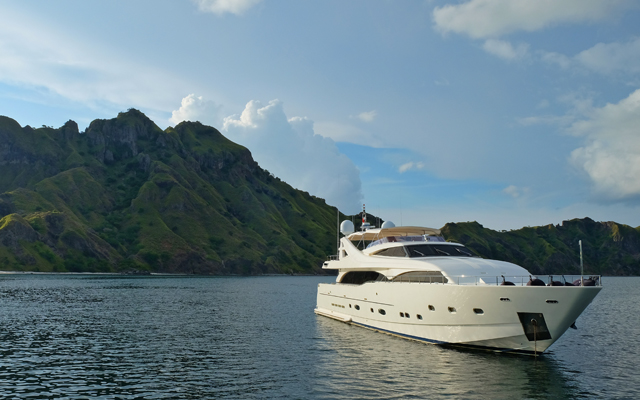
Indonesia is seeking to capture a larger share of Asia’s growing yacht tourism market by expanding marina infrastructure, developing integrated marine tourism itineraries and promoting high-value travel experiences.
Industry stakeholders said the country has some of the world’s strongest natural assets for marine tourism, but significant opportunities remain untapped in yacht tourism, liveaboard travel and premium diving experiences.
Speaking at a national marine tourism seminar in Jakarta, Itok Parikesit, assistant deputy for tourism product development at the Ministry of Tourism (MoT), said: “Marine tourism is one of the government’s priorities because of its significant potential to contribute to economic growth and foreign exchange earnings.”
Indonesia is home to more than 700 dive sites across 14 provinces, while seven of the government’s 10 priority tourism destinations are marine-based. According to Itok, diving remains a major contributor to marine tourism revenue, while yacht tourism and liveaboard travel are emerging as high-value products capable of attracting longer-stay visitors.
Rinaldi Duyo, secretary general of the Indonesian Jetsport Boating Association, said that while cruise tourism represents 35 to 40 per cent of the global marine tourism market, “yacht tourism is among the fastest-growing marine tourism segments globally” and “is one of Indonesia’s most promising growth opportunities”.
However, industry stakeholders stated Indonesia continues to face several challenges that could limit its ability to compete with other yacht tourism destinations in the region.
Hellen Sarita de Lima, vice chairwoman of the Indonesian Marine Tourism Entrepreneurs Association, identified lengthy licensing procedures and limited marina infrastructure as key obstacles.
“There are many procedures, such as arrival clearance, inspections by various agencies, shipping administration, and inter-agency licensing. In some countries, the clearance process can be completed in a few hours. In Indonesia, it still requires quite a long process.”
She added that marina development is essential to support yacht tourism growth and attract more international visitors.
“In Australia, people can use marinas as places to meet family, gather, and engage in various recreational activities. So, marinas serve more than just ports,” she noted.
Industry stakeholders opined that addressing these challenges will be crucial if Indonesia is to fully capitalise on growing demand for yacht tourism.
In response, Itok said the MoT is developing tourism routes in eastern Indonesia that combine diving, yacht tourism and liveaboard experiences into integrated itineraries designed to encourage longer stays and wider visitor dispersal.
The government is also exploring opportunities to develop marinas to support the growing yacht and superyacht market.
“Sorong is one of the locations with strong potential to serve as a gateway for marine tourism in eastern Indonesia,” Itok said.
Meanwhile, Bambang Aditya Nugraha, director of Marine Services at the Directorate General of Marine Management, Ministry of Marine Affairs and Fisheries (MoMAF), said Indonesia’s 134 marine conservation areas and coastal communities should play a greater role in tourism development.
The MoMAF is promoting village-based economic programmes through small businesses, village-owned enterprises and community groups.
“We want coastal villages to become part of national tourism development, not merely spectators to the growth of major destinations,” he shared.
Despite the challenges, Hellen said Indonesia has the natural assets needed to become a leading yacht tourism destination in South-east Asia.
“The potential is there. Indonesia offers an extraordinary combination of islands, marine biodiversity and coastal destinations that few countries can match.”