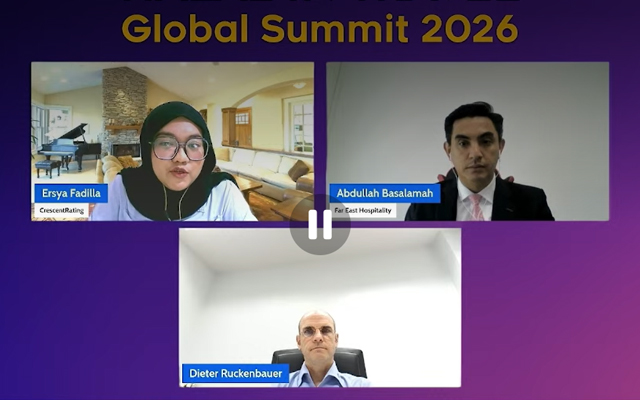
Moving beyond halal certification and towards more personalised guest experiences will be critical for hotels seeking to capture a larger share of the growing Muslim travel market, hospitality leaders said at the Halal in Travel Global Summit 2026, organised by CrescentRating in partnership with HalalTrip.
Speaking during the session Beyond Halal-Certified: Crafting Conscious, Future-Ready Hospitality Experiences, panellists argued that halal food offerings and prayer facilities are no longer sufficient differentiators, as Muslim travellers increasingly expect hotels to understand and cater to their individual needs.
Abdullah Basalamah, area general manager and vice president, rooms, at Far East Hospitality, said halal certification should be viewed as the starting point rather than the end goal.
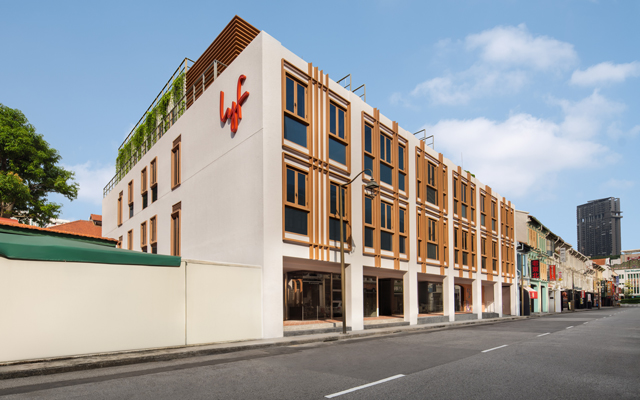
He shared that Far East Hospitality’s serviced residences in Singapore, which welcome significant numbers of Gulf Cooperation Council (GCC) travellers, focus on understanding guest preferences before arrival.
Initiatives include dedicated crockery and cutlery for Muslim guests, replacing alcoholic minibar offerings with non-alcoholic alternatives, and adapting services around guests’ cultural requirements.
Abdullah also cautioned against treating Muslim travellers as a single market.
“Not every Muslim guest is the same,” he said, noting that travellers from the Middle East, South Asia and South-east Asia often have different expectations and service requirements.
He added that technology is likely to play a growing role in personalising the guest experience, highlighting the potential of AI-powered concierge tools that can recommend halal dining options, prayer facilities and attractions based on travellers’ backgrounds and interests.
Another panellist, Dieter Ruckenbauer, general manager of Le Méridien Bangkok, said hotels should focus on reducing friction throughout the guest journey rather than simply meeting basic requirements.
“Halal food and prayer mats are no longer the differentiators in the industry; they are really the baseline,” he said.
Ruckenbauer explained that hospitality often comes down to small but meaningful gestures, such as proactively providing information on nearby mosques, prayer facilities and Muslim-friendly experiences before guests need to ask.
For him, the goal is to create peace of mind for Muslim travellers.
“The biggest luxury for travellers is not the amenity itself. It’s the peace of mind that everything has already been considered before their arrival,” he said.
The session was moderated by Ersya Rachmat, events management lead at CrescentRating and HalalTrip.