

APAC NTOs most online ready to tap halal travel market

When it comes to the availability of Muslim-friendly online travel resources provided by NTOs globally, those in Asia-Pacific continue to set a shining example, according to a recent study by travel consultancy Pear Anderson.
Some 60 per cent of the top 10 ranked NTOs are from Asia-Pacific in Pear Anderson’s report titled How Online Ready are NTOs for Muslim Travellers in 2020?.
This is the second year of the report, which examines the online resources that NTOs from the top 50 most visited non-Muslim countries worldwide have created to support Muslim-friendly travel, including information about Muslim-friendly food, prayer spaces and hotels.
Of the top 50, 46 per cent now have some form of online resource available for Muslim travellers, an encouraging increase of 21.7 per cent from 2019.
Hong Kong, Taiwan, South Korea, Australia and Slovenia all saw significant increases to their scores in 2020, as they sought to create new content, and made it more accessible to Muslim travellers.
Six countries also scored their first points in the 2020 edition of the report: Germany, Greece, India, Macau, South Africa and the UK.
Hannah Pearson, director of Pear Anderson, said: “It’s exciting to see NTOs starting to put more focus on Muslim-friendly travel. However, European NTOs have a long way to go to catch up to their Asia-Pacific peers, who are dominating the top rankings.
“The Hong Kong Tourism Board and the Taiwan Tourism Bureau have put serious emphasis on developing Muslim-friendly online resources, and their efforts have paid off by scooping the top spot. Their jump in rankings shows that it’s not enough for an NTO to create Muslim-friendly online resources as a one-off project – there needs to be continuous innovation to keep the messaging fresh.”
The report also features cases studies from the Hong Kong Tourism Board and Tourism Australia, as well as industry best practices for online Muslim-friendly tourism resources.
Muslim travel spend is a significant and fast-growing sector, increasing to US$194 billion in 2019, according to the State of the Global Islamic Economy Report 2020/2021.
Prioritising green recovery could accelerate aviation rebound

With rising concerns over climate change and increasing commitment from travel companies to become carbon neutral in the future, it is vital that airlines adapt to this emerging demand and harness technology to create new, greener ways of flying, says GlobalData.
According to GlobalData’s latest Covid-19 Recovery Consumer Survey, which was conducted in October, 43 per cent of respondents globally said that they are always or often influenced by how ethical/environmentally-friendly/socially responsible a product or service is. This means airlines that react quickest to the growing desire for sustainable travel will hold a competitive advantage over rivals, thereby, potentially becoming more appealing to nearly half of all travellers.
Ben Cordwell, travel and tourism analyst at GlobalData, commented: “Taking into account the global Covid-19 pandemic, there has been a dramatic shift in market needs and wants. Airlines that react quickest to these changing demands will have an opportunity to cement themselves as market leaders within the aviation industry and accelerate recovery.”
Sustainable aviation fuel (SAF) is a clean substitute for fossil jet fuels as it is produced from sustainable sources such as waste oils, agriculture residues, or non-fossil CO2. Hence, the adoption of SAF could attract a significant number of travellers who are growing increasingly concerned about the emissions that airlines are creating, by helping them to meet their own sustainability goals as individuals.
In the post-Covid landscape, increased health and safety procedures will be at the forefront of customer expectations and it has been suggested that a new ‘Gen-C’ tourist will emerge from the pandemic. This tourist will not be defined by traditional demographics, but a need for reassurances around health and safety. Airlines that can tap into this market will be most likely to experience a stronger recovery than their competitors.
Cordwell added: “There will likely be an increased demand for low-cost airlines as GlobalData survey states that 47 per cent of respondents globally believe that the economic situation in their country will worsen in the coming months. Furthermore, over a quarter (27 per cent) of respondents believe their own personal financial situation will worsen.
“This highlights the growing role that budget airlines will likely play in the aviation market over the coming years and full-service airlines will likely need to adopt similar pricing strategies to compete in an already hyper-competitive industry.”
Singapore tourism stakeholders unite to reimagine travel

Tourism leaders and stakeholders in Singapore have jumped on board a national initiative to reimagine tourism offerings for both domestic and foreign tourists, in preparation for the resumption of global travel.
Organised by Singapore Tourism Board (STB), the SingapoReimagine initiative comprises two engagement series launching next year. It will kick off with Reimagine Travel – Global Conversations, a line-up of forums to be held across the globe. It will begin in Singapore with a sharing session by STB alongside global partners, before making its way to other parts of the world.

On home ground, STB will also roll out Reimagine Travel in Singapore, a series of engagements with local partners and members of the tourism community to co-create ideas and stimulate greater demand for the SingapoRediscovers domestic tourism campaign.
The SingapoReimagine initiative works to encourage businesses to reimagine safety, technology and sustainability in their tourism products. For instance, Changi Airport Group has implemented an entirely touchless check-in experience, with its machines fitted with proximity sensors and biometric auto-clearance.
In August, Resorts World Sentosa introduced the Aqua Gastronomy dining concept to the S.E.A. Aquarium, transforming its Open Ocean Habitat into a multi-sensory restaurant. Elsewhere, popular nightclub Zouk Singapore adapted to the closure of nightlife establishments in the country by converting its venue into a pop-up dining concept, cycling spin studio and a cinema club.
STB CEO Keith Tan said: “Covid-19 is the biggest crisis we have ever faced in travel and tourism, but it also offers us an opportunity to reset and revive our industry. The journey to reimagine travel has already started in Singapore, and we want to continue this journey with our community in Singapore, and our partners here and around the world. We look forward to co-creating ideas and strategies with all of them, to make travel better.”
Khao Lak finds favour with Thai tourists in a pandemic
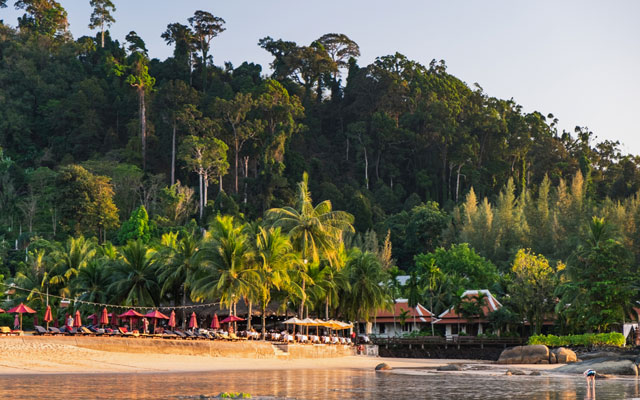
While the country’s doors remain firmly shut to international tourists, Thailand’s domestic travel wanderlust has turned Khao Lak into an Instagram hero.
According to research by C9 Hotelworks’ new Khao Lak Hotel Market Update, in the first two months of this year, occupancies in the resort destination soared above 80 per cent.
With the Covid-19 lockdowns, occupancy plunged in April and May. But as domestic travel re-started mid-year on the back of the government-initiated We Travel Together incentive, the destination has slowly but surely gained traction from both fly and drive-in Thai markets.
Khao Lak’s surf scene has become a national social media sensation, with Pakarang Beach and Memories Beach Bar the epicentre of a photo tourism movement – bolstered further by Instagram favourite hotels, Michelin-starred Southern-Thai restaurants, and the rediscovery of Takua Pa Old Town.
Over the past five years, the expansive white sand oceanfront strip of destination hotels in Khao Lak has continued a march North towards Takua Pa. Fuelling much of this development is larger greenfield land parcels and a nearly completed four-lane highway expansion from the gateway airport in Phuket.
C9’s report indicates a hotel supply of 114 registered tourism establishments with 9,542 rooms and a further 2,283 keys in the pipeline. With 73 per cent of incoming supply being chain operated, the influx of global brands includes Pullman, Marriott, Sheraton, AVANI, and Holiday Inn.
Despite Thailand’s tourism downturn, some hotel owners are taking the opportunity to complete projects and launch their properties in the marketplace, signalling long-term optimism in the destination’s tourism potential.
Meanwhile, project delays in a number of properties in the pipeline due to the present situation is pushing out many openings to 2022-2023.
Talking about the evolving geographic changes in Khao Lak’s hotel scene, Bill Barnett, managing director of C9 Hotelworks, pointed out that “while the panoramic pristine seaboard continues to stretch upwards into an emerging tourism Gold Coast, there is an increasing grassroots ‘sense of place’ movement afoot.”
Looking beyond the end of surf season which runs from just after the Songkran holiday period through November, local hotels are pinning hopes that the government domestic travel incentive which is due to expire at the end of January will be extended to at least mid-2021 or until international tourists are allowed to revisit the country.
“The continued influx of social media bloggers and influencers heading South is already creating a ripple effect in demand, most notably with the Similan and Surin islands as day trips from Khao Lak. It may not be a typical high-season but for now, the domestic tourists are a welcome sight for stressed hoteliers and tourism businesses,” said Barnett.
He added: “Looking ahead, the current northwards expansion of Khao Lak’s strip of destination beach resorts is expected to usher in a new cycle of market maturity.
“As post-Covid-19 travel commences, Khao Lak and Phang Nga are well positioned as a destination, given a unique sense of space, nature and emergence of sports and cultural tourism elements.”
Long-term optimism, creative pivots buoy hotels
Despite the global pandemic, international hotel groups are reporting robust pipelines and new signings, while coming up with creative ways to bolster revenue sources, shared panellists at The Leaders’ Panel: The Future of Hotels Post Covid-19, part of TravelRevive.
Rajit Sukumaran, managing director, South-east Asia and Korea, InterContinental Hotels Group (IHG), shared: “In 3Q2020, we opened 80 hotels globally, showing there’s a lot of confidence in the industry. We know travel will return, and want to position ourselves well.”
Similarly, Rajeev Menon, Marriott International’s president, Asia Pacific (excluding Greater China), shared: “This year, we opened around 90 hotels across Asia-Pacific, and we’ll continue to open. In terms of signing new deals, in 1H2020, this was up 30 per cent. This tells me that from a long-term perspective, there is confidence.”
In just Japan alone, Marriott opened 20 hotels, which Rajeev hailed as a “record”, but noted that these projects started a long time ago, which ultimately boils down to owners’ cash flow.
As for serviced apartment operator Oakwood, the company’s pipeline will see 14 properties open globally this year and the next. However, Dean Schreiber, CEO of Oakwood Worldwide, acknowledged that Oakwood already had a good base with longer-staying customers, so instead of closures during lockdowns, they had to work with owners to stay open.
He elaborated: “What is interesting is that independent owners are now seeing sanctuary in having a brand, which gets us more signings. In this period, aligning with a brand is easier (for business).”
However, amid border closures and travel restrictions, domestic travel – excluding the China market – has proved wanting in filling the gap left by international tourists. And while some hotel owners chose this downtime to renovate, others had to come up with innovative solutions to earn revenue.
Kwee Wei-Lin, senior vice president, hotels, Pontiac Land Group, and president of the Singapore Hotel Association, related how some hotel operators got creative. “They did hampers, takeaways, and even transformed into a temporary grocery shop – anything to survive another day.”
Rajeev mused: “A year ago, I wouldn’t have done takeaways from luxury hotels, but it’s things like these that will help us in the long run. The revenue we get from F&B is helping to keep business alive.”
For Oakwood, it had to brainstorm creative solutions for the short-stay crowd, such as rolling out work-from-home packages, shared Schreiber.
“Oakwood also sold the idea of space, where its apartments were self-contained and had a kitchenette, while still offering a ‘hotel-level’ pampering service,” he added.
Elsewhere, IHG worked with the government to convert a bulk of its 10 hotels in Singapore into quarantine facilities, while Marriott sealed a wide-ranging strategic partnership with superapp Grab that will see both companies progressively integrate their offerings.
Singapore pilots hybrid event with TravelRevive
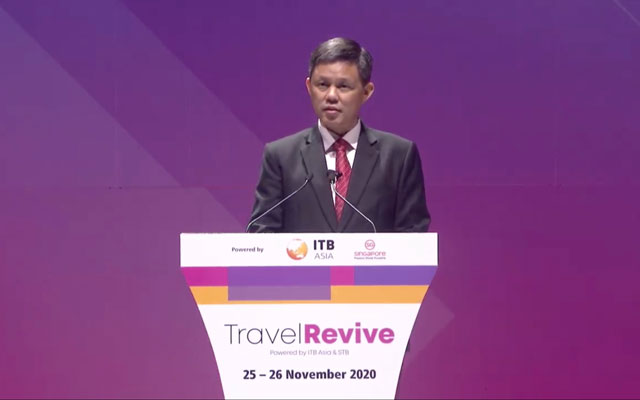
Singapore is pressing forward with a prototype for hybrid events that can accommodate up to 250 pax in person, including overseas visitors, made possible with safe itineraries, rapid antigen testing and a strict cohort system.
The prototype was launched yesterday (November 25) at TravelRevive, a joint event organised by Singapore Tourism Board (STB) and ITB Asia from November 25-26.
TravelRevive is the first hybrid travel tradeshow to take place in Asia-Pacific amid Covid-19, and is expected to see close to 1,000 delegates on-site across both days, including 65 foreign delegates from 14 countries.
On top of the polyamerase chain reaction (PCR) test that international attendees had to undergo upon arrival, they also took a new rapid antigen test before the event that delivered Covid-19 diagnoses within 30 minutes.
Speaking at the event, Chan Chun Sing, Singapore’s minister of trade and industry, said: “We are not waiting for a vaccine to arrive, nor are we waiting for the Covid-19 pandemic to blow over. Instead, we are establishing foundations now to get started on a journey to reinvent and rebuild (the MICE) industry.”
Features that have been spun into this new hybrid event format include a blend of physical conferences and virtual broadcasts, an online meeting diary for delegates, as well as exclusive experiences such as a private museum tour and a private tepee dinner in Night Safari.
The shift towards digitalisation of MICE events and the reinvention of leisure experiences were “already present prior to Covid-19”, remarked Chan. He observed that businesses had begun to revaluate the need to travel for routine meetings, and travellers were starting to consider more environmentally friendly travel experiences.
“The outbreak of Covid-19 has driven (another) need: health security and physical comfort. Whoever can ensure visitors’ health security in a faster and better way will gain a competitive advantage. Singapore recognises this, and has every intention to lead in this area,” he described.
Chan also stressed that Singapore is adopting a “risk management approach instead of a risk elimination approach”, as it is “unable to tap on a large local population or domestic sector”.
Going forward, various industry stakeholders will roll out a series of products to reinforce safety measures for the leisure travel and MICE industries. For instance, Changi Airport Group is developing a safe travel concierge, which provides visitors a checklist of requirements before entering Singapore and helps business delegates remain in their event cohort.
Other protocols in the works, such as a combination of PCR testing on arrival and periodic antigen tests, usage of the TraceTogether app for contact tracing, and more will be detailed in the Events Industry Resilience Roadmap by SACEOS, STB and Enterprise Singapore.
Chan said: “We hope that such protocols will be accepted and adopted by more countries. This will allow all of us to have a shared protocol (that can) reduce the need for a long-term quarantine period that is really disrupting business travel.”
In addition, during the event, the STB inked three MoUs which it said are a “boost to the MICE industry in Singapore” and signal international event organisers’ confidence in Singapore “as launchpad for regional expansion”.
The first is a one-year MoU that the Infocomm Media Development Authority and STB have signed with B2B event organiser Informa Tech to launch a new international technology event in Singapore. Slated for the second half of 2021, the event will bring together governments and businesses in the infocomm, media and tech ecosystem to discuss topics related to innovation and digital transformation in the tech sector.
STB said the partnership will “help to deepen Singapore’s position as a thought leader in the digital space and provide a platform for the discussion of new ideas, policies and regulations”.
The flagship tech event will also allow Singapore to tap on new and existing international networks, as well as leverage Informa’s industry knowledge, expertise and networks to further create and grow new best-in-class events in Singapore, it added.
Secondly, the STB has also signed a a three-year MoU with Fiera Milano, one of the world’s leading exhibition organisers, to establish a South-east Asia Regional Headquarters (RHQ) in Singapore.
The new office will be Fiera Milano’s first South-east Asian headquarters, and will make them the first Italian professional exhibition organiser to set up its RHQ in Singapore. It will also serve to deepen Fiera Milano’s presence in South-east Asia, providing greater support in the region. The collaboration is also set to strengthen commercial relations between Italy/Europe and the South-east Asian region.
Lastly, under a one-year MoU inked with STB, Messe Munich will establish its South-east Asia RHQ in Singapore, as part of the trade fair company’s plans to grow its presence in the region. The partnership will also see Messe Munich creating new anchor events in Singapore.
By bringing both Fiera Milano and Messe Munich into Singapore, STB said that it will also leverage their existing network of events, hosted fairs, and exhibitors to launch high-quality international tradeshows that appeal to both South-east Asian and international audiences.
New hotels: W Chengdu, Quest Preston, and more
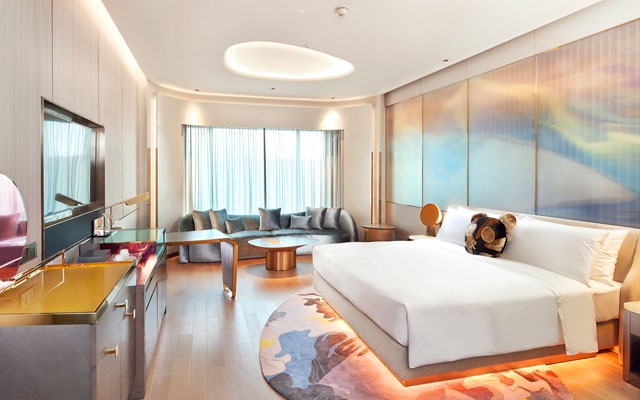
W Chengdu, China
Owned by KWG Group Holdings, W Chengdu is situated within Chengdu’s Hi-Tech Industrial Development Zone, and marks W Hotels’ debut in South-west China. The hotel offers 297 guestrooms and suites, including the Extreme Wow Suite – the brand’s modern interpretation of the traditional presidential suite – featuring 368m² of flexible space with a sculptural bar and lounge area.
W Chengdu serves up a variety of F&B options. The Living Room offers crafted cocktails and tantalising bites, while Yao Yen features a Cantonese and Sichuan menu paired with fragrant regional teas. Elsewhere, all-day diner Zing showcases South-east Asian flavours, while rooftop patio Spark offers party packages including wine and spirits as well as regular sessions with DJ talent. Wellness amenities are a spa, and a gym which includes a 115m² Pilates studio alongside an indoor swimming pool and Jacuzzi. The hotel also offers more than 2,600m² of flexible meeting spaces spanning over two floors, including The Great Room featuring a 1,200m² pillarless space.
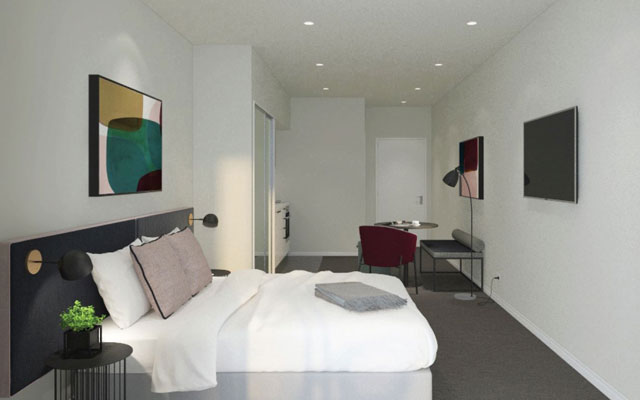
Quest Preston, Australia
Quest Apartment Hotels has opened its newest property Quest Preston, marking the company’s third opening this year and 42nd property in Melbourne. Developed by longstanding development partner, Pellicano, Quest Preston is centrally located on High St in the boutique retail and café precinct. The hotel comprises 35 studio apartments, 32 one-bedroom apartments and 12 two-bedroom apartments – all of which include fully equipped kitchens and in-room laundry facilities. Guests can also make avail of the on-site gym and conference facilities, alongside 24-hour reception service, local chargeback dining, pantry shopping service and valet dry cleaning.
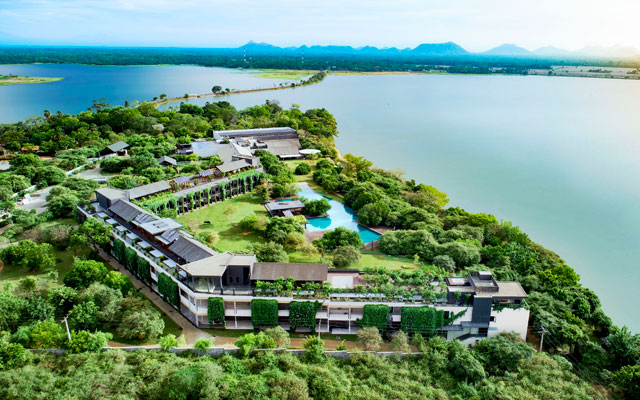
DoubleTree by Hilton Weerawila Rajawarna Resort, Sri Lanka
Uniquely situated within the Weerawila Bird Sanctuary which is home to over 400 species of birds, the newly-built, three-story, 78-room resort is owned by KDU Adventures and joins Hilton Colombo and Hilton Colombo Residences as the third hotel to be managed by Hilton in the country. All guestrooms are equipped with a 49-inch HDTV with entertainment hub, Wi-Fi, king or twin bedding, terrace or balcony, and rain shower.
Five F&B venues are on offer at the resort. Guests can savour a wide variety of cuisines at Spoonbill, the resort’s all-day dining restaurant, tea lounge and barbeque grill; or dig into an array of seafood at the rooftop restaurant Redshank. A trio of bars also promise to please: Turnstone, the main bar; Hornbill, the pool bar and lounge, and rooftop bar Nightjar.
Wellness facilities include a 24-hour fitness centre, a 75m-long outdoor swimming pool, yoga terrace, rooftop wellness spa, karaoke lounge and Tea Jar by the Lake. The resort also features over 929m² of meeting space, including the 723m² pillarless Grand Ballroom that can accommodate up to 600 guests in a wedding setting.
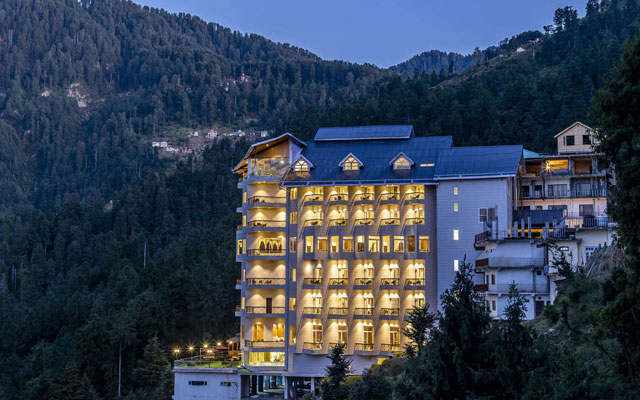
Fortune Park, Dalhousie, India
Fortune Hotels has opened its maiden property in the hill town of Dalhousie, Himachal Pradesh. Set in the lap of the mighty Himalayas, Fortune Park Dalhousie is the hospitality group’s fourth alliance in the state. The property features all-day-diner Zodiac, plush bar Neptune, a lounge, spa, gym, an activity zone and an indoor heated swimming pool. Additionally, the upscale hotel also encompasses a meeting room and two banquet halls – with a capacity to host up to a combined 200 guests.
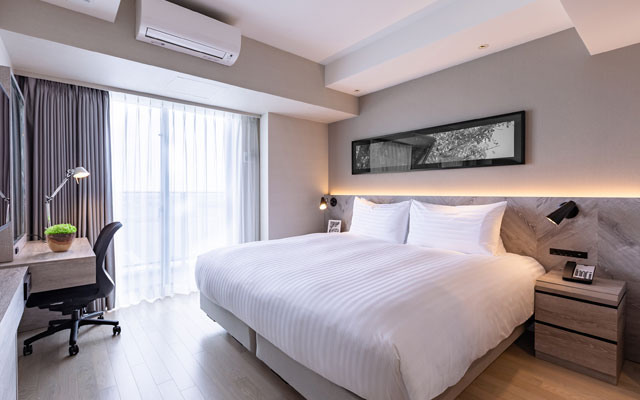
Oakwood Suites Yokohama, Japan
Oakwood Suites Yokohama marks Oakwood’s first international serviced apartment brand in the Japanese port city, and its 12th property in Japan. The 175-unit property is the second serviced apartment asset owned by Mapletree in Japan. Occupying the 46th to 51st floors of The Kitanaka Yokohama Tower, studios to three-bedroom residences are on offer, each fully-equipped with a kitchenette, washer and dryer. Facilities include a residents’ lounge, 24-hour fitness centre and restaurant.
Sri Lanka trade opposes move to amend Tourism Act
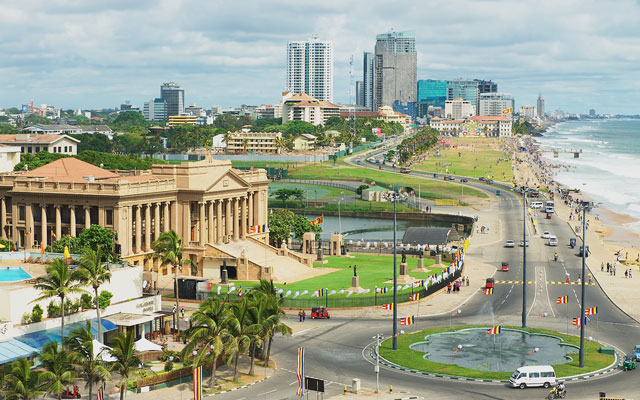
The Sri Lanka government’s plans to amend the Tourism Act of 2005 which governs tourism in the country by amalgamating four state institutions involved in tourism into one agency has been met with strong opposition from industry players.
In his presentation of the 2021 budget in parliament last week, Sri Lanka prime minister Mahinda Rajapaksa, who is also the country’s finance minister, said the government planned to bring four existing institutions relating to tourism under the proposed Tourism Promotion Authority.
“The existence of separate institutions to fulfil various but interconnected roles has become a major impediment in implementing collective development activities and has led to the incurring of additional expenditure,” he explained, without providing further details.
The four institutions are the Sri Lanka Tourism Promotion Bureau and the Sri Lanka Tourism Development Authority (both of which are chaired by Kirmali Fernando), the Sri Lanka Convention Bureau, and the Sri Lanka Hotel School. Private tourism associations are represented on all the boards of these state institutions.
Sanath Ukwatta, president of the Hotels Association of Sri Lanka (THASL), said the proposed amendment to the Tourist Act has not been discussed with industry players. “Our contention is that any changes should only be made after a consultation with the industry,” he added.
Also in opposition of the proposal is the Sri Lanka Association of Inbound Tour Operators (SLAITO). In a statement, the association – which takes credit for generating more than 60 per cent of overseas visitor arrivals – said that its members were unanimous that there was no need to change the Act which has resulted in the betterment of the tourism industry.
It said the 2005 law came into effect with the objective of developing the tourism industry to meet the international standards and to promote the destination with an effective marketing strategy under a private-public partnership, with SLAITO, THASL and the Travel Agents Association of Sri Lanka identified as the three apex bodies.
Given that the government currently collects a hefty sum through the imposition of the Tourism Development Levy on industry players, SLAITO noted that the current Tourism Act eases the financial burden on the government when it comes to promotional expenditure as the levy collected is being used for destination marketing.
Other industry officials said there were fears that the tourism associations would get marginalised and risk losing representation on these bodies if all the state institutions were to be combined into a single entity.
Sri Lanka’s airport and seaports have been closed to tourists for several months now due to the pandemic. Discussions are underway to reopen the airport to tourism under a phased programme in January 2021.
Guangzhou leads strong China hotel development pipeline
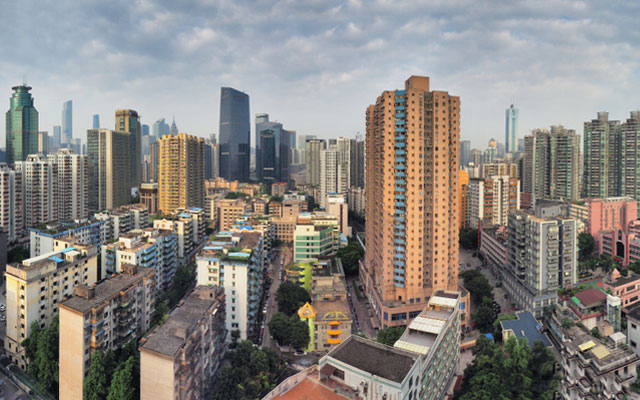
China’s hotel construction pipeline continues to remain robust in 3Q2020 amid Covid-19 headwinds, despite trending slightly down from a peak in the previous quarter, according to analysts at Lodging Econometrics (LE).
In the latest China Construction Pipeline Trend Report, analysts at LE report that China’s total hotel construction pipeline remains robust at 3,409 projects (634,119 rooms), up one per cent by projects and rooms year-over-year. These project and room counts are, however, down slightly over peak 2Q2020 totals, which were the highest seen in China during this lodging real estate development cycle.
There are currently 2,208 projects (405,530 rooms) under construction in China, down year-over-year 13 per cent by projects and eight per cent by rooms. Like last quarter, projects scheduled to start construction in the next 12 months experienced another quarter of substantial year-over-year increases of 85 per cent by projects and 44 per cent by rooms, to stand at 746 projects (122,014 rooms).
These year-over-year highs in the next 12-month stage are attributed to a record number of pipeline projects within the upscale, upper midscale, and midscale chain scales. Projects in the early planning stage stand at 455 projects (106,575 rooms), up six per cent by projects and one per cent by rooms year-over-year. In 3Q2020, China opened 185 new hotels totalling 23,605 rooms.
Guangzhou leads China’s pipeline with 137 projects (26,615 rooms), followed by Chengdu with 131 projects (26,064 rooms). Next is Shanghai at 125 projects (23,296 rooms), then, Wuhan with 101 projects (13,899 rooms) and Xi’an with 95 projects (16,882 rooms).
Franchise companies topping China’s construction pipeline are Hilton Worldwide with record totals of 535 projects (107,848 rooms); InterContinental Hotels Group (IHG), also recording all-time high project and record counts with 424 projects (90,906 rooms); and Marriott International with 336 projects (90,333 rooms). Next is JinJiang Holdings with 250 projects (25,127 rooms) and AccorHotels with 201 projects (34,655 rooms).
Hilton Worldwide’s top brands are Hampton by Hilton, at an all-time high, with 325 projects (50,100 rooms). Hilton’s second-largest brand, also at an all-time high, is Hilton Garden Inn with 68 projects (15,653 rooms). IHG’s leading brand in China is Holiday Inn Express, at a record count, with 205 projects (34,785 rooms) and then Holiday Inn, with a record number, at 69 projects (17,184 rooms).
Marriott International’s top brands are Marriott Hotel & Resorts with 67 projects (20,150 rooms) and Fairfield Inn with 47 projects (7,219 rooms). Another noteworthy brand for Marriott is Four Points Hotel, which is at a peak for projects and rooms count in China with 37 projects (11,048 rooms). Leading brands for JinJiang Holdings are 7 Days Inn with 106 projects (8,341 rooms), followed by Vienna Hotel with 75 projects (7,394 rooms). AccorHotels’ leading brands are the Ibis brands with 79 projects (8,341 rooms), and Mercure Hotel with 57 projects (9,407 rooms).
According to research by LE’s market intelligence team, hotel construction projects in most major cities have resumed as the country continues to maintain control of Covid-19.

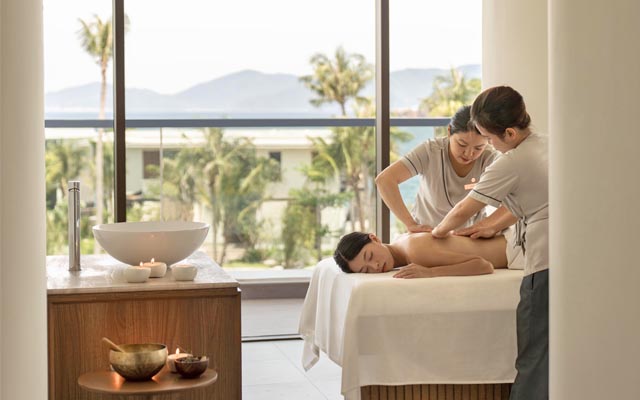






New World Hotels & Resorts has signed an agreement with Sun Group to rebrand and manage a new all-villa resort on Vietnam’s southern Phu Quoc island.
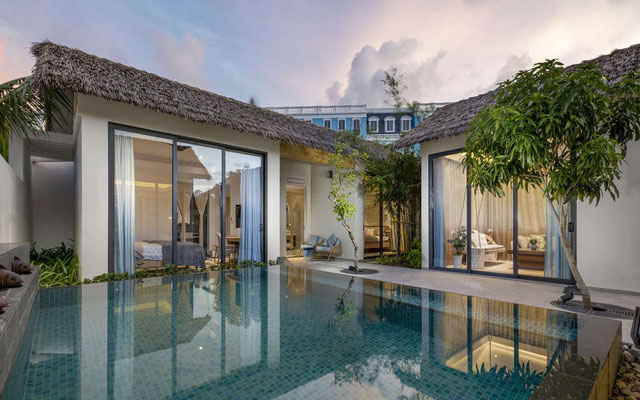
Formerly known as the Sun Premier Village Kem Beach Resort, the rebranded New World Phu Quoc Resort is scheduled to open its doors in 2021. Situated on the southwestern tip of Phu Quoc, the resort sits on nearly 60ha of tropical landscape facing acclaimed Kem Beach.
Guests can select from 375 villas in seven configurations starting from 124m² in size to the grand 414m² Sun Beach Front Villa. Every thatched-roof villa, which is composed of three separate areas, houses a private swimming pool. Recreational options include an outdoor swimming pool, fitness centre and studio, a 16-treatment-room spa and kids’ club.
An all-day café, specialty restaurant, pool bar and beachside restaurant offer a variety of island, regional and international cuisines.
The New World Phu Quoc Resort will be the 11th property and second resort to join the brand’s portfolio across Asia, and also, the third in Vietnam after the New World Saigon Hotel and the upcoming New World Hoiana Hotel.