

Google abolishes fees for hotel booking links

Hotels can now have booking links listed on Google at no charge, as the search giant announces that it is eschewing paid links in favour of “organic” price comparison – a development that strengthens Google’s standing in the metasearch space.
Prior to this update – announced by Google’s vice president, product management, Richard Holden – hotels and OTAs had to pay to list bookable room rates on its price-comparison metasearch platform, Google Travel.

Starting this week, hospitality players will be given two new slots for booking links under the “Overview” tab in Google Travel, in addition to a maximum of four paid ad slots. These paid links will also appear under the “Prices” tab, in addition to an unlimited number of organic and free booking links from eligible partners. The organic links are based on pricing and availability information fed from the hotel.
Holden explained that this change will give consumers “more confidence in making decisions about booking”. He explained: “Users will find that they’ll have more confidence in the product over time, because they believe that they’re seeing all the offers (available). That, in turn, will benefit our partners, from small hotels to large OTAs.”
This development joins another change in Google’s metasearch product made in January last year, when it stopped charging airlines for direct booking links within the Google Flights price-comparison feature. The same update was made to the listing of shopping products this year.
“We’re going to see a strong need for the industry to connect with consumers, going forward. We see this as a great opportunity to make it available to any player in the ecosystem (who are) looking for ways to efficiently reach consumers coming out of a very trying period,” expressed Holden.
Last December, Google also rolled out its Travel Insights platform, which provides data-driven analytics about travel demand and consumer booking trends. This serves as a fountain of knowledge that hotels, travel companies and governments can tap on to understand where the potential for travel is re-emerging, said Holden.
HKTB preps tourism recovery plan
The Hong Kong Tourism Board (HKTB) has committed HK$1.138 billion (US$146.6 million) to a series of short-term, as well as medium- to long-term plans, over the next financial year to prepare for the recovery of tourism and the resumption of international travel.
The short-term strategy will focus on encouraging back international visitors to Hong Kong as soon as possible. When borders reopen and global travel resumes, HKTB will launch Open House Hong Kong, a campaign designed to restore visitor arrivals through tactical offers and exclusive experiences.
In the medium- to long-term, HKTB is conducting a holistic review of Hong Kong’s tourism brand and positioning. Following the resumption of travel, HKTB will launch large-scale promotions through multiple channels including digital platforms in key source markets, as well as media and tour operator co-ops to present Hong Kong’s reinvented tourism image.
In addition, HKTB will develop multi-destination partnerships with cities in the Greater Bay Area (GBA), such as Macau and Guangzhou, to enhance Hong Kong’s reputation as the gateway into mainland China and build on the GBA tourism brand.
The two-phased approach to the plan will complement the ongoing initiatives to support the travel trade, cruise and MICE industries, as well as maintain Hong Kong’s international exposure.
HKTB executive director, Dane Cheng, said: “Despite the start of vaccinations against Covid-19 worldwide, the pandemic situation remains volatile and unpredictable. We consider it unlikely Hong Kong will see a full resumption of cross-border travel in the next three to six months.
“However, we do expect it to be possible for Hong Kong to welcome tourists from selected markets.”
He added: “In formulating our strategies for 2021/22, we focused on two major areas. Firstly, we saw a need to offer support to the trade and boost the ambience in Hong Kong, while ensuring the city’s continued exposure on the international stage ahead of the resumption of international travel.
“Secondly, we anticipate competition for tourists will be intense once the pandemic is over, with rival markets going to great lengths to bring visitors back. The HKTB is therefore setting aside resources for large-scale promotions so that Hong Kong will stand out against competing destinations.”
One-third of destinations globally shut to tourism: UNWTO
The emergence of new Covid-19 variants has prompted many governments to reverse efforts to ease travel restrictions, with recent data from the UNWTO showing that one in three destinations worldwide are now completely closed to international tourism.
Total closures to tourists are most prevalent in Asia and the Pacific and Europe.
The UNWTO Travel Restrictions Report provides a comprehensive overview of the regulations in place in 217 destinations worldwide. While previous editions had shown a movement towards easing or lifting restrictions on travel, the latest report shows that the persistent seriousness of the epidemiological situation has caused governments to adopt a more cautious approach.
As of the beginning of February, 32 per cent of all destinations worldwide (69 in total) are completely closed for international tourism. Of these, around just over half (38 destinations) have been closed for at least 40 weeks. At the same time, 34 per cent of worldwide destinations are now partially closed to international tourists.
UNWTO secretary-general Zurab Polilikashvili said: “Travel restrictions have been widely used to restrict the spread of the virus. Now, as we work to restart tourism, we must recognise that restrictions are just one part of the solution. Their use must be based on the latest data and analysis and consistently reviewed so as to allow for the safe and responsible restart of a sector upon which many millions of businesses and jobs depend.”
The ninth edition of the UNWTO Travel Restrictions Report shows that regional differences with regards to travel restrictions remain. Of the 69 destinations where borders are completely closed to tourists, 30 are in Asia and the Pacific, 15 are in Europe, 11 are in Africa, 10 are in the Americas, and three are in the Middle East.
At the same time, the UNWTO research also indicates a trend towards adopting a more nuanced, evidence and risk-based approach to implementing travel restrictions. Growing numbers of destinations worldwide now require international tourists to present a negative PCR or antigen test upon arrival and also provide contact details for tracing purposes. Indeed, 32 per cent of all worldwide destinations now have the presentation of such tests as their main requirement for international arrivals often combined with quarantine, while the same amount have made tests a secondary or tertiary measure.
The Travel Restrictions Report also notes how different governments are issuing advice to their own citizens. Analysis of the top ten tourism source markets currently advising against non-essential travel abroad found they generated 44 per cent of all international arrivals in 2018. UNWTO notes that advice issued by governments will play a crucial role in the restart and recovery of tourism in the weeks and months ahead.
Tokyo 2020 may be closed to overseas spectators

There may not be any overseas spectators at the Tokyo Olympic and Paralympic Games when the high-profile sporting event takes place this year in the Japanese capital, as fresh Covid-19 cases continue to present themselves and anti-hosting sentiment grows among the Japanese public.
Games organisers are now mulling the tough decision, and a conclusion is expected by March 25 ahead of the start of the Japanese leg of the torch relay. However, officials with knowledge of the planning have told domestic media that “practically, the course has already been set”.
Speaking anonymously, they reported that organisers are unlikely to admit overseas spectators, citing difficulties globally in suppressing Covid-19.
The new chief of the Tokyo Olympic Organizing Committee, Seiko Hashimoto, added to speculation that the Games might be open only to Japan residents with her comments at a news conference.
She said: “We would really like people from around the world to come to a full stadium, but unless we are prepared to accept them and the medical situation in Japan is perfect, it will cause a great deal of trouble, including for visitors from overseas.”
The prospect of welcoming international visitors to Tokyo to the opening ceremony in four months’ time has become more troublesome in recent days, with the slowdown in the decline of Covid-19 cases in the capital. The number of new daily infections has showed little change since February 21, with an average of 200 to 300 reported cases each day.
In response, the government has extended a state of emergency for the greater Tokyo metropolitan area until March 21. The order was initially placed on the Tokyo, Kanagawa, Chiba and Saitama prefectures on January 7 for one month, before being extended to March 7.
Announcing the extension, prime minister Yoshihide Suga said: “I believe a two-week extension is necessary to protect the lives and livelihoods of the people.”
Athletes participating in the Games will be allowed to enter Japan this month following the lifting of the state of emergency. They will not be required to undergo quarantine but must restrict themselves to their accommodation and sports venues.
Trip.com, Shangri-La expand product offering for customers
Trip.com Group and Shangri-La Group have extended their partnership, bringing in more diversified products, services and benefits for travellers.
The agreement is said to be a new milestone for both companies, as they continue to work together to grow international business as well as cementing their presence in regional markets.
Both companies have laid out plans to benefit mutual guests through enriched offerings and rewards, with one of the initiatives being the granting of Shangri-La Golden Circle Programme access to 300 million-plus Ctrip high-end members.
Shangri-La customers will also benefit from Trip.com Group’s rich range of services, from transportation ticketing to corporate travel management.
Accor picks up fresh properties in Vietnam
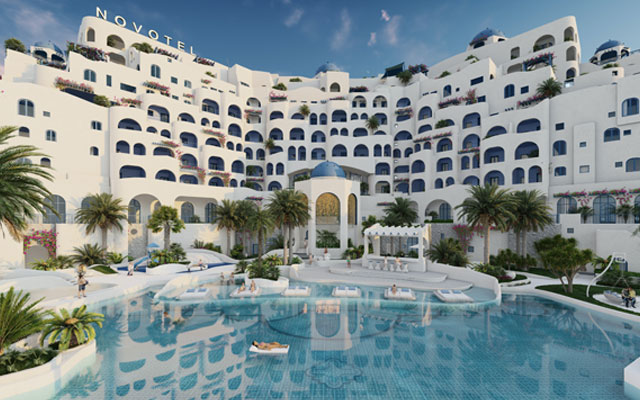
Accor has deepened its partnership with owner Novaland with three new hotel signings in Vietnam, with plans for seven more in the future.
The latest additions are the 248-room Mövenpick Phan Thiet and 250-room Novotel Phan Thiet within NovaWorld Phan Thiet, as well as Mövenpick Ho Tram, a 209-room hotel at Wonderland – NovaWorld Ho Tram, a complex under development by Novaland.
All three hotels will feature a range of recreational, wellness and F&B facilities, while Novotel Phan Thiet and Mövenpick Ho Tram will offer venues for meetings and events.
Currently under development, the NovaWorld Phan Thiet complex is a 1,000-hectare project on the Tien Thanh coastline. It will comprise a theme park, a waterpark, a 16-hectare ocean park with a marina, 36-hole golf course, a 7,000-seat events stadium, a 3,500-seat tennis court, a marathon track, a mall, food courts, a hospitality school, an international village, a senior centre and over 20 resorts managed by international operators such as Accor.
The NovaWorld Ho Tram complex spans 1,000 hectares along a 30km coastline from Loc An to Binh Chau.
The latest signings are part of Accor’s strategic development plan to expand into emerging destinations, introducing world-class hospitality brands for both domestic and international travellers. Accor will manage a further seven properties in the newly developed complexes by Novaland in Binh Thuan, Ba Ria Vung Tau and Ho Chi Minh City.
“Following on from the launch of Mercure Vung Tau and ibis Styles Vung Tau last year, we are extremely pleased to further develop our partnership with Novaland and look forward to leveraging our global distribution capabilities and extensive experience to successfully introduce the Novotel and Mövenpick brands to NovaWorld Phan Thiet and NovaWorld Ho Tram. With their untouched natural beauty, both destinations are very promising and have the potential to be the most visited coastal areas in the country,” said Garth Simmons, CEO, Accor Southeast Asia, Japan and South Korea.
The hotel company now has 35 hotels in Vietnam and a strong pipeline of committed projects across the country.
Arabian Travel Market goes hybrid this year
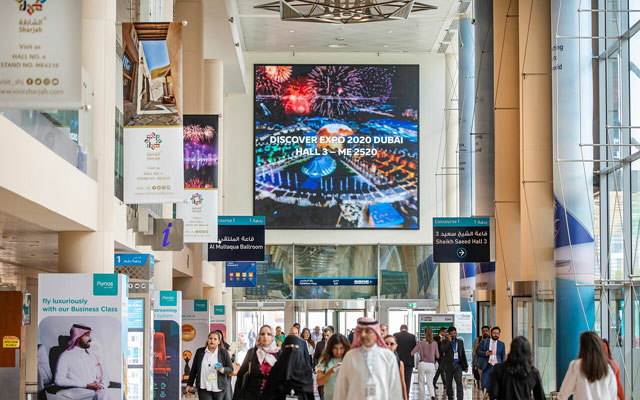
An in-person Arabian Travel Market (ATM) will return this year to the Dubai World Trade Centre from May 16 to 19, followed by a virtual event a week later to reach an even wider audience.
Now in its 27th year, ATM 2021 will bear theme, A new dawn for travel and tourism, and focus on the current state of the industry as well as what the future holds. Event content will also discuss emerging trends in travel and tourism, and how innovation can drive the industry forward.
Supporting ATM’s theme, a recent Colliers report, MENA Hotel Forecasts, estimates that 2021 will be a year of recovery, based on the assumption that hotel performance across the region is already improving. Major destinations such as Dubai and Cairo are leading the way with estimated full year 2021 occupancy levels of 68 per cent and 65 per cent respectively.
They were closely followed by Abu Dhabi, Riyadh, Jeddah, Muscat and Amman, with average occupancy of 58 per cent, 56 per cent, 51 per cent, 48 per cent, and 45 per cent respectively.
Overall, average year-on-year growth of the 20 destinations researched was 47 per cent.
Expressing confidence in the industry’s recovery based on vaccine progress, Danielle Curtis, ATM’s exhibition director ME, said: “Last week, Pfizer released the first reading of its Phase-3 trial data for its Covid-19 vaccine, announcing that it was more than 90 per cent effective in preventing the coronavirus, based on interim data analysis.
“If approved by the US Food & Drug Administration, Pfizer estimates it can roll out 50 million doses this year and up to 1.3 billion in 2021, enough to vaccinate almost 675 million people. So, we are confident that by May next year, we will be on the threshold of a new dawn for our industry.”
Both ATM 2021 and ATM Virtual are part of the wider Arabian Travel Week. Debuted in June last year, ATM Virtual was said to be a success, drawing 12,000 online attendees from 140 countries and facilitating 11,301 prescheduled one-to-one meetings and 23 live video sessions. Overall, webinars had more than 24,000 views over the course of three days.
Curtis believes that maintaining a virtual event element this year would allow more industry professionals from around the world to join in the activities, especially at a time when not all travel restrictions are off the table.
The Arabian Travel Week includes International Luxury Travel Market 2021, and Travel Forward, the travel technology vertical. ATM will also be partnering with Arival on a series of webinars aimed at tour operators and destination managers.
Buyers Forums will be established for key source markets such as Saudi Arabia, India and China, while a virtual digital influencers’ speed networking session, a hotel summit and a responsible tourism programme will also be held.
The in-person event will adhere to all health and safety guidelines, and will provide a touchless and seamless delegate experience.
SIA to pilot IATA Travel Pass this month
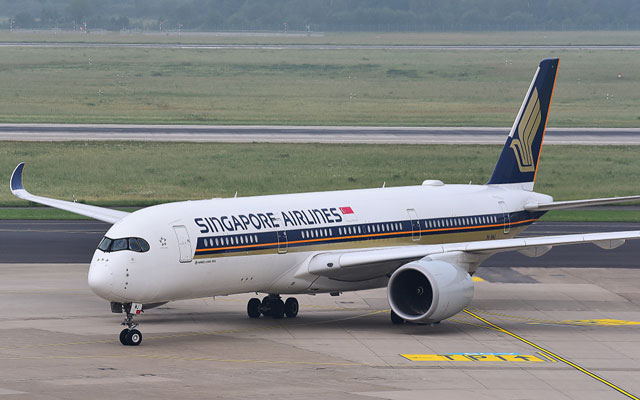
Passengers travellers from Singapore to London from March 15 to 28 will be part of Singapore Airlines’ (SIA) pilot trials for the IATA Travel Pass mobile application for digital health verification.
This is the second phase of SIA’s digital health verification process trials, which is based on the IATA Travel Pass framework.
Passengers with Apple iOS devices will be invited to download the app and create a digital ID with a photo and passport information. They have the option of also including their flight information.
They can then book a pre-departure Covid-19 test at any of seven participating clinics in Singapore via an online portal, and register at the clinic using the digital ID and flight information in the app.
Passengers participating in the trial will need to show their confirmed status in the app to the check-in staff in Changi Airport before flight departure. In line with current regulatory requirements, they will also need to bring a physical copy of their health certificate that is issued by the clinic where they took their Covid-19 test.
If successful, the pilot will pave the way for the integration of the entire digital health verification process into the SingaporeAir mobile app from around mid-2021, again using IATA’s Travel Pass framework, noted the airlines in a press statement.
The airline will work closely with its partners in Singapore and around the world in the facilitation of these trials, and towards the eventual restoration of a seamless travel experience for its customers.
JoAnn Tan, SIA acting senior vice president for marketing and planning, said: “The first phase of the trials helped to support SIA’s drive towards a secure and convenient industry standard for the verification of Covid-19 test results, and the health status of passengers including their vaccination status in the future.
“This gives us confidence that in the second phase, we can further streamline the verification process for eventual integration into SIA’s mobile application. This will help to provide a hassle-free digital solution for our customers in the new normal, and bring about a more seamless travel experience.”
Rebuilding travel demand

 Many in the luxury travel space are predicting a travel recovery that is led by high-net-worth travellers – people with the financial ability and control over their own time to get through the many hurdles required of travellers amid a pandemic. Is this happening with Hilton’s best of the best properties?
I don’t think travel recovery is restricted to luxury travellers. Everyone is travelling again once it is possible.
We are seeing in Asia-Pacific that there are now more domestic travellers than we saw a year ago, which is a natural outcome of the closure of travel borders as a result of the pandemic.
In China where we have a big number of Waldorf Astoria and Conrad hotels, we have benefited a lot from the restrictions on Chinese people leaving the country for holidays. As a result, many are rediscovering China instead.
In Indonesia, Thailand and Singapore, many locals who did not chose to stay at our hotels for a vacation pre-Covid-19 have changed their mind. In Singapore, locals are motivated by the SingaporeDiscovers vouchers put in place by the government (to stimulate domestic tourism spend) and their staycations are really helping the hotels.
In Japan and South Korea, staycations were already a big hit pre-Covid-19, and are more so during the pandemic.
Many people who are not able to travel overseas are thinking of using their time and money instead on experiences they never considered or have been thinking about for a long, long time. For some, staying at a Waldorf Astoria or a Conrad is that option.
With such a reduced market size due to international travel restrictions, are your luxury hotels reaching out to a segment of guests who previously could not afford a stay? Would this impact brand positioning?
Our hotels in Bora Bora and the Maldives see mostly returning guests, guests who have had previously experienced our properties. We have a very strong loyalty programme.
We also have a lot of returning guests at our other iconic city hotels, like the Conrad Centennial Singapore.
So, it is our regular customers who are returning first.
The rise of new customers is natural, as our brand presence has been growing over the last few years. In China, for example, we opened four hotels in 2019 – two in Hangzhou, one in Shenyang and one in Tianjin. These hotels are now attracting a new customer base for us. Residents who saw such iconic hotels in their cities became curious about the brand; they wanted to know where else on their future travels could they experience the same brand.
If a customer has just discovered us, we are very happy.
In any case, when a traveller decides on a luxury trip, he will consider what he wants to experience. When he chooses to stay in a luxury hotel, he wants to have the choice of having a wonderful time. It is never about the price. And for this reason, our team must and will continue to deliver on excellent experiences.
Has marketing to the luxury traveller changed – or will change – as a result of the pandemic and new travel priorities?
Marketing to the customer hasn’t changed but our messages have. In the beginning of the pandemic there was no need for us to tell our customers how beautiful our hotels are because everyone was stuck at home.
As the pandemic progressed, we developed our Hilton CleanStay and Hilton EventsReady messages to rebuild customer confidence.
And when the first wave of infections came under control, and people begun to dream again of travel, we started the Hilton Dream Away campaign. Travel resumption started in China, then Europe and then the US. As we saw more markets restarting some travel, we had more pockets of marketing activities but using the same channels.
We continue to be sensitive in our messaging because we cannot ignore the fact that we are still in the middle of a pandemic. Once it becomes clearer that people can get from one point to another, for example with flights resuming between Singapore and the Maldives, we will then roll out targeted marketing.
I consider the travel and tourism recovery to be a confidence game, where the player that can best portray an ability to offer the safest experience for the traveller, even at a premium price, will win. How is Hilton working towards rebuilding that confidence?
I remember how we used to keep our housekeepers hidden (before the pandemic). We told them to only clean the lobby between 02.00 and 04.00 early in the morning, and please do not show themselves to guests.
Nowadays, they will clean in the day and we are happy for them to stay as long in the lobby as they can and be visible to guests. But it is more than just a show, you know. We are a company of over a hundred years old, and cleanliness has always been a part of our DNA. Particularly because our luxury customers expect the very best from us, and that they are safe and taken care of. We didn’t have to reinvent our cleanliness processes.
That said, we have to be sensitive to Covid-19 requirements, which is why we now place a Hilton CleanStay seal on room doors as a way of assuring customers that nobody else has entered their room after it is cleaned and sanitised. Some things are also triple-cleaned now, and we have a partnership with RB, the maker of cleaning brands Lysol and Dettol, to allow guests to feel safe knowing that we are using products they trust and are familiar with.
Can you paint me a picture of your luxury guest journey in this Covid-19 era?
We start communicating with our guests days before their arrival to understand their desires and have that prepared in advance.
When they arrive at the door to their room, they will see a Hilton CleanStay seal, as I have described earlier.
Our hotel can provide an absolutely contactless experience should guests wish for that. If the guest does not want to check in at the counter, we can provide a digital check-in. If they choose isolation, they get isolation throughout their stay. Choice is the key here.
But, with luxury travellers, complete isolation is rarely chosen. They often expect some interaction, to be able to sense the smile behind the mask. They expect to discover why this hotel is luxurious, why the restaurant is famous, why the brand is positioned as such, what’s special around the neighbourhood, etc. Of course, they can know all that from Google, but they would rather find out by themselves, perhaps through a five-minute conversation with our concierge.
At our Maldives resorts, we will even arrange for a Covid-19 test on the island if the guest wishes. As you know, some guests are required to clear a Covid-19 test before they can re-enter their country, so this is an option available for them. And that, to me, is a clear example of the difference between a luxury hotel and a hotel of a smaller scale. It is in our DNA to do things differently to make our customers feel comfortable.
Speaking of the Maldives, Hilton has just launched Ithaafushi – The Private Island in January. And this autumn we can expect LXR’s debut in Asia-Pacific, in Kyoto. What about them excite you most?
Ithaafushi – The Private Island is part of Waldorf Astoria Maldives, and is essentially a private island for bigger families because there are four villas. Guests can only get there by boat, so it delivers on privacy.
Families staying on Ithaafushi – The Private Island have 24-hour access to a personal concierge and all team members who are stationed at the main resort. If they wish for a meal, chefs from the resort will go over and prepare a meal on the island. It has its own spa, gym, a large living space – everything a family could need.
We have been getting enquiries for family stays.
Sounds perfect in a pandemic era, as travellers are favouring private villas and estates when travelling with family for safe distancing.
Yes, absolutely. It is a great move, something we had planned for even before the pandemic.
Meanwhile, Roku Kyoto is under our latest brand, LXR. I’ve just seen photos of it, and it is under construction. It is on time and will open in autumn. It is a wonderful hotel, just 20 minutes from the city centre but in a wonderful nature setting. It is a resort with a couple of authentic food and beverage outlets on its grounds. I think it is a wonderful addition to the LXR brand and a great way for us to bring the brand into Asia-Pacific.
How will Hilton’s luxury portfolio continue to grow for the rest of this year in this region, and which brands will we see more of in the coming years?
Despite the pandemic, our expansion hasn’t stopped. We maintain our long-term vision for our brands. In fact, we had more signings for new hotels last year than we ever did before for all our brands.
Over the last couple of months, we are getting many partners who have expressed their trust in our brands and what we have been doing. And that is helping our hotel portfolio to grow. Ultimately, we have absolute trust that travel will return.
We are opening two Conrad hotels in China this year, one in Jiuzhaigou (Sichuan province) and another in Urumqi (Xinjiang Uyghur Autonomous Region). It is important that our luxury brands go to destinations that are beautiful and perhaps not where we would have gone five years ago but are now interesting (and unknown for the growing market of domestic travellers). The world is craving for new destinations.
Here in South-east Asia, we will have Conrad Kuala Lumpur and Waldorf Astoria Bali.
Later, we will welcome Waldorf Astoria Tokyo Nihonbashi (in 2026), which we announced end of last year.
I would say there is equal interest in all Hilton’s luxury brands.
One last question – an easy one. When travel is possible again, where would you go?
Easy. The Maldives!

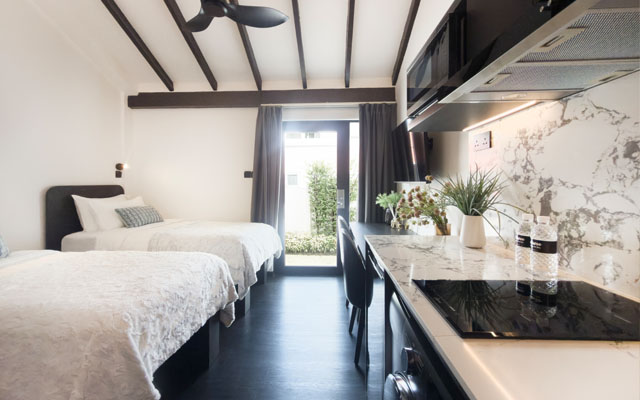






The Philippine Department of Tourism (DOT) will endeavour to ensure the tourism resiliency of the country’s prime destination, El Nido in Palawan, through the full implementation of the Sustainable Tourism Development Project (STDP) this year.
The announcement was made by tourism secretary Bernadette Romulo-Puyat during a visit to El Nido on Friday (March 5). The project is a collaboration between the DOT, the Provincial Government of Palawan, the Municipalities of Coron and El Nido, and the Asian Development Bank.
The tourism chief shared that the STDP, an initiative under the DOT’s Transforming Communities Towards Resilient, Inclusive, and Sustainable Tourism (TouRIST) programme, aims to make El Nido’s tourism development more sustainable and inclusive.
Projects will focus on making improvements to the town’s drainage; solid waste (landfill development); ecosystem-based tourism site management; as well as enterprise and skills development from 2021 to 2026.
With the arrival of the Covid-19 vaccine in the country, Romulo-Puyat said that the DOT is optimistic that tourism workers in destinations like El Nido, Palawan will be prioritised in the government’s vaccination programme, after medical frontliners and senior citizens.