

Scoot launches pre-departure Covid-19 testing trial
Argentina banks on Trip.com deal to lure Chinese tourists

Trip.com Group has signed a five-year MOU with the Argentina Ministry of Tourism and Sports to strengthen tourism exchange between China, Argentina and across Trip.com Group’s networks of users and partners.
Over the next five years, the two parties will collaborate on travel marketing initiatives, products and data, and fully optimise the travel experience for tourists in Argentina. This cooperation project will be launched in stages, based on the tourism industry in different target markets and in line with current tourism policies.
Leveraging Trip.com Group’s global network as an international online travel services provider, the partnership aims to drive visitation to Argentina once international travel restrictions have been lifted.
The Argentinian minister of tourism and sports, Matías Lammens, joined the signing ceremony online with his colleagues, the Argentine ambassador to China, Sabino Vaca Narvaja, and the head of the Argentine Investment Office, Leandro Compagnucci who visited Trip.com Group’s headquarters in Shanghai.
They met with Trip.com Group’s CEO Jane Sun and overseas destination marketing and government relations director Edison Chen, to discuss the future cooperation plan and jointly participate in the signing ceremony.
Sun said: “Argentina is renowned worldwide as a beautiful, must-visit destination which welcomed over seven million travellers in 2019. Once international travel resumes, we believe Argentina will be high on the list of destinations for travellers to visit due to its rich culture, breathtaking natural landscapes and incredible people.”
Lammens added: “The tourism industry plays a vital role in the economic recovery of Argentina following the pandemic. At present, the Argentine government is actively creating a secure business environment for tourism to increase the number of international tourists.”
Aleph Hospitality signs trio of Kenyan hotels

Dubai-based hotel management company Aleph Hospitality has signed management contracts for three hotels in Kenya.
The hotels – Boma Nairobi, Boma Inn Nairobi and Boma Inn Eldoret – are owned by Red Court Hotel, a subsidiary of Kenya Red Cross Society.
Managed under Red Court Hotel’s homegrown Boma brand until now, Aleph Hospitality has been appointed to manage the properties and turn them into profitable assets once again.
As part of the agreement, Aleph Hospitality has pledged financial support to the Kenya Red Cross Society, by donating a percentage of fees it earns from the hotels to local charitable initiatives.
Located in the heart of the capital, Boma Nairobi features 148 rooms and suites, a conference hall, boardroom, two F&B outlets, a gym, spa and swimming pool.
The three-star Boma Inn Nairobi, situated at the Kenya Red Cross complex, boasts 58 rooms, an all-day-dining restaurant and a lounge.
Meanwhile, the Boma Inn Eldoret marks Aleph Hospitality’s first property in the Rift Valley region of Kenya. The hotel offers 68 rooms and suites, three F&B outlets, meeting facilities, a gym, spa and swimming pool.
Bani Haddad, founder and managing director of Aleph Hospitality, said: “We understand the Kenyan hospitality market exceptionally well and have seen an increase in demand for our management services during the coronavirus pandemic, as owners in Kenya seek international expertise to help them manage costs, boost revenue and drive profits from their hotels.
“As a third-party management company, we are able to do this, while also enabling owners to have more visibility into their operations and better flexibility with contractual terms”.
Aleph Hospitality, which has earmarked a pipeline of 50 hotels in the Middle East and Africa by 2025, manages hotels directly for owners, either on a franchise basis for branded properties or as a white label operator for independently-branded hotels.
New OTA launches for Indonesian tour and activity suppliers
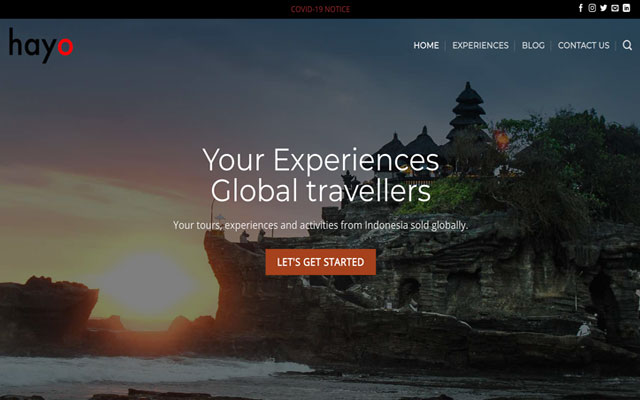
Hayo Wisata Indonesia has rolled out Hayo Travel, a new online marketplace for tour and activity providers in Indonesia to create and sell bookable experiences to tourists around the globe.
Launched in collaboration with Finland-based travel technology company Toristy and California-based travel content management platform Magpie Travel, Hayo Travel aims to spur local tourism industry players to go digital and foray into international markets.
Masrura Ram Idjal, president director of Hayo Wisata Indonesia, said: “Creating digital platforms individually is very expensive. Therefore, we set up Hayo Travel to facilitate (the digital transition of local tourism players). Making a website might be easy, but to market the products and make the website able to compete with other marketplaces around the world is not easy and cheap.”
Hotel rooms and tour packages, alongside diving, kayaking, hiking, and biking trips are among 4,000 tourism products currently available on the Hayo Travel platform, which has onboard 2,000 companies.
Steve Jackson, CEO of Toristy, said that Hayo Travel differs from existing marketplaces as it does not drive traffic to a single website.
He explained that Hayo Travel is an embeddable marketplace that will link Indonesian business entities with big enterprises in travel such as airlines, ferries, etc. Therefore, in Hayo, there will be multiple local channels and, with the help of Magpie, international sales distribution through the likes of Expedia and GetYourGuide, he added.
Tourism products, which trade players can upload to the Hayo Travel platform for free, will be automatically marketed and distributed to Magpie’s and Toristy’s partners, such as Agoda and Viator, said Bahriyansyah, managing director of Hayo Wisata Indonesia.
Accor woos guests to Recharge in the Maldives

Accor has launched the Recharge in the Maldives deal, offering guests complimentary breakfast, lunch and dinner; as well as an upgrade to the next available room category at the time of booking.
The offer is available at four of Accor’s resorts in the Maldives – Raffles Maldives Meradhoo Resort, Fairmont Maldives Sirru Fen Fushi, Mövenpick Resort Kuredhivaru Maldives, and Mercure Maldives Kooddoo Resort.
The Recharge Maldives offer, which comes with flexible cancellation terms, is valid for bookings from now until April 30, 2021 for stays until September 30, 2021. Accor Plus members are entitled to an additional 10 per cent discount on accommodation.
Tourists of all nationalities can travel to the Maldives at present with proof of a negative Covid-19 test required upon entry as well as a confirmed hotel reservation.
Qantas trials digital health pass
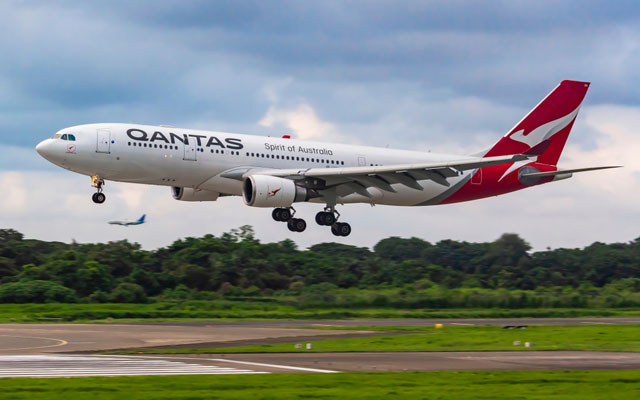
Qantas Airways has completed its first customer trial of the CommonPass digital health app on its international repatriation flight from Frankfurt to Darwin.
This follows a successful trial with crew last month and comes as the national carrier prepares to restart international flights from late October.
The CommonPass smartphone app helps to verify Covid test results and vaccination information to border or health officials and airline staff. The app connects passengers to certified testing labs so that results can be uploaded to the platform and passengers can show they have proof of a negative Covid test result before their flight, which is a requirement on all repatriation flights Qantas is operating on behalf of the Australian government.
Qantas Group CCO Stephanie Tully said a digital health pass would assist airlines and governments globally to facilitate safe international travel when borders reopen.
“We want to get our international flights back in the air and our people back to work and a digital health pass will be a key part of that,” she said. “Covid test results and proof of vaccine will be required in many countries for quarantine-free travel, just as it has been for polio and yellow fever vaccinations in the past.”
Longer-term, there are plans to integrate the technology with the existing Qantas app to create a one-stop solution for passengers, Tully said. “Ultimately we’re focused on ensuring that the process will be as seamless as possible for our customers to share this information so they can travel internationally again,” she added.
CommonPass is one of two digital solutions that Qantas is assessing, alongside the IATA Travel Pass.
The Federal Government announced last month that vaccination certificates will be issued and made available through the Medicare and MyGov apps. Qantas is working on solutions for passengers to elect to have this medical information integrated with their clearance to travel in a secure way and in accordance with global privacy regulations.
Meanwhile, the Australian government has rolled out a A$1.2 billion (US$928 million) tourism support package designed to support the country’s aviation and tourism sectors, and boost domestic travel.
Under the plan, an estimated 550,000 discounted Qantas and Jetstar fares will be offered to targeted markets, while direct support will be given to around 7,500 employees directly impacted by continued international border closure, among others.
Tourism Malaysia ropes in GoPro for video contest to spur domestic travel

Tourism Malaysia has partnered with GoPro to bring forth a new social media challenge inviting all residents in Malaysia to create and share videos of their past travels capturing diverse attractions within the country.
Dubbed Dream Malaysia Challenge, the campaign aims to promote Malaysia as the preferred destination and to boost domestic tourism.
Video submissions can be captured from any device, but must have been polished up through the GoPro App. Participants can send in their 30-45 second videos via the GoPro Awards Portal under the challenge Malaysia|Living Local.
In addition, participants are also required to post their videos on their personal Facebook and Instagram profiles, detailing their travel experience in the caption using both the #DreamMalaysia and #GoProxTourismMalaysia hashtags. They must also tag both GoPro and Tourism Malaysia on their respective Instagram and Facebook accounts.
Participants who wish to add background sound to their videos must use only music taken from the GoPro app.
The Dream Malaysia Challenge, which kick-started on March 13, will end on March 28 at 23.00. Participants stand a chance to win the latest GoPro HERO9 Black, GoPro MAX, GoPro HERO8 and full board stays at Taman Negara, Gopeng Glamping Park and Tadom Hill.
TTG Conversations: Innovator Chat with Monster Day Tours and Lion Heartlanders

The Covid-19 pandemic has highlighted the importance of collaboration over competition – and for two tour operators in Singapore, closing ranks have saved their skins amid these testing times.
TY Suen and Byron Koh, founders of Woopa Travels and Lion Heartlanders, respectively, began talks of collaboration shortly before Covid-19 struck.
When Singapore entered the circuit breaker period last year, Woopa Travels launched a new series of virtual tours under its Monster Day Tours brand. The Virtual Bingo Tours dangle the lure of prizes and spur active participation by gamifying live broadcasts of local exploration. They have since evolved to include different locations in Singapore, as well as a Kyoto itinerary, accompanied by a new breed of physical and hybrid learning tours.
In this episode of TTG Conversations: Innovator Chat, Suen and Koh reveal how these innovations and risks proved critical for survival.
Mekong Tourism Coordinating Office chief makes an exit

Jens Thraenhart, the longest serving executive director at the Mekong Tourism Coordinating Office (MTCO), has put in his resignation and will serve out his notice in 90 days.
Thraenhart joined the organisation – a secretariat of the Greater Mekong Subregion (GMS) Tourism Working Group and which is owned and funded by the six governments of the GMS – in June 2014, after serving as strategic advisor to the previous MTCO executive director.
Thraenhart told TTG Asia that he is exiting for personal reasons, adding that “external factors make it increasingly difficult to do my job and carry out the mandate of the MTCO”.
He paid tribute to the six governments of the GMS who had put their “trust and confidence” in him to head the MTCO.
“I am proud of what we have achieved. I am deeply honoured to have served the tourism stakeholders of the Greater Mekong Subregion,” he said.
Thraenhart is widely recognised for his work in promoting the GMS and enhancing the MTCO’s digital offerings, specifically the MTCO website (MekongTourism.org) and Mekong Tourism’s social media presence which have won several awards, such as the PATA Gold Award and the HSMAI Adrian Gold Award.
MTCO’s annual flagship event, the Mekong Tourism Forum (MTF), was also recognised by the UNWTO as a global best practice in inclusive and responsible tourism. Since its launch in 2017, MTF has enabled hundreds of small tourism businesses in emerging destinations to be showcased to the world.
He is also behind the creation of the private sector framework, Destination Mekong, which aims to develop, execute and operate various pro-tourism initiatives, such as Mekong Moments and Mekong Mini Movie Festival campaigns, the Experience Mekong Collection, Mekong Heroes, Mekong Trends, and the Mekong Innovations in Sustainable Tourism programme.
Other powerful public-private sector partnerships in regional tourism development formed during his leadership includes the Mekong Tourism Marketing Plan and the Mekong Tourism Sector Strategy.
Information on Thraenhart’s replacement and interim leadership arrangement is not available at press time.
Bali plays host to live event for ITB Berlin NOW 2021
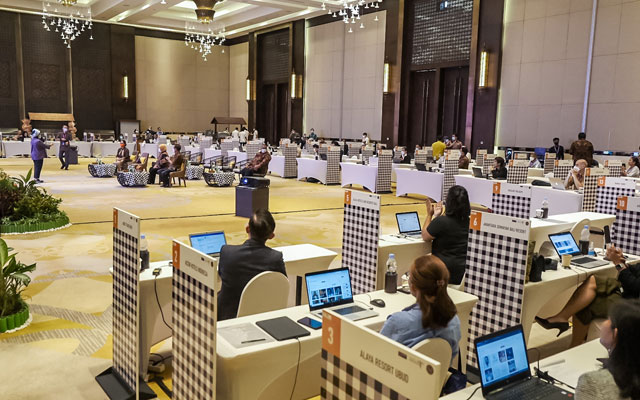
Indonesian sellers who took part in the recently-concluded virtual ITB Berlin NOW 2021 convened in a live meeting held in Bali, which was hosted by the Indonesia Ministry of Tourism and Creative Economy (MOTCE).
The event, which took place from March 9-12, saw the ballroom at The Anvaya Beach Resort Bali transform into the ‘Indonesian Pavilion’ complete with a coffee corner, a photo booth plus handicraft booths in the foyer.
A total of 65 sellers – majority of whom were Bali-based – attended the event, conducting their business with buyers in the ballroom.
Dance and music performances were staged at the opening ceremony, while Visit Indonesia Tourism Office Germany and the Indonesia Inbound Tour Operators Association organised destination presentations.
Nia Niscaya, deputy for marketing, MOTCE, said that there were several reasons for organising a live event, including wanting to boost the sellers’ spirits amid the pandemic by giving them a working ambiance close to that of a trade show, as well as to ensure that sellers keep to their appointments to show their commitment to buyers.
The event also meant to showcase that business events could be conducted safely with strict implementation of the new protocols. All participants underwent antigen swab tests and stayed at the hotel.
Bali was chosen as the event venue as the volume search by potential international travellers remained high. It was also part of efforts to prepare for the reopening of the destination, with MOTCE “working closely with the related ministries to reopen the border in stages,” said Nia.







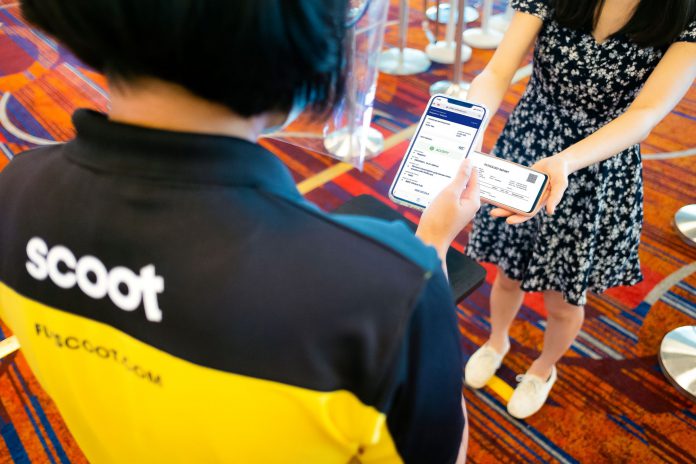
From March 17, all outbound Scoot passengers flying from Singapore, Indonesia and Hong Kong will be able to book Covid-19 pre-departure RT-PCR and serology tests as part of a trial service run by Collinson.
The service builds upon the pilot recently launched for Singapore Airlines, Scoot’s parent company.
The Collinson online portal, accessible via the Scoot website or mobile app, will allow passengers departing on flights to book pre-departure testing appointments with recognised and accredited partner clinics and digitally receive results within 36 hours.
Passengers will receive their serology test results directly from the clinic. However, RT-PCR test results can be obtained through the portal, with QR codes embedded within the RT-PCR result certificates, enabling digital authentication, streamlining verification and strengthening the integrity of the process.
There are plans to expand the service to other destinations in the Scoot network post-trial.
A digital verification solution from Affinidi, a Temasek-founded technology company, is also being trialled by Scoot at check-in for selected flights from Singapore, Malaysia, and Indonesia. By scanning the QR code with a secure app, check-in agents are able to quickly and reliably determine the authenticity of digital or printed Covid-19 test results bearing a verifiable QR code, issued by selected clinics. This will reduce the check-in time for passengers, thereby, improving their travel experience.
Todd Handcock, president, Asia Pacific, Collinson, said: “Helping to reopen key routes for travellers in a safe way is our utmost priority and this partnership is another step forward in our aim of achieving the long-term return of global travel.”
Campbell Wilson, Scoot CEO, added: “Through both solutions, we hope our customers can be assured of a more convenient, efficient and reliable experience when they travel with us.”