

TTG Conversations: Five Questions with Kwee Wei-Lin, Singapore Hotel Association
The Covid-19 pandemic has put Singapore hotels in an unusual jam, as 90 per cent of revenue had come from international tourists before borders were shut and travel was heavily restricted.
However, according to Kwee Wei-Lin, president of the Singapore Hotel Association, Singapore hotels have shown remarkable resilience by adapting themselves either to the government’s Stay-Home Notice quarantine hotel programme or domestic staycation business.
In this new episode of TTG Conversations: Five Questions video series, Kwee also talks about how industry agencies and associations came together to tackle the tourism crisis early on, critical lessons Singapore hoteliers have taken away from the predicament, changes to hotel operations and business going forward, and Singapore Hotel Association’s efforts to support members.
Revival of two cities
Once upon a time, Wonosobo and Banyumas in Central Java were favourites of European travellers who were drawn to the Baturraden mountains, Dieng Plateau and Hindu temples in the areas. Over time, the appeal waned, as these travellers were lured away by scenic train rides between Bandung and Jogjakarta.
However, completion of Trans-Java toll roads connecting major cities in the province at end-2018 has injected new life into two destinations. Domestic road trips across Java have flourished along with a growing presence of new hotels such as those managed by Indonesian company Dafam Hotels & Resorts in second- and third-tier cities across Central Java.
With international borders shut during the pandemic, Indonesian residents took to touring their own backyard, allowing the domestic road trip segment to rebound as soon as movement restrictions were lifted and attractions were once again allowed to welcome visitors in mid-2020.
Encouraged by the strong domestic interest, the regency government and industry players are taking the opportunity to refresh their product offerings.
Building on Banyumas’ natural adventurous appeal, the regency government intends to use 200 billion rupiah (US$14,286) from the post-Covid-19 National Economic Fund for attraction development. It aims to leverage the area’s beloved Baturraden mountains and the 200 waterfalls within to attract visitors.
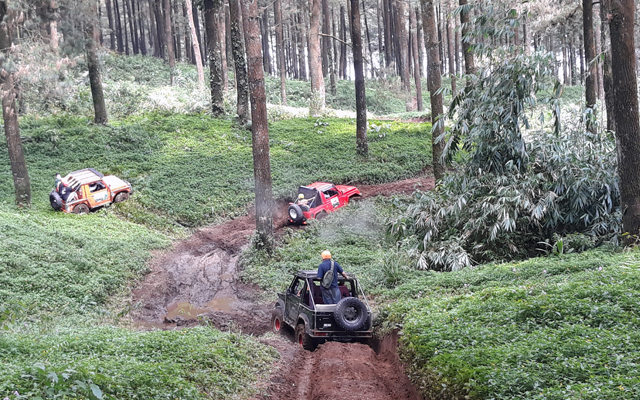
These efforts will complement the range of nature attractions managed by Palawi Risorsis, a subsidiary of Perhutani, a state-owned company of the Ministry of Environment and Forestry. They include the Pancuran Tujuh hot springs and adventure activities like trekking, offroad drives and camping.
With tourism in the government’s long-term vision, Achmad Husein, the regent of Banyumas, said the construction of a botanical garden in Baturraden will kick off development plans this year. Along with the gardens, water sports facilities in Purwokerto city and a floating market along Serayu River will materialise. Two docks have already been built along the river to facilitate this development.

Visitors to Banyumas can also look forward to a new eco-printing facility that is part of the Bruwun Alas Village Education programme. Here, visitors can observe community members print cloth using dyes and leaves collected from around the village. They can even print their own cloth souvenir.
“These will give travellers alternative attractions beyond Baturraden (mountains),” said Achmad.
Over at Wonosobo and the neighbouring Temanggung area, local authorities are riding on the region’s newfound fame in coffee bean production, which has won international recognition through competitions.
Today, taking a tour of a coffee plantation and learning to pick coffee beans and then brew a hot cuppa is a fresh tourist offering.
Two Heart Coffee, a home industry and coffee shop located in the Posong area, about 20 minutes by car from Wonosobo city, beckons visitors with a chance to roast, brew and taste the famous Kopi Posong and sample local sweets while learning about the history of the local coffee industry.
After acquiring a caffeine boost, visitors can proceed to the Posong Recreational Park on the slopes of Sindoro Mountain. Opened in 2019, the park comprises a recreational area, camping and glamping grounds. It is loved for its sun rise and sun set views.
Zuniyanto, Posong Recreational Park manager, said glamping groups often arrive in the afternoon to take in views of the tobacco and tea plantations before catching the sunset glows and indulging in a barbecue dinner over a bonfire. Come morning, the group will watch the sun rise over the horizon, have breakfast and partake in activities such as team-building games or plantation tours.
Zuniyanto recalled that a 2017 film, Filosofi Kopi, had propelled Posong into the spotlight. With the opening of the park, a number of tour operators from Yogyakarta and Central Java streamed in with travellers from the Netherlands, Germany and Malaysia.
Pranoto Hadi Prayitno, director of Citra Gilang Tour, said recent tourism developments in Wonosobo and Banyumas are perfect for the domestic tourism markets.
“But they could eventually attract international travellers with new facilities developed with specific target markets in mind. The hot springs in Baturraden, for example, could attract the Japanese crowd if onsen-like facilities were created,” he suggested.
He also encouraged local travel companies to promote Wonosobo and Banyumas to regional markets through travel tradeshows, and avoid relying on traditional European markets as international travel resumes.
Mental wellbeing propositions, testing over quarantine key to Asian travellers taking to the skies again
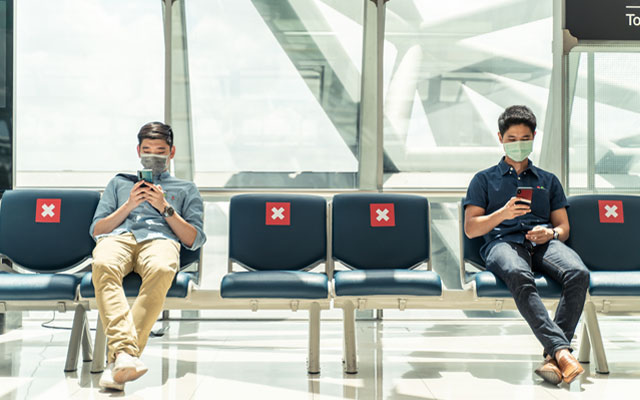
As travel slowly resumes, new research from Collinson has found that quarantine and testing remain a key concern for travellers in Asia.
Comparing data collected from a total of 18,500 travellers in 2019 and 12,607 travellers in 2020, the findings reveal that travellers are just as worried about their mental wellbeing as they are their physical wellbeing.
Whilst generally the desire to travel is high, there’s a new underlying mental health issue that travelling may cause, manifesting itself in the stress associated with post-pandemic travel. Three quarters (73%) of travellers worldwide said they’ll be prioritising their mental wellbeing more when they travel now, than they did before Covid-19.
Two in three travellers in Japan (67%) expect travel in the next year to be more stressful than in the past, a concern echoed by 78% in Hong Kong and 81% in Singapore. As such, a large proportion (87%) of global travellers specifically said they wanted access to socially-distanced spaces in which to ‘de-stress’ and ‘relax away from the crowds’; with 89% of travellers in Singapore and 90% in China citing socially-distanced spaces to relax in as a key factor to their airport experience.
While there was already a concern among travellers about the impact journeys were having on their physical wellbeing, 81% said the pandemic had heightened these concerns. Physical wellbeing when travelling is a key priority for both Singaporeans (64%) and Hong Kongers (74%), with both above the global average of 60%.
“The importance of mental health on the journey is perhaps surprising but equally a welcome insight into what travellers are looking for as the travel recovery continues to gain ground with new testing and vaccination regimes”, explained David Evans, joint CEO at Collinson.
“This is a way for the travel industry to look at its offering to consumers, allowing travel brands to understand what consumers want and what the industry needs to act on to rebuild traveller confidence.”
While apprehensions surrounding mental wellbeing and stress are a top priority for global travellers, issues around quarantine rules remain a significant concern for passengers in Asia.
The report found that the need to quarantine tops Hong Kong travellers’ list of concerns for post-pandemic travel, with 57% primarily hesitant to travel due to the need to quarantine on arrival or return. These concerns are shared with 49% of travellers from China and a further 71% of travellers from Singapore.
In light of these findings, testing has proven to be an essential factor in rebuilding global traveller confidence, with the vast majority (83%) of global passengers wanting there to be tests in arrivals at the airport, and nearly the same (82%) wanting tests on departure.
Since the beginning of the pandemic, Asia has spearheaded the drive for Covid-19 testing, attributing it to the region’s success in keeping cases largely under control. The importance of testing both pre-departure and on arrival is shared by travellers from China (90%) and Hong Kong (86%), with a further 86% of travellers from Singapore desiring testing in arrivals and 85% on departure.
Ultimately, travellers are looking for a seamless journey, with a third of travellers from China (31%) happy to pay for airport lounge access to allow for this and 45% of Hong Kong travellers specifically listing a quick and efficient journey, including a fast security queue, as key to ensuring this stress-free experience.
Sharing the wonder of travel with underprivileged kids
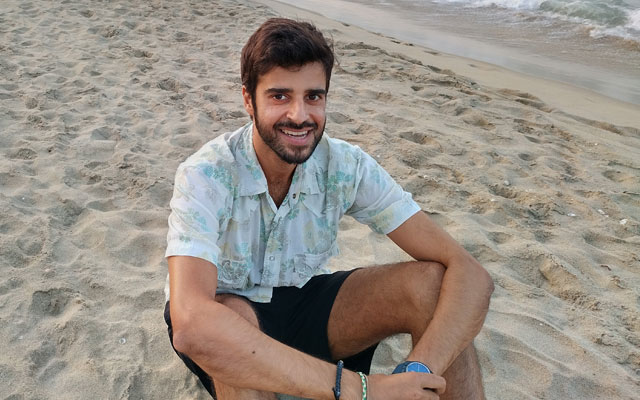
Sustainable tourism practitioner Ameer Virani is offering tourists the chance to spread the joys of travel to underprivileged children in the South-east Asian countries they visit with innovative social project, Share The Wonder.
Virani first came up with the idea of organising fun, educational day trips for poverty-stricken youngsters living in the region while working for EXO Myanmar three years ago.
“Originally, it was my passion for travel and the desire to share that with people in the countries I was promoting,” he said. “I was selling these great packages, and at the same time, thinking that travel is such a privilege. You get to meet new people and learn new things – something every young person should have the opportunity to do.”
Tour operators he spoke with said they often seek sustainable avenues to give back in the countries they sold. However, finding truly beneficial projects can be tough. Additionally, NGOs operating in the countries noted they lack the funds or time to organise trips for the children they work with.
“This is an interesting way for travellers to support children in the countries they’re visiting without having to interact with them, which I don’t think is the right way to go about it,” noted Virani. “It also still feels like it’s an experience as you’re not just donating directly to an NGO, but to a travel project that’s allowing young kids to enjoy some of the activities tourists themselves might be doing on their trip.”
After carefully selecting partner NGOs in Cambodia, Laos, Myanmar and Vietnam to put forward children to benefit from trips, Virani teamed up with EXO Foundation. It works as a fundraising and logistic partner, helping to organise trips on the ground.
In December, Share The Wonder officially launched. To date, it has operated trips in Cambodia, Laos and Vietnam.
“One of the key things is we don’t want to organise run-of-the-mill trips just to get the kids out for the day; we really want to create special experiences,” said Virani. “We put a lot of time into curating each itinerary depending on each NGO and their needs.”

For example, in Laos, Share The Wonder works with Luang Prabang Special Education School, who said its deaf and mute students would benefit from a visit to the nearby Laos Buffalo Dairy. The award-winning social enterprise was able to tailor-make a trip around their specific needs.
While launching mid-Covid has not been ideal, Virani noted it does present opportunities. “Now, a lot of people are talking about domestic travel, flying less in the future and how to travel more sustainably. People are thinking more about how they can do good when they start travelling again.”
In the short-term, Virani plans to organise one trip a month. In the long-term, he hopes to increase this to one monthly trip for each destination. He is currently looking for tour operators and other industry-related businesses to partner with. One trip costs US$25, with partner businesses offering clients the chance to donate or “add-on” the fee to their travels. “It’s like adding a fee for carbon offsetting when you fly somewhere,” Virani said.
All donors receive detailed reports on the trip they have helped finance.
“It’s important young people have the opportunity to learn about and appreciate their own culture,” said Virani. “People travel half way across the world to experience them and that opportunity should be passed on.”
For more information, visit https://www.sharethewonder.org/.
IHG adds three hotels to Japan portfolio

IHG Hotels & Resorts and Iwate Hotel & Resort have signed an agreement to open or refurbish three hotels in Japan’s Appi region and convert them to IHG brands in December 2021.
The three resorts are: ANA Crowne Plaza Resort Appi Kogen, ANA Holiday Inn Resort Appi Kogen, and ANA InterContinental Appi Kogen Resort, which will be the first international luxury hotel in Japan’s Tohoku region.
The trio combined will add more than 1,000 rooms to IHG’s Japan portfolio, which marks the biggest conversion deal IHG Hotels & Resorts has signed in Japan since it formed its joint venture with ANA in 2006. It is also the first time IHG will have three brands located on one site.
The hotel portfolio will have 18 restaurants and bars, more than 3000m² of meeting & conference space, several retail outlets, and 10 health and recreation venues, including a 2,000m² onsen facility.
SIA, Scoot to stop flying transit passengers to Hong Kong
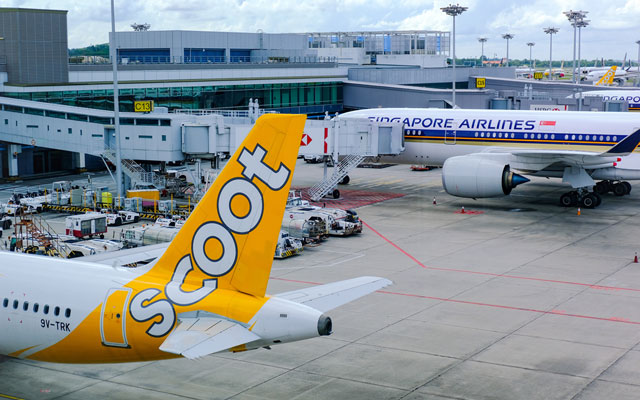
Singapore Airlines (SIA) and Scoot will stop carrying transit passengers on their flights from Singapore to Hong Kong until further notice, due to new regulatory requirements in Hong Kong.
SIA’s move will take effect from Saturday, while Scoot will stop carrying transit passengers from Singapore from April 30, the airlines said in statements on Thursday (April 15).
Both SIA and Scoot told Channel NewsAsia that their respective services from Hong Kong to Singapore remain unaffected, and that passengers originating from Hong Kong will be allowed to transfer through Singapore Changi Airport en-route to their final destinations.
SIA stated that affected customers may rebook or request a refund, while Scoot said that customers who have booked transfer flights to Hong Kong will be refunded, according to the report.
The move comes after SIA passenger flights departing from Singapore were banned from landing in Hong Kong from April 3 to April 16, after a passenger on SQ882 flying from Singapore to Hong Kong on March 31 tested positive for Covid-19 upon arrival. In addition, three passengers on the flight had breached quarantine requirements.
Meanwhile, Scoot passenger flights departing from Singapore will not be allowed to land in Hong Kong from April 16 to April 29, after TR980 arriving from Singapore to Hong Kong on April 11 carried two passengers who tested positive for Covid-19. Additionally, one passenger had also broke quarantine requirements.
Hong Kong to ease quarantine rules for vaccinated visitors
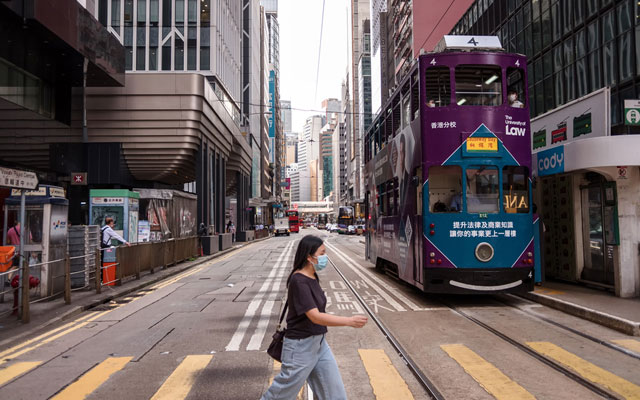
Hong Kong will reduce the mandatory quarantine period for fully vaccinated visitors by seven days from as early as end-April or early May.
Travellers from low-risk areas including Singapore, Australia and New Zealand who have received all required doses of a vaccine, need only serve a seven-day quarantine, instead of 14, at designated hotels.
Those from high- and medium-risk areas will serve a 14-day quarantine, instead of 21 days. All vaccinated visitors are required to self-monitor for another seven days after their quarantine, the Hong Kong government said in a release on Wednesday (April 14).
Meanwhile, Hong Kong residents returning to the city from abroad, with the exception of China, are still required to complete a 21-day quarantine.
The easing of quarantine rules come as Singapore and Hong Kong are finalising the details of the travel bubble, which will exempt travellers from the quarantine requirement. Discussions of the delayed Singapore-Hong Kong travel bubble resumed after Hong Kong brought the current wave of infections under control.
Hong Kong will make it mandatory for people leaving the city on these travel bubble flights to be vaccinated. However, Singapore will not impose the same vaccination requirement for incoming travellers from Hong Kong.
Veteran Indonesian travel journalist Daisy Hadmoko passes away

Daisy Hadmoko, Indonesia’s pioneer in travel journalism and founder of the country’s first B2B travel publication, Travel Indonesia Magazine, died from kidney failure on Wednesday (April 14) aged 90.
The Buddhist cremation ceremony takes place at the Grand Heaven crematorium in Jakarta today (April 16) and her ashes will be scattered at sea as per her wish.
Her husband passed away a long time ago. The couple had no children.
Through Travel Indonesia Magazine, Daisy supported the Indonesia directorate general of tourism to promote the development of the country’s tourism, a sector which was in its infancy when the magazine was first published in 1979, to the international audience.
As a veteran travel journalist, Daisy’s influence in tourism expanded beyond Indonesia into the South-east Asia and the Asia-Pacific region. She was a familiar face at major travel trade shows and conferences like ASEAN Tourism Forum, PATA Conference and Mart, and ICCA. Her reports offered valuable insights that kept the trade clued in on tourism developments within the region.
When Garuda Indonesia decided to publish an inflight magazine in 1981, Daisy was appointed publisher until 1992.
Daisy had also spearheaded media centres, coordinating the international media during international travel marts and conferences held in Indonesia, as well as Indonesia’s annual travel mart Tourism Indonesia Mart & Expo.
Daisy ceased publication of the Travel Indonesia Magazine in 2001 when she decided to retire.
She was the recipient of PATA Travel Journalism Award, ASEAN Tourism Association Special Award, and Indonesia’s Adikarya National Tourism Award.
Irish tours and activities booking solution readies for Asia expansion

Ireland-headquartered TripAdmit, which specialises in an end-to-end booking solution for tours and activities businesses, has set out on an Asian expansion, with Singapore as its launch pad.
Its core product, TripAdmit Thrive, comprises an online booking engine, price and inventory management system, online payment gateway, content and information management system, channel management solutions, and reporting and operations capabilities. TripAdmit Thrive is backed by a distribution network that includes hotels and airlines.
John Maguire, co-founder & CEO, told TTG Asia that the region is an attractive one, due to its growing appetite for tourism products and the presence of a large community of tours and activities providers that have been slow to digitise.
TripAdmit will take a progressive approach to its Asia expansion, with a careful selection of markets that are a best fit with its product and resources.
“(We have to consider) our product, the team that we have, and our network of contacts. When one enters a new market, having relationships and a network on the ground is important. For all that, Singapore makes the most sense for us,” Maguire explained, adding that he intends to move first into just one or two countries.
The company has made some new hires to support its expansion, including former Airbnb Experiences global market manager Matias Machesich, who is now international new business development manager with TripAdmit; and Carl Cromie, previously with GetTransfer, as director of travel partnerships.
The team is laying the groundwork for its Asian presence, with a focus on identifying different distribution partners as well as partners that it can “join up with, whether it is a reseller relationship or joint venture”.
Maguire sees opportunities to boost ancillary revenue streams for hotels in Asia that have had their traditional accommodation business affected by the pandemic.
Beyond hotels, Maguire believes that other tourism players such as travel agents, camp sites, accommodation sellers outside of hotels, and transportation companies could also benefit from upselling tours and activities.
“Traditionally, people see hotels and airlines as the masters of upselling ancillary products. But as the tours and activities industry digitises, it opens up connections to a wider travel industry,” he said.
TripAdmit will maintain its pricing model for Asia, which requires no upfront fees and charges begin only when the tours and activities provider starts generating revenue.

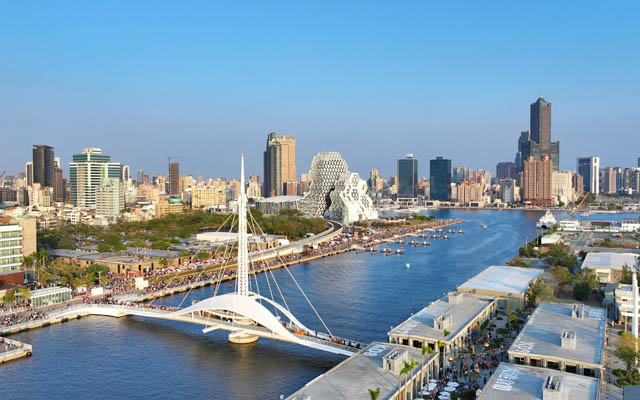






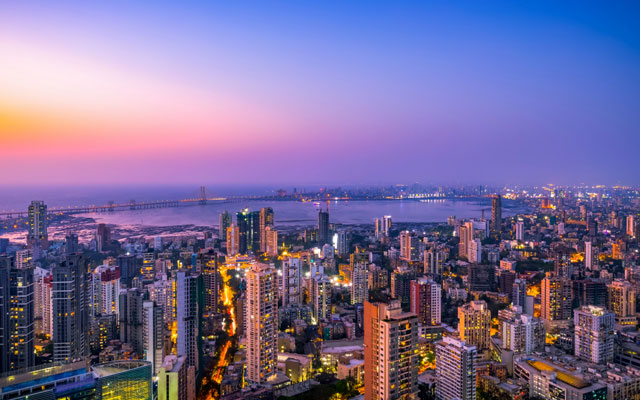
Hotels in India’s commercial capital of Mumbai, which has witnessed a rapid rebound post-Covid on the back of domestic demand, is projected to return to more moderate levels, as India battles a second Covid-19 wave, according to a recent market forecast from STR and Tourism Economics.
Driven by domestic business travel and quarantine guests, Mumbai recaptured 65 per cent of demand in February 2021 when compared with pre-pandemic levels. Group demand, which continues to lag in most markets worldwide, surpassed 70 per cent of pre-pandemic levels during the month.
Preliminary data for March showed a slowing in Mumbai’s demand amid rising Covid-19 case counts and subsequent tightened restrictions.
“Although Mumbai has not escaped the impact of the pandemic, the market performed exceedingly well for a major metropolitan area in a world that has preferred rural, nature-based destinations,” said Vidhi Godiawala, STR’s business development manager for South and Central Asia. “Further bucking global trends, business and even group demand returned early to India’s financial capital, lending hope for a second swift recovery for hoteliers as the market contends with a second wave of Covid cases.”
Data from Tourism Economics showed that international arrivals contributed to only 23 per cent of nights spent in Mumbai, even before the pandemic. The market’s strong reliance on domestic guests helped drive demand more than halfway to its pre-pandemic highs prior to the new surge in Covid-19 cases.
“Domestic demand will drive recovery post-lockdown as international travel remains uncertain,” Godiawala said. “While 2021 may be shaping into a feast-or-famine year with the newest wave of cases representing a significant headwind to recovery, hoteliers can anticipate a more sedate 2022 as travel normalises and seasonal travel patterns return. The flatter trend heralds the end of the initial recovery boom, with demand growth expected to continue at a more moderate pace in the medium- to long-term.”