

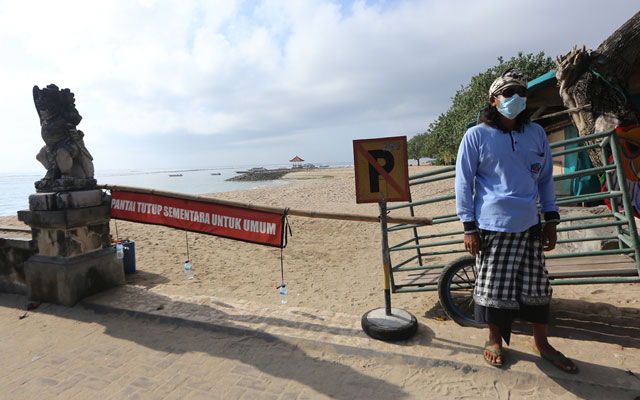
The tourism industry in Bali is calling on the Indonesian government to revise some entry policies, which they identify as hindering factors for the rebound of international arrivals.
Although Ngurah Rai International Airport has reopened for international visitors since October 14, the industry has yet to see the return of business.
A trio of tourism industry associations – Bali Tourism Board (BTB), Association of the Indonesian Tours and Travel Agencies (ASITA) Bali Chapter and the Indonesia Inbound Tour Operators Association (IINTOA) – identified the existing incoming flight regulation, quarantine requirement and visa policies as the stumbling blocks.
Currently, fully vaccinated travellers from 19 countries including UAE, New Zealand, China, India, Japan and South Korea are allowed to enter Bali.
However, according to BTB, the requirement for airlines to operate only direct flights between these countries and Bali makes it “difficult” to yield business.
An evaluation conducted by the tourism board on Monday (November 15) showed that a month into its reopening, not a single international flight has yet landed on the island.
Ida Bagus Agung Partha Adnyana (Gus Agung), chairman of BTB, said: “The government allows only airlines of the 19 appointed countries to fly into Bali. From UAE, for example, it is difficult for Emirates Airlines or Qatar Airways to bring travellers to Bali, because (their home-bases) being international hubs, the majority of their passengers are from Europe, the US, etc., and not the local Doha, Dubai and Abu Dhabi residents.”
He suggested for the government to instead allow airlines to transit at hub countries but no more than 12 hours.
“Visa application mechanism should also be simplified to be more competitive with other countries,” Gus Agung said.
Putu Winastra, chairman of ASITA Bali Chapter, explained that with the absence of visa-on-arrival (VoA) and visa-free facilities, leisure travellers currently can only use visit visas obtained through sponsors.
“Travellers need sponsors who will apply for the visas (online) on their behalf. To be a sponsor, the (travel company) must be registered at the immigration office, so not many companies are eligible to be one. As such, it is a bit challenging and more costly for travellers to obtain a visa,” Putu explained.
He, therefore, suggested categorising requirements according to each country’s Covid-19 risk level – for instance, imposing the sponsorship requirement only on nationals from medium-risk countries, while allowing those from low-risk countries to be given VoA facilities.
Gus Agung, meanwhile, opined that sponsorship is unnecessary since the government has stipulated that all travellers must have travel insurance with Covid-19 coverage.
While the quarantine period has been cut from five to three days, that policy is taking the shine off Bali as a tourist destination since many other countries have scraped quarantine, said Paul Talo, chairman of IINTOA.
He said business partners have questioned the necessity of a three-day quarantine when travellers were fully vaccinated, with many having even taken booster shots, on top of undergoing Covid 19 testing.
Paul pointed out that while many countries such as the US, Germany and Poland have allowed their citizens to use vaccine passports – or digital health certifications – when travelling; in Indonesia, even those fully vaccinated must still go through Covid tests to travel within the country.
“This shows that the government has not acknowledged the vaccines. As long as this continues and the quarantine policy remains in place, we cannot expect travellers to come,” he said.
Apart from revising existing policies, BTB has also suggested expanding the border opening to more countries including the US, Russia, the UK, Germany and Australia.
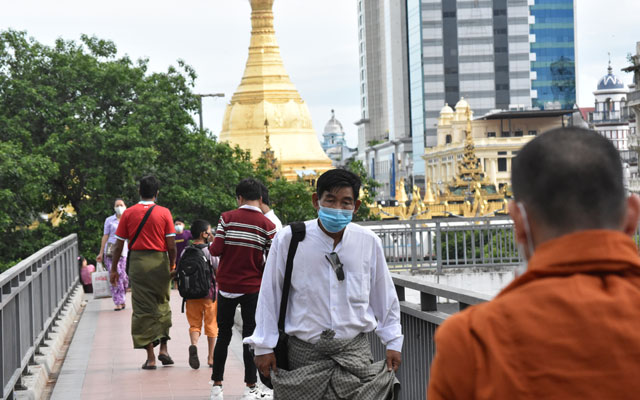











Myanmar will reopen land border crossings with China and Thailand next month ahead of a planned resumption of international air travel by 1Q2022.
The decision comes as vaccination rates have improved significantly amid clear signs of economic recovery from the Covid-19 pandemic, according to a statement by the Ministry of Information.
Maung Maung Ohn, minister of information, said travel restrictions will be eased by January 2022 at Muse which borders Ruili city in China’s Yunnan Province and at the three Myanmar towns of Tachileik, Kawthaung and Htee Kee which border Thailand.
Travel at border crossings with Laos, India and Bangladesh are currently permitted due to lower incidences of infection.
According to the statement, the government continues to receive vaccines mainly from China through donations and national procurement programmes.
A total of 14.4 million citizens above the age of 18, or 42.5 per cent of the population, have received at least one dose of vaccine as of Friday. This will increase to 50 per cent of the population by end of 2021.
With the acceleration of the vaccination programme, coupled with a fall in Covid-19 cases, the State Administration Council is accelerating resumption of social and economic activity to restore national stability following the challenges of the pandemic and the internal social unrest.
To prepare to resume international air travel, six government ministries are coordinating efforts to standardise testing and safety procedures such as social distancing, contact tracing and quarantine as well as vaccination status certification, the minister said.
“Air travel is important to facilitate the return of Myanmar citizens, expatriates, aid and development workers, and international business travel. We must ensure that hotels, transportation, health facilities, airports and airline operators are ready to meet the standard operating procedures. We will keep various embassies informed of progress,” he said.
The minister also said the government is cautiously assessing infection rates abroad ahead of the European winter. “Once our vaccination programme reaches targets and if global infection rates drop, we intend to resume international air travel in the first quarter of 2022,” he said.
“This will benefit not just tourism but also commercial activity and bilateral social, cultural and development activities and exchanges. In recent months, we have received substantial foreign interest in investments and business opportunities. These parties are eager to travel to Myanmar to conclude transactions.”
Despite clear evidence of economic sabotage and the effects of the pandemic, economic activity has largely restarted across most parts of the country with the onset of the dry season last month, the minister said.
He added: “Myanmar is recovering from challenges of a health pandemic, an economic downturn and social and political disturbances. The vaccination programme and the economic recovery efforts are gaining momentum… Business confidence is returning especially in major cities where religious activities recently have all been well attended. The resumption of air travel will be an important catalyst for tourism, the return of foreign investments and international business activities.”
As of November 12, the country has recorded a total of 511,717 cases of infection and 18,899 deaths due to Covid-19.