

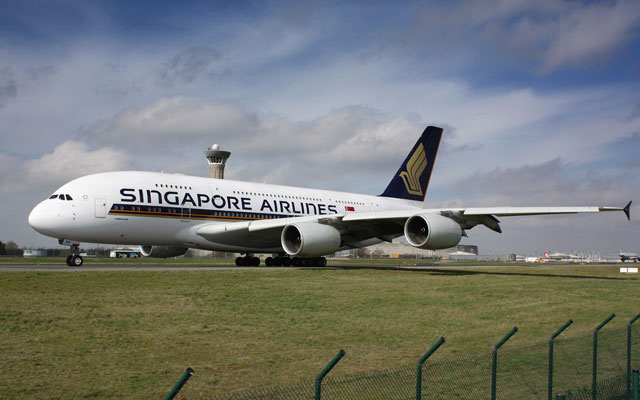
The Singapore Airlines (SIA) Group has reported a first-quarter operating profit of S$556 million (US$402.9 million), as travel demand rose sharply after Singapore fully reopened her borders to vaccinated travellers in April this year.
This is the group’s second-highest quarterly profit in its history, and a S$623 million improvement from the S$67 million loss in the previous quarter.
On a year-on-year basis, this was better by S$830 million from the previous year’s operating loss of S$274 million.
SIA and Scoot carried 5.1 million passengers during the quarter, up 158.2 per cent from the previous quarter and fourteen-fold higher than a year before.
Passenger traffic and load factors were robust across all cabin classes and travel segments, as well as all regions except East Asia where border restrictions remain in certain markets.
SIA’s quarterly revenue per available seat-kilometre was 10.2 cents, a record for the full-service airline.
Passenger flown revenue rose S$1,456 million (+119.3 per cent) quarter-on-quarter to S$2,676 million on the back of a 126.7 per cent growth in traffic.
Passenger load factor rose 34.1 percentage points to 79.0 per cent, the highest since the onset of the pandemic, as the traffic growth outpaced the capacity expansion of 28.9 per cent.
In a press statement, the group said travel demand is expected to remain robust in the near-term as it heads into the year-end holiday travel period, with forward sales staying buoyant for the next three months up to October 2022.
However, inflationary pressures including elevated fuel prices remain a concern, while rising interest rate and slowing economic growth around the world, including the group’s key markets, pose risks to travel recovery.
















Philippine president Ferdinand Marcos, Jr has directed regional offices of the Department of Tourism (DOT) to work with their respective local government units to determine the extent of damage, and extend assistance to tourism-related establishments (TREs) affected by Wednesday’s earthquake.
The DOT’s infrastructure arm, the Tourism Infrastructure Enterprise Zone Authority (TIEZA), has also been tasked to explore support specifically for cultural and heritage sites impacted by the earthquake.
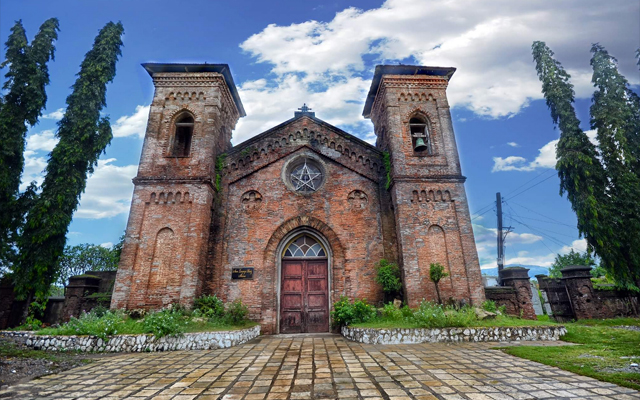
Initial reports note that at least two churches, declared National Cultural Treasure by the National Museum of the Philippines, are affected while several heritage and ancestral houses also sustained notable damage.
Other impacted tourism sites include the Vigan Cathedral in the Heritage City of Vigan in Ilocos Sur; multiple ground faulting in the popular Santa Ana Beach Area; and Lafaayette Luxury Suites Hotel and Crown Legacy in Baguio City.
Two properties managed and owned by TIEZA sustained damage as well. The riprap and ceiling of the Banaue Hotel and Youth Hostel in Ifugao partially collapsed, according to an initial report by the agency.
The quake also brought down the ceiling in the fireplace and lobby area of Mt Data Hotel in Bauko, while several hotel decorations were also damaged.
According to TIEZA, bookings for both impacted properties will be cancelled until a thorough assessment has been made.
DOT secretary Christina Garcia Frasco said in a press statement: “My concern and sympathy are one with those who have been affected by the recent earthquake in Northern Luzon. The Department will extend whatever help it can to tourism stakeholders and establishments that have been directly affected by this incident.
“Our resilience as a nation has already been tried and tested in the past. I am certain that this can be strengthened by the essential collaboration between our national agencies, local governments, and crucial stakeholders as we conquer our challenges.”