TTG Asia
Asia/Singapore Tuesday, 7th April 2026
Page 631

Scoot ramps up services for winter season

0

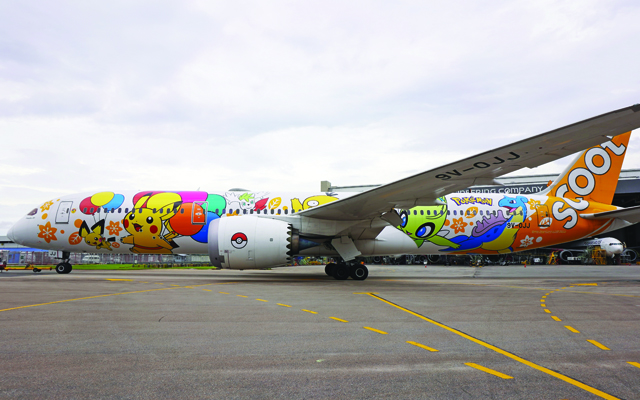
Scoot is expanding its network with the launch of new services for the year-end period, as well as resumption of flights and increased flight frequency on the Pikachu jet.

Increasing Scoot’s existing network in Indonesia to eight cities, new twice weekly flights to Indonesia’s Lombok and Makassar will start on October 16 and 24 respectively, while twice weekly flights to Yogyakarta and Pekanbaru will resume from October 15 and 24 respectively.

Scoot will increase the frequency of its Pikachu Jet to three fixed routes per month

From the end of October, Scoot will increase the frequency of flights to Jeju from three-times weekly to five-times weekly, and make its Osaka service a daily one.

Additionally, seasonal non-stop flights between Singapore and Hokkaido (Sapporo) from November 2022 to February 2023 will be mounted.

From the end of October, the frequency of its Singapore-Taipei-Tokyo flights will be increased to daily services, and three-times weekly Singapore-Taipei-Sapporo flights and five-times weekly Singapore-Taipei-Seoul flights will be reinstated – a total of 18-times weekly flights to Taipei by the carrier.

Scoot will also increase the frequency of the Pokémon Air Adventures themed flights. From November, the Pikachu Jet will operate three fixed routes per month on the Singapore-Tokyo route.

In October, Scoot will also resume flights into Hangzhou (October 3), Zhengzhou (October 12), and Wuhan (October 13), as well as increase the flight frequency to Tianjin to twice weekly (October 11).

Klook sees business surge as it celebrates eighth anniversary

0

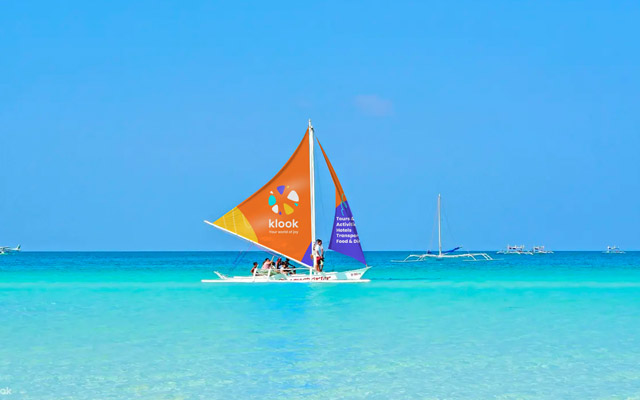
Klook is seeing over 300 per cent quarter-on-quarter growth in Asia-Pacific as it crosses its eighth year of operations.

Travel interest remains high with Klook seeing more than 140 per cent year-over-year increase in searches on the platform. The company quadrupled its bookable services, and destinations such as Singapore, Korea, Australia and Malaysia are also seeing strong recovery, with Klook exceeding its pre-Covid cross-border revenue by 40 per cent for its best performing markets.

Travel interest remains high with Klook’s platform seeing over 140 per cent year-over-year increase in searches

Klook reports incredible surge in interest since Japan, Hong Kong, and Taiwan reopened their doors to tourists. There is a tenfold increase in searches for Japan, with Taiwan, Hong Kong, and Singapore travellers driving this demand.

In addition, collaborations with tourism boards on multi-faceted partnerships help to rebuild travel confidence and accelerate tourism recovery. This includes creating engaging content to rekindle wanderlust, co-curating and co-developing new and unique experiences to cater to changing consumer behaviours, and creative regional marketing campaigns to encourage and capture consumers’ desires to travel again.

Recent partnerships comprise Singapore Tourism Board, the Tourism Authority of Thailand, the Korea Tourism Organization, and Tourism Australia.

Eric Gnock Fah, co-founder & chief operating officer, Klook, said: “After more than two years of the pandemic, many travellers are excited to travel again. That is why we are doubling down on bringing the best experiences and marquee events to the platform such as Avatar: The Experience in Singapore to inspire and ignite wanderlust. The future of travel looks promising as we seize this opportunity to empower the next generation of travellers and bookable experiences.”

In order to cater to evolving consumer habits and make the process of discovering and booking experiences more seamless, Klook will introduce several platform upgrades. One is the re-engineering of the destination discovery feed powered by user-generated content from Klook’s repository of over seven million verified user reviews, allowing customers to see local recommendations from others on the best of what a destination has to offer.

Klook will also introduce a new Trips feature, which allows users to automatically generate personalised trip itineraries that they can share with friends and family.

In celebration of its eighth anniversary, Klook is partnering with its merchants on a variety of deals and promotions for consumers. In addition, the Klook Travel Fest is back with an extended week of deals and offline events across South-east Asia.

AirAsia upgrades facial recognition system at klia2

0

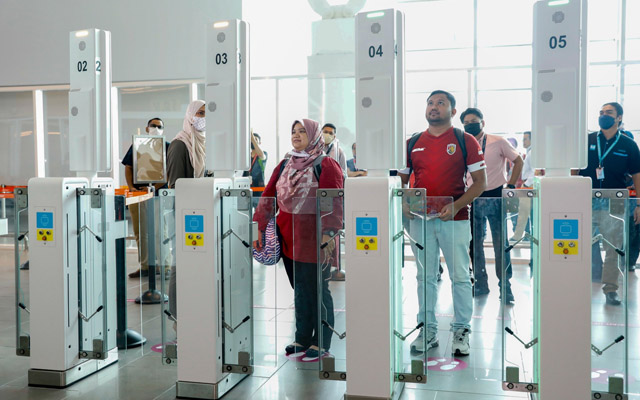
AirAsia has enhanced its facial recognition system, FACES, by integrating it with Malaysia Airports EZPaz technology at Kuala Lumpur International Airport (klia2), offering an end-to-end contactless journey for passengers.

FACES is now available across key customer touchpoints including mobile enrolment, check-in counters, pre-security check and boarding for selected domestic travel in the start-up phase. Guests who have enrolled for FACES via the airasia Super App can now travel seamlessly from arrival at the airport, departure gate to the flight, without having to present their boarding pass after self-check-in.

With FACES, passengers can now breeze through the pre-security and boarding with their biometric identity

The enhanced contactless feature went live on October 3 with guests departing on flight AK5234 from Kuala Lumpur to Kuching.

FACES is said to increase operational efficiencies, safety and security for the airline.

AirAsia Malaysia CEO, Riad Asmat said: “As we are back painting the skies red, it is more important than ever for AirAsia to be focusing on implementing digital innovations that take the hassle out of air travel, providing a more seamless and efficient customer experience. It is also an opportune time for our facial recognition system to take centre stage following the government’s recent announcement of face masks no longer mandatory at public places and in flight.

“As a digital and contactless procedure, which includes online check-in anywhere, anytime in the world with a click of a button, FACES is a definitive game-changer and a revolutionary enhancement to help restore confidence in air travel.

“We look forward to deploying our contactless FACES technologies in every airport we operate to in the near future to make flying more convenient, efficient and seamless than ever before.”

Enrolment for FACES can be done at dedicated airport counters W15 and W16 at klia2.

Vietjet adds Ahmedabad services to network

0

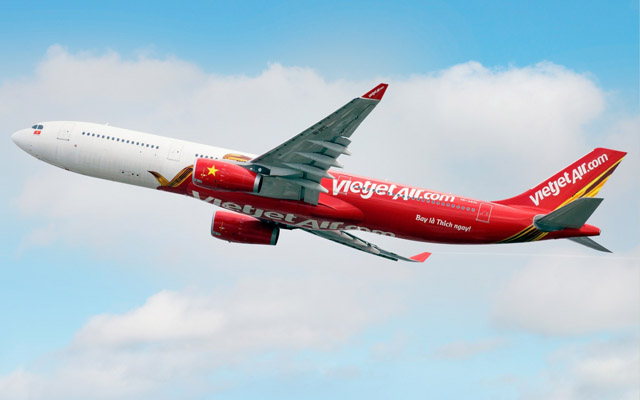
Vietjet has launched two new routes connecting Hanoi and Ho Chi Minh City with India’s Ahmedabad. The carrier will operate four weekly return flights every Tuesday, Thursday, Saturday, and Sunday for each route.

With these, Vietjet now covers 17 direct services from Vietnam’s key cities of Hanoi, Ho Chi Minh City, Danang and Phu Quoc to India’s New Delhi, Mumbai, Ahmedabad, Hyderabad and Bangalore.

Vietjet now flies from Hanoi and Ho Chi Minh City to Ahmedabad

Passengers can also connect to other Asian destinations on Vietjet’s flights.

Back in the game

0

Koh Samui, with its glut of five-star hotels, glamorous boutique properties, well-maintained roads and manicured public spaces, has earned a reputation as the country’s posh island. Posh or not, Koh Samui was profoundly affected by the Covid-19 pandemic and has only recently begun to bounce back, but not without some changes.

Lynn Grebstad, vice-president PR & communications of Skål International Thailand, details the pandemic’s impact on the fortunes of the once popular Chaweng Beach area: “One of the most notable changes is the shift of the island’s social centre towards the Bophut (Fisherman’s Village) and Bangrak areas, which now form the main attraction for visitors. Both locations are thriving with great new restaurants, chic beach clubs and boutique hotels.

Stunning sunsets on Koh Samui

“Bangrak, in particular, survived the pandemic fairly well, thanks to the growing international community on the island. People have been moving to the island from all over Asia for the past couple of years, providing a continued source of income for local businesses.

“Another plus for Fisherman’s Village is the continued popularity of Coco Tam’s, a vivacious beach haunt of Samui’s young people and hip Thai tourists who pack the place out almost every night, even during the pandemic. Fisherman’s Village and Bangrak are teeming with activity, with even local favourite Friday Walking Street extending their opening to Mondays and Wednesdays.”

Susan Field, co-owner of Tembo Beach Club & Resort, said Koh Samui is benefitting from the return of international travel and removal of most restrictions.

“The UK market, in particular, has shown healthy recovery, as have northern European countries,” Field told TTG Asia.

Field, too, has observed the emergence of several new resorts, beach clubs, restaurants and activities across the destination.

These add “significantly to the guest offering”, she opined.

“Koh Samui looks beautiful after two years of inactivity, and locally based companies and groups are striving to preserve the environment, taking a more sympathetic and eco-sensitive approach to building and renovating commercial and residential properties. The greatly enhanced infrastructure makes the island more pleasant and easy to move around,” she added.

Already home to the largest concentration of five-star branded hotels outside of Bangkok and Phuket, Koh Samui continues to welcome even more top-end properties. Brands such as Kimpton, Hyatt Regency and Melia are latest additions. These add to the posh island’s growing allure among travellers who favour the finest things in life.

Singapore Grand Prix 2022’s attendance reaches record-high

0

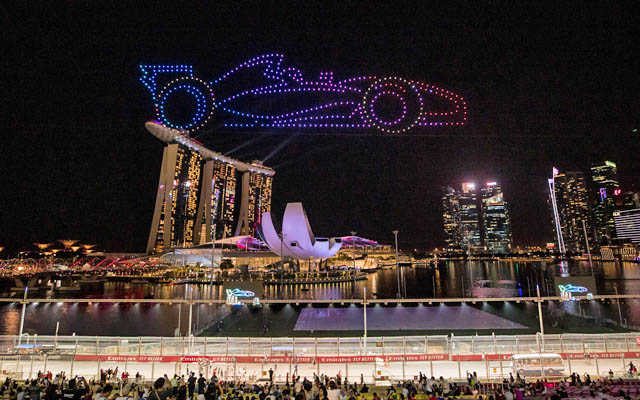
The Formula 1 Singapore Airlines Singapore Grand Prix 2022 has set a new record for the highest attendance ever in its 13-year history.

After a two-year hiatus due to Covid-19, the Marina Bay Street Circuit welcomed a sold-out record crowd of 302,000 over three days from all over the world, including Australia, Indonesia, Netherlands, the UK and the US.

The Formula 1 Singapore Airlines Singapore Grand Prix 2022 welcomed a sold-out record crowd of 302,000 over three days from all over the world

Since the gates opened on September 30, fans have returned in droves, fuelled by the return of Formula 1, the debut of two new support races and over 100 hours of entertainment over the race weekend.

Colin Syn, deputy chairman of Singapore GP, said: “It is wonderful to welcome fans back to the Marina Bay Street Circuit. The return of Formula 1 was highly anticipated, with tickets snapped up within hours of the launch earlier this year.

“In addition to the race action, we have curated an exciting range of entertainment, interactive and gastronomic experiences for the fan zones, as well as introduced new grandstands and hospitality facilities.”

Fans were treated to an entertainment line-up that included Marshmello, Westlife, Black Eyed Peas, Suede, and TLC. The thrilling finale to the Formula 1 Singapore Airlines Singapore Grand Prix 2022 weekend, had Charles Leclerc in pole position, Sergio Perez in second, and Lewis Hamilton third on the grid, with performances by Green Day and The Kid LAROI at the Padang Stage, as well as the Black Eyed Peas at the Wharf Stage.

Tickets for the Formula 1 Singapore Airlines Singapore Grand Prix 2023, to be held next year from September 15 to 17, are already on sale.

Indonesia shores up tourism appeal through sports and cruises

0

The recovery of Indonesia’s tourism industry has picked up in recent months, and the country is intent on propelling it forward with the help of Singapore’s outbound market to reach, and eventually improve, pre-pandemic inbound visitation levels.

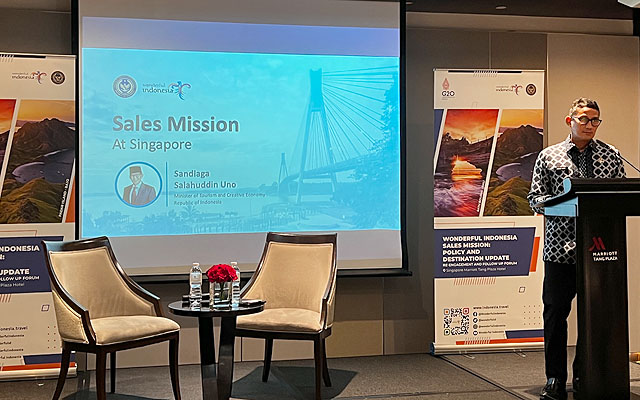
“Post-lockdown, Indonesia tourism has picked up twice its speed as compared to other industries, and therefore we need to move fast to capture the opportunities. Singapore is our number two inbound market, and data is very encouraging,” shared Sandiaga Uno, minister of tourism and creative economy, during the Wonderful Indonesia Sales Mission held last week in Singapore.

Minister of tourism and creative economy, Sandiaga Uno, speaking to industry stakeholders during the press conference

In the absence of China, Australians were the top visitors to Indonesia from January to June 2022 at 153,000, but Wonderful Indonesia Tourism Office’s country manager of Singapore Sulaiman Shehdek believes that Singaporeans, currently in the number two spot, can easily top Australia, once air capacity is fully restored.

At press time, airlift from Singapore to Indonesia stands at around 70 per cent. Representatives from Scoot and Garuda Indonesia, who were also present at the forum, shared that both airlines are in the process of ramping up its capacities.

Aside from Singaporeans, Sulaiman also put forth a suggestion for short-term visas of three to five days for expats and employment-pass holders based in Singapore, most of whom currently need visas to enter Indonesia. This would allow them to visit nearby Bintan and Batam, and encourage travel during long weekends and school holidays.

Ferry loads are also back on track, with Bintan Resorts’ group general manager Abdul Wahab confident that they will hit 60 per cent of 2019 levels by December.

Indonesia has also restarted sports tourism, such as the upcoming Ironman in Lombok, as well as MotoGP 2023. Sandiaga shared that hosting large events like the MotoGP has helped to bring in about US$350 million worth of economic impact in terms of investments, accommodations, and increasing the revenues of micro, small, and medium-size enterprises.

“I saw a massive increase in racing enthusiasts (who came for the MotoGP) choosing to stay in homestays, all of which were then sold out. There were close to around 4,000 homestays available, and the type of accommodation – which blends with nature – was a clear winner,” he said.

Cruising is another sector the ministry is looking into – aside from regional tourists, Indonesian agents are targeting longhaul markets such as Europe and North America, and are encouraging travellers to bask in Indonesia’s warmer climate during the frigid winter months.

To help speed things along, Sandiaga shared: “I have asked my team to fast track how we can receive more cruise ships, and construct the infrastructure (needed) in Bali and other ports. This will help tourists not only stay longer in the destination, but in other South-east Asian destinations.”

Finally, Indonesia will also promote cultural events, where the ministry has helped create at least 100 regional events spread across the country.

Sandiaga added that marketing promotions in Singapore will be “targeted”, and focus on “big data” that makes use of demographics and age brackets.

“There is no one-size-fits-all promotion. We’re also (planning to) do more cross-platform activations across radio, TV, and social media.”

What does the future have in store for travel payments?

0

The travel industry is moving forward with a renewed sense of optimism and new ways of adapting in a post-pandemic world. The lessons learned over the past two years are still just as relevant as they were at the beginning of the pandemic, and now that airport gates and hotel rooms are nearing capacity again, new approaches are needed.

With a third of consumers expected to travel more this year, the industry needs to cater for travellers’ new expectations, and payments are increasingly being considered as a key driver to fuel growth in the sector.

Adapting to trip stacking
To combat uncertainty, many customers have adopted the tactic we now call “trip stacking”. This entails booking multiple trips, hotel stays or flights over the same period, just in case one or more of them is cancelled. This comes as a rebound in bookings has overwhelmed understaffed airlines, leading to flights being axed.

Travel companies, airlines in particular, are hit hard by trip stacking, as last-minute changes can mean empty seats, wasted resources and frustrated forward planning. Should providers wish to dissuade customers from trip stacking, they could request an initial, non-refundable deposit for travel, followed by an automated, incremental payment to cover the remainder of the cost.

If travellers continue to choose to trip stack, it is likely that they expect to request a refund at some point in the customer journey. As this trend evolves, it is important to ensure online payment processes are simple and allow for automated, frictionless refunds. Offering the experience customers expect can help boost satisfaction and reduce the risk of chargebacks.

Travel now, pay later
Buy Now, Pay Later (BNPL) has been steadily growing in popularity in the past few years, and it is now taking off in the travel vertical. More BNPL payments are arriving within the travel and airline space. For instance, Atome, a popular BNPL provider in Asia, has partnerships with Cathay Pacific as well as digital travel platforms Agoda and Klook. Consumers in Asia are increasingly opting for such services, with regional BNPL players noting they have seen a rise in travel-related transactions.

More and more, consumers are seeking greater control over their spending patterns and finances. Flexible payment options such as BNPL can alleviate some pressures felt by consumers amid inflation and recession fears, as well as minimise the inherent risk of paying for travel in advance. It can also aid operators in filling plane seats and rooms as inflation slows pandemic recovery, while it could also be helpful in making expensive business and first-class seats more affordable for leisure travellers, with a lower up-front payment potentially enticing more passenger upsell. Travel merchants who have yet to tap into this trend should start to consider BNPL strategies.

Benefits of social selling
A fifth of consumers we surveyed last year were expecting to purchase travel, holidays, and experience on social media, up from 14 per cent in the previous year. That makes a strong social selling strategy a must-have for travel companies to integrate into their multi-channel selling solution.

Whenever a new technology or channel starts to grow, one of the primary challenges becomes payment execution. Today, there are two ways to convert social media users into buyers: you can redirect to your e-commerce platform or take payments directly within the social media platform. Either approach needs payments to be straightforward, seamless and simple. In this regard, digital wallets have emerged as the essential social commerce payment method due to the streamlined checkout experience it provides.

Another social selling strategy is livestreams, which allows for instant, seamless purchasing within an immersive social experience. Travel livestream campaigns are growing in popularity, especially in China where the livestreaming trend first took off. A notable example is Trip.com’s hugely successful livestreamed shows hosted by its co-founder James Liang, which sold US$294 million of travel packages and hotel room bookings over 25 livestreams.

As social media-oriented merchant sales strategies continue to become more ubiquitous, payment integration into such platforms will become an important lever to drive adoption of new user journeys.

A new kind of tourism
To differentiate their offerings, travel companies are starting to engage with AR and VR to enable people to interact with the attractions and destinations. For instance, a hospitality group in Singapore has launched a hotel in Decentraland earlier this year. On a much larger scale, South Korea is investing US$187 million into creating its own metaverse ecosystem, with virtual tourism services allowing visitors to explore its top attractions. As one can see, the possibilities are endless in this new frontier.

Payment providers need to enable transacting in the metaverse, and think creatively about how they can embed payment services such that they become virtually invisible. Imagine taking a city tour in the metaverse – visitors will require instant access to a digital wallet that supports on-the-go purchases of souvenirs and stores these digital assets. Ideally, they can use this digital wallet across metaverses.

With travel spend likely to grow over the next year, it is time for airlines and travel brands to adapt to new trends to ensure they are winning vacation spend. As shown by the examples above, it’s all about providing a compelling payment experience that resonates with customer expectations surrounding choice, simplicity and security, and putting payments at the centre of the customer experience can act as a passport to success.


Cross signs on Bangkok riverside property

0

Cross Hotels & Resorts has scored a hotel management agreement with Kene Hotel Bangkok Co. for the riverfront Away Bangkok Riverside Kene, set for launch mid-December this year.

The 169-key lifestyle property is located just steps from the Chao Phraya River. It is surrounded by treelined roads and wooden houses along quiet canals. From their riverside base, guests can use the hotel’s private jetty to explore centuries-old temples, palaces and shrines, monuments and markets, craft cafes and chic restaurants, as well as one of Asia’s largest shopping malls, IconSiam.

Cross Hotels & Resorts and Kene Hotel Bangkok Co. will launch the Away Bangkok Riverside Kene in December

Facilities onsite includes a centrepiece indoor swimming pool, four restaurants and bars, and a unique social and business venue.

Harry Thaliwal, CEO of Cross Hotels & Resorts, said in a statement: “By empowering a new generation of travellers, our promise to ‘Transform Hospitality for All’ extends not only to our owners, our business and our people, but also to Alpha Gen adventurers who are seeking stylish hotel choices that perfectly encapsulate Bangkok’s happening riverside communities.”

Commenting on the partnership, Natruija Sutiponggaiwan, president of Kene Hotel Bangkok Co., said: “It is our trusted belief that Cross Hotels & Resorts offers the finest diversity of brands and global distribution that is supported by the global Flight Centre Travel Group. This organisation sets the bar for world-class service quality and excellence, and is sure to raise the profile of this unique riverside destination. Together, we will create an upscale lifestyle hotel that furnishes guests with great experiences in this charming residential district.”

British Airways rolls out top-notch cabins for Singapore services

0

British Airways (BA) is launching new, improved premium cabins on board its Singapore flights to London and Sydney.

The First cabin will feature the airlines’ latest product while the Club Suite will launch in Business.

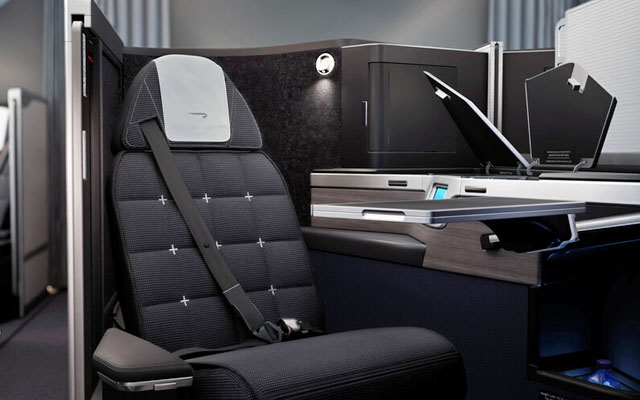
British Airways Club Suite will launch in Business on London-Singapore services

The first flight with the new First and Club Suites will depart from London on October 30, arriving in Singapore the next day.

The newly-designed Club Suite seats in Club World will offer direct-aisle access, a suite door for privacy and flat-bed seats in a 1-2-1 configuration. Other perks comprise 40 per cent more storage, a vanity unit and mirror, Wi-Fi, 18.5-inch inflight entertainment screens, high definition gate-to-gate programming and PC/USB power, new furnishings and amenity kits as well as an enhanced service and an improved dining experience.

The airline’s Boeing 777-300ER aircraft also includes BA’s newest evolution of its First suite. The First cabin is made up of eight suites that come with doors for more privacy. It also includes 24’’ high definition touch screen entertainment TV systems and noise-cancelling headphones. Also provided are pyjamas and amenity kits, as well as à la carte fine dining.

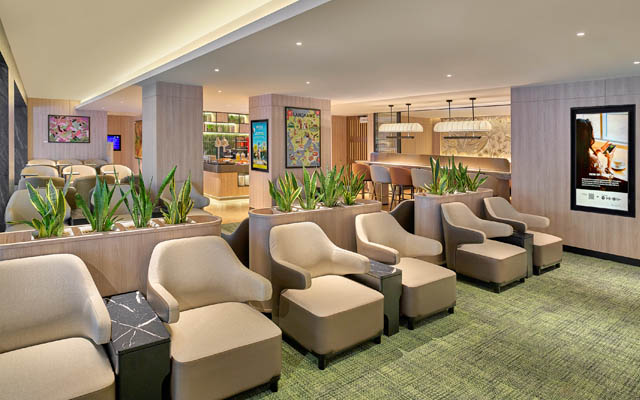
Customers in lounges can continue to order food using their mobile device directly to their table, an initiative introduced by the airline during the Covid-19 pandemic which it has decided to keep.

Calum Laming, chief customer officer, British Airways said: “Our new First and Club Suite seats have been created to suit the needs to our individual customers. We are delighted to introduce it on our London-Singapore-Sydney route which is our longest route across the network.”

BA will continue to roll out the Club Suite as its Boeing 777 fleet undergoes retrofitting.