


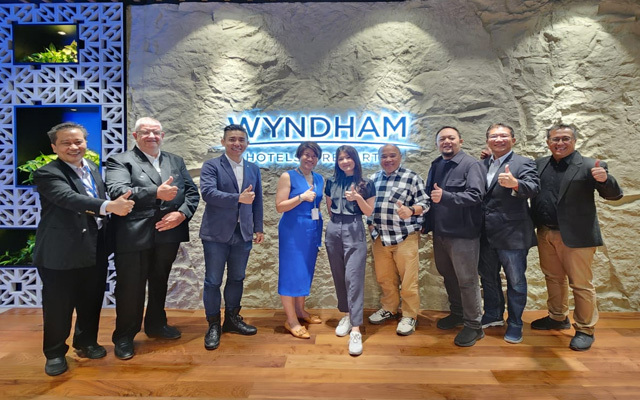
Indonesia-based hospitality management company Artotel Group has established a strategic alliance with Thailand’s Absolute Hotel Services to mutually venture into fresh markets and destinations. The alliance will amplify their respective brand reach and foster an exchange of expertise and innovation.
Under this partnership, Artotel Group will extend its international presence by introducing Otelart properties, its signature global identity, to Thailand and Laos. These properties will operate under the licensure of Absolute Hotel Services.
At the same time, Absolute Hotel Services, which has several hotels in Bali, will introduce its U Hotels & Resorts, Eastin Hotels, and Eastin Grand Hotels brands to multiple destinations across Indonesia.
Jonathan Wigley, founder & CEO of Absolute Hotel Services, said in a media statement: “This collaboration is a testament to the synergy between complementary brands, operating in complementary markets, sharing a parallel DNA and company culture. Together, we are poised to create unparalleled guest experiences that seamlessly blend innovation, culture, and luxury.”
Erastus Radjimin, founder & CEO of Artotel Group, told TTG Asia that Thailand’s tourism industry is big and the market is “very competitive”, so an expansion into the country requires a “trusted and seasoned partner” like. Absolute Hotel Services.
For Absolute Hotel Services, Erastus said Artotel Group will be the strong local partner to help it navigate its expansion into the rest of Indonesia.
Erastus also shed light on the Otelart brand, saying that it will be similar to Artotel but with F&B outlets outsourced to experienced local players. While brand positioning is similar, rates will differ and be “in accordance with local market prices”.
When asked why Thailand and Laos are central for Otelart’s expansion, Erastus said: “There are business opportunities for us in these markets which are still growing. In Thailand, there is a gap in the boutique design hotel segment. Although Thailand has a lot of hotels, there are not many art-inspired design properties. Secondly, both countries are very rich in culture, so it is a lot easier for us to take the values of the arts when we design a hotel.”

















Taman Wisata Candi (TWC) Borobudur, Prambanan, and Ratu Boko, the state-owned company that manages the temples, has set new regulations for visitors looking to explore the archeological site of Borobudur Temple in Central Java, Indonesia.
The new regulations include limited tickets for sale, pre-set visiting sessions, and a sale period of no more than a week ahead of the intended visit. These are aligned with the Indonesian government’s policy of imposing stricter visitor controls at the temple, with no more than 1,200 people allowed each day or 150 per session.
From hereon, tickets are only sold online and open for sale seven days before the intended visit; a maximum of 10 tickets may be purchased in a single transaction.
Visitors can choose from one of eight hour-long sessions, between 09.00 and 17.00.
Jamaludin Mawardi, general manager of the Borobudur Unit of TWC Borobudur, Prambanan, and Ratu Boko, said visitors are welcome to purchase an additional session for longer visits, and can do so with the help of a guide and subject to ticket availability.
He said the new regulations are being tested until October, and improvements will continue to be made.
“There will be a special landing page for tour operators on the website, including a special quota plan for ASITA (Association of the Indonesian Tours and Travel Agencies) Yogyakarta members using voucher codes,” Jamaludin added.
Indonesian travel trade players welcome the new regulations, especially as the sole online sales channel will remove ticket brokers, and are offering ideas for system improvements.
Monas Tjahjono, managing director of Monas Tours & Travel Surabaya, said TWC should make the sale of tickets transparent, so that visitors to the site can see the number of tickets available for sale in real time. This is important since tickets are very quickly snapped up, as soon as the online purchase slot is opened.
The temple’s online ticketing system could also take a leaf out of airlines’ book, where sales are open every day throughout the year and which allows visitors to see ahead tickets that are available for sale.
She then urges TWC to reduce website downtime.
Meanwhile, Trianto Sunarjati, director at Travel Help Indonesia, opined that the reservation system needs to be separated for the public and travel operators, so that the latter could purchase more tickets for tour groups.
However, ASITA vice chairman Budijanto Ardiansjah voiced concerns for the sudden regulations change “in the middle of the year, during the high season”.
As group bookings have been confirmed since last year, travellers worry if they would still be allowed into Borobudur Temple, while tour operators are concerned about cost increment and affected earnings.
Budijanto hopes that destinations or attractions that are the main tourist draws, such as Borobudur Temple, will consult tourism industry players when making decisions.
“Keep in mind that tourism is a future business, where business obtained today is the result of last year’s actions,” he stated.
Budijanto also suggested a dual online and offline ticketing system during the trial period, to allow tour operators to try for tickets manually should they fail to secure online tickets.