TTG Asia
Asia/Singapore Thursday, 30th April 2026
Page 1912

Photo of the day: Best Western signs first Vib hotel in Bangkok

0

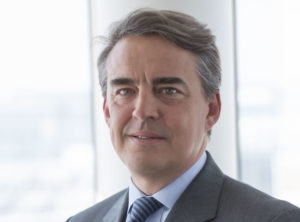
best-western-signs-first-vib-hotel-in-bangkokOlivier Berrivin, Best Western Hotels & Resort’s managing director of international operations – Asia, signed an agreement with Narin Thitipoonya, owner of Matasiri Company, for the first ever Vib Hotel in Bangkok. The new-built Vib Bangkok will offer 89 rooms when it opens in 1Q2018.

Mid-market buzz builds up

0

Taipei’s hotel supply is making progress in the mid-market segment as developers bet on the rising wave of Asian FITs

26feb-taiwan

With yearly visitor arrivals already hitting the 10 million mark a few years ago, Taiwan is fast becoming a hotspot for Asian FITs, especially independent travellers from China.

Since Taiwan opened its doors to Chinese independent tourists in 2011, the number of Chinese FITs arrivals into Taiwan rose from 191,148 in 2012 to 522,443 in 2014, reaching nearly 1.3 million from January to November 2015, according to figures from the National Immigration Agency. Last September, Taiwan further raised the daily quota of Chinese FITs from 4,000 to 5,000, way more than group tours which is limited to 2,500 per day.

The surge in visitor numbers also call for more mid-market hotels. According to figures from CBRE and Taiwan Tourism Bureau, the mid-tier hotel is the only segment to display a robust growth, from 353 properties in 2012 to 458 properties in November 2015. Furthermore, 135 new hotels are scheduled to be completed over the next two years.

In December 2015, the 465-room Courtyard by Marriott Taipei launched on the 7th to 30th floors above CityLink Mall, which is connected to the Nangang Station serving the Taipei Metro and Taiwan Railway.

Owned and operated by the local Leofoo Tourism Group, the property has revealed its interest in attracting business traffic as it resides close to the Nangang Exhibition Center and Nangang Software Park as well as a host of technology companies in the Nangang district.

Even as the popularity of budget hotels has grown on the back of a Chinese visitor influx, higher-price international branded hotels the likes of Courtyard by Marriott still have “great potential” in Taiwan’s hospitality market, remarked a Leofoo Tourism Group spokeswoman.

“Although the number of hotels in Taipei continues to increase, international branded hotels have not expanded as much in recent years. Therefore, the future development of tourism business market in Taiwan should not be limited to the Chinese market,” she said, adding that Courtyard by Marriott Taipei will rely on its established branding to attract tourists from around the world.

Targeted at leisure and FIT travellers, the 88-room Aloft Taipei Zhongshan also opened its doors last December, while the city’s second Aloft is scheduled to open in Beitou in October 2016.

Hotel manager of Aloft Taipei Zhongshan, Tiffany Lin, said: “Although we won’t be able to accommodate large tour groups, we will explore opportunities to work closely with travel agents to reach our target market.

“Lately we have seen an increasing number of FITs from Hong Kong, Macau and China. We hope (that with our positioning as) a US brand, we will attract guests who have been using hotels in this (Zhongshan) area and are willing to experience new hotels, as well as those who are aware of our brand. Taiwan still needs more mid-range or luxury properties to fuel future tourism.”

The mid-range trend is not confined to global hospitality players only. Homegrown companies like Ambassador Hotel Group celebrated its 50th anniversary with a new brand – amba Hotels. Unlike the full-service Ambassador hotels, amba stresses fun and creative elements. So far, both the 90-key amba Zhongshan and 160-key amba Ximending are now operational, with the 190-key Songshan and Kenting slated to open in 2016 and 2017 respectively.

Welcoming a more diversified hotel scene in Taipei, Swire International Travel’s general manager, Norman Meng, said: “Taiwan has been less popular in the tourist market until recent years. These international hotel brands not only enhance Taiwan’s brand exposure but also create more hotel choices for burgeoning FIT travellers from China, Hong Kong and South-east Asia.”

Suki Sin, director of Hongkong-based Muse Travel, opined: “International mid-tier hotels may offer a choice as minsu homestays are mostly scattered in he countryside and not available in the city. However, Hong Kong travellers prefer to stay in local boutique style hotels due to their special design.”

This article was first published in TTG Asia, February 5, 2016 issue, on page 22. To read more, please view our digital edition or click here to subscribe.

More heading to Phuket for plastic surgery

0

21575001_l

MEDICAL tourism in Phuket is on the rise with an overwhelming majority of visitors coming to the resort island for aesthetic treatments, according to research by consultancy C9 Hotelworks.

Close to half of all medical offerings were cosmetic surgeries such as breast implants, liposuction and face contouring while more than a third of all medical tourists sought after anti-aging treatments. Over the past five years, more than 15,000 foreigners have arrived for breast augmentation procedures alone.

The average amount spent at hospitals or clinics for cosmetic surgery is nearly twice that of anti-aging patients, with median costs of 150,000 baht (US$4,200) and 80,000 baht respectively. The length of stay of cosmetic patients average around 12 days, roughly twice that of those who come for anti-aging treatments.

“Aesthetic procedures have increasingly grown to dominate the market, with cosmetic surgery being the most popular product led mostly by Australians, and anti-aging treatments being driven by travellers from Mainland China,” said Bill Barnett, managing director, C9 Hotelworks.

He added: “Existing medical demand reveals high investment potential which is drawing more domestic and international groups into commercial projects such as large-scale expansions and acquisitions. We expect the Phuket healthcare tourism sector to be a positive long-term proposition.”

Ascott fast-tracks China expansion

0

citadines-guoxitai-xian_facade

IN a bid to accelerate its expansion in mainland China, Ascott has partnered with Dongfu Investment Development – a real estate subsidiary of China’s largest state-owned construction and infrastructure builder, China State Construction Engineering Company.

Kevin Goh, Ascott’s managing director for North Asia, said: “Mainland China is Ascott’s largest market. We have recorded three consecutive years of expansive growth in the country with more than 2,000 units added year-on-year.”

He added that demand for quality serviced residences in mainland China is likely to grow, riding on the growing popularity of domestic travel especially to first and second tier cities.

Kicking off the Ascott-Dongfu Investment partnership is a management contract for the 148-unit Citadines Guoxitai Xi’an, slated to open in 2018.

This adds to Ascott’s portfolio of more than 14,000 units in 24 cities owned and operated by them in mainland China.

Ascott has further plans to leverage the partnership and expand in cities such as Shanghai and Jinan as it advances towards its target of 20,000 units in the country by 2020, Goh added.

MCB faces anxious wait on new operating model

0

melbourne-exhibition-centre

THE Melbourne Convention Bureau (MCB) will join forces with the state’s tourism body Visit Victoria later this year, but just what that new business model looks like remains a mystery.

Speaking at AIME 2016 in Melbourne on Monday, MCB’s CEO Karen Bolinger said they were “well down the track in negotiations as to what stays and what goes”.

Last August, the Victorian Minister for Tourism and Major Events John Eren announced a “once-in-a-generation shake-up” of the tourism and major events sector, creating a new entity, Visit Victoria, to bring Tourism Victoria, the Victorian Major Events Company and “a new conventions division” under the one umbrella. The announcement stated: “Bringing the key entities together will end inefficiencies and duplication”.

“We’re in discussions with Visit Victoria as to how MCB will sit within that portfolio,” said Bolinger. “It’s certainly recognised that we are a key component.”

“They see us as an incredibly strong operating model. They’d like to mirror Visit Victoria on our model because we do so well and we have that commercial approach to doing business.”

But the merger isn’t so simple, explained Bolinger: “We are a membership-based organisation so anything we do needs to go to members for a vote. They will be voting on whether that is the right offer for them and whether they would like to take that forward,” adding that voting was likely to take place by the beginning of April and the current sentiment amongst members was “neutral”.

“We’ll hopefully have a good case, but if it isn’t strong enough there is a risk it may not get voted through,” she said.

Asian travel employment to remain strong

0

16498954_l

EMPLOYMENT in Asia-Pacific’s travel and hospitality industry is expected to remain healthy this year, bucking the trend forecasted in most other sectors, according to a study conducted by ACI HR Solutions.

The ACI HR Solutions 2016 Travel and Hospitality Industry Salary and Employment Trends Report indicates that 44 per cent of hiring managers surveyed expected new headcounts in 2016, albeit with more modest volumes compared to previous years.

Andrew Chan, founder and CEO, ACI HR Solutions, said: “As in the previous surveys we have conducted since 2012, salary continues to be an important factor for candidates. A total of 41 per cent indicated they would need to see 11 to 22 per cent salary increase when considering a new job.”

He added: “Notwithstanding, the importance of career development was also similar to recent results with a total of 69 per cent of all respondents indicating that career progression was either ‘extremely important’ or ‘very important’ and only five per cent saying career progression was unimportant.”

In a worrying trend, 30 per cent of respondents felt career prospects with their present employer were ‘poor’ or ‘zero’, compared to 26 per cent from last year’s survey. This percentage has been increasing for the third year running.

Compounding on this is 47 per cent of employed respondents indicating that they would change employers in 2016, with a further 12 per cent contemplating leaving the industry altogether.

And while 77 per cent of respondents indicated that they have received a pay increase in the past 12 months, it appears that salary gains in some countries are slowing, with Singaporean and Indonesian respondents experiencing a 15 per cent and 30 per cent decline in pay raise respectively.

Modest increments were seen in Thailand (12 per cent), Malaysia (8 per cent) and Hong Kong (4 per cent) in this year’s report, with the highest average annual salaries once again belonging to Macau (US$109,621) and Hong Kong (US$85,596). Indonesia posted the survey’s lowest average salary at US$44,492.

Australia lures MICE with global campaign

0

john-osullivan

TOURISM Australia is encouraging MICE players to take advantage of the NTO’s A$40 million (US$28.8 million) multi-platform aquatic and coastal global marketing campaign to drive business events to the country.

Speaking at the official AIME media conference and Tourism Australia Hosted Buyer and Media lunch in Melbourne on Monday, Tourism Australia’s managing director John O’Sullivan emphasised the campaign wasn’t just targeted at the leisure market.

He stated that 60 per cent of business events providers choose Australia for its aquatic and coastal assets, food and wine, cosmopolitan cities and its safety and friendliness.

O’Sullivan added that the campaign was being brought to life through traditional media as well as virtual reality video technology showcasing 17 aquatic experiences currently available on Australia.com.

The technology would be made available to travel agents and the business events teams in key markets including America, Mainland China, New Zealand and London in the coming weeks.

Philippines lays out cruising ambitions

0

5683070_l

DETERMINED to strengthen its position as a cruising destination, the Philippines will implement this year a development strategy put together by Sydney-based Chart Management Consultants and funded by the United States Agency for International Development.

It includes plans to upgrade Philippine’s ports, of which four were identified as priorities: Manila, Boracay, Subic and Puerto Princesa in Palawan, said undersecretary of the Philippine Department of Tourism, Benito Bengzon Jr.

Shore excursions in all destinations will have to be improved and marketing stepped up, Bengzon said during the sidelines of the PATA Philippine Chapter’s first general assembly last Thursday.

He added that promotional efforts are already in motion with the country’s participation in major cruise events in Miami and the Asia-Pacific, and with the publication of the first ever Philippine Cruise Guide in 2014.

Cruise passengers have been growing at an average rate of 50 per cent over the past three years, from 19,313 in 2013 to 32,382 in 2014 and to 35,236 in 2015. The target this year is 65,000.

As of press time, 21 cruise ships are expected to make 59 ports of call in the Philippines this year, with more to be expected. In 2015, 22 cruise ships made 70 ports of call in the country.

Green light for more US-Haneda flights

0

30551839_l

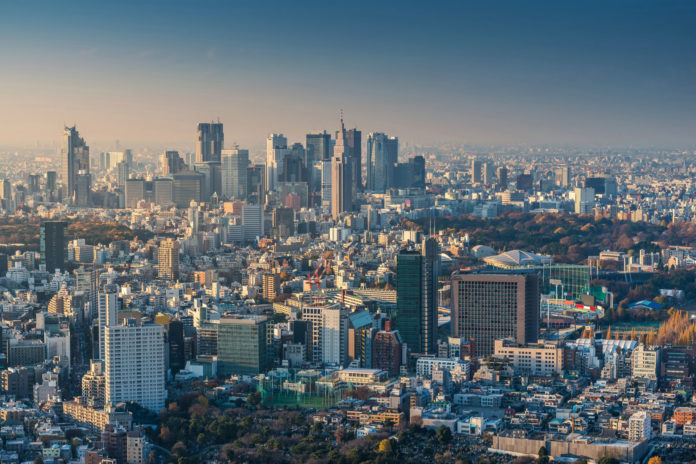
AN agreement to increase flights between the US and Haneda International Airport in Tokyo was reached between the US and Japan last week.

“(US representatives) have worked diligently with their counterparts in Japan to find a way to provide business and leisure travellers more options to conveniently fly between Tokyo and the US,” said Brian Schatz, the US Senator for Hawaii.

“Adding more options into Haneda complements Japan’s desire to expand international flights, supports consumers, and aligns with tourism goals of the US.”

According to a statement from Schatz’s office, the agreement results in two new flight slots between the US and Haneda while also converting the four existing nighttime flights into daytime flights.

Air carriers will be able to bid for the new flight slots in the coming months.

Open Destinations offers software solution for tour operators

0

TRAVEL technology provider Open Destinations has launched Travel Builder, a configurable cloud-hosted software package for tour operators.

The software offers inbound tour operators the option to integrate supplier relationships by using the Travel Builder Supplier Extranet while outbound operators can utilise a wide range of third-party product interfaces, including GDS providers, LCCs, hotels and wholesalers, such as GTA, Miki, Hotelbeds and Expedia.

It also comes ready with B2B and B2C website options, multi-lingual functionality and customisation for individual agents and wholesalers.

“We have been implementing tour operator systems for over 15 years and we continue to see a gap in the market for small and specialist operators. There are many amazing companies out there with fantastic product to sell yet they do not have access to the cutting-edge technology that they need to compete in the international marketplace,” said Kevin O’Sullivan, CEO, Open Destinations.

Mario Hardy, CEO of PATA, added: “This type of technology opens up possibilities for small tour operators, particularly those DMC-style operators that need to build up their network of agents and suppliers.”