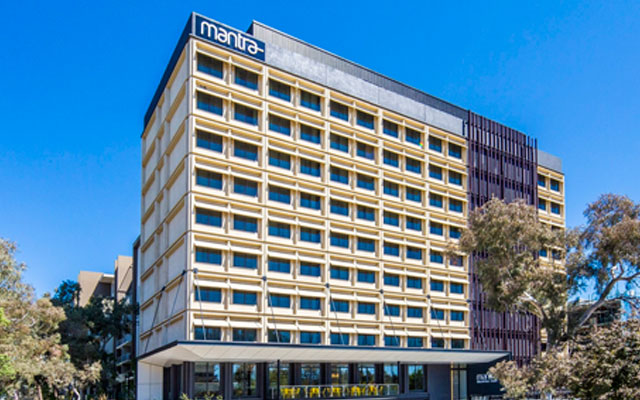
Accor takeover of Mantra on track; exterior of Mantra MacArthur Hotel in Canberra pictured
The Australian Competition and Consumer Commission (ACCC) has given the nod for AccorHotels’ A$1.2 billion acquisition of Mantra Group, after finding that two companies have little overlaps to give rise to anti-competition concerns.
ACCC chairman Rod Sims said: “The combined Accor-Mantra will still compete with other international and national hotel chains, as well as many independent hotels and accommodation providers.
Accor takeover of Mantra on track; exterior of Mantra MacArthur Hotel in Canberra pictured
“The combined Accor-Mantra will have a large number of properties in some areas, particularly in certain holiday destinations in Queensland. However, in each case and after a detailed review the ACCC has found that there are also sufficient other options nearby for visitors which will provide competition to Accor-Mantra,” Sims added.
Accor’s business is mainly focused on hotel-style accommodation and its brands include Sofitel, Novotel, Mercure and ibis. Mantra’s focus is on serviced apartments, which it offers through its Peppers, Art Series, Mantra and Breakfree brands.
The acquisition still requires approval from Mantra shareholders, as well as approvals from the Federal Court and the Foreign Investment Review Board.
Women have been asking for equal labour right and social status since the establishment of International Women’s Day in 1910. It is common sense for a responsible company to provide equal career development and remuneration for women. According to an Economist report, the rate of Chinese women’s participation in the workplace is almost 70 per cent, higher than most of developed economies like the US, Europe and Japan.
We are now in the midst of the Fourth Industrial Revolution, an era characterised by technological fusions and the integration of artificial intelligence, big data and cloud computing. This has catalysed our creativity and bridged the physical gap between individuals. Men and women have equal rights in intelligence and competency.
Sun: growing outbound share
Technology advancement has provided women with more opportunities and broader platform for career development. We have discovered that women also play a crucial role in Internet companies. In Bloomberg’s report, 17 per cent of venture capital companies’ partners are female in China. In the US, this number rests at 10 per cent. While 80 per cent of venture capital companies in China have at least one female partner, in the US, this is only 50 per cent.
Ctrip is a leading Internet travel company in the world and China’s largest. Women represent over more than half of our 30,000 plus employee base. This rate far exceeds the average Internet companies in China and Silicon Valley. Ctrip from day one, 18 years ago, has promoted gender equality. We recruit based on each employee’s competency level and we have a series of policies to encourage workplace growth for women. We adhere firmly to United Nation Women’s Empowerment Principles.
From our experience, women play important roles driving good corporate governance and fostering a culture of teamwork. Decisions made by female leadership are more meticulous and balances risk and reward better. Actions are executed with more communication, consideration and organisation. Fiscal policies are geared towards long-term sustainability.
Our female employees have fostered teamwork and communication, and are more open to different perspectives. This has complemented well with our male employee base that are generally very good at fast execution. Our organisational diversity and the qualities that women bring to the table has helped Ctrip generate large and sustainable investment returns for our stakeholders through the years. I feel it is critically important to encourage and incorporate the female voice. It will also help greatly to have more women leadership devote more time to provide guidance and become role models for aspiring women.
Disconcertedly, figures show workplace gender equality still has a long way to go. Only 10 per cent of Fortune Global 500 Companies have female directors on their boards. And only three per cent of these companies have female CEOs. Internet companies’ female representation is even lower. In many of these companies, it is rare to see any female leadership in key management positions.
Technology companies represent innovation and revolution. I think it is only fitting that we see more and more technology companies take on leading roles in fostering equal rights for women, provide processes for women to grow their careers, and most importantly, shatter any sort of ‘glass ceiling’.
And to further reinforce the point, shattering the ‘glass ceiling’ is not just about recruiting more women. It is about giving women equal opportunities to take on more leadership roles. There are more than 1,000 executives represented in the Top 100 US companies. The large majority of women are in supportive roles such as human resources, public relations and legal advisors. Seldom do we see women taking on key management roles.
We are making some breakthroughs though. In recent years, a quarter of entrepreneurs in China are women. And I am most delighted to learn that 55 per cent of new Internet companies are started by women in China, according to the Chinese government. We are progressing as an industry.
For Ctrip, female leadership, is already well represented, with nine women leaders including myself, forming our key management team. Women also help lead many of the technological developments and innovations at Ctrip. Out of our 7,000 engineers, roughly 30 per cent are female. Ctrip has demonstrated that women can be as good as men in technology development too.
As the Women’s Rights Movement continues, and in light of International Women Day, I hope more and more women can be liberated from traditional family roles and given more opportunities to work alongside their male counterparts in driving growth and innovation. Every company has the responsibility to instil a gender equality foundation to create a fair environment for our future generations.
Ctrip will continue to lead the charge for equal rights for women and provide a broad platform for females to contribute and grow meaningfully in the workforce.
Mövenpick Hotels & Resorts moves forward with its expansion plans to open 11 new properties in nine countries by the end of 2018.
Out of the nine countries, the global hospitality firm will make its debut in five – Bangladesh, Iraq, Kenya, Malaysia and the Maldives. The remaining properties will be located in the UAE, Egypt, Tunisia and Thailand.
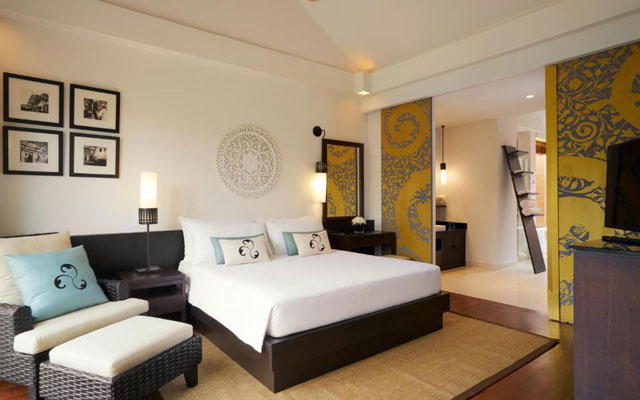
Mövenpick Hotels & Resorts announced that it would rebrand and manage a luxury villa and suite resort in Hua Hin last year; the soon-to-reopen Mövenpick Asara Resort & Spa Hua Hin pictured
In Asia-Pacific, Mövenpick’s upcoming hotels this year include Mövenpick Asara Resort & Spa Hua Hin – the brand’s seventh property in Thailand; the 105-unit Mӧvenpick Resort & Spa Kuredhivaru in the Maldives, Mövenpick Hotel & Convention Centre KLIA in Malaysia, and Mövenpick Hotel Sylhet in Bangladesh. The company will also bolster its cluster strategy in Thailand with the opening of Mövenpick Resort Khao Yai.
“In 2018, our global expansion drive really steps up a gear, with the 11 new openings planned, putting us firmly on track to meet our target of 125 properties by 2020 and introducing the Mövenpick brand in some very desirable locations,” confirmed Olivier Chavy, president & CEO, Mövenpick Hotels & Resorts.
New package includes one free ride a day (photo credit: Uber)
Millennium Hotels and Resorts has partnered with Uber to offer guests staying at its Singapore properties complimentary daily rides around the city throughout their stay.
New package includes one free ride a day (photo credit: Uber)
A first-of-its-kind collaboration in Singapore, guests who book the Stay & Ride with Uber package at any one of Millennium Hotels and Resorts’ six Singapore properties – Grand Copthorne Waterfront, Orchard Hotel Singapore, M Hotel Singapore, Studio M Hotel Singapore, M Social Singapore or Copthorne King’s Hotel Singapore – will enjoy a complimentary Uber ride each day of their stay, along with value-added benefits such as complimentary buffet breakfast for two persons, free room upgrade, free Wi-Fi, early check-in and late check-out, F&B discounts up to 20 per cent off at selected hotel restaurants and more.
Millennium Hotels and Resorts will leverage Uber for Business’ product ‘Uber Central’ to provide guest transport. Uber Central is a dashboard that allows organisations to request and manage multiple rides at the same time from one place. The guest does not require a smartphone or an Uber account to book a ride.
Need help to convince your clients to book cruise vacations? Find out why cruising is hot and will get even more popular as TTG Asia sails the high seas with Princess Cruises. Not only is cruising a safe and relaxing way to explore the world, it’s also fun, comfortable and not to mention mostly all-inclusive. Cruising as a vacation has never been cooler.
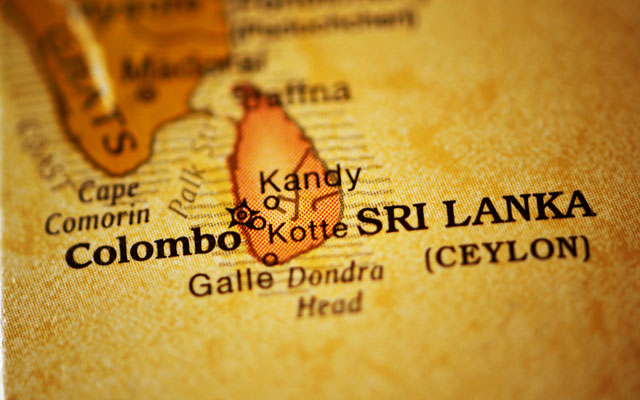
Sri Lanka declares state of emergency in wake of communal violence
Travel in Sri Lanka has largely been unaffected by the state of emergency that was declared on Tuesday to curb ethnic unrest in some parts of the country, but the trade is concerned that the crisis will deter tourists from visiting the fledgling destination.
Clashes erupted earlier this week between majority Sinhalese and minority Muslims in the hill station town of Teldeniya in Kandy, a major tourist area. A curfew was imposed on March 7 and lifted on March 8, and was reimposed from 18.00 yesterday evening (Thursday) to 06.00 (today) as a precautionary measure.
Sri Lanka declares state of emergency in wake of communal violence
A nationwide state of emergency was also imposed on Tuesday as a precaution again the unrest spreading to other areas. This is the first time emergency rule has been enforced in Sri Lanka since it was lifted in 2011, following the end of a savage civil war in 2009.
The US, the UK and Australia have also issued travel advisories, requesting their nationals to exercise caution when travelling in the country.
Travel Trade Association president Trevor Rajaratnam said it was an unfortunate situation as Sri Lanka in recent times has been identified as an emerging travel destination.
“The crisis has created alarm bells and many of us in the industry have been fielding calls from overseas reflecting concerns,” he said, adding that even though the unrest is confined to Teldeniya and the rest of the country was calm, the word ‘emergency’ always creates uncertainty.
Sri Lanka Tourism Development Authority chairman Kavan Ratnayake is now expecting the problems will have a negative impact on tourism. “To say otherwise would be untrue. But how we deal with the situation as an industry and a country will determine how quickly we recover. We are monitoring the situation closely,” he was quoted as saying in local media.
While there are no restrictions to movements for tourists in Kandy, Samantha Ratnayake, president of Kandy Hoteliers Association, acknowledged that there had been cancellations.
The Indonesia Ministry of Tourism’s recent restructure has resulted in marketing development being split into two area-based structures: zone I for domestic and neighbouring markets; and zone II for mid- and longhaul markets.
Nia Niscaya, former director of international tourism promotion with the ministry, now leads zone II as deputy minister of tourism marketing development II. The change has also resulted in a dedicated director taking charge of China, which was previously under the Asia-Pacific director.
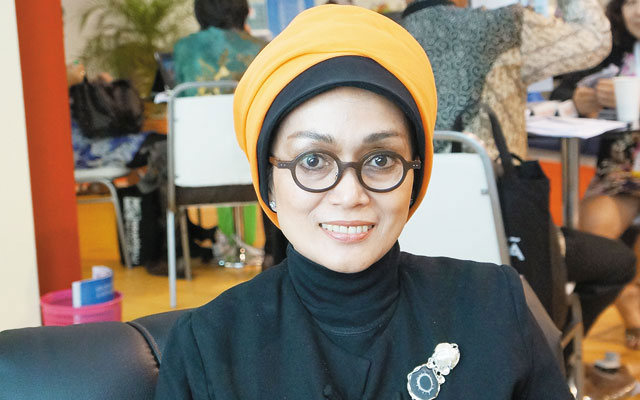
Nia is now in charge of getting longhaul travellers to Indonesia after a recent restructure
“Europe, which was previously grouped with the US, the Middle East and Africa, now also has its own director, while the rest are divided among two other directors.”
Also new in this structure is that each region has its own marketing communications and strategy director.
When asked about her action plans in her new role, Nia said China, Europe and India would be her biggest points of focus this year. Specifically for Europe, the ministry will step up joint promotional efforts with wholesalers and airlines to boost arrivals.
“In the past, our focus was more on branding and we are moving into selling,” she said. “Airlines are the key to accessibility, and in Europe tour operators still play a major role in bringing tourists to a destination. Therefore, we are primarily focusing on collaborating with these two stakeholders.”
Nia revealed that results have been encouraging since the ministry took this step last year.
“At ITB Berlin this year, I will have 40 meetings with industry partners, mostly tour operators, to discuss such cooperations,” she said, adding that the ministry is investing in the promotion of packages wholesalers are selling across different platforms.
“For a certain amount of promotion budget we are to spend, agents must present to us the number of passengers they can produce on top of their own target. The additional numbers must also be new customers, not a ‘steal’ from other operators,” she elaborated.
With airlines, the ministry has linked up with both national and international carriers.
For example, the ministry has a joint promotion agreement with the Philippine Airlines, starting with a London-Manila-Bali/Jakarta deal which was sold during the Indonesia Weekend Festival (in London).
This was followed by the airline’s participation at the World Travel Market and ad placements on London taxis. In return, the ministry promotes the deal on its website.
A similar arrangement is also on-going with the Royal Brunei Airlines for its London-Bandar Seri Begawan-Bali service.
With Dubai-based Emirates, however, the ministry has a different arrangement. It jointly organised a sales mission that featured 10 of Indonesia’s top inbound players. “Emirates sponsored the tickets for both buyers and sellers, while we provided the event venue,” Nia shared.
Talks are now underway with Turkish Airlines, and Nia hopes to leverage the airline’s connectivity to 160 destinations in Europe.
The ministry has set a target of 2.2 million arrivals from Europe this year. European arrivals last year rose 13 per cent over 2016 to reach nearly 1.9 million.
Zone II has been given a marketing budget of 1.8 trillion rupiah (US$138.5 million), with 10 per cent allotted for Europe to be spent on tradeshows, sales missions and fam trips.
Tourism stakeholders in Myanmar are rallying to mitigate the effects of conflict in the north-western Rakhine region on the country’s overall tourism health, with tour operators working closely with Myanmar Tourism Marketing (MTM) to dispel fears among potential visitors.
May Myat Mon Win, MTM chairperson, said: “The (affected) Rakhine area is extremely far away from the main tourist hotspots and even from the new destinations we are promoting now. Myanmar remains one of the safest, most secure and authentic Asian destinations.”
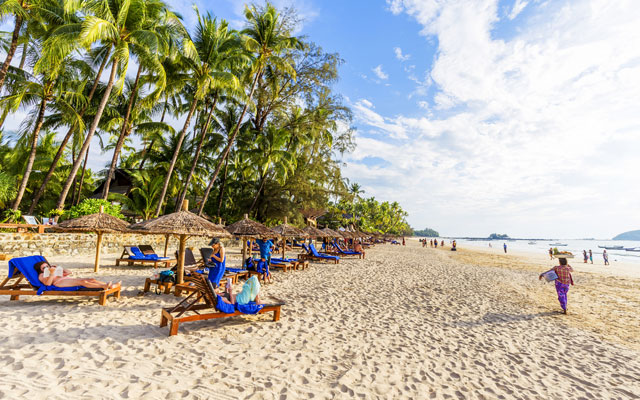
Trade urges operators to continue supporting Myanmar’s tourism industry, and highlights places like Ngapali Beach in Rakhine (pictured above) are far from the conflict
For example, Rakhine’s popular Ngapali Beach is “very far” from the “problem area”, said Kay Thwe Soe, managing director of Amazing Time Travels & Tours.
She remarked: “I have been in the tourism business for 24 years, and I have never been there. This is happening at the border, and our government is negotiating with the Bangladeshi government. All we can do is to invite visitors to come and see for themselves how safe it is.”
When asked if tourism arrivals were dented by the Rakhine conflict, Myanmar sellers insisted that travellers are still curious about the destination.
Lucia Martinez, business developer for Option Way, told TTG Asia that she has seen a rise in bookings for Myanmar. She added: “Myanmar is a favourite among Europeans, and we are in constant negotiations with flight operators to fly there. The French particularly are adventurous and like destinations that are not as popular, so they like to discover Myanmar.”
May Myat Mon Win added: “We are very concerned and sorry about the ongoing conflict. This is not an easy problem because of our country’s difficult history for the past 60, 70 years. We hope that this (situation) can be resolved peacefully.”
“It’s very important for tour operators not to turn their back on the rest of Myanmar, and that they support the tourism industry because (there are) a lot of people working in tourism who need this support. These are people from any race and religion,” said Edwin Briels, executive committee member of MTM.
Malaysia is seeking greater visibility in Europe through two new partnerships, one with ITB Berlin for 2019 and the other with the European Travel Agents and Tour Operators Association (ECTAA) as its Preferred Destination Partner for 2018.
As the partner country of ITB Berlin 2019, Malaysia will organise the opening ceremony on March 6 next year and from March 7 to 11 will fascinate trade visitors with a colourful programme of events.
Malaysia’s tourism board hopes to arrest the declining arrivals from Europe by partnering with ITB and ECTAA
“Malaysia’s official partner country titleship at ITB 2019 will entail publicity opportunities globally as well as the potential to reach out to key decision-makers and top industry players,” said Tourism Malaysia’s director-general, Mirza Mohammad Taiyab.
With ECTAA, Tourism Malaysia will highlight the diverse travel and tourism products in the country to members across Europe.
Along with these new efforts, Tourism Malaysia is addressing the lack of direct flights from Europe by working with national carriers of neighbouring countries, specifically Singapore Airlines and Thai Airways, to bring in tourists from Europe.
Malaysia lost a direct connection between Frankfurt and Kuala Lumpur in 2015 and 2016 when Malaysia Airlines and Lufthansa suspended flights on this route. However, Germany’s Condor Air stepped in on Novermber 5 last year to service this very route.
Tourism Malaysia also encourages tour operators from Europe to initiate charter flight operations to Malaysia.
These initiatives will hopefully help to arrest the decline in European arrivals, which had seen a double-digit year-on-year drop in major markets such as the UK, Germany and Switzerland in 2016.
Tourism statistics for 2017, up to October, revealed a drop of 10.2 per cent in the UK market to 306,331 tourists; 15.4 per cent drop in the German market to 94,644 tourists; and 19.9 per cent in the Swiss market to 18,062 tourists.
Traditionally, the UK is Malaysia’s top performing European market, followed by Germany. Europe remains an important market for Malaysia as the average tourist spends 7.1 nights and a per diem expenditure of RM583.60 (US$149.40).
According to Manfred Kurz, managing director at Diethelm Travel Malaysia, the market is also crucial for Malaysia as travellers like to venture off the beaten track, hence contributing to rural economies.
Tourism Malaysia has also increased its promotional budget for 2018 as part of efforts towards creating more awareness internationally of the year-long Visit Malaysia Year 2020 campaign.
The campaign is expected to generate 36 million tourists and RM168 billion in tourism receipts. The objective of the campaign is to promote Malaysia as a top-of-mind destination by highlighting the Travel, Enjoy and Respect tagline, in line with the National Eco-Tourism Plan 2016-2025.
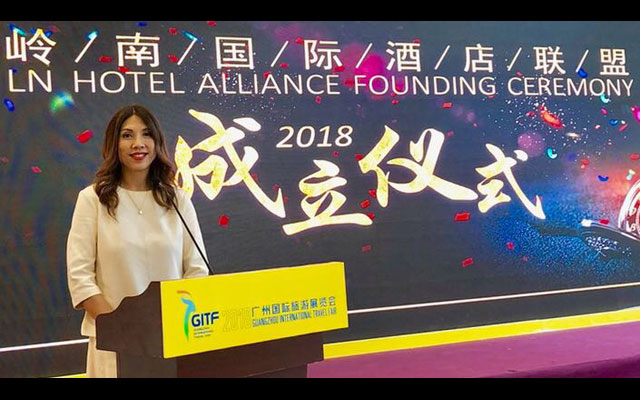
Ling Nan Hospitality and online solution provider Compass Edge, together with partners China Southern Airlines and GZL Travel Services, have come together to launch the LN Global Hotel Alliance.
The alliance has four components. Compass Edge represents hotels outside of mainland China – such as The Bellevue Resort in Philippines and The Trans Resort Bali; Ling Nan Hospitality represents a large number of hotels in China – including The Garden Hotel and the China Hotel in Guangzhou; China Southern Airlines is the air segment of the alliance; while GZL represents the travel services product.
Compass Edge’s CEO Anita Chan speaking at the launch of the alliance
The number of loyalty members under the four brands amounts to more than 46 million Chinese travellers.
Anita Chan, CEO of Compass Edge, said that all four pillars are complimentary to each other with no overlap and no conflict of interest.
She added: “It is extremely difficult for a standalone property to be in the loyalty game, especially in China. Chinese people buy from those they know and trust. Now, overseas independent hotels can get that trust endorsement from the three most reputable China travel brands via LN Global Hotel Alliance.”
Moving forward, LN Global Hotel Alliance will put together lifestyle experience travel products for high net worth Chinese travellers.
“LN Global Hotel Alliance is not just a hotel loyalty program. We no longer just sell hotel rooms. It is an innovative concept to bring the experiences that Chinese travellers are looking for and present them in the Chinese digital ecosystem that Chinese people use,” said Chan.
“It is also important to stress that unlike OTAs, we do not want to sign up every hotel in the world. Far from it, we limit the number of hotel members in each location so that we can provide them with better service and a larger presence in this hugely important market place.”
Currently, the LN Global Hotel Alliance has more than 100 founding hotel members in over 13 countries and 30 cities.