TTG Asia
Asia/Singapore Monday, 22nd December 2025
Page 1452

Myanmar moves to allay Rakhine fears

0
Trade urges

Tourism stakeholders in Myanmar are rallying to mitigate the effects of conflict in the north-western Rakhine region on the country’s overall tourism health, with tour operators working closely with Myanmar Tourism Marketing (MTM) to dispel fears among potential visitors.

May Myat Mon Win, MTM chairperson, said: “The (affected) Rakhine area is extremely far away from the main tourist hotspots and even from the new destinations we are promoting now. Myanmar remains one of the safest, most secure and authentic Asian destinations.”

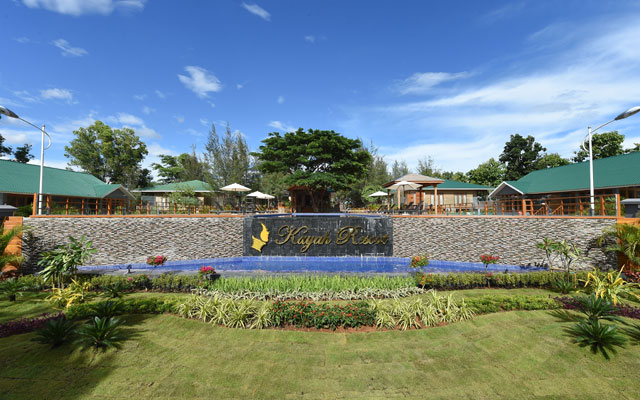
Trade urges operators to continue supporting Myanmar’s tourism industry, and highlights places like Ngapali Beach in Rakhine (pictured above) are far from the conflict

For example, Rakhine’s popular Ngapali Beach is “very far” from the “problem area”, said Kay Thwe Soe, managing director of Amazing Time Travels & Tours.

She remarked: “I have been in the tourism business for 24 years, and I have never been there. This is happening at the border, and our government is negotiating with the Bangladeshi government. All we can do is to invite visitors to come and see for themselves how safe it is.”

When asked if tourism arrivals were dented by the Rakhine conflict, Myanmar sellers insisted that travellers are still curious about the destination.

Lucia Martinez, business developer for Option Way, told TTG Asia that she has seen a rise in bookings for Myanmar. She added: “Myanmar is a favourite among Europeans, and we are in constant negotiations with flight operators to fly there. The French particularly are adventurous and like destinations that are not as popular, so they like to discover Myanmar.”

May Myat Mon Win added: “We are very concerned and sorry about the ongoing conflict. This is not an easy problem because of our country’s difficult history for the past 60, 70 years. We hope that this (situation) can be resolved peacefully.”

“It’s very important for tour operators not to turn their back on the rest of Myanmar, and that they support the tourism industry because (there are) a lot of people working in tourism who need this support. These are people from any race and religion,” said Edwin Briels, executive committee member of MTM.

Malaysia works towards prominent presence in Europe

0
European tourists

Malaysia is seeking greater visibility in Europe through two new partnerships, one with ITB Berlin for 2019 and the other with the European Travel Agents and Tour Operators Association (ECTAA) as its Preferred Destination Partner for 2018.

As the partner country of ITB Berlin 2019, Malaysia will organise the opening ceremony on March 6 next year and from March 7 to 11 will fascinate trade visitors with a colourful programme of events.

Malaysia’s tourism board hopes to arrest the declining arrivals from Europe by partnering with ITB and ECTAA

“Malaysia’s official partner country titleship at ITB 2019 will entail publicity opportunities globally as well as the potential to reach out to key decision-makers and top industry players,” said Tourism Malaysia’s director-general, Mirza Mohammad Taiyab.

With ECTAA, Tourism Malaysia will highlight the diverse travel and tourism products in the country to members across Europe.

Along with these new efforts, Tourism Malaysia is addressing the lack of direct flights from Europe by working with national carriers of neighbouring countries, specifically Singapore Airlines and Thai Airways, to bring in tourists from Europe.

Malaysia lost a direct connection between Frankfurt and Kuala Lumpur in 2015 and 2016 when Malaysia Airlines and Lufthansa suspended flights on this route. However, Germany’s Condor Air stepped in on Novermber 5 last year to service this very route.

Tourism Malaysia also encourages tour operators from Europe to initiate charter flight operations to Malaysia.

These initiatives will hopefully help to arrest the decline in European arrivals, which had seen a double-digit year-on-year drop in major markets such as the UK, Germany and Switzerland in 2016.

Tourism statistics for 2017, up to October, revealed a drop of 10.2 per cent in the UK market to 306,331 tourists; 15.4 per cent drop in the German market to 94,644 tourists; and 19.9 per cent in the Swiss market to 18,062 tourists.

Traditionally, the UK is Malaysia’s top performing European market, followed by Germany. Europe remains an important market for Malaysia as the average tourist spends 7.1 nights and a per diem expenditure of RM583.60 (US$149.40).

According to Manfred Kurz, managing director at Diethelm Travel Malaysia, the market is also crucial for Malaysia as travellers like to venture off the beaten track, hence contributing to rural economies.

Tourism Malaysia has also increased its promotional budget for 2018 as part of efforts towards creating more awareness internationally of the year-long Visit Malaysia Year 2020 campaign.

The campaign is expected to generate 36 million tourists and RM168 billion in tourism receipts. The objective of the campaign is to promote Malaysia as a top-of-mind destination by highlighting the Travel, Enjoy and Respect tagline, in line with the National Eco-Tourism Plan 2016-2025.

Chinese-centric LN Global Hotel Alliance has been formed

0

Ling Nan Hospitality and online solution provider Compass Edge, together with partners China Southern Airlines and GZL Travel Services, have come together to launch the LN Global Hotel Alliance.

The alliance has four components. Compass Edge represents hotels outside of mainland China – such as The Bellevue Resort in Philippines and The Trans Resort Bali; Ling Nan Hospitality represents a large number of hotels in China – including The Garden Hotel and the China Hotel in Guangzhou; China Southern Airlines is the air segment of the alliance; while GZL represents the travel services product.

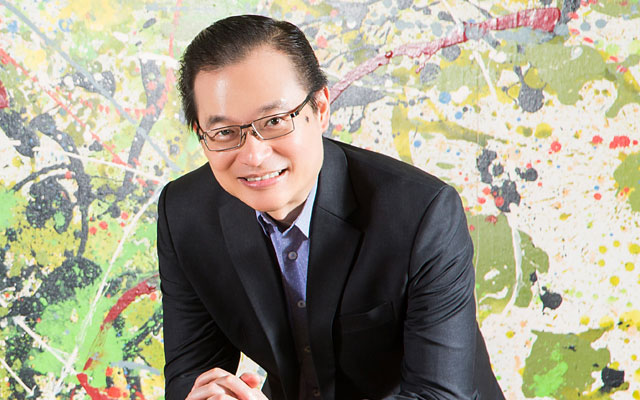
Compass Edge’s CEO Anita Chan speaking at the launch of the alliance

The number of loyalty members under the four brands amounts to more than 46 million Chinese travellers.

Anita Chan, CEO of Compass Edge, said that all four pillars are complimentary to each other with no overlap and no conflict of interest.

She added: “It is extremely difficult for a standalone property to be in the loyalty game, especially in China. Chinese people buy from those they know and trust. Now, overseas independent hotels can get that trust endorsement from the three most reputable China travel brands via LN Global Hotel Alliance.”

Moving forward, LN Global Hotel Alliance will put together lifestyle experience travel products for high net worth Chinese travellers.

“LN Global Hotel Alliance is not just a hotel loyalty program. We no longer just sell hotel rooms. It is an innovative concept to bring the experiences that Chinese travellers are looking for and present them in the Chinese digital ecosystem that Chinese people use,” said Chan.

“It is also important to stress that unlike OTAs, we do not want to sign up every hotel in the world. Far from it, we limit the number of hotel members in each location so that we can provide them with better service and a larger presence in this hugely important market place.”

Currently, the LN Global Hotel Alliance has more than 100 founding hotel members in over 13 countries and 30 cities.

Dream veteran among Nikki Beach’s latest hires to drive expansion

0

Luxury lifestyle and hospitality brand Nikki Beach Worldwide has made two senior appointments to chart its expansion worldwide.

Kevin Wallace, the new president of Nikki Beach Hotels & Resorts Asia, will lead the division’s expansion across China, India, Australia and South-east Asia.

(From left) Kevin Wallace and Alexander Schneider

Prior to joining Nikki Beach Hotels & Resorts, the seasoned international hospitality executive was president of Centara Hotels and Resorts, managing director-Asia of Plateno Hotel Group and most recently managing director-Asia Pacific for Dream Hotel Group.

Meanwhile, Alexander Schneider has been appointed vice president of Nikki Beach Hotels & Resorts in Europe and the Middle East. Schneider has been with the brand since 2016, leading the opening of Nikki Beach Resort & Spa Dubai.

Born and raised in Germany, Schneider brings over 17 years of hotel management experience to the table, having worked with major hotel operators including Emirates Palace Abu Dhabi – UAE, Rixos Properties UAE, Grand Hyatt, Germany and Casa Camper.

While Nikki Beach’s roots are in luxury beach clubs with 13 destinations worldwide, the Nikki Beach Hotels & Resorts portfolio currently includes four resort properties in Koh Samui, Thailand, Porto Heli, Greece, Bodrum, Turkey, and Dubai, the UAE.

The Nikki Beach Hotels & Resorts division has plans to open over 20 additional properties in the next five years.

Europe to benefit from increase in Chinese airlift

0
Chinese FIT to Europe on the up

Europe is expected to welcome more Chinese travellers on the back of increased flight capacity from China, the latest figures from ForwardKeys showed.

A total of nine new routes and one resumed route will start in 1H2018, plus a further three are in the pipeline. At least four China-Europe routes are already planned for 2H2018.

More Chinese travellers are expected to land in Europe thanks to direct flights

ForwardKeys’ statistics show that by June there will be an extra 30 flights a week from China to Europe. Based on an estimation of 200 seats per flight, that means 6,000 more seats will be available for Europe-bound Chinese travellers. Excluding Russia, the average total number of seats available each week last summer was 150,000.

Europe, with a 10 per cent market share of the outbound Chinese market, saw a 7.4 per cent increase in Chinese travellers during the recent New Year holiday period in January and February this year, revealed ForwardKeys. Turkey – recovering after terrorist attacks – surged 108.2 per cent, and Greece by 55.7 per cent, compared to the same period last year.

Travel in the opposite direction is set to increase too. At present, flight bookings to China, in the coming six months, from the rest of the world, are 11.8 per cent ahead of where they were at this time last year. The stand-out origin region is the Americas, which is responsible for 25 per cent of travel to China. Bookings from there are currently 24 per cent ahead.

ForwardKeys CEO and co-founder, Olivier Jager, said: “It seems that the EU-China Tourism Year is having a positive impact on travel in both directions. The Chinese have been growing in confidence for international travel for some time now and that trend is being reciprocated. Europe clearly has a lot to gain from this increased capacity because the Chinese are ready to spend money on luxury goods while on holiday, providing good opportunities for European retailers.”

New hotels: Azerai Can Tho, Felix Hotel and more

0

Azerai Can Tho, Vietnam
Located on Au Islet in the Hau River, a tributary of the Mekong River in Vietnam’s Mekong Delta, the resort offers 60 rooms housed in 30 two-room structures. Each room is approximately 35m, with views of the river, lake or the surrounding gardens and trees that can be enjoyed from the outdoor terrace with loungers. Recreational facilities on the eight-hectare site include a spa with eight treatment rooms, gym, yoga and meditation pavilion, swimming pool, pilates studio and a tennis court. There is also a restaurant, grill, lounge and bar.

Felix Hotel by 8Hotels, Australia
All 150 rooms in this hotel near Sydney’s Domestic Airport have been designed to pay homage to the 1960s golden era of flying. The high-flying theme runs throughout the property from conference rooms, Boeing and Airbus, to suite categories Economy, Premium Economy, Business Class and First Class. All rooms are fitted out with 55-inch TVs, power rain showers and blackout curtains. Guests will check in on the top-floor penthouse, which is also home to a cocktail bar, 24-hour food shop and outdoor rooftop cinema. There is also a 24-hour gym, Felix Athletic Club and self-service laundry.

Atlantis Sanya, China
Atlantis has launched the US$1.6 billion integrated entertainment resort on Hainan Island in China. The 540,000m property offers 1,314 guestrooms including 154 suites (five of which are underwater), water slides at the Aquaventure Waterpark and The Lost Chambers Aquarium which is home to 86,000 marine creatures. Guests will also have access to 21 different F&B options, the AHAVA spa, and 5,000m of space for functions and events.

The Longhouse, Indonesia
This exclusive property in the hills of Jimbaran offers only six bedroom suites named after Indonesian islands – Bali, Lombok, Sumatra, Sumba, East Java and West Java – where no two suites are the same. Amenities on the property include a dining room, a hilltop bale for morning yoga, an infinity pool, bar, private lawn and home theatre. A spectrum of guest services are offered, from cooking courses in Indonesian cuisine to local village tours, Balinese massages in the in-house spa and mixology sessions.

JW Marriott Jaipur Resort & Spa, India
The JW Marriott brand has made its debut in India’s Pink City with 200 guestrooms, villas and suites, where the property design is inspired by the palaces of Rajasthan. The property has five dining options – the fine-dining Mohan Mahal; all-day restaurant Sukh Mahal; rooftop eatery Hawa Mahal, complete with live music; the Jharokha bar and lounge; plus light bites and non-alcoholic drinks at Preet Mahal. Other amenities include a spa, outdoor pool, fitness centre, kids club, as well as over 4,830m of indoor and outdoor banqueting venues that include a 1,021m pillarless ballroom.

Island-wide race a happy hunting ground for agents

0

Royal Caribbean’s Royal Hunt competition proved to be a happy hunting ground for four agents from Singapore’s New Shan Travel, who each bagged a three-night South-east Asian cruise on Voyager of the Seas after becoming the winning team.

The winning team from New Shan Travel

In eight teams of four members each, 32 participants from Singapore travel agencies last Saturday took part in the island-wide race. They first downloaded a location-based mobile app in order to find six golden anchors around Singapore and uncover treasures along the way.

Catching up on the digital

0

The recent spate of business closures – from the sudden cessation of Misa Travel to GC Nanda giving up its licence after 40 years in operation last year – may seem like a blow to Singapore’s travel agency sector, but in its wake the trade is encouraged by the emergence of a stronger, more efficient pool of players.

The vast majority of cessations are “orderly business closures or businesses which choose to let their licence expire for reasons such as change in business focus and retirement”, said Ong Ling Lee, director, travel agents and tourist guides, Singapore Tourism Board (STB).

The number of travel agents has remained constant at around 1,200 over the last few years, according to STB figures, although an average of 100 to 120 companies cease operations every year.

To help agents stay ahead of the game amid fast-changing technology developments and consumer travel habits, STB is banking on amendments to travel agents’ legislation – including the exemption of certain entities from requiring a travel agent’s licence and the emergence of a niche-licence tier for travel agents arranging or selling tours in Singapore – to create a “more vibrant local tourism scene”, Ong added.

STB in August 2016 launched the Travel Agent Roadmap to enhance the capability and sustainability of the travel agent industry through business transformation, technology adoption and manpower initiatives, with follow-up initiatives rolled out last year.

To expedite travel agents’ adoption of technology, STB is developing a “green lane” where a set of solutions are being identified and prequalified for funding approval, paving the way for easier adoption of technology among travel agents.

More help for SMEs  
On its part, the National Association of Travel Agents Singapore (NATAS) has formed the new Business Transformation Committee to galvanise the industry towards business transformation. In 2018, NATAS will launch the Travel Technology Challenge with the objective of curating even more solutions for travel agents.

Steven Ler, acting president of NATAS, told TTG Asia that the association is also stepping up collaboration with government agencies to assist its SME members, who make up 70 per cent of its 400-strong membership. The association is also working with banks to help members with the financial aspects of doing business.

“The big boys are self-sufficient and have enough funding and resources to transform, but for an SME to find a solution is costly. Such companies and members may have the intention to transform but may not have the know-how. This is where NATAS can give support and provide the infrastructure to transform,” stated Ler.

To address the changes in the marketplace, Ler announced that NATAS is reviewing its membership categories and classifications, and changes will be made after its AGM in May to reflect the new market needs to allow niche and smaller travel agents to be a part of NATAS.

A key NATAS initiative this year is the development of a cost-effective, user-friendly offline-to-online (O2O) portal, targeted for a 3Q2018 roll-out to support SME agents’ move into the online domain, complement its travel fairs and create a consolidated travel agency platform. The portal will feature themed travel fairs throughout the year, and serve as a plug-and-play solution for agents who currently lack the ability to go online.

Ler noted: “This platform will allow more travel agents to come on board but it will also be managed with stringent criteria. The whole purpose is to attract non-members with a value proposition of member and non-member fee payment structures.”

Tackling challenges in digital era
Such trade initiatives have been a timely blessing for Quotient Travel Planner, helping the company achieve “technical growth” to expand and globalise, according to its co-founder and COO Lim Hui Juan.

The agency has adopted solutions such as a cloud-based file sharing system, a customer relationship management system and an internal staff chat and information-sharing platform. It is currently developing a chatbot under STB’s Tourism Innovation Challenge.

Lim told TTG Asia: “We’re a small company with limited resources (so) digitising processes is a cost- and time-savings initiative for us. We would prefer to spend (our) time engaging personally with clients (and see) how we can do more for our clients with technology.”

As well, Dynasty Travel has tapped STB’s business improvement fund to develop a mobile app to help customers make bookings, write reviews and contact the firm in emergencies. A revamped website is also on the way, scheduled for a 2Q rollout.

Similarly, Chan Brothers Travel – which recently launched a chatbot and a Salesforce system – maintains staff engagement and hands-on training with each innovation to ensure employees “understand how to utilise and maximise the new software or tool”, according to spokesperson Justine Koh.

Technology disruption aside, staff hiring and retention remains another key challenge faced by agencies, according to Ler.

He said: “It’s important to get support from STB in terms of infrastructure, but more importantly, for the trade to move forward in (acquiring) talent. Training would be the most crucial element moving forward to help (agents) be more focused and let the travel trade continue to progress.”

To further this scheme, the East Asia Institute of Management (EASB) last year acquired a majority share of NATAS’ training arm, the Tourism Management Institute of Singapore. EASB’s pedagogy will focus on integrating mobile technology into learning processes.

This is the association’s first step in transforming the travel trade by raising the technology confidence in Singapore’s travel trade sector, added Ler.

Retraining existing agents is an accompanying step. Lim shared that in implementing online solutions, “some of the early Gen X-ers had some grumbles… Training our staff to use the newly developed technology took time”.

Another NATAS initiative, which will be launched in the latter part of the year, is the talent portal, which focuses on skills acquisition and the crystalisation of travel agency roles.

Ler explained: “The aim is to standardise roles in the industry, conduct blind assessments and profile talent and travel agencies. NATAS is working with schools, the polytechnics and institutes of learning to build a supply pool. It is also plugging the (skills) gap.”

A sea of soft brands

0

As independent-minded customers eschew cookie-cutter accommodations for the ones that are able to express themselves freely, soft brands are deemed to be here to stay.

Agents may benefit from the presence of more soft brand collections. For one, they bring to their radar many previously unknown independent properties. With more customers desiring the singular hotel with its own individuality, it has become the agent’s business to seek out more of such properties.

That’s the big idea of soft brands. The independent hotel owner needs his property to be known to the world, yet does not want to be chained by the standard operating procedures of the behemoths. The large global chains smell a great opportunity and let the owners, for a fee, latch onto their illustrious name, distribution network, loyalty programme, property management technology, training and the sense of belonging to a like-minded club, aspects OTAs can’t offer as well or don’t.

“Hard brands have a precise template and a cookie-cutter approach to business at large, whereas association with an independent representation company allows bespoke hotels like ours to retain our character as well as our unique selling propositions and competitive advantage. We get to enjoy the best of both the worlds,” said Varun Chhibber, general manager of The Leela Ambience Convention Hotel New Delhi – a property that de-flagged from Kempinski in December 2015 to Preferred Hotel Group’s LVX Collection.

Chain reaction  
Chains have been shelling out new soft brands at a rate faster than ever before.

One-third of all rooms in the US are independent, according to an STR survey. The opportunity to grow soft brands internationally is even bigger. It’s just the reverse: 70 per cent of hotels outside the US are unbranded, according to Best Western International’s COO Ron Pohl. “That means the potential for us overseas is tremendous,” he said.

Best Western has been launching one soft brand every year since 2015: BW Premier Collection (2015), SureStay Collection (2016) and BW Signature Collection (2017). Last year also saw Wyndham Hotel Group launching Trademark Hotel Collection, while Hilton International launched Tapestry Collection.

Whereas before soft brand launches by chains were mostly aimed at the luxury end and were few and far between (e.g. The Luxury Collection, acquired by Starwood Hotels & Resorts in 1998, and Marriott International’s Autograph Collection, launched in 2010), it’s clear that chains are marching towards the lower end of the spectrum in a bid to cover independents that fit into economy and midscale as well (see box).

But if agents who work in the industry can’t tell the difference between, say, a BW Premier Collection and a BW Signature Collection, or even between Hilton’s Tapestry and Curio soft brands, as a test by this editor shows, will customers – or even the independent hotel owners themselves – be any wiser?

Jan Freitag, STR’s senior vice president lodging insights, believes “brand fatigue” is indeed creeping in.

“Parent companies conduct customer surveys and are hopefully building brands that meet customer needs. That said, the proliferation of brands is certainly hard for a customer to track and it is easy to assume that a certain amount of brand blur or brand fatigue is taking place. This is probably also true for owners who have a hard time to determine the ‘swim lanes’ of one brand against another.

“The challenge for the new brand is to provide a unique selling proposition to satisfy the guest’s demand and to stand out among the sea of brands,” he said.

This is why the original players of soft brands, the so-called hotel representation companies such as Worldhotels, Preferred etc, aren’t overly-anxious about global chains entering their turf. Over decades, these established brands, with enough scale, hindsights and foresights, have continuously been perfecting their niche, so much so it is clear to all and sundry what they stand for.

Relais & Chateaux? Boutique luxury hotels, almost always with gourmet restaurants. Small Luxury Hotels of the World? It’s exactly what the name says. Leading Hotels of the World? It’s the leader of independent luxury hotels.

Hard sell for soft brands  
On the global chains side, however, beyond identifying the segment their soft brand is targeting – going by the US graduated system, that goes from economy, midscale, upper midscale, upscale, upper upscale to luxury – it is hard to tell how different one soft brand is to the other in the same competitive set, or even between two soft brands in the portfolio.

Here are two competing new soft brands, Curio by Hilton (launched in June 2014) and The Unbound Collection by Hyatt (launched in March 2016) as described by their parents:
Curio: a global collection of distinctive four- and five-star hotels that offer travellers local discovery and authentic experiences in key markets. Just as the word “curio” can refer to something of interest, unique or even rare, each Curio hotel will be different from the next, with individuality being a common thread, along with the quiet reassurance of the Hilton name behind every location.

Unbound: a portfolio of new and existing upper-upscale and luxury properties that will maintain a distinct character; includes historic urban gems, contemporary trendsetters, boutique hotels, resorts and more – will have their own individual brand identities, free from constraint or convention. At the same time, the brand will provide guests the freedom from worry by giving them the high-quality that comes with the Hyatt brand.

Said Robert Hecker, managing director Pacific-Asia, Horwath HTL: “I don’t think any have gained sufficient scale or distinction to have created their own soft brand identity that consumers would seek them out on any consistent basis.”

Without doubt, the chains will be driving scale and launching more soft brands.

“Soft brands are here and are here to stay,” Freitag wagered. “The large parent companies have found that the soft brand alternative is attractive to owners who do not want to give up their unique look and feel while at the same time being connected to the large loyalty programme that the traditional hotel companies bring. In the long run, it will come down to the value that the soft brand deliver to the hotel owner’s bottom line to see if any specific brand will make it.

“As a side note, I would also not be surprised if one of the major OTAs starts exploring the idea of a soft brand to organise the independent hotels they have relationships with.”

Meanwhile, the hotel representation companies are doing everything to protect their grip on the market. Preferred’s 2017 year-end results show a 22 per cent year-on-year increase in reservations revenue to nearly US$1.4 billion and the addition of 103 new properties in 2017 to its fold.

Asked what this shows about the rising competition in the space, Preferred’s CEO, Lindsey Ueberroth, said: “The independent space will only continue to gain market strength, which is a trend that is corroborated by the movement of major chains trying to make in-roads into this space by launching brands that, on paper, appear to deliver the same experience.

“This growth of soft brands has created more competition, but Preferred will continue to maintain its position as an authentic frontrunner given our 50-year (this year) head start and a consistent track record of excellence. We look forward to many more years of success ahead.”

When passion drives purpose

0
Vespa sidecar tour

Singapore’s latest destination marketing brand, Passion Made Possible, is giving a new lease of life to tours and activities in the Lion City as operators and hotels clamour to roll out fresh offerings.

Since the brand was born, at least four new tours were launched, including a Vespa sidecar tour, an industry and inventors trail, an insider’s look into Kampong Glam and a new-generation hawker centre tour.

Seek out Singapore’s hidden lanes in vintage Vespa sidecar tour

The Kampong Glam tour was developed by Ruby Dot Trails in collaboration with Singapore Tourism Board (STB) for the new branding, said Ruby Dot Trails’ owner Shal Lalwani.

She said: “I believe the campaign will help drive fresh perspectives of Singapore and attract new traveller markets… It is expected, that with STB’s global rollout of its brand campaign, we will see increased demand for the tour from new markets.”

Meanwhile, Diethelm Travel Singapore is riding on the campaign to promote tours such as its Go Local package, where visitors can explore Singapore through a local’s perspective and have immersive experiences, said Judy Lum, general manager, Diethelm Travel (Singapore).

Passion Made Possible ties in perfectly with our focus on curating experiences with in-depth elements of culture, history, food and lifestyle of the (local) people,” explained Lum.

She noted that the arts and food scenes in Singapore have “grown exponentially”, leading to an uptick in requests for itineraries incorporating elements of the arts, architecture, local cuisines and the Southern Ridges for the agency.

Hoteliers have also hopped onto the bandwagon as well by rolling out their own experiential tours. For example, InterContinental Singapore partnered with the Society of Tourist Guides to conduct a weekly Guided Heritage Trail that takes guests to areas of interest near the hotel.

Cheryl Ng, InterContinental Singapore’s director of marketing, shared: “We observed that guests are appreciating the authenticity of the experience more, especially when they are immersed in the local culture.”

Ng opined: “We anticipate a higher demand for luxury experiential travel where travellers will be looking towards the hotels to provide insider knowledge and new perspectives of a destination.”

As well, The Fullerton Hotels Singapore has introduced The Fullerton Experiences, a menu of complimentary programmes – such as heritage cuisine workshops, a picnic at Singapore Botanic Garden and walking tour around historical sites in the Civic District – for guests.

Since this initiative was started, the hotel group has seen a “heightened interest to better understand the people, stories and culture of a multifaceted Singapore beyond the top attractions in town”, said Giovanni Viterale, general manager of The Fullerton Heritage.

“We have seen a steady increase in the number of guests visiting The Fullerton Heritage Gallery and participating in our complimentary heritage tours in 2017 as compared to 2016,” he added. The group expects increased demand for such experiences by travellers from Asia-Pacific, the UK and the US.

STB is expected to roll out the remaining Passion Made Possible campaign material – targeted at travellers interested in nightlife, arts and culture, and sports and adventure – later this year.