TTG Asia
Asia/Singapore Wednesday, 8th April 2026
Page 1439

Visitor arrivals into Okinawa hit record high with connectivity boost

0
Port calls in Okinawa in 2017 were up 33 per cent year-on-year

The proliferation of LCCs and increased frequency of air and sea routes are driving rapid growth in Okinawa, Japan’s southern-most archipelago.

Direct flights are in operation from countries such as South Korea, Taiwan, Thailand, Singapore, Hong Kong and China. According to Yasushi Nakamura, vice-president of Okinawa Tourist Service, the main airport in Naha now receives more than 200 direct international flights per week, compared to 40-50 five years ago.
Port calls in Okinawa in 2017 were up 33 per cent year-on-year

Port calls in Okinawa in 2017 were up 33 per cent year-on-year, according to the Okinawa Convention & Visitors Bureau (OCVB). More than 500 cruise ships docked on the island chain, most of which hailed from Taiwan and China.

The result has been an unprecedented number of visitors: nearly 2.7 million fiscal 2017, representing a 26.4 per cent increase year-on-year, according to OCVB.

Kazuhiko Yoshioka, manager of the Okinawa inbound and MICE department of Nippon Travel Agency, attributes the archipelago’s popularity to its proximity to other Asian nations and Japan’s relaxation of visa requirements.

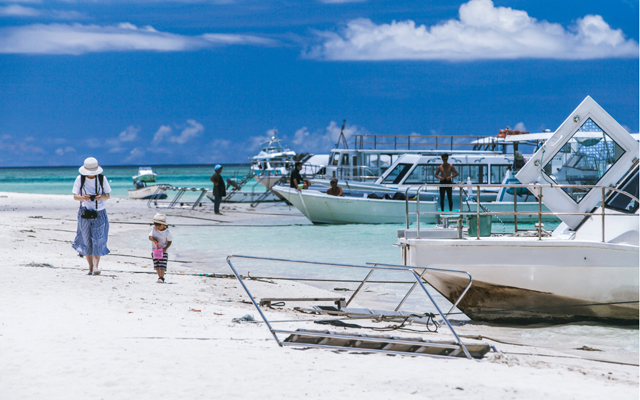
As well, some experts are observing that the Instagram-worthy beaches and sea have attracted the younger market.

Yasutomo Morikawa, spokesperson for the Kinki Nippon Tourist Group, agreed that Okinawa’s positioning as a resort destination has fuelled its growth. He predicts the firm’s April to June 2018 Okinawa sales will be up 30 per cent over the same period last year.

Meanwhile Ryubo Travel Service reported a 113 per cent increase in sales over the January to May 2018 period, most of which was derived from Taiwanese visitors.

The hotel market has responded with a spurt of openings, including new glamping resorts Island Magic Senagajima and Kariyushi Beach Glamping. DoubleTree by Hilton Okinawa Chatan Resort launched in June and The Luxury Collection Hotel’s Iraph Sui will open in late 2018. The Hilton Okinawa Sesoko Resort is slated for 2020.

Further growth in Okinawa is expected due to the addition of more flights and another airport this year. By fiscal 2021, the government aims to attract 12 million visitors annually.

From tourist to food tour boss

0
Tomer (centre) always offers durians to clients to end their Singapore food tour experience on a memorable note

What brought you to Singapore to conduct culinary tours?
I was a chef in Israel before coming to Singapore eight years ago to join my husband who was here for work. I’m a foodie and my passion is local markets and food, so when a Malay friend here took me to Tekka Market, I fell in love.

I remember having chicken biryani (spicy rice), served on a banana leaf with egg, mutton and cashew, and it was amazing. After three days of eating like this, my heart was in Singapore.

I wanted to share my passion with other visitors. Back (in 2010), there was no TripAdvisor, and I found it hard to find the local wet markets. When I started Wok ‘n’ Stroll, my company was one of the few players offering culinary tours.

What preparation did you have to do?
After my visit to Tekka Market, I bought books from Dr Leslie Tay (a prominent food blogger with a taste for hawker fare) and Makansutra (a local food guide and standard). I read blogs of people who miss Singapore food, like their grandmother’s popiah (vegetable wrap). I read up on every dish that I ate.

I wanted to share all of these by taking people out of the air-conditioned malls and off the beaten track. It took about two to three years to be licensed as a travel agent and create our first tours.

How do you ensure customers receive the best experience from your tours?
Manpower and guides are important. Our customers deserve to receive the best knowledge and service. Our guides are all professional – they know how to work with clients, be attentive, on time, tidy and give the best customer service.

But they also know how to be a passionate food explorer. They all have a background in food – from a blogger to a guy whose wife sells noodles in a canteen – so they can tell you about everything from the culture to the ingredients.

I tell my guides to take me as a tourist and be able to entertain me. I have to learn something interesting and surprising.

As guides, we are the ambassadors of Singapore for the three hours of our tour. Some clients have certain expectations about the tour and food, which can sound romantic to them, but sometimes they don’t like what they’re tasting.

For example, some customers find the belacan (chilli) too spicy and they want a beer, so I always tell our guides to just give them what they ask for. Let them enjoy it and go home happy.

I don’t just show my customers to a trendy restaurant – I take them to tour the establishment. We try to do unique experiences that revolve around food.

And we always give our customers durian at the end of the tour! Even if they don’t like it, they will still remember the good experience of Singapore.

As a non-Singaporean, how do you connect with the locals? What are the challenges and how do you overcome them?
As a former chef, I know the hawkers’ frustrations and appreciate the work that they do. We try to keep a close relationship with the hawkers. Some of them are our friends – we give them Chinese New Year or Deepavali presents, and they greet us during the New Year. We engage them in activities as our partners, and we’re even friends on Facebook.

One of our challenges was learning how to chope (reserve) hawker centre seats for big groups of 40. We have a food producer go to the market earlier to set up placemats and cutlery on the tables.

What is the next step for Wok ‘n’ Stroll?
We are working on technological developments that will take Wok ‘n’ Stroll to the next stage. I keep in touch with our clients to see what they’re looking for and what the next trend is, e.g. we are exploring a “catch of the day” tour to the fishery ports.We are also looking into developing tours tailored for the Chinese market, which is starting to visit the local hawker centres.

What makes the successful debut for ILTM Asia Pacific? Watch here

0

Hailed to live up to the success of ILTM Cannes, ILTM Asia Pacific came through and proved a hit with luxury buyers and sellers in its inaugural edition in Singapore.

Not only did ITLM Asia Pacific bring more luxury buyers and specialists from around the region to Singapore, the dedicated four-day event also opened doors to new business opportunities, greater engagement and awe-inspiring fun for the luxury travel community during their time in the Lion City.

In this video, hear from ILTM’s portfolio director Alison Gilmore, first-time attendees seeking extraordinary products for high-end clients, and sellers celebrating milestones in conjunction with the first-time event.

Can’t get enough of a good thing? Look out for ILTM Asia Pacific 2019!

Tour East Group’s new website goes live

0
Next phase for the website includes enhancements to the MICE section

Tour East has launched a new website, which will serve as a knowledge and information centre for its B2B travel industry partners.

Speaking on the launch, Chris Bailey – senior vice president said: “Our aim in designing this new site was to create a digital shop window to the world of Tour East and its portfolio of services, products and destination information from 15 countries throughout Asia-Pacific.”

Next phase for the website includes enhancements to the MICE section

The site also acts as a gateway for its travel industry partners using the Web-Connect booking platform, which houses thousands of products and services in Thailand, Singapore, Hong Kong, Malaysia, Indonesia, Vietnam, Cambodia and Myanmar.

Australia, New Zealand, Sri Lanka and South Korea will soon be added to the portfolio, and Tour East aims to have its whole network accessible by year end.

The next phase for the website includes further enhancements to the MICE section, expected to result in a one-stop tool for organisers to gather and collate information and data for planning their programmes throughout the Asia-Pacific region.

Livn rolls out content self-service tool for suppliers

0
Suppliers can now edit content directly instead of having to go through Livn

Tours and activities aggregator Livn has launched Content Manager, a self-service tool for suppliers to control the presentation of their products on the global distribution platform.

Business solutions general manager at Livn, Gary Gelenter, explained that once the products have been loaded onto the platform by the Livn product team, suppliers are able to log on and view how their products are presented to travel agents with the ability to also edit and enhance.

Suppliers can now edit content directly instead of having to go through Livn

“Now suppliers can edit and verify their products 24/7 without having to waste precious time sending emails back and forth with the Livn content team. Importantly from our supplier partner perspective, this improves the time to market from sign up to sale by almost half.”

Livn tours and activities products are now also airport and geo-coded to make them easier for agents to search for and sell, while notifications about new products and pricing can be done by ticking a box.

Content Manager has been made available to Livn’s contracted wholesale clients.

The Sydney-based company aggregates the inventory of more than 15,000 tour operators, sourcing more than 700,000 products, all of them bookable live, via a unified API which can be quickly integrated into any sales platform.

Livn has agency distribution agreements with key retailers such as Flight Centre, while its inventory has also been integrated into the Amadeus GDS, allowing agents to seamlessly book tours and activities product with instant confirmations and ticketing.

Aviation roundup: China Airlines, Scoot and more

0

China Airlines to launch Kaohsiung-Jakarta flights
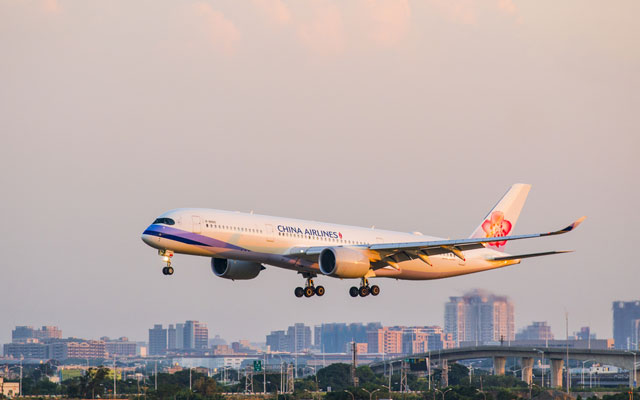
China Airlines will soon begin a new route from Kaohsiung to Jakarta via Hong Kong on July 1.

CI671 will depart Kaohsiung at 14.10 and arrive in Hong Kong at 15.35. It will then depart Hong Kong at 16.35 and arrive in Jakarta at 20.20. The return leg will depart Jakarta at 06.25, and arrive in Hong Kong at 12.25. It will then depart Hong Kong at 13.25 and arrive back in Kaohsiung at 14.55. The route will be operated daily on a Boeing B737-800.


Berlin becomes Scoot’s third longhaul destination
Scoot has launched its third longhaul destination, Berlin, connecting Singapore with the German capital with four-times-weekly direct flights.

On Mondays, Wednesdays, Fridays and Sundays, flights will depart Singapore at 12.25 and arrive in Berlin at 07.20. The return flight will depart Berlin at 09.40 and arrive back in Singapore at 03.45 the following day. The route will be serviced with a 787 Dreamliner.


SAS moves Hong Kong route from Stockholm to Copenhagen
From October 28, Scandinavian Airlines (SAS) will shift its Hong Kong route from Stockholm, Arlanda to Copenhagen, Kastrup. The airline will ply the new route five days a week.

On October 28, SK965 will depart Copenhagen at 20.55 and arrive in Hong Kong at 14.45 the following day.

SAS has struggled with profitability on the Stockholm-Hong Kong route since launching it three years ago, but said the new slot would offer an improved timetable including night flights.

Passengers that have already booked a flight from Stockholm will be rebooked via Copenhagen to Hong Kong.


Delta announces destination updates
Delta Air Lines will launch two new routes between the US and Asia-Pacific next year as it pulls the plug on its Hong Kong-Seattle service later this year.

The American carrier will begin direct services between Minneapolis-Saint Paul in Minnesota, and Seoul, as well as non-stop flights between Seattle and Osaka-Kansai. The latter route will be included in Delta’s joint venture partnership with Korean Air, which serves 12 destinations in Japan.

Lastly, Delta will cease Seattle-Hong Kong service, with the last flight out of Hong Kong on October 4, 2018. Delta will continue to serve Hong Kong from Seattle via Seoul Incheon, with its joint venture partner Korean Air.


PAL now flying a tri-class A330 to Auckland
Since June 18, Philippine Airlines (PAL) started utilising its tri-class Airbus A330-343 on its non-stop flights from Manila to Auckland, increasing the capacity on this route by 22 per cent.

PAL replaced the original 414 economy seats with three new cabin sections, resulting in a more spacious cabin with only 309 seats. The refurbished A330 has 18 business class, 24 premium economy and 267 regular economy seats.

The thrice-weekly service leaves Manila on Wednesdays, Thursdays and Sundays. The return flight, PR219, departs Auckland on Mondays, Thursdays and Fridays.

Why speed matters for online bookings

0

Making an online booking is often where most customers start their travel experience today. Amid stiff competition, brands need to cut through the clutter, ensuring that their target audience not only lands on their page, but completes the booking.

Steve Miller Jones

Ensuring reliability
Consumers want a fast and consistent experience each time they interact with brands online.

According to Limelight Network’s State of User Experience survey, 84 per cent of respondents expect web performance consistency across devices; 43 per cent said they would abandon the current booking site in favour of a competitor’s if the experience is slow.

Brands should look to integrate content delivery network (CDN) solutions, which can ensure this amid changing network conditions. Users will gain fast content access without rebuffering, and ultimately have a positive experience.

Ensuring security
Beyond providing an interactive user experience, brands need to ensure that their site is secure. With 98 per cent of organisations experiencing cyberattacks since 2016, brands need to be adequately equipped, as cyberattacks ultimately undermine customer trust and relationships.

This can be safeguarded by automatically stopping bad bots and facilitating good bots through a trusted CDN, to maintain revenue-generating traffic. This will ensure the speed of customer experience, through ongoing monitoring that protects web applications without impacting performance.

Benefiting from an optimised user experience
When users enjoy a beneficial web experience, brands ultimately gain profitability and customer trust.

In the case of Cebu Pacific, an airline which receives 90 per cent of its user bookings online, they wanted to not only ensure web acceleration but security of revenue and routes by managing partner bots. By implementing a CDN, it saw a 61 per cent improvement in global delivery performance, successfully scaling with customer requirements.

As such, an optimised user experience is more crucial than ever. Brands should start by taking the first step, by identifying technology partners that can edge them closer to this goal.

Limelight Networks is a global CDN service provider that enables organisations to deliver faster websites, more responsive applications, highest-quality videos, and consistent game and software downloads to any device.

Thailand, the mainstream destination with niche ambitions

0

Thailand may well be on its way to another record year in tourism, welcoming 13.7 million visitor arrivals in the first four months of 2018, nearly 14 per cent more than the same period last year, but the Tourism Authority of Thailand (TAT) says its international marketing strategy is no longer about pursuing the numbers game.

Instead, focus will be placed on growing tourism revenue and visitors’ length of stay, announced Tanes Petsuwan, TAT’s deputy governor for marketing communications, at the recently-concluded Thailand Tourism Mart Plus (TTM+) in Pattaya.

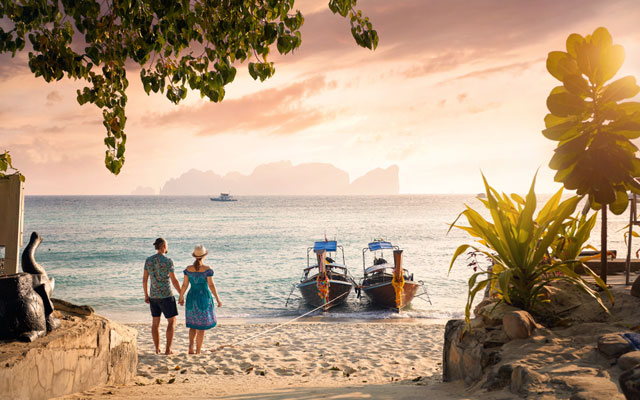
Weddings and honeymoons are one of TAT’s targeted niche markets; a couple on Phi Phi island at sunset pictured

“The only way to bring Thailand out of its pain points is to go niche. We are at a comfortable point now to go niche, so we will focus only on spending and revenue for performance statements moving forward,” Tanes revealed. In 2018, TAT targets to grow tourism revenue by eight per cent.

Romance and luxury were the focus for TTM+ 2018 when the tradeshow took place at Pattaya’s Ocean Marina Yacht Club last week under the theme of “Million Shades of Romance”. TAT also identified weddings and honeymoons as niche segments for promotion – in 2016, both segments attracted 1.1 million visitors and US$1.8 billion in revenue.

Gastronomy tourism is another focal point, with the launch of the Michelin Guidebook Bangkok last year, and the recent hosting of the fourth UNWTO World Forum on Gastronomy Tourism, as initiatives TAT has undertaken.

TAT’s niche market campaigns come at a critical time, especially as the impacts of mass tourism in Thailand are becoming even more apparent for overseas tour operators.

Gastronomy tourism is another niche market TAT is working on; a patonggo (deep fried dough) vendor sporting a 2018 Michelin-recommended label

“Thailand has tremendous potential but it has been quite obsessed with numbers. It is becoming too much of a mass tourism destination and runs the risk of losing to Vietnam,” said David Kevan, partner and product person at Chic Locations UK. “The Chinese market is easy to attract in the short-term, but have longer-term consequences.”

Echoing Kevan’s concerns, Peer Runge, sales director of Samson Travel Denmark, remarked: “The influx of Chinese travellers is becoming a challenge for Thailand. Why would Danes come to Thailand if there are many Chinese?”

Speaking to TTG Asia and a handful of media outlets at the sidelines of TTM+, Tanes acknowledged that managing China as a growth market is a key challenge for Thailand.

“China is becoming too big a market, around 30 per cent; even tourism itself is also becoming too big a GDP contributor at 20 per cent,” he stated, stressing the need for TAT, as well as Thailand, to pursue market diversification strategies to better manage risks.

A silver lining, Tanes pointed out, is the growing number of FITs from China’s first-tier cities, where TAT’s marketing efforts will be targeted. Second- and third-tier Chinese cities will not be actively courted, he told TTG Asia.

However, TAT’s quality tourism push will probably take three to five years to bear fruit, Tanes admitted. In the meantime it is placing more attention on other key markets like South-east Asia.

When old is gold

0
Above: A Hindu ceremony at Yogyakarta’s Prambanan temple to mark the Day of Silence

Yogyakarta may be a big city in the making, with hotels and shopping malls mushrooming across the city and the latest car models making runs on the roads, but this city remains a stronghold of Javanese culture and heritage.

For Fadli Fahmi Ali, founder and director of Werkudara Travel Management, there is no question Yogyakarta’s cultural identify is well and alive and will continue to be so.
“Culture and heritage are at the heart of the city. Despite the developments, it is culture and art that keeps our business and leisure clients interested,” he stated.

A Hindu ceremony at Yogyakarta’s Prambanan temple to mark the Day of Silence

Archaeological sites like Borobudur Buddhist Temple and Prambanan Hindu Temple, and Kraton (Yogyakarta’s Palace) are key attractions.

However, the fact is that Yogyakarta sees a high rate of repeat visitors. How then do travel companies keep tourists coming after they have crossed out these must-sees?

For Fadli, it comes down to enhancing the overall experience. He said: “There are several other small temples around Prambanan which we take travellers to. And to add to the experience, instead of sitting on a bus, travellers can take a bike, or hop on andongs (horse carts) or becaks (trishaws).”

A temple tour can also be combined with a nearby village, where tourists visit home industries producing tofu, brown sugar, or a local artist’s workshop demonstrating crafts such as wayang leather shadow puppet and wooden masks.

Barama Intercity Tour also combines a sunrise tour to Punthuk Setumbu hill overlooking the Borobudur Temple, followed by a guided tour of the temple and buffet breakfast at Manohara Hotel.

Hasan Prayogo, founder of Omah Kecebong guesthouse, believes local communities need to be an active part of tourism to set the city apart from other destinations.
He said: “I started the project in 2015 with cultural preservation in mind. We created a place for those who have an interest in local culture, while empowering the village and surrounding villages.”

Activities in Omah Kecebing include batik painting and gamelan music class run by local artists.

He also works together with ox-cart owners to who take travellers on tours of the village.
Such traditional activities appear to be of interest to Indonesian and international travellers. Between 2,500 and 3,000 guests visit Omah Kecebong every month, even with minimum promotional efforts.

Having witnessed strong retention of culture in the city despite growth in the last two decades, Alain Rigodin, general manager of Yogyakarta Marriott Hotel, however expects a new airport (opening in the next two years) may accelerate change.

“The new airport will be the game changer. When it opens, a larger number of tourists will (pour in) and change will take place,” said Rigodin.

“Nevertheless, I hope Yogyakarta will maintain its cultural identity, because (only then can it) differentiate itself from other destinations like Jakarta or Surabaya.”

Sheraton Imperial KL intensifies courtship of healthcare travellers

0
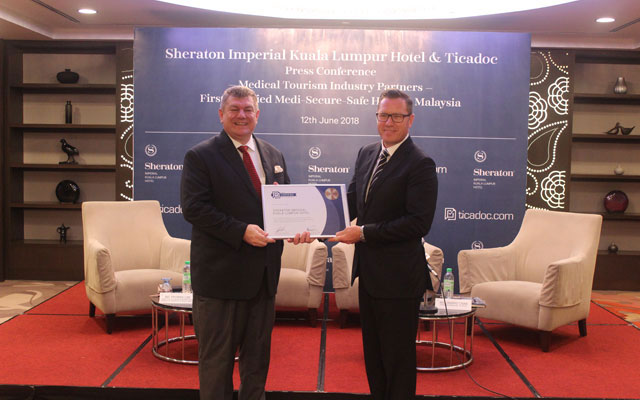
Left-to-Right,-Mr.-Frank-Beck,-Managing-Director-of-Sheraton-Imperial-Kuala-Lumpur-Hotel-and-Mr.-Richard-Stevens,-Executive-Chairman-of-Ticadoc.jpg

Sheraton Imperial Kuala Lumpur Hotel has become the first hotel in Malaysia to be certified a “Medi-Secure-Safe Hotel” by medical tourism resource Ticadoc, part of efforts by the hotel to attract more wellness and healthcare visitors.

Frank Beck, managing director of Sheraton Imperial Kuala Lumpur Hotel, said: “Our participation with Ticadoc is part of a strategy to expand market reach. It is a platform that opens up opportunities, which does not only translate into business but also in hospitality service offerings targeted at wellness and healthcare travellers.”

From left: Sheraton Imperial Kuala Lumpur Hotel’s Frank Beck and Ticadoc’s Richard Stevens

“Our platform is to provide medical-stay travellers with assurance, using us as a tool to assess (if their) choice of stay is in accordance to strict medical requirements,” Richard Stevens, executive chairman of Ticadoc said.

To get certified, the hotel had to pass a series of internal and external audit, with a comprehensive list of safety and security compliance to fulfil, according to a statement from the hotel.

Ticadoc.com is a resource that wellness and medical travellers use to research and access information, feedback and ratings. Its Medi-Secure-Safe certification allows potential guests to understand the medical, security and safety capabilities of hotels in which they are considering for accommodation.

In a bid to reach out to medical tourists, a new target segment, Sheraton Imperial Kuala Lumpur Hotel also recently partnered Prince Court Medical Centre in Kuala Lumpur to launch its ‘Healthcation’ package.

The package includes a one night’s stay at the hotel’s deluxe room with breakfast for two plus health screening, cardiological examination and laboratory test for one person at Prince Court Medical Ce