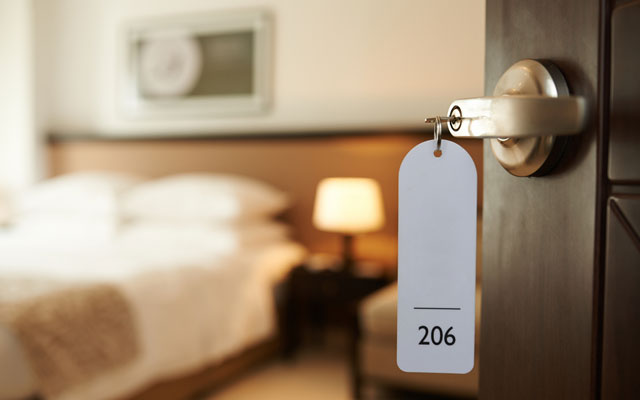
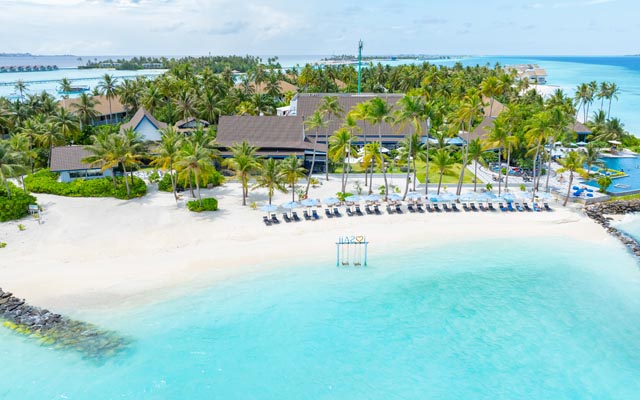
Artist impression of the 225-room Hotel Indigo Auckland
Come 2021, the City of Sails will soon be home to New Zealand’s first Hotel Indigo.
The 225-room Hotel Indigo Auckland will be part of a mixed-use development in a coveted Auckland Central location and its design will be inspired by the local scene.
Artist impression of the 225-room Hotel Indigo Auckland
The hotel will feature its own all-day dining and bar, meeting space and gym, and a majority of rooms will offer stunning views of the city and Auckland’s harbour.
Hotel Indigo Auckland will also provide convenient access to Sky Tower, the new NZ International Convention Centre, Sky City Casino, CBD office buildings, and entertainment precinct of Britomart and Viaduct.
Cooking classes added to the Himalayan Explorer package (photo credit: Como Uma Paro)
As part of the Himalayan Explorer package, which includes stays at both Como Uma Paro and Como Uma Punakha, guests can now also enjoy a half-day Bhutanese cooking class, using techniques and ingredients native to the Himalayan country.
Guests will be taught to make authentic Bhutanese dishes such as ema datshi, a fermented yak cheese and chilli dish; dau, a yak milk yogurt; Bhutanese buckwheat noodles; and momo dumplings filled with minced yak meat, which are dipped in etsay, a very hot chilli sauce universally loved by all Bhutanese people.
Cooking classes added to the Himalayan Explorer package (photo credit: Como Uma Paro)
Participants will also be guided through making tshome – a wooden pounding utensil, similar to a pestle and mortar, found in every Bhutanese homestead.
The cooking class will take place in the valley of Punakha, where local fresh and organic vegetables are available to use, sourced from nearby farms. Guests will be met by Como Uma Punakha’s chef for a guided walk around the lodge’s organic vegetable garden, before learning to prepare a full meal in the al fresco open kitchen. After the class, the meal can be enjoyed on the terrace overlooking the Mo Chhu river.
The class will be offered as part of the six- or seven-night Himalayan Explorer package, which also includes the following:
• Accommodation at Como Uma Paro and Como Uma Punakha on a full board basis, including picnic lunches during excursion days (excluding beverages)
• Privately guided excursions, taking in the highlights of the Paro, Thimphu and Punakha valleys
• Services of an English-speaking Bhutanese guide
• One 60-minute Como Shambhala body treatment
• Complimentary use of the library, swimming pool, steam room and gym at Como Uma Paro
• Private airport transfers and transport around Bhutan
• All Bhutanese government visa and royalty fees, service charge and sales tax
• All museum and visitor centre entry fees and road permits
• Complimentary one-hour daily yoga class whilst at Como Uma Paro (except Sundays)
• Complimentary Wi-Fi throughout Como Uma Paro and Como Uma Punakha
The six-night Himalayan Explorer starts at US$6,617 and the seven-night Himalayan Explorer starts at US$7,746 for two people.
The hospitality industry has evolved significantly over the past decade, evidenced by new customer segments, expectations and lifestyle habits, along with an industry-wide trend towards a greater emphasis on the overall well-being, enrichment and experience of travellers. With today’s travellers placing greater value than ever on authenticity, customisation and flexibility; hotels are also moving away from cookie-cutter, white-glove delivery to genuine and heartfelt service where each guest is treated as a unique individual.
Guests are gravitating towards brands that listen to them and offer unique values, which is perhaps not always so immediately apparent in some of the bigger hotel chains. Pan Pacific Hotels Group (PPHG) has taken steps to position itself for sustained growth into the future and to meet the needs of its guests tomorrow.
Pan Pacific Melbourne, newly refurbished, is the latest addition to the sophisticated city of Melbourne
Pan Pacific Hotels Group embarked on a brand refresh journey, which started naturally with, asking its customers what they want – today, and then five to ten years down the road. After consulting with more than a thousand guests, partners and frequent travellers, the recurring theme which emerged was the importance of trust. Taking great care to perpetuate this enduring value in its business conduct and operations — which is crucial in today’s ever-changing and fast-paced world— into its refreshed philosophy, Pan Pacific also introduced and revitalised its corporate bookers and guest loyalty programmes as part of its marketing initiatives.
Pan Pacific DISCOVERY
As a founding member of the Global Hotel Alliance (GHA), the world’s largest alliance of hotel brands, PPHG offers membership to DISCOVERY, which provides a special selection of benefits and personalised services and entitles the member to intriguing Local Experiences to make the travel unforgettable.
In June, PPHG private-labelled this loyalty programme to become Pan Pacific DISCOVERY. Along with that, PPHG introduced more meaningful benefits to members including an exclusive members’ rate, late check out till 3pm and upgrades to the next room category with direct bookings.
Joining the programme in August are the Serviced Suites under the Group, which will offer members’ privileges which are customised to their guests. These include a range of benefits including airport transfers, complimentary laundry and branded toiletries.
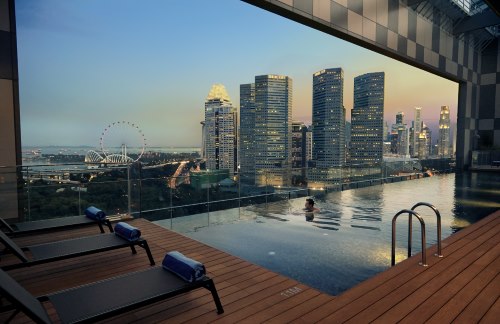
View from the infinity pool of Pan Pacific Serviced Suites Beach Road, Singapore
Pan Pacific Connections
Launched in May, Pan Pacific Connections is a by-invitation only bookers’ programme to recognise, retain and reward loyal corporates bookers for booking rooms, meetings and events at all properties under the Group. Membership is open to both corporate accounts and individual booker accounts, where members earn points for every eligible stay and meeting.
Delivered through a seamless digital platform, members will be able to log-in to their account round-the-clock and book negotiated corporate rates or special corporate rates directly through the website, www.panpacificconnections.com. Members are able to enjoy instant reward points for their bookings, which can be used to redeem a rich selection of rewards from hotel stays, dining, wellness, lifestyle and shopping products.
Ms Cinn Tan, Chief Sales & Marketing Officer, said: “The brand refresh arose from our desire to engage our customers more actively and to meet their needs, which are constantly evolving. Aligned with our aspirations of sincerity in service, we developed these loyalty programmes from inside out by first looking at the rewards and benefits which are most meaningful to our customers – both B2B and B2C. We hope to generate more brand love and loyalty to our hotels through these efforts, and will keep innovating and improving to always stay top-of-mind as our partners’ preferred hotel brand in the region.”
Whether you’re planning your own vacation or making a booking on someone’s behalf, Pan Pacific Hotels Group’s loyalty programmes open up a world of exclusive benefits across 40 hotels, resorts and serviced suites located in Asia, Europe, Oceania and North America. Click here to find out more: Panpacific.com/discovery and www.panpacificconnections.com
As an international corporation, Avis is committed to both corporate and employee involvement in civic as well as charitable activities. Our corporate responsibility extends beyond philanthropy and volunteerism to include consistent adherence to business practices that are friendly to customers, employees, and or course, the environment.
Avis in Europe, the Middle East and Africa, has introduced numerous measures to ensure a greener fleet is available to our customers. Globally, we have introduced a rigorous check between rentals to ensure vehicles run at peak efficiency. To ensure fuel efficiency, the fleet is rapidly replaced which ensures the use of the newest and most fuel-efficient engines.
Our fleet includes hundreds of new, environmentally-friendly cars that run on fuels other than petrol or diesel. We continue to work with car manufacturers so that our customers can choose the cleanest vehicles around, including the Mercedes-Benz Blue EFFICIENCY vehicles across Europe and more than 400 Flexifuel/BioPower vehicles in Scandinavia.
We are happy to share energy-efficient and eco-driving tips with you and your customers to ensure that we all play a part to protect our Planet Earth. In addition, how we drive not only helps us get the best out of the existing car but it is also good for our back pockets too!
1. Avoid Quick Acceleration and Aggressive Driving
When we step on the accelerator, our car is expending energy as heat and noise. It produces high pollution rates and wastes fuel. According to the American Council for an Energy-Efficient Economy, one second of high-powered driving can produce nearly the same volume of carbon monoxide emissions as a half hour of normal driving.
2. Stick to the Speed Limit
Drive within the speed limit. Higher speed means more energy spent on overcoming friction and maintaining the momentum. Instead of driving at 120 km/h (75 mph), if we drive at 105 km/h (65 mph), our fuel economy will improve by about 10% and tailpipe pollution will decrease. Cruise control will help maintain a steady, constant speed, which will reduce the need for acceleration and braking.
3. Avoid Rush Hour
The stop-and-go driving of rush hour burns fuel and increases emissions of smog-forming pollutants – not to mention the effects of road rage on our health. It would be worthwhile to plan our schedule to avoid driving during peak traffic times or use a GPS to find a less busy route.
4. Avoid Hard Braking
Anticipate rather than breaking hard! This will prevent increased pollution, wasted gas and wear on the breaks. This is especially true for congested, high traffic areas.
5. Do Not idle for more than a minute
The philosophy of managing the engine extends to idle time too. An idle but turned-on engine generates more pollution than driving, and it wastes fuel too.
6. Use an Electronic Toll Collection System, where available Avise-TollTM avoids cash payment lines at toll booths in the USA and Canada. Studies have found that paying tolls electronically reduces hydrocarbons and carbon monoxide emissions by 40%-63% and reduces emissions by 16%.
7. Benefit from a GPS Navigation System
The GPS navigation from Avis, provides real-time traffic alerts to help avoid traffic jams and road construction. It also guides drivers to their destination without getting lost, eliminating the extra driving that could result when they do get lost. Besides saving on fuel, money and driving time, anxiety and stress levels are reduced too!
So, be a Green Driver and make the most of the mileage for the money spent, save on fuel and reduce the overall environmental impact!
Extracted from avis.com Photo Sources: Avis, Getty Images, Pixabay
About Avis Avis Car Rental and its subsidiaries operate one of the world’s best-known car rental brands with approximately 5,500 locations in more than 170 countries. Avis has a long history of innovation in the car rental industry and is one of the world’s top brands for customer loyalty.
Travellers today are more connected, informed and tech savvy than ever before. This has opened a multitude of new ways for hotels to gather data and use it to enhance the guest experience. However, there are challenges when it comes to gaining a 360-degree view of that data. Hotels need technology solutions that can integrate together to help build a more detailed view of the guest and use it to deliver more personalized services and marketing.
Today, a hotel may use a dozen or more applications, from revenue management systems to guest survey solutions to marketing automation software. “Guests leave a tremendous amount of data in their wake at the various touchpoints during their stay—website, call center, PMS, mobile app, POS, activities, survey, loyalty program, just to name a few,” said Tim Sullivan, Chief Revenue Office at Cendyn. “The challenge is that each of these systems captures a sliver
of information about the guest, and it’s housed in disparate data silos.”
When you consider the entire lifecycle of a guest, which may encompass multiple stays at properties and brands within a hotel group, the amount of data increases exponentially. The challenges arise out of the evolution of technology in hotels. New tools have been developed piecemeal over the years, some as standalone applications, others as add-ons. Because many of the systems do not communicate with one another, a hotel company may have multiple profiles of the same guest scattered across its properties and databases.
In today’s competitive marketplace, hotels need to know their guests and earn their loyalty. Customer relationship management (CRM) utilizes a combination of technology and human hospitality to create rich profiles of guests and cater to their individual needs and preferences.
By mining these profiles, staff can make informed decisions about the services, amenities and marketing campaigns they need to gain an edge over competitors. And with a single view of the customer, hotel staff can ensure that engagement is meaningful and relevant at every touchpoint during the guest journey. For example, a single profile within a CRM can include the guest’s photo, stay history, total spend, interests, preferred room types, links to social profiles, loyalty program status, and feedback from previous stays.
In addition to the single, consolidated view of every guest, hotels are also well positioned using CRM, to be transparent and upfront about how they use and store guests’ data. By centralizing their data, hotels know exactly where the data is stored, who has access to it, and who controls it.
Some hoteliers have misconceptions of CRM, that it provides an email marketing platform and not much else. CRM has capabilities far outreaching that of email marketing, by providing a consolidated view of every guest, it allows hoteliers to act on their data through segmentation, personalization and accurate, real-time reporting.
A great example of this is how a central profile within a CRM can play a pivotal role in improving the guest experience across the whole travel journey. Hoteliers can automate, segment and tailor how they communicate based on data points such as:
• Spend per stay
• Frequency of visits
• Preferred locations and booking patterns
• Interests
• Behavior
• Satisfaction
• Reasons for travel
This wealth of data and activity means they are now communicating via the right channel, at the right time, with the right message. Here are a few examples of how using segmentation and personalization can improve every day activities at a hotel:
• Tailor transactional/confirmation emails based on reservation and preference data
• Up-sell room upgrades, and amenities based on reservation type, room type and preferences
• Provide a tailored check-in experience based on arrival times
• Display and provide personalized welcome gifts in the room for arrival
• Send reminder emails to guests to book again based on stay dates and preferences
To find out more about the CRM data warehouse and how it can improve engagement and operations at your hotel, download this guide.
Lack of clarity around a key term for calculating the goods & services tax (GST) rates for hotels is spelling trouble for consumers booking hotels in the peak tourist season.
India’s Goods & Service Tax (GST) Council has decided to levy tax on transaction value of hotel rooms instead of published rates, bringing some relief to hoteliers who had been protesting the confounding taxation since its implementation.
Earlier, the tax council had pegged different slabs of GST rates on hotel room tariff – 18 per cent for tariff of Rs2,500 (US$36.40) to Rs7,500, and 28 per cent for tariffs of above Rs7,500.
Calculating GST rates for hotels in India is easier now, but hoteliers remain unhappy about the high taxation
“This is a very welcome change. GST being charged on published tariff was a let-down when the new tax structure came into effect. We have since then been lobbying against this anomaly. Even prior to the GST regime, tax was being levied based on the invoice value,” said Garish Oberoi, president, Federation of Hotel & Restaurant Associations of India (FHRAI), the apex body of hoteliers in the country.
Likewise, Vibhas Prasad, director of Leisure Hotels Group, said the change has come as a “big relief” to the hotel industry, as well as to the customers.
A section of hoteliers told TTG Asia the new notification of the GST Council will also help to reduce confusion among consumers who perceive that they were being charged a higher tax slab even when the invoice value is less.
Rajat Singhal, director, Leisure World Tours, added: “The hotel room tariffs vary as per seasonality or special rates for groups. But as GST was being charged on declared rates and not on the transaction value, it was making tour packages expensive even in low season or when we were getting special rates from hotel.
The revision brings greater tax clarity and transparency between hoteliers and travel agents, a win-win situation for all including customers, he remarked.
However, some hoteliers are disappointed as the high taxation of 28 per cent on room rates of above Rs7,500 is still not addressed by the GST Council.
“FHRAI have been asking the government to bring the entire hospitality industry under one tax bracket of 12 per cent. Nowhere in the world do we see this high rate of taxation. We are still pursuing with the government to do away with the 28 per cent taxation completely,” added Oberoi.
Gili Islands fast boat service point. Pantai Padang Bai - Bali - Indenosia ,
Access by fast boat between Bali and Lombok, as well as between Lombok and the three Gilis, has been suspended as the sea around the islands have been considered unsafe due to high and heavy waves.
In a statement from news website Viva.co.id, Dwikorita Karnawati, head of the Indonesian Meteorological, Climatological, and Geophysical Agency (BMKG), said that the high waves were a likely cause of the long lunar eclipse. BMKG has further cautioned that the peak of the high wave will occur on July 27.
Gili Islands fast boat service point at Pantai Padang Bai on Bali Island
As such, Padangbay Bali Port Authority has closed the pier until July 29. Similarly, the Port Authority of Bangsal and Lembar in Lombok have also ceased port activities as of two days ago.
Andi Ananto, general manager of Mola Mola Resort Gili Air Lombok, said the suspension of fast boats from Bali to the Gilis has resulted in an occupancy drop of 40 per cent.
“This is not just happening in our hotel. Cancellations are also happening at all hotels in Gili Air. The situation in Gili Trawangan is probably worse because there is greater impact of the wave there,” he said.
According to Andi, every July or August, the waves are usually large and high, but they have never lasted this long until the harbour has to close, which in turn has led to a drop in the number of visitors to Gili Air. Fast boat from Bali to Gili is one of the most popular means of transport, apart from air.
To reduce the impact of high waves, Awan Aswinabawa, managing director of A&T Holidays, has diverted his clients elsewhere.
Awan said: “We advise clients, especially for those who have arrived in Lombok, not to visit Gili Trawangan, Gili Air and Gili Meno. Instead, we give them alternative package tours in the city of Mataram and other beaches in Lombok.”
Even though Awan said he did not receive many cancellations, he admitted it was quite challenging to organise transport for his clients, especially those who have been stranded in the three Gilis, and those who must leave Lombok soon.
He explained: “In the absence of sea access, air transportation becomes the main choice. But because it is high season and the number of flights are very limited, many guests have trouble getting tickets home. Plus, the price of air tickets continue to climb.”
For such travellers, Awan had arranged for them take a flight to Surabaya and connect to Jakarta or Bali, in order to catch their flight to their home countries. This route also applies to guests going to Lombok.
“For the stranded guests in the Gilis, I arrange for them to board a ferry (to Bali), or large boats run by fishermen’s cooperatives (to Lombok),” Awan added.
Meanwhile, Mola Mola Resort Gili Air Lombok, in partnership with other hotels in the Gili Air area, are providing large fishing vessel charters to transport guests to and from Gili Air. According to Andi, the shipping activity can only be done after permission is obtained from the harbourmaster.
Andi shared: “Usually, they allow large ships to sail in the morning, when the waves are not too big. But for July 27 and 28, we encourage guests to stay in the hotels.”
For guests who are forced to extend their trip due to weather and high waves, Mola Mola Resorts Gili Air Lombok will be providing discounts of up to 50 per cent. They have also added a complimentary shuttle facility from the airport to the port.
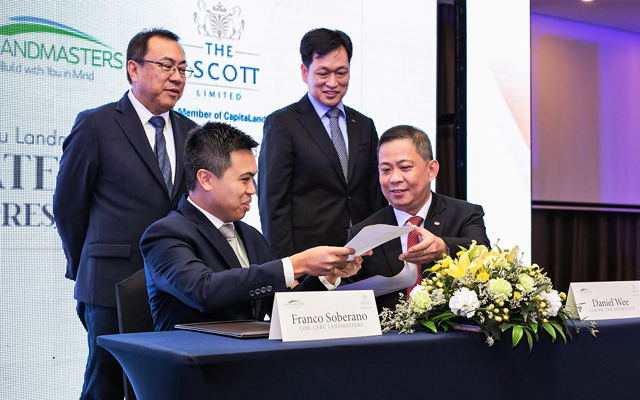
At the signing ceremony (from left): CLI's Jose Franco B. Soberano and Jose Soberano III; Ascott's Kevin Goh and Daniel Wee
Ascott has entered into an alliance with Philippines’ Cebu Landmasters (CLI) to manage 1,600 units in the country by 2022.
The two parties have already signed management contracts for their first four properties offering over 800 units.
At the signing ceremony (from left): CLI’s Jose Franco B. Soberano and Jose Soberano III; Ascott’s Kevin Goh and Daniel Wee
Slated to open from 2019 to 2021 are Citadines Bacolod City – which will mark the CapitaLand subsidiary’s debut in the city – Citadines Cebu City, Citadines Paragon Davao and lyf Cebu City.
Separately, Ascott also made its foray into Quezon City, Metro Manila’s largest city, by scoring a management contract with another property owner for Citadines Roces Quezon City, which will open in 2023.
The two new contracts in Bacolod and Quezon City will increase Ascott’s portfolio in the Philippines by 27 per cent year-on-year to over 4,300 units.
In the Philippines, Ascott has 20 properties either operating or in the development pipeline, offering over 4,300 units. Of these, 13 are slated to open from 2018 to 2023.
Daniel Wee, Ascott’s country general manager for the Philippines, said: “Ascott has been in the Philippines for 18 years with strong performing properties that enjoy an average occupancy rate of about 80 per cent under our brands Ascott, Citadines and Somerset. We are on track to achieve Ascott’s target of 6,000 units in the Philippines by 2020.”
Meanwhile, the International Finance Corporation, a member of the World Bank Group, has signed an MoU with Ascott to pioneer a green building certification for serviced residences. Ascott Makati is set to be the first serviced residence to receive this certification.
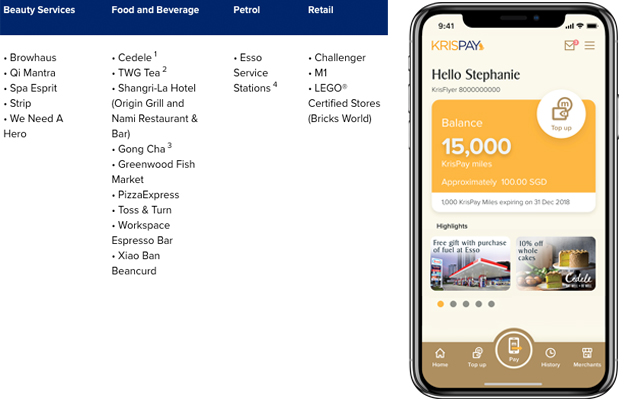
Members can use a minimum of 15 KrisPay miles (equivalent to about S$0.10) to pay for their purchases at partner merchants
The Singapore Airlines (SIA) Group’s has launched KrisPay, a blockchain-based digital wallet which enables its KrisFlyer frequent flyer programme members to convert air miles into digital currency.
Currently, KrisPay miles are accepted at 18 merchants across the F&B, petrol and retail categories in Singapore. Selected partners will also offer discounts during the launch period.
Members can use a minimum of 15 KrisPay miles (equivalent to about S$0.10) to pay for purchases at partner merchants
More merchants will be progressively added to the platform, and members can expect frequent in-app promotions and more app features to be delivered in the coming months.
The app, available for download, will allow members to choose from using as little as 15 KrisPay miles (equivalent to about S$0.10) to pay for their purchases at partner merchants, either partially or in full.
Once it has been downloaded, members can turn their KrisFlyer miles into KrisPay miles using the app’s instant top-up function. Once transferred, KrisPay miles have a validity of six months.
To pay for purchases, members simply need to scan the KrisPay QR code at the merchant, and key in the amount they wish to pay with their KrisPay miles.
KrisPay is the world’s first blockchain-based airline loyalty digital wallet. The technology was developed in collaboration with KPMG Digital Village and Microsoft.
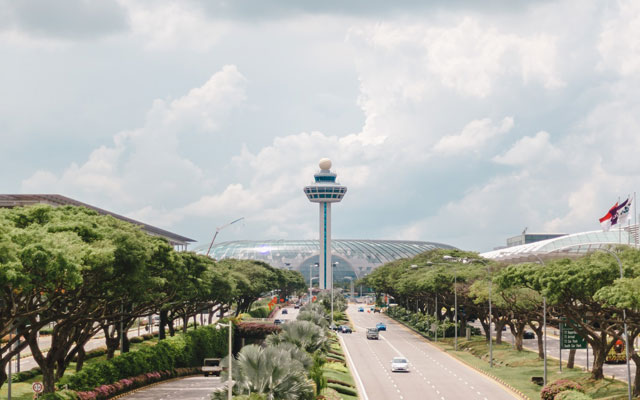
Changi Airport Group (CAG) has launched the Changi Stopovers’ programme, aimed at enticing passengers to stop over in Singapore and explore the Lion City.
The programme will be promoted jointly by CAG and the Singapore Tourism Board (STB) to overseas travellers in a S$3.2 million (US$2.4 million) marketing partnership spanning two years.
Changi Airport
Passengers who book a stopover package on the Changi Stopovers website will enjoy complimentary one-way airport-hotel transfer (by coach) and a mobile SIM card worth S$10. Packages are available from S$63 per person.
CAG’s vice president for passenger development, Peh Ke-Wei, said: “We are also working with our airline and travel trade partners to offer this stopover programme via their sales channels in the coming months.”
Jacqueline Ng, director of marketing partnerships and planning at STB, added that the programme could help the NTO reach out to a largely untapped audience.
Transfer passengers make up about 30 per cent of Changi Airport’s total traffic, with passenger movements from Australia and India registering as top contributors to transfer traffic at Changi. Last year, more than 1.1 million passenger movements were registered on Changi’s top transfer route between Australia and India.






 We are happy to share
 3. Avoid Rush Hour
 7. Benefit from a GPS Navigation System