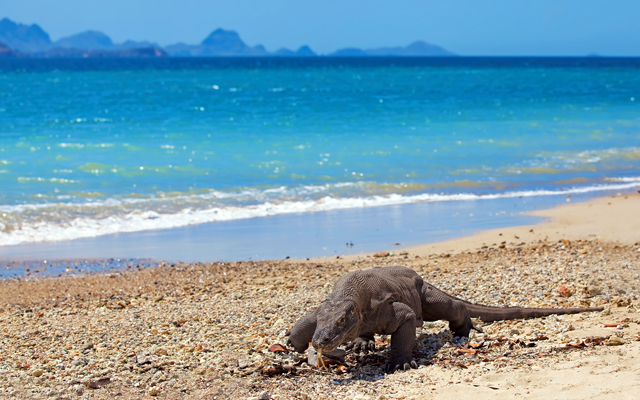
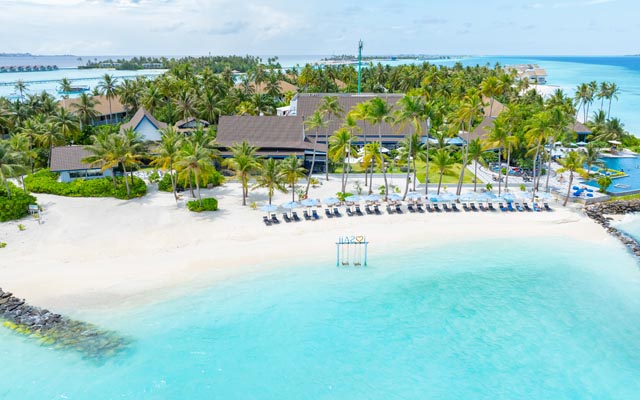
The resort will be located an hour away from UNESCO World Heritage Site, Komodo National Park, home to the Komodo dragons
A Courtyard by Marriott will open in Labuan Bajo, gateway to Komodo National Park which is home to the Komodo dragons, come 2021.
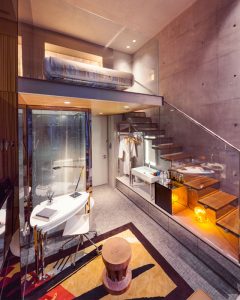
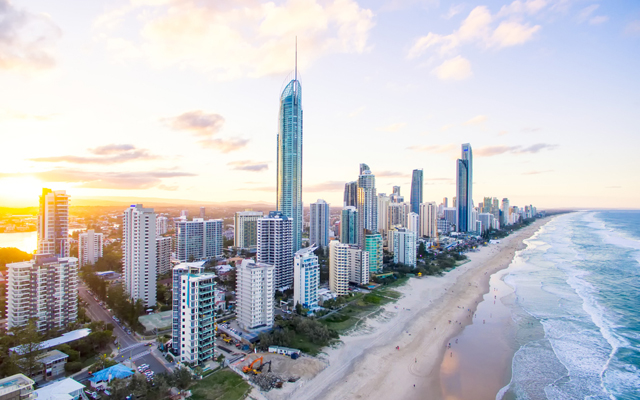
With a hilltop location on the western tip of Flores Island, the Courtyard by Marriott Labuan Bajo Komodo Resort will offer 158 rooms and suites.
The resort will be located an hour away from UNESCO World Heritage Site, Komodo National Park, home to the Komodo dragons
The property is located less than 10 minutes away from Komodo Airport and the Kantor UPP Kelas III Labuan Bajo Port. The Komodo National Park and Manta Point are both within an hour away by speedboat, said the chain.
Additionally, it said the construction of a new marina port, set to be the main arrival and docking spot for yachts and traditional Indonesian phinisi sailboats, is underway and the resort will become an integral part of this new development.
Lana Jong, chairwoman of Terra Komodo Bakti, said: “Labuan Bajo is home to diverse marine life and is listed as one of the 10 destinations in the Indonesian government’s tourism development plan. This is a very opportune time to team up with Marriott International in opening the Courtyard by Marriott Labuan Bajo Komodo Resort.”
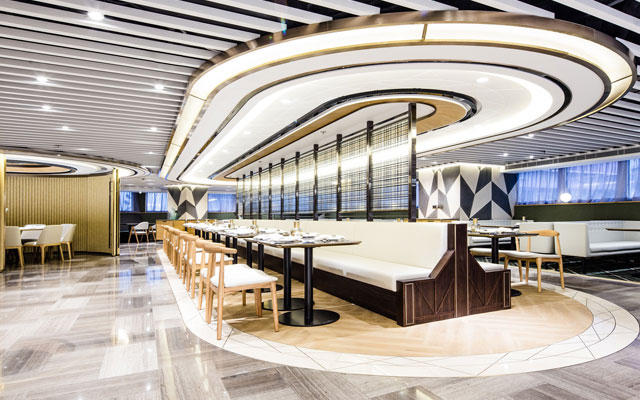
The resort will feature two swimming pools. Other facilities include a kids’ club, fitness centre and meeting spaces. F&B concepts will include the all-day dining restaurant, Momo Café, the poolside The Courtyard Lounge and Fish Bar, and The Market for light bites to-go.
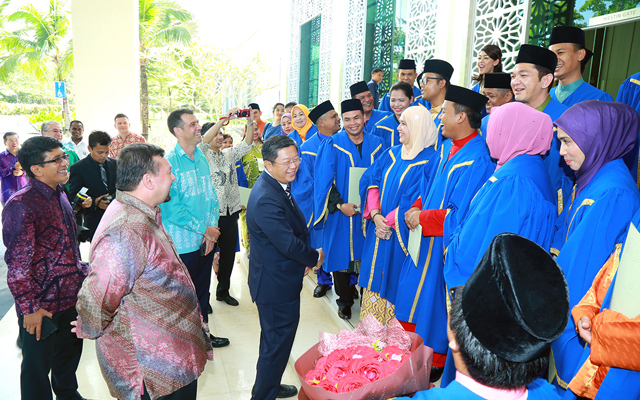
Kedah state tourism exco Tan Kok Yew with first batch of graduating students
The pioneering class of Datai Investing in People (DIP) hospitality training programme graduated earlier this month.
An initiative launched by The Datai Langkawi in October 2017, the DIP certification programme is designed to groom resort staff to deliver better service as well as provide them with opportunities for growth.
Kedah state tourism exco Tan Kok Yew with first batch of graduating students
The middle Management and supervisors track earns participants the Advance Certificate of Excellence For Executives in Hospitality Management from Universiti Utara Malaysia in partnership with Overview, while the rank and file track confers the Certificate of Achievement from Taylor’s University in partnership with Langkawi Tourism Academy.
While the initiative was launched during the resort’s closure for renovation, the resort said DIP would be an ongoing programme for employees.
Upcoming family entertainment complex Blue Tree Phuket in Thailand has appointed Michael Ayling as general manager.
Ayling has been working in a consulting capacity on the project for the past 24 months, but has now taken the reins to lead the development as it prepares for its public opening early next year.
The UK-born industry professional brings a wealth of experience to the role, including 12 years at Laguna Resorts & Hotels.
While working for Laguna Resorts & Hotels, Ayling oversaw the operations of eight different hotels and a golf course, in addition to property development, construction, marketing and sales operations for over 400 residences.
Prior to joining Laguna in 2000, he spent more than a decade working in the professional service industry for KPMG, initially at its Oxford, England office before relocating with the firm to Papua New Guinea.
Donna Kessler, managing director, Tourism Portfolio, Australia How do you select affordable hotels?
I select affordable hotels based on positive past experiences, market reputation, location, facilities and most importantly, my clients’ specific needs. Some prefer big chains like Marriott, Hilton or Accor which are increasingly diversifying into mid- and lower-range offerings while others are inclined to independent hotels.
The Living Room
Customers now seek quality and value for money, not luxury, moving away from the large impersonal rooms of the traditional luxury properties, and towards trendy and technology-friendly hotels regardless of their star category rating.
Issues in affordable hotels segment
Mid-market hotels need to emerge as trendy, designer properties focused on providing facilities such as clean rooms, great and free Wi-Fi, and accessibility via various technology platforms, but often hotel owners do not invest in these requirements.
Are there enough affordable hotel brands in Australia?
There are plenty of new two- to four-star brands by the big chains, e.g. Aloft, Doubletree, Tru and ibis. Chains like Best Western and Choice Hotels have combined over 350 properties, and there are multiple Australian hotel brands including Quest, Rydges, Clarion, Breakfree and Medina. Hotel groups such as TFE are using Airbnb as a an alternative distribution channel with 141,000 listings in Australia.
Tina Tabram, accommodation manager, Arinex, Australia How do you select affordable hotels?
As clients become savvier, wherever possible we will offer two tiers of affordable hotels. One tier sits at around 3.5 stars and has the modern comforts expected of a hotel these days, while the second option sits at around the three-star mark for guests who care less about aesthetics and just want a private space with a bed.
Issues in affordable hotels segment
There aren’t enough modern, affordable hotels in the CBD locations. Generally they tend to be a little older, and sometimes they sacrifice regular upgrades to keep costs down. In Sydney where there is a shortage of rooms, even the affordable hotels are often priced at five-star levels, which can make it hard to attract international visitors due to the cost of travel.
Are there solid affordable hotel brands in Australia?
Overall, no. Some brands are emerging brands to combat the affordability issue in the CBD areas with innovative product and service offerings, such as Holiday Inn Express, ibis Styles and smaller brands like Metro Hotels and Pensione hotels. Regionally, there are a lot more affordable options available, generally in motel-style properties. Choice Hotels and Best Western have a good selection of properties across regional locations.
Miles Garrett, general manager, Khiri Travel Cambodia How do you select affordable hotels?
We select hotels that have a good mix of pleasant environment, sustainability practices, location and price. We are very lucky in Cambodia with so many beautiful and affordable locally-owned boutique hotel options and rarely, if ever, need to work with international brands.
Issues in affordable hotels segment
Sometimes it is a race to the bottom and the affordable hotel market segment forgets that price is not the only factor, particularly in regard to taking green initiatives, food quality and service.
Are there enough affordable hotel brands in Cambodia?
Yes, more than enough.
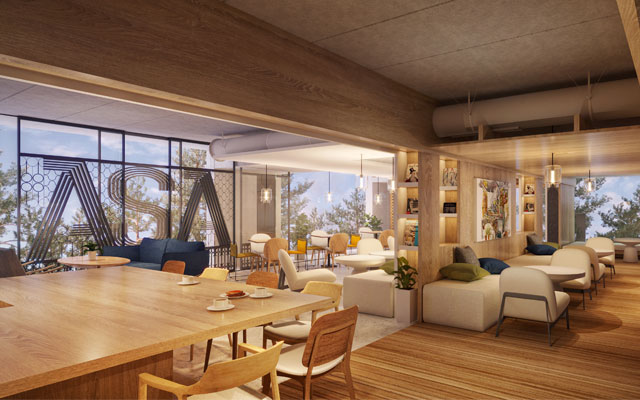
A rendering of an Asai property, which mixes work and play in common areas
Savath Mao, general manager, Peak DMC, Cambodia How do you select affordable hotels?
We try to find small, boutique, family-style hotels that offer between 50 and 100 rooms. They are usually not established worldwide brands but are well-known in the country. Cambodia has a very good variety of three- to four-star hotels.
Are there enough affordable hotel brands in Cambodia?
A lot of affordable hotels have grown in Siem Reap and Phnom Penh in the last few years. More remote areas like Mondulkiri, Ratanakiri and Koh Kong have limited options, but it will take time to grow.
Gunther Homerlein, general manager, Destination China, Hong Kong How do you select affordable hotels?
We select affordable hotels when clients’ budgets preclude them from five-star hotels or above. If their budget is all used up on hotels in an expensive destination like Hong Kong, it prevents us from being able to offer good programmes and restaurants. Eaton Smart, Jen Hotel, Holiday Inn Express and the Island Pacific Hotel come to mind as good options.
Issues in affordable hotels segment
A paucity of affordable hotel brands in central locations. If clients want an affordable hotel near the city centre, the rooms are tiny. In Hong Kong, the star category of hotels doesn’t matter, the size does – that 200ft2 is HK$2,000, 300ft2 is HK$3,000 and 400ft2 is HK$4,000. This makes it very challenging to accommodate twin-sharing requests from the Western markets.
Are there enough affordable hotel brands in Hong Kong?
Definitely not, but neither is there the space to add. Hong Kong’s energy is a draw for visitors, but it is also crowded and expensive as space is a premium. These elements clash quite a bit in the affordable hotels marketplace.
Monas Tjahjono, managing director, Monas Tours & Travel, Indonesia How do you select affordable hotels?
Tour operator partners look for affordable hotels with new or refreshed rooms. They do not like hotels with too many frills, as their clients just need a place to sleep and spend most of their time outside the hotel.
Issues in affordable hotels segment
Sometimes, even international brands are no guarantee of the service standards across different locations.
Are there enough affordable hotel brands in Indonesia?
Mid-scale hotels are aplenty, be it in primary or secondary cities. Both international and Indonesian homegrown brands have been opening in secondary cities, and many of them have four-star facilities at three-star pricing too. Some clients even think that three-star properties in Indonesia are good enough, so they can reduce room expenses and spend more on tours.
Adjie Wahjono, operations manager, Aneka Kartika Tours & Travel Services, Indonesia How do you select affordable hotels?
For our European clients, it really depends on location. When they do an overland trip in Java or Sulawesi, for example, they look for minimum comfort – clean and comfortable bedding, shower, TV set, air-conditioning and free Wi-Fi. In these areas, they usually spend most of their time travelling and need the hotel just to rest.
On the other hand, travellers do not mind paying more for midmarket hotels in a resort destination. As they want to relax in the hotel, facilities like restaurants, bars, pools and/or beach are required.
To some travellers, it is easier to relate to international brands like Ibis and Novotel. Having said that, many recognise established homegrown brands such as Santika and Aston.
Issues in affordable hotels segment
There are too many hotel brands in the market, both international and home-grown hotel chains. Introduction is sometimes needed for clients for the brands unfamiliar to them but which actually meet the criteria of their needs.
Philippe Wauquaire, sales coordinator, The J Team DMC, Japan How do you select affordable hotels?
We select hotels according to the client’s budget, requirements and facilities needed, and their preferred location. We use hotels such as MyStays, Hearton, Mitsui Garden, Monterey and Hankyu. Customers now expect more for less, and seem to be booking at shorter notice than a few years ago.
Issues in affordable hotels segment
Increased competition. Airbnb is certainly slowly changing the game, too. There are still not enough rooms for large groups at some properties and a lack of affordable hotels in some cities. Looking towards the Rugby World Cup 2019 and the Tokyo 2020 Olympic Games, we are experiencing larger price increases in the affordable hotels segment that are making the request for “affordable” somewhat of a challenge to deliver.
Are there enough affordable hotel brands in Japan?
Although the three-star market segment probably has the biggest supply, it is still difficult to book these hotels at certain times of the year, particularly in Kyoto.
Ally Bhoonee, executive director, World Avenues, Malaysia How do you select affordable hotels?
We determine what is affordable for our clients based on their budgets and purchasing power, then select hotels that offer good service and location within these parameters. We mostly use local independent hotels, such as Hotel Sentral Pudu, Flamingo Hotel By The Beach, Penang and Fave Hotel Penang.
Travellers from the Middle East, our main inbound market, are now more cost-conscious. Most will choose four-star hotels. They also do their research online and tell us exactly which hotel they wish to stay in.
Issues in affordable hotels segment
Some local properties, especially in the three-star category, are not well structured. They do not have dedicated personnel to handle specific departments. It can be frustrating when you are seeking answers on the phone and get pushed around.
Are there enough affordable hotel brands in Malaysia?
There are enough four-star brands in key touristy destinations such as Kuala Lumpur, Penang and Langkawi but not enough quality three-star hotels providing good service in these destinations.
Manfred Kurz, managing director, Diethelm Travel Malaysia How do you select affordable hotels?
We look for hotels that provide very good service at reasonable rates, based on our site inspections and from online guest reviews. We use both independent and chain hotels such as ibis and Swiss-Inn.
A trend among European customers is the growing appeal of small hotels with personalised service. They like boutique hotels with 20-30 rooms as opposed to large properties with a few hundred rooms.
Issues in affordable hotels segment
The upkeep of the hotel. Owners don’t place much importance on renovations and refurbishments, and as a result the establishments often look rundown.
Are there enough affordable hotel brands in Malaysia?
There is not enough affordable hotels outside of Kuala Lumpur. Destinations such as Sabah, Sarawak, Langkawi and Penang need more affordable hotels.
JP Cabalza, inbound manager, Corporate International Travel and Tours, Philippines How do you select affordable hotels?
If clients ask for prices, we give a combination of boutique and high-end properties. Customers have an overview of the hotels from online reviews, and they visit hotel websites and OTA reviews.
In El Nido, Palawan, within the LIO Estate are new properties that are great in design and location: Hotel Covo Hotel, Casa Kalaw and Balai Adlao. Artstream Hospitality Management’s boutique hotels Hotel Luna is a good one in Vigan. In Makati, boutique Hotel Celeste has individually designed rooms in specific European style. The Henry in Cebu and Pasay in Metro Manila appeal with their rustic setting and individually-decorated rooms.
Issues in affordable hotels segment
The limited facilities like lifts available on-site, and thin walls that cannot block outside noise from the rooms.
Irene Maliwanag, general manager, Boris Travel, Philippines How do you select affordable hotels?
We take note of what our travellers want – cleanliness, Wi-Fi availability, full-board meals and airport transfers, etc. They know what they want and have knowledge of the hotels from the Internet. In Palawan, Hotel Covo in El Nido and One Manalo Place in Puerto Princesa are good options as clients are satisfied with them. Also, Hennan Hotel in Bohol and Boracay.
Issues in affordable hotels segment
Steep price fluctuation but there are resorts like Hennan, for instance, which rarely increase the rates for the whole year and gives almost the same price for next year.
Are there enough affordable hotel brands in the Philippines?
Yes, there’s a growing number of affordable hotels to meet the growing demand.
Maureen Goh, manager, Asian Compass Travel, Singapore How do you select affordable hotels?
We choose hotels based on the customers’ budgets. Some don’t mind three-star hotels as long as the rooms are clean and near what they come for. For instance, Eastern European groups like to stay in the Clarke Quay area for its nightlife offerings, so we work with hotels like Grand Park City Hall and Park Regis.
Issues in affordable hotels segment
Hotels are not that affordable during peak periods, especially during the Golden Week. Some hotels have small room sizes, so we make sure to tell our guest the room sizes in advance to avoid disappointment.
Are there enough affordable hotel brands in Singapore?
Yes, definitely enough. Many new names have opened and there are more hotels now than ever before. Because of greater competition, hotels are also now more flexible with their timing and budget. They listen to our clients’ budgets and try to meet them if they can.
M Social Singapore’s Loft Premier room
Judy Lum, general manager, Diethelm Travel (Singapore) How do you select affordable hotels?
Defining the customer’s demographic is important to ensure the right match. As agents, we take a proactive approach to find out about the hotel and what the social network platforms are saying about it. Customers look for more than just price but also ratings and comments on social media platforms on the property to help them make an informed decision.
Issues in affordable hotels segment
International chains practically blindside local DMCs by forging direct deals with overseas tour operators. If that doesn’t hurt enough, they offer a rate parity. The local independent brands and hotel groups tend to support the DMCs better, at least for now. I see many smaller, independently owned and boutique hotels over-extend themselves to OTAs and have to pay high commissions begrudgingly as they become dependent on them.
Are there enough affordable hotel brands in Singapore?
(There are) more than enough, but these hotels price themselves higher than affordable. I suppose it is a demand and supply situation but they should ensure consistency so that the DMCs can support them better.
Reporting by S Puvaneswary, Pamela Chow, Marissa Carruthers, Adelaine Ng, Mimi Hudoyo, Rosa Ocampo and Julian Ryall
New affordable kids on the block
Ansa Hotels & Resorts, Malaysia
Ansa Hotels & Resorts will roll out thelivingroom Hotel, a three-star, limited-service hospitality concept, by end 2019 with the first property in Kuala Lumpur.
Optimising efficiency of space and resources will be a key theme at thelivingroom hotels, with services such as flexible check-in service and a 24-hour breakfast.
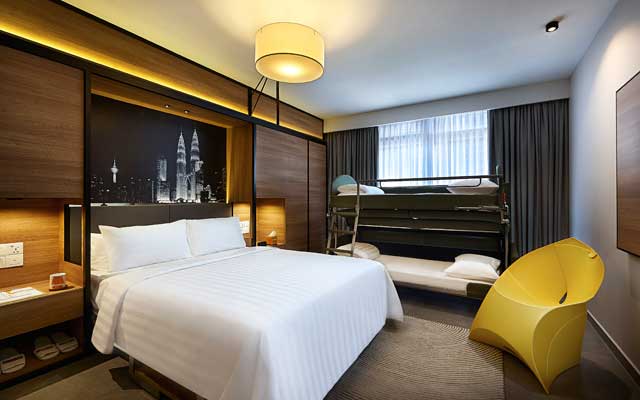
Rooms come in one configuration only at a standard 25m2 size, and in-room space is innovatively used – a full-sized queen bed, which, when not in use, can be reclined back to the wall to transform into a study desk, and a three-seater sofa that opens up into a double bed.
Asai Hotels, Thailand
Dusit International has unveiled Asai Hotels, a new affordable lifestyle brand targeted at the millennial-minded.
Asai properties will feature compact rooms of about 15m2 each, a mixed-use space offering work and leisure areas, and a restaurant. Each Asai hotel will also leverage technology, availing self check-in kiosks and online guides to local attractions.
The debuting property, Asai Chatuchak, will open in Bangkok’s Chatuchak weekend market in 1Q2019. Five more Asai hotels are expected to launch in 2019 – three in Cebu (in Lapu-Lapu, Oslob and the city centre); one in Yangon; and a second hotel in Bangkok in the Sathorn district.
Veriu Hotels, Australia
A “bespoke collection of neighbourhood hotels” is how Veriu describes itself in Australia’s hotel scene. Locally owned and launched in 2016, four Veriu hotels and a fifth unbranded accommodation currently dot the Sydney landscape, with three more to launch next year.
Veriu says its four-star brand attracts guests thanks to its quirkiness, locations and unique inclusions like free Netflix, barista coffee and pastry, speedy Internet, complimentary sparkling and filtered water, and free Veriu bikes plus access to other Veriu hotels for co-working purposes.
M Social, Singapore
Seated in Robertson Quay along the Singapore River, M Social Singapore is Millennium Hotels and Resorts’ answer to the millennial traveller segment, with its youthful and tech-savvy identity underlined with a contemporary design by Philippe Starck.
The hotel employs Aura, an autonomous service delivery robot that delivers amenities to the guestrooms. In-house restaurant Beast & Butterflies features Ausca, an autonomous service chef robot that prepares eggs for guests.
M Social Singapore is the first M Social property, and New Zealand is now home to M Social Auckland. M Social Suzhou is planned for a 2019 opening.
Hotel Cozi Oasis (opening 3Q2018)
Cozi Hotel, Hong Kong
Launched in 2017 by Tangs Living Group, Hotel Cozi features an eclectic collection of midscale hotels designed in contemporary styles and homey atmosphere.
Each Cozi property has its own personality and unique features create with guests’ comfort in mind. Hotel Cozi Wetland (debuted in September 2017) in Tin Shui Wai is a blend of nature and city, while Hotel Cozi Harbour View overlooks the Victoria Harbour.
Hotel Cozi Oasis (opening 3Q2018) will boast facilities such as restaurant and bar, gym, spa, meeting and conference space, and Hotel Cozi Resort (opening 4Q2018) will be suited for staycations with kids’ facilities and themed rooms.
MAADS, Cambodia
Design lies at the heart of MAADS hotels. Sitting at the top-end of its portfolio is Templation, offering an affordable slice of eco-luxury on the doorstep of Angkor. In Phnom Penh, The Pavilion is a collection of four period buildings; Kabiki is a boutique family-friendly garden resort; Blue Lime is a stylish 23-room urban hotel; while Tea House combines classic Chinese designs with modern urban style.
MAADS’ offerings also span hidden locations, with Kirirom Hill Station, two mountain chalets with six rooms and suites in a pine forest. The Floating Suite offers a boutique experience in a detached bungalow on the Mekong River, opposite the Royal Palace in Phnom Penh.
Hundreds of climbers remain trapped at Mount Rinjani
At least 14 people were killed and more than 160 missing when a powerful 6.4 magnitude earthquake yesterday struck Lombok, with a three-day state of emergency declared for the popular tourist island next to Bali.
The quake was followed by 124 aftershocks in the same area, with the epicentre 50 kilometres north-east of the city of Mataram.
Hundreds of climbers remain trapped at Mount Rinjani
Other areas including popular tourist area of Senggigi reported strong shocks. The earthquake was also felt in neighbouring Bali.
“We estimate the number can still go up because we are not done collecting data,” said Sutopo Purwo Nugroho, a spokesman for the Disaster Mitigation Agency.
Mount Rinjani, a popular trekking destination, has been closed due to landslides. A 30-year-old Malaysian woman, who was with 17 other Malaysians on a mission to scale the mountain, was among those killed.
About 300 climbers are still trapped by the earthquake, according to Mount Rinjani National Park Office.
“The process of evacuation of climbers is still ongoing,” Sutopo said.
No damage was found at the Bali and Lombok airports, with both in operations as usual. The surrounding airports of Komodo Labuan Bajo, Waingapu and Tambolaka are not affected by the earthquake and continue to operate normally.
Indonesia’s Ministry of Tourism has activated the crisis management team to monitor the situation and coordinate with the local government and ground-handlers to ensure that all visitors impacted by the quake are well taken care of.
Guntur Sakti, director of public communication, Ministry of Tourism, said: “We encourage visitors to stay alert, follow government instruction and always update themselves with information only from official social media or website of the Indonesian government.”
Hyatt has indicated its interest to acquire the Spanish hotel operator ; NH Collection Madrid Gran Vía pictured
Hyatt has indicated its interest in acquiring NH Hotel Group, as the latter mulls an offer from Thailand’s Minor International, an existing shareholder, Bloomberg reports.
After increasing its shareholding in NH Hotel Group in June this year, Minor International has entered a Share Purchase Agreement for 22,496,064 additional shares, representing 5.7 per cent shareholding, subject to the approval of Minor’s shareholders at the EGM on August 9.
The Spanish hotel operator has a portfolio spanning Europe, the Americas and Africa; NH Collection Madrid Gran Vía pictured
If approved, the purchase would give Minor International control of 172,379,103 shares, amounting to 44 per cent shareholding.
Bloomberg reports that NH Hotel Group now has an additional option to Minor International, after Hyatt sent a letter of intent expressing its interest in acquiring the Spanish hotel operator.
In Ras al-Khaimah, the Jebel Jais mountain is home to the world’s longest zipline
Sharjah, Ras al-Khaimah and Fujairah are fast emerging as sought-after destinations on UAE’s tourism landscape, as visitors to the region look to explore beyond the established cities of Dubai and Abu Dhabi.
In Ras al-Khaimah, the Jebel Jais mountain is home to the world’s longest zipline
While the neighouring GCC countries are significant feeder markets for these northern emirates, emerging too are markets from farther afield like China and India.
“Tourists from both India and China are looking for experiential travel. They are drawn to our tradition and heritage,” Khalid Jasim Al Midfa, chairman of Sharjah Commerce and Tourism Development Authority (SCTDA), told TTG Asia on the sidelines of Arabian Travel Market (ATM) 2018. “We expect the numbers from both these markets will continue to grow strongly this year as well.”
Sharjah welcomed 138,000 hotel guests from India and 126,000 hotel guests from China in 2017, posting growth of 32 per cent and 45 per cent respectively over the previous year.
Feedback from the UAE tour operators attending ATM 2018 also spoke of an uptick in foreign arrivals to the nothern emirates.
The expanding tourism infrastructure has been a key driver of rising visitor interest, noted Jamal Abdulnazar, CEO of Cozmo Travel. “New luxury property openings and a host of new attractions have boosted international tourist arrivals to the northern emirates, (evident) from the strong double-digit growth in international tourist visitation to Sharjah,” he said.
“In winter, there is good MICE movement to Sharjah from India, and the government’s visa-free policy for China has helped to grow the Chinese market as well,” he added.
“Northern emirate destinations like Sharjah and Ras al-Khaimah are becoming more popular among Indian travellers. Sharjah attracts Indian tourists looking for cultural tours, while adventure tourism is picking up in Ras al-Khaimah,” said Kulwant Singh, CEO, Lama Tours.
The SCTDA, meanwhile, also has its sights set on expanding into new Asian markets like Malaysia and Indonesia as it aims to attract 10 million international tourists by 2021. The authority is currently developing market intelligence on these markets to back its promotion and marketing strategies while shortlisting key outbound travel agencies in Malaysia and Indonesia to partner with.
Khalid elaborated: “We are looking at ways to reach out to Malaysia and Indonesia where at present we’re attracting a small number of tourists. There is a lot of potential in these two markets, considering their sizeable Muslim populations. We will promote Sharjah by showcasing our rich Islamic culture.”
Naveen Saldanha, managing director, Royal Arabian, agreed: “There is a significant number of tourists from Asian markets like Indonesia who transit in the UAE when visiting Saudi Arabia for Islamic pilgrimages. If a segment of these transit travellers can be attracted to visit northern emirates, the tourist numbers will grow significantly.”
Lama Tours’ Kulwant added that he expects Sharjah will attract a “good number of Indonesian travellers” moving forward, attracted by Sharjah’s Islamic heritage.
Other northern emirates Fujairah and Ras al-Khaimah are clearly not resting on their laurels either.
Like Sharjah, India and China will be focus markets for the Fujairah Tourism and Antiquities Authority, according to coordinator, marketing and exhibitions Omar Bani Hamour.
“We will be opening our representation office in India and China within the next two years. We aim to increase international tourist arrivals to one million in the next four years,” he shared.
Last year, Fujairah recorded 700,000 international tourist arrivals, a growth of four per cent over the previous year, while Ras al-Khaimah achieved a 19 per cent growth in tourist arrivals.
With plans to welcome one million visitors this year, the destination is focusing on adventure tourism, following the opening of the world’s longest zipline on Jebel Jais, the UAE’s highest mountain. An observation deck with viewing spots and picnic areas is currently under development in the mountain.
RevPAR in Gold Coast, host of the XXI Commonwealth Games in April, was up 24.2%
Hotels in the Asia-Pacific region posted growth across the three key performance metrics during 2Q2018, according to data from STR, with notable peaks seen in Australia, Indonesia and Singapore.
The regional occupancy level was at 70.4%, up 1% from the previous quarter. Average daily rate (ADR) rose 3.1% to US$105, while revenue per available room (RevPAR) was up 4.1% to US$73.95.
RevPAR in Gold Coast, host of the XXI Commonwealth Games in April, was up 24.2%
In Australia, the 73.2% (+1.3%) absolute occupancy level was the highest for any 2Q on record in the country, STR reported. That came even with 2.1% more room nights available compared with 2Q2017. ADR was at A$178.60 (US$131.70) (+1.5%) and RevPAR A$130.71 (+2.8%).
Gold Coast, host of the XXI Commonwealth Games in April, was the standout Australian market with RevPAR up 24.2% to A$138.40 for the quarter.
STR further observes that performance growth was stronger outside of the capital markets as supply growth had a greater effect on RevPAR comparisons in Perth (-4.5% to A$113), Sydney (-2.1% to A$174.70) and Hobart (-0.7% at A$125.50). However, in absolute values, Sydney remained the top performer in the country.
Another market with notable performance is Indonesia, whose 60.6% (+2.5%) absolute occupancy level was the best the country has since for 2Q since 2014. ADR grew 3.5% to over one million rupiah (US$69.40), and RevPAR was up 6.1% to 629,693 rupiah.
STR analysts note that performance increases were seen in Bali (+9.1%), Jakarta (+4.1%), Surabaya (+7.4%) and Yogyakarta (+8.7%). In June specifically, Bali’s RevPAR grew 15.9% to over Rp1.2 million rupiah, with demand lifted by Eid al-Fitr and the school holiday.
Turning to Singapore, occupancy rose 2.9% to 81.3% – the highest for 2Q the city has seen since 2013 – even with significant supply growth (+4.5%). ADR was up 0.9% to S$263.60 (US$193.40), and RevPAR grew 3.8% to reach S$214.40.
June was the strongest month of the quarter with RevPAR up 6.9% to S$217. According to STR analysts, the country’s demand was boosted by the North Korea-US Summit on June 12. Hotels in the Orchard Area, specifically, reported high ADR premiums and three consecutive days with double-digit RevPAR growth from June 10 to 12.
Hotels that have signed up include Anantara, InterContinental Hotels Group, Hyatt and Marriott International
The Phuket Hotels Association will inaugurate a new annual forum to support the South-east Asian hospitality industry in its fight for a sustainable future.
Co-organised by C9 Hotelworks and Greenview, the first edition of the Phuket Hotels for Islands Sustaining Tourism (PHIST) forum will be held at JW Marriott Phuket Resort & Spa on September 24, 2018.
Hotels that have signed up for the inaugural forum include Anantara, InterContinental Hotels Group, Hyatt and Marriott International
The programme will feature a series of expert panels, themed talks, technical workshops and roundtable discussions covering topics such as sustainable operations, destination development, ocean health, corporate sustainability, community tourism and responses to overtourism. All the sessions will be free to attend.
The forum will also include a Green Suppliers’ Exhibition.
Phuket governor Norrapat Plodthong will open the event, and speakers will include Six Senses’ chief executive Neil Jacobs; Yaana Ventures’ CEO Willem Niemeijer, C9 Hotelworks’ managing director Bill Barnett, and Greenview’s founder and CEO Eric Ricaurte.
“Island tourism in South-east Asia is at a critical juncture; we simply cannot continue overlooking the impacts. Risks are real and sustainability must be the driving force behind future growth. But how do we change and adapt to the challenges we face, then catalyse solutions across the region? Education is the key and PHIST will create a forum for positive action,” commented Greenview’s Ricaurte.
According to a joint statement from the organisers, PHIST is of particular relevance to hotels in tourist island hotspots such Phuket, Bali, Boracay and Koh Samui, as well as up-and-coming destinations like Phu Quoc.
Among the hotel groups that have already signed up for PHIST are Anantara, InterContinental Hotels Group, Hyatt and Marriott International. Other global organisations in attendance will include the World Wide Fund for Nature, the World Bank and the International Union for Conservation of Nature.
The Phuket Hotels Association will also use PHIST 2018 as an opportunity to showcase its “People.Planet.Phuket” campaign, which aims to educate local island communities and visitors about the importance of the “Three Rs” – Reduce, Reuse and Recycle.
“Environmental destruction is a crisis without borders and the hospitality industry needs to collaborate, find answers and come up with a regional action plan,” said Bill Barnett, managing director of C9 Hotelworks.
The event is supported by major tourism organisations, including the Tourism Authority of Thailand, Thailand Convention and Events Bureau, the American Chamber of Commerce and Australian-Thai Chamber of Commerce.
Pkfarer, a customer service chatbot rolled out to the B2B travel marketplace
Global travel B2B marketplace Pkfare has launched its customer service robot.
Named Pkfarer, the bot leverages machine learning and artificial intelligence (AI) to deliver 24/7 customer service in real time.
Pkfarer, a customer service chatbot rolled out to the B2B travel marketplace
In a statement, Pkfare says the tool will also enable customers to reach online consultants without leaving the human-machine platform and provide global travel players with more seamless customer service.
“In the future, we will deepen the application of AI and machine learning technology, propel the disruptive innovations of (those technologies), and consistently optimise our products and services with simple and smart solutions to satisfy the personalised needs of our clients.” said founder and CEO of Pkfare, Jason Song.