TTG Asia
Asia/Singapore Sunday, 14th December 2025
Page 1407

Maiden journeys on Cruise & Maritime Voyages’ new ship goes on sale

0
CMV Vasco Da Gama

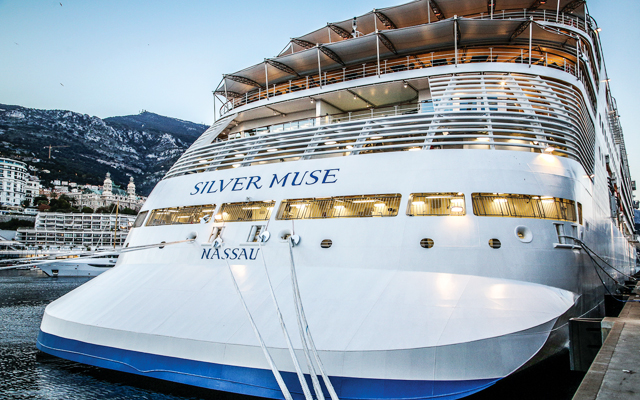
Cruise & Maritime Voyages’ (CMV) latest ship, Vasco da Gama, will sail from Singapore and London on its 44-night maiden journey next year.

Currently sailing as P&O Australia’s Pacific Eden, the ship will be renamed to Vasco da Gama when she joins CMV’s fleet. The ship will be dry docked in Singapore and given a refresh before its maiden voyage on April 23, 2019.

Vasco Da Gama

A 56,000 GRT ship, Vasco da Gama offers 630 cabins and is able to accommodate 1,200 passengers. Other facilities onboard include two pools, a wellness centre and spa, theatre, five bars and lounges, as well as six dining venues.

The ship will sail from Singapore to London, and London to Sydney in 2019, before launching its inaugural Australian cruise season. Passengers can choose from a range of options along the routes of up to 55 nights.

The ship’s 44-night Maiden Voyage from Singapore to London will include South-east Asia, the Indian subcontinent, Jordan, Egypt and pass through the Suez Canal. The cruise will continue to Israel and around the Mediterranean, finishing with Morocco and Portugal before docking in London. Guests wanting more can stay aboard and disembark in Amsterdam (Netherlands) or Bremerhaven (Germany).

Vasco Da Gama’s Suite Twin Share

Next, Vasco da Gama’s 53-night inaugural Southbound voyage will depart London on October 9, 2019, calling on 16 ports of call in countries such as Morocco, Barbados, Mexico and New Zealand before arriving in Sydney.

London to Sydney cruise-only fares start from A$6,899 (US$5,193) per person twin share for an inside cabin (53 nights), which includes up to A$2,200 free on-board credit per cabin – for bookings made up until July 31, 2018 – to allow guests to experience even more of the new ship. Singapore to London cruise-only fares start from AU$5,399 per person twin share (44 nights).

Vasco da Gama will be deployed and dedicated to both the German and Australasian cruise markets. During the European summer (May-October) the ship will operate under CMV’s German brand, TransOcean Kreuzfahrten, homeporting from both Bremerhaven and Kiel; and during the Australian summer season (December-March) will sail from Fremantle and Adelaide.

In addition, CMV has launched a ‘Sell & Set Sail’ promotion for travel agents. The winner and a friend will spend five nights aboard Vasco da Gama during its inaugural Australian Season in 2019/2020.

The agent who books the highest number of cabins on Vasco da Gama’s Maiden Voyages or Inaugural Southbound Voyages by June 30, 2018 will be selected.

A new opportunity for luxury travel in Asia

0

Brought to you by Beyond Luxury Media

Luxury tourism to Asia is increasing rapidly, but its very nature is changing just as fast. Market research shows that top-end international travel agents are now looking for unique, tailored experiences to satisfy an increasingly demanding and discerning wealthy clientele.

In spite of this – and the fact that Asia represents over 30 per cent of global tourism receipts – there is still no travel tradeshow fully dedicated to that space.

That’s where Further East comes in. We’re delivering a fresh innovative event that will be the first show dedicated to inbound travel in Asia. Taking place from the 12-15 November 2018 on Seminyak Beach, Bali.

The continent is unique; it needs its own temple where all Asia’s values are celebrated, in an authentic context. That’s why our new four-day festival will create a global community on Seminyak Beach, Bali, for Asia’s travel elite to inspire, collaborate and grow luxury inbound tourism.

Spearheading this movement is Serge Dive, CEO and Founder of Beyond Luxury Media – the mould-breaking company behind globally renowned tradeshows PURE Life Experiences, We Are Africa and LE Miami. Serge explains why Further East is set to become another industry-defining event:

“Our aim is to create the most efficient and relaxed marketplace and the closest experience to a ‘barefoot travel tradeshow’. With the choice of uber-cool Seminyak and the enthusiasm of our incredible local partners – Alila Hotels, Potato Head Beach Club, Katamama and W Bali-Seminyak – we will deliver an event like no other and provide a cure to boring travel tradeshows.”

Image: Alila Seminyak, the official marketplace of Further East, 12-15 November 2018

Building communities

To be a truly great company, you need to be a small shopkeeper in a global village. The millennial mentality of Beyond Luxury – where personalisation and spontaneity are prioritised over the beige “cookie cutter” experience of pre-packaged holidays – allows us to achieve this.

While business is at the core of our shows, our approach is totally uncorporate. We build communities through shared experience; you don’t just leave with a business card but a feeling of real friendship and long-lasting business relationships.

Creating context

With Further East, we want to be a context creator for the Asian luxury travel space. It’s important that it resonates with the product we’re showcasing – Asia itself – and celebrates it within a relevant context.

We knew that Bali, with its unique harmony and spirituality, would be an outstanding location. We have distanced ourselves from the usual city hubs and sterile convention centres to find somewhere that truly embodies the spirit and the goal of the show.

And thanks to Beyond Luxury’s proven track record, we’ve already attracted some iconic names to Further East. They’ve been explaining why they’re joining us.

We’re going Further East…

…To build relationships that matter

“Further East is about authenticity and spending time with likeminded people who are passionate and have the same drive to deliver meaningful experiences”. — Christina Deeny, Aman

…To network with the best, in Asia

“The calibre of agents coming to the show means we can develop important relationships without having to travel to Europe and America”. — Anthony Syrowatka, Viceroy Bali

…To get real results

“We’ve attended Further East’s sister show, PURE, and trust the qualification process and the quality of participants – every appointment will be worthwhile”. — Nick Downing, The Siam

The corporate way of doing business is disappearing in front of us. In its place we are creating something that has never been done before, showcasing Asia on its own terms and celebrating its unique energy in order to build a truly exceptional travel show.

Join our global community www.furthereast.co

Surabaya attacks spur heightened security at Asian Games, trade recovery efforts

0
Jakarta says it will step up on security in time to welcome the Asian Games; Senayan Sports Complex (in background), one of the event venues, pictured

Security will be stepped up at the upcoming Asian Games, taking place in Jakarta and Palembang from August 18 to September 2, in the wake of the recent bombings in Surabaya.

Anies Baswedan, governor of Jakarta, said his office has been working closely with all stakeholders to keep the city safe and secure.

Jakarta says it will step up on security in time to welcome the Asian Games; Senayan Sports Complex (in middle ground), one of the events venues, pictured

“Do not be afraid,” he said while addressing the media in Jakarta last week, adding that the recent attacks in Surabaya serve as a lesson in vigilance, spurring efforts to improve security measures with the Asian Games round the corner.

Indonesia’s minister for youth and sports Imam Nahrawi also assured that preparations for the high-profile sports event remain on track and that the ministry will continue to work with all parties involved to ensure the smooth running of the Asian Games.

Meanwhile, the travel trade has reported minimal fallouts from the Surabaya attacks, attributing this to swift responses from the Indonesian authorities.

With the belief that the impact will be “minimal and contained”, Hariyadi Sukamdani, chairman of Indonesia Hotel and Restaurant Association, said: “Terror can take place anywhere and (referring to several incidents in Europe) the recovery is quick. In Surabaya, the police acted very promptly and managed to capture other suspects within a couple of days, (curbing plans for further attacks).”

The Casa Grande hotel group in Surabaya, despite recording a drop in occupancy for its economy hotels in the initials days following the attack, has already seen occupancy quickly bouncing back in the days after.

Hasiyanna Ashadi, chairman of ASITA Jakarta Chapter, said: “We received a few reports of cancellations or postponement of ad hoc tours on the day following the incident. However, the tour series remain generally intact.

“Moreover, now being the Ramadhan fasting month now, the market tends to be slower. So while there is an impact, it is insignificant,” Hasiyanna added.

To stimulate the market, Indonesia Ministry of Tourism together with Visit Wonderful Indonesia (ViWI) committee launched the Jakarta Ramadhan Hot Deals packages last weekend, on top of the Jakarta Weekend Hot Deals launched earlier.

Haryadi, who is chairman of Visit Wonderful Indonesia, said: “The low season in Jakarta gives us an opportunity to work with airlines (Garuda Indonesia, Malaysia Airlines and Singapore Airlines, among others ), hotels and agents to promote Ramadhan hot deals.

Later this month, Surabaya Hot Deal and Bali Hot Deals will also be launched.

With a new government, Malaysian hotels urge review of tourism tax

0
Hotel associations had opposed the tax leading up to its implementation, saying it impinges on the destination's price competitiveness

With the Malaysian cabinet set for a refresh following Mahathir Mohamad’s landmark election victory and return to the post of prime minister, the country’s three main hotel associations are taking the chance to resurface their objections surrounding a tourism tax that came into effect in September 2017.

Diminished competitiveness especially in the budget hotel sector and hotels’ unwillingness to be made “collecting agents” for the tax are among the issues highlighted by the Malaysian Association of Hotel Owners’ (MAHO), Malaysian Association of Hotels (MAH), and Malaysia Budget Hotel Association (MyBHA).

Hotel associations had opposed the tax leading up to its implementation, saying it impinges on the destination’s price competitiveness

This comes as the government announces a reduction of a goods and services tax introduced in 2015 to zero.

MAHO executive director, Shaharuddin M Saaid, shared with TTG Asia that the association will push for an overall review of the tourism tax so that it does not hurt inbound arrivals.

Shaharuddin said: “A RM10 (US$2.50) tourism tax per room per night at a budget hotel that costs RM50 to RM80 per room per night is too much for guests to pay. The budget hotels complain that they are losing business because of this tax.”

The association hopes to recommend putting a new mechanism in place to free hotels of the tax collection role they have reluctantly assumed.

In addition, the three hotel associations had last year proposed that the government introduce an exit tax that should be collected at the airports and borders and imposed on foreign tourists. Shaharuddin said: “We will most likely bring up this proposal again.”

Under the system, foreign tourists are charged a flat rate of RM10 per night and per room and Malaysian citizens and permanent residents are exempted from paying the tax.

The luxury sector keeps growing and growing

0
Above: The Sukhothai Shanghai is part of the HRKI Taikoo Hui mixed-use complex

Hotel inventory in Shanghai is expanding and the opening of at least 10 international high-end brands in the business and cultural hub in the past year is raising the city’s luxe appeal.

The Sukhothai Shanghai is part of the HRKI Taikoo Hui mixed-use complex

Among the additions are the 436-room St Regis Shanghai Jingan, which opened in May 2017; the 374-room W Shanghai – The Bund,  which opened in June 2017; and the 55 all-villa Capella Shanghai, Jian Ye Li – one of the last remaining clusters of shikumen architecture dating back to the 1930s – which opened in September 2017.

At press time, other notable openings this year include the Bellagio by MGM Shanghai and boutique brands, with between 100 and 150 rooms, like Bulgari, Edition, Middle House and Sukothai.

Yvonne Peng, director of sales and marketing, said all 55 of the Cappella’s one-, two- and three-bedroom villas were booked in February by a China-based finance company for a one-night stay that was combined with an off-site dinner as its annual company event.
Peng also noted the hotel is seeing demand for events that mix luxury lifestyle and business.

Meanwhile, the 28ha Shanghai Hongqiao Economic and Technological Development Zone, being developed for commerce and MICE, will house 100 new international chain and domestic-branded hotels in the next three to five years.

According to a city tourism official, there are now 51 hotels in the area with 14 business and high-end hotels providing some 4,400 rooms, and 32 in the economy category providing another 4,000 rooms.

Violet Wang, destination manager, Pacific World in Shanghai, commented: “Hotel demand in Shanghai is increasing but so is supply, and that is keeping hotel rates stable.”
Observing some increase in rates, Julien Delerue, general manager of 1000meetings, a Shanghai-based event technology platform, said there was “10 per cent growth for business group rates on room accommodation year-on-year in 2017 versus 2016 for five-star international hotels – RMB1,045 (US$166) in 2017 versus RMB945 in 2016”.
It was “seven per cent for four-star international hotels – RMB645 in 2017 versus RMB600 in 2016”, he added, noting that similar trends are expected in 2018.

As China’s financial hub, domestic demand for Shanghai is a big factor. Chris Tsoi, general manager, St Regis Shanghai Jingan, said: “The hotel business in China has evolved… the domestic market in China is now key.”

Cheryl Yue, executive assistant manager – sales and marketing, W Shanghai-The Bund, agreed. “China is now like the US and the domestic market is very important. For us between 20 and 30 per cent of the business is domestic, and China, the US and Hong Kong make up our top three markets,” she commented.

It takes a village to raise community-based tourism

0
Ambassador Wylbur Chisiya Simuusa (right) speaking on policy change for sustainable development (photo credit: Facebook/PATA.HQ)

Local communities and villages in the Asia-Pacific region are becoming more active parts of the tourism value chain, a step forward for the global sustainability movement, observed industry stakeholders at last week’s PATA Annual Summit in Gangneung, South Korea.

Shifts towards community-based tourism are especially significant in light of concerns about overtourism, which often erodes the natural and cultural qualities of these places, said Wylbur Chisiya Simuusa, Zambian ambassador to the Republic of Korea. Simuusa raised the example of Victoria Falls in Livingstone, which was a rural area until international hotels began to open along the riverfront, driving local communities away from their traditional source of water.

Ambassador Wylbur Chisiya Simuusa (right) speaking on policy change for sustainable development (photo credit: Facebook/PATA.HQ)

“The government’s biggest task is to see how policies can be changed for sustainable development as well as ownership of these (lands) by the locals. We opened a national park in the capital Lusaka that satisfies both local and tourism interests: we employed the local community as game wardens to take care of the animals and provide transport for tours. As a result, the locals took ownership of the land, and stopped cutting trees for charcoal,” said Simuusa.

The involvement of native residents can even extend to including them in the design process of the tourism product, which is done by private companies such as LocalAlike in Thailand and TourDure in South Korea.

LocalAlike works with 80 villages in Thailand, while TourDure currently has 157 community business projects under development.

Pai-Somsak Boonkam, CEO & founder, LocalAlike, said: “We must plan with the community, not for the community. They can build rules for travellers in order to maintain the community’s authenticity, because travellers should contribute good, not harm.

“We worked with a community for six years before the village became self-sustaining. They came up with rules such as no making loud noises after 10pm, and private hotels must set aside a certain percentage of income for the community.”

Meanwhile, TourDure works with the Korea Culture and Tourism Institute, Korea Tourism Organisation and local county representatives to plan, execute and support tour activities that promote local offerings.

Examples include the Yangpyeong Water Safety Training Centre, which introduced canoeing as a new activity in Yangpyeong, and Gangwon’s Hongcheon Yongoreum Beer Village Co-op, which commercialised and revitalised the village’s wheat industry through handmade beer, guesthouses and local tours.

Cebu Pacific Air deepens Japan presence with first branch office

0

Cebu Pacific Air has opened its first branch office in Japan to serve as the hub for all its activities and business transactions in the country.

Heading the office in Chou-ku Tokyo is Tomohiko Matsumoto, who was appointed country manager for Japan in December 2017. A veteran in the travel and aviation industries with over 25 years’ experience, he served as country manager and international air cargo manager for Qatar Airways and more recently, as sales and marketing manager for Japan for Tigerair Taiwan.

The airline’s first Japan branch office has an address in Chuo-ku, Tokyo

Mike Szcus, chief executive adviser at Cebu Pacific Air, commented that the airline’s new branch office in Japan will bring the airline into the “next stage of growth” in the market, which is today “one of the most important across our network”.

“In 2017, we flew over 435,000 passengers between the Philippines and Japan. Compared to the (size of the Japan outbound market), there is much room to grow,” noted Alex Reyes, vice president for cargo at Cebu Pacific Air.

Now on its 10th year of operations in Japan, Cebu Pacific Air operates a total of 70 flights a week between Japan and the Philippines. Cebu Pacific Air flies between Manila and Narita, Osaka, Nagoya and Fukuoka, as well as between Cebu and Narita, utilising its fleet of Airbus A330 and A320 aircraft for these routes.

Aside from B2B and B2C transactions such as group reservation services, ticket sales and customer support, the Japan brance office will also drive marketing strategies and promotional activities of Cebu Pacific Air in the country.

Reminders in boom times

0
Halong Bay’s pristine environment comes under threat from more visitors and cruises

As Vietnam’s tourism industry continues to boom, it is essential measures are put in place to preserve the country’s rich heritage and bounty of natural beauty, tourism leaders warn.

Halong Bay’s pristine environment comes under threat from more visitors and cruises

According to figures from Vietnam National Administration of Tourism (VNAT), the country welcomed more than 12.9 million international arrivals in 2017 – a 29.1 per cent year-on-year increase. More than 73 million domestic visitors were also recorded in 2017. Revenue from tourism rose by 25.2 per cent in 2017 to US$23 billion, accounting for seven percent of GDP.

Dinh Ngoc Duc, head of VNAT’s marketing department, predicted the number of foreign tourists in 2018 will increase to between 15 and 17 million.

Tour operators claim the rise in part is connected with a major marketing push from the government in 2017, which saw an action plan to develop tourism as an economic pillar issued. This includes creating more favourable conditions for travel operators, said Pham Ha, CEO of Luxury Travel Vietnam.

Nguyen Duc Quynh, deputy director general of Furama Resort Da Nang, added the central shift of focus on the tourism sector has also triggered a sense of urgency to preserve what tourists flock to the country for its “natural beauty and heritage”.

Added Nguyen: “The acknowledgement helps the government pay more attention to the preservation of Vietnam’s nature and heritage by introducing laws on the conservation of these issues.”

For example, the government has halted controversial development that threatened the environment at Son Tra Nature Reserve area, and plans are being mooted to introduce building regulations that promote sustainable development and encourage design to be in keeping with its surroundings.

Last year, the traditional musical performance of Bai Choi, from Central Vietnam, was recognised by UNESCO as the country’s 12th non-material heritage. A swathe of EU-funded training programmes have also been rolled out to raise service standards in the industry, and a new Tourism Law, addressing issues such as regulations on star rating, accommodation and tourism products, was introduced.

Anton Jurgens, general manager of Exo Travel Vietnam, said: “With increased footfall, the country needs to promote everything that makes it stand out, be it natural beauty, heritage, culture or food. This can have a damaging effect on the environment and society’s perception of heritage, for example. But if managed well, it can enhance a country’s sense of pride. In general, Vietnam is doing a good job.”

Despite these steps, the industry claims it is imperative more efforts are pumped into preserving Vietnam’s natural and cultural charm in both the short- and long-term.

Luxury Travel’s Ha said: “Among the challenges is the importance of adapting tourism growth without losing sight of the environment and the locals. It is important to develop tourism in a sustainable manner, conserving and promoting cultural heritage and values of the people, protecting the environment and nature, and maintaining security and safety.”

He added the UNESCO site of Halong Bay is “suffering” under the tourism influx, with hundreds of cruises taking their toll on resources daily.

“The rapid increase in the number of visitors to Vietnam in the short-term is putting the industry under pressure, and attention should be paid to the upgrade of transport infrastructure, including seaports in the context of increasing demand for cruise tourism,” he said.

Jurgens added that one of the major issues Vietnam faces is the unchecked development, especially along the coast. He cited the proposed construction of a cable car at Phong Nha – home to Son Doong Cave, the world’s largest – as another example.

Said Jurgens: “Vietnam is still emerging and relatively new to tourism. With enormous potential to become the go-to destination in Southeast Asia, it is imperative VNAT is adequately funded and supported in order to promote and steer the industry in a sustainable and responsible direction.”

New homesharing committee in China pushes for industry standardisation

0
Association working towards the gradual implementation of standards for the whole industry (photo credit: Airbnb)

China’s homesharing space is coming under more concerted regulation and standardisation with the establishment of the House-Sharing Association by the country’s leading online homesharing marketplace Xiaozhu.com, Airbnb China, and the State Information Center of China National Development and Reform Commission.

Established on May 15, the association is calling on house-sharing companies to work with the Chinese government for legal regulation; make trust and safety a core industry value; and create a “fair and benign competition atmosphere”, such as by rejecting “money-burning” practices.

Association working towards the gradual implementation of standards for the whole industry (photo credit: Airbnb)

Over time, the association would also like to see the industry promote the standardisation of service process, quality control and dispute processing, working with government agencies to delineate responsibility and relationships among vendors, landlords and tenants.

The association has also initiated the development of China’s first house-sharing industry standards. Referring to what’s been practised by Xiaozhu.com and Airbnb in data security, trading rules, credit system and risk control, the team will work with experts to produce a standard document regulating house-sharing companies.

The standard is expected to be released by the end of 2018.

Xu Changming, deputy director of the State Information Center, said he hopes the association would play a role in driving Chinese government’s regulation of house-sharing industry and become a platform for all stake holders in the industry to exchange thoughts and ideas.

Great drives with Avis

0

Brought to you by Avis

The freedom and flexibility to discover and explore a destination at one’s own pace; the excitement and delights of driving through a kaleidoscope of landscapes… a classic road trip is one of the best ways to travel and to experience the sights and sounds; the people and places of a country.

To help you plan your customers’ next self-drive holiday with Avis, here are mini-guides to some of the most beautiful stretches of roads in Europe, on journeys through some of the region’s most scenic spots.

Austrian Romantic Route from Salzburg to Vienna, one of the most popular and best-known scenic routes in the country.
Or explore French châteaux, charme and cuisine through the sights and tastes of the picturesque Loire Valley in France.
The German Fairy Tale Route takes on a nostalgic journey with the Brothers Grimm, in search of the spirit of Sleeping Beauty, the Pied Piper and the Bremen Town Musicians!
Beyond the clichés of Milan as a fashion and design capital and home to AC Milan football club, a drive beyond the city in the Lombardy region in Italy opens up an immersion in history and tranquility.
With its own language and unique local customs, the region of Catalonia is more than just Barcelona and brings on an unbeatable Spanish allure for a drive holiday from fishing villages and secretive beaches to dramatic mountain peaks, gentle rolling hills and miles of stunning coastline.
And as one of the last areas of the United Kingdom where there are truly open roads, surrounded by soaring mountains and icy lochs, a drive into Scotland’s Highlands will uncover the country’s many treasures beyond the Aberdeen Angus beef and Scottish salmon!

These are but only a handful of great drives with Avis. To uncover more breath-taking sceneries and cultural wonders of Europe, set off here!


About Avis

Avis Car Rental and its subsidiaries operate one of the world’s best-known car rental brands with approximately 5,500 locations in more than 170 countries. Avis has a long history of innovation in the car rental industry and is one of the world’s top brands for customer loyalty.

For more information and to make a reservation for your customer – visit www.avisworld.com/ttgasia