TTG Asia
Asia/Singapore Friday, 3rd April 2026
Page 1388

GM named for soon-to-open boutique resort in Siem Reap

0

Joni Aker has been appointed as general manager of Treeline Urban Resort, the first managed property under Bangkok-based Hospitality Management and Development Asia.

The New Zealander has extensive management experience in operations across a wide range of fields, including the luxury hospitality sector. She was most recently the cruise director for Aqua Expeditions operating on the Mekong between Cambodia and Vietnam, and on the Amazon in Peru.

Located on the banks of the Siem Reap River, Treeline Urban Resort will have 48 keys comprising 36 rooms and 12 suites, together with culinary outlets, a rooftop pool and bar. It will open November 1, 2018.

Master of change

0

Every new leadership opens a door to new ways of doing things. Are you looking at changing things now that you’re at the helm?
New leadership does bring something different but there must be an objective for that. The difference must be a positive one, and we must be able to calm waters when there is change and get everybody involved and on board.

Everybody has to see the endgame, and understand that sometimes a different road needs to be taken in order for the organisation to move forward.

You mentioned having to calm waters when there is change. Did you see churning waters when you arrived into this new position?
Oh no, not at all! It’s just that when somebody new arrives, even a new general manager at a hotel, everybody wonders who (he is) and how (things will be). It is normal.

What are some of the changes that you have set in motion?
We recognised that we needed to put more emphasis on our website and booking engine. We recognised that we needed our front-facing pages to be more customer-oriented and to portray ourselves to be more in line with what the customer is looking for. We also recognised that social media is an important channel, so we’ve stepped up our efforts there.

Digital is another important aspect of the game, so we’ve put more emphasis on that.

On the hardware front, together with our owners, we have and will continue to invest quite significantly in a number of our key properties for renovations and upgrades. We will even change some of our F&B concepts in some of our hotels.

These will take place over 18 months, three years and five years – one cannot make these changes immediately.

At the same time, we recognised that all of these changes would not pan out if we did not bring a definite change to our service, software and human capital.

The service offered by our hotels is very good. Can we do more? Of course! And that’s what we aim to do. Together with a professional company and a lot of our own senior managers, we have built an employee service culture training manual that is specific to our needs. This took us several months to put together.

We have hotels in different parts of the globe, so the way we portray this service culture and the way we deliver this training to our employees need to be localised. We don’t want to have a one-size-fits-all because our employees and customers are different in every hotel.

One of the key points about our training is that it is first given to our senior management. Not only did they build the course, they were the first to receive training when it was launched in June this year. The training course then cascades down to the employees, with training conducted by the senior team. This shows buy-in by the senior team. We wanted to create an emotional attachment to this course.

The other benefit of having our senior team conduct the training is that they can give relevant, real-life examples to emphasise a point.

Does your social media effort include influencer engagements? It is common for such engagements to come with direct booking motivations, such as through a promo code. Doesn’t that add to travel agents’ ongoing fight with direct bookings?
Social media is a large part of life and we need to embrace it. Have we worked with influencers? Absolutely! Our marketing team identifies which influencers are a right fit with PPHG.

This has happened because of technology and the change in people’s aspirations. They are looking to be inspired and influenced by others.

Influencers bring a new business opportunity but that does not mean we won’t continue to use all the other channels familiar to us.

Travel agents need to embrace this shift. They could themselves see advantages in engaging influencers too.

How about changes in innovation at the back- and front-end?
Our industry – any industry for that matter – has to keep innovating. But we need to understand if the technology is something the customer wants and understands.

We have seen hotels using robots. We have one too at Pan Pacific Beijing, and it’s called Peter Pan. It is quite fun, and the young children like it. The robot is extremely efficient but I do not see it taking over all service roles.

In the meetings and events space, innovation is vital. The days of hotels packing out projector screens and a projector are long over.

I love how PPHG’s ongoing global brand refresh includes a localised strategy and action plan for each market, built with local agency partners. Is this indicative of the continued importance of travel agents in the travel and tourism industry?
Travel agencies are our partners and we are clear about how very important they are. We are here to do business with them.

The relationship between hotels and travel agents have changed over the years because of technology and customer needs. I see both parties evolving together to keep in line with customer demands. Travel trends and habits are changing so rapidly that hotels and travel agents need to work together to do better business.

You’ve been in the hospitality business for 30 years. What are the biggest changes to the regional hotel landscape, and how do you see it evolving next?
Here in Asia-Pacific, there have been very powerful hotel players 20 years ago that are no longer as powerful today. And in the past year, there have been two or three hotel companies that have become very big, very powerful. They will continue to grow where they can. There is no doubt that these very large players, because of their booking system, back-of-house infrastructure and sheer size of their customer base, will dominate the market.

Having said that, PPHG is part of the Global Hotel Alliance which is also a very powerful organisation made up of many other small and mid-sized hotel companies. That gives us some power to fight the giants.

While these large hotel companies are here to stay, they will also change their shape as time goes on. Look at the news today – one of them is looking to offload some of its Australian properties.

What power does PPHG have over these mega hotel companies?
To get things done across the board for 40 properties, as opposed to several hundreds, will be faster, of course. Having said that, it is all about the people who are executing programmes and changes on the ground.

I think another advantage of ours is that we can afford to be more personal.

Have you also seen changes in the way hotels are built today compared to decades ago?
At PPHG, we work very closely with our contractors and architects on environmental impact. The new property that will take over what once was Pan Pacific Orchard (closed since April 2018 for a three-year redevelopment) will have a zero-waste capability.

Hotel companies need to be more conscious about the impact their properties have on the environment. Hotels consume a huge amount of water and energy, and generate a huge amount of waste.

Hotels today also are no longer being built with five or six restaurants. Now, one or two only. In the past, customers were happy to stay in the hotel, hence all the services were created to keep them occupied. Today, customers just want to go outside.


Asians invited to ‘Undiscover Australia’ beyond koalas and kangaroos

0

Tourism Australia has launched a AU$10 million (US$7.2 million) campaign targeting high value travellers in India, Singapore, Malaysia and Indonesia with experiences outside stereotypical views of travelling in Australia.

Speaking at the Singapore launch event on Wednesday, Tourism Australia chief marketing officer, Lisa Ronson, said the Undiscover Australia campaign aims to bust popular myths about Australia held by travellers in the region.

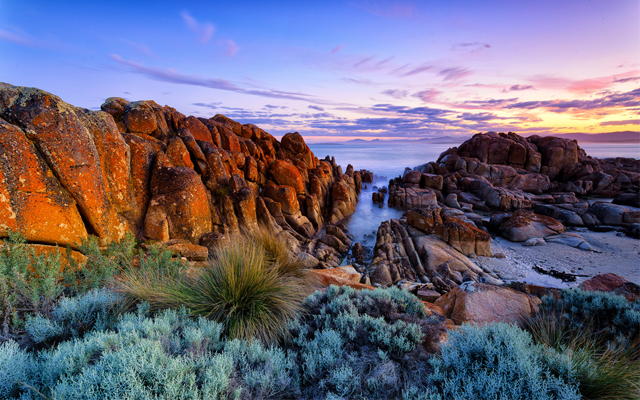
Beerbarrel Beach, Tasmania

She said: “One of the challenges that we face in South and South-east Asia is that travellers think they know Australia. This campaign is all about uncovering the some… hidden gems, and inspiring people to come and see a side of Australia they perhaps didn’t know existed.

“We know that travellers today are always on the hunt for the next cool, ‘Instagram-worthy’ destination, so the challenge for us is to show all the ways that Australia ticks this box as a vibrant, captivating destination and give them new reasons to come and explore for themselves,” Ronson added.

The campaign plays on some of the popular misconceptions about Australia highlighted by local research, showing that there is much more to the country than the typical stereotypes of koalas, kangaroos, the outback and well-known icons.

This is the first time Tourism Australia is targeting South and South-east Asia region as part of a single, coordinated tourism promotion. Tourists from Singapore, Malaysia, Indonesia and India accounted for around 1.3 million arrivals a year, contributing AU$5 billion.

The campaign will be supported by an online marketplace called Australia On Sale, which will be launched later this month to feature competitive fares from multiple airlines and travel agents.

Undiscover Australia will initially run for four months with the potential to be extended to additional markets in the future.

Growth in intended Thai travel spend leaps ahead of global average

0

Thais’ intended travel spend is growing faster than the regional and global average, according to Visa’s Global Travel Intentions Study, which also found that most travellers from the market are using cards rather than cash for their pre-trip payments.

The study examines international travel trends and behaviour of 17,500 travellers from 27 countries around the world.

Thai travellers favour credit cards

The study show that the intended travel spend of Thais have surged 51% ahead, compared to Asia-Pacific (46%) and global travellers (36%).

The average Thai traveller spends US$1,502 per trip and that is expected to increase to US$2,252 for future travel, based on respondent feedback. On average, Asia-Pacific and global travellers spend more, US$ 1,677 and US$1,793 respectively, but see lower movement in future travel expenditure.

Suripong Tantiyanon, country manager, Visa Thailand, said: “From our conversation with different players in the tourism industry, an increase in intended spending of Thai travellers can be attributed to the fact that there are more financial products today than ever before. They are more sophisticated and better suited to travellers’ needs, with added benefits and privileges. As a result, Thai travellers are more confident and willing to spend more.”

The study also revealed that the use of payment cards is prevalent especially during the pre-trip stage. Three in four (76%) Thai travellers reportedly prefer and use payment cards for pre-trip expenditures, such as flight and hotel reservation, compared to cash at 52%.

Respondents cited their preference towards payment cards are due to promotion, lower transaction fees, better rewards for international usage and higher security.

Despite the fact that cash is used by all Thai travellers at some point during their trip, credit cards are also heavily featured at 67%. A quarter of Thai travelers use a different card to their usual one whilst abroad, basing their decision on transaction speed, wider acceptability at international retailers, lower fees and better rewards.

Additionally, 26% of Thai travellers would have spent more with wider card acceptance.

Interestingly, the use of digital wallet is fast emerging, with a quarter of Thai travellers having used it at their destination. Solo and bleisure travellers, in particular, are the heavier users of digital wallets at 41%.

“It is exciting to see travellers willing to spend and venture overseas more and we believe that the payment industry continues to have an important role to play,” commented Suripong.

“That is why it is important they are not limited to a handful sources of fund or few ways to their payment will be accepted. Travellers’ needs and behaviours are inherently diverse therefore driving adoption and usage of payment form factors, including mobile application, QR code or plastic cards, which will be key to sustaining the growth of the industry in the long run.”

Penang Port, Royal Caribbean sign JV to redevelop Swettenham Pier

0

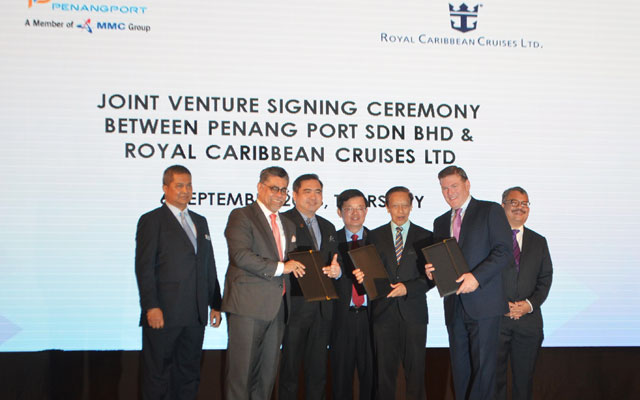
Penang Port (PPSB) has yesterday entered a joint venture agreement with RCL Development Holdings (Penang), an indirect wholly owned-subsidiary of Royal Caribbean Cruises (RCL), to redevelop its cruise terminal to accommodate larger ships.

The two parties had previously signed a Heads of Agreement in March 2017.

From right: MMC Corporate Berhad Group’s Khalib Mohamad Noh; Royal Caribbean Cruises’ Gavin Smith; Penang Port’s Syed Mohamad Bin Syed Murtaza; Penang’s chief minister Chow Kon Yeow; Malaysia’s minister of transport Anthony Loke Siew Fook; MMC Port Holdings’ Ian James; and Malaysia’s secretary general of ministry of transport Saripuddin Bin Hj Kasim

In the redevelopment plans for Penang’s Swettenham Pier Cruise Terminal (SPCT), the existing 400m-long berth will be extended by 220m with an additional 118m-long dolphin.

With the current expansion plan, SPCT will be able to handle two mega-sized cruise ships simultaneously on the outer berths along with one small- and one-medium sized ships on the inner berths by end-2019. The expansion will enable RCL’s Oasis-class ships, the largest in the world, to berth at the terminal.

Sasedharan Vasudevan, PPSB’s CEO, said in a statement: “Detailed design and site investigations are already midway, with construction to begin before the end of 2018. The expansion will see a significant increase in international transit calls at Swettenham Pier Cruise Terminal along with an increase in appeal for the homeport segment in Penang.

“With the state government’s full support in managing tourism activities,
logistics and transport staging around the terminal, we are confident in strong
future growth of the cruise industry in Penang.”

Founder and CEO of Asia Voyages passes away

0

ITB Asia conference spotlights AI, biometrics, blockchain

0
Participating tech and travel companies include Booking.com, Egencia, Fliggy, Hotelbeds Group, Kayak, Microsoft, Sabre, SITA, Skyscanner, Tencent, Travelport and Tujia

Unveiling new partnerships and programme additions including a MICE Tech Showcase, ITB Asia will focus on the interdependence of travel and technology this year under the overarching conference theme of Travel Reimagined.

Hosted at the Sands Expo and Convention Centre in Marina Bay Sands, the conference will take place from October 17 to 19.

ITB Asia will host a series of talks on travel technologies at the Travel & Tech Hub, where delegates could learn about how emerging and innovative tech can offer meaningful connections between travel brands and customers for improved ROI, and help resolve some of the biggest challenges in the industry.

Participating tech and travel companies include Booking.com, Egencia, Fliggy, Hotelbeds Group, Kayak, Microsoft, Sabre, SITA, Skyscanner, Tencent, Travelport and Tujia

Technology and travel companies including Booking.com, Egencia, Fliggy, Hotelbeds Group, Kayak, Microsoft, Sabre, SITA, Skyscanner, Tencent, Travelport and Tujia will be joining the show with senior representatives taking the stage to discuss technologies to watch.

The organiser said in a statement that the show agenda will be dominated by discussions from AI to virtual reality, biometrics, blockchain and robotics, utilising case study examples and practical application in travel management, business travel, hotel operations, travel photography, and dining experience, etc.

Launching the new MICE Tech Showcase, the conference will feature innovations that will help solve issues in the MICE industry.

As a partner at the MICE & Corporate Hub, Troovo, a robotic process automation solutions provider, will join ITB Asia to tackle the positive impact of virtualisation and robotics for the travel industry.

Troovo’s co-founder and CEO, Kurt Knackstedt, will host a one-hour session on October 18 to discuss how the laborious task of data entry and grunt work of processing travel and payment transactions can be overcome.

Meanwhile, Skift will host a session at the Knowledge Theatre on ‘Post Experience Economy: Innovators At The Edge of Travel’.

In addition, ITB Asia’s partnership with Asian Development Bank and Innovel Travel Tech will reach out to the young, tech-savvy companies around the world that are innovating with breakthrough technologies. Both will host a session on travel startups in the dedicated conference track at the Travel and Tech Hub.

Ctrip partners Tourism NZ to certify customised travel experts in China

0
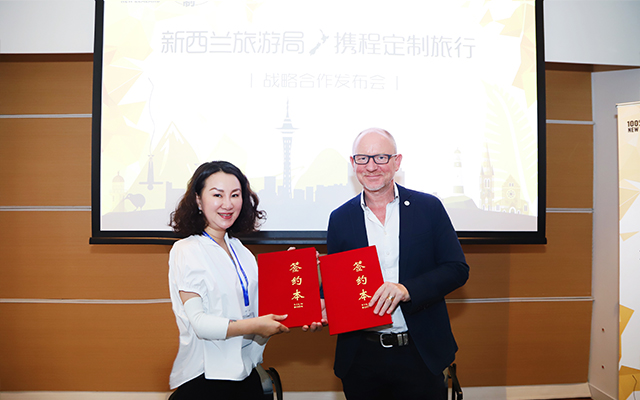
From left: Ctrip's Kane Xu and Tourism New Zealand's Gregg Wafelbakker

The Ctrip Institute of Customized Travel Business and Tourism New Zealand are joining hands to develop a training programme to help tour experts offer more relevant products and services in the destination amid a growing wave for bespoke travel among Chinese holidaymakers.

Both parties will also carry out joint data sharing, user analysis and marketing to better cater to Chinese customised travel needs.

From left: Ctrip’s Kane Xu and Tourism New Zealand’s Gregg Wafelbakker

Titled “New Zealand Travel Expert + Customized Travel”, the programme will include specific sections dedicated to families and newlyweds, key target groups in the programme.

The NTO and Ctrip will award graduates with the New Zealand Customized Travel Training Certification, which they say is a “jointly recognised accreditation within the customised travel profession”.

Divided into gold, silver and bronze, the certificate permits the graduate to service travellers as their personal customised travel expert.

Tourism New Zealand will also sponsor a trip to New Zealand for the top three customised travel graduates, enabling them to better understand the destination and the type of services needed to cater to the demands of their customers.

The partnership, Ctrip Institute of Customized Travel Business’s first with a tourism bureau, was in response to the increasing demand for more personalised holidays to New Zealand.

According to Ctrip’s Customised Travel platform, demand for more personalised and in-depth experiences of New Zealand has increased by 150 per cent year-on-year over the last year. These travellers not only stay in New Zealand much longer than those who travel to New Zealand as part of a tour group, but also travel to more regions and participate in more in-depth travel activities, Ctrip said in a statement.

New hotels: X2 Vibe Viet Tri Hotel, The Calile Hotel Brisbane, and more

0

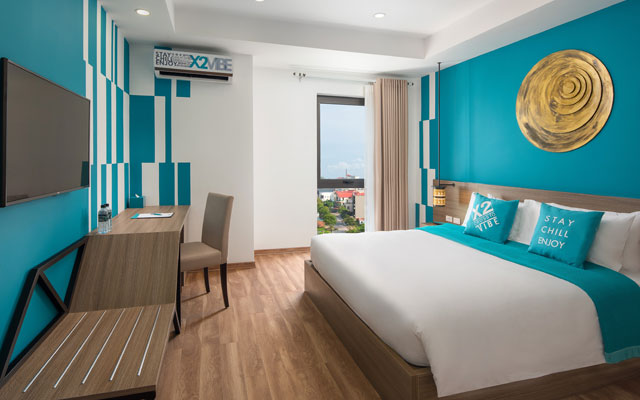
X2 Vibe Viet Tri Hotel, Vietnam
Located 60km from Hanoi’s Noi Bai International Airport, in Vietnam’s north-eastern region, is the X2 Vibe Viet Tri Hotel. This is the first property of BHMA’s – Flight Centre Travel Group’s hotels and accommodation business – in the country. The 60-key property enjoys a waterfront location by Van Lang Lake in Viet Tri, the capital city of Phu Tho Province, and offers amenities such as a restaurant, meeting rooms, coffee shop and rooftop bar overlooking the lake.

The Calile Hotel Brisbane, Australia
The newest to the TFE Hotels Collection portfolio is the The Calile Hotel. Located on Brisbane’s James Street, the property offers 175 guestrooms including nine suites and two premier suites. Each room features a Bluetooth sound bar, motorised blackout blinds, 55-inch television and complimentary Wi-Fi. Recreational spaces span the Lobby Bar, poolside restaurant with open-air cabanas, fitness centre and spa. There are several multifunctional spaces as well, such as the Grand Ballroom – which is divisible into four smaller rooms.

Hotel Gracery Seoul, South Korea
Fujita Kanko has expanded its Hotel Gracery brand beyond Japan’s shores to launch its first overseas property in South Korea’s capital city. The 335-room property stands in the Myeongdong area, three minutes away from the City Hall subway station. On-site facilities include a restaurant and a concierge desk.

Somerset Maison Asoke Bangkok, Thailand
Set to welcome its first guest on September 28, 2018, the brand-new Somerset Maison Asoke Bangkok features 125 keys comprising studio and one-bedroom serviced apartments. On-site facilities include a fully-equipped gym, a heated swimming pool, sky garden, and a restaurant. Bookings are now open.

Defence ministry deputy picked to helm Singapore Tourism Board

0
Keith Tan will be STB's chief executive with effect from October 28

The role of chief executive at the Singapore Tourism Board, left vacant since Lionel Yeo stepped down in June, will from October 29 be filled by Keith Tan Kean Loong, currently the deputy secretary (policy) of the Ministry of Defence (MINDEF).

After Yeo served up his six-year term as STB chief, Melissa Ow, STB’s deputy CEO, was appointed acting CEO with effect from June 1 until a new chief assumes the post.

Keith Tan will be STB’s chief executive with effect from October 29

As deputy secretary (policy) of MINDEF, Tan is responsible for defence policy, strategic communications, national education and total defence. He played a key role in strengthening Singapore’s defence relations with key international partners, enhancing MINDEF’s strategic communications capabilities and deepening MINDEF’s partnerships with the private and people sectors in support of Total Defence.

He also helped to grow MINDEF’s public and social media engagement efforts as well as oversaw efforts to apply data analytics in public communications and policy making.

Key projects he oversaw included the signing of the Singapore-Australia Comprehensive Strategic Partnership, the setting up of So Drama! Entertainment and extending the reach of Total Defence and National Education through innovative means such as gamification.

Prior to MINDEF, Tan held various senior leadership positions including
senior director, PS21 Office at public service division, institute director, Institute of Governance & Policy at Civil Service College; and director, foreign economic policy division at the Ministry of Trade and Industry.

Loh Khum Yean, permanent secretary for the Ministry of Trade and Industry, expressed optimism that Tan’s leadership experience “will equip him well to lead STB to achieve its next lap by pursuing quality tourism and driving tourism development”.