TTG Asia
Asia/Singapore Sunday, 5th April 2026
Page 1357

Song Saa to plant 120ha sustainable luxury resort in Siem Reap

0
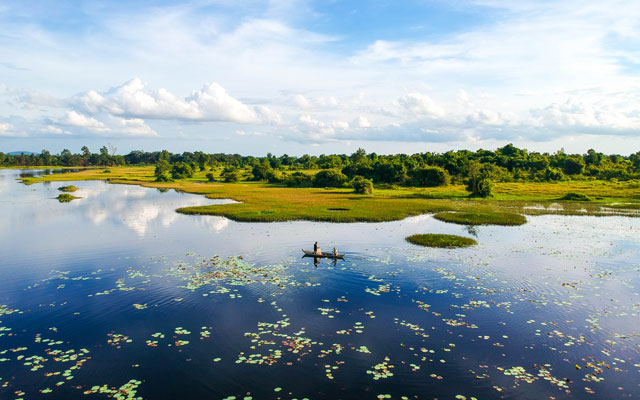
Song Saa (pictured)

The owners of Song Saa Private Island in Cambodia is inviting developers and investors to be a part of its latest sustainable hospitality project, a 120ha integrated resort in Siem Reap.

The site of the new Song Saa Reserve project is five minutes from the famed Angkorian temple of Banteay Srei, with a 35ha lake as a central feature.

The site of the Song Saa Reserve project

In line with the ethos of Song Saa Private Island and sister NGO Song Saa Foundation, the new project is positioned as an ethically led integrated resort that blends luxury tourism with initiatives that restore and improve the local natural and human environment.

Investors will have the opportunity to purchase plots for hospitality-based projects, including a projected seven resorts. With over 120ha of land available, Song Saa Collective says developers can consider projects “on a scale that is unrealistic in Siem Reap city”.

Among the sustainable tourism features proposed are a hospitality training centre, a “Green School”, rainforest nursery, permaculture gardens and a solar farm.

With an environment and social plan as well as a rainforest restoration strategy in place, implementing agency Song Saa Foundation will work with developers to uphold sustainability standards at Song Saa Reserve.

“Since Melita and I arrived in Cambodia in 2005, we’ve felt a deep sense of commitment to developing the country in a way that’s inclusive and aligns all stakeholder interests while showing the world how special this country is,” said Rory Hunter, CEO and co-founder of the Song Saa Collective.

“The Song Saa Reserve scales up our ethos and approach and allows Cambodia to show the world how tourism, done right, is a powerful means for lifting people out of poverty and protecting the environment, while delivering lifetime experiences to global travellers and attractive returns to our shareholders.”

Coopers Hill is responsible for the site’s master planning, and real estate company CBRE is acting as the sole agent.

In times of excess baggage, share the load

0
Sokmey Ty

Sokmey Ty was tired of facing hefty fees for checking in luggage a few kilogrammes overweight at airports, especially knowing that many of her fellow travellers probably had swathes of empty space in their suitcase.

That led Sokmey and her friend Daneth Reasmey to brainstorm at how they could provide plane passengers with a way to share their luggage allowance.

Sokmey Ty hopes to create a platform to exchange excess baggage

“We started thinking, what if these two people could meet each other and share their baggage allowance together to save, and earn money?” said the 24-year-old Cambodian entrepreneur.

The result is SidesBag, an innovative online marketplace that enables airline travellers to buy and sell baggage weight allowance from fellow passengers. The company recently launched its first prototype in the form of a basic website.

Although the site is still in its infancy, visitors will be able to view a list of flights along with luggage weights that were being sold, as well as buyers looking for extra allowance. Travellers can then fill in their flight details and the baggage weight they are looking to buy or sell. There will also be a search option to find fellow travellers headed to the same destination.

“Our ultimate vision is to transfer passengers’ baggage weight through our platform, seamlessly,” said Sokmey, now SidesBag’s CEO and head of marketing.

Slated to launch early next year, SidesBag is currently building partnerships with relevant businesses and is in talks with travel agencies and regional transportation booking companies to get them on board.

“We want them to include our services on their booking platforms,” said Sokmey. “It’s the biggest milestone we have reached so far.”

To ensure safety, passengers exchanging luggage allowance are not expected to carry goods on the other person’s behalf. Instead, the two parties must check in together, and ask for the luggage allowance to be spread at the counter.

The next phase of SidesBag will see the company partner with airlines to allow luggage pooling without this step.

“We expect many more airlines and businesses involved in air travel will join us to solve this real pain,” added Sokmey.

London Designer Outlet finds SE Asia rep in Pear Anderson

0
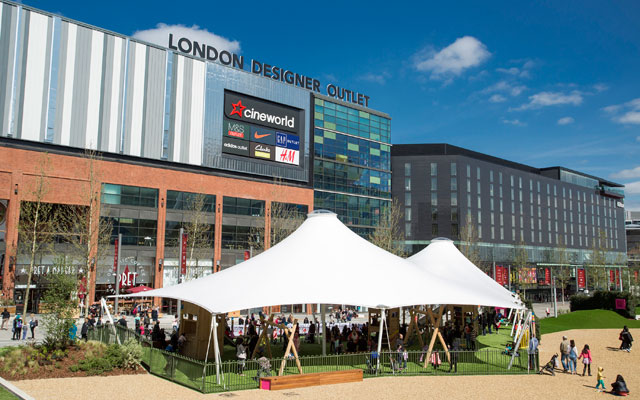
London Designer Outlet

London Designer Outlet (LDO) has appointed Pear Anderson, a boutique representation and consultancy firm, to be its representative in South-east Asia in a bid to attract more overseas visitors.

London Designer Outlet wants to attract more South-east Asian travellers

“South-east Asians, in particular Malaysians, Indonesians and Singaporeans, are known to love great shopping, and rate time spent shopping as equally important as sightseeing when abroad. In general, they are pretty knowledgeable about premium shopping outlets. We want them to think about LDO when planning a trip to London,” explained Robert Galway, guest experience and tourism manager at LDO.

LDO is located next to the Wembley Stadium, 12 minutes from central London by Tube. It is home to 50 outlet shops, 20 restaurants and coffee shops, the nine-screen Cineworld, and play park.

New hotels: Six Senses Maxwell, Hilton Manila and more

0

Six Senses Maxwell, Singapore
Sister property of Six Senses Duxton, Six Senses Maxwell, is the second of two heritage buildings that together form Six Senses Singapore. Located five minutes walking distance from each other, the Maxwell property on Cook Street features 120 guestrooms and suites designed by French architect Jacques Garcia.

The hotel houses five F&B concepts – ranging from Murray Terrace, a classic European-style brasserie; to Cook & Tras, a social library restaurant and bar influenced by heritage Straits cuisine. On the rooftop, Max’s Edible Garden complements the 25m-long lap pool and gym. On the wellness front, Six Senses Spa Pods will open in early 2019. Bookings are now open for stays from December 1.

Hilton Manila, Philippines
Hilton Manila has opened within Resorts World Manila, heralding the entry of flagship brand in the Philippines. Located just across Ninoy Aquino International Airport Terminal 3, the hotel offers 357 guestrooms furnished with the Serenity bed, and the Digital Key “direct-to-room” technology.

The property’s dining outlets include New York-inspired Madison Lounge & Bar; Hua Ting, a Shanghainese restaurant; all-day dining Kusina; and Port Bar. Meanwhile, recreational amenities include a lagoon pool, 24-hour fitness centre, and six meeting venues such as the 545m2 ballroom which can accommodate up to 600 for a reception.

Wyndham Sundancer Resort Lombok, Indonesia
The five-star all-suite resort is the first Wyndham-branded resort to open in Lombok. Rooms come in one and two-bedroom suites, each furnished with complimentary Wi-Fi, air conditioning, kitchen facilities, and bathroom with shower and oversized bath. Guests can take advantage of a large lagoon-style pool with swim-up bar, a day spa and wellness centre with its own juice bar, and a dive centre offering diving excursions. There are also three dining options, where one can be converted into a 200m2 space to cater to events of up to 100 seated guests.

The St Regis Zhuhai, China
The St Regis Zhuhai occupies floors 41 to 72 of the Zhuhai Tower, the city’s newest landmark in the business district. It offers 251 guestrooms, including 34 suites and a 1,100m2 Presidential Suite. All guest rooms offer panoramic views of the waterways of the Greater Bay area.

The hotel offers five restaurants and bars, as well as recreational facilities like the Iridium Spa on the 68th floor with nine treatment rooms; the fitness centre on the 69th floor which boasts a heated indoor pool; as well as the outdoor sky pool on the 71st floor. For events and functions, the property offers 1,500m2 of meeting space such as the rooftop on the 72nd floor that opens out to views of the the river channel between Hengqin and Macau’s Cotai Strip.

Hotel Gracery Asakusa, Japan
Japanese hospitality company Fujita Kanko has opened its fourth Gracery-branded property in Tokyo’s Asakusa district. The 125-room hotel stands minutes from Asakusa stations on the Ginza and Asakusa subway lines. All guestrooms are non-smoking, designed with Japanese accents, are equipped with separate toilets and bathrooms. There is also a restaurant on-site.

Centara appoints GM for Cosi Samui Chaweng Beach

0

Centara Hotels & Resorts has appointed Vatmongkol Rasisawas to helm Cosi Samui Chaweng Beach hotel, which opened its doors as the brand’s first last December.

Vatmongkol brings 15 years of hospitality experience in five-star hotels in Bangkok and Pattaya.

She is familiar with the Centara brand, having previously worked at the company’s flagship Centara Grand & Bangkok Convention Centre at CentralWorld.

Before rejoining Centara, she was general manager at Sovereign Group Hotel in Bangkok.

Take two on film tourism’s impact

0

One of the latest blockbuster hits to make waves on the international big screen, Crazy Rich Asians, sparked a rush in the travel industry. While Singapore’s tourism players cash in on the predicted surge in visitors inspired by the set, in Asia’s broader tourism sector in Asia, some are shifting the spotlight to the detrimental effects of film tourism.

Tour operators put together Crazy Rich Asians tours of the city, while Singapore Tourism Board teamed up with Warner Brothers to launch a series of marketing campaigns across the US, Australia, South-east Asia and Japan.
Local guide Phil Choo, who has been running Crazy Rich Asians-themed tours since 2014 after reading the book the film is based on, has noted a rise in interest in his tours since the film premiered. He predicts this will continue, with more people wanting to follow in the footsteps of the movie’s stars.

Choo said: “The film is like a love letter to Singapore and showcases some of the best of our country. It can only be positive, generating greater interest in the country and attracting more visitors. It is free advertisement for Singapore.”

Film tourism can bring with it huge benefits, with countries enjoying a boom in visitors of between 25 and 300 per cent after featuring in a film, according to data from Champion Traveler.

Its research showed visitors to Wallace Monument in Scotland increased by 300 per cent after the release of Braveheart. The Beach led to a 22 per cent increase to Thailand, Mission Impossible II saw 200 per cent more people visit Sydney National Park, and all filming locations featured in the Harry Potter series welcomed 50 per cent more tourists.

“(Film tourism) brings huge public relations value and marketing for a country if a movie is featuring a certain destination,” said Edwin Briels, managing director of Khiri Travel Myanmar. In October 2017, Briels attended LocationEXPO, a Hollywood tradeshow for producers scouting for locations. His aim was to plant Myanmar on the map as a potential destination for film-makers.

“I am sure tourism in Myanmar could benefit from having a feature movie or any reality show or documentary shot in Myanmar,” he added.

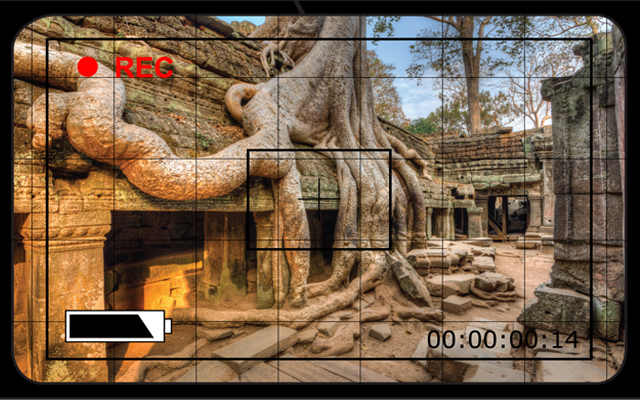
Cambodia is a country that has been able to cash in on the film industry, with Ta Prohm – one of the three main temples at Angkor Archaeological Park – providing the famous tree-riddled temple backdrop to the 2001 film starring Angelina Jolie, Lara Croft: Tomb Raider.

Nick Ray, location manager, producer and director of Hanuman Films and advisor of Hanuman Travel, said: “(The film) has had a powerful imprint on Angkor and has become part of Angkor’s story. Ta Prohm is now nicknamed as much the Tomb Raider temple as the jungle temple.”

Ray, who worked as location manager on the film, adds that Tomb Raider’s effect on attracting tourists to the site has taken time to trickle down due to Cambodia building peace after decades of war.

“You have to remember when it came out in summer 2001, Cambodia was only just emerging from a long civil war,” said Ray. “It wasn’t long since the fall of Anlong Veng so it was all still quite raw. When you look at what’s happened since, and how important Tomb Raider has become in tour guides’ talks, you realise its impact and power.”

Ray regularly visits Ta Prohm on location scouts or accompanying high-end tour groups. At the “Tomb Raider tree”, he always hears guides talking about its appearance in the film. Said Ray: “This shows the power of film and film locations.”

In spite of the potential films have to attract tourists to a destination, movie tourism comes coupled with issues.

“Overtourism and crowding can be an issue, especially in fragile or remote areas,” said Sue Beeton, a senior lecturer in tourism at La Trobe University in Australia, who has been studying film tourism for more than 25 years.

A prime example is 2000 Hollywood hit The Beach, starring Leonardo DiCaprio. 20th Century Fox Pictures was sued by environmental activists for moving palm trees and damaging the pristine island’s natural beauty during shooting. And the hoards who flocked to the destination for a slice of the hidden tropical paradise portrayed in the film have caused devastating environmental damage.

In June, drastic measures were taken to prevent Maya Beach, on Phi Phi Leh, from being environmentally devastated. Up until its four-month closure, it welcomed about 3,800 visitors daily, bringing damage.

Beeton added: “Other negative effects are when the film attracts a different market to that of the existing tourists, which can create friction.”

Chinese film Lost in Thailand, released in December 2012, triggered an influx of Chinese tourists visiting the campus of Chiang Mai University, which featured in the film. The university reported up to 500 tourists a day causing chaos at the university by wandering into classrooms, taking photos of teachers and even renting school uniforms and sneaking into classrooms. To curb the behaviour, the university started charging for short tours.

“There’s the sort of the Hollywood kiss of death,” remarked Ray, adding it is vital lessons be learnt from Thailand and Boracay, which was closed for six months in April as part of environmental rehabilitation efforts. He suggests measures be put in place, such as controlling numbers or charging entry fees.

“The issue of mass tourism in general is a massive one and films may help trigger it,” he said. “Tour operators can help by informing the government and coming up with their own suggestions and plans, but it takes political will to trade-off between quality versus quantity. Do we want one million tourists or one thousand tourists spending the same amount?”

Beeton adds it is important that proper planning and research are carried out by tourism stakeholders to understand what the potential in filming may be.

The Cambodian government is also pinning hopes on the film industry to help the country hit its target of attracting two million Chinese visitors to Cambodia by 2020, up from 1.2 million in 2017.

In September, shooting started on Love in Cambodia, a collaboration between the ministries of Tourism, and Culture and Fine Arts, that aims to showcase the country to tourists, particularly Chinese. It will feature Phnom Penh, Angkor Archaeological Park, Koh Rong and Bokor Mountain in Kampot.

“There’s Hollywood, Bollywood, China and a lot of other film industries that are big,” said Ray. “If you get one or two production companies to peel off and they can see what’s on offer, suddenly you’ll have a wave of people coming over.”


Bali puts its best face forward

0

Bali recently hosted the Annual Meetings of the International Monetary Fund and the World Bank Group from October 8-14, the biggest-ever business event ever to take place on the island.

Over 15,000 delegates from 168 countries flew in to attend these high-profile meetings. As well, some 1,200 meetings were held in 89 venues across two convention centres and hotels.

In the Nusa Dua area alone, 4,600 hotel rooms were booked to accommodate the delegates. Other guests stayed in Sanur, Kuta and Denpasar.

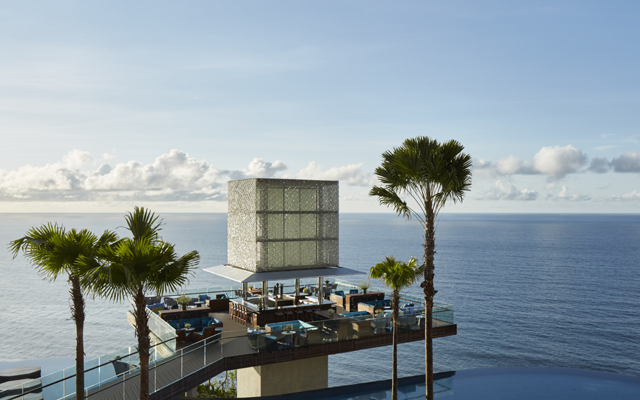
Constant new additions like Omnia Dayclub Bali (pictured) help to keep the destination’s appeal fresh

An event of this scale not only put Bali on the international conference map and brought economic benefits, it also provided the push for resources to be allocated to improving infrastructure and facilities on the island.

For Badung, the event served as a springboard for the regency’s smart city project. By this month, visitors to Badung area will be able to enjoy free Wi-Fi. The regency government has also invested in 385 CCTV cameras in 986 locations.

I Made Badra, Badung Regency’s head of tourism, said: “The CCTV cameras are placed at tourist attractions and other strategic locations to provide safety and security for travellers and the community alike.”

The project currently covers Badung Regency, the fastest-growing and most visited tourist region in Bali, but is expected to expand to the rest of the island down the line.

Badung Regency stretches from southern Nusa Dua, Uluwatu and Jimbaran to Seminyak and Canggu on the west coast up to Mengwi and Plaga in the northern part of the territory.

In terms of area, Badung Regency covers only 7.6 per cent of Bali, but contributes 65 per cent of the local economy and 40 per cent of passenger arrivals to Indonesia.

Further infrastructure developments are also taking place on the island.

Angkasa Pura I, the airport authority, has expanded the apron at Ngurah Rai International airport to make available 11 additional parking stands to 63 aircraft.

Initially, plans were for a second runway to be built to provide a dedicated runway for take-off and landing. However, the central government has now decided to invest in developing a second airport in North Bali instead.

Road upgrades are also underway. A new Underpass Ngurah Rai project, for example, is now ready to welcome conference delegates.

The 712m-long underpass is expected to reduce the traffic congestion around the Ngurah Rai Statue cross roads by 50 per cent.

Other plans include the development of the nine-kilometre road connecting Nusa Dua and Jimbaran.

Mella Purwanaika, vice president marketing at Jambuluwuk Hotels and Resorts, said: “While we do not get direct business from the conference itself, as our hotel’s location in Seminyak is quite far from the venue in Nusa Dua, the infrastructure and facility development are great news for the industry.

“For us, this means that our hotel, Jambuluwuk Oceano Seminyak and its restaurant, Frestro & Bar, will be more visible to travellers.”

More new attractions, tour products and hotels are also coming up.

Bali now boasts a new landmark with the completion of the Garuda Wisnu Kencana Statue at the GWK Cultural Park. Standing at 121m tall (271m above sea level), it is the third tallest statue in the world.

The new addition to GWK Cultural Park, long known as a venue for dinner under the stars, has taken 28 years to reach completion. Indonesian artist Nyoman Nuarta had started building the statue in 1989, but construction came to a halt during the 1997 economic crisis.

In the Uluwatu area, Omnia Dayclub Bali, which opened in February, has become the talk of the island as an all-day party destination. In Canggu, the recently opened Mason restaurant serves creations made from locally sourced and organic ingredients, while in Nusa Dua, Revivo Wellness Resort offers accommodation, wellness facilities and retreat programmes.

Meanwhile, existing establishments are reinventing their products to keep up with the competition.

The Sarong Group, for example, has come up with Canggu Cooking Retreat, which offer homestays, cooking classes, street food tours and more.

Chef Will Meyrick, who owns the restaurants under the Sarong Group, said: “With the increasing competition on the island and in keeping with the trend where travellers today look for experiences, we have come up with street food tour and adventure offerings.”

New partnership to help agencies face dynamic availability wave

0
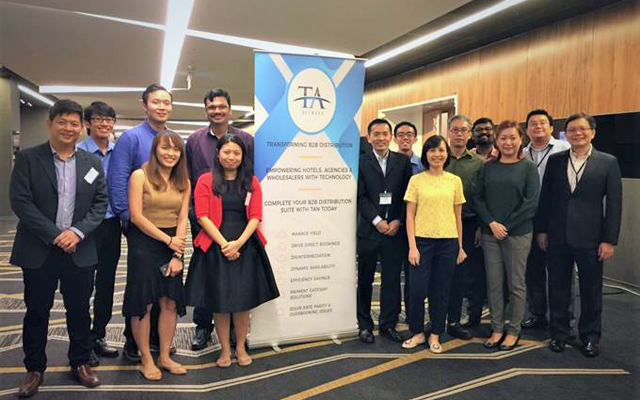
The TAN team at the partnership announcement event last week, which saw the attendance of regional agencies, wholesalers and hotel chains

A new industry partnership could offer the answer to mounting hotel distribution struggles that traditional travel agencies and wholesalers face in a technology age.

Trip Affiliates Network (TAN) and SiteMinder, a cloud platform for hotels, have teamed up to extend channel manager connectivity to small- and medium-size travel agencies, effectively giving these traditional middlemen access to live hotel inventory, rather than have to rely on paper contracts and allotted blocks.

The TAN team at the partnership announcement event last week, which saw the attendance of regional agencies, wholesalers and hotel chains

“There’s a technology wave coming and hotels are beginning to move towards dynamic availability. Marriott has gone full dynamic availability and stopped giving allotments to local wholesalers. InterContinental Hotels Group (will soon go that way too). This is the major trend driving what we are doing today,” said Tan Huck Khim, executive director of TAN’s Travel Prologue.

“Wholesalers are being left out in the cold because they cannot access technology or are not large enough to attract the likes of SiteMinder. TAN fills the gap between SiteMinder and local wholesalers. These local wholesalers are big in their own markets, contracting with up to 300 hotels, but lack the technology, know-how and an account with SiteMinder (and the like), and are hence being left out of Marriott and IHG (distribution).”

And with access to live availability and rates, travel agencies will be better able to price rooms competitively, as well as enjoy greater efficiency.

For hotels, this helps address problems with rate parity and overbooking, according to TAN.

The partnership also translates to wider distribution opportunities. “It’s about what will add value to individual hotels. We are doing what we can to give hotels more opportunities to sell their inventory,” James Bishop, SiteMinder’s senior director of demand partnerships commented.

Giving “local champions” a technological boost now is a timely move, with the rise of bespoke preferences among consumers making mass distribution through OTAs arguably less core as a B2B strategy than before.

“We think local champions have a big role to play in B2B distribution going forward. Quoting (what a hospitality partner said last year), OTAs have been around for 22 years and have commoditised the entire industry by making it (largely) a hotel price comparison site.

“But commoditisation has run its course.Travellers are looking for bespoke, experiential, off-the-beaten-track (holidays). That’s where travellers want to go to agencies because they have that human capital.”

Video interview: Singapore Girl won’t turn robotic as SIA embraces technology

0

A huge change is taking place at 72-year-old Singapore Airlines (SIA), which is refleeting the product, undertaking an organisational restructure and embracing digital in a big way.

In a TTG video interview on the sidelines of ITB Asia, Campbell Wilson, SIA’s senior vice president of sales & marketing, described the transformation as “fundamental”.

Digital initiatives are being rolled out across the business. Giving examples, he said technology is being deployed so that frontline people, whether crew, ground staff or contact centre staff, are equipped to handle “not just people in general but a person in particular”, with full knowledge of what he/she likes and what might be the best solution for the person’s particular interest at the point in time.

“That’s on the customer side. Obviously on the business side, it’s predictive maintenance, so we can ensure aircraft operate efficiently and reliably. From the sales and marketing perspective, it’s to be able to segment the customer base and provide people with a customised offer of product, and price that means something to them, that confers value of the Singapore Airlines product.

“We’re spending hundreds of millions of dollars on IT-related CAPEX; we’re employing hundreds of additional IT-related staff. This is a fundamental transformation.”

While the organisation keeps up with contemporary demands and technologies, Wilson said its business model, which has been built on human contact, customer service and intuition, remains.

Transforming a legacy brand like SIA, compared to a LCC like Scoot (where Wilson was CEO before being transferred back to SIA) is “absolutely” harder, he said.

“If you want to do an initiative in a low-cost airline, it takes a month and it’ll cost you US$10,000. If you want to do the same thing at a legacy airline, it’s usually a year and US$1 million.”

Watch the full video to understand the real magnitude of change that is happening at SIA here.

Sarawak readies for launch of tourism campaign

0
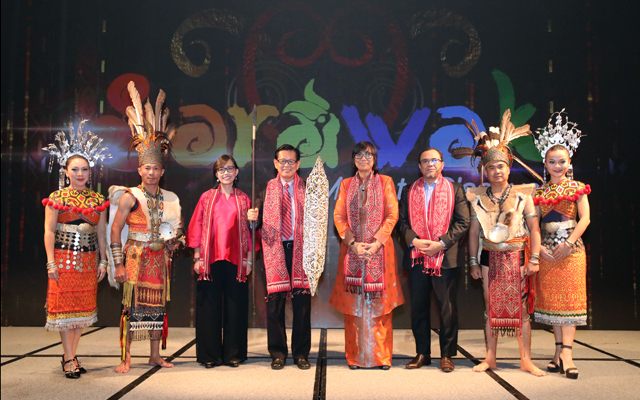
At the Visit Sarawak logo launch (middle four, from left): High Commission of Malaysia counsellor Engku Puteri Suraya Engku Mohd Afandi; Sarawak assistant minister for tourism, arts & culture Lee Kim Shin; Sarawak Tourism Board's Sharzede Salleh Askor; High Commission of Malaysia tourism attache’ Edzuar Zar Ayob Azri

The Sarawak state government last week unveiled the Visit Sarawak Year logo in Singapore, where it will soon have an office, as a precursor to the campaign’s official launch in January 2019.

At a trade event held in Singapore last week, Sarawak assistant minister of tourism, arts and culture, Lee Kim Shin said: “The tagline, More to Discover underscores Sarawak Tourism Board’s (STB) strategy to position the state as a plethora of culture, adventure, nature, food, and festivals offerings that are not found anywhere else in the world, and ready to be discovered.”

At the unveiling of the Visit Sarawak logo (middle four, from left): High Commission of Malaysia counsellor Engku Puteri Suraya Engku Mohd Afandi; Sarawak assistant minister for tourism, arts & culture Lee Kim Shin; Sarawak Tourism Board’s Sharzede Salleh Askor; High Commission of Malaysia tourism attache’ Edzuar Zar Ayob Azri

The campaign is aimed at increasing visitor arrivals to Sarawak to 5.2 million by end 2019, from 4.9 million in 2017. Apart from the domestic market, key focus markets include the UK, Germany, the Benelux countries, China, Australia and South-east Asia.

Lee added: “Singapore will be a central hub for STB’s marketing strategies as the Sarawak state government will be setting up an office in the city-state next year.”

There are more than 600 seats daily between Singapore and Sarawak, served by Scoot, Malaysia Airlines and AirAsia.

According to Lee, the 3D2N Kuching getaway is among the packages favoured by Singaporeans with Central Sarawak being a rising attraction.

Stretching from Sibu, on the lower Batang Rejang, upriver to Kapit and Bintulu and north-eastward along the coast to Bintulu and Miri, Central Sarawak offers some river journeys, national parks and modern urban conveniences. The Sibu Heritage Centre, the Niah National Park, the Tua Pek Kong temple and Fort Sylvia are some key attractions within this region.

STB’s CEO, Sherzede Salleh Askor, will intensify promotional efforts in 2019 through participation in trade fairs and digital platforms.