More than double the visa processing fee for Malaysian tourists to India
New Delhi has become the second Asian city after Bangkok in Air Italy’s network, with Mumbai soon to follow as the airline plans further expansion to better connect India and North America via Milan.
The new Italian airline commenced a thrice-weekly New Delhi-Milan service last week, continuing its foray into Asia that kicked off with a five-times-weekly flights between Bangkok and Milan in October. On December 14, it will start plying the Mumbai-Milan route three times a week.
Plans to connect India to North America via Milan
Air Italy has also entered into an interline agreement with Air Vistara, which will help expand its reach to other markets within India.
Apart from focusing on point-to-point connectivity, the airline is expecting Asian markets like India to generate healthy demand for its new North American routes including New York and Miami, where it commenced operations earlier this year.
“We promote Italy as a destination. However, we are also offering customers connectivity to New York and Miami through our hub in Milan. Whenever a airline provides hub connectivity the demand increases significantly. Though there are other airlines like Air India that are offering point-to-point connectivity between India and Italy, we are the only option for travellers that are looking at onward connections to North America,” said Rossen Dimitrov, COO, Air Italy.
On its strategy to expand its North American network, he shared that the airline will be launching new destinations in the US including San Francisco and Los Angeles in April 2019. Air Italy also plans to launch a new service to Toronto in summer 2019.
He added that Air Italy is also planning to enhance its connectivity to Asia, without disclosing the destinations the airline is looking at.
“For us Asia is a priority market and there are some other destinations in the continent on our radar. We are presently evaluating those markets. We will make announcement in this regard at the right time.”
The carrier is enhancing its longhaul fleet with the Airbus A330-200 aircraft. The airline’s fleet size is expected to increase from the current 15 to over 50 by 2022, with new Boeing 737 Max aircraft part of the mix.
Correction: The story earlier reported that Air Italy has entered into a codeshare partnership with Air Vistara, but the airline has clarified that it is actually an interline agreement. The story has been updated.
A Paramount Picture-branded theme park is set to open within an upcoming multi-billion-dollar integrated entertainment resort in South Korea’s Incheon.
A development by Inspire Integrated Resort, an affiliate of Mohegan Gaming & Entertainment (MGE), the Inspire integrated resort is scheduled to open in phases from 2022 onwards.
Rendering of Inspire in Incheon
The 40-plus ha Paramount-branded theme park with a connecting entertainment and retail village is scheduled to open as part of phase 1B of the project in 2025.
Paramount controls a collection of brands in filmed entertainment, including Paramount Pictures, Paramount Animation, Paramount Television, Paramount Players, MTV Films and Nickelodeon Movies.
It is one of the brands on the growing list of strategic partners for Project Inspire, according to Mario Kontomerkos, CEO of MGE. “Aligning with highly sought after and recognised brands (sharing) mutual goals is a key component to the creation of the world’s first true integrated entertainment resort.”
Phase 1A of the development, spanning over 170ha of Incheon Airport’s nearly 437ha IBC-III parcel of land, is scheduled to break ground in May next year and open in 2022.
It will include a five-star resort hotel with over 1,250 keys, a 15,000-seat concert and sports arena, casino space with 150 table games and 600 slots/electronic games, a hemispherical dome featuring over 4,500m2 of climate-controlled indoor pool space comprising rides, dining and retail.
A conference and convention space that includes the largest hotel ballroom in Incheon/Seoul at 5,617m2 is also expected to open as part of phase 1A of the project.
Rosewood Hotels & Resorts has been appointed by Fubon Hospitality Management to manage Rosewood Taipei, set to launch in 2024.
Rosewood Taipei will feature 191 rooms and 27 suites; five restaurant and bars; residential-style meeting and function facilities; Sense, a Rosewood spa with four treatment rooms; an indoor pool and a fitness centre.
Rosewood to open Rosewood Taipei in 2024
Located in Taipei’s Xinyi district, the hotel sits at the intersection of new and old neighbourhoods, with sites such as Taipei 101 and Si Si Nan Cun cultural heritage village at the property’s doorstep.
The Taipei property will add to Rosewood’s growing Asian footprint, with Rosewood hotels in Hong Kong, Bangkok, Yangon and Guangzhou scheduled to open in 2019.
Other recently announced Rosewood hotels in Asia include Shanghai; Shenzhen; and Hermana Mayor, a private island in Zambales, the Philippines.
Harry Sommer has been named Norwegian Cruise Line Holdings’ (NCLH) president, international – a new role created to reinforce plans to expand global sourcing and distribution. He will continue to report to NCLH’s president and CEO Frank Del Rio.
Sommer is now responsible for sales, marketing, public relations and office operations for NCLH brands – Norwegian Cruise Line, Oceania Cruises and Regent Seven Seas Cruises – in all markets outside the US and Canada.
Harry Sommer. Photo credit: www.cruiseindustrynews.com
A 25-year cruise industry veteran, Sommer joined NCLH in 2000 and rejoined in 2008, serving in various executive capacities, including most recently as executive vice president of international business development, which he assumed in June 2015.
During this time, he championed the growth of the company’s international division, increasing NCLH’s presence worldwide, opening 13 offices globally, including most recently Auckland and Tel Aviv.
Additional leadership promotions to the NCLH’s international division include Isis Ruiz, who has been appointed senior vice president, international marketing & public relations.
She will oversee the marketing, public relations, creative services and advertising strategy across all three brands in our international markets.
Based in the company’s Southampton, UK offices, Sally-Anne Beasley has been named vice president, passenger services, and will head the service-focused areas of operations, including reservations, support services, guest relations, help desk and legal support, and air and land operations and planning.
Moreover, as vice president, commercial and business planning international, Todd Hamilton, will be responsible for commercial planning, business analysis, and business operations for the entire international organisation.
Ruiz, Beasley and Hamilton will all report directly to Sommer.
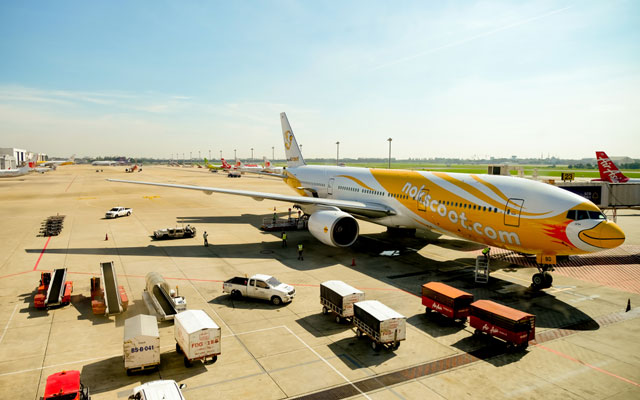
NokScoot scoots off to Delhi
NokScoot will launch its latest route from Bangkok’s Don Mueang Airport to Delhi’s Indira Gandhi International Airport on December 18, 2018, marking the Thai carrier’s inaugural service to South Asia.
XW306 will depart Don Mueang Airport at 22.35 and arrive in New Delhi at 01.15 the following day. Return flight XW305 will depart New Delhi at 02.55 and land in Don Mueang Airport at 08.15.
NokScoot will operate the four-times weekly Bangkok-Delhi service using Boeing 777-200 wide-bodied jets, configured with a total of 415 seats.
Xiamen Airlines flies to Paris from Fuzhou
Xiamen Airlines has launched a new direct flight between Paris and Fuzhou on December 11.
The Paris-Fuzhou route operations thrice weekly on Tuesdays, Thursdays and Sundays. Flights depart Paris at 13.30 and arrive in Fuzhou at 07.30 the following morning, and the return flight will depart Fuzhou at 00.30 and land in Paris at 06.55. A Boeing 787 Dreamliner will be operated on the 13.5-hour route.
Vietjet links Phu Quoc with Seoul
From December 22, Vietjet will start operating daily return flights between Phu Quoc and Seoul.
The 5.5-hour service will depart Phu Quoc at 15.30 and arrive at Seoul at 22.45. The return flight will take off from Seoul at 01.45 and land in Phu Quoc at 05.35.
The airline currently operates seven other routes between South Korea and Vietnam, including Seoul-Hanoi/Ho Chi Minh City/Hai Phong/Danang/Nha Trang, Hanoi-Busan and Danang-Daegu.
AirAsia Thailand inaugurates 10 routes
In December 2018 alone, AirAsia Thailand has inaugurated flights on 10 new routes, comprising nine international destinations – the bulk of which are new links to China and India – and one domestic connection.
The new international connections are:
– Chiang Mai-Beijing (seven times weekly, launched November 30)
– Chiang Mai-Nanchang (four times weekly, launched December 1)
– Krabi-Macau (four times weekly, launched December 1)
– Krabi-Hong Kong (thrice weekly, launched December 2)
– Krabi-Chongqing (seven times weekly, launched December 7)
– Bangkok-Gaya (four times weekly, launched December 3)
– Bangkok- Bhubaneswar (thrice weekly, launched December 6)
– Bangkok- Visakhapatnam (four times weekly, launched December 7)
– Bangkok-Colombo (four times weekly, starting December 14)
The Thai LCC will also begin four times weekly flights between Khon Kaen and U-Tapao (Pattaya) on December 21.
Air NZ to add seasonal flight between Singapore and Christchurch
Air New Zealand is set to operate flights between Singapore and Christchurch from December 2019, subject to slot availability.
The airline will operate a five-times weekly seasonal service between Singapore and Christchurch from December 1, 2019 to February 22, 2020 using a new configuration Boeing 787-9 Dreamliner aircraft.
Up to now, Singapore Airlines has been operating the seasonal service three times a week, in addition to its daily service between Singapore and Christchurch.
Tickets for the new service will go on sale January 23, 2019.
Ivan Liu has been appointed as general manager of Sheraton Langfang Chaobai River Hotel.
Prior to his latest appointment, Liu was director of human resources at Sofitel Wanda Beijing, where he rose up the ranks to become director of operation – executive assistant manager in 2016.
Liu brings over 17 years of experience to the table, having worked with other China hotels such as Beijing Marriott West and Peninsula Palace Beijing.
Kevin Hinahon, marketing and sales manager, Travel Experts, Philippines
Boracay. The island has always been the country’s most sought-after destination and next year won’t be any different. It has tickled the curiosity of both foreign and local tourists as to what improvements took place during its six-month rehabilitation. The hubbub of complex issues, although unintentional, proved to be an excellent publicity stunt, especially prior to Boracay’s October 26 reopening, as evidenced by the crowd and demand curve.
Flores, Indonesia
Renato Domini, CEO, Panorama Destination Indonesia
A destination to watch would be Labuan Bajo on Flores island. We are seeing a significant growth in interest for the destination, largely due to the wealth of amazing landscapes, spectacular scenery, unique cultures, otherworldly wildlife and beautiful beaches to be found on the surrounding islands, not least the natural wonders of nearby Komodo National Park.
Ally Bhoonee, executive director, World Avenues, Malaysia
Langkawi sees strong demand for tourists looking for beach stays. Adding to its allure is the availability of all categories of hotels, lovely beaches, and abundance of sea and land-based attractions for families such as cable car ride, crocodile farm, buffalo farm and ziplining through the rainforest. Payar Island in Langkawi is also very popular for snorkelling and diving.
Pirach Hansrisuk, CEO, 5H Tour, Thailand
Khao Yai will be a hot destination next year, especially among South-east Asian tourists. A two-hour drive from Bangkok, Khao Yai features beautiful landscapes particularly in the rainy season, and tourism booms during winter. Local hotels, attractions and tourism-related activities have been well developed and are ready to welcome foreign visitors.
Edwin Briels, managing director, Khiri Travel Myanmar
Southern Rakhine state will become more popular with the Arakan Nature Lodge’s recent opening, especially as Ngapali Beach is already offering one of the best beach experiences in South-east Asia. The opening of Wa Ale Resort in October 2018 and the upcoming launch of Awei Pila ensure Mergui Archipelago now offers top luxury accommodation.
Joseph Sze, senior project director, Siam Express Singapore
Tiong Bahru is getting popular with the Chinese market, as Chinese FITs and families have been researching places to eat and explore in Singapore. Tiong Bahru fits in with Singapore Tourism Board’s Passion Made Possible brand, which has also helped translate and present the neighbourhood’s story to visitors.
Houseboat in Kerala backwaters
Arun Anand, managing director, Midtown Travels, India
Kerala. The state has bounced back from the floods in terms of restoration of the connectivity, infrastructure and tourism experiences. The state government, and the local tourism and hospitality stakeholders, are aggressively promoting the destination. Through these efforts, we are expecting a healthy number of enquiries from our foreign tour operator partners for Kerala in 2019.
Ronni Dalhoff, managing director of Diethelm Travel (Cambodia)
The riverside town of Kampot and nearby coastal resort of Kep are becoming tourism hotspots as interest shifts from Sihanoukville. Many places in these destinations are now seeing high occupancy so we would like to see more four-star and mid-range accommodation in these areas to be able to offer a more rounded package.
Ronald Wu, director of sales and marketing, Gray Line Tours of Hong Kong
The world’s longest bridge-cum-tunnel sea-crossing, the 55km Hong Kong-Zhuhai-Macau Bridge linking northern Lantau to the western shore of Pearl River Estuary is an architectural wonder and attraction. Apart from driving across the mega structure, visitors can also view it from a boat.
Amber Halleday, mobile travel advisor, Mobile Travel Agents, Australia
Only 25 minutes by ferry from Townsville, North Queensland, lies the Magnetic Island. It has secluded beaches, crystal clear waters, abundant wildlife and easy access to the Great Barrier Reef. Two-thirds of the island is the national park, housing nearly 25km of amazing walking trails. The island comprises everything from luxury self-contained accommodation to backpacker hostels, plus many activities ranging from boat trips and guided tours to golf, diving and horse riding.
Devindre Senaratne, managing director Journey Scapes Travel, Sri Lanka
Sigiriya, where the famous rock fortress built by an ancient king is located, is gaining prominence over other locations in Sri Lanka. It is where you can see the largest land mammal (elephant) at a wildlife park, and the largest mammal (blue whale) on the shores off the eastern town of Trincomalee.
Avi Lugasi, owner and managing director, Windows to Japan
We are expecting a very busy 2019 thanks to the Rugby World Cup, even though Kyoto – where we are based – is not hosting any matches. We are very close to Osaka and fans will inevitably want to come here on days when there are no games.
OUTBOUND
Abdul Rahman Mohamed, general manager, Mayflower Holidays, Malaysia
Phu Quoc has seen a spike in demand since AirAsia commenced new services from Kuala Lumpur on November 2. The destination has unspoilt beaches, and makes a great weekend getaway for Malaysian travellers.
Amol Punni, managing director, Welcome Travels, Australia
Kerala. Although the destination suffered severe flooding in 2018, wellness tourism and beach destinations will bounce back and there will be a surge in tourist footfalls. Not only does it have a number of world- renowned Ayurveda and yoga resorts, Kerala’s natural beauty is unmatched. The Malabar Coast is adorned with palm-lined beaches, canal network, lush lands, house boats and wildlife sanctuaries.
Winter in Lapland, Finland
Mike Hain, group sales, Corporate International Travel & Tours, Philippines
Lapland. It’s the buzzword for Filipinos who’ve been there, done that and want to experience unique winter activities such as visiting Santa Claus’ home near the Arctic Circle, seeing the Northern Lights, staying in an igloo, and husky-sled, snowmobile and reindeer sleigh rides. Lapland can be combined with other Nordic countries and Tallinn in Estonia is just a ferry ride away.
Wong Yew Hoong, EU Holidays Singapore
There has been an increase in travellers signing up for tour packages to Uzbekistan as compared to five years ago, heralding the trend of travel to exotic and unique destinations in 2019. This is also evident in more than 100 travellers booking tickets for EU Holidays’ mass-chartered flight to Uzbekistan in December 2018.
Saint Basil’s Cathedral in Moscow
Johnny So, general manager, Sunflower Travel Service, Hong Kong
Eastern Europe like Russia. Numbers have been going up over the last few years as many travellers have been to Western and Southern Europe. Hotels and coaches were in shortage earlier, but post-World Cup Russia has seen more resources added, lowering costs and make the destination more affordable.
Surawat Akaraworamat, managing director, KTK Tour Enterprise, Thailand
An emerging outbound market of Thailand is Taiwan. Travellers need not apply for visas and it takes only about four hours to fly there with many airline choices available. The values of Taiwanese and Thai currencies are close. It is clean, well regulated, with convenient transport facilities. Taiwanese people are friendly and their food is compatible with Thais’ tastes.
Shibuya crossing, Tokyo
Andy Wu, managing director, Gray Line Tours Macau
Japan will continue to be the hottest destination owing to its culture and food. As FITs occupy a larger ratio of visitors, I foresee the traffic will venture beyond the key cities. With the Hong Kong-Zhuhai-Macau Bridge now operational, there will be more options for Macanese to fly to Japan via Hong Kong International Airport.
Shun Tsuzawa, supervisor of outbound marketing and strategy division, JTB
Hawaii. For many Japanese, Hawaii is still paradise and our largest customer segment is families, followed by couples on their honeymoons.
Bui Nhan, director, Ecosea Travel, Vietnam
For 2019, I expect more Vietnamese will visit European countries, with Paris, Italy and Sweden the most popular destinations. New destinations are emerging. South Africa is one country that will start to see more Vietnamese travellers because it is new and exciting.
Sinan Thourn, CEO and founder, B2B Cambodia
Interest in Tokyo and Taipei will continue to grow as popular destinations with Cambodians in 2019. These cities are still seen as new destinations and with direct flights to both, they are quick and easy for tourists to spend a few days for some sightseeing and shopping.
Kamal Munasinghe is now the general manager of Alila Bangsar Kuala Lumpur.
The hospitality veteran has over two decades of hospitality expertise managing independent and international hotels across various locations including Switzerland, Sri Lanka, Malaysia and Vietnam.
The Swiss national first began his career in F&B in Switzerland where he worked his way up to be the director of restaurants at the Zurich Marriott Hotel. After eight years, he joined Movenpick Restaurants as the general manager before re-joining Zurich Marriott in the rooms division where he served for another three years, after which he started his own hospitality management company Worldone Management.
Munasinghe then returned to Sri Lanka, his home country, where he joined Mount Lavinia Hotel Group before his next move to The Kingsbury Colombo Hotel as general manager.
His career then continued in Vietnam with a 3.5-year stint as the director of
operations with the Renaissance Riverside Hotel Saigon, following which he moved to the Renaissance Kuala Lumpur as the resident manager in 2016.
Sam Turner, global director of sales & sourcing: Consolidation across accommodation sector set to continue
Consolidation has been a key part of the accommodation sector over the last 12 months and will continue in 2019. Both investors and owners have recognised that the sector is just way too fragmented. How many other industries can you name where the top 10 brands generate less than a quarter of revenues?
This explains not just the mega deals of recent years, but also the medium-sized chain deals of this year such as Minor Group acquiring NH and Accor acquiring Mövenpick – as well as the constant acquisition of smaller brands and start-ups by Accor and other major chains.
The bedbank sector too remains highly fragmented and this explains the rationale behind our acquisition of both Tourico Holidays and GTA last year, with both companies now almost fully integrated into our business and their brand names now being phased out. We’re not the only people in this sector following this philosophy, just look at the activity of Webbeds and their recent acquisitions, right up to a few weeks ago.
The biggest challenge for travel intermediaries and distributors is to stay relevant to hotels. But for many people in this space the copycat model is becoming increasingly harder to justify, as they are not delivering extra value to hotels. This perhaps also explains some of the consolidation, as people throw in the towel and sell-up or simply go out of business.
Hyped-up new technologies still not delivering, at least not yet
All of the buzz and hype from last year around artificial intelligence (AI) and voice search has failed to deliver this year – as is often the case with the latest trends, the reality is that they take much longer to implement than was originally foreseen.
In the short term the result has been a bit disappointing, and not just in terms of voice search: ultimately you really still have to sit down at an actual computer to fully plan and book any trip, as even on a mobile it is not quite as easy as many had hoped.
For sure both AI and voice search will be relevant in the medium term. But in the short term we need to be more realistic and perhaps 2019 will be a year in which our expectations will slowly begin to match the more slowly developing reality: small improvements and changes, not a quantum leap.
Noteworthy breakout brands and individuals this year
Perhaps the most interesting development in the hotels space this year has not been a piece of technology or from the distribution space.
Oyo Rooms has come out of nowhere to raise huge sums, around a billion dollars at the last round, to create a more level playing field for small independent properties. Already it is the fastest-growing hotel company in the world and will soon be global chain. No one could have anticipated a new competitor emerging so quickly. It goes to show that the sector still has room for more innovation that many would have imagined.
Alternative accommodation sees slowdown in growth
Last year everyone was still assuming that the alternative accommodation sector would just keep growing exponentially. But this year has seen a massive slowdown in growth and we expect that to continue. The likes of Airbnb are still growing well, of course, but nothing like before.
This perhaps explains why such providers are now trying to expand into other areas, such as cross-selling ancillaries or ‘experiences’. They are realising that ultimately they are intermediaries, just another sales platform – and in that respect they are becoming more like OTAs.
Chinese outbound market remains largely untapped
Everyone in tourism with a strategy team or demanding investors to keep satisfied knows that the explosion of Chinese outbound tourism represents an enormous opportunity. The demographic shift in China as people become middle class and aspire to travel internationally means that we will see exponential growth in the passenger figures for many years: in the coming two years alone the Chinese passport office will issue 100 million new passports.
But 2018 was another year in which global hoteliers once again failed to fully capitalise on the Chinese segment. Many are still playing catch-up here and few are fully ready to cater for Chinese travellers. Could this change in 2019? Right now too many hotels don’t accept Alipay, cannot show floor plans in the booking process, or have no visa support service in the Chinese language – the sector is improving, but 2019 is probably not the year most hotels will crack the Chinese outbound market.
Peter Mansour
Peter Mansour, director of product management: Hotel distributors offering re-seller content unsustainable
The growth in recent years in the number of smaller hotel distributors offering ever larger amounts of hotel rooms available for sale is both unsustainable and not in the interest of consumers. Whilst it will probably continue in 2019, over the longer term this is likely to change.
These distributors are increasing the number of rooms they have available simply by signing contracts with re-sellers and are not offering directly contracted rates. Every extra link in the hotel distribution chain adds a cost that is ultimately paid for by consumers. Not only are these distributors not adding value, often this approach is not even sustainable for them in the long term.
Why are they doing this? Right now the distribution industry is consolidating into larger players who have the scale and directly contracted hotel rates. This means that the smaller players are now looking for any extra revenue opportunity, no matter how small. But fast forward a few years and you will notice a great deal less small distributors offering ‘500,000 hotels’ at trade shows like ITB or WTM – they will either shrink back down to whatever their core offering really is, or go out of existence.
More airlines moving into the hotel intermediary space – and in some cases even tour operator space
Over the last few years we’ve seen a trend for airlines approaching us to start selling hotel accommodation on their website. In 2018 this has increased, but we predict that in 2019 it really will begin to snowball.
As airlines look to diversify their revenue sources and increase their margins, the opportunity to cross-sell a loyal customer a hotel room offers potentially more profit than operating the flight itself.
In particular, however, what we are seeing is more and more airlines wanting to go a step further still and actually become a tour operator: offering a complete package to customers by giving them a combination of a flight and hotel – with all the regulatory and operational implications that means, but also the opportunity to cross-sell the customer more products: car hire, transfers, theatre and sports tickets, etc.
Service will slowly become the key differentiator for hotels, not price
The general trend towards greater price transparency and efficiency for hotel accommodation – helped significantly by the advent of metasearch – means that hotel rooms are increasingly becoming more and more commoditised, in the same way airline tickets have been for many years.
So how does a hotel stand out in such a price sensitive market? Service has always been a differentiating factor, but as time goes on it becomes an ever more important one.
In 2019 we will see this shift accelerate slightly as AI and bots become used more frequently by pioneering hotels to improve customer service all round, and not just in the booking process. But achieving this is going to be harder said than done, only the most innovative will succeed – and many will fall behind.
Trend for greater price transparency driven by metasearch leading to a technological arms race
The impact of metasearch pushes us towards greater price transparency and efficiency, which is great news for consumers. For both hotel providers and travel selling intermediaries however, not only does this drive down margins it also makes it harder to compete to actually make that sale.
It is a merciless market out there for those competing on price alone and this is leading to a data-analytics arms race in our sector as providers compete to have the fastest and best pricing technology to outwit the competition.
In Thailand, an ongoing price war in the sale of Japan tour packages has altered the image of the destination, once associated with luxury.
While Japan continues to be among the top destination choices for Thai travellers, lower airfares offered by LCCs and the visa exemption policy the Japan government extended to Thai nationals since 2012 have brought package prices down and triggered a price war.
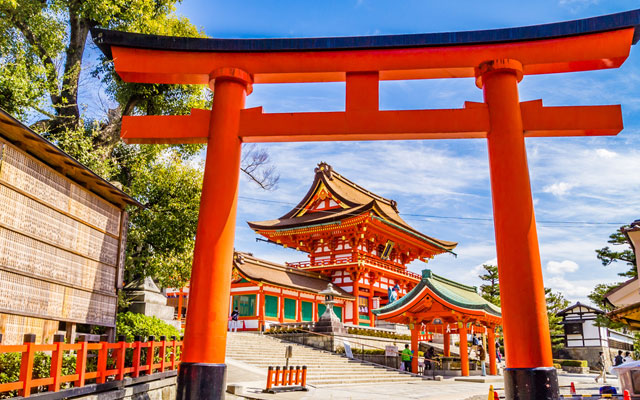
Thai travellers’ perception of Japan has changed over the years; Fushimi Inari Shrine in Kyoto pictured
Prices have dropped by more than 50 per cent, from between 40,000 baht (US$1,219) and 60,000 baht per package five years ago to less than 20,000 baht at present.
Somchai Chomraka, chief executive of Weekend Tours, added: “There have been many groups of Thai seniors who have time and money and wait until tour operators offer their lowest prices (before buying packages). This becomes a habit.”
Thanapon Cheewarattanaporn, president of the Thai Travel Agents Association (TTAA), said Japan tour package prices should average around 25,000 baht each. Any prices lower than this would likely mean a loss-making service for tour operators.
“The question is how they can run business in the long run without profit,” he stressed.
Weekend Tours’ Somchai said Japan has already become the riskiest destination to sell in terms of loss-making potential, followed by South Korea, adding that the situation is likely to persist in 2019.
But Somchai believes that the price war will end in 2020 after some players either go out of business or realise the downsides of engaging in price war.
If China and South Korea tours were any indicator, perceptions of product quality are likely to be affected with such high levels of competition, opined Chotechuang Soorangura, the associate managing director of NS Travels & Tours (NS).
Five years ago, Japan was seen as a coveted destination for holidays and trips sold out fast, Chotechuang said. But as perceptions of Japan change, demand has begun shifting to new destinations.
However, executives of TTAA, NS and Weekend Tours are confident that Japan will remain in high demand for Thais, thanks to the rise of FITs.
TTAA projects that the number of tourists from Thailand to Japan will exceed 1.3 million in 2019. As of October 2018, the arrivals from Thailand to Japan numbered about 900,874.
Thanapon said arrivals to Japan would reach at least one million by the end of 2018. The number of FITs will form the majority of the tourists within 2020, compared with the present 30 per cent proportion, he forecasts.