

Singapore to get first MGallery
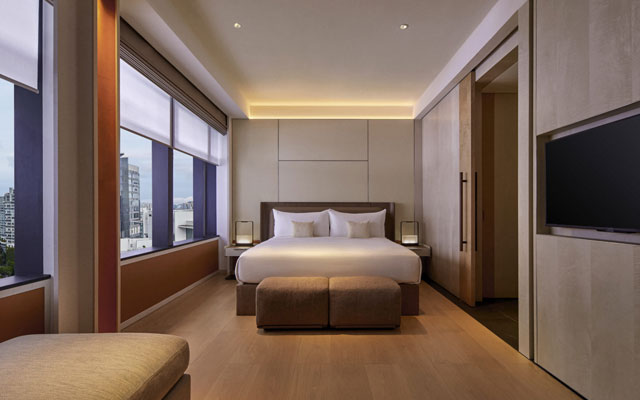
Orchard Hills Residences, the newest addition to Accor’s MGallery collection, is set to open in the heart of Orchard Road, Singapore’s famed shopping strip.
The 168 serviced residences will be the first MGallery in Singapore, and is slated to open in 1H2021, under an agreement between the hotel group and investment firm SIN Capital.
Designed by Japanese studio Nikken Sekkei, Orchard Hills Residences will be located at Orchard Hills, a fully-integrated luxury healthcare hospitality development that will offer bespoke luxury hospitality services, curated health and wellness services, healthy cuisine, and flexible workspaces.
Key highlights include the world’s first cantilevered clear-bottomed swimming pool more than 100m above street level, and a 9-by-9m digital art installation custom designed by teamLab, among other design features.
Orchard Hills Residences is SIN Capital’s flagship development, the first of a strong pipeline of integrated luxury healthcare hospitality developments in key gateway cities across Asia.
Restaurant A380 @Changi
Why
Coronavirus travel curbs have not quenched the desire to travel, and for many, a reminder of the in-flight experience is a welcome treat. In Pattaya, a retired commercial airplane was converted into Coffee War, a “plane café” complete with first-class seats, while Thai Airways turned the staff cafeteria in its Bangkok headquarters into an aircraft-themed restaurant.
Singapore Airlines (SIA) went the extra mile. Over two weekends between October 24 and November 1, two of its newly retrofitted A380 superjumbo aircraft were opened for exclusive tours and multi-course meals, reviving the memory of dining in the clouds.
What
Parked at Changi Airport Terminal 3, a pair of double-decker A380s hummed in wait of their first guests since the outbreak. While each plane seats more than 470 pax at usual capacity, only 250 guests were served per aircraft, per dining session, in line with safe distancing measures.
With a choice of either lunch or dinner serving, diners selected their experience as they would book their flight. Seatings ranged from Economy to Suites, and the menus varied with the cabin class. Guests who signed up beforehand were also treated to a guided tour of the entire aircraft, including the suites and the cockpit.
How
Although the restaurant was the core concept, the entire experience mimicked the boarding process. Our journey started in the departure hall, where we were guided to the gates. In order to prevent overcrowding, we had been allocated ‘departure’ timings.
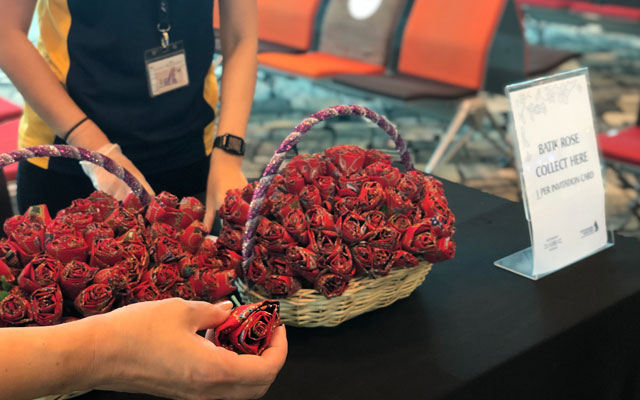
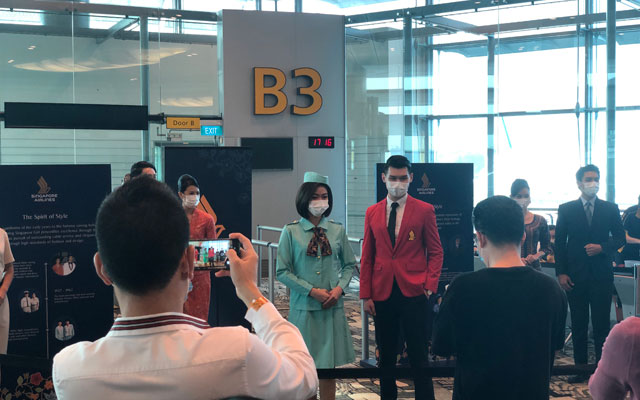
Once inside the gate hold room, we could enjoy a variety of activities while waiting for our guided tour. The caricature sketching station was a hot favourite, and a batik rose-making workshop was held every half-hour. At hourly intervals, the cabin crew held a showcase of the airline’s uniforms from 1957, with a queue set up for guests to snap photos.
After a short time, I was called for the pre-dining tour. Each batch was further split into small groups of four to five, led by a staff of Singapore Airlines who acted as a product guide.
The groups were spaced apart, with no two occupying the same cabin. The tour took us through the plush suites – where we caught a rare glimpse of the cabin’s luxurious powder room – all the way to the cockpit of the plane, where three pilots were stationed for a photo with guests.
Post-tour, we were led back to the gate hold room, where we waited an hour as the planes were prepared for dining. As the cabin crew filed in, they were greeted by rousing applause from fans and loyal customers. Many of these crew members have not flown for months, and had volunteered to serve in Restaurant A380 for a small allowance.
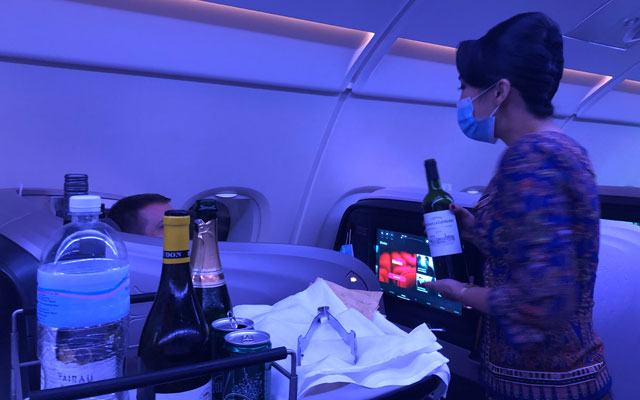
Upon boarding for our meal, the crew warmly welcomed us with SIA’s famed hospitality. I was seated in the business class cabin, and was given a choice between an international course and a local menu selected by chef Shermay Lee. All guests were also entitled to two complimentary alcoholic drinks and a free flow of other beverages.
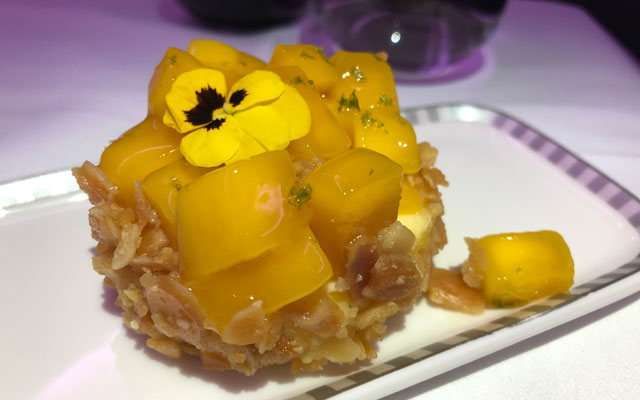
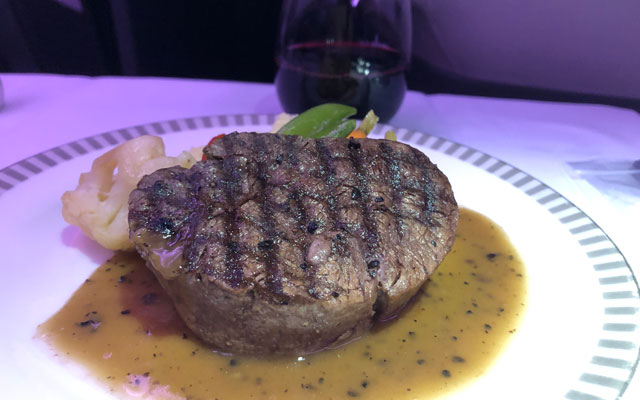
The dishes had been prepared by SATS, and were thus, fresher than usual in-flight meals. I picked the international menu, and was treated to a hearty dinner comprising SIA’s signature satay, smoked salmon, a well-done beef fillet, baked cheesecake and a smattering of cheese and fruit.
The entire meal lasted about three hours, during which, we were kept entertained by in-flight entertainment. At the end, guests were given a goodie bag with airline merchandise as a token of appreciation.
Verdict
As the dishes had not been frozen and were formulated for on-ground consumption, they tasted much richer than they would have in the air. While I found the beef a tad dry, I greatly enjoyed the truffle mash it was served with, but my overall favourite had to be the satay.
Crowd control was largely effective, however, it could have been managed better at certain points, such as during the uniform showcase, when the queueing system was not clear to guests and the staff had to rush to enforce safe distancing.
During the hours between entering the gate hold room and boarding for our meal, the wait could have been made more enjoyable if some snacks or drinks were provided. Ultimately, however, the service was well worth the wait. Throughout the dinner, the crew was eager to host and engage in hearty conversation, and the overall experience was a unique and memorable way to support SIA through this tumultuous storm.
Rate From S$53.50 (US$40) per person
Contact
Tel: +65 62238888
Website: www.singaporeair.com/en_UK/sg/plan-travel/discover-your-sia/restaurant-a380-at-changi/
Waldorf Astoria to make Japan debut in Tokyo

Hilton’s Waldorf Astoria Hotels & Resorts has signed a management agreement with developer Mitsui Fudosan to open the first Waldorf Astoria in Japan come 2026.

Located within a planned mixed-use development that will include office and retail spaces as well as luxury apartments, Waldorf Astoria Tokyo Nihonbashi will span nine stories, from levels 39 to 47.
The hotel will feature 197 guestrooms, three restaurants, and the brand’s signature Peacock Alley lounge and bar. Guests will also have access to an indoor pool, spa and fitness centre, while the hotel’s 583m² of meetings and events space includes a ballroom and chapel for special events.
Safety, value-for-money top priorities for SE Asian Muslim travellers
Muslim travellers in South-east Asia prize safety and value-for-money above the availability of halal food and Muslim-friendly amenities when it comes to key factors influencing their post-pandemic destination choice, a recent study launched by Pear Anderson and Wego has revealed.
The report, which examined Indonesian and Malaysian Muslim travellers’ travel needs and travel readiness, found that 100 per cent of Indonesian Muslims thought safety was important when choosing a destination, while 100 per cent of Malaysian Muslims deemed value-for-money as important.
Highlighting growing awareness towards the importance of hygiene amid Covid, 100 per cent of respondents from both countries rated health and safety protocols as an important factor when selecting accommodations.
On the other hand, the importance of the availability of halal food to choose a destination was 91.1 per cent for Indonesian Muslim travellers and 92.5 per cent for their Malaysian counterparts.
The study also found that the majority of respondents are planning at least two domestic trips between now and the end of 2020 (71.6 per cent for Indonesia, and 74.6 per cent for Malaysia).
Tasting the local, authentic cuisine in the destination is also important to Muslim travellers, with 58.4 per cent of Indonesian Muslims and 46 per cent of Malaysian Muslims rating it as “very important”.
Wanderlust is also very much alive among Indonesian and Malaysian Muslims, who are planning travels to South-east Asia, Europe and North/North-east Asia over the next three years, with an overall preference towards travelling in multi-generational family groups.
Hannah Pearson, director of Pear Anderson, said: “These results challenge the concept that attracting Muslim travellers is difficult. In the ‘new normal’ (for) travel, destinations and accommodation will be selected based on hygiene protocols, safety and value-for-money, and this is no different for Muslim tourists.
“However, Muslim-friendly amenities and halal-certified restaurants are still important – and are a valuable way to stand out from the crowd. For instance, 89.5 per cent of Indonesian Muslims and 95.2 per cent of Malaysian Muslims said that they would be more interested in an attraction if they knew it had Muslim-friendly facilities, so this definitely represents an opportunity for travel stakeholders.”
Nina Kubik-Cheng, vice president, Asia Pacific, Wego, added: “Muslim travel is one of the fastest growing segments in the industry, and a rapidly increasing number of Muslim millennial travellers in Indonesia and Malaysia are looking forward to exploring new destinations when travel is possible again. Muslim travel represents great potential to travel industry providers who choose to seize the opportunity and adapt to the specific needs that make Muslim travellers feel welcome and comfortable to travel.”
The full report can be downloaded here.
Feature-based retail system set to revolutionise hotel distribution in Asia
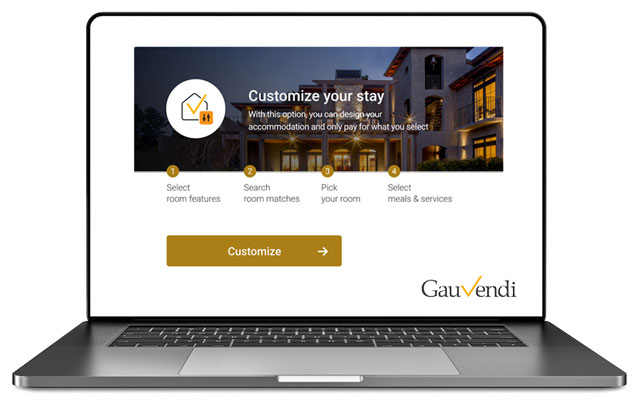
A new retail system for hotels allowing bookers to DIY rooms, F&B and activity packages, allowing for true personalisation and customisation of the desired experiences, is set to revolutionise the hotel B2C distribution market in Asia.
Originating from Germany, GauVendi Retail System for hotels breaks away from traditional room types and organise inventory by room feature combinations. Guests may design their own room by selecting, ranking and choosing individual room features like views, floors and space.
Guests’ purchase journey starts with accessing the participating hotel’s website and clicking the “Customize Your Stay” button embedded on the booking page. It allows guests to DIY their stay experience, rather than booking a generic standard or deluxe room.
Debuted in 2019, GauVendi Retail System recently made its foray into Asia through key distributor, Hospitality Host (HH), founded by Winnie Chui in 2016 who now serves as the managing director of the company. A hotel veteran with over 30 years of marketing and revenue management experience, Chui formerly served at international chains like IHG, Sterling and Summit Hotels, followed by stints with hotel reservation systems like Micros-Fidelio and TravelSolutiones.
HH’s core business includes GDS connectivity and China online branding solutions. According to Chui, GauVendi pioneers the introduction of feature-based shopping for hotels, catering to current trends in consumer behaviour and purchase patterns by letting customers decide the exact room features, attributes and additional services they desire.
Deploying artificial intelligence to personalise offers in real-time, Chui said the company is now looking to onboard hotel operators who are keen on revolutionising the industry and want to embrace change.

According to Chui, the system benefits hotels by not only offering them differentiated products that they are unable to obtain through current distribution methods, but also boosting their bottomline. It is especially beneficial to hotels which target leisure and long-stay travellers, she added.
Noting that the retail model is common in many industries, especially the retail and airline sectors, she cited the example of how just by unbundling the baggage component, airlines recorded over a four-fold increase in baggage fees annually over a decade.
However, Chui pointed out, the adoption of that operating model is still in the “very nascent stages” in the hospitality industry. Envisioning that the system will drive the future of hotel marketing and sales, she urged hotels to rethink their strategy.
“Such dynamic pricing model is a wake-up call for hoteliers who have the ability to take the lead in transforming their business model at a time where (evolving) is even more critical than ever, helping them not only to generate much-needed revenues that go beyond just the room revenue, but also to stand out from the competition and provide a unique booking experience to create customer delight,” she said.
With today’s travellers becoming more sophisticated and aware of their desires, there is a greater demand for personalisation of experiences.
“Today, the world is a much more global marketplace than ever before, no doubt accelerated by the ‘new normal’ as a result of the challenges created by Covid-19. So we have global reach, as well as a concentration of resources in Asia and Australasia to support rapid growth,” Chui said.
The brand is currently in discussions with several luxury properties and business hotels globally on adopting the system. It is billed as a great fit for resort hotels or hotels which cater to both business and leisure travellers, or even serviced villas and apartments. The system benefits a 10-room beach lodge in the same way it does a 500-room luxury resort.
IHG signs double hotel deal in Thailand

IHG will be growing its footprint in Thailand by bringing both the Holiday Inn and Holiday Inn Express brands to Phuket’s Kata Beach come 2022.
Under the hotel group’s management agreement with K.W. Group, the two properties will form part of the mixed-use development The Beach Plaza Phuket, the largest of its kind in Kata Beach.

Holiday Inn Phuket Kata Beach will have 134 rooms and offer guests a range of dining options and meeting facilities as well as a swimming pool and gym. Holiday Inn Express & Suites Phuket Kata Beach extends the offering to 135 rooms and also features the brand’s signature Great Room.
IHG has 19 hotels in the Holiday Inn and Holiday Inn Express brand family in Thailand, with another 16 in the development pipeline that are due to open within the next three to five years.
Marriott expands Thai portfolio
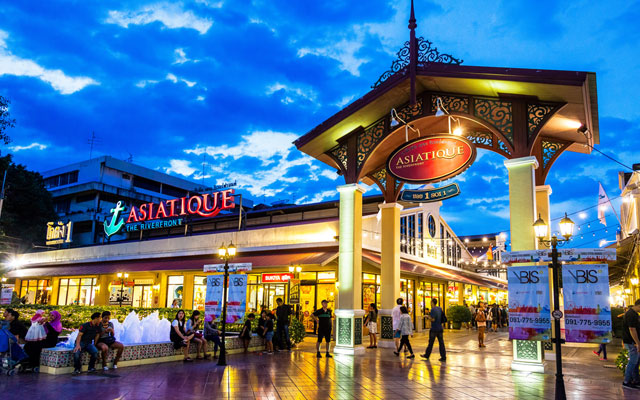
Marriott International has signed an agreement with Thai real estate group Asset World Corporation to add four new hotels under three brands across Bangkok and Pattaya in Thailand.
The multi-property agreement features a Ritz-Carlton Reserve, Thailand’s first JW Marriott Marquis hotel in Bangkok, and two Autograph Collection hotels, marking the debut of the Autograph Collection brand in the country.
Expected to open by 2024, The Asiatique Bangkok, Autograph Collection hotel will serve as the first Autograph Collection branded hotel in Thailand. Located at Asiatique The Riverfront, the 208-room hotel will showcase the unique ambiance of 19th century Thai-Chinese trade with restored furniture to mimic a former shophouse.
Also targeted to open by 2024 is the Aquatique Pattaya, Autograph Collection hotel, which will weave together the local charm of a Thai fishing village, a steamboat wharf and the underwater world in the resort town at Aquatique The Beachfront Pattaya. Upon opening, the 306-room hotel will be set alongside the Pattaya Marriott Marquis Hotel and JW Marriott The Pattaya Beach Resort & Spa, both still under development.
The remaining two hotels are targeted for a 2027 opening at Asiatique The Riverfront, set on the Chao Phraya River. The 124-key Ritz-Carlton Reserve, Bangkok is expected to serve as a private, ultra-luxury boutique urban resort; while the mindfulness-centric JW Marriott Marquis Hotel Asiatique Bangkok will feature over 1,000 rooms, functional meeting spaces, and a Spa by JW.
Marriott International’s portfolio in Thailand encompasses 45 hotels and resorts currently in operation, including nine properties with Asset World Corporation.
STB leverages local star power in latest tourism push
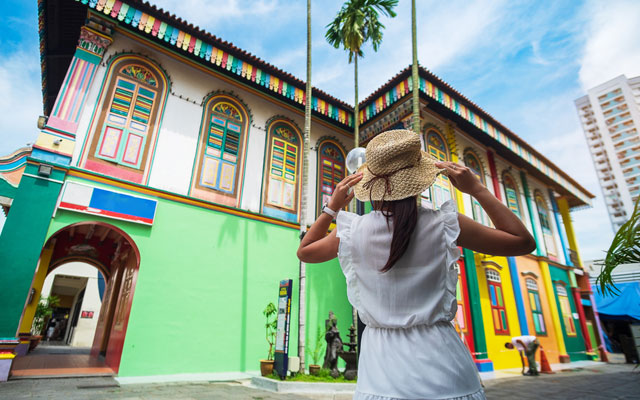
As part of its SingapoRediscovers campaign to promote local tourism, the Singapore Tourism Board (STB) has launched bundled promotions, personalised itineraries and online content focusing on ten key precincts, as well as extended its run from March 2021 to June 2021.
These “Singapoliday” destinations are Changi/East Coast, Chinatown, Civic District, Joo Chiat/Katong, Kampong Gelam, Little India, Mandai/Kranji, Marina Bay, Orchard Road and Sentosa.
To encourage locals to go on a Singapoliday and explore their favourite precincts, STB will roll out a new video series called S.P.I.E.S. (Secret Places in Exciting Singapore). Over ten episodes, the series will shine the spotlight on lesser-known facts and discoveries for each precinct. Each episode will be hosted by a local celebrity, and broadcasted on STB’s social media platforms.
To be launched in November, the first episode will feature actor Tosh Zhang visiting Little India to uncover its secrets, such as a vintage garment shop and a hotel filled with artworks and sculptures. Upcoming hosts include Siti Khalijah Zainal, Fakkah Fuzz, Rishi Budhrani and Judee Tan.
More content will be released in the coming months to encourage locals to visit the various precincts. This includes a video series titled How To Not Waste Your Annual Leave, hosted by Chua Enlai and Michelle Chia.
As part of the campaign, hotels, attractions, tour operators as well as retail and dining establishments have also come together to offer bundled promotions for each precinct.
Locals can pick from a total of 50 bundled promotions, featuring a combination of products such as staycations, attractions, tours, as well as retail and dining offers in each precinct.
For instance, locals wishing to explore Marina Bay may choose a staycation-attraction package curated by travel agent The Traveller DMC that features Mandarin Oriental, Singapore, and Gardens by the Bay. In the heritage district Kampong Gelam, The Sultan and Tribe Tours have paired up to offer a staycation and Instagram photography tour of areas such as Bugis and Waterloo Street.
Around a quarter of these promotions were curated by local travel agents such as The Traveller DMC and Gourmet Trails, who have pivoted and rallied with industry partners to design promotions for the domestic market.
More offers will be added in the coming months, and tourism businesses may submit their proposed promotions via STB’s Tourism Information and Services Hub.
STB has also designed customisable itineraries to help locals plan mini-holidays of up to three days within each precinct. These itineraries suggest recommended hotels, attractions, tours, as well as retail and dining offerings in each district.
For instance, locals can stay at Hotel Soloha or Oasia Hotel Downtown Singapore and explore the Chinatown precinct on a Trishaw Tour by Trishaw Uncle or a Red Clogs Down the Five-Foot Way tour by Journeys. Those looking for an island retreat on Sentosa can stay at The Barracks Hotel Sentosa or Capella Hotel Singapore, join a kayak fishing tour, and dine at the Ocean Restaurant, touted as South-east Asia’s only permanent underwater aquarium dining experience.
Since the launch of SingapoRediscovers in July, more than 100 businesses – across hotels, attractions, tour operators, retail and F&B – have offered over 600 promotions.
A tourism mission for conservation

Covid-19 has exacted massive damage to world economies as well as the travel and tourism industry, but it is just one of many alarms Nature has sounded, from wildfires and droughts to hurricanes and floods, to retaliate against mankind’s excessive takings from planet Earth.
Conservationists are emphasising that it is in the travel and tourism industry’s interest to protect the environment – the beauty of which is their income generator.
The good news is, some businesses in the industry are already working towards positive change. They include World Wildlife Fund’s collaborations with organisations such as Ctrip, Royal Caribbean Cruises, Hilton Worldwide, and Intrepid Group; Everland’s work with Keo Seima Wildlife Sanctuary in Cambodia where community-based Jahoo Gibbon Camp brings in tourism dollars to improve the lives of natives; and Cardamom Tented Camp, a three-way initiative between The Minor Group, YAANA Ventures and Wildlife Alliance to fight against land and wildlife loss in Cambodia’s Botum Sakor National Park.
In this fifth article by TTG Asia Media for PATA Crisis Resource Center, TTG Asia‘s Pamela Chow and Karen Yue find out why continued environmental degradation is devastating for the world’s travel and tourism industry, what has been done to reverse the damage, and what more is needed.
What has habitat loss got to do with tourism? is now available at PATA Crisis Resource Center.







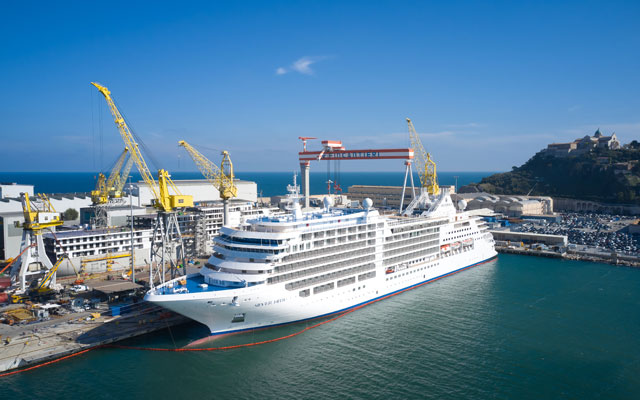
Silversea Cruises has taken delivery of its new ship Silver Moon, bringing its total fleet to nine vessels.
During an intimate ceremony held at Fincantieri’s shipyard in Ancona, Italy, executives from Silversea Cruises, the Royal Caribbean Group, and Fincantieri delivered live speeches via video feed, commending the more than 1,000 craftspeople who contributed to the build.
Present in Ancona, Roberto Martinoli, Silversea’s president and CEO, penned his signature to officially take delivery of the ship.
Debuting aboard Silver Moon is the culinary enrichment programme S.A.L.T., an acronym of Sea and Land Taste, which will enable guests to enjoy a range of destination-focused gastronomic experiences both onboard and ashore.
As part of the S.A.L.T. programme, three new venues will cater to guests onboard Silver Moon. S.A.L.T. Kitchen, a regional restaurant, will offer a menu that changes with the destination; S.A.L.T. Lab, a test kitchen, will host workshops, tastings, and demonstrations using local ingredients and artisanal techniques; while S.A.L.T. Bar will feature a selection of regional wines, spirits, and other drinks, based on the destination.
With a maximum capacity of 596 guests, Silver Moon will offer 298 suites, including four Owner’s Suites, four Grand Suites, and two Royal Suites. All guests will enjoy the dedicated service of a butler, alongside an in-suite bar, stocked with preferred beverages; and 24-hour in-suite dining.
The ship will also feature a number of redesigned public spaces to allow for safe distancing. This includes Silversea’s signature French restaurant, La Dame, which has been redesigned and enlarged to accommodate 56 guests, with the option to dine outdoors.
As well, the Atlantide restaurant has been enlarged and enriched to accommodate up to 220 guests, while the Connoisseur’s Corner now features a new Wintergarden area, creating a sheltered area outdoors.
Silver Moon is the third ship to be built by Fincantieri for Silversea Cruises, with the fourth, Silver Dawn, scheduled for 2021.