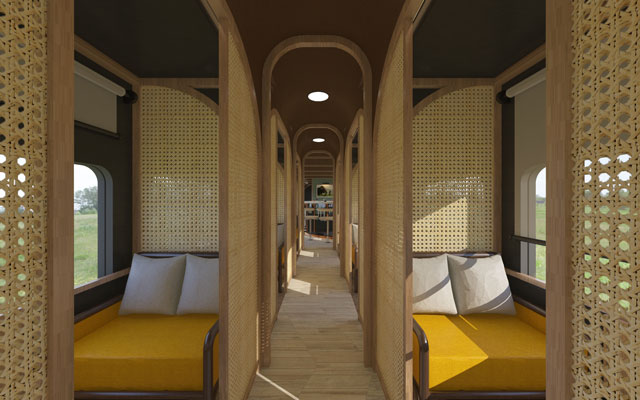
A new luxury train, The Vietage, will launch this July to take guests on a journey through the Vietnamese countryside.
The Vietage offers an opulent train ride through the Vietnamese countryside
On track for departure on July 1, 2020, The Vietage is a custom-designed 12-seater carriage that will be on the daily return railway route between Danang and Quy Nhon in South Central Vietnam. Amenities on board include a fully-serviced bar and massage area.
The Vietage will depart from Danang station every morning for the six-hour journey to Quy Nhon, and will return in the evening.
Employers from across global tourism are going beyond the call of duty in supporting their workers and communities, research carried out into the sector’s response to Covid-19 has found.
The study, conducted by the World Committee on Tourism Ethics – a subsidiary of the WTO – analysed the steps taken by businesses and trade associations to mitigate the impact of the pandemic.
Employers in tourism industries are playing their part to support workers and communities amid crisis
Studying the actions taken by the private sector commitment to the Global Code of Ethics for Tourism (GCET) in 25 countries, the research revealed that, in spite of staff furloughs, employers across the sector are stepping up their support for workers and communities.
Committee chairman Pascal Lamy, who touched base with the GCET signatories to learn about the mitigation actions being championed by tourism companies and trade associations, said: “It is evident that the sector’s engagement goes beyond symbolic CSR actions. The GCET signatories, although hit terribly hard by the crisis like their colleagues across the tourism sector, have shown that they indeed care for the societies they operate in while striving to keep their businesses afloat.”
UNWTO secretary-general Zurab Pololikashvili welcomed the initiative of the tourism sector while at the same time calling on governments to work with private employers to safeguard jobs and livelihoods.
He said: “Governments should not abolish the resources already allocated to tourism in their budgets for 2020. Tourism administrations also need to communicate to the general public what the sector is doing for the society in these troublesome times.”
The survey found that many companies are providing 24-hour psychological help for their employees, while also maintaining medical insurance and facilitating platforms with motivational videos, medical updates and training. Many are also offering free lodging and food for stranded international staff and their families.
As well, UNWTO noted in a press release that monetary donations have been given to city councils, underprivileged families and rural communities, and food and supplies have been sent to frontline workers and vulnerable groups.
Some businesses chambers are working with public, real estate, financial and legal entities to provide SMEs with funding and identify guarantors for those unable to receive a loan. Associations have engaged in local pandemic committees to flag up the most pressing issues and better articulate their support.
In addition, hotels have donated thousands of gift nights to medical staff for their holidays and remained open for them and Covid-19 patients whenever necessary. Elsewhere, guides offered virtual tours for voluntary contributions donated to hospitals, and transportation companies offered their channels to bring critical emergency equipment to save lives.
Furthermore, volunteer platforms have also been set up to create youth loans. Virtual solidarity groups gathered hundreds of travel agents with multiple jobs to exchange goods and support their livelihoods.
Planet Happiness has partnered the World Centre of Excellence for Destinations (CED) to strengthen excellence in destination management and the necessity of the sector to deliver destination well-being.
Under the partnership, Planet Happiness and CED will work together to promote mutual understanding of each other’s work among their networks and partners. They will engage on a range of topics related to excellence in destination planning, host community well-being and the imperative of the sector to respect and preserve living culture and cultural heritage.
Strengthening host well-being is key to building destination resilience, says CED’s François Bédard
By promoting destination well-being, the partnership aims to deliver solutions for host communities, governments, businesses and tourists.
François Bédard, director of CED, said: “Destination resilience depends on the industry’s ability to promote inclusivity, improve the quality of life of host communities and directly engage local residents in the tourism recovery effort.”
Amid this time of tourism collapse, with job and income losses punctuated by evolving realities in the wake of the pandemic, the partnership recognises the heightened importance of measuring host well-being in tourism destinations, said the companies in a joint press release.
As destinations move towards Covid-19 recovery, among many priorities, attention will inevitably be drawn to profound changes in host well-being and new normal pathways to rebuilding the quality of life, it added.
“Destinations at the forefront of the Covid-19 recovery curve need to be seen to be making clear, inclusive and informed decisions,” said Paul Rogers, co-founder and director of Planet Happiness, a project of the Happiness Alliance, an NPO specialising in happiness and well-being measurements.
He added: “Destinations need to promote their sites, ensure attractions and excursions are safe and responsible, and foster healthy and welcoming communities. This implies listening to the needs and concerns of industry employees and businesses, as well as the voices of the wider destination community. The Planet Happiness approach enables and facilitates dialogues that deliver win-wins and the strengthening of destination well-being.”
The Happiness Index survey, promoted by Planet Happiness, measures individual and destination well-being. Currently available in 24 languages, it includes indicators for health, standard of living, satisfaction with life, community engagement, as well as access to nature, the arts and life-long learning and other important contributors to well-being.
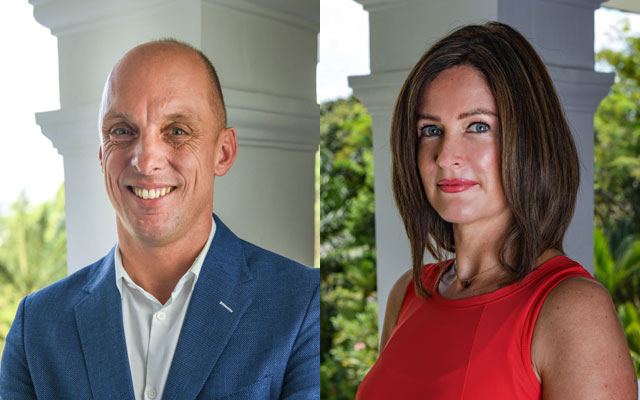
Patina Maldives, Fari Islands has appointed Marco Den Ouden as general manager, and Simone Broekhaar as director of sales & marketing.
In his new role, Ouden will prepare for the property’s launch in 1Q2021. He brings over 20 years of global experience in the luxury hospitality industry, four of which were spent with the Alila group, leading teams as general manager across three of their properties in Asia.
From left: Marco Den Ouden and Simone Broekhaar
Prior to joining Patina, he was general manager of Soneva Jani, Maldives. Other previous roles include working as an F&B hospitality consultant for the Les Amis Group, international general manager of Jin Jiang Hotel in Chengdu, and general manager of Huvafen Fushi by Per AQUUM, Maldives.
Similarly, Broekhaar holds over two decades of experience in the luxury hospitality scene.
She joins Patina Maldives from her role as director of sales & marketing of Capella Ubud, Bali, where she led a team of nine.
Prior to this, she was the regional director of sales & marketing for COMO Hotels & Resorts, Bali, where she oversaw the marketing activities for three properties – COMO Uma Ubud, COMO Shambhala Estate, and COMO Canggu.
She has previously held positions at The Datai, Langkawi and The Chedi, Muscat, as well as with international brands such as Swissôtel.
Patina Maldives, Fari Islands will be the first launch under Patina Hotels & Resorts, a new lifestyle brand by Capella Hotel Group.
More aircraft are returning to the skies, but it will still be a bumpy ride ahead for the industry, as supply outstripping demand means airlines face a long haul to return to profitability.
That forms the backbone of a latest study by Cirium, which was presented in a recent webinar hosted by Rob Morris, global head of consultancy, in which he drew on Cirium’s data to expound on the challenges that lie ahead for the aviation industry.
Headwinds ahead for the aviation industry, even as more airlines resume services
With the Covid-19 pandemic labelled the worst crisis the aviation sector has weathered, Cirium said that the need for a networked community response becomes even more crucial as attention now turns to the recovery effort – but it appears that airlines’ journey back to normal is paved with uncertainties.
Looking at current forward-looking schedule data, Morris shared data that presented a global capacity increase from -80 per cent at its peak drop earlier this year to around -20 per cent by the end of June. Airlines could however make further adjustments to these flight schedules depending on the changing environment surrounding coronavirus, he noted.
Green shoots in the Chinese domestic market, which has seen over 30 per cent of its capacity return in the last two months, is a positive sign for short-haul travel recovery.
However, the dramatic drop in capacity globally compared with 2019 remains in stark contrast to the forecast from the IATA in December last year, which projected capacity growth of +4.7 per cent in 2020.
It’s clear that, as some travel restrictions ease, it will be the domestic market which will start to return first. And while flight schedules are indicative of supply, they do not reflect the changes that airlines are making to their network on a daily basis.
Cirium’s flight status data shows that around one-fifth of the adjusted flight schedules globally are being cancelled on a near-term basis, underscoring significant uncertainty.
In light of the data, Cirium raised the possibility of the cancellations being due to the lack of demand as consumer confidence drops. Similarly, despite the recovery in China’s domestic capacity, the plateau could indicate that consumer confidence has yet to pick up.
The positive side is aircraft are starting to return to service and Cirium noted an uptick in domestic capacity in certain regions. Morris indicated that a “bottom point” has now been reached for aircraft being grounded, the hibernation phase has begun and passenger jet tracking data for May 4, 2020 shows a positive trend emerging.
Cirium’s “seven-day prior metric” shows active aircraft have increased by six per cent, flight cycles by 14 per cent, and hours flown by 13 per cent, compared with a week before on April 27, 2020.
However, year-on-year, active aircraft are down by 72 per cent, flight cycles by 82 per cent, and hours flown by 84 per cent, compared with May 6, 2019.
Additionally, aircraft utilisation remains dramatically lower than pre-Covid-19 levels for in-service jets, with single-aisle aircraft usage down 43 per cent on average since the start of year, said Cirium.
While the uptick in passenger jet flights is modest, Cirium noted that it’s encouraging to see aircraft returning to service. In particular, twin-aisle aircraft are returning to service, now down just 29 per cent on the start of the year, and the analysis here suggests these aircraft are being used for freight – some with cargo transported in the belly hold, and in some cases, main passenger cabins.
With tracked aircraft hours down, Morris explained that planning the required post-lockdown fleet will be complicated.
“It’s almost impossible to say when the bounce-back will start or end, and it would be unwise to speculate. Ultimately, it is airlines that will be in the best position to track the recovery as they assess their forward booking data,” he said.
As the aircraft going in to storage has passed its peak, Cirium is classifying the current phase as the hibernation phase. Around 13,700 aircraft, 62 per cent of the global passenger fleet, still remain parked around the world as of May 4, 2020.
For context, the in-service fleet of 8,320 aircraft per May 4, is approximately the same size as that operated in 1993.
However, more than 2,600 passenger jets have returned to service since March 1, with 31 per cent originating from the China domestic market as travel restrictions have eased in the country.
Looking ahead, the airlines face a number of hurdles to getting planes back in the air, not least an ageing passenger fleet.
Only 113 aircraft built between 2001 and 2016 have been stored for over a year, excluding Boeing’s 737 Max aircraft which were grounded before the pandemic.
There are more than 2,000 stored aircraft built in or before the year 2000. These jets may never return to service or could get a second lease of life, albeit as converted freighter aircraft.
The current demand scenario will likely result in premature retirements, particularly for stored wide-body aircraft built between 2001 and 2005, such as Airbus A340s and Boeing 777s.
Some owners will choose to monetise their assets and “part-out” jets that they no longer deem profitable as in-service aircraft.
The challenge of returning aircraft to service is also magnified by the geographical diversity and number of unique locations in which aircraft are currently parked around the world, Morris added.
A total of 719 different locations globally are home to one or more single-aisle or twin-aisle passenger jets.
More than a fifth of the global in-storage fleet is parked at the top 20 locations, 23 per cent by aircraft units and 27 per cent by aircraft value.
Top locations include Roswell International Air Center, Victorville Southern California Logistics Airport, Delhi Indira Gandhi International Airport, Istanbul Airport, and Hong Kong International Airport.
Only three of the top twenty locations globally are “typical” storage facilities.
With many aircraft stored at commercial airports rather than storage locations, if storage is prolonged, many will need ferrying to more suitable locations to mitigate risk of corrosion.
This is further compounded by passenger to freighter conversions. As some jets have had cabin furniture removed during the pandemic – with airlines operating all-cargo flights to shore up revenue – many will require restoration to passenger configuration.
Morris concluded that supply will inevitably outstrip demand for the foreseeable future, with aircraft being retired earlier than planned or subject to a part-out process as owners try to recoup costs.
As such, airlines face a long haul to return to profitable operations. It will take time to get aircraft flying again as demand lags behind capacity – and even longer to return to 2019 levels.
The sector is set to shrink in the short term but the current outlook helps to identify the route to a planned and predictable recovery for the aviation industry, with urgent need for a networked community response.
While Thailand has scaled back its evening curfew by an hour, reopened malls and allowed 10 types of businesses and activities to resume, the Civil Aviation Authority of Thailand (CAAT) has chosen to extend its ban on international flights until June 30.
Travel and tourism industry stakeholders are divided on the announcement, with some feeling that the extension is unnecessarily harsh given the country’s low numbers of daily new coronavirus cases which have hovered close to zero for several weeks on end.
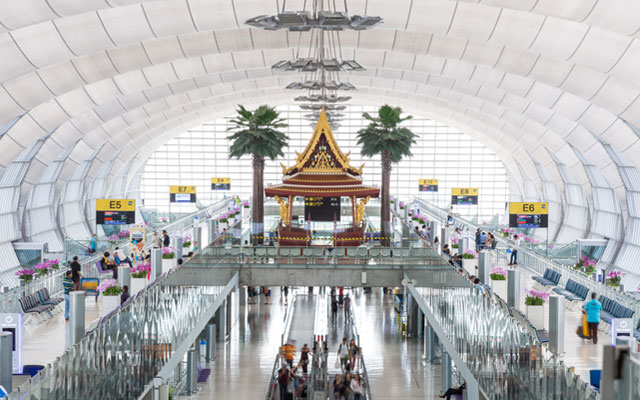
Thailand has reopened 14 airports, including Suvarnabhumi Airport
“I feel it’s the suitable thing to do for now while hygiene measures and protocols are (in the process of) being applied towards the entire business events sector,” opined Max Boontawee Jantasuwan, president of the Society for Incentive Travel Excellence (SITE) Thailand chapter and founding CEO of Events Travel Asia Group, referencing the joint effort between the Thailand Convention and Exhibition Bureau and other business events associations to launch MICE Venue Hygiene Guidelines to prepare the sector for the new normal.
“It also echoes the situation outside Thailand, because even if we were to open the airspace now, nobody would start travelling here as of yet,” he added.
The ban, which covers all international passenger planes, means that the earliest foreigners could come to Thailand is in July.
“Thailand has maintained a low number of cases and few fatalities in this crisis. The focus is, understandably, on a regulated return to normality in the country. For the suffering Thai tourism industry, a return of domestic tourists will be the fastest way to (secure) some revenue. However, even if Thais will engage in some ‘revenge travel,’ it will not by far be enough to replace the full stop on international travellers,” said Willem Niemeijer, CEO and co-founder of Khiri Travel.
As the rest of the world begins the process of reopening, “CAAT’s decision to extend the ban on international arrivals until July 1, six weeks from now, seems an unnecessary overreach,” Niemeijer added, citing Italy’s decision to reopen for all international travel on June 3 and the ‘bubble tourism’ bilateral agreements being pioneered now, such as those between Spain’s Mallorca and Germany, or between New Zealand and Australia.
Flight consultant Luc Citrinot suggested that a gradual reopening of international travel would make sense, by first facilitating small travel corridors between Thailand and neighbouring countries with low numbers of infections, such as Vietnam, and gradually extending to South Korea, Taiwan and China.
Niemeijer believes that a gradual reopening would help to “plant the seed of confidence” in longhaul travellers who are in the process of making longer-term travel plans now.
“Thailand is risking trampling the excellent handling of the crisis compared to other countries, and giving first-mover advantage to other tourism destinations in the world, prolonging the crisis for the country’s recovery,” he said.
The country’s beleaguered national carrier, Thai Airways, which is still hovering between bankruptcy and bailout, has also scheduled its first flights on July 1, 2020.
Thailand last week removed China, Hong Kong, Macau and South Korea from its dangerous disease zone list, meaning travellers from those countries will be subject to fewer restrictions and less monitoring.
Fourteen of Thailand’s airports are currently operating, with Bangkok Airways being the latest Thai airline to resume domestic flights, since mid May. Phuket International Airport remains closed indefinitely; though scheduled to reopen May 15, CAAT issued an order the same day for the airport to remain closed.
Visas for all foreigners currently in Thailand have automatically been extended until July 31, 2020. Forty-two inter-provincial train lines, some longhaul, have resumed with inter-provincial buses also now running select routes.
Meanwhile, the Thai government is still debating whether to lift its state of emergency by end-May.
The concept of a zoo will be turned on its head in architect Bill Bensley’s ambitious plan for a luxury hotel cluster nestled in a wildlife sanctuary.
Slated to open in 2022, Worldwild China or more commonly known as The Luxury Human Zoo, will allow rescued endangered animals to roam free in the space while human habitants caged in their hotel rooms watch on.
A rendering of The Colony Lodge Hilton, which will be one of seven hotels at Worldwild China
This Animals First concept will prioritise animal welfare while developing unique conservation conscious learning experience for guests and visitors, according to a press release.
Set in 809ha in Wuchuan in southern China’s Guangdong province, the wildlife sanctuary and reserve will house seven luxury hotels with a combined 2,084 keys. Each of the hotels will also boast a luxury spa.
The idea for a luxury “human zoo” hotel came about when BENSLEY was approached by their client Dinglong in China to design a zoo with over 2,000 hotel rooms on a piece of land bigger than Central Park.
In response, its founder Bensley proposed a wildlife sanctuary and reserve which dedicated 95 per cent of the land for animals to roam freely, and five per cent of the land for people to observe and learn about the animals, while caged in their luxury hotels. Upon completion, the hotel expects to receive up to 10 million guests and visitors annually.
“It is my dream that the mistreated animals of over populated zoos in China could run free there. Of the 60,000 vertebrates worldwide, we are reassigning non-predator animals from less fortunate Chinese roadside zoos to create an ecosystem where they can all thrive,” said Bensley in a press statement.
“I am planning a wildlife reserve without cages or predators, as that simplifies the equations significantly. Instead of fences, we will use natural barriers to separate species which might not get along: barriers such as rivers, mountains, forests or hahas (a recessed landscape design feature that creates a vertical barrier while preserving views).”
The hotels will be spread across three zones, representing the three continents of Asia, Africa and Australia. Asia’s hotels will be called Dzong (228,854m2) and Dragon’s Nest (38,893m2), which will be operated by Hyatt; while Africa’s hotels will be called The Colony Lodge Hilton (211,272m2) and Stone Town Conrad (54,783m2).
Australia will have three hotels: Waldorf Astoria World Wild (101,044m2), Fish River Settlement by Waldorf Astoria (9,570m2), and Kamp Koala Shinta Mani Bensley Collection (10,451m2).
In addition, Worldwild will operate four trains which visit all three continents in the reserve. The three luxurious sleeper trains are named the Tasmanian Tiger for Australia, Oriental Expresso for Asia and African Queen for Africa. Following the head conductor wagon, each train will have five cabin wagons with exquisite suites that can accommodate up to 40 guests, a restaurant wagon and an observation wagon.
The fourth train, the Iron Horse, with six wagons, will conduct day tours in all three continents and will wind around the park and take people to eight different whistle-stops. At each stop, passengers will be treated to a Broadway-like show, educating them on different aspects of wildlife, environmental protection and sustainability.
Self-drive holidays in Malaysia and Thailand are expected to see a strong revival as local residents seek safer forms of travel in the early days of tourism recovery.
After nearly two months of curfews and travel restrictions, Thai FITs are raring to head out again and the most eye-catching destinations are those that they can access with their personal cars once limitations ease up.
Self-drive vacations are expected to rise in popularity on the back of greater demand for domestic travel post-pandemic
Last week’s C9 Hotelworks report indicated that family beach destination Hua Hin is primed to benefit from this trend – 75 per cent of the resort town’s visitors in 2019 were domestic tourists.
Bill Barnett, founder of C9 Hotelworks, indicated that “both overnight stays and day trips look to be the agents of change in the short-term.”
According to data from STR, domestic tourism has proven positive for destinations like Hua Hin, helping to prop up market-wide average room rate at the 4,000 baht (US$125) level, which “in many of other Thailand’s resort destinations rates have been flat or in some cases retreated in the face of mass tourism and appreciation of the Thai baht,” stated Barnett.
Jaffee Yee, PATA Chiang Rai Chapter chairman, foresees more Thais taking self-drive holidays for “as long as the coronavirus is still around” and “before an effective vaccine is available”.
He reasoned that costly air travel, fewer flight options as well as social distancing and hygiene requirements could deter air travel in the recovery stage.
With prices of gasoline at an all time low, “self-drive vacations are more carefree and enjoyable as one can stop anywhere and stay as long one desires,” he added.
Beach destinations in the south and the east, and possibly along long routes like Bangkok to North Thailand, would likely do well with the self-drive segment.
Yee also pointed out that post-pandemic leisure travel trends may shift to less crowded places with plenty of open air environment, such as natural and cultural spots like Hua Hin, Koh Chang, Koh Samed and the mountain resorts of Chiang Rai (Phu Chi Fah, Doitung, Doi Mae Salong), Chiang Mai (Doi Suthep, Inthanon, Doi Luang), Pai and Maehongson.
Yee is working on initiatives to revive cross-border self-drive holidays, such as from Yunnan to North Thailand. He also foresees self-drive tourism potential between Thailand and Myanmar, and between Thailand and Malaysia.
Andre van der Marck, founder and managing director of Travel Exclusive Asia, expects self-drive holidays to pick up especially among the richer Thais – people in the middle class and up, and who have their own cars. The self-drive trend may stay for four to six months, before Thais return to overseas destinations.
Amid the changing landscape of tourism business, Nattapong Saengsirirattana, managing director of Thai Leisure Co., told TTG Asia that he might try his hand at the domestic market. Thai Leisure Co, has all along focused on the foreign market, but overseas arrivals are expected to be weak until the end of the year.
“Right now it’s hard to wait for foreign tours to come in. If our government can get the virus under control, reduce restrictions and let Thai people travel, we may adjust our business plan to accommodate Thais,” he said.
However, van der Marck is doubtful that domestic self-drive holidays will bring much needed business to travel agencies.
“I’m not sure if (travellers) really need a DMC to handle such trips. Thais are a hard and rough market; everyone can drive and book a hotel via Agoda. But it could be something for local DMCs who are really Thai oriented to look at,” he said.
Over in Malaysia, trade agents are more upbeat about the business prospects of domestic self-drive vacations.
Mayflower Car Rental general manager, Abdul Rahman Mohamed, foresees a pick-up in domestic self-drive vacations as soon as the government lifts its Conditional Movement Control Order and allows interstate travel again.
He believes that self-drive is an option for FITs who are not yet comfortable with using public transport due to social distancing and hygiene concerns.
To allay fears, the company sanitises its vehicles before handing them over to new customers and provides hand sanitisers and face masks.
He expects Penang, Langkawi and Melaka to benefit the most from self-drive vacations, as these are perfect for short weekend getaways and are already a hit with the domestic market pre-pandemic.
For Haniza Hasan, managing director of Langkawi-based Honeyzone Travel & Tours, the domestic self-drive vacation market has always been a strong performer. Domestic bookings make up 80 per cent of the company’s self-drive business, she shared, and is a more lucrative business compared with walk-ins the company gets from foreigners who are already in Langkawi.
Haniza said the business comes with upselling potential, as domestic travellers will purchase accommodation and transportation from her agency and are open to suggested itineraries, attractions and activities that will help pad up her income.
Haniza and fellow Langkawi inbound specialist, Eric Sinnaya, managing director of Morahols Travel, are predicting a return in the domestic market from early 2021.
Sinnaya said Langkawi is in a strong position to attract travellers, as the destination has been in the Green Zone, which means it has no active cases.
For now, Haniza is selling accommodation and vehicle rental packages ahead for 2021, throwing in a 40 per cent early-bird discount to get appetites going. – Additional reporting by S Puvaneswary
Singapore-based budget hotel operator RedDoorz has launched Hope Hotline, a mental health support programme to help its employees, hotel partners and their staff cope with pandemic-induced stress.
As part of RedDoorz’s regional CSR initiative, the new programme provides online counselling sessions through the company’s partner counsellors and psychologists, and will be made available in Singapore, Indonesia, and the Philippines.
RedDoorz launches mental health support programme to help employees cope with the pandemic
In light of the mobility restrictions, RedDoorz has partnered certified counsellors and psychologists across the region to conduct free counselling sessions remotely through online platforms for all its employees and its hotel partners’ staff.
RedDoorz is partnering KALM, a Jakarta-based online mental health platform, to offer the programme in Indonesia. In the Philippines, the company works with individual psychologists to provide video counselling sessions.
As people adjust to the new normal brought on by the pandemic and learn how to cope with mobility restrictions and other changes to their everyday lives, it can trigger feelings of fear, anxiety and stress, and negatively impact their mental well-being, said RedDoorz in a press release.
According to a study conducted in China during the initial outbreak of Covid-19, 53.8 per cent of respondents rated the psychological impact of the outbreak as moderate or severe. Furthermore, a Qualtrics research of over 2,000 employees, including those in Singapore, has shown that employees have been reporting lower mental health since the outbreak.
Amit Saberwal, founder and CEO, RedDoorz, said: “The ongoing pandemic has resulted in immense stress on our economies, healthcare systems and people. As Covid-19 continues to restrict mobility and the immediate outlook remains uncertain, many of us could be experiencing negative emotions detrimental to emotional and mental well-being.
“This is especially relevant for professionals working in the travel and hospitality industries who have also been subjected to many job-related stresses as the pandemic has caused major disruptions to businesses and people’s livelihoods.
“Through Hope Hotline, we stand in solidarity with our employees and hotel partners and want to play an active role by helping them embrace the new normal more easily. We hope the counselling sessions will provide much needed relief, and spread positivity and optimism.”
Lukas Limanjaya, one of KALM’s co-founders, said: “It is our hope that other companies will follow the pioneering steps that have been taken by RedDoorz because mental health is as important as physical health.”
As part of its Hope Hotline programme, RedDoorz will also host a complimentary webinar for all professionals working in the travel and hospitality industry during the last week of May.
The webinar will feature a panel of certified counsellors and psychologists who will impart essential skills and tips on managing daily stress while maintaining emotional well-being during this difficult period. Interested individuals can sign up here.
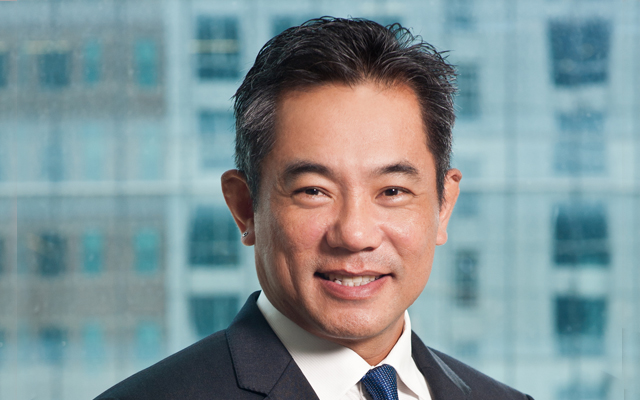
Wyndham Hotels & Resorts (WHR) has appointed Joon Aun Ooi as president, Asia-Pacific, effective June 1, 2020.
In his new role, Ooi will lead the growth of WHR’s portfolio of brands across the Asia-Pacific region – which combines South-east Asia and Pacific Rim (SEAPR) with Greater China, following a restructuring – and drive its strategic objectives, as the tourism industry recovers from Covid-19.
“These are extremely challenging times for the hotel industry and it is more crucial now than ever for Wyndham Hotels & Resorts to be agile in adapting to the evolving situation to be able to drive greater value for our owners and partners,” Ooi said in a press statement.
“Across Asia-Pacific, the consolidation will enable the company to leverage on a broader pool of resources – allowing it to strengthen its strategic positioning to support existing operations, drive further expansion and create additional opportunities for cross-border collaborations.”
With nearly two decades of experience in the hospitality industry, Ooi joined Wyndham in 2013 as vice president, openings and operations, Greater China. In 2018, he was appointed president and managing director for SEAPR and led WHR’s regional growth and development after its spin-off from Wyndham Worldwide.
Prior to Wyndham, Ooi held leadership roles across Asia and Greater China including vice president strategy at InterContinental Hotels Group in 2002. He moved to China in 2005 to take on the role of vice president, hotel openings (Greater China) where he played a key role in establishing and implementing the China growth strategy for the group.
In 2009, he was appointed vice president strategy and hotel openings (Asia Pacific) at Hilton Worldwide where he oversaw the growth of the Hilton portfolio in China.
Before joining the hospitality industry in 2002, Ooi spent more than seven years at The Boston Consulting Group as a principal.