


Sri Lanka reopens to tourists under pilot project

Following a nine-month-long travel ban imposed due to the pandemic, Sri Lanka reopened its borders to international visitors on December 28, with the first arrivals being a group of Ukrainians in a series of charters initially under a pilot project before the country opens fully for commercial travellers.
Under the pilot project, nearly 3,000 tourists from Ukraine will visit the country, coming in batches of around 200 per flight onboard Ukrainian Budget Carrier SkyUp Airlines which is operating flights to Mattala Rajapaksa International Airport, the country’s second international airport located on the southern tip of Sri Lanka.
The 12 flights will operate till January 19, after which the authorities will review the progress of the scheme before deciding when to reopen the borders for visitors from other countries.
The first flight landed on December 28 with 180 passengers, the second the following day with 204 passengers, and the third on January 2 with 172 passengers. The visitors are travelling under a bio-bubble with limited contact with the local community to avoid Covid-19 infections. Five visitors, arriving on the first flight, had tested positive for Covid-19 and were transferred to treatment centres.
Sri Lankan tourism authorities have been pushing to reopen the country to tourism, a key sector in the country’s economy, but the process has been repeatedly delayed in the absence of a go-ahead from health officials.
Tourism minister Prasanna Ranatunga told a local newspaper that stringent measures were being taken to prevent the tourists from coming into contact with the local community. “They travel as a group wherever they go and will not be exposed to any civilians,” he said, adding: “They are always under supervision.”
The charters from Ukraine had been arranged through the business contacts of Udayanga Weeratunga, a former Sri Lankan ambassador to Russia, who is a cousin of prime minister Mahinda Rajapaksa and an influential member of the current administration. Local media have accused the former ambassador of ignoring health protocols by arranging accommodation in hotels, which have not yet been given the Covid-19 certified status by the state’s tourism agency Sri Lanka Tourism Development Authority. Visits to national parks and other places of interest are also allegedly violating health protocols, the local Sunday Times reported.
According to earlier health guidelines issued pursuant to the opening of the Mattala airport for tourism, every tourist must produce a negative Covid-19 report taken 72 hours before arrival. They will also need to take a polymerase chain reaction (PCR) test at the hotel upon check-in, and another PCR test five to six days later if they are staying for over a week.
Tourists will also be required to stay in one resort for one week before being allowed to move to another resort or hotel if their stay extends beyond that period. They will be allowed to move around in restricted areas which have been cleared by the authorities.
As of January 3, Sri Lanka has reported 44,371 Covid-19 cases and 211 deaths.
Thailand: a health and wellness powerhouse

Brought to you by Tourism Authority of Thailand
In promoting Thailand as a health and wellness destination, the inaugural Amazing Thailand Health and Wellness Virtual Trade Meet held from 15-17 December, 2020, saw 49 Thai suppliers and 82 buyers hailing from 27 countries congregate on the TTVM platform.
The virtual trade meet also provided an opportunity for Thai health and wellness related businesses to update and share best practices, trends, and new products and services in the country with potential international partners.
Two key activities evolved from this format were pre-scheduled appointments with three time durations tailored to different time zones, and informational webinars. Webinar topics presented ranged from wellness forecasts in 2021, to market insights on global travellers, to anticipated updates by the Department of Disease Control regarding the tackling Covid-19 and new norms; alongside TAT updates on Amazing Thailand Safety and Health Administration (SHA).
Destination updates from Phuket, Samui, and Krabi, along with presentations from the Spa Association and the Private Hospital Association of Thailand also provided both market specific and association updates.

Yuthasak Supasorn, TAT Governor, observed the existing challenging conditions during the pandemic is all the more reason to promote Thailand’s health and wellness industry.
He added: “People are now more health conscious than ever before, and Thailand is among the world’s top destinations that international tourists want to visit once the situation improves. This is helped because the country is globally recognised for its effective Covid-19 preventive control measures.”
In 2017 and 2018, medical, and health and wellness tourists to Thailand amounted to more than 300,000 annually. East Asian countries constituted the largest number of visitors, followed by ASEAN, South Asia, South Pacific countries, EMEA and the Americas, respectively.
The country’s growing health care industry has been supported by more than 370 hospitals, 61 of which are accredited with Joint Commission International (JCI) standards.
TAT’s overseas offices also market health-related packages to the following two segments: medical tourists, and health and wellness tourists – with the latter combining gastronomy and sport tourism products into their stays. Preferred destinations for wellness-related travels include Bangkok, Phuket, Krabi, Chiang Mai and Koh Samui.
The annual Amazing Thailand Health and Wellness Trade Meet will take place again in 3Q2021 with the event format advised closer to date, pending developments from the pandemic. Please stay tuned!

HK quarantine hotels selection draws questions

- 36 hotels across Hong Kong picked for initial phase of scheme
- Scheme is expected to boost business for struggling hotels
- Hoteliers claim inconsistency in selection process
Hong Kong has established a quarantine hotels scheme to support her intensified infection control measures against a surge in Covid-19 community cases. Since December 22, all travellers arriving in Hong Kong from countries outside of China must undergo a 14-day compulsory quarantine at designated quarantine hotels.
Designated quarantine hotels will only receive quarantined travellers who will arrive in appointed transportation provided by the government.
According to Hong Kong’s Food and Health Bureau, invitations to join the scheme were issued to more than 2,000 hotels and guesthouses with valid hotel licences or guesthouse licenses. Some 100 applications were received, and 36 from nine different districts were eventually qualified to form the first batch of designated quarantine hotels.
A bureau spokesperson told TTG Asia that the government sought participation from different hotel groups and properties with varied price ranges.
“We primarily consider whether the design, facilities and operations of the hotels meet the government’s infection control requirements. Other factors include location, room rate, number of rooms offered by the hotels; they must also pass the inspection conducted by the Department of Health and other relevant departments…”, the spokesperson further explained.
A copy of the invitation letter provided to TTG Asia by hoteliers showed other requirements – the hotel has to be in a standalone building, centrally managed and have individual rooms with toilet/bathroom without the need to share daily-use facilities; and the hotel operator must close all ancillary guest facilities (such as gym, spa and restaurant), and reject appointments or bookings for facilities for purposes other than lodging for quarantine guests.
Commenting on the first batch of designated quarantine hotels, the spokesperson said room rates ranged from HK$300 (US$38.70) for non-suite room types to several thousands for suites, with 80 per cent of rooms offering rates of under HK$1,000.
“We will consider allowing more hotels to join the scheme if situation warrants,” the spokesperson added.
Business booster and disruptor
As wage subsidies for the travel and tourism industry have concluded end-November 2020, the quarantine hotels scheme is seen as a lifeline for hotels struggling to cope with severely reduced business due to the ongoing pandemic and travel restrictions.
Hotels contracted under the scheme will obtain quarantine travellers for 60 calendar days, with rates set on a full-board basis. The government is committed to a minimum guarantee of 50 per cent room nights during the contracted period and at the rate of 70 per cent of the hotel’s non-suite rate per room night or HK$600, whichever is lower.
However, the scheme is not palatable to all hoteliers.
Local chain Tang’s Living Group, which owns 15 hotels across the destination, has chosen to skip programme due to a desire to protect its guests and employees. “With long-stay being one of our key pillars of business, ensuring a safe, healthy and comfortable environment for all perpetually is of paramount importance,” explained the company spokesperson.

Likewise, Hyatt Centric Victoria Harbour Hong Kong has also chosen to prioritise its staff and existing guests. Long-stay residents account for 20 to 30 per cent of the hotel’s occupancy each month, revealed general manager Andy Chang. Being in the quarantine hotels scheme would mean inconveniencing these guests as they would have to find alternative accommodation, he said.
Confusion abound
Despite the published selection guidelines, some Hong Kong hoteliers said the process had been anything but clear.
A hotelier who asked for anonymity, said that although her property had experience in serving voluntary quarantine guests earlier in 2020, her application to be a designated quarantine hotel was rejected.
She said the rejection was due to a failure to meet certain requirements, such as not being in a standalone building. “The result made me so frustrated and confused, as some of the designated quarantine hotels (do not meet the criteria). The Landmark Mandarin Oriental Hong Kong, for instance, is approved but it is attached to a mall. Another approved hotel, Four Points by Sheraton Hong Kong Tung Chung, was not even opened (at the point of selection), and has no experience in handling (quarantine cases),” the hotelier said.
In the case of Four Points by Sheraton Hong Kong Tung Chung, the hotel expressed in a press statement that it has “passed the infection control inspection by the Department of Health and other relevant departments including the Electrical and Mechanical Services Department and the Buildings Department” and that it is compliant with all health guidelines. Precautions are also in place to protect its staff, such as by way of providing protective gear to all associates and have them undergo Covid-19 tests every 14 days.

Girish Jhunjhnuwala, founder and chief executive of Hong Kong-based Ovolo Hotels, told TTG Asia: “Although Mojo Nomad Aberdeen owned by the group has been included (in the scheme), it is the one least suited (for quarantine).”
He explained that Ovolo Hotels was among the first hotel chains to provide quarantine stays for returning residents since March 2020, chalking up more than 1,500 quarantine stays and 21,000 quarantine room nights of experience. The properties have earned numerous positive feedback from guests for their “gold standard quarantine service”.
Despite this, none of the experienced quarantine hotels in the group were qualified for the quarantine hotels scheme. The government decision has cost Ovolo Hotels about 8,000 room nights of quarantine stays between December and March 2021. The company has launched a petition seeking support to be included on the quarantine list, and has received high-profile support including from the Australian Chamber of Commerce in Hong Kong.
Similarly, OZO Wesley Hong Kong, which also accommodated quarantine travellers earlier in the year, has been left out of the approved list of hotels. ONYX Hospitality Group, area general manager Hong Kong, Annie Shum, commented: “With many hotels already offering quarantine services, we are on the government’s reserve list and are ready to be at service at short notice.”
Yet another gripe arising from the scheme, according to another Ovolo spokesperson, is the government’s failure to abide by its earlier indication that only one hotel per group would be appointed.
It was pointed out that Magnificent Hotel Investments, which operates Best Westerns, Ramada and Grand City properties, has six hotels qualified for the programme. Far East Consortium, which operates Dorsett properties and the Lan Kwai Fong Hotel @ Kau U Fong, has four qualified hotels. Three of Regal Hotel Group’s properties are also qualified. Altogether, the three hotel groups supply 5,366 rooms to the programme, making up almost half of the total inventory.
Jhunjhnuwala also highlighted cases of price gauging by certain designated quarantine hotels. Local Chinese-language newspaper, Ming Pao, had on December 22 reported on such incidents, citing a family that had their booking rates revised from HK$12,180 prior to the announcement of the scheme, to HK$23,800 after the hotel had made it to the list.
With these many concerns around the selection and enforcement process, Jhunjhnuwala said a review was necessary.
Plotting post-pandemic travel: Six technology trends set to transform air travel in 2021

2020 will go down in the history books as the air transport industry’s most turbulent year to date, with massive fluxes in passenger volumes globally due to the Covid-19 pandemic. Runways emulating plane graveyards served as a visceral reminder of the vulnerable economics of the air transport industry.
Emerging from government-imposed travel bans and nationwide lockdowns during the first half of the year was not enough to prompt travelers to return to the skies en masse. After showing some positive signs over the northern hemisphere summer months, global passenger traffic at the end of November 2020 slumped back down to 48 per cent year-on-year (YoY) from 2019, according to SITA data. Regaining passenger confidence has become a critical factor for airlines to weather the ongoing economic storm.
Reasons to be hopeful
No territory is left unscathed by the impact of Covid-19 and many western countries are buckling into their second wave response protocols with lockdowns reinstated in the UK, Europe, and parts of the US, much to the fatigue of struggling businesses and citizens.
Despite the bleak travel outlook for the 2020 holiday season in western countries, there are reasons to be hopeful for 2021. Fringe and emerging technologies that were sidelined during the previous decade of industry growth are now being examined with fervent scrutiny to evaluate their efficacy in solving crucial Covid-19 challenges.
For example, Health ETAs (Electronic Travel Authority), where electronic verification of a passenger’s health status is required upon entry to a country, look set to be commonplace by next year. Their usage will become standardised as new Covid-19 vaccines are made available in 2021.
Accelerated digitisation
Increasing passenger safety, boosting passenger confidence, and making airport and airline operations significantly more efficient, adaptable, and intelligent is the new blueprint for survival, and eventually, growth. Significant steps in these areas have already been taken.
Despite being synonymous with stalled economies and cancelled events, 2020 was a year of accelerated technology adoption across the air transport industry.
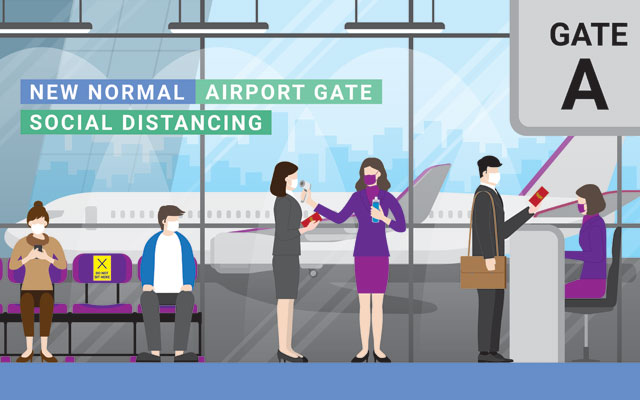
From head-mounted thermal scanning devices to technology-supported social distancing measures, new technologies have seeped into our airports and changed the passenger experience. That pace of innovation adoption sets a scene for rapid industry transformation over the next few years and will force a historically slow-moving industry into action.
The pandemic has prompted a new focus on trust. The industry must regain the trust of passengers, while airport and airline workers must trust the measures taken and the environments they are working in are sufficient to keep them safe.
David Lavorel, CEO of SITA at Airports and Borders, plots a new course for aviation’s recovery in 2021 and predicts a smarter, safer, and more sustainable travel industry fit for people and planet. Here are the six technology trends set to underpin this metamorphosis.

1. Advanced self-service and biometrics
The digitally optimised traveller experience makes use of facial recognition and touchless technologies, embedded in various self-service devices. Automation and biometrics will become the norm rather than the exception at leading airports globally in the next few years.
SITA has already implemented Smart Path self-service biometric and mobile technology and automated the outbound passenger journey at several airports, including Beijing and Miami. These deliver a ‘walk-through’ airport experience, where passengers can simply use their face as their boarding pass and walk from the taxi to the plane in a fluid and seamless fashion. Improved processing efficiency means less time in line and more social distancing for all passengers.
A key benefit during the Covid-19 era is that the process removes the need to touch any airport equipment, reducing the risk of infection significantly. Once airborne, passengers are increasingly being offered services via Wi-Fi or 4G networks to avoid any non-personal touchpoints (such as seat-back inflight entertainment screens) and respect social distancing – boosting confidence onboard as a result.
As well as biometrics and automation for improving passenger processing, there is a huge opportunity to increase efficiency and safety for airport and airline crew using technology like SITA Smart Path. In November 2020, SITA announced a trial with Etihad to use facial recognition technology to identify and authenticate crew members, allowing them to complete check-in procedures and mandatory pre-flight safety and security questions digitally via their own mobile devices. The new initiative has replaced a kiosk-based check-in process which required crew to use their staff identity cards as a form of authentication.

2. SDN innovation and evolving airport operations in response to Covid-19
Passenger flow management technologies such as SITA Airport Management provide real-time passenger monitoring and actionable insights, for airports to understand and manage passenger movement throughout the airport. It will become a necessity to pro-actively manage crowd density and social distancing during daily operations, as well as longer-term planning.
Utilising technology, like SITA’s Information Display System, airports can send passengers personalised mobile messages. This added level of communication places passengers at ease throughout their entire airport journey.
Innovation in software defined networks (SDN) is also enabling more resilient and agile airport operations that can respond to the changing demands of travel during and after the pandemic. For example, SITA’s SDN portfolio allows multiple airlines, ground handlers, and other tenants to access the same virtualised infrastructure in the cloud, delivering more scalable and agile connectivity. Leveraging Orange Business Services’ Flexible SD-WAN portfolio, this drives greater cost efficiencies and supports the airline industry’s drive to migrate applications to the cloud.

3. Internet of Things, artificial intelligence and machine learning
The Internet of Things (IoT) has held great promise for some time, but the convergence of 5G, maturing Artificial Intelligence (AI) programmes, and the ubiquity of sensors embedded into cheaper hardware is bringing this vision to life. The IoT creates a network of data-producing devices and assets that converse and increase efficiency across the airport. Examples of technologies that harness IoT and AI to solve business problems are robotics and autonomous vehicles, computer vision, language, virtual agents, and machine learning.
Machine learning algorithms detect patterns and learn how to make predictions and recommendations by processing data and experiences, rather than by receiving explicit programming instructions. Already, SITA is seeing an increased use of real-time data to intelligently handle turbulence and shifting weather patterns. The company recently announced a solution with eWAS Pilot that delivers both forecasts and satellite-based observation data, enabling crews to avoid the avoidable and create more economic, intelligent, and flexible flight plans.
While helping to address immediate needs like sanitisation, social distancing, and the automation of customer support processes, the combination of these technologies potentially signposts a Fourth Industrial Revolution, where, beyond airports, the physical world around us becomes connected and intelligent.
AI algorithms will be key to efficiency, with sophisticated AI becoming the secret sauce for airports. Airports will use visually-enabled analysis supported by AI-based recommendations to bring real-time 3D simulations of operations to life for all stakeholders, improving operational efficiency, and enhancing the passenger experience.
4. Development of a digital identity for air travel
In the coming years, we expect that the development of a digital identity will replace the traditional passport. One approach is a Digital Travel Credential (DTC), currently being explored and progressed by key industry bodies like ICAO.
Another potential solution is self-sovereign identity, a form of digital identity giving travellers control over how their personal data is shared and used. It adds a layer of security and flexibility, allowing the identity holder to reveal only the data required for any given transaction or interaction.
The benefits of using self-sovereign identity include lower financial transaction costs, protecting people’s personal information, limiting opportunity for cybercrime, and simplifying identity challenges in various fields, including travel, healthcare, banking, IoT, and voter fraud.

5. Vaccination visas, Health ETAs, and Advanced Passenger Processing
Health ETAs allow governments to receive the information they need to help reduce the risk of infection from travel and tourism. Travellers are required to provide information on their health status – potentially including PCR test results that indicate the presence of Covid-19 antigens – and are informed of that assessment’s outcome in advance of travel. This will give travellers the confidence before they start that they will be allowed to complete their journey.
Advance Passenger Processing (APP) brings the ability to assess the risk, including health risks, and allow or deny travel at check-in. When coupled with the implementation of a Health ETA service, it enables real-time checks to be performed to confirm that each traveller has completed the required health checks and is eligible to travel.

6. Blockchain for aviation industry-wide savings
It is almost as though the blockchain was invented for the air transport industry. Blockchain is about sharing information safely among different industry players. It is about providing one truth at a given point, that can be used to facilitate workflow and the exchange of data. This trusted network is tailor-made to address some key challenges of Covid-19 without compromising passenger experience or data privacy.
PwC estimates that the use of blockchain could increase aerospace industry revenue by as much as four per cent or US$40 billion, while cutting maintenance repair and overhaul (MRO) costs globally by around five per cent or US$3.5 billion. Savings will be derived from secure document storage, ensuring confidentiality and data privacy, improved insights on repair time and inventory, automated workflows, and more efficient record reconciliation.
In 2020, blockchain was successfully used in a SITA Blockchain Alliance MRO Proof of Concept to record and track two separate strands of information for each aircraft part: a digital thread and a digital passport. The digital thread provided the real-time status, chain of custody, and back-to-birth track and trace of the aircraft part over time. The digital passport – like a human passport – provided the indisputable identity of a part and contains other vital data such as certification of airworthiness to prove ownership.
From a passenger perspective, customs processes are another area where blockchain can solve challenges. Airports, airlines, and governments can share baggage content information to pre-clear bags at arrival, hence, avoiding the need to recheck bags in transit. Improving efficiency in this department, and further reducing the chances of baggage mishandling on arrival, is good news for passengers.
Covid-19 presents a minefield of data sharing challenges between the dozens of organisations required to collaborate during a single passenger journey. Being able to share critical information safely and instantly will result in easier, smarter, and safer air travel for all, encouraging a return to the skies and strengthening the resilience of the air transport industry for years to come.
Accor Ambassador Korea grows footprint across country

Accor Ambassador Korea has signed four new hotels in South Korea, which will see the group enter Pyeongtaek, Mokpo and Jeju for the first time.
Set to open in mid-2021, Mercure Ambassador Jeju will feature 72 guestrooms, an array of dining outlets, a pool, spa and indoor driving ranges.

Meanwhile, the 360-room ibis Styles Ambassador Incheon Airport is slated to open come 2022 in the International Business Complex II of Incheon International Airport.
Boasting 219 rooms, Mercure Ambassador Pyeongtaek will be located in the high-tech industrial area near to the US army base and residential district. Set to open in 2024, the hotel will house a restaurant and bar, meeting room and business centre, a swimming pool, spa and fitness centre.
Lastly, opening in 2025, the 235-room Mercure Ambassador Mokpo will boast a restaurant and bar, a 500-seat convention and meeting facility, fitness centre, pool and kids’ club.
With the new additions, Accor Ambassador Korea will operate 33 hotels and resorts across 10 destinations in South Korea by 2025.
Google rolls out new tools to aid tourism recovery

Google has launched the Travel Insights with Google platform designed to provide insights into travel demand to drive data-driven decisions.
The platform is built around three new tools: Destination Insights, Hotel Insights and The Travel Analytics Centre.
 The Destination Insights tool gives travel businesses, governments and tourism boards information on the top sources of demand for a destination, and the destinations within their countries that travellers are most interested in visiting. This helps them map out a possible resumption of travel on specific routes and make choices about where to communicate with potential future travellers.
Meanwhile, the Hotel Insights tool is designed to provide hotels of all sizes, especially small and independent properties, with extensive insights about demand for hotel bookings from Google searches daily. This allows them to understand where demand for their property may be coming from for more effective target marketing as they plan their recovery.
Available to Google’s commercial partners in the travel sector, the Travel Analytics Centre will enable organisations to combine their own Google account data with broader Google demand data and insights, giving them a clearer picture of how to manage their operations and find opportunities to reach potential visitors.
Lynette Pang, assistant chief executive, marketing group, STB, said: “The Destination Insights Tool will be an easy and useful tool for tourism stakeholders to better understand travel trends and consumer demands in a timely manner. We hope that this will empower more data-driven business decisions and fuel innovation, so as to enable businesses to reimagine their offerings and emerge stronger.”
Covid returns global air traffic to 1999 levels: Cirium
The fallout from the pandemic has wiped out 21 years of global airline passenger traffic growth in a matter of months, reducing traffic this year to levels last seen in 1999, according to a recent report by Cirium.
In comparison to last year, passenger traffic is estimated to be down 67 per cent in 2020, due to global travel restrictions implemented to curb Covid-19, showed the aviation data firm’s Airline Insights Review 2020.
TravelAt the peak of the disruption in April, scheduled passenger flights dropped significantly to just 13,600 globally on April 25, compared to the year’s busiest day on January 3 when Cirium tracked over 95,000 scheduled passenger flights globally. This marks an extraordinary 86 per cent reduction in flights.
From January to December, airlines operated 49 per cent fewer flights in 2020 compared to 2019 – down from 33.2 million flights to just 16.8 million (to December 20).
Domestic travel was down 40 per cent this year, from 21.5 million flights in 2019, while international flights suffered an even more precipitous drop as they were 68 per cent below the 11.7 million flights tracked the year before.
Jeremy Bowen, CEO of Cirium, said: “This severe setback shows the true extent of the challenge faced by the struggling aviation sector as it has sought to reset itself in the new post-Covid-19 era.”
Global passenger traffic figures reveal a plunge of over two-thirds (67 per cent) versus the previous year, with Asia-Pacific continuing to handle over a third of world passenger traffic.
The majority of the scheduled passenger flights flown this year have been domestic – totalling 13 million (77 per cent) with a mere 3.8 million (23 per cent) flying internationally, due to closed borders and limited business travel.
Cirium data analysis recorded Southwest Airlines operating the most flights globally (and in North America), with 854,800 flights in total. Meanwhile, China Southern Airlines (487,700 flights) topped the tables in the Asia-Pacific, Ryanair in Europe (205,000 flights), Azul in Latin America (134,000 flights) and Qatar Airways (82,400 flights) in the Middle East and Africa.
On the ground, Atlanta was the world’s busiest airport, handling over 245,000 arriving flights during 2020, while the world’s busiest air route in both directions was within South Korea, between Seoul and the island of Jeju with 70,700 flights operated.
Forward planning for airlines has dramatically contracted from six- to 12-months for flight scheduling to just six- to eight-weeks – forcing carriers to be nimbler and adapt with greater speed to the rapidly changing rules and travel restrictions around the world.
Airlines have been forced to drastically reduce the number of aircraft still in service, with those still flying operating significantly fewer hours.
For example, narrowbody aircraft operated just six to seven hours a day in 3Q2020 compared to nine to 10 hours a day in the same period last year.
While up to 30 per cent of the global passenger fleet remains in storage, there are signs of recovery on the horizon, with only 10 per cent of short-haul Airbus A320neo aircraft currently in storage, showing narrowbody aircraft leading the recovery and domestic and short-haul travel returning first. In fact, the world’s most used aircraft type was the Airbus A320, with Cirium tracking 5.49 million flights throughout 2020.
Bowen said: “Airlines will have a way before returning to 2019 levels, particularly as international travel is significantly down and showing only slow signs of recovery, mainly (in) China and South-east Asia.
“But Cirium is confident aviation will weather this difficult and terrible year and emerge in better shape – with younger, more fuel-efficient aircraft and right-sized fleets – to gradually navigate their way to recovery in the years ahead.”
The seven key trends outlined by The Cirium Airline Insights Review 2020 for next year include:
- The consolidation of airlines, particularly in Asia-Pacific where more domestic competitors will merge or be acquired.
- New-generation aircraft like the A320neo and the return of the 737 Max will provide reduced operating costs.
- Surplus aircraft will be retired and the Boeing 747 and the Airbus A380 are projected to support the rising demand in the denser leisure markets.
- In Q4, Cirium saw a 78 per cent plunge in bookings compared to the same period last year – this will naturally change the way the industry forecasts demand, with Cirium seeing online search and sentiment becoming the primary indicators to calculate demand.
- Airlines will need to deploy more dynamic scheduling with the increased volatility of flight scheduling, as the booking window has fallen from six- to 12-months to just six- to eight-weeks.
- The implementation of AI technology will accelerate to automate the traveller experience and real-time proactive information will become more critical.
- Aircraft leasing will push past 50 per cent, becoming the major manner in which aircraft are financed.
The future of experiences

The shift in guest touchpoints for experiences post-Covid is not just about safety; it’s about new forms of delivery, more deliberate choices by travellers and the rise of virtual and hybrid experiences that can enhance experiences even further.
Heavier doses of social distancing and sanitisation, more intimate experiences in smaller groups, a proclivity for less congested spaces and new forms of delivery and new ways of immersion will shape the future of travel experiences, said tours and activities specialists throughout Asia.
 Shifts in guest touchpoints
Safety, sanitation and health measures are impacting the entire continuum of travel experiences from start to finish, leading many operators to implement advanced bookings, e-maps and cashless payments. In many cases, operators are leveraging technology and digitalisation to create what can be deemed “contactless touchpoints” for equally memorable experiences.
“Aside from making processes safer, digitalisation also allows us to enhance the overall visitor experience,” said Patrick Lee, sales and business development director at Singapore’s One Faber Group, drawing an example of its Singapore Cable Car attraction which now has a “geo-location commentary system” that functions as a personal tour guide in every cabin.
At the Siam Piwat Group’s ICONSIAM shopping mall in Bangkok, whose basement contains an indoor floating market of eats from around Thailand, changing their touchpoints has meant engaging shoppers right in their homes. “Our Luxury Chat and Shop is a first-ever service that no other shopping malls have operated before, and it has become a benchmark service and case study that draws attention from many world brands,” shared a spokesperson for ICONSIAM.
Ethical travel operator Local Alike has pointed out that the biggest operational change is in how they transport guests, having solved the issue of limited van capacity due to social distancing by encouraging guests to drive to the destination themselves.
“It’s not only safer for them; it reduces the costs of the tour so guests are happier with the price,” said Chitpol Watcharapan, senior director, international programmes at Local Alike.
To cater to FITs growing demand for self-exploration, Klook in May 2020 launched a dedicated private car rental page.
Rise of virtual and hybrid experiences
People’s hesitance to step out the door has led to a rise in virtual and hybrid experiences and forced operators to get creative with their delivery, creating many new business opportunities for leisure and business events.
Airbnb in particular seized on the market space for virtual experiences early on. Having temporarily paused its Airbnb Experiences offering globally from mid-March to May to support social distancing efforts, the company launched Airbnb Online Experiences in April 2020.
“We had 50,000 seats booked within the first two months since launch,” shared Parin Mehta, director, Asia-Pacific, Airbnb Experiences. “The online experiences are now our fastest growing product (for leisure and teambuilding purposes).”
Singapore’s Sentosa is also playing with what they term “phy-gital” formats.
“On the consumer front, we collaborated with our Island Partners (tenants) to roll out several free online offerings, such as the virtual Sentosa on Animal Crossing: New Horizons and other leisure experiences like video conferencing backgrounds and Yoga by the Beach,” shared Lynette Ang, chief marketing officer of Sentosa Development Corporation.
Prioritising safety and social distancing has also meant a predictable downsizing of groups.
“Where I see the permanent tectonic shift is that before we comfortably had groups of over 40 people on a tour. I think those will taper off a bit,” opined Jason Loe, founder of Tribe Tours.
“The other change has to come from operators and activities themselves…in terms of the delivery means,” he added.
To this end, Singapore’s Tribe Tours, which has previously gained a name for its cutting-edge experiences such as its Good Morning Singapore and Mr Lee Kuan Yew guided tours, has launched a new product: livestream hybrid experiences which allow large groups of people to participate in the safety of their homes.
The most popular ones so far feature a livestream behind the scenes of famous traditional food factories paired with an ingredient box – delivered to participants’ homes during the livestream – allowing guests to cook along under the guidance of factory chefs on screen.
It debuted to an immensely positive reception. “Since our launch in mid-September, the tour has been fully booked out every weekend,” said Loe, who also saw corporate interest in the tours for teambuilding.
Another very popular livestream addition is Tribe’s escape room-style tour in Singapore’s Chinatown where participants can direct and solve a murder mystery and learn the history of Chinatown through the eyes of characters in the outdoor puzzle adventure.
All livestreams are limited to 30 minutes “to keep it entertaining (and punchy because our attention span online is not as focused”, said Loe.
Intimate, secluded experiences are hot
Klook described travellers post-pandemic as being “more measured and deliberate,” and points to travellers gravitating toward “smaller-group trips that are more intimate and personalised” – a growing opportunity for activity aggregators like Klook, whose predominant focus has been on serving the FIT segment.
Klook has witnessed a stronger demand for outdoor adventurous offerings, especially in Taiwan which resumed domestic travel early. “Our traffic data in Taiwan for outdoor and island-hopping activities surged 10 times in June this year,” said CS Soong, vice president, corporate development.
Local Alike’s Chitpol stated that the desire for seclusion and the outdoors paves the way for the rise of community-based tourism (CBT). “The capacity of local communities is in itself too small for mainstream tourism, which automatically reduces risk. In the past, we may have looked at large mass markets as desirable; now it turns out that the smaller capacity of CBT helps it to shine because it means less health risk,” he told TTG Show Daily.
Tourism investment zones part of Malaysia’s 10-year plan to revive sector
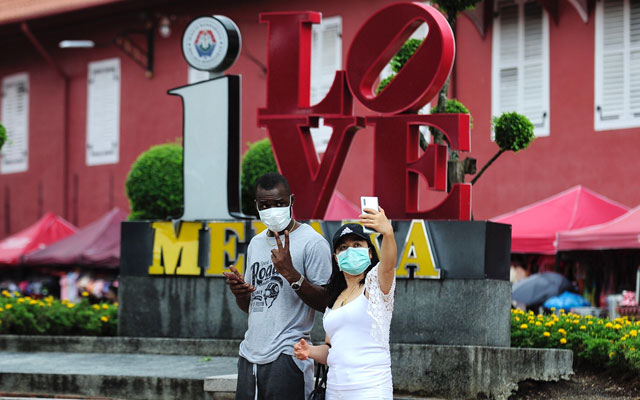
The National Tourism Policy 2020-2030, recently launched by Malaysia’s prime minister, Muhyiddin Yassin, will see the creation of special tourism investment zones to attract more local and international investors as well as an intensified focus on making Malaysia a top-of-mind ecotourism destination, to regenerate the industry ravaged by the pandemic.
In his speech, Muhyiddin said he was confident that the National Tourism Policy would be able to ensure the survival of the country’s tourism industry.
The policy would be implemented through six key strategic thrusts, namely, governance transformation, creation of investment zones for inclusive tourism projects, intensifying the digitisation of tourism, enriching the experience of tourists, strengthening commitment to sustainable tourism and increasing human capital capacity in all tourism sub-sectors.
In 2019, Malaysia’s tourism industry contributed 15.9 per cent to the country’s GDP, valued at RM240.2 billion (US$59.5 billion).
The labour force of the tourism sector recorded 3.6 million people who contributed 23.6 per cent to total employment. This means that for every four jobs in Malaysia, one of them is related to the tourism industry.
Commenting on the 10-year tourism policy, Malaysian Association of Hotels CEO, Yap Lip Seng, said it needs to be accepted and empowered across various ministries and agencies, and not just be another project paper for the Ministry of Tourism, Arts & Culture (MOTAC) alone.
“MOTAC must be given sufficient autonomy to ensure the objectives under the policy are achieved within the set time frame,” he added.
He described the tourism industry as a complicated sector that involves various stakeholders, both public and private, and very often overlapping jurisdiction with other government agencies with conflicting priorities.
He said: “The National Tourism Policy must be upheld across and be prioritised for it to be relevant and effective. A clear example would be the need to drive international arrivals versus immigration controls. The government must realise that relaxation of immigration restrictions (visa requirements) plays a major role in driving tourist arrivals. While immigration concerns are valid too, it should be a matter of enforcement and not upfront restrictions.”
The Malaysian Association of Tour and Travel Agents president, KL Tan, welcomed the plan, but suggested that, in light of the current uncertainty and global economic landscape, that the roadmap be segmented into various phases according to the dynamic business environment.
He said: “The immediate first three years would be resetting tourism as the whole tourism ecosystem is on the brink of collapse. Reimagining tourism destination strategies, digitalisation, infrastructure development, upskilling, rebranding and repackaging should be emphasised, consistent with the new travelling trends and patterns. The roadmap needs to provide an opportunity for stakeholders to realign and reinvent towards a better and sustainable tourism for the future.”
Critical structural changes in both the government and private sectors will facilitate tourism recovery and lift Malaysia’s appeal as a tourist destination, he noted.
The baseline initiative reflecting the sector needs should be spearheaded by the MOTAC, he added, while other government agencies should strive to align their objectives with the ministry’s.
He said: “One of the key areas that has yet to be effectively addressed is governance transformation – local legitimate tourism stakeholders have been disadvantaged for years and we hope that this thrust for transformation will finally put us on equal competitive footing globally.
“With the thrust towards digitalisation, the government must prioritise the role of local stakeholders by looking seriously into developing locally established assets and balance engagement with foreign platforms and entities.”







The High Speed Rail (HSR) project between Singapore and Malaysia has been terminated, after both countries failed to reach an agreement on changes sought by Malaysia due to the economic fallout from the pandemic.
The announcement was made in a joint statement by the prime ministers of both countries on Friday (January 1), following their meeting via videoconference on December 2, 2020 to review the status of the HSR project, including changes proposed by Malaysia.
“In light of the impact of Covid-19 pandemic on the Malaysian economy, the government of Malaysia had proposed several changes to the HSR project,” read the joint statement by the leaders.
“Both governments had conducted several discussions with regard to these changes and had not been able to reach an agreement.”
Following the termination, Malaysia has to compensate Singapore for costs already incurred, said Singapore’s Transport Ministry.
Singapore and Malaysia had signed the Kuala Lumpur-Singapore HSR Bilateral Agreement in 2016. In September 2018, both parties agreed to postpone the construction of the HSR until May 2019.
In June 2020, Singapore’s then-transport minister, Khaw Boon Wan, announced that Malaysia had requested for another seven-month extension to allow both countries to discuss Malaysia’s proposed changes to the project. Both parties had also agreed then to a final extension of the suspension period to December 31.
The proposed rail link would have cut travel time between Singapore and Kuala Lumpur to 90 minutes, as compared to over four hours by car.