Travel, tourism and hospitality-focused HR specialist, ACI HR Solutions, has started work on its 2021 research on salary and employment trends across the Asia-Pacific region.
The well-regarded annual report provides a unique statistical view of the travel, tourism and hospitality labour market as well as an invaluable insight into the mindset of industry personnel.
The 2021 Salary & Employment Trends Survey will look at Covid-19 impact on the industry
Against the backdrop of a pandemic and business crisis in the hospitality industry, the 2021 Salary & Employment Trends Survey will bring in specific questions related to Covid-19, shared founder and CEO, Andrew Chan.
Industry personnel can be part of the research by participating in an online survey.
Participants will receive a free copy of the published report upon its release.
InterContinental Hotels Group (IHG) has plans to triple their number of hotels in Malaysia over the next five years – from the present four properties to more than 14 hotels across six brands.
Rajit Sukumaran, managing director, South East Asia & Korea, IHG, expressed long-term confidence in the Malaysian market, despite the coronavirus pandemic’s continued impact on the hospitality industry.
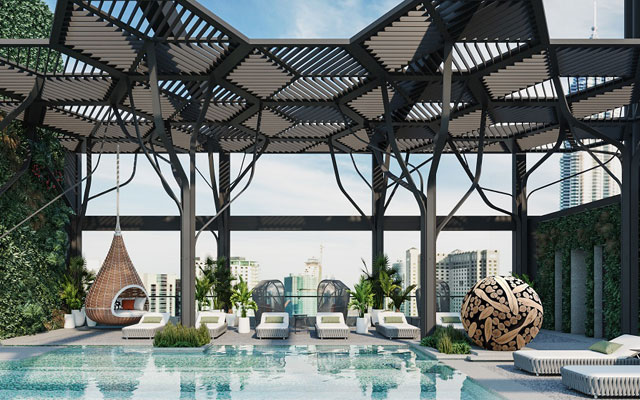
Hotel Indigo Kuala Lumpur on the Park will open in Bukit Nanas come 2023
He said in a press release: “There is still plenty of reason for optimism. History tells us that travel will return and, as demand comes back, we’ll be well-positioned to welcome guests to our hotels – and continue to grow.
“There’ll clearly be bumps in the road, but governments across South-east Asia and (South) Korea have reacted to reduce the spread of Covid-19, which means that, in most markets, we have seen restrictions start to ease and the easier movement of people domestically, even if borders remain closed.”
Serena Lim, vice president, development, South East Asia & Korea, IHG, explained that Malaysia is an important part of IHG’s overall growth strategy and the mainstream hotel segment is key to the company’s expansion in Malaysia.
She said: “Mainstream travel is proving to be the most resilient to the crisis around the world, and it’s where we are seeing occupancy levels rebuild the quickest. We see it as key to our growth in peninsula Malaysia and East Malaysia, where we are seeking to unlock secondary markets such as Ipoh, Alor Setar, Kuching and Miri.
“We know that, when the pandemic is behind us, we will see more conversions as independent hotel owners look to bring the IHG brand strength, know-how, and system delivery to their hotels.”
Lim explained that another part of IHG’s growth strategy is to introduce new luxury and lifestyle brands to the country, such as Kimpton and Hotel Indigo, both of which are set to launch in Kuala Lumpur come 2023.
The 471-room Kimpton Kuala Lumpur will be situated in the Tun Razak Exchange area, a new financial district currently being developed in Kuala Lumpur; while the 180-key Hotel Indigo Kuala Lumpur on the Park will open at the base of the picturesque Bukit Nanas.
Next year, IHG will also introduce its upscale brand Crowne Plaza in Kuala Lumpur and Kota Kinabalu. The group will also debut its Regent brand in Malaysia, with the slated 2022 opening of the Regent Kuala Lumpur.
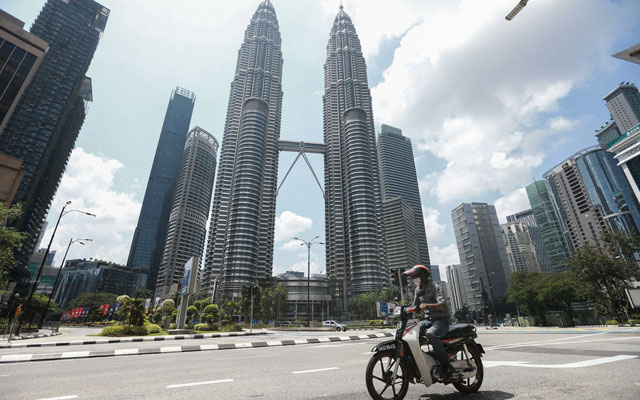
Malaysia has lifted the conditional movement control order (CMCO) for most states since yesterday (December 6), as the government seeks to revive the country’s economy battered by the pandemic.
However, it will be extended for another two weeks until December 20 for Kuala Lumpur, Sabah, most of Selangor, and some parts of Johor, Negeri Sembilan, Kelantan and Perak – areas where the number of Covid-19 cases remain high.
The conditional movement control order will remain in place in Kuala Lumpur until December 20
From today, interstate travel will also be allowed nationwide, except in areas under enhanced movement control order, said senior minister for security Ismail Sabri Yaakob during a media conference on Saturday.
Under the CMCO, all schools, public parks and recreational centres must be closed. Most sports, social and cultural activities are not allowed, with entertainment centres and nightclubs banned from operating.
While most economic activities are allowed to continue, only three people per household are allowed to venture out of their homes.
On Saturday, Malaysia reported 1,123 new Covid-19 cases and four more deaths, bringing the tally to 71,359 and 380, respectively.
Tourism in the Maldives, which reopened its borders in mid-July after a near four-month lockdown, is picking up with a surge in arrivals expected for the festive season.
“The year-end arrivals are looking good and some of this credit should go to the Maldivian authorities for aggressive destination marketing,” an industry official said.
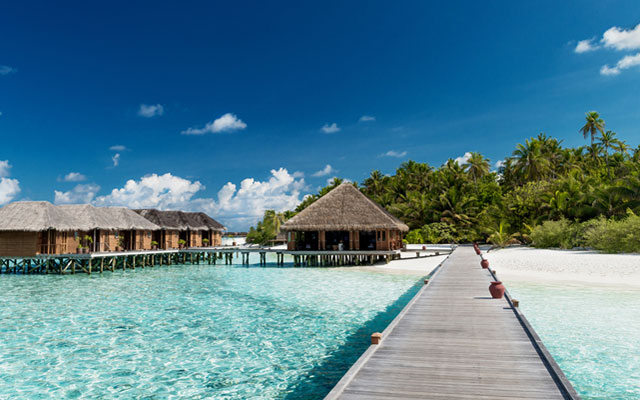
Maldives expected to receive over 500,000 arrivals for 2020
Beating 22 other countries to bag the highly coveted World’s Leading Destination award at last month’s World Travel Awards – the most prestigious awards in the tourism industry – has also helped to boost the Maldives’ reputation as a tourist destination, said Maldives Marketing and Public Relations Corporation (MMPRC) managing director Thoyyib Mohamed.
“We have been continuing destination marketing even during the lockdown. Last month, we launched a global media campaign and currently have 47 other marketing activities with B2B and B2C campaigns,” he said, adding that source markets including Russia, Ukraine, the UK, India and the US were doing well.
He said the Maldives saw 35,759 arrivals last month, and is on track to reaching its target of 100,000 arrivals from mid-July to year-end by December 15. Meanwhile, the total arrivals for the year is expected to be a little over 500,000 arrivals, a steep decline compared to pre-Covid figures but commendable given the restrictions on outbound travel in many source markets.
Abdulla Ghiyas, deputy managing director at Inner Maldives Holiday, said many airlines were returning to the Maldives, in part due to the island nation being one of the few Asian countries with borders open to leisure travellers. “We are seeing many expatriates from the Middle East also visiting the Maldives,” he said, adding that based on the upward trajectory, next year’s target has been revised to one million from 600,000.
The number of Covid-19 infections detected in the island nation has also reduced since borders were reopened on July 15, and were mostly confined to the capital Male – far away from the remote resorts, added Ghiyas, who is also the former president of Maldives Association for Travel Agents & Tour Operators.
Meanwhile, 10 resorts have acquired their own Covid testing machines and are awaiting Health Ministry clearance, a facility until now only offered by Soneva resorts in the Maldives.
Another industry official from a DMO, who declined to be named, said the surge in visitor arrivals has surprised many sector players. “(Demand in forward bookings) is really looking good and we expect occupancy of 60-65 per cent during the festive season, as compared to 70-75 per cent in the past few years,” he said, noting however that prices have been marked down by 30-50 per cent to attract visitors. Still, he added: “Even if prices are low, the cash injection with growing arrival numbers is vital to sustain the resorts.”
Correction: This report has been updated to correctly state that Abdulla Ghiyas is the former president of Maldives Association for Travel Agents & Tour Operators.
Each room at Parkroyal Collection Marina Bay overlooks one of the iconic views of Singapore – Marina Bay, the Padang, or the CBD
Pan Pacific Serviced Suites Orchard sees new guest suites and Residents' Lounge
A revitalised Orchid Club Premier Room at Parkroyal on Beach Road
The rejuvenated club lounge at Parkroyal on Beach Road
A refurbished lobby with hospitality area at Parkroyal on Kitchener Road enhances the check-in experience
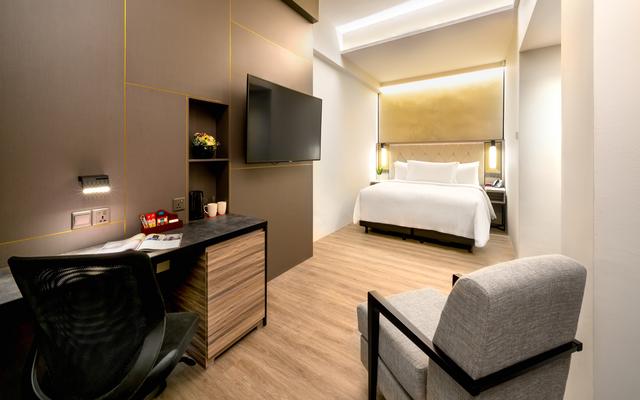
Renovated Deluxe King room at Parkroyal on Kitchener Road
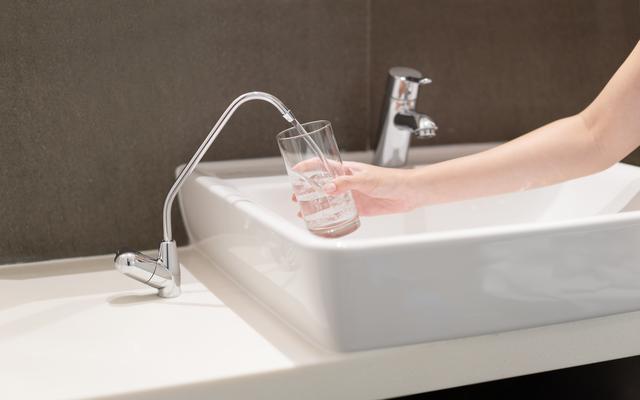
Water filter taps in renovated properties reduce single-use plastic bottles
The latest addition to the metamorphosis – Parkroyal Collection Marina Bay (formerly Marina Mandarin) – brings the first garden-in-a-hotel concept to Singapore. It is not surprising then, to spot the Group’s core belief in sustainability radiating through this revamped property.
Stroll down the skybridge for an immersive forest treetop experience
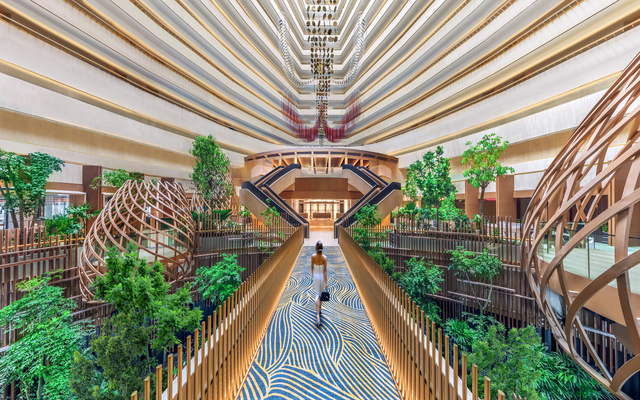
Stepping through the entrance, visitors are greeted by a soaring 13m landscaped planter wall; before transcending the skybridge on the 4th floor – designed to emulate an immersive forest tree top experience – to an indoor atrium, now transformed into a lush garden featuring sculptural pavilions that double up as enclaves for guests to unwind.
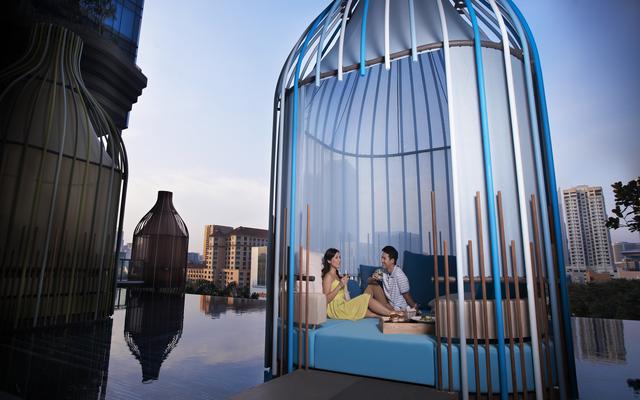
Pavilions inspired by birds’ nests are incorporated into the lush atrium
With sustainability and experiential stays gaining traction in today’s travels, all 583 well-furnished rooms feature biodegradable in-room amenities and a water filter system to minimise the use of single-use plastic bottles.
A host of wellness experiences beckons: an urban farm located onsite offering educational farming experiences; a mineral swimming pool fitted with optic lights akin to luxuriating in a cosmic pool; and – with appreciation for conscious eating – a farm-to-table concept dining.
As part of its launch, capitalise on the trove of curated options in charting your stay – from in-room family fun, to picnics at the insta-worthy sculptural pavilion or even at the iconic Gardens by the Bay.
Bespoke stays
See Singapore like never before with PPHG’s staycation experiences
As cross border leisure travel is largely still a pipe dream, PPHG has also pivoted two other brands under its portfolio, Parkroyal and Pan Pacific, with localities in Singapore’s treasured precincts to attract residents to be a tourist in their own city.
With Christmas festivities around the corner, why not consider indulging yourself to rediscover Singapore, or at best, gift it to an industry friend? We check four of them out:
Feed Your Wanderlust: A culinary-oriented stay, delight palates with a four-course lunch or dinner set menu, Club access to all-day refreshments and a hearty champagne buffet breakfast. Guests who’ll miss the food can learn to replicate it at the cooking and mixology classes, included as part of the package.
Participating properties: Pan Pacific Serviced Suites Beach Road, Pan Pacific Singapore, Parkroyal on Beach Road, and Parkroyal Collection Pickering.
The Suite Life: Life is indeed sweet when champagne, spa treatments, and luxury car transfers are involved. In addition, Parkroyal Collection Pickering curates a series of holistic wellness activities – cooking and mixology classes, yoga and pilates sessions, and architectural tour of Chinatown – to round up the stay.
Pacific Club Experience: Can’t fly? Don’t fret. A stay at club floor rooms at Pan Pacific Singapore grants access to the Pacific Club Lounge on the 38th floor, which offers 360-degree views of Marina Bay, the South China Sea, and the city. Besides personalised hospitality and culinary frills, the option of booking its private dining rooms for two hours is a welcome respite in today’s climate.
Simply Yours: The Exclusive Couples Retreat: Explore facets of Singapore’s rich heritage with a partner (or esteemed friend) while staying at the newly renovated Parkroyal on Beach Road. In-house culinary masters lead curated local experience workshops daily, and guests may also opt for add-on activities such as guided walks, batik making, and perfume discovery workshops at discounted rates. Unwind a day of being out and about with refreshments and evening cocktails served to your room.
Gourmet tourism at home
Sample global flavours with PPHG’s exciting line-up of gastronomic delights
Foodies, don’t dream its over because travel restrictions now throw a spanner to your vacation plans.
With Singapore at the crossroads of an international culinary scene, PPHG redefines dining experiences with its portfolio of new concepts, and award-winning restaurants and bars showcasing a plethora of global flavours.
Visit Japan without having to leave the country
First up, longstanding favourites in the local dining scene: Keyaki and Si Chuan Dou Hua.
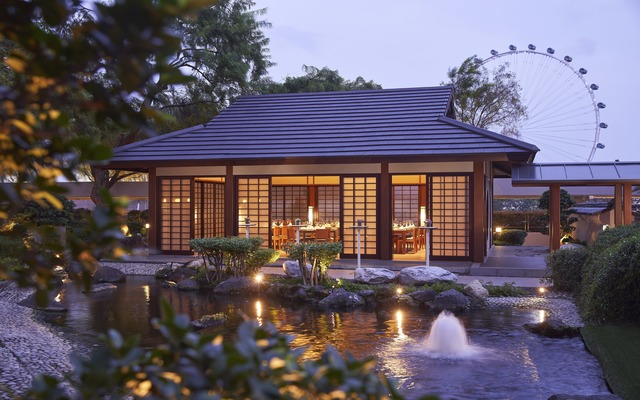
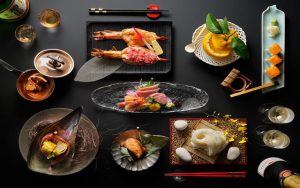
Enjoy a Kaiseki or Omakase menu at Keyaki
Breezing through the ethereal Japanese garden surrounding the establishment is akin to visiting the destination in itself. Keyaki prides itself for using air-flown ingredients from Japan in creating its renowned Kaiseki and teppanyaki menus.
Accommodating both traditionalist and contemporary diners, both tatami and western seating private dining rooms are available.
Tantalise palates with Sichuan cuisine
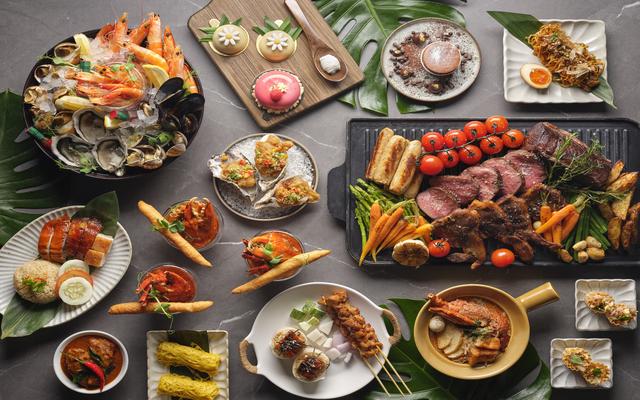
Our familiarity with bold and spicy Chinese flavours today is thanks to Si Chuan Dou Hua, the pioneer of authentic Sichuan cuisine in Singapore. The fiery gastronomic adventure ranges from intricate a la carte presentations to celebrated themed buffets featuring an extensive list of samplers. Dining here is also complemented by theatrics – with tea served through a long-spouted kettle.
The love affair with local food birthed Best of Lime, an all-new a la carte buffet featuring tie-ups between hawker heavyweights from the renowned Hong Lim Food Centre, and in-house culinary stars with their creative takes on international fusion cuisine.
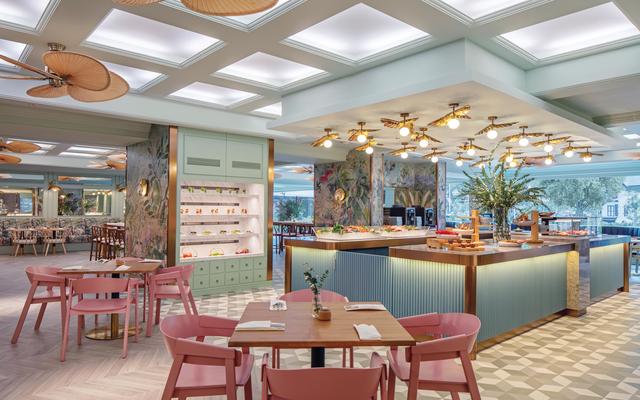
Ginger restaurant serves up uniquely Singaporean flavours amid an insta-worthy background
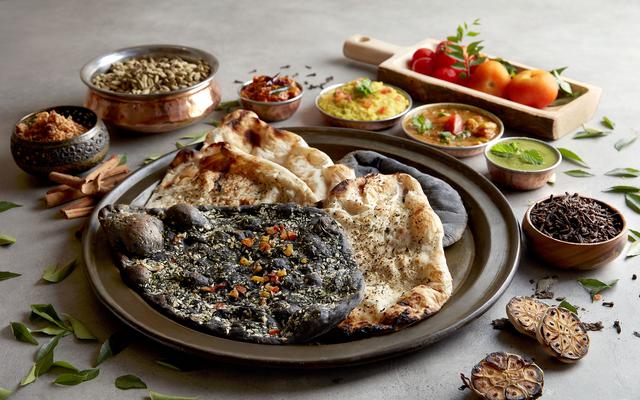
Spice Brasserie’s creative take on North Indian cuisine – Squid Ink Naan
Head to the facelifted Ginger for a curation of Singaporean flavours with a twist, such as dried shrimps – a staple in South-east Asian cooking – meets garlic cheese bun, or slow braised Australian beef cheek rendang.
Also newly renovated, all-day dining restaurant Spice Brasserie embraces Asian street food, while taking diners on a culinary journey weaving through Asia to Europe at its buffet line. An ode to the vibrant Kitchener Road neighbourhood, the restaurant also houses a tandoor oven in churning out unique takes on North Indian delights.
Dine right next to nature at Peppermint restaurant
Atrium Lounge’s transformation to whisky bar by night evokes a Prohibition period feel
Club 5 – the next destination bar with craft cocktails, and nibbles inspired by South-east Asian flavours
For the millennials (and those who identify as such) whose cameras must eat first, there will be ample opportunities for the ‘gram – all while savouring healthful farm-to-table cuisine in greenhouse-inspired private dining areas at Peppermint, sipping afternoon tea at freshly sown verdant landscape at Atrium Lounge, or when downing tipples at new destination bar Club 5.
Feeling famished already? Click here for bookings on featured establishments and more.
The International Air Transport Association’s (IATA) Guidance for Vaccine and Pharmaceutical Logistics and Distribution will ensure member airlines are prepared to handle what is expected to be the largest and most complex operation in the fight against the Covid-19 pandemic.
Launched in mid-November, the guidance was developed in partnership with the International Civil Aviation Organization, International Federation of Freight Forwarders Associations, International Federation of Pharmaceutical Manufacturers and Associations, Pan American Health Organization, UK Civil Aviation Authority, World Bank, World Customs Organization and World Trade Organization.
IATA has issued guidelines to prepare the air cargo industry for the large-scale distribution of Covid-19 vaccines
The guidance includes a repository of international standards and guidelines related to the transport of vaccines and will be updated regularly as information is made available to the industry. In addition, IATA has set up a joint information-sharing forum for stakeholders.
On December 2, the UK became the first Western country to approve a Covid-19 vaccine and will roll out Pfizer-BioNTech’s drug from next week.
Conrad Clifford, IATA’s regional vice-president for Asia Pacific, told a virtual media briefing that if people continue not to travel because of the 14-day quarantine requirement, airlines will continue to see a 90 per cent drop in traffic.
Commenting on Qantas’ announcement last week that passengers have to be vaccinated before flying with the airline, Clifford said he did not know when this regulation would kick in and was not aware of any other member deciding to follow suit.
IATA maintains that testing is still the way to go, and outgoing director-general Alexandre de Juniac, at its November 24 virtual AGM, commented: “We can’t wait for the vaccine, the priority now is testing.”
He added: “As excited as we are about vaccine development, I must be very clear on one point. We cannot wait for vaccine distribution to reopen borders for travel. An immediate solution already exists. We could safely open borders today with systematic Covid-19 testing.”
While the reopening of its borders to international tourism remains uncertain, the Tourism and Events Queensland (TEQ) is sparing no effort in engaging the travel trade in Greater China during this downtime.
Apart from updating trade partners on product and destination knowledge, it also identified business opportunities and assisted both Queensland industry and Chinese travel trade partners wherever possible.
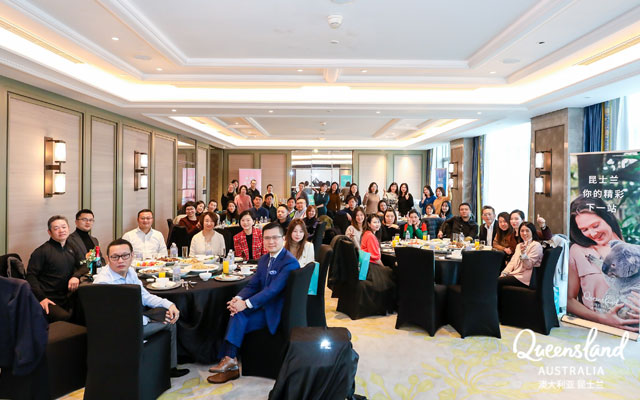
TEQ hosted its annual Greater China Industry luncheon on November 30, drawing about 111 trade representatives from Greater China, Hong Kong and Taiwan
In fact, TEQ’s office in Greater China has recently developed an idea to promote and sell consumer goods to generate small but critical revenue for both Queensland tourism operators and travel trade partners in the Greater China region. Dubbed Project Perk Up, a range of Queensland products were introduced and distributed via Chinese travel trade staff to consumers during the lockdown period. To date, 13 key travel trade partners in mainland China, Hong Kong and Taiwan have generated more than A$64,000 (US$47,100) in retail revenue from the project.
Moreover, TEQ has conducted a series of livestream programmes with different themes, aimed at delivering Queensland destination information and experiences to help support trade partners in China. As of November 11, a total of 18 livestream sessions have been held to 6,441 participants, with total viewership of 14,594. Similar travel trade training programmes have also been and will continue to be delivered in Hong Kong and Taiwan, through both online and offline methods.
TEQ CEO Leanne Coddington told TTG Asia: “TEQ has worked closely with our key partner, Trade and Investment Queensland (TIQ), to connect Queensland operators and suppliers with Hong Kong trade and media partners to source and introduce Queensland products to consumers, ensuring that consumers are able to still get a taste of Queensland whilst they are unable to visit.
“We see great potential in developing e-commerce opportunities in Hong Kong. As a result of our partnership with TIQ, there are increasing numbers of Queensland products now being sold in Hong Kong such as wagyu beef from Kur-Cow Barnwell Farm, Bundaberg ginger beer, lobster tail, scallop, King prawns, heath products, chocolates, eggs and vegetables.”
Last Monday (November 30), the government agency organised its annual Greater China Industry luncheon in a hybrid format, drawing about 111 trade representatives from Beijing, Shanghai, Guangzhou, Hong Kong and Taiwan (99 from mainland China, three from Hong Kong and nine from Taiwan).
Speaking remotely from Queensland, Coddington cited a ‘test’ project with Ctrip featuring top Queensland hotels and airline deals that has generated over 1,000 leads for air ticket and hotel vouchers in less than a month. Additionally, the agency has also rolled out Queensland Moments, a WeChat activity inviting partners to share their past vacation photos taken in Queensland, to trigger happy holiday memories of the Australian state.
She said: “TEQ has been keeping its finger on the pulse of its key international markets. We have been adapting to the ever-changing climate this year, and working to inspire our trade partners, stakeholders, media and consumers through aspirational content and engaging events. Our current strategies in Hong Kong and China are simple and straightforward: keep the industry engaged and to position Queensland at the top of trade partners’ and consumers’ minds when they are considering their next international holiday once Australia’s borders reopen.”
TEQ group executive – global marketing, Michael Branagh, opined that although international travellers are unable to visit Queensland for now, the agency is working to understand them better and exploring innovative ways to continue engaging with them.
He said: “Our team in Greater China has developed projects such as Q Style and Beautiful Reconnection, which are UGC (user-generated content) campaigns, aiming to keep Queensland top of consumers’ minds via key opinion leaders. We believe that the businesses which have the strongest understanding of their consumers, and their future wants and needs, will be in the best position to compete in what will be an incredibly crowded market, as global travel rebounds.
“With the support of Tourism Australia, we are working with Ctrip and Trip.com to deliver a campaign, targeting the Australian-based Chinese community. We know this community is important to our tourism recovery, represents a large and valuable target segment, travels frequently, and is a key influencer for travel decisions made by visiting friends and relatives.”
During the event, a slew of TEQ stakeholders gave an online update on their latest happenings. For instance, Tourism Whitsundays CEO, Tash Wheeler, unveiled new developments in the region, including Reefsuites by Cruise Whitsundays boasting Australia’s first underwater accommodation, InterContinental Hayman Island Resort which opened in late 2019, and the newly refurbished Coral Sea Resort at Airlie Beach Day. As well, Juliet Alabaster, general manager of business and major events at Brisbane Economic Development Agency, shared new itineraries and products to excite Chinese visitors, such as a camel ride and camel farm experience.
Jakarta has seen a decline in hotels’ support for the government-initiated quarantine programme intended to accommodate Covid-19 patients with mild symptoms, following public backlash from fears of virus spread.
A total of 35 hotels had initially signed up for the programme, according to Krishnadi, chairman of Indonesia Hotel and Restaurant Association (IHRA) Jakarta chapter. However, the majority has since pulled out of the programme, after a wave of public objections threatened their business.
Tauzia Hotels withdrew its Yello Hotel Harmoni Jakarta (above) from the government’s quarantine facility programme, not wanting to “sacrifice existing bookings”, shared its director of marketing, Irene Janti
Of the six hotels that stuck to their decision to join the quarantine programme, half of them – Ibis Hotel, U Stay Hotel, and Grand Asia Hotel – are already hosting Covid-19 patients, said Krishnadi. Many hotels withdrew their participation as many of their existing guests proceeded to check out, and bookings were cancelled, after the news broke, he said.
The protests, he said, also came from shopping malls and apartments surrounding those hotels.
MaxOne Hotel on Jalan Sabang, a popular culinary centre in the heart of Jakarta, faced objections from the Jalan Sabang Residents’ Association for hosting some 25 patients in October, recalled its general manager, Andrianita Nainggolan.
After a mediation explaining the strict measures taken by the hotel to the residents’ association fell through, they decided to withdraw from the programme, Andrianita said.
Tauzia Hotels also pulled out its two properties – Pop! Hotel Tebet and Yello Hotel Harmoni Jakarta – from the programme after learning that participating hotels are barred from accepting regular guests during its duration. “We don’t want to sacrifice (existing) bookings,” shared its director of marketing, Irene Janti.
Nite & Day Hotel Jakarta Bandengan, on the other hand, back-pedalled on its decision to join after the hotel was left to sit empty as no patient was assigned to the property, and it could not accept bookings from regular guests, said Hera Adiwikarta Hady, director of sales and marketing, Milestone Pacific Hotel Group.
Meanwhile, the 130-room U Stay Hotel is running full occupancy, according to owner Nofel Saleh Hilabi.
He said the hotel’s decision to house Covid-19 patients did not meet with public objection, attributing the positive response to better understanding about the virus among residents of the hotel’s surrounding areas.
Saleh said: “They are well-informed about the strict health protocols implemented (in our hotel to ensure) that (this quarantine programme) does not spread (the virus) to the environment.”
Location
The iconic hotel stands in the prime area of Marina Bay, skirting the busy commercial districts. Despite its central location, the hotel served up a relaxing escapade, complemented by convenience, accessibility and sweeping city views.
The integrated resort is stocked with shops and restaurants running the gamut from local fare to Michelin-starred restaurants, spoiling guests with pampering choices for a comfortable and indulgent stay.
Rooms
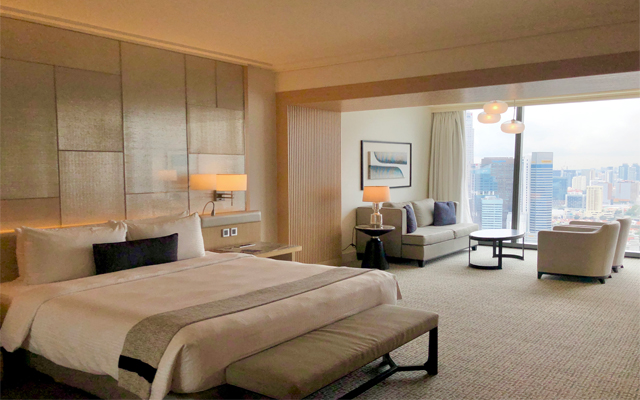
Three towers of rooms present a variety of vistas, from Gardens by the Bay to Singapore’s iconic cityscape. I was given the Premier King Sky View Room, a 44m2 space complete with seating area and arresting city view. Its spacious bathroom boasted a large deep-soaking bathtub, as well as split shower and lavatory – especially convenient for sharing guests.
Due to Covid-19, all towels in the bathroom were individually packed in plastic for hygiene purposes. I personally wished to see a more environmentally friendly, biodegradable alternative, especially as there was no card to indicate my preference to reuse my towels.
F&B
The integrated resort is bursting at the seams with award-winning restaurants, celebrity chef-helmed establishments and Michelin-starred offerings. On my visit, I had the privilege of enjoying several dining experiences, with three standout affairs: Japanese concept Koma, casual a la carte buffet at Rise and a contemporary Italian-American rooftop dinner at Lavo. All restaurants now provide disposable paper envelopes with which to store our masks.
Koma opened last year under the helm of Tao Group, which also operates the dramatic Marquee Nightclub. Enjoying a meal in Koma feels like dining in a private Japanese garden, with dedicated waiters and fusion Asian meals delighting the senses. Although sushi and sashimi are staples of Japanese dining, it would be remiss not to try some of its fusion fare. My personal favourites include the flavourful yellowtail ginger jalapeno, charred barbecued short rib and savoury miso-glazed eggplant.
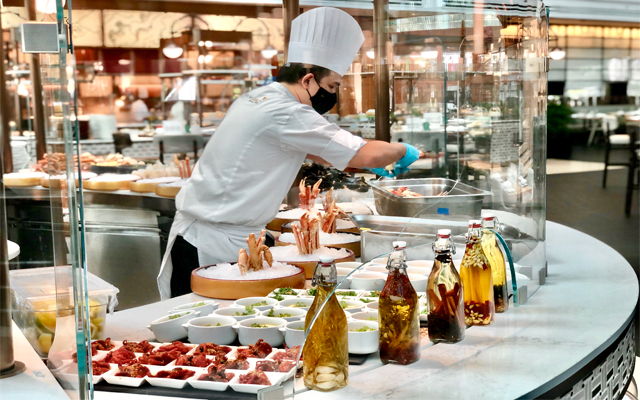
At Rise, its popular buffet has been reconfigured into a more ‘pandemic-friendly’ concept. While dishes are now ordered and many served a-la-minute, the restaurant itself still displays its enticing spread and the chefs continue to prepare meals in full view of eager guests, protected by glass barriers. Dishes do take longer to arrive now, but freshness is ensured.
Finally, Lavo presented an unforgettable experience to top off the memorable staycation. At 57 storeys above the city, the Italian-American restaurant served a varied menu of surprising and delightful treats. My meal started off with an intriguing presentation of tuna tartare, served in mini cones but big on flavour. The penne seafood alfredo that followed was a deceptively simple, but creamy and lip-smacking dish. Though filled up by now, I chowed down the final prize: Oreo zeppole, double-stuffed and fried Oreo bites served with a bowl of malted vanilla milkshake.
Facilities
Being an integrated resort, Marina Bay Sands is fully fitted with conveniences and indulgences alike. The Premier King Sky View Room afforded me a faster and quieter check-in experience at the Check-In Lounge, as well as access to the exclusive Club 55 lounge.
The Infinity Pool – no doubt a centrepiece of the property – operates differently now with the pandemic in mind. Guests must book a slot to visit the pool, which is cleaned every other hour before the next cohort of visitors. Timings are limited, so guests are encouraged to book a slot as soon as they have made a room reservation.
Additionally, all entrances and exits of the hotel, the Shoppes, the train station and the ArtScience Museum are marked by SafeEntry gantries, and guests must scan their national identity card, or their TraceTogether app or token, in order to enter or leave that portion of the resort.
Guests looking for an extra experience can keep an eye out for the soon-to-come Sustainability & Art Guided Tour. This new offering takes guests through the lesser-known details of massive art installations and designs commissioned for the resort – some that even contribute to its environmental efforts. These include the iconic Rain Oculus, which collects and distributes rain water to an internal filtering system, as well as ‘hidden’ light sensors that optimise indoor lighting according to daylight.
Service
Hospitality is invariably a key product of this Sands property. Throughout my dining experiences, waitstaff and even chefs were happy to explain the concept of their dishes. Even housekeeping staff were extremely friendly and accommodating, checking on my preferred timing for cleaning as well as offering me extra minibar top-ups and amenities.
This outstanding service is what contributes to the signature experience, and sets the bar high for a luxury staycation.
Verdict
With its unforgettable dining experiences and hospitality, alongside its wealth of guest offerings such as the upcoming tour, Marina Bay Sands has maintained its standing even for a discerning local crowd. Its packages and promotions now make it a good deal for a pampering long weekend.
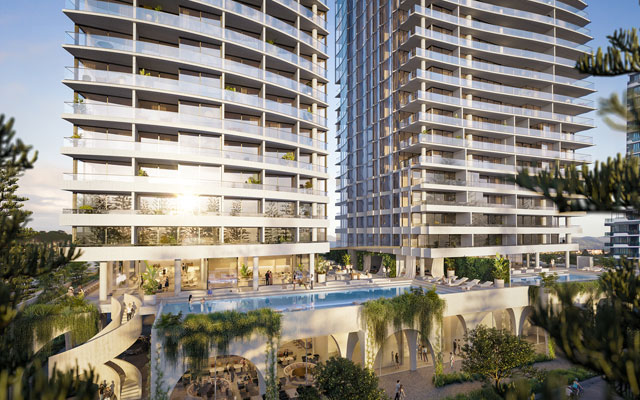
Accor and sbe have partnered with Australian developer Vitale Projects to deliver Mondrian Gold Coast on an expansive 4,037m² beachfront site at southeast Queensland’s tourism and lifestyle destination Burleigh Heads.
Slated to commence construction in 2021 and be completed by mid-2023, the property will be Australia’s first five-star Mondrian hotel and branded private residences. Set to be built at 50 The Esplanade on the Burleigh Heads Beach on the Gold Coast, it will comprise a private residential tower of 89 apartments and a separate hotel tower with 208 guestrooms.
Australia will receive its first Mondrian Hotel and Private Residences, to be built at the Burleigh Heads on the Gold Coast
The buildings will be united by a three-level podium that acts as the property’s common space and hub of activity, including a fitness centre, spa, restaurant, and swimming pool, all overlooking the Burleigh Heads Beach.
Mondrian Gold Coast Private Residences’ luxury two-, three- and four-bedroom apartments feature beach views, balconies, living spaces, butler’s pantries and wine cabinets. Residents enjoy full access to hotel amenities and services, including a 24-hour concierge and 24-hour room service, valet carparking and personal drivers, while also enjoying the privacy of residents-only amenities in their own building.
Mondrian Gold Coast is one of nine new Mondrian properties that sbe plans to open globally by 2022, with six more to be announced. It follows the company’s recent opening of Mondrian Seoul Itaewon, and the announcement of Mondrian Shoreditch London set to open in 2021.




















InterContinental Hotels Group (IHG) has plans to triple their number of hotels in Malaysia over the next five years – from the present four properties to more than 14 hotels across six brands.
Rajit Sukumaran, managing director, South East Asia & Korea, IHG, expressed long-term confidence in the Malaysian market, despite the coronavirus pandemic’s continued impact on the hospitality industry.
He said in a press release: “There is still plenty of reason for optimism. History tells us that travel will return and, as demand comes back, we’ll be well-positioned to welcome guests to our hotels – and continue to grow.
“There’ll clearly be bumps in the road, but governments across South-east Asia and (South) Korea have reacted to reduce the spread of Covid-19, which means that, in most markets, we have seen restrictions start to ease and the easier movement of people domestically, even if borders remain closed.”
Serena Lim, vice president, development, South East Asia & Korea, IHG, explained that Malaysia is an important part of IHG’s overall growth strategy and the mainstream hotel segment is key to the company’s expansion in Malaysia.
She said: “Mainstream travel is proving to be the most resilient to the crisis around the world, and it’s where we are seeing occupancy levels rebuild the quickest. We see it as key to our growth in peninsula Malaysia and East Malaysia, where we are seeking to unlock secondary markets such as Ipoh, Alor Setar, Kuching and Miri.
“We know that, when the pandemic is behind us, we will see more conversions as independent hotel owners look to bring the IHG brand strength, know-how, and system delivery to their hotels.”
Lim explained that another part of IHG’s growth strategy is to introduce new luxury and lifestyle brands to the country, such as Kimpton and Hotel Indigo, both of which are set to launch in Kuala Lumpur come 2023.
The 471-room Kimpton Kuala Lumpur will be situated in the Tun Razak Exchange area, a new financial district currently being developed in Kuala Lumpur; while the 180-key Hotel Indigo Kuala Lumpur on the Park will open at the base of the picturesque Bukit Nanas.
Next year, IHG will also introduce its upscale brand Crowne Plaza in Kuala Lumpur and Kota Kinabalu. The group will also debut its Regent brand in Malaysia, with the slated 2022 opening of the Regent Kuala Lumpur.