TTG Asia
Asia/Singapore Saturday, 18th April 2026
Page 976

Australia’s major airlines, travel agencies unite to call for lifting of Queensland border restrictions

0

PATA virtual roundtable to shed light on Singapore tourism recovery

0

TTG Conversations: Five questions with Fransiska Handoko, Bali Hotels Association

0

The public’s growing expectation for health and safety protection promised by the travel community could lead to suppliers going overboard and becoming too sterile, warns Fransiska Handoko, government & organization relations with the Bali Hotels Association.

In this new episode of TTG Conversations: Five questions video series, Fransiska speaks about the fine balance between safety and hospitality, challenges of implementing health and safety protocol by smaller, resource-restricted hotels, and long-term compliance controls.

STB and Klook ink US$1.5m domestic tourism partnership

0

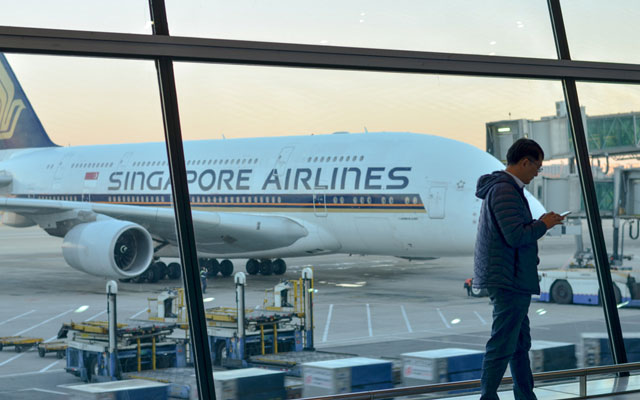
SIA jumps on board flycation trend

0

Singapore, Mastercard join hands for recovery, digital transformation

0
Exterior view of Jewel and Control Tower. Jewel Changi Airport is a mixed-use development at Changi Airport in Singapore, opened in April 2019.

The Singapore Tourism Board (STB) and Mastercard have signed a partnership to co-develop solutions and initiatives to help players transform their businesses, pivot to new audiences, and prepare for the gradual return of international visitors.

Under Mastercard’s City Possible programme, this partnership will commence with digital initiatives for seamless international travel and e-commerce. It will explore projects such as enhancing contactless ticketing and payment solutions for tourism offerings in Singapore under STB’s Visit Singapore Pass, sharing of data insights for business planning in the tourism industry, as well as joint marketing and advertising campaigns.

Singapore Tourism Board’s partnership with Mastercard will strengthen digital capabilities of the country’s tourism sector; exterior view of Jewel Changi Airport and Control Tower pictured 

“This partnership places Singapore and STB on the path to becoming a global lab for solutions and pilots, creating travel experiences that are safe, yet personalised to the needs of our visitors. The partnership is also in line with our efforts to transform and build new capabilities for our tourism industry,” said Keith Tan, chief executive, STB.

Ari Sarker, co-president, Asia Pacific, Mastercard, added: “There is an urgent need for public and private sector players to work together to identify the best strategies for all industries to digitise, be flexible and be agile in efforts to keep up with new consumer demands.”

STB is the first national tourism organisation to join Mastercard’s City Possible program, which aligns key stakeholders to address challenging issues faced by city planners. The programme connects its members to holistic urban solutions and provides access to expertise from a global community of urban leaders, businesses, NGOs and academics.

Jakarta returns to partial lockdown as Covid surge strains healthcare system

0
People walking in front of the monument to the Covid-19 chest on September 10, 2020 in Jakarta.

The Jakarta city government will reimpose large-scale social restrictions (PSBB) across the capital city starting Monday (September 14), following a spike in the number of Covid-19 cases in the city.

Since restrictions were eased in June, the number of Covid-19 cases and fatalities in the capital has continued to soar. With Jakarta now finding itself in “times of emergency”, the authorities have reimposed a partial lockdown to prevent further spread of the virus, according to its governor Anies Baswedan.

Jakarta returns to Covid-19 alert as a surge in virus cases pushes the city’s health system to brink of collapse

The Covid-19 task force reported 1,351 fatalities in Jakarta, while the number of new cases had risen from 901 on September 1 to 1,274 on September 10, bringing the city’s tally to 50,671 as of September 10.

“Due to this emergency situation, Jakarta (government) has no choice but to ‘pull the emergency brakes’ as soon as possible,” he said.

Anies revealed that 77 per cent of 4,053 isolation beds in the capital city are currently being occupied, and he feared the city would run out of them by September 17 if no action was taken. He added that local Covid-19 intensive care units could reach capacity by September 15, if cases continue to climb.

During the PSBB, all offices and entertainment venues must be closed, and staff will have to work from home. Only 11 essential businesses, hotels included, will be allowed to open.

Anies said that he would not only strictly limit people’s movement, but also ban all dine-in services at F&B outlets. Worship places and other public facilities will also be shut in a bid to prevent crowds.

Tourism stakeholders in Indonesia backed the governor’s decision, while at the same time, urging firmer enforcement of health and safety measures.

Hasiyanna Ashadi, managing director of Marintur Indonesia, said that the Covid situation could become much graver, if the governor did not reimpose PSBB. She also called for greater surveillance in monitoring the public’s compliance to PSBB, noting that many people are not wearing their masks correctly and do not maintain physical distancing.

However, some industry players pointed out the economic repercussions of reimposing a partial lockdown in the city.

Maulana Yusran, deputy head of the Indonesian Hotel and Restaurant Association, said that the move would cause further disruption to the country’s ailing tourism industry.

To mitigate the fallout from the PSBB, he suggested that the Jakarta administration extend relief measures to struggling industry players, such as tax waivers, subsidies, and cash transfers for affected workers.

Japan forges first critical travel green lane

0
Tokyo cityscape and Mountain fuji in Japan

Japan and Singapore will commence a green lane for essential business and official travel for residents from both countries on September 18, making it the first such arrangement for the North Asian country.

A Business Track between Japan and Singapore will facilitate cross-border travel and business exchanges; Tokyo pictured

In a joint statement, the foreign affairs ministries of both countries said that the Business Track arrangement will allow the safe resumption of cross-border travel and business exchanges with the necessary public health safeguards in place.

These safeguards include pre-departure and post-arrival testing as well as the need to adhere to a controlled itinerary for the first 14 days in the receiving country.

Operational details including the requirements, health protocols and application process will be published on the website of the Japan Ministry of Foreign Affairs website and Singapore’s SafeTravel website on September 18.

To date, Singapore has four other reciprocal green lanes for business and essential travel with the governments of Malaysia, China (selected cities), Brunei and South Korea.

Ovolo expands Australian portfolio

0
Ovolo South Yarra - Facade

Hong Kong-based Ovolo Group will expand its footprint in Australia with the signing of Ovolo South Yarra, slated to launch in 1Q2021.

Located near the intersection of Toorak Road and Chapel Street in Melbourne’s cultural hub of South Yarra, Ovolo South Yarra will offer 123 rooms and suites featuring technology integration and intuitive design.

Ovolo South Yarra will rise in the heart of South Yarra come 1Q2021

Among the hotel facilities is a unique Ovolo kitchen & bar concept, which will feature locally sourced produce, as well as seasonal cocktails and wines sourced from Australia’s producers.

‘Flexibility’ is the new watchword for APAC airline industry recovery

0
Cyril Tetaz, Executive Vice President, Airlines, Asia Pacific, Amadeus

Covid-19 has brought the aviation industry in Asia-Pacific to a near standstill, with IATA’s latest figures predicting that demand for air travel is unlikely to reach 2019 levels again until at least 2024.

The pandemic has also fundamentally changed what passengers in the region need and want from the flying experience, and with the ongoing threat of ‘second waves’, the mid-term future remains uncertain.

Nevertheless, there are still opportunities for carriers that can adapt their operations. But to navigate the ongoing uncertainty, flexibility will need to become the new industry watchword.

Against this backdrop, Tetaz outlines four areas where flexibility will be critical to Asia-Pacific’s airlines surviving and thriving in the era of Covid:

1. Disruption management
With policies changing constantly, flexible and effective disruption management should be a top priority as it allows airlines to maintain a high quality of customer service and build customer confidence.

The dynamic situation means that airlines need to ensure that their disruption management systems are informed by the very latest data, are agile enough to respond seamlessly in real time, and enable them to immediately communicate with passengers and offer alternative flight and short-term accommodation options if necessary, through mobile apps and wearables, for example.

Technology will be critical to airlines achieving this at scale, with the latest breed of sophisticated inventory management systems – like Amadeus’ Altéa Passenger Service System – underpinned by big data analytics, machine learning algorithms and cloud computing to allow real-time customisation for individual passengers in response to disruptions.

2. Cabin configurations
Many airlines have refocused some of their fleets to support repatriation flights, transport of cargo and medical supply shipments. In fact, Korean Air and Asiana even reported profits in Q2 by focusing on their cargo businesses.

To do this, they have repurposed their aircraft by adding additional cargo space to flight cabins and extra space around passengers for safety. This is enabled by the seamless integration between airline systems from inventory to reservation, departure control, and offer management.

Fully integrated systems also mean that even if unforeseen events like last-minute aircraft changes occur during operational windows, airlines can immediately and automatically reseat passengers and adjust weight and load balance – thus avoiding expensive and inefficient manual intervention.

3. Increased choice through interlining and codeshares
The reduction in flight routes has prompted increased airline consolidation and collaboration; and we expect interlining and codeshare agreements to become a mainstay.

As well as choosing the right partners to collaborate with, success will come down to airlines having the right technology infrastructure. Dynamic customer identification and sophisticated airline policy controls to automate flight schedules and codeshare agreements will be key; as will the ability for carriers to easily work together with each other third parties.

For this reason, we’ve made ‘collaboration’ a founding principle of our airline solutions. Our Altéa suite, for example, is designed to deliver a common core functionality to a community of airlines as an alternative to high cost, ongoing IT development within each airline. We’ve also made our Amadeus Airline Platform an open system to allow third parties to develop on top of Amadeus technology. Crucially, this helps to fast-track development from concept to market.

4. Flexible cancellation, rebooking and revenue management
Finally, a seamless cancellation and rebooking process – underpinned by a smart inventory management system – will be critical to reassuring travellers, and tempting them back to frequent flying.

This includes using advanced availability management techniques, dynamic customer identification and sophisticated airline policy controls to automate flight schedules, codeshare agreements, re-accommodation and seating. This helps maximise airline network yield, increasing revenues and improving efficiency.

Carriers could also consider turning any under-capacity issues into a positive by making it easier for their customers to redeem existing reward points.

Flexible revenue management will also be critical for airlines looking to respond quickly to fast-changing consumer behaviour and shorter booking lead times, by shifting away from models that use historical data in favour of real-time demand analysis and use of merchandising techniques to shape hyper-relevant offers.

For this reason, we have incorporated artificial intelligence and machine learning algorithms into our revenue management solutions. This allows an airline to build models where there is no precedent upon which to rely and quickly identify patterns of recovery, permitting airline partners to seize new opportunities.

Ultimately, despite the challenges faced by aviation, airlines can still use this time to prepare for the future. And as some airlines in our region have recently demonstrated, there are still opportunities for those that can adapt to the new operating environment, too.

Flexibility should be the cornerstone of all carriers’ mid-term plans – building in a greater level of agility than ever before so that technology, systems and staff can respond quickly as the situation inevitably continues to change.