Following two successful programmes in December under its Pay It Forward campaign, Trip.com has decided to extend its efforts around supporting charities, social service agencies as well as tourism businesses in Singapore to June 2021.
Launched on December 1, the Pay It Forward campaign calls on Singaporeans to donate attraction tickets purchased with their SingapoRediscovers Vouchers (SRVs) to selected beneficiaries through Trip.com’s platform.
The first Pay It Forward programme hit its target of 100 donated Singapore Zoo tickets within a week
The first programme in partnership with Boys’ Town met the donation target of 100 tickets to the Singapore Zoo within a week. The second project sought donations of 220 tickets to the Night Safari, in favour of Club Rainbow (Singapore) beneficiaries and their caregivers.
A third programme is ongoing now, to gift Boys’ Town wards and their caregivers with 110 tickets to the River Safari. Although the programme is set to conclude on February 28, there are already 484 tickets booked and donated at press time.
Trip.com’s Ru Yi says the Pay It Forward programmes allow Singaporeans the option of putting their vouchers to meaningful uses
Ru Yi, area general manager – Asia, Trip.com, told TTG Asia that as the authorised booking partner of the SingapoRediscovers campaign, the company works closely with partners to encourage Singaporeans to redeem their SRVs in support of local tourism companies and bring about a multiplier effect on spending.
“At the same time, we acknowledge that some may want to donate their SRV products to a meaningful cause,” she said, adding that the initiative also helps to raise awareness of the beneficiary groups supported by Pay It Forward, “rally and inspire our stakeholders to come together and support them in various ways during and beyond this campaign, and also maximise the level of support to the local tourism industry”.
Trip.com is no stranger to community work during times of crisis. Throughout 2020, even as the company battled with the pandemic and faced business challenges, it went on to donate three million surgical masks worldwide and had its team members contribute time and resources to help needy local communities.
The Malaysia team, for instance, provided cash and in-kind donations to the Malaysian Association for the Welfare of Mentally Challenged Children; the Philippine team raised funds for relief packages that were directed to at least 100 families impacted by Typhoon Ulysses; the Cambodian team donated surgical masks, alcohol hand gel and medical gloves to impoverished children as well as participated in a blood donation drive for the Angkor Hospital for Children.
Yi acknowledged that local social service agencies were “doing an amazing job in supporting and empowering various disadvantaged or needy groups”, and saw that it was also Trip.com’s “responsibility to step forward and support them in their work and services which will have a lasting impact on these beneficiaries”.
Airbnb has appointed Parin Mehta as regional director for the Asia-Pacific region. In this role, Mehta will lead Airbnb’s Homes and Experiences and be responsible for the long-term growth of the company in APAC.
Mehta was previously director of Airbnb Experiences for APAC and was responsible for launching the Experiences business across the region, including Online Experiences in 2020.
He has been based in Singapore for 10 years, previously serving as head of strategic partnerships for South-east Asia at Google, and also previously lived in Japan.
Sri Lanka will once again welcome tourists on January 21, this time under a bio bubble, following a successful pilot programme to assess the country’s capability in managing tourists under a bio bubble amid the pandemic.
A daily limit of 2,500 inbound tourists has been set. While tourists do not need to undergo mandatory quarantine, they have to abide by a strict set of rules. Travellers must obtain their visas online along with confirmed hotel booking, pre-purchased PCR tests and mandatory Covid-19 insurance coverage of US$50,000 on hospitalisation or medical bills for a month. They must also produce a valid PCR test taken 96 hours before arrival.
Sri Lanka will allow in a maximum of 2,500 tourists per day under a bio bubble arrangement
Vaccination will not exempt travellers from these health and safety protocols.
The first PCR test on Sri Lankan soil will be conducted on arrival at the hotel; the second will come five to seven days later or when symptoms develop; and the third will be conducted 10 to 14 days of their stay.
Travellers staying in Sri Lanka for more than a week will need to pay for all three tests ahead of time, with each costing US$40.
Under the bio bubble, all arriving travellers must stay in one of 40 certified hotels for the first 14 days of their trip. These hotels will not accept any local guests nor local events. After this period, travellers are free to move to their hotel of choice and mingle with locals.
During this same period, travellers are restricted to only 14 attractions and tourist sites.
With the reopening of Sri Lanka’s borders, scheduled flights by key airlines such as SriLankan Airlines, Emirates and Singapore Airlines will resume from January 21.
Sri Lanka Tourism officials said the first arriving tourists were likely to be a group of Germans who would come through Bandaranaike International Airport.
Margaret Paul has been appointed as general manager of Pan Pacific Singapore.
Prior to joining Pan Pacific Singapore, Paul was the managing director of Emerald Palace Kempinski, Dubai and Kempinski Hotel Residences Palm Jumeirah.
In total, the hotelier worked for 16 years with the Jumeirah Group both in London and Dubai, progressing to the role of general manager of the iconic Burj Al Arab and prior to that, was general manager of Madinat Jumeirah overseeing four hotels.
Indonesia’s Ministry of Tourism and Creative Economy’s recent plan to launch a new digital tourism marketplace in support of Grab Indonesia’s travel investment has irked local tourism players who said that the move neglected existing platforms that were already serving the industry.
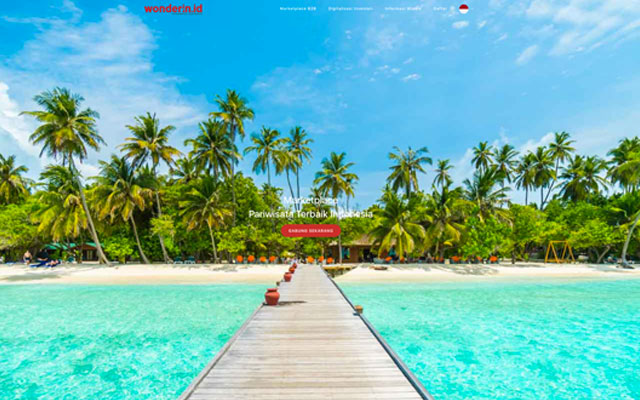
Jongki Adiyasa, executive director of Ina Leisure Tour and Travel, pointed to wonderin.id, which was created by state-owned telecommunications company Telkom and currently provides 2,400 tour packages, 2,000 homestays, 300,000 hotel rooms and 3,000 travel destinations.
Industry representatives urged the government to make use of existing and established digital tourism marketplaces, like wonderin.id, instead of creating a new one with Grab Indonesia
Instead of creating a new digital tourism marketplace, Jongki said the government should instead scale up wonderin.id.
“If the minister deems that wonderin.id is not good enough, let’s invite experts to improve its performance,” he said, adding there was no guarantee that a new platform would immediately perform.
Bahriyansyah, secretary general of the Association of the Indonesian Tour & Travel Agencies (ASITA), also expects the government to make better use of existing marketplaces like ASITA’s hayo.travel created last year.
According to Bahriyansyah, hayo.travel is an inclusive marketplace where travel companies, hotel and homestay operators, transport rental providers, and spa operators could join.
Should the government go ahead with its plan with Grab, both Bahriyansyah and Jongki hoped that the well-being of local travel and tourism players would be considered, such as by allowing them to market their products on the platform. This would minimise the ongoing struggles of local players.
Grab’s investment in the country’s travel and tourism industry involves the creation of the Grab Travel Pass service in five priority tourism destinations, namely Labuan Bajo, Mandalika, Likupang, Borobudur and Toba Lake. The pass allows tourists to book hotels as well as purchase attraction tickets and tele-medical services.
IAAPA, the global association for the attractions industry, has decided to shift its annual exposition and conference to the Shanghai New International Expo Centre, from August 10 to 13, 2021.
The IAAPA Expo Asia 2021 was initially planned for Macau in June.
IAAPA Expo Asia 2021 will be held in Shanghai, China this August
IAAPA explained that the relocation and date change were in response to the continued impact of the global pandemic.
Hal McEvoy, president and CEO, IAAPA, said: “IAAPA’s role has always been to help members meet, do business, and learn from each other. It is more important than ever we provide such opportunities in a safe manner, at the right time, in the right location.
“After careful review and with significant input from our team, members, exhibitors, and the IAAPA Board of Directors, the decision has been made to relocate IAAPA Expo Asia 2021 to Shanghai, China. Given the continued uncertainties impacting travel – international and domestic – we believe the relocation and event date change will provide more opportunity for exhibitors and attendees to participate.”
Plans are underway to ensure a smooth transition to the new venue.
This year’s event will kick off with a conference day followed by three days of tradeshow, additional education programmes, exclusive special events and more.
McEvoy said the event would abide by safety guidelines and operational procedures recommended by global and health authorities as well as event industry experts.
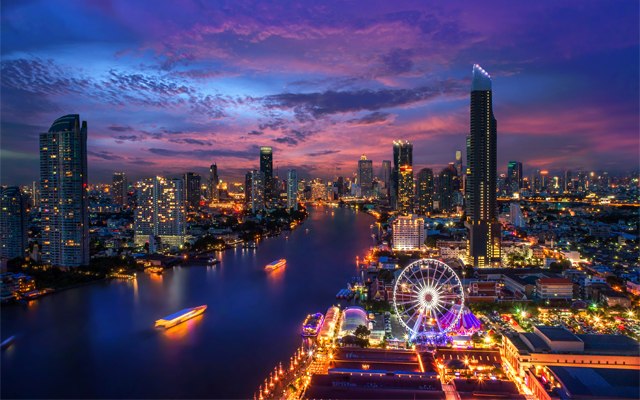
Bangkok cityscape. Bangkok night view in the business district. at twilight.
The travel and tourism crisis has forced as many as 80 per cent of member hotels to halt operations in 2020, according to the Thai Hotels Association (THA), which has a membership of 930.
However, the true numbers of hotel casualties may be higher, as more than 80 per cent of approximately 54,200 hotels nationwide are non-member properties – most of which are by independent, small-and-medium-sized (SME) operators.
The pandemic and tourism crisis has forced 80 per cent of member hotels to halt operations in 2020, according to the Thai Hotels Association
“These independent and SME hotels are at the highest risk. Some have already closed their doors and others were sold,” said THA president Marisa Sukosol Nunbhakdi.
Several owners of such small outfits told TTG Asia that they were entering 2021 with much anxiety, and expect the challenging environment to remain until early-2022.
Wassana Srikanchana, owner of White Villa Hotel in Hua Hin, said the company has slashed room rates by half to stimulate demand but average occupancy remains at just three to five per cent – “similar to other small hotels in town”.
Hua Hin is declared a red zone due to high numbers of Covid-19 infections. The status has further bruised local travel and tourism businesses, which are already struggling with severely reduced international arrivals.
Wassana said there has been zero business since mid-December 2020, following the second wave of infections.
To minimise loss, Wassana has slashed staff wages and kept only the first floor running to cut utility expenses.
Local independent chain Urban Hospitality Group saw 80 per cent of foreign clientele disappearing with the pandemic, along with 50 per cent of business event bookings, compared to 2019.
Managing director Wutthiphon Taworntawat has chosen to respond with aggressive sales and marketing efforts, dishing out attractive rates for hotel rooms to be used as home offices. This comes on top of reduced wages and work hours for hotel staff, as well as staff relocation to other properties in the chain.
Despite the challenges, Urban Hospitality Group has been among the fortunate few. In 2020, it acquired two hotels in Bangkok to expand its portfolio.
THA has been vocal about Thailand’s ailing hotel industry, calling on the government to provide multi-layered assistance, such as tax incentives to support hotel development or public health renovation, a commitment to hosting government meetings in local hotels, and minimum wages for workers affected by temporary hotel closures.
Without further assistance, THA expects more hotels to exit the market this year.
The Philippines
Travel agencies are among the most beleaguered in The Philippines’ travel and tourism industry, as more than 50 per cent of them have closed or reduced their scale of operations last year in the face of continuous inbound and outbound travel restrictions.
The harrowing numbers in 2020 sum it up: an 84 per cent drop in foreign visitors to only 1,323,956, from 8,260,913 arrivals in 2019, and a corresponding 83.1 per cent decrease in visitor receipts to 81.40 billion pesos (US$1.7 billion) from 482.16 billion pesos over 2019.
Boracay, Cebu, Siargao and Bohol (pictured) have reopened to domestic travellers, but demand has been scarce
Travel prospects are dashed this year as the government extended travel restrictions on January 15 on 32 countries until the end of the month to curb the entry of the new and more contagious Covid-19 variant, of which a Filipino who travelled from Abu Dhabi is confirmed to have been infected.
Domestic travel, which is the main strategy to reboot Philippine tourism, remains lacklustre although a growing number of local destinations including Boracay, Cebu, Siargao and Bohol have reopened. The absence of a uniform travel requirement for all destinations has been blamed.
“It’s a very difficult time for travel agencies, specially (when) multiple entities do not seem to follow a singular standard or treatment of the protocols. It becomes quite confusing to sell any tours,” pointed out Aileen Clemente, president and chair of one of the country’s biggest and oldest agencies, Rajah Travel.
This sentiment is shared by Dorothy Drysdale, head of international communications of one of the country’s oldest agencies, Marsman Drysdale Travel. She lamented that “there is not one (travel) rule that goes across the board. Every barangay (village) has a rule”.
In late-2020, Drysdale had suggested that the various forms that travellers must fill should be consolidated into one for all organisations, which would also simplify the process for travel agents.
Meanwhile, displaced travel agents and guides continue to face financial pressure which gets little relief from the government – each affected worker has access to just 5,000 to 8,000 pesos through the Bayanihan 2 programme.
Tourism secretary Bernadette Romulo Puyat said that as of January 7 this year, 388.6 million pesos had benefited 77,724 recipients of Bayanihan 2. She added that under the CARES for TRAVEL programme of the Department of Tourism (DoT) and the Small Business Corp, 415 soft loan applications amounting to 247.5 million pesos have been processed.
In addition, DoT called for a cap on the price of Covid-19 tests required for safe travels; partnered with two hospitals on the 50 per cent subsidy of swab test to make it cheaper; provided 10 million pesos for the swab tests of tourism workforce in Boracay, among others.
With the election of a new set of officers, the Philippine Travel Agencies Association (PTAA) also distributed a small Christmas token worth 2,000 pesos to members to signify the start of greater collaboration and attentive listening.
To survive, a number of travel consultants have segued into other small businesses like food catering and farming to sell their produce online.
Among those that have moved away from travel and tourism is im-active Tours, Events, MICE Management and Services. General manager Irine Maliwanag has chosen to take advantage of free tutorials on social media to acquire new skills such as copy writing, graphic design and digital marketing.
Maliwanag explained that running the travel agency may not be sustainable now, particularly as only domestic tourism is allowed in certain destinations and varying travel requirements per domestic destination are confusing and time consuming to manage.
Furthermore, her company has yet to be refunded by tour package partners abroad who also have been unable to get full payment from their airline and hotel partners. – Rosa Ocampo
Hong Kong
With the government wage subsidy scheme coming to an end last November and no immediate recovery in sight, travel agencies in Hong Kong have stepped up measures to keep costs down.
For some agencies, that means mass layoffs. Recently, Wing On Travel trimmed some 120 employees, while Jetour reduced its manpower by 40 per cent.
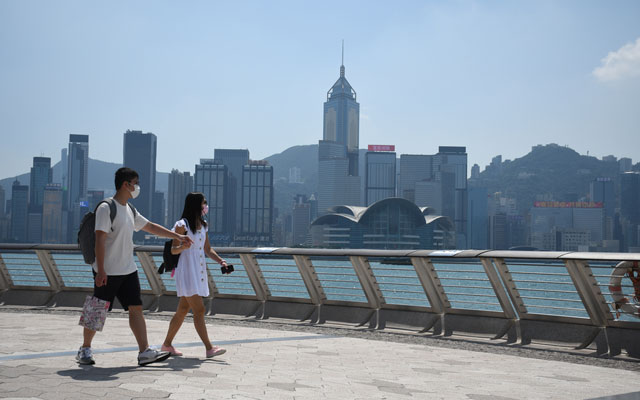
Established Hong Kong travel agencies have chosen to temporarily pivot to other businesses instead of exiting the industry
However, statistics from the Travel Industry Council are barely reflecting the impact of the pandemic, as only 88 agencies had terminated their membership last year, a slight dip compared to 96 members in 2019.
According to the Hong Kong Association of Travel Agents (HATA), the agency closure rate in 2020 stood at single-digit levels, similar to the previous year, with even the addition of new members – although membership fees were waived due to zero business amid the pandemic.
Noting that HATA’s members largely comprise veterans from mid- to large-scale agencies, its chairman, Ronald Wu, shared: “These long-timers tend to not give up, and instead, adopt various measures to control costs.”
While staff layoffs became more prevalent after last November, according to Wu, four rounds of government relief measures rolled out to support tourism businesses have so far kept widespread closures at bay.
Wu does not expect more agencies to shutter over the next few months, as “the cost of keeping their license is low, especially with relaxed rules like agents being allowed to share the same office address”.
However, Jetour chairman, Ronnie Ho, criticised the government for its inadequate support for those 90 active agents who are key employers of the industry.
He explained: “As far as I know, more than 1,000 agents benefited from government financial assistance, but they are mostly small and medium-sized businesses, with staff under four people. In fact, some are even inactive with limited business transactions or have been operating at a loss over the last few years.
“The government should instead consider helping viable operators with (active) business transactions, otherwise these players with a long history will disappear.”
To get through continued tough times, some established players have evolved their business model to generate some much-needed income and keep staff active.
Hong Thai Travel Services, which has permanently shut two of its more than 10 branches last year, was one of the first agencies last April to set up an online store called HT Mall, offering staycation packages, anti-pandemic tools as well as imported goods from Taiwan, Japan and Australia.
According to a spokesman, the agency has resisted retrenchments, implementing only pay cuts and no-pay leave; workforce reduction was due to natural attrition.
Some tour guides even requested to go on voluntary leave so they could take on part-time jobs, with the condition to return to longer working hours once business is back, the spokesman added.
While most of Hong Thai offices are dormant, its Mongkok branch remains open to provide limited services.
Moving forward, Wu hopes the government would pump more funds into pandemic control and focus on creating travel bubbles with more countries and regions such as Macau and China, as the vaccines alone will unlikely lead to a significant inbound recovery this year. – Prudence Lui
Udom Tantiprasongchai, founder of One-Two-Go, the first low-cost airline in Thailand, has passed away on January 16.
He was 66 years old.
Udom Tantiprasongchai passes on at age 66; Image: www.facebook.com/udom.tantiprasongchai.3
Udom is recognised as the first-mover in the Kingdom’s low-cost carrier (LCC) business, ahead of Thai AirAsia and Nok Air, the latter being the sister budget airline of Thai Airways International.
After gaining aviation business experience through Cambodia International Airlines and a joint venture with Air Philippines, Udom founded Orient Express Air in 1995. The airline was later renamed to Orient Thai Airlines.
In 2012, he birthed One-Two-Go.
Udom’s airline businesses hit a snag years later, with Orient Thai having its licence revoked in 2018 by the Civil Aviation Authority of Thailand due to debt issues, and a One-Two-Go air crash that led to financial problems.
In the throes of a second lockdown and faced with a bleak forecast on travel this year, the Malaysian Association of Tour and Travel Agents (MATTA) is calling on the government to come up with an enhanced and targeted rescue plan for tour and travel agents.
MATTA president Tan Kok Liang said in a statement: “Tourism businesses are currently in extreme distress due to the very fragile and uncertain business environment which is expected to continue late into 2021. Tour and travel agents have been battling with collapsing revenue and liquidity problems since the start of the pandemic and the government’s efforts have not made any significant impact on this segment of the industry.”
Malaysia tourism bled over US$24.7 billion in losses last year due to the pandemic; tourists at Sri Subramaniam Temple in Batu Caves in November 2020 pictured
Tan also stressed on the importance of the tourism sector to Malaysia’s economy, being the third largest contributor towards the national GDP in the previous years. In 2019, the tourism industry supplied 15.9 per cent, equivalent to RM240 billion (US$59.4 billion), to the country’s GDP.
However, the pandemic’s impact on the tourism industry has led to an estimated total loss exceeding RM100 billion for 2020.
“While the hotel industry is expecting more hotels to close or wind-up due to the second phase of MCO (movement control order) and continuous closure of borders, more travel agents, especially those owning tourism vehicles, are very likely to face the same fate as those hoteliers,” said Tan.
In the face of mounting losses, he urged the government to extend the loan moratorium and enhanced wage subsidy programmes until June 30, 2021. “Reliefs on rental, insurance and statutory licensing fees are also needed to help those who are affected, especially the SMEs who have already had to burn a lot of cash just to survive the last MCO,” he added.
Urging travel businesses to go for consolidation and mergers, Tan said: “Over 5,000 travel companies are now in the ‘ICU’ condition and the government needs to initiate rehabilitation programmes as the situation will get worse.” Measures he cited include allowing travel agents to close business premises and operate from home and cancelling the mandatory Travel & Tours Enhancement Course programmes for travel companies.
Other measures that Tan said the government needs to assist are: resolving the issues on deposits held by airlines and related service providers, making urgent corrections to the Tourism Industry Act 1992, and providing flexibility of approval for conversion of tour buses into other categories so these buses can be utilised for other purposes.
He concluded: “The tourism sector has been burdened by bureaucracy and over-governance affecting the industry’s regional and global competitiveness. Overlapping jurisdictions by multiple government agencies has stifled the industry over the many years.
“It is no longer ‘business as usual’ under the Covid-19 pandemic and we urge the various government agencies to make immediate policy changes to ease the financial burden of the hardest-hit industry in Malaysia.”





 Mehta was previously director of Airbnb Experiences for APAC and was responsible for launching the Experiences business across the region, including Online Experiences in 2020.