TTG Asia
Asia/Singapore Monday, 5th January 2026
Page 969

Hoteliers push back at Thailand’s shift to target high-end tourists

0
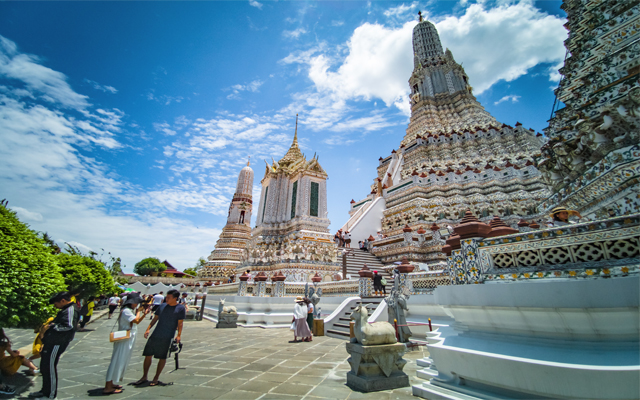
Tourists walking in Wat Arun, locally known as Wat Chaeng, is a landmark temple on the west (Thonburi) bank of the Chao Phraya river Bangkok, Thailand.

Thai hotel industry professionals are concerned that the government’s plan to shift its focus away from mass tourism and backpackers to high-spending travellers could mean that small businesses will be overlooked.

Officials last week announced a new luxury push to help make up for the current lack of inbound tourism, following media reports that Thailand’s travel bubbles proposal will not be ready for implementation by July and international flights may not resume before September.
Thailand plans to turn away from mass tourism and target high-spending travellers; tourists walking in Wat Arun temple in Bangkok, Thailand pictured

Anthony Lark, president, Phuket Hotels Association (PHA), stressed that small hotels have a key role to play in the country’s tourism recovery. He elaborated: “It’s great to drive business away from mass tourism in the long-term, yet higher rates should ideally be linked to all levels of the business, not just the luxury sector – the recovery has to also include hotels that are three- and four-star, not just five-star.”

Bill Barnett, founder, C9 Hotelworks, echoed similar thoughts, saying there are “too many three-star hotels in Thailand” for the luxury push to reap mass benefits for the hospitality industry.

Covid-19 offers opportunity for Thailand’s tourism sector to build a more resilient model: Barrett

Thailand should not forsake mass tourism for the luxury sect, according to David Barrett, marketing communications consultant at DBC Asia. While “tapping the luxury segment is nothing new for Thailand”, he said that “luxury” must be kept in perspective and high yield tourists should be targeted in tandem with wooing back mass tourism.

However, he warned that Thailand needs to refrain from chasing every tourism dollar. “Covid-19 presents Thailand with an opportunity to reset and build a better tourism model. However, we need to better manage the kingdom’s resources, protect the environment, and learn to say ‘no’ to new hotel developments in an oversaturated market and ‘no’ to tour operators who have disregard for the destination and environment,” Barrett said.

“Control has been woefully lacking in the past, causing the overtourism that Thailand was talking about pre-Covid-19 and environmental devastation from mass group tours.”

Last week, the Thai government approved a 22.4 billion baht (US$718 million) domestic tourism stimulus that promises to benefit hotels, F&B businesses, travel agencies and domestic airlines. Licensed hotels and accommodations are eligible to join the programme.

Phuket will be a prototype for using luxury island resorts to draw medical and business travellers – the first groups to be allowed into Thailand when the country reopens its borders to international arrivals.

To this end, Lark stated that PHA is working with the Tourism Authority of Thailand and the Thai Hotel Association Southern Chapter “to drive a thoughtful campaign to highlight the unique experiences of Phuket, directed at families and FIT travellers worldwide, who spend more than the mass market (visitors)”.
Malaysia mulls travel bubbles with neighbours

0
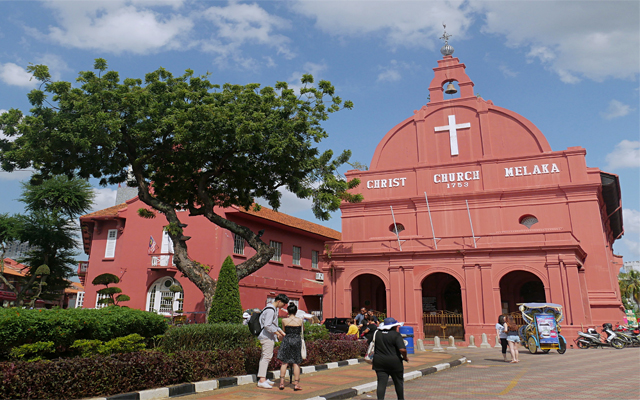
Malacca, Malaysia

Malaysia’s tourism authorities are banking on regional travel bubbles to kickstart tourism recovery post-Covid-19, as international travel from medium and longhaul markets will take a longer time to recover.

Speaking at an online forum hosted by the Federation of ASEAN Travel Associations (FATA) on the way forward for tourism in the region, Noor Zari Hamat, secretary general of the Ministry of Tourism, Arts and Culture Malaysia, shared that Malaysia has started bilateral talks with neighbouring countries to set up travel bubbles once their international borders reopen.

Malaysia eyes regional travel bubbles to bring back tourists; Christ Church Melaka in Malacca City, Malaysia pictured

Noor said: “If the concept is successful, it can be replicated with similar arrangements with all ASEAN member states and other countries that are free from Covid-19.”

Malaysia is dependent on intra-ASEAN travel which made up 69 per cent of foreign arrivals to Malaysia last year. Intra-ASEAN travel is also important to the survival and sustainability of the region’s tourism industry. South-east Asia’s population of 622 million contributed more than 40 per cent to the total international tourists arrivals in the region last year.

Noor called on South-east Asian NTOs to strengthen partnership with the private sectors to stimulate tourism demand via strategic marketing and promotional efforts on digital platforms, while the relevant bodies work on developing the safety and health protocols for the post-pandemic period.

Fellow speaker, Benito Bengzon Jr, undersecretary for tourism development, Philippines Department of Tourism, shared that the agency is supportive of a unified move for the region-wide resumption of flights.

He noted that while the timeline for each country’s reopening of commercial travel will differ, the Philippines is already prepping for the rebound. “New normal protocols for airports, airlines, road transport companies and other service providers are already in place,” he said.

He also pointed out that at a special meeting of ASEAN tourism ministers on April 29, there was agreement to work together to stimulate tourism and build a resilient, sustainable and inclusive tourism model in the region.

Both Wachira Wichaiwatana, vice president of Thailand Travel Agents Association, and Nunung Rusmiati, president of the Association of the Indonesian Tours and Travel Agencies (ASITA), shared the view that intra-ASEAN travel will recover before international travel from medium and longhaul destinations.

Nunung added that short-haul destinations, private tours and open-air activities away from crowds are preferred by Indonesian travellers, based on a survey ASITA had conducted.

Ritchie Tuano, secretary-general at FATA, shared that post-Covid-19 will see more FIT movements or small groups of friends and families travelling together, as opposed to a bus load of travellers.

But for now, domestic travel reigns supreme as borders remain closed in most South-east Asian countries. Thus, he urged industry players and NTOs to work together to rebuild travel confidence for people to travel domestically first, ahead of the reopening of the region’s borders.

FATA president, Tan Kok Liang, who is also president of the Malaysian Association of Tour and Travel Agents, said: “Strict physical distancing measures, temperature checks and disinfection and sanitation procedures are among the protocols that are obligatory and will rebuild travellers’ confidence. (Our members) are also limiting risks through the extensive use of QR codes and contactless travel approaches where possible.”

South Korea plans makeover for 23 tourist spots

0

South Korea’s Ministry of Culture, Sports and Tourism has launched the 2020 Open Tourism Project, involving the revamp of 23 tourist attractions across the country to help boost domestic tourism post-Covid.

The makeovers are intended to allow greater freedom of movement at these tourist sites, and primarily aims to benefit the disabled and elderly, as well as families with babies.

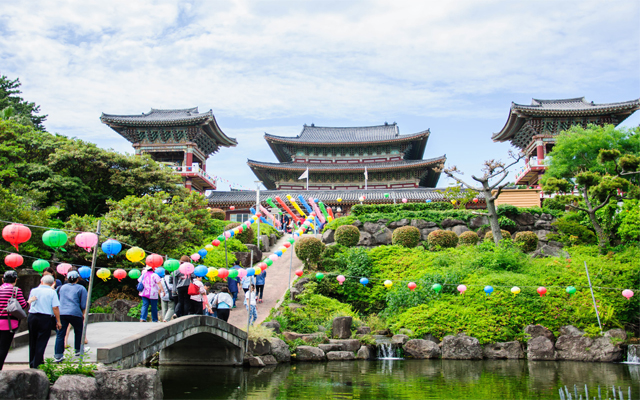
Several tourist spots across South Korea, including Jeju Island, is primed for a facelift; Yakcheonsa Temple on Jeju Island, South Korea pictured

“We will increase the amount of support funds and focus on developing good tourism content,” culture minister Park Yang-woo said, adding that the tourism ministry is striving to not only enhance the physical environment, but also the overall management, of the sites.

A grant of US$206,000 – an increase from the initial US$130,000 – will support each site’s revamp, which includes the renovation of public toilet facilities.

South Korea’s tourism ministry to improve physical environment and management of tourist sites: Park

The domestic sites to be revamped includes those in Gyeonggido Province, Jeju Island, Gangwondo Province and Gyeongsangnam-do Province. In addition, tourism businesses in those regions will receive customised consulting sessions, training courses for workers, as well as assistance for online and offline marketing efforts.

For one, the Yeonmudae, Janganmun and Hwaseong Haenggung located in Suwon, Gyeonggido Province are included in the project. The city decided to invest more than US$1.5 million into revamping these sites after consulting the tourism ministry. The sum includes US$620,800 in state funds (US$206,000 per site) and US$931,000 in municipal funds.

The city said it will improve access to wheelchairs, secure barrier-free movements around the area, and install tourist information boards that respond to both touch and voice for the disabled. Access to restrooms, rest facilities, parking lots and lodging facilities will also be improved.

Gold Coast courts locals to Come Back and Play

0

Queenslanders are being urged to holiday on the Gold Coast as the first burst of campaign activity launches to support struggling operators looking to capitalise on a tourism-led recovery.

Destination Gold Coast CEO Annaliese Battista said in a statement that the recently-launched Come Back and Play campaign is the first step in revitalising Gold Coast’s tourism sector, with the push set to be extended interstate once border restrictions are lifted.

Gold Coast rolls out campaign enticing Aussies to visit the city, as lockdown measures ease 

“Now that intrastate travel restrictions have eased, we’ve wasted no time in rolling out our Come Back and Play campaign to tempt holidaymakers to explore their own backyard, as Aussies emerge from lockdown,” she said.

“Gold Coast operators are desperate to clawback the economic losses they sustained as a result of the Covid-crisis and we know pent-up demand for travel will continue to grow as social and travel restrictions are further relaxed.”

The A$1.5 million (US$1 million) campaign is part of a four-phased plan to trigger a tourism-led economic recovery by encouraging Aussies to holiday in Gold Coast, said Battista.

“We are focused on reanimating Gold Coast’s economy to support the one in seven Gold Coasters employed in the tourism sector, alongside our operators, who have felt the brunt of devastation over the past five months,” she added.

The 14-week campaign adapts core experiences and creative components from Destination Gold Coast’s previous domestic marketing campaigns. Compelling vision of the Gold Coast will play out across a number of media platforms to entice audiences to visit the city.

Battista said the campaign will leverage appetite for drive holidays and primarily target high-spending travellers from Brisbane and regional Queensland.

“Our chief priority is to jumpstart the domestic market by stimulating demand, visitation and expenditure for the city,” she said.

“In the immediate term, this will be to attract intrastate visitors eager to explore attractions and experiences and engage in activities they’ve missed out on, like dining in at a restaurant or café.”

Twelve experiences, events and products from across the Gold Coast that feature in the campaign include Rainbow Bay, Coolangatta; Sea World, Main Beach; Warner Bros. Movie World, Oxenford; Miami Marketta, Miami; SWELL Sculpture Festival, Currumbin; Jumpinpin, South Stradbroke Island; Curtis Falls, Tamborine Mountain; Gwinganna Lifestyle Retreat, Tallebudgera Valley; Gold Coast Broadwater; Dreamworld, Coomera; Tallebudgera Creek; and Sea World Cruises, Main Beach.

Coronavirus crashes APAC hotel investment sales

0

While Asia-Pacific racked up close to US$14 billion in hotel investments last year – representing a 60 per cent growth year-on-year – the region is now seeing a 60 per cent decline in hotel transaction volume in 2020 post-Covid, according to new research from JLL.

“Against the Covid backdrop, and against the year-to-date (through) May, we’ve seen volumes (of hotel deals in Asia-Pacific) fall by more than 60 per cent to US$1.8 billion, and based on the current pace, we expect 2020 to finish at around US$4 billion,” shared Nihat Ercan, managing director, head of investment sales Asia for JLL’s Hotels & Hospitality Group.

While 2019 was a banner year for Asia-Pacific’s hotel investment market, with Singapore and Tokyo emerging as top performing markets in the region, its progress has been set back by Covid-19

“This would represent a decline of 60 per cent against our original forecast, and a year-on-year decline of more than 70 per cent against the prior-year peak,” he stated.

Speaking at a special web event edition of Thailand Tourism Forum 2020 hosted at Rosewood Bangkok on June 17, he likened those figures to being “on par with 2008 and 2009”, when Asia-Pacific recorded US$3.6 to US$3.9 billion in hotel sales following the global financial crisis.

Ercan described some disconnect now with “owners holding out on values to the extent that they can, while buyers are on the lookout for deep correction”.

“The silver lining is that the supply pipeline will decline as some projects are put on hold and some are considered for alternative uses. I think this will give a much-needed breathing space to owners,” he stated.

Shrinking supply pipeline will give breathing space to owners: Ercan

JLL foresaw “domestic demand and drive-to destinations being the resurgence,” but described the overall recovery scenario as being a bit more prolonged than its original anticipation of a swift V-shaped recovery.

Recovery could hover anywhere between 12 to 36 months from when “green shoots of recovery take place,” which Ercan projected will happen towards the end of 2020, though that hinges “on each market’s characteristics”.

Singapore hotels prep for return of dine-in customers

0

Hotels in Singapore are changing up their F&B operations to cater to the return of dine-in customers, as the country stepped into phase two of its reopening plans on June 19, which allows for groups of no more than five.

Digital menus are the top pick in creating a touchless and seamless experience, with players including Shangri-La’s Rasa Sentosa Resort & Spa and Raffles Hotel Singapore (RHS) adopting contactless ordering systems and payment solutions across its F&B outlets.

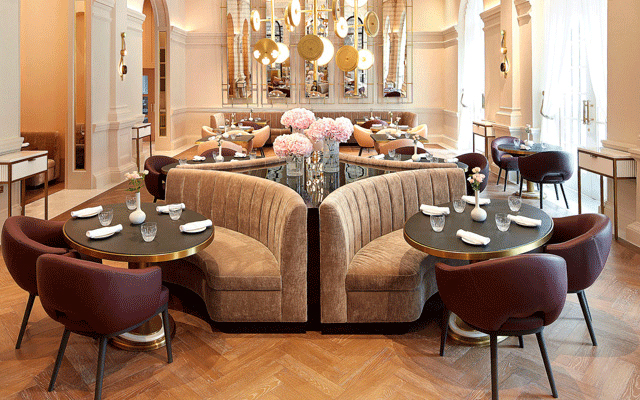
Hotels in Singapore will use digital menus and conduct health checks as part of operating in the new normal; La Dame de Pic in Raffles Hotel Singapore pictured 

“There is a strict adherence policy in place to HACCP principles for food preparation and hygiene. Guests can further ease any discomfort by requesting for disposable utensils or arrange for private dining within suites,” shared Christian Westbeld, general manager, RHS.

The luxury icon is leveraging this reopening to introduce new menus in two of its restaurants, namely, La Dame de Pic and Butcher’s Block.

Before entering Shangri-La’s Rasa Sentosa Resort & Spa’s dining establishments – which includes offsite beach restaurant Trapizza – guests must undergo mandatory temperature checks and scanning of contact-tracing QR code, SafeEntry.

Staff and chefs will be required to wear three-ply masks and surgical masks, respectively, and tables and seats will be disinfected before every meal period and after each use.

For local hotel group Far East Hospitality, caution remains the way forward. Dining outlets in all hotels and serviced residences under the group will only offer orders for room service and takeaways. When hotel stays resume, the breakfast buffet feature will bow out to alternatives such as packed bento boxes and à la carte plated service.

Hotelbeds to add 10,000 properties as demand spikes

0

Hotelbeds plans to expand its global hotel portfolio with the addition of 10,000 new properties by year-end, in response to the surge in demand for domestic hotels worldwide in the wake of Covid-19.

Harnessing big data analytical capabilities, Hotelbeds has been able to closely compare the main corridors, lead time, and length of stay for each source market to more accurately predict the characteristics of the surge in demand for domestic stays.

Hotelbeds responds to strong demand for domestic hotels in the world’s largest source markets

The initiative will be first rolled out in the US, Canada, Mexico, Germany, Austria, Switzerland, Spain, Portugal, Italy, the UK, UAE, Saudi Arabia, China, Thailand, Australia and New Zealand, with more countries to be included in the near future.

This strategy has received the support of many of Hotelbeds’ 60,000 B2B travel buyers worldwide – including tour operators, airlines, points redemption schemes and retail travel agencies – who have also signalled the increase in demand for domestic properties following the pandemic.

In addition, Hotelbeds is expanding its hotel portfolio in secondary destinations, adding more property types like resorts and rural hotels, increasing the availability of refundable rates, as well as reducing releases and minimum stay requirements to capture last-minute booking demand.

As well, the bedbank will launch local marketing campaigns targeted at B2B travel buyers in the selected source markets to promote domestic products at great rates this summer season.

León Herce, global sales director at Hotelbeds, said: “Following client feedback, and thanks to our own data analytics capabilities, we have detected not only the overall surge in domestic demand, but the requirement for more products in secondary destinations, across all different property types.

“As you would expect, hoteliers in these destinations – many of them previously dependent on international markets that are unlikely to be travelling anytime soon – are very keen to capture the new domestic demand and we are working hard to sign them up fast.”

Alibaba travel arm names new president

0

Fliggy, Alibaba Group’s online travel arm, has shaken up its senior management team, including the appointment of a new president, according to a ChinaTravelNews report.

Zhuoran Zhuang, vice president of Alibaba Group, has replaced Angel Zhao as president of Fliggy. However, Zhao will still serve as president of Alibaba Global Business Group and senior vice president of Alibaba Group.

Angel Zhao

Zhao replaced Shaohua Li as president of Fliggy in March 2018.

Zhuang, who joined Alibaba in 2009, previously served as CTO of Alibaba’s cultural and recreational unit and COO of the Youku video business.

Chi Fan, vice president of Alibaba Group, will no longer lead Fliggy’s hospitality and domestic business unit, but will be working under Alibaba’s cultural and recreational unit.

The Fliggy brand has had three presidents in the past four years, said the report.

Fresh look for Avani Kalutara Resort

0
Beach

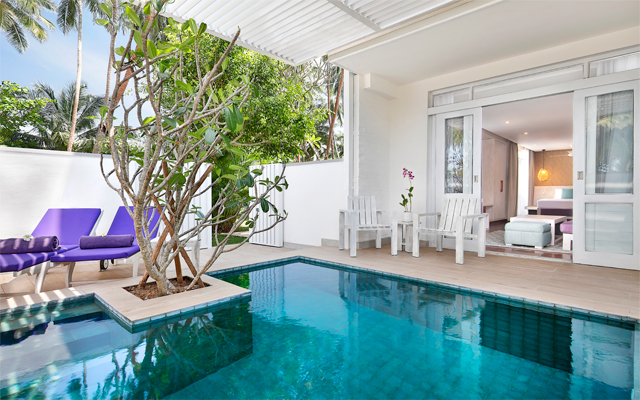
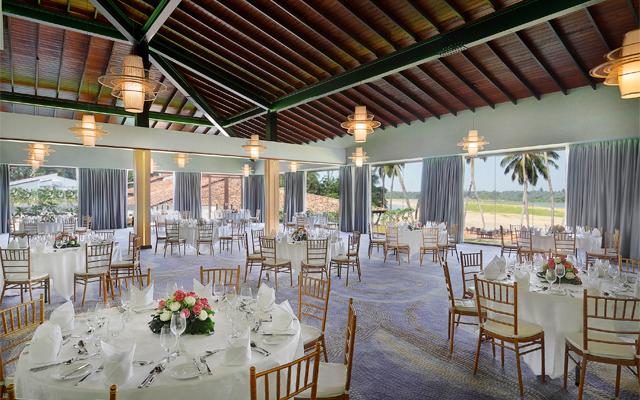
Avani Kalutara Resort has been given a facelift, with fully-renovated suites and lobby, refreshed outdoor spaces, brand new pool suites and dining venues, as well as a 360-degree grand ballroom.

A refreshed look awaits guests at the Avani Ocean View Suites with their tropical airy layout, the brand new Avani Ocean View Pool Suites equipped with private plunge pool and two terraces, and the Avani Deluxe Ocean View Rooms with views of the Indian Ocean and lagoon.

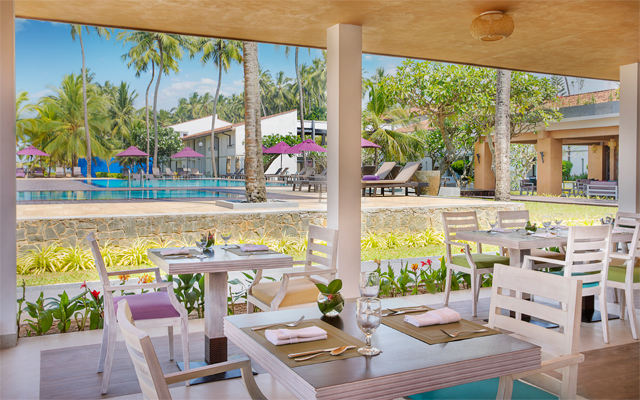
Elsewhere, Karadiya Bar now offers a new pool bar experience. Other culinary venues at the 105-room resort include the Miridiya Bar serving up drinks and bites by the riverside, the Mangrove Restaurant featuring local and international delights, and the brand’s deli Pantry by Avani.

The brand new Ganga Ballroom can house up to 300 guests, and features 360-degree vistas of the Indian Ocean, Kalu Ganga and lagoon. There is also a dedicated events planner overseeing décor, catering, and logistics.

Recreational facilities include a swimming pool, gym, a Glider Adventure Tower for ziplining, climbing and abseiling, and water sports on the lagoon. Guests can also access adjacent sister property Anantara Kalutara Resort, featuring a spa with Ayurvedic treatments.

Agoda spurs travellers to GoLocal

0

Agoda is turning towards domestic tourism as it starts down the path of recovery with the launch of its GoLocal campaign, which has signed up thousands of hotel partners in the pre-launch phase.

To support its initiative, Agoda has developed a fully integrated sales and marketing campaign, investing in social media campaigns, digital brand activations, video content, public relations activities, bespoke customer marketing, and a dedicated landing page, agoda.com/golocal.

Hotels can now market domestic travel deals to travellers via Agoda’s new GoLocal initiative 

Accommodation providers opting in to the initiative can leverage this “multi-channel approach” to connect with travellers on the prowl for domestic travel deals.

Errol Cooke, vice president partner services, Agoda, said: “We soft-launched this initiative over the past month to gauge the appetite for support of domestic travel promotions, and the enthusiasm has been beyond our expectations… Our pre-launch GoLocal early adopters are significantly outperforming other providers within the domestic travel sector across the region, and so we are confident this GoLocal initiative will continue to generate even more bookings.”

Partners signing up to GoLocal will offer special domestic deals, and in return, they will be featured across various Agoda product and marketing touchpoints, including the exclusive agoda.com/golocal landing site for domestic travel, GoLocal badges to highlight participating properties on Agoda, plus brand and performance marketing activities.

Strategic partnerships with key verticals will highlight and promote partner hotels and properties, further extending the reach of the campaign.