TTG Asia
Asia/Singapore Tuesday, 16th December 2025
Page 968

CLIA’s Cruise Champion training now open to all

0

CLIA is offering open access to its new online training course, Cruise Champion, making it available to travel agents and other industry supporters from outside the association’s membership.

The course will take a deep dive into the workings of the global cruise industry, helping to combat misperceptions and raise awareness of the strict regulations that govern cruising operations worldwide, so travel agents will be better placed to respond to clients’ queries.

CLIA offers free access to its online training course, Cruise Champion, to promote greater awareness of the cruising industry

CLIA managing director Australasia & Asia Joel Katz said: “By sharing more knowledge about cruise line practices and the strict regulations that govern our industry, we can build a bigger network of voices who advocate for cruising globally.

Topics covered include regulations, safety, health, security, environmental protection and corporate social responsibility.

While other CLIA education options will remain exclusive to members, Cruise Champion can be accessed without charge.

Macau rolls out subsidised tours for locals

0
Beautiful view of Cathedral of Saint Paul with local people and tourist in the morning in MACAU, PEOPLE'S REPUBLIC OF CHINA

The Macao Government Tourism Office (MGTO) has launched a subsidy scheme for Macau residents joining tours run by local travel agencies in hopes of spurring domestic travel.

Under the campaign, titled Macao Ready Go! Local Tours, each Macau permanent and non-permanent resident can enjoy a grant of 560 patacas (US$70) to join two tours – with 280 patacas per tour – scheduled between June 22 and September 30 organised by participating travel agencies.

MGTO will subsidise local tours for Macau residents in bid to revive tourism; Ruins of St. Paul’s in Macau pictured 

Participants can pick from 15 itineraries in two categories: Community-based Tours (six itineraries) and Leisure Tours (nine itineraries). The tour fees cover sightseeing, catering, tour guide service, insurance, and more. The two grants must be used on tours in different categories. Those who wish to join a third tour must then pick up the tab.

The project is coordinated by MGTO, sponsored by the Macao Foundation, and undertaken by a task force comprising Macau Travel Agency Association, Association of Macao Tourist Agents and Travel Industry Council of Macau.

As part of the project, the task force will work with the travel agencies for their provision of resources such as coaches, drivers and tour guides, as well as arrangements for catering and tourist attractions, among others.

In addition, to cater for participants with special needs, community organisations, schools and other institutions can contact the task force for coordination of tour application via info@lovemacau.org.

Downtime reflections

0

The Covid-19 pandemic has presented new and unusual business challenges for hotels. How have hotels’ approach to sales and marketing changed as a result?

With the global impact of Covid-19 on travel evolving from week to week, and market-to-market recovery being hard to predict, we conducted a survey with 500-plus hoteliers worldwide at the end of May (to understand the state of hotel marketing). Findings indicated that they are aligned on key post-Covid recovery marketing strategies.

Some key findings included:
● 42% of respondents believe we can expect to see signs of recovery in 4-6 months
● 54% are looking to government easing lockdown restrictions as an indication of recovery
● 39% will have a very small budget for marketing when recovery begins, so (spend) will be lower than pre-Covid
● 50% will keep the same marketing mix (while) 39% will be focusing on tactics that promote more direct bookings, away from OTAs

We don’t recommend that hoteliers go dark right now, as they should be focused on generating brand awareness, honing in on the local and drive markets, and (creating) advanced booking offers. Pay-for-performance models are an excellent way to achieve this without (straining) a small budget or (when there is) no budget at all.

Consumers trapped at home are spending more time online, working, learning, shopping and seeking connections. What should hoteliers do to engage these consumers online positively?

Hoteliers spending this time to upgrade their website and booking engine is key. Having a Covid-19 information page will also be key to garnering confidence among consumers to book with that specific hotel.

Now, more than ever, travellers want a flexible cancellation policy. Hoteliers are (doing that, enabling their guests) to book now and stay before the end of 2021. For example, Marriott has extended loyalty status to February 2022, and paused all points expiration to February 2021. Additionally, Marriott is making it easy for their customers to get involved in giving back, thus building brand loyalty; they can use their Bonvoy points to donate to The World Central Kitchen, UNICEF, Red Cross, (or desired) disaster relief fund.

What critical considerations should hotels take in planning their current sales and marketing strategy?

What we are seeing as part of current strategies, especially for chain hotels, is that they are offering competitive pricing and flexibility with stay dates. This has resulted in independent hotels holding off introducing offers due to the low lead in room rates.

In terms of future marketing strategies, hoteliers need to be cautious about group bookings – crowded hotels (during the) pandemic will not send a positive message and perhaps even create consumer distrust of that hotel.

When we ease out of Covid-19, hotels should focus on messaging that will give their customers and travellers peace of mind to stay with them and feel confident in their brand. Cleaning, disinfecting, social distancing, meal service protocols, and other standard operating procedures will be at the forefront for a long time.

Other recommendations I have for recovery are:

● Look for early signs of recovery, starting with the number of active cases and death rates. When numbers of new active cases and death rates plateau, it is likely that lockdown restrictions will be eased and social distancing measures will be lifted. Pay attention to government-issued travel policies obtained from reliable sources. Another sign to look out for is airlines ramping up to reinstate suspended flights.
● Promote a flexible reservation policy that is customer sensitive, and be mindful that the approach you take now will be remembered in the future. Consider incentivising postponed bookings and having a flexible cancellation policy.
● Use this time to optimise your website. Make it easy to navigate and book; provide updated and accurate information; use desirable images to convey the brand’s offering; and improve the speed of your webpages which will affect your ranking on Google search results page. It’s important to note that travellers using mobile to search are much more likely to leave a page if it takes longer than three seconds to load.
● Set up a Covid-19 information page to highlight the measures you are taking to ensure the well-being of your customers, staff and local community. Share how the team is trained to respond swiftly to anyone showing Covid-19 symptoms on property, including your process to notify medical authorities. If your country has a national health and hygiene audit initiative, call it out on this webpage.

How about their future sales and marketing strategy?

Globally, more and more people are isolated indoors. With that, many have turned online and are dreaming about and planning their next trip. Because online traffic is exponentially higher these days, it is important to maintain upper to mid-funnel marketing and brand awareness activities. We have seen a spike in travel bookings for late-2020 and early-2021, suggesting that travel will pick up (then), with a domestic focus first, then regional and finally, international.

Here are some digital advertising tips to keeping your potential customers engaged and ready to book with you as soon as they are able: choose your audience; get ahead of the staycation trend; select optimal marketing channels such as Display, Facebook, Instagram, search engine marketing, video and metasearch, and ideally, run them with a single vendor in order to avoid attribution/overlap issues; make sure your messages match the tone of your current audience’s circumstances; and use remarketing to advertise to the people who had come to your site, checked you out and then continued on their day.

Other recommendations I have are:

• Inspire dreamers on social media by continuing to showcase your business to keep future customers engaged
• Use metasearch to get in front of travel planners, starting with sites like Google Hotel Ads, TripAdvisor, Kayak, Trivago, and Skyscanner where approximately three-quarters of travellers will be browsing to plan their future travel
• Improve your SEO (Search Engine Optimisation) strategy to get your business in top search results organically without paying for advertising. The content you put on your website determines your SEO ranking, so, during this crisis, use certain key phrases often and meaningfully throughout your website to float your site to the top of the Search Engine Results Page
• Reevaluate your rate parity and OTA strategy. When businesses are able to convince that their brand presents the best value, it encourages guests to book directly with them, thus developing trust
• Consider a co-op, especially if you don’t have the funds. Reach out to your local NTO or government destination partner for an advertising co-op possibility.

The big hotel chains clearly have all the sales and marketing guns they need to go forward in the digital world. What about the smaller local chains or independent properties that want to be competitive but may not know how to proceed? How can they get started?

Gone are the days when it cost an arm and a leg to own a website. Nowadays, there are affordable website developers and marketing partners (to be found).

At Sojern, we support independent hotels with our Pay On The Stay model, where a hotel pays a commission for the booking we have driven and (use our) tools such as The Hotels Network’s offering to… drive direct bookings.

The absolute bare minimum a local chain or independent property can do is have a well informed property website.

How is Sojern helping?

We’ve been talking with our customers across the world and travel verticals, and (many say they are) using this time to think about their current partnerships, relationships, and industry, and to see how they can use this time to re-evaluate some things.

There is so much changing every week that you need to be flexible, soak up as many great ideas and strategies from each other and from other verticals within travel, and let data guide your decision-making as much as possible.

We understand that tracking the ever-changing travel trends is more important now than ever. To help arm hoteliers and travel marketers (with timely information), we’ve released a real-time insights dashboard that provides the latest travel trends. Additionally, we have a webinar series where industry experts share how they are tackling Covid-19.

Japan to hold “simplified” Olympic Games

0
The five ring symbol of the Olympic Games at Odaiba. Tokyo Olympic 2020 has been postponed to 2021 due to novel coronavirus pandemic. People wearing surgical masks.

The International Olympic Committee (IOC) and Tokyo Organizing Committee (TOC) have agreed to hold a “simplified” Games in 2021 to limit the financial impact of the one-year delay and ensure the safety of those involved as Covid-19 continues to spread.

The decision came following recognition of the need for a “realistic plan” that allows the Olympics to be held and eliminates calls for its cancellation, The Japan News reported, citing an unnamed Japanese government source.

Tokyo Olympics organisers consider simplifying the Games in 2021 due to Covid-19 impact

Some 200 items have already been earmarked for streamlining, TOC president Yoshiro Mori and CEO Toshiro Muto told a press conference. These items cover five areas: service levels, volume of provision, activities, operations and venues.

According to a statement from the IOC-Tokyo 2020 joint steering committee, organisers will make decisions on scaling back based on three revised goals: “to prioritise the health and safety of athletes, spectators, stakeholders, volunteers and staff; to reduce the cost impact of postponement and promote public interest; and to simplify and reduce the complexity of the Games to ensure they can be organised efficiently, safely and sustainably in this new context”.

Detailed plans are yet to be announced, but may include adjustments to the opening and closing ceremonies, as well as other “non-core cultural elements”.

“Critical sport competition and athlete-related elements”, however, will be maintained where possible and “only be adapted to the new context if absolutely necessary,” the statement continued.

Alongside the scaling down, the Tokyo Committee has rolled out a six-stage roadmap to 2021 to adapt to the evolving coronavirus situation.

Following confirmation of the new framework for the Games by end-June, the committee will reexamine the required service levels and initiate measures to overcome the challenges caused by the postponement. In late August, staff are set to carry out additional reviews of required services and begin their implementation, with preparation for Games time beginning in full in January 2021.

The Japanese government and the IOC have agreed that a further extension for the Olympics beyond 2021 will not be possible.

TripAdvisor sees spike in travel searches amid pent-up demand

0

Activity in the travel and dining sectors look set to pick up as consumers are displaying strong pent-up demand, with growing interest in road trips and destinations closer to home, found a recent TripAdvisor study.

The study, titled Beyond COVID-19: The Road to Recovery for the Travel Industry, analysed consumer travel sentiment and first party behavioural data related to the ongoing pandemic.

More travellers favouring road trips, shorter vacations to destinations closer to home: TripAdvisor

There is significant pent-up demand that exists in the marketplace for travel and dining, the study found. New Zealand, Germany and Switzerland are among the first markets to see signs of recovery in the dining sector, with restaurant searches on TripAdvisor resurging strongly.

Consumer desire to travel remains resilient, with around two in five (41 per cent) respondents keen to take the same or more trips than last year.

Shorter trips to destinations closer to home are a recurring theme, with nearly half (44 per cent) of consumers saying they are more likely to take a road trip, and two thirds (61 per cent) saying they are most comfortable taking a road trip for three to five days.

Consumers are 218 per cent more likely to want to take a trip where they can relax compared to before the pandemic, and nearly two thirds (59 per cent) would prefer to go somewhere off the beaten path.

In addition, searches for nature and beach destinations are on the rise, with Tripadvisor seeing a spike in North American traffic researching Campgrounds, Ranches and Beach Motels, while Myrtle Beach, San Diego and Key West are among the most popular domestic destination searches in the US in recent weeks.

The report also outlined a five-stage recovery for the travel and hospitality industry, from the period of decline owing to the pandemic to the anticipated market recovery, led by domestic activity, ahead of the return of international travel.

Kanika Soni, COO, Tripadvisor, said: “Our path to recovery will depend on the steps the industry takes to prepare for the road ahead – not just in terms of new standards and practices, but also in how we collectively educate and engage consumers in a new, more thoughtful way of travelling.”

The study also detailed the changes in travel and dining behaviours resulting from the ongoing pandemic. Across the board, safety, flexibility and transparency are key to rebuilding traveller and diner confidence.

Martin Verdon-Roe, general manager of hospitality solutions, Tripadvisor, added: “For hospitality businesses, (this) report offers plenty of reasons for cautious optimism. There are clear signs that many consumers have a strong desire to dine out and travel again when they are allowed to do so, but when they do, they will bring a new set of expectations with them.

“Businesses that adapt quickly to embrace safety, flexibility and transparency will have a clear competitive advantage to communicate to consumers, and that could prove crucial in hastening their recovery.”

Attractions in Indonesia scale up health response

0
A fairytale castle in Taman Mini Indonesia Indah (Beautiful Indonesia Theme Park)

Indonesian attractions and parks are rolling out flash deals and heightening safety measures to win back public confidence, as they ready for a reopening after three months of closure.

Jakarta’s amusement park Fantasy Land (Dufan) in Taman Impian Jaya Ancol will reopen its doors on June 20, operating at 30 per cent capacity. To woo domestic tourists, the park is offering free admission through a quiz on its Instagram account.

Attractions in Indonesia push out special deals to woo back visitors; fairytale castle in Taman Mini Indonesia Indah theme park in Jakarta pictured

The free tickets, which will be valid till March 31, 2021, are also offered with every purchase of limited-edition Dufan X Muklay merchandise, marked down by 33 per cent, which will be available until June 30.

To lure domestic tourists, Sea World, which will also reopen on June 20, is selling its annual pass for 187,500 rupiah (US$13), 25 per cent cheaper than usual, until June 30.

From June 15 to June 30, Taman Safari Indonesia park in Bogor, West Java, which reopens at 20 per cent capacity, has also slashed the price of its entrance tickets for adults and children by 13 per cent on weekends.

The park has also rolled out a new programme, Safari Trek, a hiking trip for visitors to go on a safari and enjoy the beautiful view around Mount Gede Pangrango, in a bid to help them ease the mental and emotional strain caused by the months-long lockdown.

Meanwhile, the Borobudur temple in Central Java, which normally receives 8,000 to 10,000 visitors daily, will also halve its normal capacity upon reopening. During a trial run which kicked off this month, only 100 to 200 tourists are allowed to enter the temple daily.

Implementing cashless transactions, requiring visitors to wear face masks, conducting temperature checks, providing hand sanitisers, giving physical distancing marks, and disinfecting properties are also among health and safety protocols imposed by these attractions and parks after reopening.

Such heightened safety measures will also be carried out by Taman Mini Indonesia Indah park in Jakarta, when it reopens on June 20, and Jawa Timur (Jatim) Park 2 in Batu, East Java, which will reopen on June 27.

Meanwhile, travel agencies in Indonesia are also ramping up health measures to ease travellers’ concerns.

Hasiyanna Ashadi, managing director of Marintur Indonesia and head of Association of Indonesian Tour and Travel Agencies Jakarta chapter, said: “In our cars, we have arranged seats in a way to ensure that our guests can maintain distance. She added that hotels and restaurants partnering with the association’s members had also implemented health protocols.

She further shared that Jakarta had 59 hospitals equipped to handle Covid-19, and if travellers were to get infected with the virus or display symptoms, they would be rushed to one of those hospitals immediately for medical treatment.

The readiness of cities who have committed to health and safety protocols needs to be conveyed to tourists, according to Adjie Wahjono, operations manager of Aneka Kartika Tours, and Monas Tjahjono, managing director of Monas Tours.

They encourage local governments to boost promotions not only on tourist destinations’ offerings, but also the health measures they have adopted to safeguard the well-being of tourists.

Pandemic fears hamper Malaysia’s tourism recovery

0

Malaysia’s interstate travel ban has been lifted on June 10 but tour operators are seeing slow crawl to domestic recovery due to persistent fears of infection.

Uzaidi Udanis, general manager, Eyes Holidays, described demand as “trickling in” but for hometown visits to see loved ones and relatives, which were restricted during the movement control order (MCO). Their visits are then extended with a short holiday to a beach or island destination.

Beach and island holidays are gaining popularity among domestic travellers in Malaysia; aerial view of a floating resort at Port Dickson, Malaysia pictured

He shared: “For families looking for a weekend outing, the requests we get are usually (for somewhere) within a three-hour drive. We see more requests for self-drive packages as travellers are not yet confident using public transport or travelling by air.”

Uzaidi’s target market are city dwellers living in the Klang Valley. He sees demand for day visits and homestays to experience local village cuisine as well as to beaches such as Port Dickson.

Raaj Navaratnaa, general manager, New Asia Holiday Tours & Travel, said the pandemic has heightened consumer awareness around cleanliness, with more travellers enquiring about the standard operating procedures (SOPs) and hygiene protocols in place at their holiday destinations.

He has observed pent-up demand for travel among Malaysian residents, and urged the local state tourism authorities to “come out with policies to jumpstart the tourism industry”.

Mint Leong, managing director at Sunflower Holidays, believes it will take time for the domestic market to recover, as many businesses and employees have been affected by the MCO.

Leong noted that measures to discourage senior citizens from outdoor activities, such as museums and galleries admitting only those aged 13 to 60, are hindering the recovery of domestic tourism. She said the older consumers are “the ones with time and money to spend”.

New coalition pushes for sustainable tourism

0

Six sustainable tourism NGOs have rallied together to form the Future of Tourism Coalition with the goal of placing destinations at the centre of strategies for post-Covid recovery.

The organisations – the Centre for Responsible Travel, Destination Stewardship Centre, Green Destinations, Sustainable Travel International, Tourism Cares, and the Travel Foundation – will be guided by the Global Sustainable Tourism Council.

Future of Tourism Coalition calls on tourism businesses to adopt responsible and sustainable practices 

“Decades of unfettered growth in travel have put the world’s treasured places at risk – environmentally, culturally, socially, and financially, said the Future of Tourism Coalition in a statement.

“The travel and tourism industries face a precarious and uncertain future due to the Covid-19 global pandemic, with international tourist numbers projected to fall 60 to 80 per cent in 2020. As tourism moves forward and recovers, re-centring around a strong set of principles is vital for long-term sustainable and equitable growth.”

The coalition has put forth 13 guiding principles that provide “a clear moral and business imperative for building a healthier tourism industry, while protecting the places and people on which it depends”.

It is calling on tourism agencies, travel companies, governments, investors, non-governmental organisations, and destination communities to commit to them.

Those principles call for signatories to see the whole picture, use sustainability standards, collaborate in destination management, choose quality over quantity, demand fair income distribution, reduce tourism’s burden, redefine economic success, mitigate climate impacts, close the loop on resources, contain tourism’s land use, diversify source markets, protect sense of place, and operate business responsibly.

Twenty-two industry stakeholders have committed thus far, including the Adventure Travel Trade Association, Ecotourism Australia, G Adventures, Global Ecotourism Network, Hilton, Intrepid Travel, Jordan Tourism Board, Lindblad Expeditions, Seychelles Ministry of Tourism, Slovenian Tourist Board, The Travel Corporation, and the World Wildlife Fund.

Incheon Airport green lights US$40m incentive scheme for airlines

0

Incheon International Airport is set to implement a new incentive system worth US$40 million to support the aviation industry, which is facing an unprecedented crisis due to Covid-19.

For the passenger sector, Incheon Airport has agreed to support landing fees for new airlines and routes for up to two years. It will also exempt landing fees for all flights arriving and departing late at night to activate late-night flights.

Incheon Airport rolls out a raft of financial incentives to provide relief for airlines 

About US$33 million of the total budget is slated to be used in the passenger sector to subsidise roughly US$8 per boarding passenger, while the remaining US$7 million will be used to prop up the freight sector, including reducing landing fees for cargo aircrafts.

The move comes after South Korea’s airline industry recorded its worst first-quarter earnings. For one, Korean Air had a first-quarter operating loss of about US$47 million, a major dip from the operating profit of US$198 million seen in the same time last year.

Asiana Airlines also posted operating losses of US$172 million, while low-cost carriers such as Jeju Air, Jin Air and T’way Airlines all suffered losses of US$54.5 million, US$26 million and US$18.5 million, respectively.

Incheon Airport’s Koo vows to support South Korea’s virus-ravaged aviation industry

Incheon Airport president Koo Bon-hwan said: “We will do our best to recover air demand and support the airline industry, while preventing the spread of the virus at the forefront of the nation’s defence line.”

However, the outlook for airlines in the second quarter seems even dimmer. Passengers are still reluctant to fly, with aviation information portal system Air Portal reporting that the total number of air passengers in April stood at about 1.3 million, down 86.7 per cent compared to last year.

Kim Yoo-hyuk, a researcher at Hanwha Investment & Securities, said: “As countries still continue to impose entry restrictions, demand (from) international passengers will not grow substantially… Larger airlines are planning to resume operations on certain routes from June, but we need more time to fully recover.”

Thai DMCs warn of further job losses as borders remain closed to international travellers

0

DMC chiefs in Thailand are crying for clear directions on international travel resumption from the Thai government to prevent further job losses in the beleaguered industry.

Although the tourism authorities and travel and tourism industry leaders in the Kingdom have discussed the formation of travel bubbles and controlled arrivals, namely 1,000 business travellers and medical tourists per day from countries with whom Thailand will form bilateral tourism agreements, the government has yet to announce definitive dates and decisions on the return of international tourism.

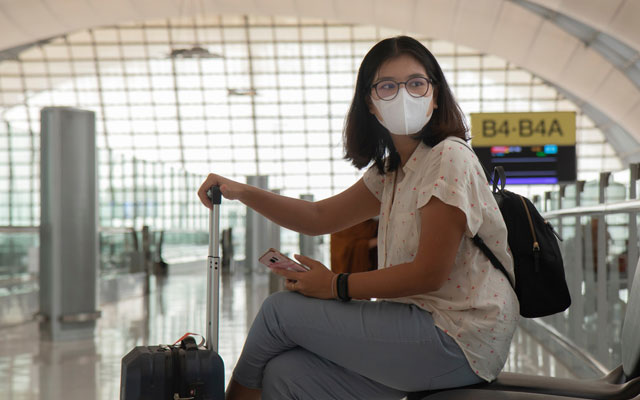
Thai travel agents seek more definitive guidelines from the government on the resumption of international travel; travellers wearing masks walking through departure hall of Suvarnabhumi Airport in Bangkok pictured 

Stephan Roemer, group CEO of Diethelm Travel Management, told TTG Asia that approximately 800,000 tourism jobs are lost every month – or 25,000 jobs every day – due to Thailand’s border closure.

Roemer bases his calculations on an estimated 40 per cent drop in tourism-contributed GDP by the end of this month and another eight per each month of extended border closure.

“If the borders remain closed until October, we would need to cut manpower costs by 60 per cent,” he elaborated.

Tourism contributes nearly one-fifth of Thailand’s GDP at 18 per cent and nearly three trillion baht (US$134.2 billion) annually, fueling direct and indirect employment for approximately 10 million individuals. The Ministry of Tourism and Sports reported that in 2019, around two trillion baht came from foreign tourist arrivals and the remaining from local tourists.

A report for 1Q2020 by the Office of the National Economic and Social Development Board revealed the Covid-19 crisis poses a risk of layoffs of 8.4 million people; of those at risk are 2.5 million out of the 3.9 million tourism labour force.

“The key point for international tourism to restart is for governments to open borders and eliminate quarantine restrictions. The sooner the better, even if they come with conditions, such as compulsory health certificates and Covid-19 tests,” said Laurent Kuenzle, CEO, Asian Trails.

He suggested that conditional measures should be “reasonable, practical and conductive” and not strict to the point that they will bar tourists from travelling.

The Thai arm of Diethelm Travel Group is hoping to catalyse discussions on this matter between the government authorities, the Tourism Authority of Thailand, and the local tourism industry.

“The economy needs (clear planning and) the first ones to react are the ones to be out of the crisis first,” remarked Roemer, citing examples of countries in Southern Europe which immediately acted to revive their cross-border tourism in time for the summer season and successfully did so without seeing a rise in cases.

“If Thailand wants to keep its role as a leading tourism player in the region, she is expected to set an example for neighbouring countries too. There are competitors lurking and we see a more active communication of some countries. We expect the first Asian countries to open their borders for international tourism by July,” he said.

On June 16, Chula Sukmanop, director-general for the Civil Aviation Authority of Thailand, hinted that the ban on commercial international flights might not be lifted on July 1 as originally planned, and the travel bubble proposal would not be ready for implementation in July.

Prime Minister Prayut Chan-o-cha on June 15 described Thailand’s list of travel bubbles as being “still in the works”.