Travel bubbles, green lanes and airline initiatives around travel safety can inspire travel interest, but actual movement requires a combination of institutional framework to facilitate travel and perceived high rewards of travel among consumers.
In this new episode of TTG Conversations: Five questions video series, Jameson Wong, APAC director at ForwardKeys, discusses how progress in Covid-19 management is impacting consumers’ flight appetite and how the marketplace has responded to travel bubbles and green lanes. He also explains how data can help travel and tourism industry navigate this crisis with greater visibility.
Malaysia and Indonesia have agreed in principle to implement the reciprocal green lane scheme to facilitate bilateral travel, pending approval by health authorities in both countries.
Foreign Affairs Ministry secretary-general, Muhammad Shahrul Ikram Yaakob, said that follow-ups were required to fine-tune the standard operating procedures (SOPs).
Malaysia agrees on green lane reciprocal travel bubble with Indonesia
He was quoted by The Star as saying: “A follow-up is necessary as far as Malaysia is concerned on tightening the existing SOPs. The scheme will be implemented once Malaysian and Indonesian health authorities deem it appropriate.”
Tourism, arts and culture minister, Nancy Shukri, said in a press statement that the travel bubble initiative is part of the ministry’s recovery plans formulated since last July to revitalise the country’s tourism and culture sector.
She added that the ministry had also previously held discussions with the Health Ministry, Home Affairs Ministry and the Foreign Affairs Ministry to explore opportunities in creating travel bubbles with neighbouring countries such as Brunei, Singapore, Thailand, Japan, South Korea, Australia and New Zealand.
“Its implementation, however, is subject to bilateral discussions and considerations based on the aspects of health, immigration, data tracking, and ongoing monitoring by relevant agencies in both countries,” she said.
Nancy also highlighted that Malaysia had proposed for transparency and standardisation of cross-border SOPs enforced by safe countries to facilitate easier travel.
While welcoming the travel bubble plan, Malaysian Inbound Tourism Association president, Uzaidi Udanis, opined that careful and detailed study of the mechanisms is crucial to ensure strict adherence to SOPs in order to guard against imported cases.
He said: “The SOPs must be clearly stated in writing to ensure tourism industry players are clear about the procedures.”
He added that the reopening of the border with Indonesia presented inbound players from Malaysia with an opportunity to capture the high-end travellers from Indonesia, a segment that has remained under-tapped.
Landmark of Nakhon Pathom city, the stupa of Phra Pathom Chedi is the biggest and highest in all of Thailand.
The Tourism Council of Thailand (TCT), comprising a group of experts from the private sector, has proposed a new Tourism Labor Bank scheme to support Thai tourism workers whose jobs are at risk due to Covid-19.
“Looking ahead at the future of tourism, we don’t think it will go back to normal soon, especially seeing the situation in Europe and other places. While Thailand has the capacity to welcome 40 million visitors a year comfortably, we are very concerned that if we don’t meet this year’s target of 10 million visitors – for example, if only 25 per cent of that number come – then 75 per cent of the tourism labor force will lose their jobs,” shared TCT’s new president Chamnan Srisawat.
Tourism Labor Bank scheme will include training programmes to upskill and re-skill workers in travel sector
Given the uncertainty as to when Covid will strike again, and current lack of income for those in the tourism sector, the TCT has designed a Tourism Labor Bank scheme for the tourism and hospitality sectors.
A key feature of the programme is the tourism employment database, which will include the employment history details of 13 categories of tourism workers from 13 geographical areas in Thailand. “If we have accurate data, we can plan better how to take care of these people,” said Chamnan.
The scheme will include co-payment for monthly salaries of up to 15,000 baht (US$498), with the government subsidising half of it, along with training programmes to upskill and re-skill workers so that they can supplement their income with side hustles like e-commerce and online marketing.
Srisawat: Potential in tourism and hospitality workers “shouldn’t be overlooked”
Furthermore, the scheme will capitalise on the existing knowledge bank and skill sets within the hospitality and tourism sectors to facilitate knowledge exchange; for example, hiring five-star chefs and skilled hospitality workers to train the local community-based tourism segment.
The staff could also be hired for short-term or freelance positions by other tourism businesses, and receive career coaching and training in new skills that they aspire towards, to give them hope in starting a second career.
“It’s a huge pool of talent and skill that we’re very reluctant to let go of, not to mention the fact that 90 per cent of those who work in tourism have excellent English skills. This is potential that shouldn’t be overlooked,” Chaman added.
“Imagine an army of online sellers and influencers who can sell package tours from their friends’ companies and One Tambon One Product (an entrepreneurship stimulus programme spotlighting locally-made products) items to customers abroad. Not only could they boost their own income; they can also strengthen the tourism industry nationally.”
The scheme is intended to launch in March, and will be open to all categories of tourism industry staff, both direct and indirect. Chamnan stressed the importance of not overlooking those on the periphery, such as taxi drivers, mini van drivers, river boat workers, chefs from two-star hotels, entertainment park crew, and staff from spas and massage parlours.
While the TCT intends to spearhead the scheme, the council is very open for other entities to get on board and support the initiative.
“We see this as a way out, a long-term plan for Thailand’s tourism sector that can create more sustainability and make our tourism industry more competitive on an international level,” he concluded.
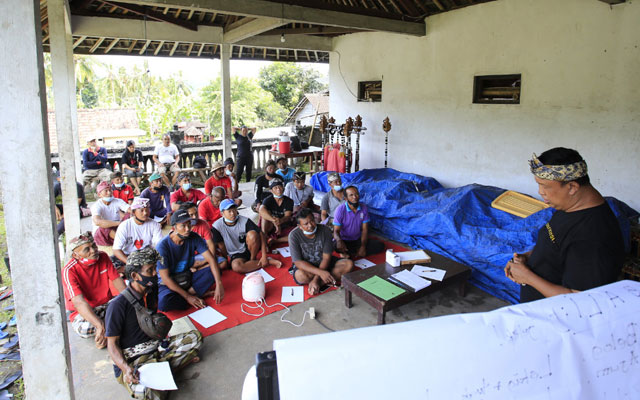
Discova is launching a new farm-to-table project in Bali to provide additional income for local farmers whose livelihoods have been impacted by the prevailing tourist drought due to the pandemic.
Peter Christiansen, Indonesia country manager for Discova, said the project will not only help local communities generate income, but also support Bali’s growing organic farming movement.
Discova, Bali Rare Paduraksa partner to educate farmers in Bali on organic and sustainable farming
“We begin our first phase with 22 farmers and 3ha of land. I have been moved by the enthusiasm and passion of the local people to move away from traditional farming. They are focused on working towards a healthier environment, but also want to ensure healthier diets, especially for their kids,” he added.
Discova has partnered with Bali Rare Paduraksa to educate farmers from a village in Karangasem regency on organic and sustainable farming. The tie-up sees Discova provide finance for organic farming workshops, irrigation infrastructures, along with rice seeds and vegetable plants for community farmers.
Discova is also helping farmers to sell their organic and locally made produce directly to partner hotels and restaurants across the island and nationwide, including Cross Hotels & Resorts. The new initiative is part of the DMC’s long-standing commitment to a more sustainable tourism, which directly benefits local communities where it operates.
Christiansen said the farm-to-table project is a long-term initiative, with a dedicated team appointed to helm it. “We are helping community farmers convert from conventional farming using chemical intervention, to more sustainable, organic methods. When international tourism returns to Bali, we will help our communities build their own businesses providing cooking classes, trekking, cycling experiences to our travellers, generating direct income for locals,” he said.
Discova aims to collaborate with educational travel agents and institutions to bring students into the village to assist the local village to build irrigation systems for their crops and help improve their income by increasing the quality and quantity of their crop through needs analysis and study of the supply chain. The Discova Educational Travel Team also work directly with five other communities in Cambodia, Laos, Thailand, and Vietnam since 2007.
Dream Cruises will spice up its cruises to nowhere aboard World Dream with a new series of Super Seacations from February to May, featuring traditional and pop culture experiences from South Korea and Thailand.
At the same time, the cruise line has announced the extension of World Dream’s Super Seacation itineraries to June 27, 2021, to mark its milestone 100th day of safe sailing on World Dream coming up in mid-February.
Guests on board World Dream’s Korean-themed sailing can partake in the traditional Korean game of Jegichagi
The new Korean and Thai-themed programmes have been launched in partnership with The Embassy of the Republic of Korea in Singapore, Korea Tourism Organization, and Tourism Authority of Thailand Singapore.
Rhythm of Korea (February 21 to March 31)
Guests can enjoy a Hanbok fashion runway show, featuring the iconic garment embodying the vibrant culture and colourful representation of historic Korea. They can also unwind like Joseon nobles with old-time, outdoor games like Jegichagi, which challenges players to kick and keep the Jeji from hitting the ground for as long as possible; and Tuho & Arrows, which requires players to throw arrows into a pitch pot vase.
Catch up on Korean blockbuster movies at World Dream’s Cinema at Sea, learn about the latest K-Beauty trends during Flawless Beauty Talks and “Hair-ppiness” Styling Workshops, and groove to the greatest K-Pop hits at Hallyu K-Pop Dance 101 Classes. Those who consider themselves to be Hallyu Inssa and savvy of all things Korean can put their Kugo to the test with Basic Conversational Language Classes, or even challenge themselves with the K-Culture Trivia quiz for a chance to win great prizes.
For culinary cruisers, learn classic recipes well-loved by Koreans of multiple generations, such as kimchi and kimbap, and feast on trendy Korean street food delights like tteokbokki rice cake, japchae, haemul pajeon seafood pancake and Korean fried chicken. Guests can also treat themselves to a selection of Korean snacks, including Jeju chocolates and Korean abalones.
Amazing Thailand (March 31 to May 28)
Set the mood for the Thai New Year, better known as Songkran, as you experience themed activities ranging from traditional and pop Thai music, to a movie marathon of Thai blockbusters. For the physically inclined, enjoy a hit of adrenaline with basic Muay Thai training; or a fun game of Sepak Takraw, a hybrid sport of football, volleyball and gymnastics; before partaking in Water Gun Tag or the Pitch Burst Challenge.
World Dream will play host to basic Muay Thai training classes during its Amazing Thailand sailing
Relax and rejuvenate with a massage with tropical Thai products at Crystal Life Spa, complete with a tropical beverage of one’s choice. Then, head to the Thai Street Market at Sea and tuck into world-famous Thai street food. Enjoy regional delicacies from the North and South of Thailand, as well as signature Thai desserts at the complimentary restaurants of the cruise ship.
Insta-worthy photos are only a click away at the Tuk Tuk and Big Bowl Noodle pop-up displays, as well as in front of stunning backdrops of Thai umbrellas and lanterns found throughout the ship. Guests may bring a piece of Thai culture back home at the Thai handicraft workshop, where the traditional arts of soap carving, tie dying and paper umbrella painting will be taught.
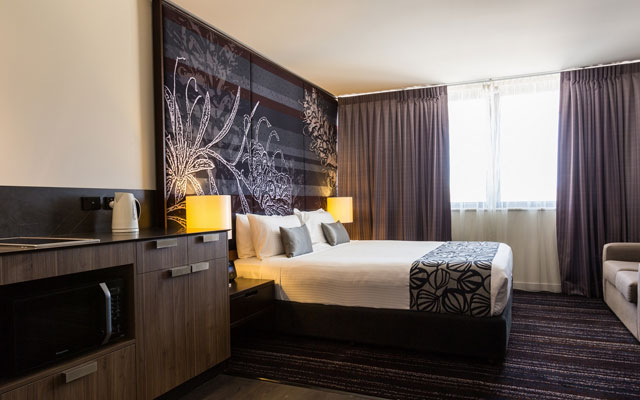
Mantra has added another property to its Australian portfolio, following the rebranding of the Mercure Gladstone situated on Queensland’s Capricorn Coast.
The refurbishment of Mantra Gladstone, as part of the rebrand, includes transforming 33 of its 60 guestrooms into spacious open plan self-contained apartments.
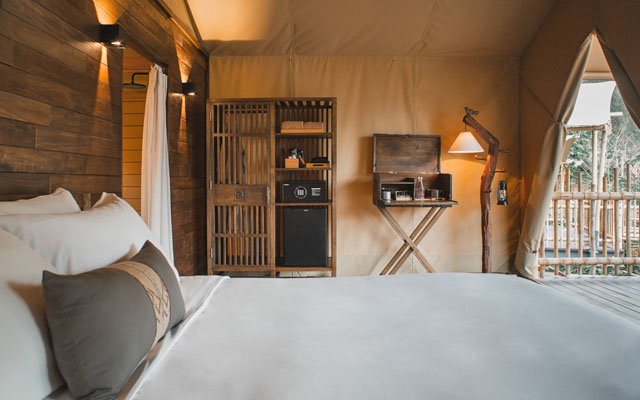
Guestrooms at Mantra Gladstone have been refurbished, as part of the rebrand
Located just minutes from the CBD, the hotel features a fitness centre, F&B options, meeting rooms, a soon-to-open swimming pool, and a gym at the adjoining Yaralla Sports Club complex.
Since acquiring Mantra in 2018, Accor has continued to grow the brand with five new Australian hotels opening in the past two years.
SITA has launched Health Protect, a solution to help airlines, airports, governments and passengers share information on health tests or vaccinations needed during travel.
Successful trials have already been undertaken with travellers to the UAE, and will soon start at Milan Malpensa Airport.
SITA’s Health Protect seamlessly integrates with multiple travel pass schemes
SITA’s Health Protect allows airlines and passengers to submit required health-related documents such as PCR test results or vaccination history safely and securely to authorities, in line with specific government requirements.
A key benefit of Health Protect is its ability to seamlessly integrate with multiple travel pass or health passport schemes, bridging the gap between these schemes and aviation and border processes. By incorporating Advance Passenger Processing, the solution enables authorities to make an informed decision on whether a passenger can travel at the point of check-in, improving the safety of all passengers and avoiding costly return flights.
Passengers without the required documentation, or are considered high-risk, will be unable to check in for their flight, ensuring they do not travel to the airport. By facilitating the inclusion of health pass schemes into passenger processing systems, Health Protect minimises the operational and technical impact on carriers and ports. As well, it provides passenger certainty that they have the right documents before departure, vitally at a time when borders regulations change regularly.
At the airport, Health Protect also integrates with the existing airport passenger processing systems to verify the health status of the passenger at each point in the process using SITA Flex touchless passenger flow monitoring technology.
David Lavorel, CEO of airports & borders at SITA, said Health Protect will “bridge the gap between airlines resuming normal operations and governments’ strong focus on keeping control of Covid-19. Recovery from Covid-19 will take time and is complex but we believe that SITA can play a key role in enabling a safer, simpler travel experience for passengers.”
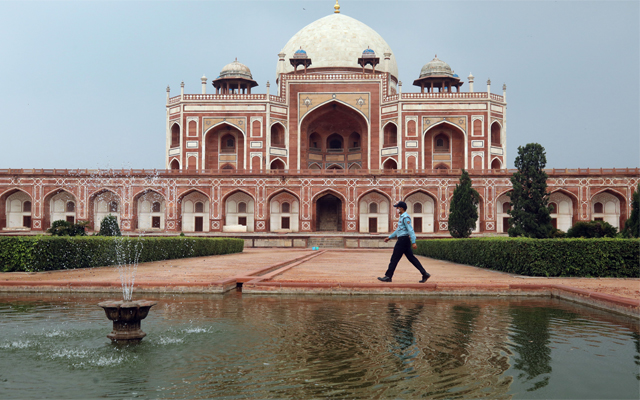
Historical Monuments Humayun's Tomb reopened to the public after Three Months in Delhi, Security guard mask, lock down coronavirus COVID 19
Amid less-than-rosy prospects for a significant rebound in international tourism for 2021, Indian tourism stakeholders continue to keep their eyes trained on the domestic segment to stay afloat this year.
Since the pandemic outbreak curtailed international travel in March 2020, domestic tourism has been the only source of relief for the industry.
Domestic market will continue to be a saviour for Indian tourism businesses this year
“India’s inbound tourism market will take some more time to recover, and it all depends on factors like the beginning of international flights and the coronavirus situation in India and our source inbound markets,” said Arun Anand, managing director, Midtown Travels.
“Already, a large number of inbound companies have laid off the majority of their staff and many companies have closed their offices because of zero business. I think that we can’t expect some growth in inbound tourism before October or November this year. I hope the demand for domestic tourism in India would create confidence among inbound tourists too.”
Confidence in the domestic market has spurred the Association of Domestic Tour Operators of India to push ahead with its annual convention scheduled to take place in Gujarat this month.
Even the hoteliers in India foresee weak inbound demand for 2021.
Sarbendra Sarkar, founder and managing director, Cygnett Hotels and Resorts, said that the domestic segment will be its “key market” this year. When inbound travel eventually resumes, he expects corporate travel to lead the recovery “as physical meetings are important for corporates”.
As for leisure outbound travel, he foresees that regional markets like South-east Asia and South Asia will gain prominence “as Indian leisure tourists may prefer to avoid longhaul destinations”.
To encourage domestic travel, the Ministry of Tourism launched the Dekho Apna Desh (See Your Country) initiative in January 2020 to spotlight the country’s rich heritage and culture. The initiative was in line with the 2019 Independence Day address made by the prime minister, Narendra Modi, where he urged every citizen to visit 15 tourist destinations within the country by 2022.
“Domestic tourism has restarted and is helping to mitigate the impact on jobs and businesses in some destinations. However, real recovery will only be possible when inbound tourism returns,” said K Vijay Mohan, managing director, Holiday World.
“This requires global co-operation and evidence-based solutions so travel restrictions can be safely lifted. Tourist movement between neighbouring countries will be very important and the key to rebuilding tourism. There will be greater demand for regional travel (this year) as travellers will not look at longhaul markets well into 2021.”
Indian tourism and hospitality stakeholders had high hopes for this year’s union budget that was announced on February 1, expecting measures to boost both inbound and outbound international tourism. However, there was no announcement made by the government to support the industry that is reeling under severe pressure.
“For an industry that is a crucial contributor to India’s GDP and a powerful force multiplier, priority tourism-related announcements – an imperative to revival and sustenance – were clearly missed. We are looking at a long road to recovery and the union budget has not provided the helping hand that was expected of it,” said Madhavan Menon, chairman and managing director, Thomas Cook (India).
“The inbound tour operators, hotels, restaurants and transport operators are on their knees in the absence of any support from the government. Now is the time for the revival of inbound tourism, and the government can at least step in (to aid the sector) through measures like offering soft loans, GST exemption for two years, and discounted entrance fees at the Archaeological Survey of India monuments.”
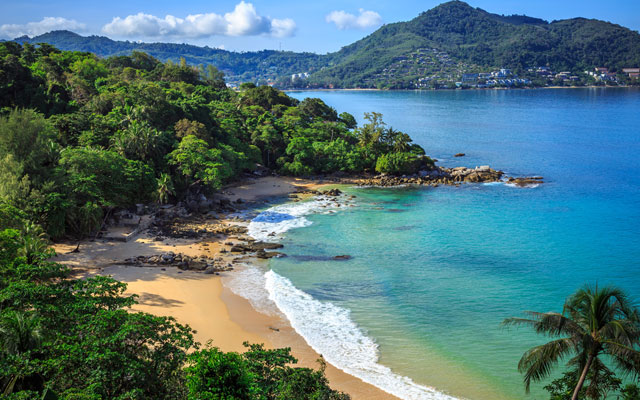
Phuket (Laem Sing Beach pictured above) aims to reduce, and eventually, remove all foam and plastic usage
Thailand’s resort island of Phuket is planning private Covid-19 vaccinations for 250,000 residents, in hopes that the government will allow it to fully reopen to foreign tourists by October.
At least 10 Phuket industry associations including hotels, tourism and chambers of commerce will pool resources to carry out a private vaccination drive to inoculate at least 70 per cent of the island’s population to create sufficient immunity by October 1, according to a report by Channel NewsAsia.
Phuket industry associations to hold private vaccination drive, eyes October reopening
The plan would cover most adults in Phuket before a nationwide government immunisation programme for the public starts in June, it added.
Phuket Tourism Association president, Bhummikitti Ruktaengam, was quoted by the report as saying that they are liaising with three major hospital networks to procure AstraZeneca and Sinovac vaccines. He also argued that vaccinated foreign tourists should be exempted from quarantine.
Of the nearly 40 million foreign visitors to Thailand in 2019, about 10.5 million visited Phuket. That number dwindled to 2.1 million arrivals in 2020 due to pandemic-induced border closures. It accounted for nearly one-third of the 6.7 million visitors which set foot in the country last year. In that same year, foreign tourism receipts in Phuket dived 78 per cent to 87.5 million baht (US$2.9 million).
A survey by the Australian Tourism Export Council (ATEC) showed that 55 per cent of tourism businesses in Australia will not survive till September without some kind of government support, while international borders remain closed.
Against that bleak outlook for 2021, the ATEC is calling on the federal government to provide further financial support to the tourism industry, specifically, the export tourism businesses which are unable to operate at anywhere near their previous levels.
One year into the pandemic, and Australian tourism business are running on empty
“Tourism businesses were optimistic that by now international borders would be open and they would be seeing visitors return, but all indications are that these businesses face yet another tough year,” ATEC managing director Peter Shelley said.
“State and territory governments need to provide certainty in the way they respond to Covid outbreaks and a clear path to reopening international travel that appropriately manages the health risk and effective rollout of vaccines in order to give our industry certainty into the future.”
While 75 per cent of export tourism businesses have been able to supplement some of their revenue with domestic visitors, this spend represents less than 20 per cent of income from overseas visitors, according to the ATEC’s industry ‘Pulse Check’ taken in January.
With borders closed and export tourism businesses unable to access their international markets, around 60 per cent are running at less than half of their staff and service capacity, with most only surviving with the support of the JobKeeper supplement.
“Australian tourism businesses have hung on with the support of JobKeeper but face annihilation once the programme ends next month if the government fails to provide further support,” Shelley said.
“Australia’s tourism industry has spent the past 12 months battling enormous setbacks, from bushfires to floods and the Covid crisis which has closed international borders and left tourism businesses with no customers.”
The ‘Pulse Check’, which looked at how Australia’s export tourism businesses have fared over the past 12 months, also revealed that 95 per cent of inbound tour operators (ITOs) – key tourism export intermediaries – have revenue of less than 10 per cent compared to 2019. Some 50 per cent of ITOs are unable to attract domestic business and for those who have, this represents less than 10 per cent of their international market.
Without some kind of government support, some 80 per cent of ITOs will be gone by September, making it much harder for the inbound tourism industry to restart.
Shelley concluded: “Through no fault of their own, successful tourism businesses from across the country have been decimated by a series of setbacks that culminated with the international border closures.
“These are the same businesses which were instrumental in delivering A$45 billion export revenue in 2019 and delivering thousands of jobs to regional communities throughout the country and they will be the ones which will provide future jobs and economic prosperity.
“Given the success of our export tourism industry over the past decade which saw international visitors contributing more than A$350 billion in our economy, we must ensure these businesses survive.
“Once the borders reopen, these businesses will quickly rebound and once again contribute significantly to our export earnings, support regional economies and build back Australian jobs.”















Malaysia and Indonesia have agreed in principle to implement the reciprocal green lane scheme to facilitate bilateral travel, pending approval by health authorities in both countries.
Foreign Affairs Ministry secretary-general, Muhammad Shahrul Ikram Yaakob, said that follow-ups were required to fine-tune the standard operating procedures (SOPs).
He was quoted by The Star as saying: “A follow-up is necessary as far as Malaysia is concerned on tightening the existing SOPs. The scheme will be implemented once Malaysian and Indonesian health authorities deem it appropriate.”
Tourism, arts and culture minister, Nancy Shukri, said in a press statement that the travel bubble initiative is part of the ministry’s recovery plans formulated since last July to revitalise the country’s tourism and culture sector.
She added that the ministry had also previously held discussions with the Health Ministry, Home Affairs Ministry and the Foreign Affairs Ministry to explore opportunities in creating travel bubbles with neighbouring countries such as Brunei, Singapore, Thailand, Japan, South Korea, Australia and New Zealand.
“Its implementation, however, is subject to bilateral discussions and considerations based on the aspects of health, immigration, data tracking, and ongoing monitoring by relevant agencies in both countries,” she said.
Nancy also highlighted that Malaysia had proposed for transparency and standardisation of cross-border SOPs enforced by safe countries to facilitate easier travel.
While welcoming the travel bubble plan, Malaysian Inbound Tourism Association president, Uzaidi Udanis, opined that careful and detailed study of the mechanisms is crucial to ensure strict adherence to SOPs in order to guard against imported cases.
He said: “The SOPs must be clearly stated in writing to ensure tourism industry players are clear about the procedures.”
He added that the reopening of the border with Indonesia presented inbound players from Malaysia with an opportunity to capture the high-end travellers from Indonesia, a segment that has remained under-tapped.