TTG Asia
Asia/Singapore Friday, 2nd January 2026
Page 959

Malaysia hotels woo travellers with safety label

0
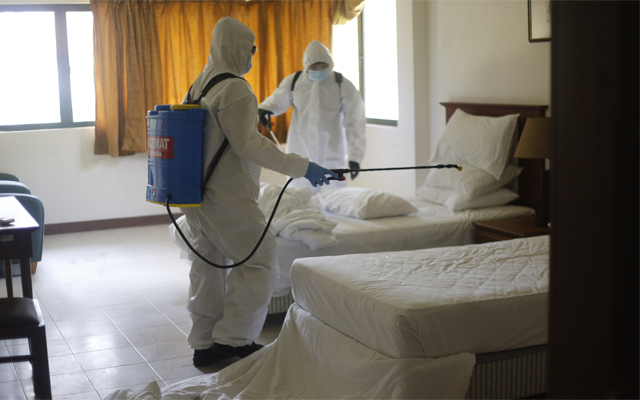
Disaster Operation conducted by the Malaysian Fire and Rescue Department's Hazmat Special Forces at the Covid-19 Quarantine Interim Center in a hotel.

The Malaysian Association of Hotels (MAH) has launched the first industry-wide hygiene and safety label in the country amid the Covid-19 pandemic to give travellers peace of mind amid the pandemic.

Dubbed the Clean & Safe Malaysia, the certification programme is designed specifically for hotels and resorts in compliance with both local regulatory requirements and international standards.

Malaysia’s Clean & Safe label certification for the country’s hotels aim to restore traveller confidence

This programme is supported by the Ministry of Tourism, Arts and Culture of Malaysia, and will be the benchmark of hygiene and safety standards for the country’s hotel industry.

MAH CEO Yap Lip Seng said in a statement: “The Clean & Safe Malaysia hygiene and safety label extends beyond base regulatory requirements, with the ultimate goal of not only ensuring its implementation, but also continuous compliance for peace of mind of travellers staying at certified hotels.”

MAH has appointed Bureau Veritas Malaysia (BVM) as the independent auditor leveraging its global footprint and auditing expertise in more than 140 countries to deliver a consistent and uniformed solution to every participating hotel across Malaysia.

BVM will audit and monitor participating hotels throughout the entire certification period, and the general public can also access information of these hotels on its website.

Every certified hotel will be issued the Clean & Safe Malaysia label and certificate, complete with its very own QR code for referencing and verification purposes.

Skyscanner’s Fare Families aims to boost airlines’ revenue

0

No-confidence vote for ASITA’s chairman

0

The national board of the Association of the Indonesian Tours and Travel Agencies (ASITA) has been accused of poor leadership and accountability by several board members, who have passed a motion of no confidence against the chairman, Nunung Rusmiati.

The accusation comes from the ASITA Savior Assembly (MPA), founded by some of the association’s senior members including its former chairman, Ben Sukma.
MPA no longer recognises Nunung’s leadership as she was involved in obtaining a new registration certificate for the association in 2016, sans the approval of ASITA members, which MPA perceived as a move to change the organisation’s objectives.

“The new certificate is used to get projects in the wrong way,” Ben said during the declaration of the motion in a web conference on June 2. “The move was not only illegal, but also embarrassing because it was against the original ASITA (principles as stated in the) registration certificate issued in 1971, which remains valid to date.”

The 2016 document also raised the eyebrows of the assembly because it named Nunung as one of the co-founders while there was no mention of ASITA’s original founders.

Nunung has also been accused of failing to submit the 2015-2019 accountability and financial reports of the association, during which she served as secretary general.

To resolve these issues, MPA claimed that it had proposed an out-of-court settlement thrice, but Nunung refused to attend. The assembly, therefore, has filed a lawsuit to solve the dispute in court.

On behalf of ASITA members in Indonesia, MPA also declared that they did not acknowledge Nunung’s chairmanship as well as the board which was formed by her.

The assembly has mandated Ben the head of the presidium team to lead the association temporarily, to form an interim board, take over its assets from the current board, and hold an extraordinary national congress to elect a new leader no later than September 30, 2020.

TTG Asia‘s attempts to contact Nunung for comment were unsuccessful.

However, ASITA vice-chairman, Budijanto Ardijansyah, said the organising committee was not bothered by MPA’s motion, noting that MPA was an illegal assembly not recognised by ASITA’s rules and internal bylaws. He said that ASITA would file a defamation countersuit as soon as possible.

According to Budijanto, what the association did in 2016 was to register ASITA to the Law and Human Rights Ministry to enhance the organisation’s legal certainty. ASITA was registered in 1971 by the Department of Tourism, Post and Telecommunications.

“The registration resulted in a certificate of attestation, not a new one as MPA has claimed. The 2016 certificate has adopted the principles of the one issued in 1971,” he said.

Budijanto stressed that Nunung remained ASITA’s legitimate leader, and won unanimously during an extraordinary national congress in 2019.

He, therefore, was left confused by MPA’s pending lawsuit. Budijanto also pointed out that some MPA members were actually ASITA board members when the certificate was in the making in 2016.

“If they sue the policy, it means that they are bringing the case against themselves in the court of law. I think that such action is unconstitutional and it is allegedly made by those who could not concede defeat during the extraordinary national congress last year,” he said.

Budijanto, however, acknowledged that the mention of Nunung as the association’s co-founder in the 2016 registration certification was a mistake that “occurred accidentally” and could be corrected.

He also opined that the 2015-2019 accountability and financial reports that had yet to be submitted was not good enough reason to overthrow the current ASITA board.

Despite the dispute, Budijanto ensures that the current organising committee led by Nunung will run as per normal, adding that the lawsuit filed by the MPA will not impact its performance.


WTTC, Carnival host Covid-19 summit

0
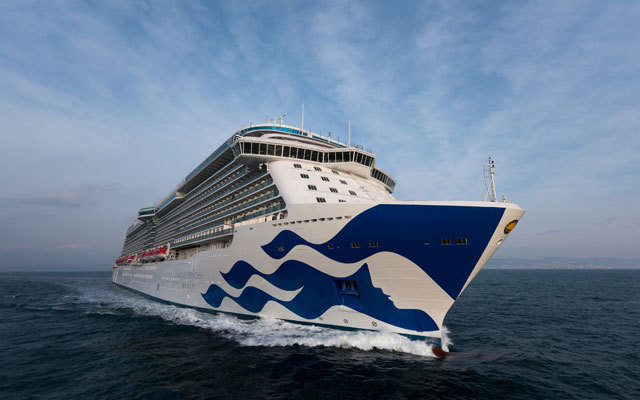
Majestic Princess

The WTTC and Carnival Corporation will hold a global summit to discuss the impact of Covid-19 on the tourism industry, and provide a roadmap to better navigate the current crisis.

The virtual summit will take place on July 23, from 14.00 GMT to 17.30 GMT, and is free and open to the public.

Carnival Corporation partners WTTC to hold a virtual summit on Covid-19 

The event will convene a panel of leading scientists and health experts to share the latest scientific knowledge and evidence-based best practices related to prevention, detection, treatment and mitigation of Covid-19.

Global tourism leaders, WTTC members, government agencies, destination partners, trade and private businesses will share the very latest science and medical evidence that can be used to inform practical, adaptable and science-based solutions for mitigating and living with the virus.

Gloria Guevara, WTTC president and CEO, said: “The science of this virus is rapidly evolving and these real-time insights will be invaluable in helping us determine evidence-based protection and mitigation measures to combat Covid-19. They will also help drive global alignment and collaboration on the frontiers of science and policy, which is critical to the survival of this important sector.”

Panels will include a mix of science-based debates and discussions on key topics, including epidemiology, transmission, screening and testing, therapeutics, and practical risk mitigation.

To register for the summit, visit here.

Heathrow Airport to trial Covid-19 tests

0

Heathrow Airport is poised to become the UK’s first airport to pilot a Covid-19 test-on-arrival procedure.

The testing model was devised by Collinson, owner of Priority Pass, and airport ground handling company Swissport, as a potential alternative to the blanket 14-day quarantine policy.

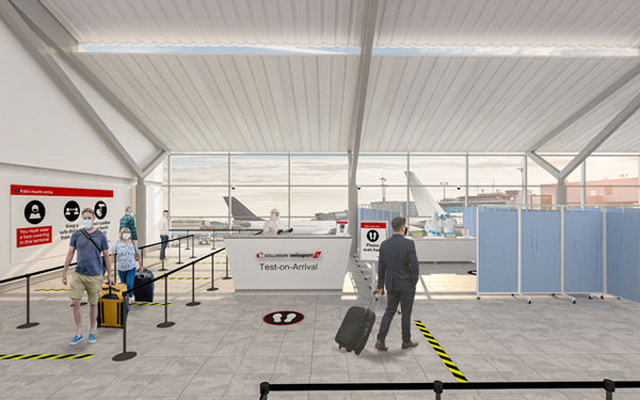
Heathrow to pilot Covid-19 testing procedure for arriving passengers

If green lit by the government, this testing model could mean that arriving passengers from high-risk countries can skip the quarantine process, if they test negative. Passengers who test positive will have to serve a 14-day quarantine.

The private service is available to arriving passengers in the airport’s Terminal 2. Passengers will need to book their test online prior to flying to the UK. Upon arrival at the airport, the test will be carried out by Collinson nurses in a Swissport facility, with the results to be out within hours.

The tests will be able to identify even asymptomatic passengers. If travelling from a country where quarantine is still required, passengers will be asked to proceed to their accommodation to wait for their test results, which they’ll receive within 24 hours.

Last week, the UK announced the lifting of the 14-day quarantine rule for passengers arriving from 59 countries and territories from July 10. The exemptions include Australia, New Zealand, South Korea, Japan and Hong Kong, but countries like the US and Portugal failed to make the list.

Luxury travel, promotions and strong Chinese OTAs likely to lead Chinese outbound recovery

0
Luxury travellers, with their spending power, are expected to lead the comeback of Chinese outbound travel

Luxury tourism players are expected to be the first in the industry to see a revival of Chinese outbound travellers who will also be drawn to safe and secure hotels as well as attractive travel discounts and promotions, opined an expert in Chinese hospitality and tourism marketing technology.

Speaking on Travel Daily’s Hotel Owners, General Managers and Senior Executives Summit in June, Anita Chan, CEO of CompassEdge, noted that a McKinsey & Company study on Chinese consumer sentiment between April 9 and May 24, 2020 had found much stronger confidence in economic recovery compared to respondents elsewhere in the world.

Luxury travellers, with their spending power, are expected to lead the comeback of Chinese outbound travel

At the same time, forecasts by Ctrip’s Tourism Big Data Lab are predicting a return in overseas flight bookings among Chinese travellers in October, as well as across November and December.

Sharing her own predictions on Chinese outbound travel in a post-lockdown world, Chan said luxury leisure travel would likely drive recovery due to the Chinese central government’s call on companies to cut back on corporate travel spend and the substantial spending power of the well-heeled in China.

Along the same line, luxury hotels are expected to lead an accommodation revival.

In fact, hotels in general – perceived safer in a health and safety-focused post-pandemic travel environment – were expected to be in a more favourable position than short-stay sharing economy accommodation options, like Airbnb, opined Chan.

Data from Chinese search engine, SO.com, indicated that hotel searches for domestic trips were surpassing that of short-stay sharing economy accommodation.

She predicted that future outbound travel could follow a similar trend, with Chinese travellers favouring hotels over home-sharing. Chan opined that the preference for hotels could also be driven by lower language barriers in overseas hotels, safety of the hotel’s location, and the availability of amenities nearby.

Discounts and promotions would drive Chinese outbound travel demand, as seen from the prevalence of such efforts within China by Chinese companies, including WeChat, reckoned Chan.

While health and safety would remain prime considerations for Chinese travellers, hotels would need to deploy promotions to be competitive as travel resumes.

Chan also predicted continued market dominance by Chinese OTAs. Compared to other travel markets across the globe, OTAs wield considerable market influence in China. According to data from SO.com, month-on-month outbound travel searches with OTAs have been on the rise.

While OTAs elsewhere may have been associated with inflexibility, inaccessibility and unreliability during the cancellations and rescheduling caused by Covid-19, Chan noted that Chinese OTAs have responded well to the challenges. Ctrip, for instance, was able to leverage on its Global SOS Emergency Response Platform, which was launched years ago.

According to Chan, the programme shined through particularly during the pandemic, where customers were provided with assistance on flights back to China and on securing accommodation.

Citing another example, Chan said Alibaba’s Fliggy offered customers a full refund shortly after the outbreak in China. Should tourism suppliers lack funds for a full refund, the OTA would step in to repay consumers through a RMB 1 billion (US$143 million) fund obtained via Ant Financial Services Group, an affiliate company of the Chinese Alibaba Group; this would be considered as a loan on the part of tourism suppliers.

These initiatives reflected the commitment of Chinese OTAs in building relationships with customers and safeguarding their interests. Hence, overseas tourism suppliers looking to attract Chinese travellers would need to rely on Chinese OTAs, Chan said.

– Translated by Angela Teo; this article was first published in TTG China

Airbnb urges M’sian govt to extend tourism incentives

0
Female hand holding smartphone with Airbnb application. Airbnb is an online marketplace and hospitality service, enabling people to lease or rent short-term lodging

Airbnb has hailed the Malaysian government’s efforts to provide financial relief for tourism businesses affected by the pandemic, and proposed that these incentives be extended to short-term rental accommodation hosts.

These incentives include the postponement of tax instalment payments to affected businesses in the tourism sector, a RM1 billion (US$233.7 million) Penjana tourism financing (PTF) facility to finance transformation initiatives in the sector, a one-off RM600 payment and RM1,000 tax relief for domestic tourism expenses, and digital vouchers of up to RM100 to all Malaysians for domestic tourism purposes to be enabled for Airbnb bookings.

Airbnb fights for the Malaysian government to grant incentives to hosts on its platform

Airbnb head of public policy (South-east Asia), Mich Goh, said in a press statement: “Airbnb has proposed to the Malaysian government several policy recommendations for consideration to help everyday people and small business operators whose financial security has been put at risk by the Covid-19 epidemic.”

Goh said that as many affected Airbnb hosts rely on booking income to help pay their mortgages, the government should also consider extending the moratorium on loan repayments at least until December.

Airbnb had also proposed that the one-off cash assistance given to e-hailing drivers, be extended to Airbnb hosts.

Goh added that Airbnb was committed to supporting the government in weathering the Covid-19 pandemic. She said: “Since the start of the global pandemic, we activated our extenuating circumstances policy globally, allowing guests and hosts to cancel reservations penalty-free.”

PATA doubles down on Covid-19 recovery support for members

0
Businessman holding the word Recovery split over two puzzle pieces in his hands conceptual of overcoming challenges and finding solutions leading to a recovery in the business.

PATA is joining forces with the Asian Development Bank (ADB) to expand its Crisis Resource Center (CRC) to further aid the recovery of the Asia-Pacific travel and tourism industry.

PATA chief of staff, Trevor Weltman, said: “Timely, accurate, and useful information is the need of the moment for our members as they manage their recovery from Covid-19. The generous support we received from ADB has allowed us to invest in bringing these essential tools to our region at this critical time.

PATA joins forces with Asian Development Bank to expand its Crisis Resource Center

“As 65 per cent of PATA members polled had no crisis plans pre-Covid, the CRC will be a permanent offer from PATA going forward to continue meeting their evolving needs for crisis preparedness, management and recovery from this crisis, and beyond.”

The PATA Crisis Resource Center and Tourism Recover Monitor was launched in April 2020, to provide updated information and tourism indicators from around the world. The new CRC will officially be launched on July 14, 2020.

CRC’s aim is “to lead, coordinate and sustain a comprehensive world-class digital resource for crisis response, management, and recovery for the Asia-Pacific travel industry,” PATA said in a statement.

PATA believed that Asia-Pacific will lead global tourism’s recovery from Covid-19, as both an inbound destination as well as a source market.

As part of the expansion, PATA has formed a CRC advisory team to help provide further content and development of online toolkits and resources for industry stakeholders to navigate their way through the crisis.

Hong Kong DMCs struggle with domestic market switch

0

Despite being experts of Hong Kong’s best tourism offerings, the city-state’s DMCs are finding the switch to serve the domestic market – the only available source of potential tourism income now – a tough one to make.

Momentous Asia Travel & Events, which organises meetings, incentives, tours and events in Hong Kong for overseas groups, has turned its business attention to the local staycation market, tapping on supportive clients based in Hong Kong.

Some Hong Kong DMCs move to promote domestic travel, as inbound tourism remains at a standstill, while others are resisting the switch and instead preparing for the return of international travellers 

Despite scoring a few bookings, mostly for short breaks in local hotels, general manager, Doris Lam, told TTG Asia that “it is not easy for DMCs doing inbound business to make adjustments overnight” because “it takes years for a DMC to build up its branding in a market and its clientele base”.

However, with international inbound corporate business cut off by border restrictions during the pandemic, Momentous is left without much choice.

“We are exploring some special local itineraries and, hopefully, we will be able to get a few more bookings in the future,” Lam said, adding that the downtime is also spent on upgrading the company’s online conference registration system for improved protection when international conference can resume as well as to source for fresh destination inspiration.

Struggle to make the switch to cater to a local clientele: Lam

Fellow DMC, Discova, which specialises in international leisure inbound to Hong Kong, supporting its branch offices worldwide, has resisted the domestic market switch.

Country manager for China and Hong Kong, Sandy Ho, opined that an “abrupt switch to domestic leisure in such short time without carrying out research and marketing study” is folly.

“If borders were to reopened in the next few months, we have to get ready for new business. My staff have been busy with new product development, rate renegotiation with our partners, and back-end safety audit,” Ho said, adding that her team is also keeping busy with a soon-to-launch reservation system.

For Ivy Sung, CEO of Faces of Hong Kong, the ROI from serving the domestic leisure marketing is too minimal for the business switch to make sense.

On the other hand, Liberty Hong Kong is all for a change in business model, and is tapping on the government’s Green Lifestyle Local Tour Incentive Scheme which grants travel agencies a cash incentive for organising tours that encourage the public to get close to nature and practise green lifestyles.

Aimed to trigger local economic revival and relaunch the tourism industry, the scheme dishes out incentives of HK$200 (US$25.80) for every tour participant the travel agency gets. Each travel agency can apply for cash incentives for up to 1,000 tour participants.

Liberty Hong Kong’s managing director, Portia Hau, acknowledged the difficulty in luring domestic travellers since Hong Kong is small and easily accessible.

To stand out, itineraries must be unusual and “value for money”, Hau said.

Hau’s team is promoting customised, upscale and in-depth tours via social media and within own social circles between this month and December 2020.

While the Green Lifestyle Local Tour Incentive Scheme does little to cover costs, Hau said getting some business in through the green tours “are good to keep the ball rolling and let our staff earn some money”.

Melbourne returns to lockdown as virus cases surge

0
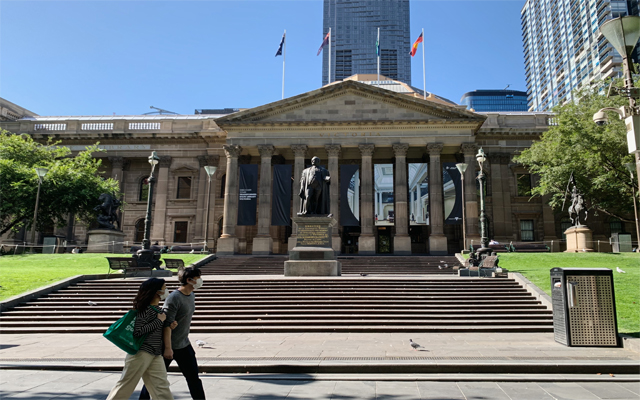
CBD Lockdown, Shopping for essential while passing by State Library Victoria.

Melbourne authorities have locked down the city for a second time after the emergence of 191 new cases overnight – its biggest daily increase since the crisis began – according to a Channel NewsAsia report.

State premier Daniel Andrews said the lockdown would begin at midnight on Wednesday and last at least six weeks. The new restrictions are expected to affect about five million people.

Melbourne has imposed a six-week lockdown after a rise in virus cases, raising fears of a second wave; people walking past State Library Victoria during lockdown in April pictured 

Most school students will return to remote learning, while restaurants and cafes will be limited to serving takeaway food.

Although the lockdown covers the Melbourne metropolitan area, the entire state of Victoria will effectively be sealed off from the rest of the country from Tuesday midnight, as state borders are closed.

Roughly 3,000 people were also locked in their homes last weekend after a cluster emerged in a high-rise public housing estate. There are now 69 infections linked to the estate.

Australia has recorded almost 9,000 cases of Covid-19 and 106 deaths from the virus.

Almost all new daily cases are being detected in Melbourne, while other regions are enjoying relaxed restrictions after largely curbing the spread.