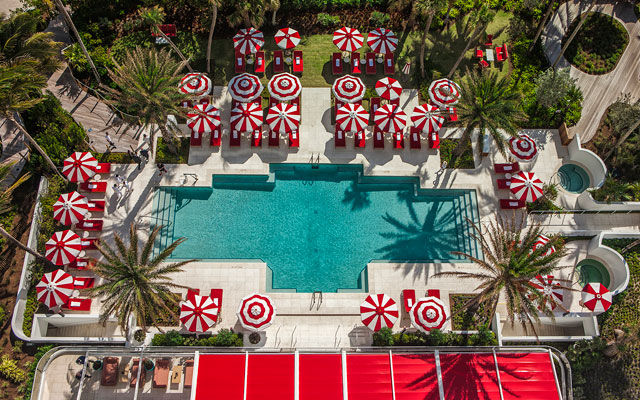
Accor has signed a partnership with Faena Group to expand the luxury lifestyle brand across the globe, with Dubai slated to be the first international destination.
Alan Faena and Len Blavatnik, the brand’s founders, will work in partnership with Accor to develop Faena Districts in select global destinations.
New venture with Accor seen by Faena as “catalyst for exponential growth”
The new venture will manage Faena Buenos Aires and Faena District Miami Beach, as well as all future projects created in collaboration together. The endeavour will result in businesses which specialise in the development of socially responsible, holistic environments, anchored in cultural experiences ranging from residences and hotels to art and cultural spaces.
“As Faena expands, we plan to continue rethinking hospitality lifestyle and shaping the path for groundbreaking concepts, setting new industry standards in the creation of inimitable environments rooted in culture, positively transforming cities, shifting old paradigms and becoming new international cultural epicentres,” said Faena.
“It has always been our dream to share the Faena ethos and artistic vision around the globe, and with Accor, we are turning this dream into reality.”
Sébastien Bazin, chairman and CEO, Accor, said: “Accor is building an experience-based hospitality platform and in doing so, we greatly value the energy and ideas that entrepreneurs, creators and visionaries bring.
“Alan Faena is a clear leader in the luxury lifestyle sector with his transformative concepts. Faena Districts are shifting the gravitational centres of the cities where they reside, making a true difference in their communities. These will serve as our model as we work hand-in-hand with the Faena team to help achieve their vision and global expansion ambitions.”
The Singapore Tourism Board (STB) and KrisShop, Singapore Airlines’ flagship retailer, have forged a three-year partnership to jointly market homegrown brands and grow their e-commerce reach, as well as create seamless experiences for their local and international customers.
Under the partnership, content will be co-developed to profile local brands on KrisShop.com and highlight the vibrancy of Singapore’s retail scene.
STB-KrisShop partnership to feature KrisShop as the exclusive e-commerce platform for Design Orchard
In the first phase, STB and KrisShop will launch a domestic campaign to raise awareness of local brands and grow demand for their products. Both partners will develop and amplify content to showcase local design talent and elevate the perception of Singapore’s retail scene.
This complements the Made With Passion initiative – launched in November 2020 to spotlight local lifestyle brands – led by the Singapore Brand Office and STB, with the support of Enterprise Singapore.
In the next phase, STB and KrisShop will roll out global campaigns across various key markets as international travel resumes.
To help local brands extend their global reach, KrisShop.com will be the exclusive e-commerce platform for Design Orchard, offering the retail showcase on Orchard Road an additional distribution channel. From this week, 36 Design Orchard brands will be digitally housed on With Love, SG, a KrisShop concept store for homegrown brands showcasing Singapore’s culture and heritage.
With the inclusion of Design Orchard brands, there will be a total of 100 local brands on With Love, SG. More Design Orchard brands will come on board in the coming months. Consumers will be able to purchase a wide variety of homegrown products from lifestyle and sports brands to fashion and accessories labels.
KrisShop will also work with STB and Design Orchard brands to raise the profile of these homegrown brands through joint promotions, limited-edition collections and exclusive collaborations, among other marketing efforts. As well, KrisShop will offer Design Orchard brands guidance to boost e-commerce sales in Singapore and in global markets, and hold regular review sessions with the brands.
As part of the partnership, STB and KrisShop will explore new fulfilment services and channels to create effortless online-to-offline and offline-to-online retail experiences for Design Orchard and KrisShop’s customers. Some ideas to be trialled include self-collection for local customers at designated pick-up points, such as Design Orchard and SingPost POPstations.
STB and KrisShop will also explore integrating KrisShop.com’s features with STB’s official VisitSingapore mobile application, allowing users to shop on the go.
Lynette Pang, STB’s assistant chief executive (marketing group), said: “Profiling local brands is part of our strategy to build destination affinity and mindshare, and ensure that Singapore stays top-of-mind during this period and when travel resumes. This partnership with KrisShop also aims to future-proof local brands, giving them a new channel to reach local and international audiences, and ideas to enhance customer experiences.”
Chris Pok, CEO of KrisShop, added that the partnership with STB “is an extension of our efforts to champion our culture, and further fuels our vision of being a platform of enablement and empowerment for homegrown entrepreneurs, by giving prominence to their crafts for audiences in Singapore and beyond”.
Hotel deals aplenty to keep bookings coming after the festivities
Public-private partnerships will help maintain booking momentum
Asia’s hotel industry was the strongest performing region for year-end bookings
A full year of pent-up travel demand has unleashed strong year-end holiday bookings for travel players in Asian markets with eased movement restrictions, particularly China and Singapore.
Trip.com has seen “promising signs in Asian markets when and where travel is possible, with those able to travel opting for hotel packages and domestic tours”, revealed CEO Jane Sun in an interview with TTG Asia.
Sun is hopeful of good tourism growth across Asia, as many nations have demonstrated a capability to contain the spread of the Covid-19 virus through technology-forward approaches taken by Asian leaders. A safe return to travel throughout the region will therefore be possible.
In China alone, Trip.com saw a 50 per cent increase in thematic tourism product transactions during the October Golden Week holidays in 2020, with customers searching for holidays by activity. Top searches include skiing, hiking and outdoor activities.
The number of small group tours during the 2020 National Day holidays rose by 100 per cent over 2019, with an average of three to five people per group, dominated by families. In November, five-star hotel reservations accounted for more than 70 per cent of total accommodation bookings.
Referencing an STR hotel report, Sun said Asia’s hotel industry showed the strongest performance compared to other regions around the world.
“Overall occupancy rates reached 62 per cent, the highest level since January 2020, while other regions’ rates remained below 51 per cent. Initiatives such as the launching of the air travel bubbles between Singapore, Hong Kong and Taiwan also reveal a potential path to the staggered return of regional travel,” she remarked, adding that similar staggered travel recoveries could be expected in other Asian markets.
Pan Pacific Hotels Group (PPHG), whose global portfolio is dominated by Singapore properties, has also reported excellent year-end takings.
Cinn Tan, chief sales and marketing officer, said the company’s eight hotels and serviced suites in Singapore “saw tremendous bookings”, with almost full occupancies on the weekends. Bookings came mainly from local families and young couples, whose overseas travel plans are disabled by continued air travel restrictions.
Tan: Staycation demand over year-end period more than doubled at PPHG’s Singapore properties
The Singapore government’s domestic travel stimulus programme, SingapoRediscover Vouchers, has also helped to fuel domestic staycation demand over the year-end period, noted Tan, who added that Singapore remains a key market for PPHG.
“We saw more than double the demand compared to previous years in Singapore, with bookings concentrated around the key festive dates and weekends. Our hotels and serviced suites in Singapore exceeded our expectations in both rooms and dining,” Tan said.
However, in other Asian markets where PPHG operates, such as China and Malaysia, performance potential was interrupted by the implementation of fresh Covid-19 restrictions, which slowed down demand in the second half of December.
Maintaining momentum
With the resumption of school and work routines in 2021, tourism players anticipate demand to contract – but not by a lot, as the Chinese New Year period this year coincides with Valentine’s Day.
In Singapore, the school holidays also come around in March, which fuels hope for another staycation wave.
Dusit Thani Laguna Singapore, which welcomed its first guests in early December, is optimistic that business will continue to “remain good” over the weekends and slow down on weekdays.
The key to maintaining booking momentum after the year-end peak is the provision of continuous attractive reasons for local residents and expatriates to stay with the resort, opined general manager Eric Piatti.
Banking on the resort’s co-location with Laguna National Golf Resort Club, Dusit Thani Laguna Singapore has curated unique experiences, such as the Stay and Play package, which offers guests access to a round of 18 holes on the golf course, access to the Short Game Practice Area, dining credits and spa discounts.
It is also enticing bookings with the Weekday Break-cation package, Pause@Devarana Wellness spa day pass, and festive deals for Chinese New Year and Valentine’s Day.
Noting that wellness tourism has gained importance over the past decade and even more so as a result of the pandemic, Piatti said Dusit Thani Laguna Singapore is focusing on holistic wellness – something that the property is able to excel in due to its extensive range of well-being activities and lush surroundings.
PPHG, too, has been engaging guests across various marketing channels and rolling out varied staycation experiences with perks to keep guests coming. For example, Parkroyal Collection Pickering offers the Bait and Breakfast package that invites guests to sail away to the Southern Islands of Singapore for a private fishing trip for two, while the new Parkroyal Collection Marina Bay has an opening offer where guests can pick a picnic or go for kids’ amenities with pint tent, in-room sand art activity and unlimited ice cream.
Collaborative approach is critical
Sun believes that private and public partnerships are needed to spur recovery and maintain demand. To that end, Trip.com signed a three-year agreement with the Singapore Tourism Board to co-market the city-state globally. She regarded this as a “much-needed boost of confidence during this time of uncertainty”. The company is also one of the few select partners for the redemption of SingapoRediscover Vouchers.
Trip.com’s Sun expects 2021’s first holiday season to see spike in travel bookings across Asia as vaccine fuels travel confidence
At the height of the pandemic in 2020, Trip.com invested hundreds of millions of dollars into the industry as part of its Travel On campaign, aimed at helping trade partners weather the storm.
The company also launched Trip.com LIVE, a weekly live-streaming series that supports key travel ecosystems in Singapore, South Korea, Japan, Thailand, Hong Kong, and Malaysia. It promotes hotel partners and incentivises consumers with exclusive, unique staycation packages.
Casting her eyes on the future, Sun expects “a sharp increase” in travel across Asia during the first holiday season of 2021, with travel confidence stemming from the widespread rollout of vaccinations as well as the development of better Covid-19 controls by governments.
“This may be preceded by more extensive domestic travel recoveries around the world, with incremental amounts of business and individual travel,” Sun concluded.
Mass rollout of Covid vaccines could help inject vitality back into the global tourism scene, with a recent TripAdvisor report showing growing consumer confidence and demand for overseas travel in the year ahead.
The report, entitled The Year of the Travel Rebound: 5 Traveller Trends to Watch Out for in 2021, analysed first party search data as well as traveller sentiment across six major markets – the US, the UK, Australia, Italy, Japan and Singapore. It revealed consumers’ increasing confidence that they will travel abroad in 2021, particularly in the second half of the year.
TripAdvisor’s report reveals increased intent for domestic and international travel
In fact, globally, the majority of hotel clicks on TripAdvisor are already shifting to international destinations for trips taking place from May 2021 onwards, as opposed to domestic destinations, which had dominated the proportion of hotel clicks throughout 2020.
The five trends highlighted in the report are:
1. Travellers are planning to travel abroad in the second half of the year, but won’t wait to make plans
Nearly half (47%) of travellers surveyed globally say they are planning to travel internationally in 2021, including 61% of Singapore travellers. In fact, one in ten (11%) of Singaporean respondents have already booked an international trip for 2021.
2. Vaccinations will be a game-changer for traveller confidence
The widespread rollout of Covid-19 vaccines won’t just impact travellers’ confidence to travel, it will have a major influence on where leisure travellers are prepared to go too.
Globally, more than three-quarters (77%) of travellers surveyed say they will be more likely to travel internationally if they receive the vaccine, rising to 86% for travel domestically. In Singapore, 87% of travellers surveyed say they are more likely to travel domestically if they receive the vaccine, and 90% are more likely to travel internationally.
More than a quarter (26%) of respondents globally say that they would only travel to destinations that required visitors to be vaccinated before travel, with Australian (32%) and US (30%) travellers the most likely to expect destinations to adopt this safety measure. In Singapore, 26% of respondents say they will only travel to destinations that require a pre-travel vaccination in 2021.
3. Domestic vacations remain high on travellers’ wishlist for 2021
While international tourism looks to be getting a boost this year following a shutdown for much of 2020, domestic travel isn’t necessarily going to take a backseat in 2021. In the first week of January, nearly 70% of hotel clickers on TripAdvisor were booking future domestic trips, while further out, May through August are still proving the most popular months for domestic vacations.
Globally, three-quarters (74%) of travellers surveyed plan to take at least one overnight domestic leisure trip in 2021, with 60% of travellers surveyed in Singapore planning a domestic trip this year.
The good news for destinations and tourism businesses in Singapore looking to attract domestic travellers is that 73% of Singaporean travellers planning a 2021 domestic vacation have yet to book it, so there is still an opportunity for businesses to capture that demand.
4. The joy of vacation planning will be stronger than ever as travellers spend more time researching 2021 trips
With travel plans dashed in early 2020, many people have been dreaming about their next big vacation for more than ten months, so it’s no surprise that travellers are extra conscious of getting it just right when they do travel.
Three-quarters (74%) of travellers surveyed globally say they will spend more time choosing a destination this year, including just over 79% of travellers in Singapore. As well, 77% of travellers in Singapore will spend more time reading reviews, 76% will spend more time selecting their accommodation, and 78% will spend more time finding things to do.
5. Consumers can’t wait to dine out again, but their taste for takeout will still endure
As in-person dining was restricted in many countries throughout 2020, the success of takeout and delivery services soared, as consumers sought to satisfy their appetite. But encouragingly for the hospitality industry, in-person dining’s rebound in 2021 doesn’t mean a decline in takeout and delivery demand.
Nearly half (47%) of respondents globally say they plan to dine in-person at restaurants more often in 2021 than they did in 2020, and a quarter of respondents (27%) say they plan to order more takeout meals this year. In Singapore, 48% of respondents plan to dine in-person at restaurants more often this year, and 30% plan to order more takeout.
Shibani Walia, senior research analyst, Tripadvisor, said: “Despite the fact that many countries around the world are still grappling with high infection rates of Covid-19, many travellers are feeling optimistic that they will be able to vacation abroad this year, particularly coinciding with the rollout of a vaccine.
“Consumer appetite for travel is as strong as it has been since the start of the pandemic and, as our data shows, many people are already actively planning their next big trip – even for trips more than four months out.
“For destinations, brands and tourism operators, it is so important that they act now to attract this early booking demand, or else they risk missing out to the competition.”
Philippine budget carrier Cebu Pacific (CEB) has introduced Covid Protect, its newest add-on to CEB TravelSure, the airline’s travel insurance plan, to give travellers peace of mind when flying during this time.
The upgrade will cover up to one million pesos (US$20,700) in Covid-related hospitalisation and medical expenses in the Philippines for passengers who test positive for the virus. It is now available across all of CEB’s flights for 270 pesos.
CEB offers Covid insurance add-on to boost passenger confidence
Coverage begins on the date of departure from origin destination and ends two hours upon arrival of return flight to origin destination, with a maximum duration of 30 consecutive days. Both Filipino and non-Filipino passengers who are legal residents of the Philippines are eligible for the plan.
CEB TravelSure Covid Protect is underwritten by the Insurance Company of North America (a Chubb Company).
Passengers can add on Covid Protect when booking flights on the airline’s website; while existing CEB TravelSure-insured passengers can purchase the Covid Protect add-on up to two hours prior to their flights, also via the airline’s website.
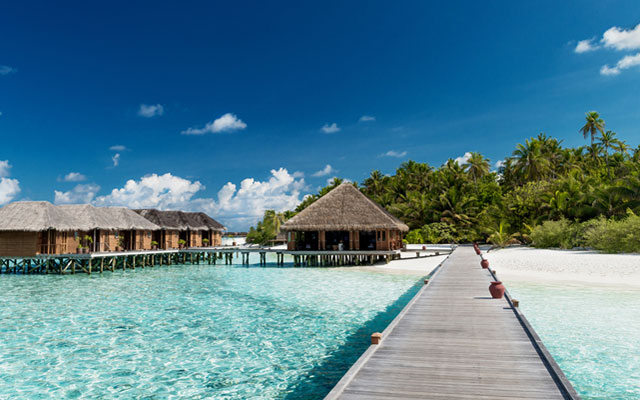
Thomas Cook India has signed an agreement with the Maldives Marketing and Public Relations Corporation to boost visits to the Maldives.
The signing comes as Thomas Cook India has witnessed “positive consumer sentiment” to travel on the back of vaccine news coupled with lockdown fatigue, with its recent Holiday Readiness Report showing 48 per cent of respondents are keen to take an international holiday in 2021.
India has replaced China as the Maldives’ top source market amidst the pandemic
Consumer interest in short-haul destinations, including the Maldives which reopened its borders in July 2020, is significant at 50 per cent.
Under the agreement, Thomas Cook India will spotlight the Maldives as a preferred destination for various consumer segments – leisure, bleisure and corporate – targeting India’s metros as well as tier 2 and tier 3 cities. To instil traveller confidence in the Covid era, the reiteration of safety and hygiene protocols implemented in the Maldives will also form a key part of the campaign.
Rajeev Kale, president & country head – holidays, MICE, visa, Thomas Cook (India), said: “The Maldives has been an aspirational destination for Indians and our strategic intent will focus on highlighting the benefits/USPs of easy access and a free visa-on-arrival process, coupled with its eclectic vibe, stunning natural vistas and exclusive resorts to steer consideration towards the Maldives and drive demand.”
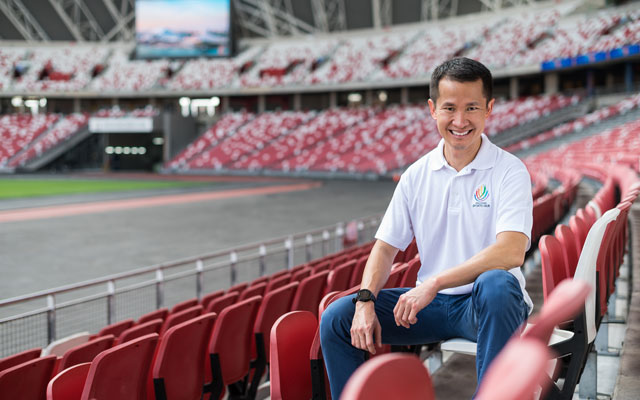
How was your transition from tourism chief into the private sector, and now as you make inroads into sports and events?
I’ve enjoyed tackling new challenges and learning new things at the Singapore Sports Hub (SSH). My experience at the Singapore Tourism Board (STB) has also come in useful. In the public sector, the general aim is to create an enabling environment for growth and success, whereas in the private sector, we are (aiming) for that growth and success under serious resource and commercial pressures.
A common thread throughout my roles at SSH, STB and even Grab is the key strategic priority: to maintain relevance in a fast-changing environment, and consistently engage with the internal team and external stakeholders as we navigate change.
What lessons about tourism demand and consumer behaviour glimpsed from your time with STB could translate into your work at SSH?
There are a few similarities in driving tourism demand and running a sports and lifestyle venue. For one, staying attuned to consumer trends by recognising short-term or seasonal preferences and behaviours is the key to staying relevant. For instance, this pandemic has led consumers to shift towards seeking familiarity and predictability. In response, SSH has organised activities that invoke that sense of normalcy that Singaporeans crave during this time.
Technology plays an increasingly important role in both tourism development and venue management. Leveraging key tech innovations is therefore necessary to keep up with the pace of change, improve services, enhance operational efficiency and elevate the customer experience.
What does SSH have planned for the year ahead?
We have plenty of discussions abuzz for the second half of 2021, as we are in the midst of building our events calendar and providing our event partners the support they need. Following the successful execution of safety protocols for Project Dorm – where we provided quarantine facilities for thousands of migrant workers – and ONE Championship in the past year, we have confidence in our ability to hold more live events, particularly in the latter half of this year. We are excited to unveil these to the public in due course.
Being able to support the training of our national athletes is also an important priority and we are glad that we have been able to reopen many of our facilities for this purpose.
For a public-private partnership like the SSH project, success can only be achieved if all partners are aligned and working together.
How do you foresee the concept of massive community and sporting events will change in the post-Covid era, even after the majority of the local population has been vaccinated?
When it is safe again, we will want to gather as social beings to play, celebrate, cheer, bond and form great memories. These are deep human instincts and desires, and the demand for such experiences will always be there. SSH aims to be able to curate and host these experiences through entertainment, sporting and community events.
The safety aspect of events will definitely have to be tightened to ensure that they run smoothly and efficiently. The judicious application of technology can help us here. Hybrid events that combine both the virtual and physical worlds will also likely be prevalent in the post-pandemic world, and event organisers will want to leverage on the strengths of online and physical engagement.
Singapore had its fair share of such “phygital” events in 2020. What lessons have you learned from these activities that can be applied to SSH’s “phygital” events?
A key observation is that standing out from the multitude of phygital events available in the market has become all the more critical. The variety of events available online means patrons can easily switch between virtual events at the last minute. This is behaviour that can impact our business. Therefore, it’s imperative that we are able to engage viewers well enough that they feel strongly about our programmes and events, and stick with them.
The key to keeping patrons engaged with phygital events is to focus on building a sense of community both online and offline, and across the participants on either platforms. Physical meet-ups can supplement the online ones, (while) online engagement allows the community to remain connected even after the physical event. If sustained over a period of time, a community can be even more connected and build even stronger bonds than (with) a pure online or offline experience.
As businesses pivot towards domestic markets now, what considerations do you have to keep in mind when planning events?
First and foremost, safe management measures should be the most important consideration in any event plan. Patrons need to be assured of their safety when attending events. We ensure this by carefully and thoroughly executing safety protocols across various teams. Externally, we also clearly communicate the safety procedures that event attendees must undergo, and manage their expectations of what the new experience will be like.
We also make it a point to be discerning of the type of programmes we organise. As mentioned previously, Singaporeans desire meaningful experiences during these challenging times, which is why we have been focused on activities that matter to our local audiences as well as help drive greater community engagement.
In the near term, we hope to be able to host our usual suite of marquee sporting and entertaining events via careful selection of international acts and sporting events that can be sustained by domestic demand.
What challenges do you foresee awaiting and how might you overcome them?
Balancing commercial ROI with capacity limits is one of the challenges that we foresee. Even in the future, we can expect restrictions on large crowds and gatherings, therefore, tapping into phygital events to draw a larger crowd online is definitely vital. We are working on enhancing these hybrid virtual events to engage with audiences.
We also want to ensure that we hold physical events responsibly and safely, hence, coming up with solutions for crowd monitoring and control will be very important. In order to ensure that all these new processes run smoothly to support the future of events at the SSH, reskilling staff to carry out hybrid events will be a top priority.
Cordis Hangzhou, Sci-Tech City, China
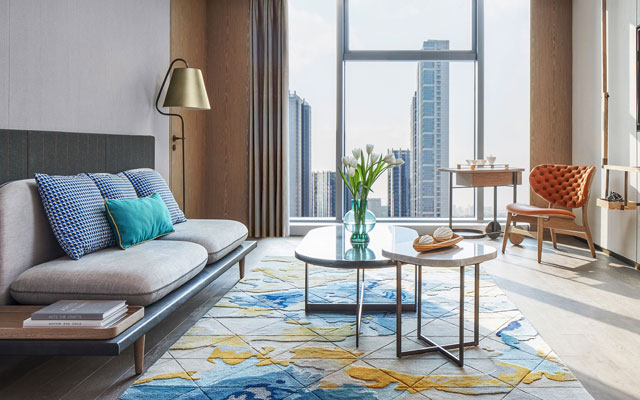
Located in the heart of the high technological and integrated complex, Hangzhou Future Sci-Tech City, Cordis Hangzhou is a luxury hotel which features 186 rooms and suites, including the 190m2 Presidential suite which houses a living room, dining area, private kitchen and bedroom. Two signature restaurants and a bar are on offer. Chinese restaurant, Ming Court, features Cantonese and local cuisine; while the all-day dining restaurant, Cordis Market, offers a customised, cook-to-order interactive buffet experience. Elsewhere, The Bar serves curated fine wines, vintage whiskeys and cocktails, alongside bar snacks and finger food. For recreation, there is a heated indoor swimming pool, spa, and 24-hour gym. Six meeting and event venues on-site include a business centre and a 600m2 pillarless grand ballroom which can accommodate up to 300 guests and is divisible into three individual rooms. The other four meeting rooms feature natural lighting and an unblocked city view.
Hyatt Regency Phnom Penh, Cambodia
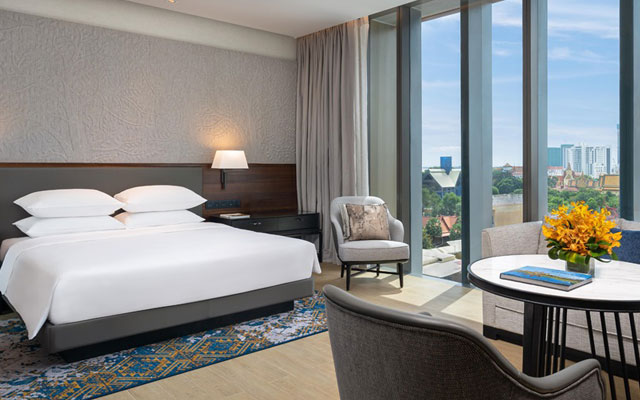
The opening of Hyatt Regency Phnom Penh marks the first Hyatt hotel in the Cambodian capital and the debut of the Hyatt Regency brand in the Kingdom of Wonder. With 247 guestrooms including 43 residential-style suites, Hyatt Regency Phnom Penh is the largest internationally branded hotel in the city. Guests have a choice of five dining venues, including Market Café Restaurant & Lounge, an all-day dining concept serving buffet breakfast, afternoon tea and à la carte options; Metropole Underground, a metro-themed bar offering live music and local beers; and a speakeasy-style bar, The Attic, specialising in handcrafted cocktails and grand cru wines. Elsewhere, the FiveFive Rooftop Restaurant & Bar, boasting an open-plan dining setting and live DJ performances, serves sustainable seafood, locally-sourced meats and produce, as well as cocktails.
A total of 1400m2 of meeting and event space is available on-site, including the Regency Ballroom that can accommodate up to 490 guests and boasts floor-to-ceiling windows. Meanwhile, nine meeting suites and social spaces provide flexible arrangements. Additionally, The Poolhouse features an outdoor barbecue area and an open terrace, accommodating up to 70 guests. Recreational facilities include a 22m outdoor infinity pool, a poolside bar, a Himalayan salt room and a steam room, alongside a spa and 24-hour gym.
Ramada Encore by Wyndham Kathmandu Thamel, Nepal
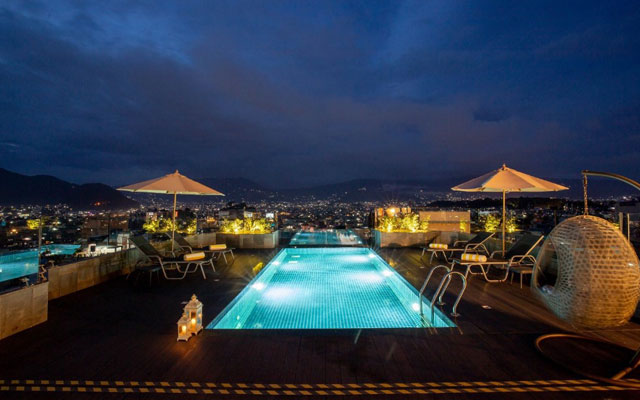
Wyndham Hotels & Resorts has made its entry into Nepal via the 90-room Ramada Encore by Wyndham Kathmandu-Thamel. Located in the centre of Kathmandu, the capital and largest city in Nepal, the newly-built hotel is part of a rejuvenation project of the city’s commercial centre. Guests can choose from a variety of F&B outlets, including the Pateo restaurant and bar; the outdoor El Beso Caro offering scenic city views; as well as Chocos N Subs, serving light meals and coffee. Other amenities include a rooftop plunge pool, a spa and salon, as well as a fitness centre. The hotel also features a versatile meeting room to accommodate up to 60 conference attendees or 80 banquet guests.
The Royal Park Canvas – Kobe Sannomiya, Japan
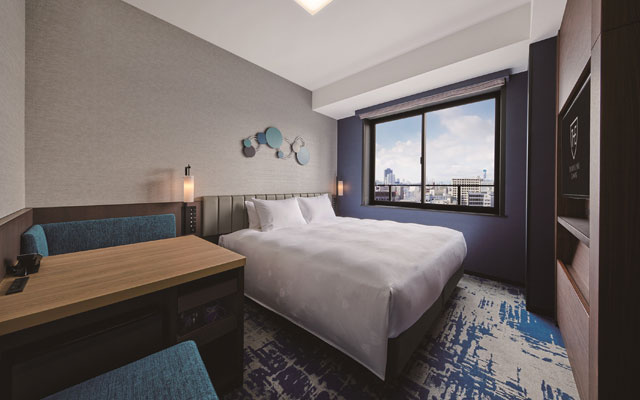
The newest venture of Royal Park Hotels and Resorts Company aims to connect travellers and locals in Kobe, a bustling city filled with unique small shops and restaurants. Seated in Sannomiya, the centre of Kobe city, the 170-key lifestyle hotel wants to appeal particularly to couples and families who appreciate an authentic environment and like to connect with the local culture. As such, one of the hotel’s prime features is the Canvas Lounge, a space providing tea and coffee that is open to hotel guests and locals alike and is meant to stimulate exchange and communication.
Two global tourism bodies have come together to develop a blueprint for climate action in destinations.
The blueprint, helmed by the Future of Tourism Coalition (FoTC) and Tourism Declares, will combine the frameworks, tools, best practice and resources required for destinations to deliver action plans that align tourism with the need to reduce global emissions by at least half by 2030. Its publish date has been timed to coincide with the UN Climate Change Conference in November, and is intended as a free, practical resource for anyone to use.
New blueprint under development aims to encourage destinations to scale up climate action
The hope is that it will be adopted as the standard approach to scale up climate action and transform the industry. Other climate action blueprints are also being created by Tourism Declares for accommodation providers and tour operators.
Supporters and members of both tourism bodies will help co-create the destination blueprint, and a smaller group of “Destination Climate Leaders” will be identified to lead the process. Progress will be shared regularly on both group’s websites and other channels to encourage wider consultation and contributions from anyone working on this issue.
Jeremy Smith, co-founder of Tourism Declares, said: “It is essential that 2021 is a turning point for our industry, the year when delivering against science-based Climate Action Plans becomes standard practice for travel and tourism organisations.” Alongside the FoTC, both groups will “co-create a new, low-carbon, destination blueprint”.
Jeremy Sampson, chair of the FoTC, added: “We’ve been working closely with Tourism Declares since we launched last summer, as climate change is the big issue that cuts right across our 13 guiding principles for the future of tourism. We would like our two initiatives to align as seamlessly as possible, as we need engagement, insights, experience and expertise from all parts of our diverse industry to find the best solutions for tomorrow’s tourism.”
The ASEAN Hotel & Restaurant Association (AHRA) has appointed a new board of directors at its recent Annual General Meeting (AGM) held virtually for the first time.
The new office bearers will serve a term of service from 2021 to 2023. AHRA members unanimously elected Eugene Yap of the Hotel & Restaurant of the Philippines as the president for the second term, in another first for the association.
Eugene Yap is serving as the president of AHRA for the second term
Yap said: “We are optimistic of a healthy recovery for the tourism and hotel industry with positive developments and deployment of vaccinations across the region. (South-east Asia) is an important market for not only the world, but also its very own member states, and this will be the key to our economic recovery for the next two years.”
Meanwhile, Ben Montgomery from Thai Hotels Association will take on the role of first vice president; Chenda Clais from Cambodia Hotel Association, as second vice president; and Hariyadi B.S. Sukamdani from Perhimpunan Hotel dan Restoran Indonesia (PHRI), as third vice president.
Assuming the position of secretary general is Margaret Heng from Singapore Hotel Association, while Christina Toh from Malaysian Association of Hotels will be the honorary Treasurer.
The AGM was attended by members from nine countries, with each member country represented by respective national hotel and restaurant associations sharing situation updates, strategies as well as outlook of the tourism and hospitality industry for the year ahead.
Despite the pandemic’s devastating impact on the industry, AHRA said that it remains “strong and determined” in rebuilding the industry through sharing of resources and strategic collaborations across the region. Part of AHRA’s roadmap to recovery includes industry support events with focus on tourism safety and health, sustainability, human resources and productivity, as well as a regional hospitality conference set for 3Q2021.
















The Singapore Tourism Board (STB) and KrisShop, Singapore Airlines’ flagship retailer, have forged a three-year partnership to jointly market homegrown brands and grow their e-commerce reach, as well as create seamless experiences for their local and international customers.
Under the partnership, content will be co-developed to profile local brands on KrisShop.com and highlight the vibrancy of Singapore’s retail scene.
In the first phase, STB and KrisShop will launch a domestic campaign to raise awareness of local brands and grow demand for their products. Both partners will develop and amplify content to showcase local design talent and elevate the perception of Singapore’s retail scene.
This complements the Made With Passion initiative – launched in November 2020 to spotlight local lifestyle brands – led by the Singapore Brand Office and STB, with the support of Enterprise Singapore.
In the next phase, STB and KrisShop will roll out global campaigns across various key markets as international travel resumes.
To help local brands extend their global reach, KrisShop.com will be the exclusive e-commerce platform for Design Orchard, offering the retail showcase on Orchard Road an additional distribution channel. From this week, 36 Design Orchard brands will be digitally housed on With Love, SG, a KrisShop concept store for homegrown brands showcasing Singapore’s culture and heritage.
With the inclusion of Design Orchard brands, there will be a total of 100 local brands on With Love, SG. More Design Orchard brands will come on board in the coming months. Consumers will be able to purchase a wide variety of homegrown products from lifestyle and sports brands to fashion and accessories labels.
KrisShop will also work with STB and Design Orchard brands to raise the profile of these homegrown brands through joint promotions, limited-edition collections and exclusive collaborations, among other marketing efforts. As well, KrisShop will offer Design Orchard brands guidance to boost e-commerce sales in Singapore and in global markets, and hold regular review sessions with the brands.
As part of the partnership, STB and KrisShop will explore new fulfilment services and channels to create effortless online-to-offline and offline-to-online retail experiences for Design Orchard and KrisShop’s customers. Some ideas to be trialled include self-collection for local customers at designated pick-up points, such as Design Orchard and SingPost POPstations.
STB and KrisShop will also explore integrating KrisShop.com’s features with STB’s official VisitSingapore mobile application, allowing users to shop on the go.
Lynette Pang, STB’s assistant chief executive (marketing group), said: “Profiling local brands is part of our strategy to build destination affinity and mindshare, and ensure that Singapore stays top-of-mind during this period and when travel resumes. This partnership with KrisShop also aims to future-proof local brands, giving them a new channel to reach local and international audiences, and ideas to enhance customer experiences.”
Chris Pok, CEO of KrisShop, added that the partnership with STB “is an extension of our efforts to champion our culture, and further fuels our vision of being a platform of enablement and empowerment for homegrown entrepreneurs, by giving prominence to their crafts for audiences in Singapore and beyond”.