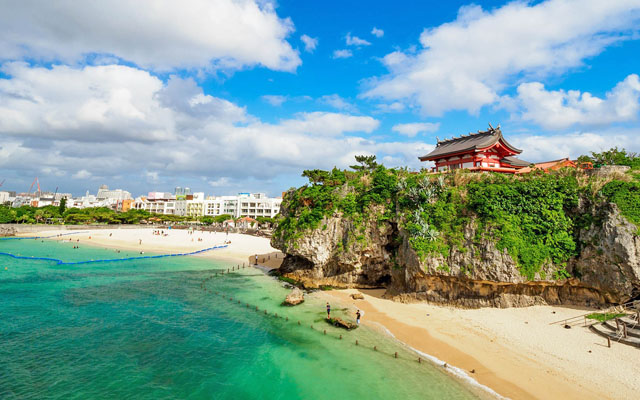
Mandarin Oriental Hotel Group has launched a trio of packages globally for guests looking to get away with friends and families, with the assurance of flexible cancellation.
The Staycation by M.O. package, valid until March 31, 2021, includes daily breakfast for two, early check-in and late check-out, as well as a bottle of sparkling wine or champagne. Guests can also enjoy a tailored experience, varying between hotels, which may include a dining credit, wellness experience, cocktail masterclass, or a private tour of a local gallery.
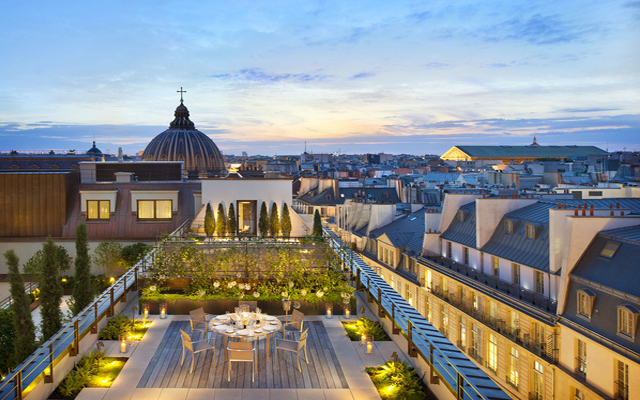
Mandarin Oriental launches attractive packages globally; private terrace in the Suite Royale Orientale at Mandarin Oriental, Paris pictured
Year-round, the Families by M.O. package offers a second room with a 50 per cent discount when occupied by a family member; one rollaway bed and complimentary meals for children under 12; children’s amenities and a tailor-made, age-appropriate local activity guide; and one round-trip airport transfer for stays at a suite for three nights or more.
Designed for getaways with friends, the Get Togethers by M.O. package, valid until March 31, 2021, allows guests to uncover the unique local highlights at any Mandarin Oriental hotel’s destination.
From Thai cooking classes in Bangkok, to beach yoga sessions in Miami, and touring the vibrant Marrakech souk, the hotel will arrange authentic experiences tailored for each destination. The package includes daily breakfast for two; a 30-minute spa treatment per person, per night for two; and destination-specific activities.
Two Dusit properties in Dubai – dusitD2 Kenz Hotel and Dusit Princess Residences Dubai Marina – will offer one-month complimentary accommodation to four individuals or families impacted by the pandemic.
The dusitD2 for Humanity initiative is open to the general public in Dubai who can nominate themselves, or others, through a video submission via direct message on Facebook or Instagram explaining their situation.
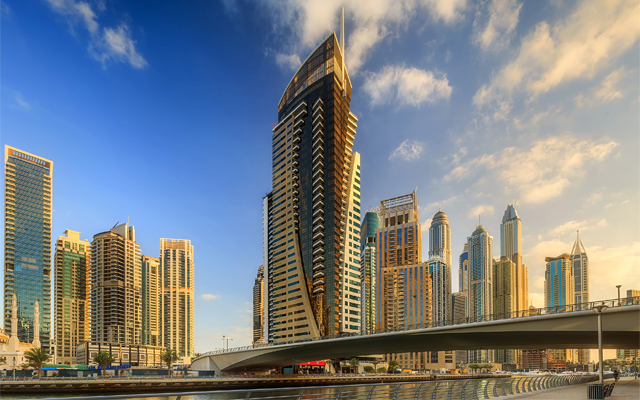
Dusit Princess Dubai Marina is offering free one-month stays for those impacted by the pandemic
Video submissions must state why the intended recipient requires one month’s free accommodation, and how they plan to develop themselves or help the community during their stay.
All videos will be reviewed by dusitD2 Kenz Hotel Dubai’s community relations committee, with recipients to be announced in batches between July and August 2020.
“Whether someone has lost their job, is awaiting a repatriation flight, is having difficulty paying rent, or just needs some additional support, we want to help,” said Bassam Zakaria, cluster general manager, dusitD2 Kenz Hotel, Dubai, and Dusit Princess Residences Dubai Marina.
“We have been operating in the UAE for several years now, and we want to take this opportunity to support the efforts of the government and give back to the community that has given us so much. Now is the time to help each other, and we are very happy to do our part by allocating rooms and apartments to the dusitD2 for Humanity project.”
The UK’s Kew Green Hotels (KGH) is expanding into South-east Asia, launching seven properties in Bangkok, including four under the Wyndham Hotels & Resorts brand umbrella, with an additional three properties in the pipeline.
The expansion is stablished through a joint venture with Bangkok-based developer Siamese Asset to form Siamese and Kew Green Management Company Thailand.
Kew Green Hotels will open seven properties in Bangkok, including Ramada by Wyndham Sukhumvit 87 (above)
The four properties will be launched in Bangkok in early 2021: The Wyndham Queen Convention Centre, Wyndham Garden Sukhumvit 42, Ramada Plaza by Wyndham Sukhumvit 48 and Ramada by Wyndham Sukhumvit 87.
In addition, KGH will also launch a commercial hub for South-east Asia, based in Bangkok, to support KGH’s growing hotel portfolio in the region.
The 120-key Wyndham Queen Convention Centre Hotel & Residences is located within minutes from the Queen Sirikit National Convention Centre MRT station. Amenities include rooftop gardens, a sky lounge, infinity pool, restaurant, executive lounge and fitness room.
With also 120 rooms, Wyndham Garden Sukhumvit 42 sits in the heart of Ekkamai, known for its lively collection of popular cafés, bars and restaurants. The hotel offers a rooftop garden, restaurant, a terrace coffee bar, swimming pool, spa and gym.
Ramada Plaza by Wyndham Sukhumvit 48 offers 100 rooms, alongside a sky bar, restaurant, bar lounge, spa, swimming pool and gardens. The hotel is less than 10 minutes’ walk to Phra Khanong BTS Sky Train.
Located between BTS Bang Chak and BTS Onnut, the 85-key Ramada by Wyndham Sukhumvit offers a yoga room, rooftop gardens, a swimming pool, garden and coffee bar.
Tour guide giving a brefing to tourist at Mari Mari Cultural Village..Unique culture and traditional costume is among attraction in Sabah.
The Malaysian Association of Tour and Travel Agents (MATTA) has urged the government and Bank Negara Malaysia (BNM) to extend the loan repayment moratorium by another six months for the tourism industry.
In March, BNM had granted a six-month moratorium on loan repayments starting April 1 to help ease the financial burden of individuals and SMEs affected by the Covid-19 pandemic.
MATTA urges government to extend loan moratorium for tourism players who have been left without income due to pandemic-induced travel restrictions; a tour guide briefing tourists at Mari Mari Cultural Village in Kota Kinabalu, Sabah, Malaysia pictured
MATTA president, Tan Kok Liang, said in a statement that the extension of the loan moratorium will help more tourism players to weather through the challenges. He added: “The tour and travel industry is the hardest hit by the recent outbreak and studies indicate that it will only recover from the current crisis much slower than other sectors of the Malaysian economy.
“It will be an uphill task to retune the industry if tourism companies are wounded up and tourism workers are being driven into bankruptcy by early 2021.”
Tan shared that many tourism players have had no income since March, and that against a backdrop of recession and unemployment, being wholly dependent on domestic tourism will not be sufficient to sustain related businesses and individuals working in this industry.
He said: “The industry’s inability to service their loans are due to regulatory constraints and weak demand. As many tourism businesses derive a large portion of their earnings from international tourists, how are they to survive if borders stay closed?
“With no firm direction from the government on the easing of borders, it is only appropriate to request that the government initiate and order an extension of the moratorium, rather than industry players seeking an extension to their respective banks on their own, which will likely be turned down, especially after the prime minister (Muhyiddin Yassin) made an announcement that the industry could take four years to recover.
“Individual borrowers working in the hospitality and tourism industry should also be given a six-month moratorium extension as many are currently on pay cuts, unpaid leave or have been retrenched. Many do not have the ability to repay their loans under current pressing circumstances and the rate of unemployment is rapidly increasing.”
The Ministry of Tourism, Arts and Culture estimated the losses suffered by the tourism and culture industry totalled some RM45 billion (US$10.5 billion) in tourism receipts, and about one million workers in the tourism industry in Malaysia are expected to lose their jobs this year, said Tan.
He added: “The tourism industry’s collective inability to service its debts is due to external forces beyond its control. In this instance, the industry urges the government to take proactive actions to intervene rather than leave the decision to the various private banking institutions who will make decisions based on their terms of industry risk assessment and maximise shareholders wealth.”
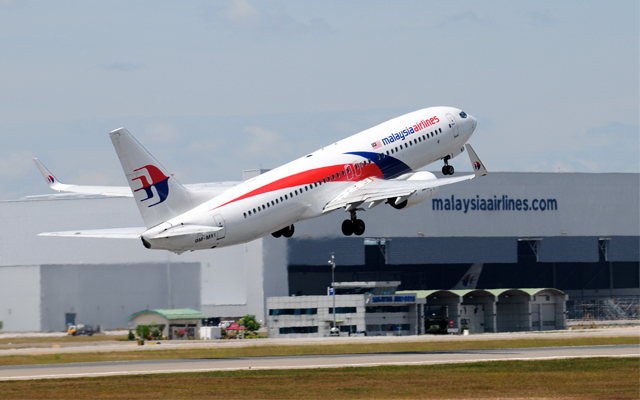
Malaysia Airlines (MAS) and Japan Airlines (JAL) are set to launch a delayed joint business partnership on July 25, which will see the two carriers co-operate commercially on flights between Malaysia and Japan.
The airlines said in a joint press release that the partnership will “further enhance convenience between Japan and Malaysia and allow customers to benefit from more flight choices”.
Malaysia Airlines, Japan Airlines joint business partnership finally takes off following Covid-19 delay
With MAS resuming flights to Japan starting this month, MAS and JAL combined will offer four-weekly services between Kuala Lumpur and Tokyo Narita in July and August.
MAS group CEO, Izham Ismail, said the joint business was delayed by a few months due to travel restrictions between both countries amid Covid-19. “We look forward to the bilateral discussions between the governments of Malaysia and Japan to establish a travel bubble between the two countries, which will ease restrictions for cross-border travel,” he added.
JAL president, Yuji Akasaka, said: “While our expanded relationship is being launched during unprecedented times, it has allowed both Japan Airlines and Malaysia Airlines to ensure the highest standards of safety and hygiene are in place from the onset for our mutual customers’ peace of mind. And with hospitality in mind, we are confident that customers will delight in the in-flight experience and enjoy convenient flight schedules and seamless services.”
Despite a second wave of Covid-19 infections in Beijing, China’s aviation recovery is expected to surpass that of other Asia-Pacific markets through August, according to forecasts by Ascend by Cirium.
Speaking at Cirium’s recent virtual seminar on Post Coronavirus Recovery for Aviation in China and the Asia-Pacific Region, Joanna Lu, head of consultancy-Asia, Ascend by Cirium, noted that seven-day seat capacity in the mainland is expected to recover to pre-Covid-19 levels, and possibly even see a slightly positive year-on-year growth by end-August.
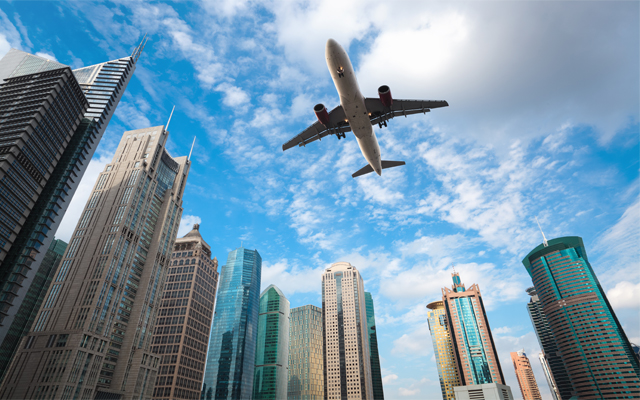
The return of more Chinese aircraft to the skies heralds recovery in domestic air travel markets
Meanwhile, most other markets in the region are expected to still register year-on-year decline in seven-day seat capacity by end-August, even as capacity continues to improve in July and August.
Overall, seven-day seat capacity across Asia-Pacific is expected to see a lower year-on-year decline of 12 per cent come August versus 43 per cent in June.
China’s recovery trajectory is markedly different from of Hong Kong, which is expected to see year-on-year change in seven-day seat capacity recover to approximately -20 per cent by end-August, below that of the overall region.
Lu cautioned, however, that signs of recovery have to be considered alongside continuing uncertainty and the fact that airlines tend to make short-term capacity reductions in response to shifts in the industry.
Additionally, markets where July is traditionally a peak month for domestic travel – Indonesia, Taiwan and Thailand – could see greater positive year-on-year growth in terms of domestic seat capacity versus China this month, reckoned Lu.
Nevertheless, an encouraging sign supporting predictions of recovery is the increasing number of Chinese aircraft in service over the past few months, which signals that China’s domestic market is on the mend, shared Lu.
Despite a slight drop in daily aircraft in service after concerns of a second wave in Beijing emerged mid-June, service levels on June 19 recovered to 80 per cent (2,471) of the 3,071 aircraft in service on January 3.
Meanwhile, recovery of daily in-service fleet across the rest of Asia-Pacific trails behind China’s, reaching 1,238 on June 19, or just 33 per cent of January 3 fleet numbers.
In China, aircraft utilisation has been lagging behind that of fleet capacity. The number of hours flown by China’s single- and twin-aisle planes in mid-June came in at around 6.5 and six per day respectively – still 22 per cent and 44 per cent down from that at the start of the year.
Across the rest of the region, utilisation trends are closer to that of fleet capacity trends. Single- and twin-aisle aircraft in the rest of the region flew about 4.5 and eight hours respectively per day, after utilisation bottomed out in end-April, as did fleet capacity. Interestingly, the latter is slightly higher than that of mainland China.
While the mainland domestic travel market is on track for recovery, its international travel market has been struggling since February. As a result, overall air traffic has been down 58 per cent year-on-year between January and April.
Concurrent air traffic trends for Asia-Pacific nations varied depending on the timing border controls were enacted.
Significantly, markets greatly dependent on inbound and international travel and that had no domestic travel market to tap on, such as Hong Kong and Singapore, were badly hit. Cut off from the mainland and the rest of the world, Hong Kong’s air traffic fell by 73.4 per cent in April over the start of the year, while Singapore faced a 48.4 per cent decline.
Moving forward, bilateral agreements to set up travel bubbles and air bridges could offer international aviation markets some reasons to be optimistic, reckoned Lu.
For instance, China is in talks with South Korea and Singapore to put in place travel bubbles for essential corporate travel.
With this in mind, Cirium predicted that departure seat capacity of flights from China to South Korea could recover to 800,000, nearly 80 per cent of that in January 2020.
At the same time, capacity from China to Singapore could recover to just over 200,000, approximately half that of January 2020 levels.
Other Asian nations in dialogue for similar travel agreements include Japan with Taiwan, Vietnam, Thailand, Australia and New Zealand, and between Australia and New Zealand (of a Trans-Tasman travel bubble).
Should markets recognise public health standards of other destinations and provide information openly, Lu predicted that more of such agreements will be sealed in the future, which could lead to a much-needed revival of international air travel.
Countries forming such agreements are likely to be nearby or ideologically compatible.
– Translated by Angela Teo; this article was first published in TTG China
• Singapore attractions fine-tuning operations to suit these pandemic times
• Places of interest double down on hygiene standards to win back visitors
• Tourism operators pivot to focus on domestic market
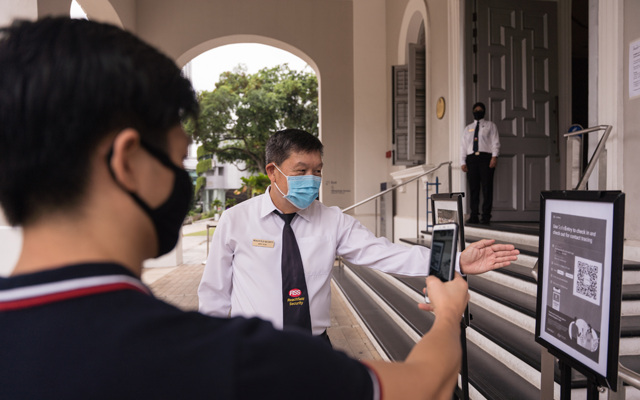
A visitor to the National Museum of Singapore checks in via SafeEntry as part of the country’s contact tracing efforts (Photo credit: Brian Teo for National Museum of Singapore)
As tourist attractions in Singapore start to reopen their doors, they are reshaping their operations in line with shifting health and safety expectations post-pandemic.
At most attractions, capacity is capped at 25 per cent to manage visitor volume. Other safety mandates include safe distancing measures, temperature checks, and SafeEntry system for contact tracing. Many tourist spots have also adopted SG Clean sanitation standards, or enhanced cleaning and disinfection of frequent touchpoints in common areas.
In addition, many attractions are now encouraging online ticket purchases and e-payment methods to minimise physical contact.
At the reopened National Museum of Singapore (NMS), shared multimedia content, guided tours and programmes are temporarily unavailable. Instead, visitors can access exhibition captions and multimedia content in the four official languages on their personal devices, shared museum director Chung May Khuen.
For now, the museum has also removed headphones, audio guides and reusable translation text guides, and closed off all interactive exhibitions, to minimise touch.
Meanwhile, other attractions in Singapore, whose nature of operations seem tailored for safe distancing, has only had to make minor tweaks to their operations.
Case in point: Virtual Room Singapore, a multi-player VR arcade, which reopened on July 4. “Our experience has always been very safe and socially distanced so there won’t really be any differences to how people experience our attraction,” said its director Rebecca Assice.
“Our players each have their own 3m by 3m dedicated room, so they have no physical interaction with anyone else. They join and interact with only their friends in the virtual world, where they can see, hear and collaborate together.”
For Flight Experience Singapore, a flight simulator attraction which reopened on July 9, while the core experience remains unchanged, there will be new crowd control measures in place to suit these pandemic times, according to Alwin Yong, a flight simulator instructor.
He elaborated: “In the past, we could accommodate a bigger group of family or friends in the cockpit to watch their loved ones take control of the Boeing 737. Now, with the new safe distancing measures in place, the maximum capacity in the simulator has been reduced to three, excluding our instructor.
“The (additional members) of the group will have to remain outside the flight deck at the lounge area where they can enjoy a snack and a cup of coffee or tea, while enjoying the live feed on TV. In fact, the experience is more exclusive now as other groups of customers will not be admitted to the lounge area until their allocated timeslot.”
The attraction will also hold off hosting large school, corporate and team bonding events until further notice, Yong added.
More stringent safety protocols
Apart from the aforementioned hygiene protocols that have become de rigueur for every tourist attraction by now, some have gone the extra mile to stay sterile.
For the reopened Singapore Cable Car – part of the hilltop destination Faber Peak which also houses F&B outlets Arbora and Dusk Restaurant & Bar – it has adopted additional safe distancing measures, shared Buhdy Bok, managing director of One Faber Group.
“The interior of the cabin is sanitised after every ride and there will be no sharing of cabins among different groups of guests. Social distancing and capacity limits could contribute to a more exclusive, serene experience for guests… Our guests will enjoy not only more spacious surroundings at Faber Peak, but also their own private cable car cabins,” he added.
Some of its staff members have also been trained as Safe Management Officers to monitor the on-site implementation of the safety measures, and conduct regular inspections.
With social distancing rules in place, visitors to Singapore Cable Car will get their own private cabins
At Flight Experience Singapore, a 15-minute buffer between customers is enforced to allow for thorough cleaning and disinfecting of frequent touchpoints in the simulators before and after each experience, shared Yong.
In the Boeing 737 simulator, the communication headsets are wiped and disinfected before and after each use. In addition, disposable nonwoven covers are fitted over the leatherette earcups for each customer. A HEPA filter is also present in the flight deck to constantly purify the air to reduce airborne transmission risk.
As well, the facial sponge cushion on the VR headsets have been replaced with a washable non-porous silicone gel cushion, wiped and disinfected before and after each use. Disposable eye masks are also provided for each customer to wear under the VR headset.
Similarly, customers at Virtual Room Singapore are required to wear a soft disposable ninja mask to avoid direct contact with the headset, shared Assice. They also have to put on their own equipment, instead of being assisted by game masters.
The pivot to localism
With borders closed to most foreigners, attractions in Singapore are shifting strategies to make the most of what’s shaping up to be a majorly domestic tourism season.
Buhdy said they have pivoted their plans and campaigns for this year to target locals who have not taken the cable car in years, including families on day outings and couples planning romantic dinners with their Cable Car Sky Dining.
He elaborated: “We are planning a series of exciting local promotions for our attractions and working with partners to organise a series of events including yoga, mental wellness and art jamming within the beautiful natural surroundings of Faber Peak.”
Flight Experience Singapore, which traditionally has been heavily reliant on tourism, found the need to pivot as tourist footfall started to dwindle rapidly with the onset of Covid-19.
“We turned to online marketing to promote our experiences to the local market using targeted Facebook and Google ads. The campaign was a success – it more than made up for the significant increase in cost of online marketing and allowed us to connect with a large base of local consumers that we typically had not reached out to,” said Yong.
Flight Experience Singapore’s VR simulator area at their new Funan Mall outlet, which they opened in April to capture the local footfall
While most companies are downsizing their operations in the current economic climate, Yong shared that they are expanding with their new Virtual Reality flight simulators.
Instead of adding them to their existing location at the Singapore Flyer alongside their Boeing 737 flight simulator, the 12-year-old company opted to site them at their second outlet, which they set up in Funan Mall this April to capture the higher proportion of local traffic there.
Said Yong: “The decision was made to locate the new VR Experience at Funan Mall as we fit into their theme of experiential shops with our unique blend of retail and high-tech experiences, and we hope our commitment to cater to local consumers would bear fruit and forge a more resilient business model that is less dependent on tourist arrivals.”
Correction: In the original post, we made a mistake by describing Faber Peak as an entertainment complex. It is not, and is a hilltop tourist destination instead.
As Indonesia gradually eases lockdown restrictions, hotel occupancy rates across the country, including Jakarta, have started to pick up, after the coronavirus plummeted industry rates to a record low.
Parador Hotels and Resorts COO, Johannes Hutauruk, said that his properties have seen a spike in demand, from the lowest occupancy rate of 18 per cent during the pandemic to the current 31 per cent.
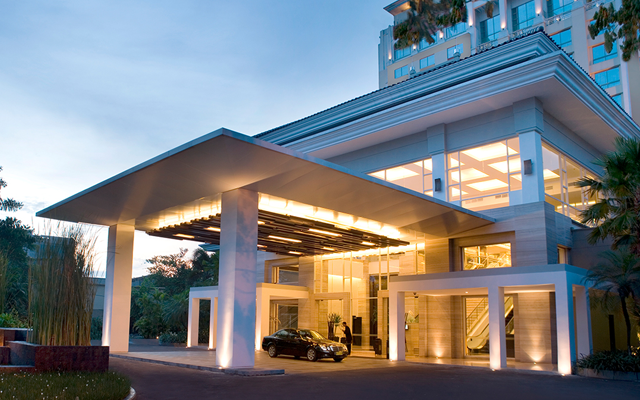
Santika Indonesia Hotels & Resorts has seen a rise in occupancy at its properties like Hotel Santika Premiere Slipi Jakarta (above)
Of Parador’s 10 properties, five are located in Gading Serpong, Tangerang. Some 95 per cent of guests to their Tangerang properties come from the neighbouring capital of Jakarta, which has relaxed restriction for business sectors.
“In April and May, the main purposes of our visitors were to seek safety and to self-isolate. But from mid-June to July, we have seen demand for business events,” Johannes said.
However, he added, properties in other areas like Malang in East Java, Bali, and Magelang and Semarang in Central Java, still face challenges in bouncing back.
East Java, for example, has overtaken Jakarta to become Indonesia’s coronavirus epicentre, with the highest record of confirmed cases and deaths. In Bali, meanwhile, business has yet to pick up because the island will only open its doors to domestic travellers from July 31.
As such, Santika Indonesia Hotels & Resorts’ properties in Bali remain closed to date, according to its assistant manager of marketing communications, Prita Gero.
However, at least 80 properties in many other regions have reopened, including Yogyakarta, Semarang, Belitung, Makassar and Palu, said Prita. Though hotel occupancy fluctuates, there is an upward trend. In Ambon, Santika’s property at one point even enjoyed 60 per cent of occupancy.
In Jakarta, Santika’s properties have seen occupancy rates climb from seven or eight per cent to nearly 30 per cent, thanks to Jakarta’s relaxed restrictions. With ministries resuming operation, many of Santika’s guests come from government institutions, according to Prita.
Other hotels across the country are also reporting a similar surge in demand. Artotel Group COO, Eduard Rudolf Pangkarego, said that occupancy rates for the group’s properties in Jakarta have climbed to around 30 to 40 per cent.
Tauzia Hotels has also seen an increase in occupancy at their properties, particularly in Jakarta, Central Java and East Kalimantan, according to its spokesperson, Nadia Tika.
Both Eduard and Nadia attributed the rebound to health and safety measures that Artotel and Tauzia had implemented to restore customer confidence.
Meanwhile, the success of the recently held Santika Online Travel Fair, which offered special discount packages, has led Santika Hotels and Resorts to plan a similar event in August to boost occupancy, Prita said.
On the other hand, Parador’s Johannes intends to skip price lures and will rely on intense online marketing efforts instead. “While monitoring the market and our competitors, we will try to use prices (stipulated in) our initial 2020 business plan,” he said.
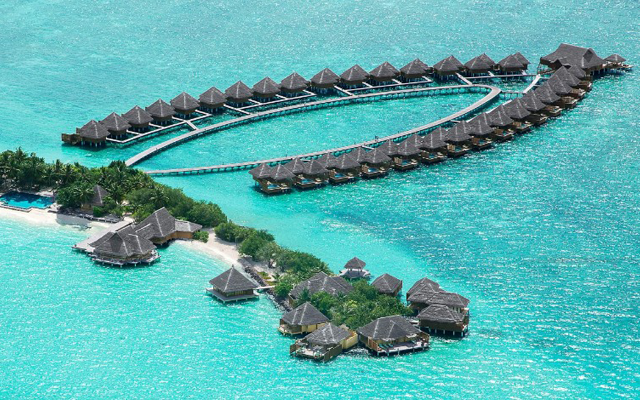
Contactless check-ins, empty minibars, and digital menus are among the safety and hygiene measures to be rolled out at resorts across the Maldives, when the island nation reopens to travellers on July 15.
According to government data, 42 resorts will reopen by end-July, another 24 in August, 32 in September, 46 in October, and the rest after that.
Contactless check-in and dining, as well as 48-hour vacancies between bookings among safety measures adopted by Taj Exotica Resort & Spa, Maldives as it gears up for its July 15 reopening
Industry officials said they expect only a trickle of visitors during the initial reopening days, as most source markets in Europe have yet to resume outbound travel; while China and India, the Maldives’ top two source markets, are still battling the virus crisis.
Abdulla Ghiyas, former president of the Maldives Association of Travel Agents and Tour Operators, expected leisure tourists to only start coming in from August or September.
“The July opening will help authorities to test the effectiveness of the health and safety protocols. There are many expatriate workers who will also make use of the July 15 opening and availability of flights to return to their home countries,” he said. SriLankan Airlines, Emirates and Qatar are among the airlines that would resume operations this week.
From July 15, guests at Taj Exotica Resort & Spa, Maldives can expect contactless check-in, as well as F&B ordering using QR codes and e-payment solutions, according to its general manager, Samrat Datta.
Room allocations will be made only after they have been unoccupied for 48 hours, to allow for cleaning, disinfecting and sanitisation, he told TTG Asia. All resort associates will don personal protective equipment, while seating arrangements in restaurants and other common areas have been reconfigured to meet social distancing guidelines.
Similarly, when LUX* South Ari Atoll Resort & Villas reopens on August 1, all rooms will be left vacant for at least 24 hours between guests, to allow for deep cleaning and disinfection.
Hussain Afeef, the company’s regional director of training, development and quality assurance, said that minibars will remain empty, with a wide selection of items available upon request.
Wet wipes and sanitiser bottles will be placed in each guestroom, alongside pedal bins to allow for safe disposal of face masks and other protective equipment. Additionally, a medical team, including a doctor and a trained Covid-19 officer, will be on call 24/7 at the resort.
As of July 11, the Maldivian health authorities reported 2,664 Covid-19 cases, with 2,268 recoveries and 13 deaths.
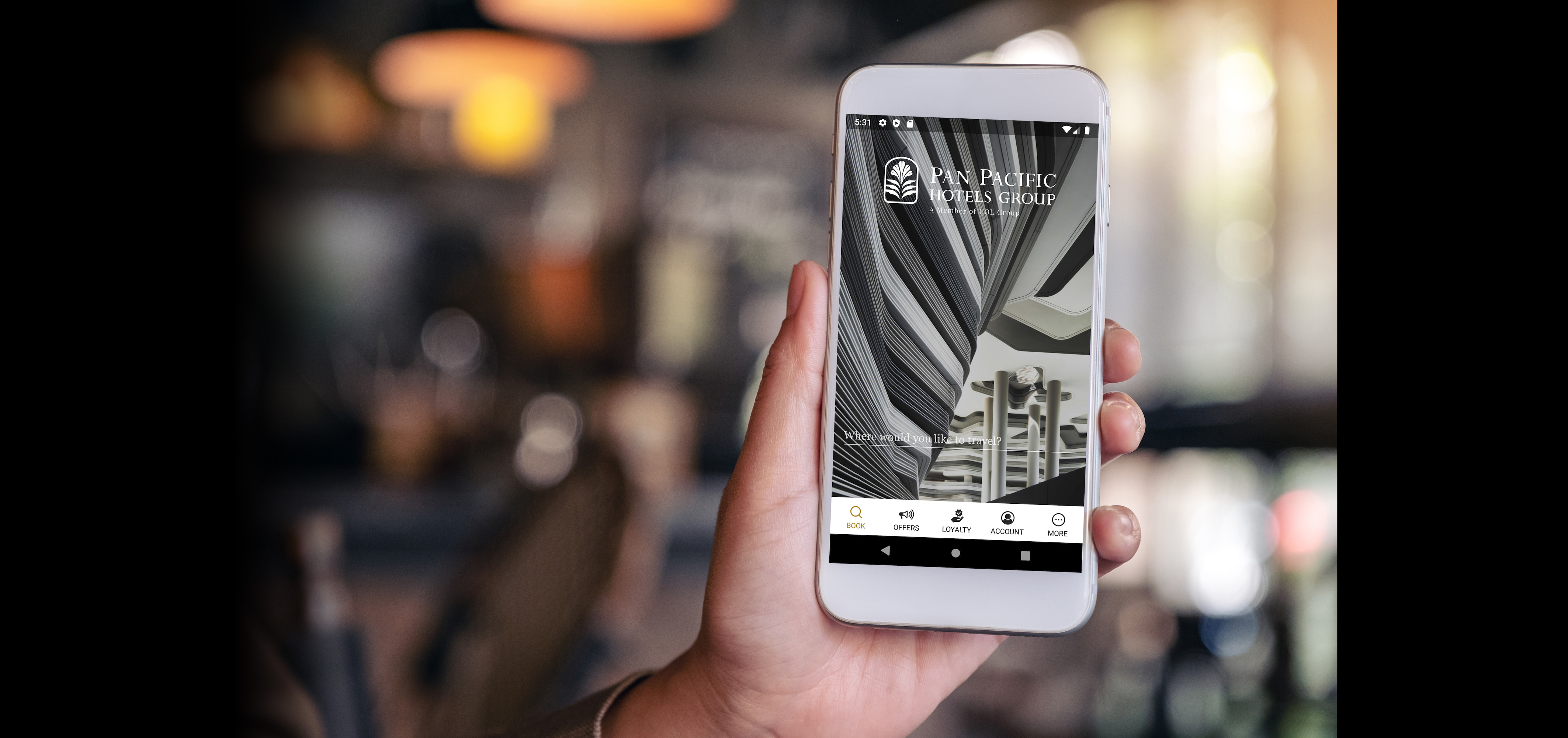
Pan Pacific Hotels Group (PPHG) has launched an all-new brand app, Pan Pacific DISCOVERY.
Available now for iOS and Android users, the app grants users to a myriad of exclusive offerings such as special member privileges, unique local experiences in all PPHG hotels in 30 destinations and F&B discounts of up to 25 per cent in all PPHG operated outlets through a digital membership card incorporated into the app.
Bridging consumer touchpoints, the app is developed to deliver personalised experiences in the face of a rapidly evolving travelscape that gravitates towards the digital space.
Designed to meet the needs from leisure to frequent business travellers, the app allows users to search for, book and modify their stay at any of PPHG’s hotels or resorts around the world with an intuitive user interface.
App rewards are also specifically categorised, recognising the wide demographics of potential users. From year-round deals and limited offers, to promotions targeting families and honeymoon perks, prospective guests can definitely find something to craft a unique stay with PPHG.
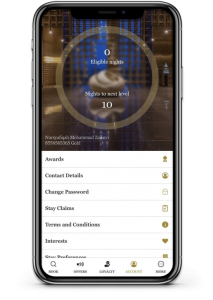
Pan Pacific DISCOVERY members are able to check their membership status and redeem rewards on the go, including special member rates, in-room benefits, complimentary upgrades and more, enabling a rewarding stay experience
In enhancing members’ travels, the app also offers curated local experiences ranging from gastronomic adventures to relaxing spa sessions, presenting a destination’s best offers in one place.
Download Pan Pacific Discoveryhere or scan the QR code below. The app is also available on App Store or Google Play.








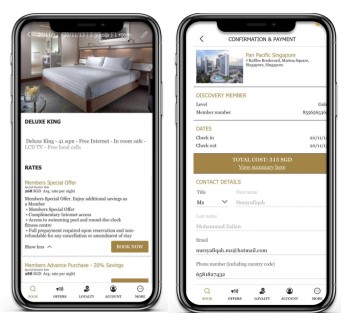
 Pan Pacific DISCOVERY members are able to check their membership status and redeem rewards on the go, including special member rates, in-room benefits, complimentary upgrades and more, enabling a rewarding stay experience