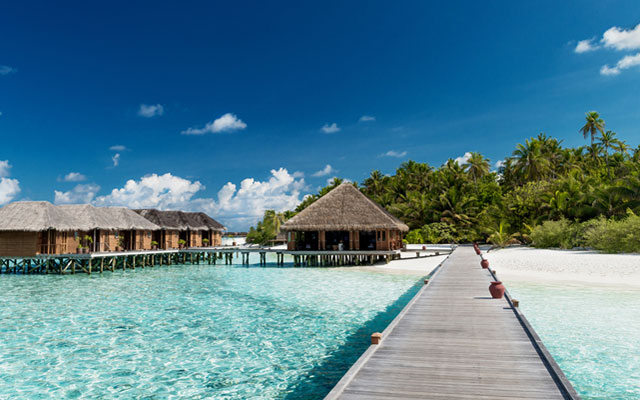
Thomas Cook India has signed an agreement with the Maldives Marketing and Public Relations Corporation to boost visits to the Maldives.
The signing comes as Thomas Cook India has witnessed “positive consumer sentiment” to travel on the back of vaccine news coupled with lockdown fatigue, with its recent Holiday Readiness Report showing 48 per cent of respondents are keen to take an international holiday in 2021.
India has replaced China as the Maldives’ top source market amidst the pandemic
Consumer interest in short-haul destinations, including the Maldives which reopened its borders in July 2020, is significant at 50 per cent.
Under the agreement, Thomas Cook India will spotlight the Maldives as a preferred destination for various consumer segments – leisure, bleisure and corporate – targeting India’s metros as well as tier 2 and tier 3 cities. To instil traveller confidence in the Covid era, the reiteration of safety and hygiene protocols implemented in the Maldives will also form a key part of the campaign.
Rajeev Kale, president & country head – holidays, MICE, visa, Thomas Cook (India), said: “The Maldives has been an aspirational destination for Indians and our strategic intent will focus on highlighting the benefits/USPs of easy access and a free visa-on-arrival process, coupled with its eclectic vibe, stunning natural vistas and exclusive resorts to steer consideration towards the Maldives and drive demand.”
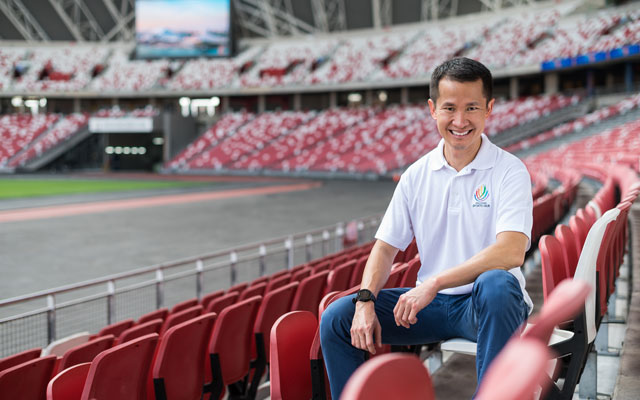
How was your transition from tourism chief into the private sector, and now as you make inroads into sports and events?
I’ve enjoyed tackling new challenges and learning new things at the Singapore Sports Hub (SSH). My experience at the Singapore Tourism Board (STB) has also come in useful. In the public sector, the general aim is to create an enabling environment for growth and success, whereas in the private sector, we are (aiming) for that growth and success under serious resource and commercial pressures.
A common thread throughout my roles at SSH, STB and even Grab is the key strategic priority: to maintain relevance in a fast-changing environment, and consistently engage with the internal team and external stakeholders as we navigate change.
What lessons about tourism demand and consumer behaviour glimpsed from your time with STB could translate into your work at SSH?
There are a few similarities in driving tourism demand and running a sports and lifestyle venue. For one, staying attuned to consumer trends by recognising short-term or seasonal preferences and behaviours is the key to staying relevant. For instance, this pandemic has led consumers to shift towards seeking familiarity and predictability. In response, SSH has organised activities that invoke that sense of normalcy that Singaporeans crave during this time.
Technology plays an increasingly important role in both tourism development and venue management. Leveraging key tech innovations is therefore necessary to keep up with the pace of change, improve services, enhance operational efficiency and elevate the customer experience.
What does SSH have planned for the year ahead?
We have plenty of discussions abuzz for the second half of 2021, as we are in the midst of building our events calendar and providing our event partners the support they need. Following the successful execution of safety protocols for Project Dorm – where we provided quarantine facilities for thousands of migrant workers – and ONE Championship in the past year, we have confidence in our ability to hold more live events, particularly in the latter half of this year. We are excited to unveil these to the public in due course.
Being able to support the training of our national athletes is also an important priority and we are glad that we have been able to reopen many of our facilities for this purpose.
For a public-private partnership like the SSH project, success can only be achieved if all partners are aligned and working together.
How do you foresee the concept of massive community and sporting events will change in the post-Covid era, even after the majority of the local population has been vaccinated?
When it is safe again, we will want to gather as social beings to play, celebrate, cheer, bond and form great memories. These are deep human instincts and desires, and the demand for such experiences will always be there. SSH aims to be able to curate and host these experiences through entertainment, sporting and community events.
The safety aspect of events will definitely have to be tightened to ensure that they run smoothly and efficiently. The judicious application of technology can help us here. Hybrid events that combine both the virtual and physical worlds will also likely be prevalent in the post-pandemic world, and event organisers will want to leverage on the strengths of online and physical engagement.
Singapore had its fair share of such “phygital” events in 2020. What lessons have you learned from these activities that can be applied to SSH’s “phygital” events?
A key observation is that standing out from the multitude of phygital events available in the market has become all the more critical. The variety of events available online means patrons can easily switch between virtual events at the last minute. This is behaviour that can impact our business. Therefore, it’s imperative that we are able to engage viewers well enough that they feel strongly about our programmes and events, and stick with them.
The key to keeping patrons engaged with phygital events is to focus on building a sense of community both online and offline, and across the participants on either platforms. Physical meet-ups can supplement the online ones, (while) online engagement allows the community to remain connected even after the physical event. If sustained over a period of time, a community can be even more connected and build even stronger bonds than (with) a pure online or offline experience.
As businesses pivot towards domestic markets now, what considerations do you have to keep in mind when planning events?
First and foremost, safe management measures should be the most important consideration in any event plan. Patrons need to be assured of their safety when attending events. We ensure this by carefully and thoroughly executing safety protocols across various teams. Externally, we also clearly communicate the safety procedures that event attendees must undergo, and manage their expectations of what the new experience will be like.
We also make it a point to be discerning of the type of programmes we organise. As mentioned previously, Singaporeans desire meaningful experiences during these challenging times, which is why we have been focused on activities that matter to our local audiences as well as help drive greater community engagement.
In the near term, we hope to be able to host our usual suite of marquee sporting and entertaining events via careful selection of international acts and sporting events that can be sustained by domestic demand.
What challenges do you foresee awaiting and how might you overcome them?
Balancing commercial ROI with capacity limits is one of the challenges that we foresee. Even in the future, we can expect restrictions on large crowds and gatherings, therefore, tapping into phygital events to draw a larger crowd online is definitely vital. We are working on enhancing these hybrid virtual events to engage with audiences.
We also want to ensure that we hold physical events responsibly and safely, hence, coming up with solutions for crowd monitoring and control will be very important. In order to ensure that all these new processes run smoothly to support the future of events at the SSH, reskilling staff to carry out hybrid events will be a top priority.
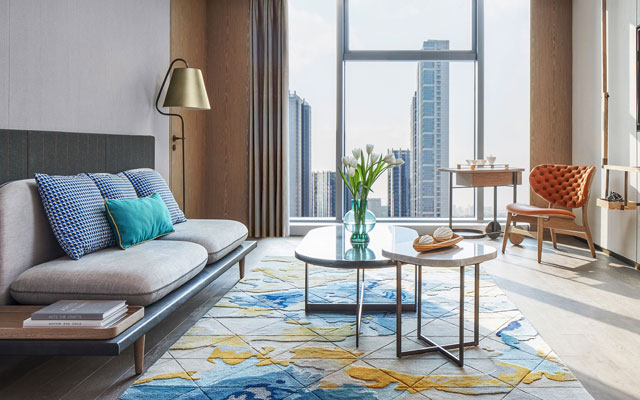
Cordis Hangzhou, Sci-Tech City, China
Located in the heart of the high technological and integrated complex, Hangzhou Future Sci-Tech City, Cordis Hangzhou is a luxury hotel which features 186 rooms and suites, including the 190m2 Presidential suite which houses a living room, dining area, private kitchen and bedroom. Two signature restaurants and a bar are on offer. Chinese restaurant, Ming Court, features Cantonese and local cuisine; while the all-day dining restaurant, Cordis Market, offers a customised, cook-to-order interactive buffet experience. Elsewhere, The Bar serves curated fine wines, vintage whiskeys and cocktails, alongside bar snacks and finger food. For recreation, there is a heated indoor swimming pool, spa, and 24-hour gym. Six meeting and event venues on-site include a business centre and a 600m2 pillarless grand ballroom which can accommodate up to 300 guests and is divisible into three individual rooms. The other four meeting rooms feature natural lighting and an unblocked city view.
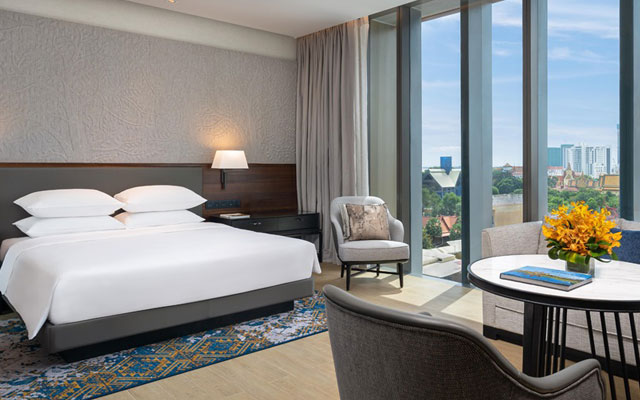
Hyatt Regency Phnom Penh, Cambodia
The opening of Hyatt Regency Phnom Penh marks the first Hyatt hotel in the Cambodian capital and the debut of the Hyatt Regency brand in the Kingdom of Wonder. With 247 guestrooms including 43 residential-style suites, Hyatt Regency Phnom Penh is the largest internationally branded hotel in the city. Guests have a choice of five dining venues, including Market Café Restaurant & Lounge, an all-day dining concept serving buffet breakfast, afternoon tea and à la carte options; Metropole Underground, a metro-themed bar offering live music and local beers; and a speakeasy-style bar, The Attic, specialising in handcrafted cocktails and grand cru wines. Elsewhere, the FiveFive Rooftop Restaurant & Bar, boasting an open-plan dining setting and live DJ performances, serves sustainable seafood, locally-sourced meats and produce, as well as cocktails.
A total of 1400m2 of meeting and event space is available on-site, including the Regency Ballroom that can accommodate up to 490 guests and boasts floor-to-ceiling windows. Meanwhile, nine meeting suites and social spaces provide flexible arrangements. Additionally, The Poolhouse features an outdoor barbecue area and an open terrace, accommodating up to 70 guests. Recreational facilities include a 22m outdoor infinity pool, a poolside bar, a Himalayan salt room and a steam room, alongside a spa and 24-hour gym.
Ramada Encore by Wyndham Kathmandu Thamel, Nepal
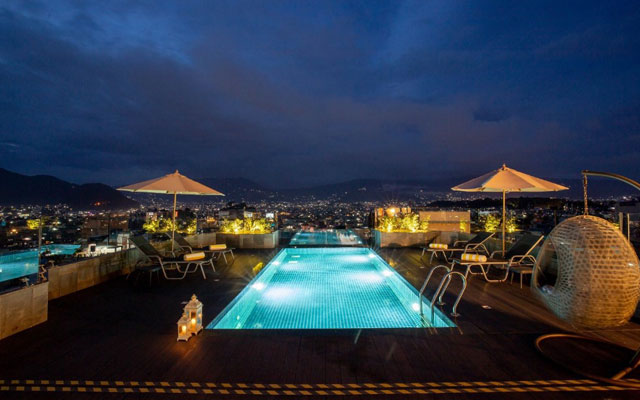
Wyndham Hotels & Resorts has made its entry into Nepal via the 90-room Ramada Encore by Wyndham Kathmandu-Thamel. Located in the centre of Kathmandu, the capital and largest city in Nepal, the newly-built hotel is part of a rejuvenation project of the city’s commercial centre. Guests can choose from a variety of F&B outlets, including the Pateo restaurant and bar; the outdoor El Beso Caro offering scenic city views; as well as Chocos N Subs, serving light meals and coffee. Other amenities include a rooftop plunge pool, a spa and salon, as well as a fitness centre. The hotel also features a versatile meeting room to accommodate up to 60 conference attendees or 80 banquet guests.
The Royal Park Canvas – Kobe Sannomiya, Japan
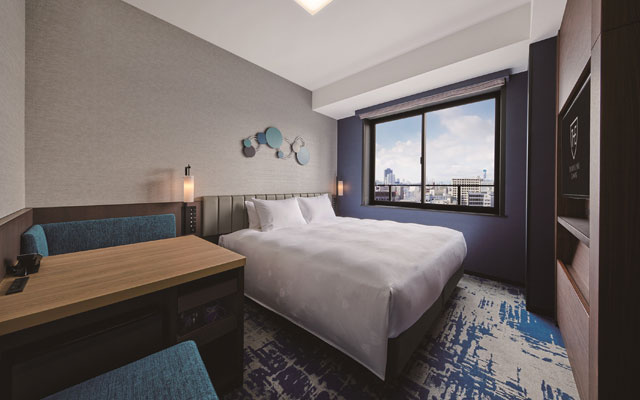
The newest venture of Royal Park Hotels and Resorts Company aims to connect travellers and locals in Kobe, a bustling city filled with unique small shops and restaurants. Seated in Sannomiya, the centre of Kobe city, the 170-key lifestyle hotel wants to appeal particularly to couples and families who appreciate an authentic environment and like to connect with the local culture. As such, one of the hotel’s prime features is the Canvas Lounge, a space providing tea and coffee that is open to hotel guests and locals alike and is meant to stimulate exchange and communication.
Two global tourism bodies have come together to develop a blueprint for climate action in destinations.
The blueprint, helmed by the Future of Tourism Coalition (FoTC) and Tourism Declares, will combine the frameworks, tools, best practice and resources required for destinations to deliver action plans that align tourism with the need to reduce global emissions by at least half by 2030. Its publish date has been timed to coincide with the UN Climate Change Conference in November, and is intended as a free, practical resource for anyone to use.
New blueprint under development aims to encourage destinations to scale up climate action
The hope is that it will be adopted as the standard approach to scale up climate action and transform the industry. Other climate action blueprints are also being created by Tourism Declares for accommodation providers and tour operators.
Supporters and members of both tourism bodies will help co-create the destination blueprint, and a smaller group of “Destination Climate Leaders” will be identified to lead the process. Progress will be shared regularly on both group’s websites and other channels to encourage wider consultation and contributions from anyone working on this issue.
Jeremy Smith, co-founder of Tourism Declares, said: “It is essential that 2021 is a turning point for our industry, the year when delivering against science-based Climate Action Plans becomes standard practice for travel and tourism organisations.” Alongside the FoTC, both groups will “co-create a new, low-carbon, destination blueprint”.
Jeremy Sampson, chair of the FoTC, added: “We’ve been working closely with Tourism Declares since we launched last summer, as climate change is the big issue that cuts right across our 13 guiding principles for the future of tourism. We would like our two initiatives to align as seamlessly as possible, as we need engagement, insights, experience and expertise from all parts of our diverse industry to find the best solutions for tomorrow’s tourism.”
The ASEAN Hotel & Restaurant Association (AHRA) has appointed a new board of directors at its recent Annual General Meeting (AGM) held virtually for the first time.
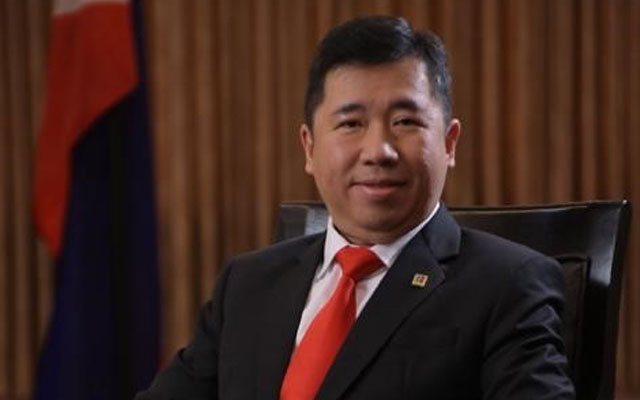
The new office bearers will serve a term of service from 2021 to 2023. AHRA members unanimously elected Eugene Yap of the Hotel & Restaurant of the Philippines as the president for the second term, in another first for the association.
Eugene Yap is serving as the president of AHRA for the second term
Yap said: “We are optimistic of a healthy recovery for the tourism and hotel industry with positive developments and deployment of vaccinations across the region. (South-east Asia) is an important market for not only the world, but also its very own member states, and this will be the key to our economic recovery for the next two years.”
Meanwhile, Ben Montgomery from Thai Hotels Association will take on the role of first vice president; Chenda Clais from Cambodia Hotel Association, as second vice president; and Hariyadi B.S. Sukamdani from Perhimpunan Hotel dan Restoran Indonesia (PHRI), as third vice president.
Assuming the position of secretary general is Margaret Heng from Singapore Hotel Association, while Christina Toh from Malaysian Association of Hotels will be the honorary Treasurer.
The AGM was attended by members from nine countries, with each member country represented by respective national hotel and restaurant associations sharing situation updates, strategies as well as outlook of the tourism and hospitality industry for the year ahead.
Despite the pandemic’s devastating impact on the industry, AHRA said that it remains “strong and determined” in rebuilding the industry through sharing of resources and strategic collaborations across the region. Part of AHRA’s roadmap to recovery includes industry support events with focus on tourism safety and health, sustainability, human resources and productivity, as well as a regional hospitality conference set for 3Q2021.
Marriott International has launched Good Travel with Marriott Bonvoy, a programme that aims to offer meaningful travel by helping tourists forge connections with local communities in their host destination.
Good Travel with Marriott Bonvoy kicked off on Tuesday with a pilot at 15 Marriott International hotels across Asia-Pacific, offering purpose-driven experiences that focus on three pillars: Environmental Protection to support the resiliency of the natural environment due to environmental degradation, pollution and climate change; Community Engagement to create a positive impact in the communities where the group’s properties operate through cultural education or volunteerism; and Marine Conservation to restore and preserve marine ecosystems and species.
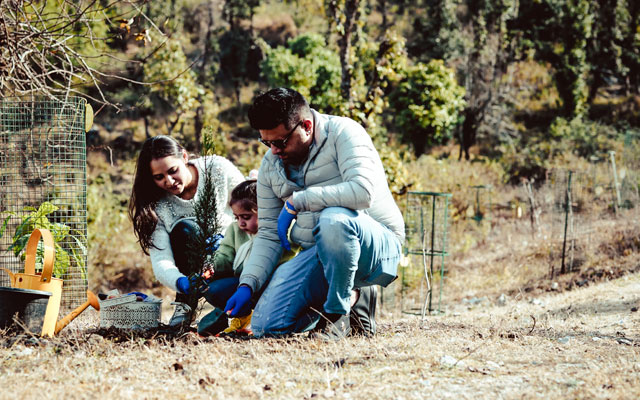
Guests at the JW Marriott Mussoorie Walnut Grove Resort & Spa planting saplings on-site
Current experiences range from planting saplings at the JW Marriott Mussoorie Walnut Grove Resort & Spa in India to coral propagation, transplanting, and restoration at the Sheraton Maldives Fullmoon Resort and Spa in the Maldives. Other ways that travellers can make a positive impact in host communities include food redistribution in Bali, and beach cleanups in Sanya.
All these experiences are guided by Marriott’s sustainability and social impact platform, Serve 360: Doing Good in Every Direction, in support of the United Nations Sustainable Development Goals.
On the motivation behind the carving out of Good Travel under the Marriott Bonvoy programme, Bart Buiring, chief sales and marketing officer of Marriott International Asia Pacific, said: “This umbrella creation within Marriott Bonvoy would make it easier to search and identify these specific experiences. Some of them have been around, while some of them are new. But the time to launch them is now, as people become more conscious of learning and engaging in more meaningful travel.”
Over time, Buiring shared that Good Travel will be expanded to most of Marriott’s Asia-Pacific destinations. But first, he pointed out, feedback from travellers on current experiences was needed, while the engineering of new experiences within hotels or cluster hotels is ongoing.
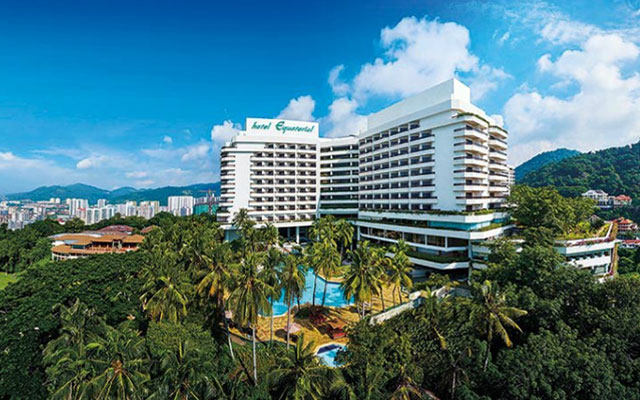
The five-star Hotel Equatorial Penang, which has been in operation for more than 30 years, is set to shut its doors for good by March 31, the latest hospitality casualty of Covid-19.
In an internal memo to employees, general manager Alan Ong said the decision was made due to the “adverse business conditions caused by Covid-19”, reported the Malay Mail.
Hotel Equatorial Penang has been hit by continued border closures and a second lockdown during the pandemic
The hotel’s last day of operations has yet to be decided, but it will be before March 31, he added.
“Until we officially cease operations, all of you shall remain as employees of the hotel and we remain committed to upkeep the strong heritage and name of Hotel Equatorial Penang,” Ong said in the letter dated January 25.
Despite having chalked up “huge losses”, the company said that it will still pay severance benefits to employees, with details to be announced later.
Travel and leisure booking platform Klook has raised US$200 million in additional funding through a Series E round led by Aspex Management and other investors.
Sequoia Capital China, Softbank Vision Fund 1, Matrix Partners China, and Boyu Capital, who are existing investors, also participated in this round of funding.
New funds raised by Klook will be used to speed up digital transformation of merchants
Investment confidence in Klook stems from its “resilience and adaptability despite the market headwinds”, said Hermes Li, CIO and Founder of Aspex Management.
“We believe the transition toward digital bookings will only accelerate post Covid-19, and that Klook’s ability to reinvent itself as a one-stop-shop for experiences and services across the region puts it in prime position to capitalize on this trend,” Li added.
Throughout 2020’s travel crisis, Klook re-prioritised its core strategic strengths to tackle the impact of the pandemic on the business. The company focused on two main areas – digitising the experiences booking sector, and launching new verticals such as staycations and car rental.
Some of the new tools piloted in 2020 included a free-to-use Contact Tracing System for Philippine partners, Attractions Plus module to support attractions and major establishments, and Klook Live!: Interactive livestream mobile feature, which allows users to experience merchants’ offerings up-close through entertaining and interactive instant video content.
At the height of the pandemic, Klook onboarded 150 per cent more activities compared to the same period in 2019.
Key markets where Covid-19 restrictions have eased, such as Singapore, Hong Kong, and Taiwan, have witnessed increased spending on local experiences, with bookings reaching near pre-pandemic levels as locals start exploring domestically.
“Despite a challenging 2020, we have shown our mettle, turning challenges into growth opportunities with agility and constant innovation. We’ve observed over the past year that consumers have a pent-up desire to explore and enjoy themselves, despite international travel being paused. Instead, they are turning inwards – exploring new and unique experiences right in their backyard,” said Ethan Lin, CEO and co-Founder at Klook.
“This new capital further strengthens our leading position to take us from defense to offense, as domestic tourism becomes ubiquitous and international travel gradually returns.”
With this new capital, the company will accelerate the development and roll-out of its merchant SaaS solutions, which will empower any merchant to build, manage, and scale their business with Klook.
“We are setting out to reimagine the next digital leap for the experiences sector which has traditionally been fragmented with offline practices or legacy systems that do not truly address the realities of a post-Covid world. Since day one, Klook has been working closely with our merchants, both big and small, to identify common pain points that we can solve together. With this new funding, we have additional ammunition to accelerate our technology innovation, and truly transform and empower this space for future growth,” added Eric Gnock Fah, COO and co-founder at Klook.
Thailand’s tourism authorities have been wooing regional and international film crews to the country’s shores, with a goal of generating three billion baht (US$100 million) from hosting such productions this year.
Film productions with a budget of over 100 million baht, featuring well-known directors or A-list actors, are being targeted, reported the Bangkok Post.
Thailand hosted 176 foreign film productions in the country last year; a production crew filming on a beach in Pattaya pictured
According to recent data from the Tourism and Sports Ministry, Thailand welcomed a mere 6.7 million international visitors last year, generating 332 billion baht – down 82.63 per cent from the previous year.
The Chinese market accounted for the biggest fall, with visitor numbers plummeting from nearly 11 million in 2019 to just 1.2 million.
Thailand’s plan to attract foreign film companies to shoot productions in the country is one of many measures taken by the country to reboot its once-booming tourism sector ravaged by the pandemic.
Anant Wongbenjarat, director-general of the Tourism Department, was quoted by the report as saying that international productions can “generate income for locals, despite the tourism slowdown”.
According to the Tourism Department, Thailand hosted 176 foreign film productions in the country last year, raking in 1.73 billion baht for the local economy. The bulk came from China, followed by India, the UK, the US and South Korea.
The number of foreign productions was a far cry compared with the 4.86 billion baht generated by the 740 foreign film crews in the country in 2019.
After the Centre for Covid-19 Situation Administration granted special entry permission to film crews last August, 53 film productions were based in Thailand during August and December, contributing 1.14 billion baht to the economy, according to the report.
This month, four more film productions are underway, set to generate 186 million baht, it added.
Another nine productions, accounting for a combined budget of 850 million baht, have sought to film in Thailand during 1H2021, which would help create 800 jobs for locals.
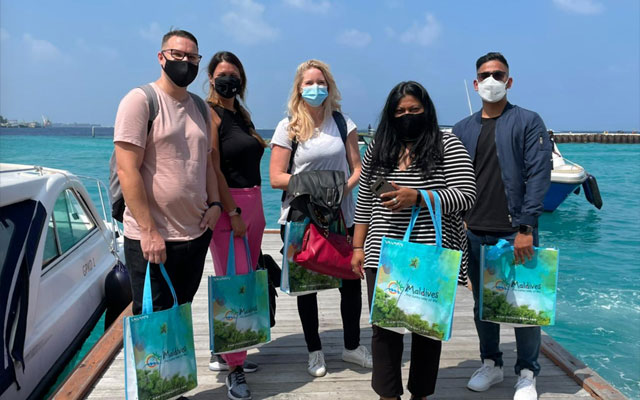
Journalists representing leading publications in the Middle East arrived in the Maldives on Tuesday, the first of many fam trips to be hosted by Visit Maldives this year as the destination ramps up tourism recovery efforts.
Visit Maldives will host a series of fam trips this year, starting with a media team from the Middle East
The six-day study trip is focused on family, safety and affordability, and demonstrates stringent Covid-19 safety measures that are in place.
Visit Maldives said the resulting editorial coverage would be circulated physically more than 95,000 times, with an online reach of more than 3.7 million.
Other marketing activities aimed at the Middle East will include joint promotions with notable tour operators and prominent airlines, participation in key travel trade fairs in the Middle East and roadshows covering the GCC&KSA region. Additionally, Arabic-language focused digital, social media and virtual activities are in the pipeline, aiming to maintain the destination presence and promote the Maldives as the most preferred destination within the market.
In 2020, 26,288 tourists visited the Maldives from the Middle East, which was a considerable drop from 2019’s 60,003 footfalls.
However, with core markets from the region leading post-lockdown tourism growth in the Maldives, and with arrivals growing day by day, Visit Maldives is confident of achieving pre-pandemic arrival numbers this year.











How was your transition from tourism chief into the private sector, and now as you make inroads into sports and events?
I’ve enjoyed tackling new challenges and learning new things at the Singapore Sports Hub (SSH). My experience at the Singapore Tourism Board (STB) has also come in useful. In the public sector, the general aim is to create an enabling environment for growth and success, whereas in the private sector, we are (aiming) for that growth and success under serious resource and commercial pressures.
A common thread throughout my roles at SSH, STB and even Grab is the key strategic priority: to maintain relevance in a fast-changing environment, and consistently engage with the internal team and external stakeholders as we navigate change.
What lessons about tourism demand and consumer behaviour glimpsed from your time with STB could translate into your work at SSH?
There are a few similarities in driving tourism demand and running a sports and lifestyle venue. For one, staying attuned to consumer trends by recognising short-term or seasonal preferences and behaviours is the key to staying relevant. For instance, this pandemic has led consumers to shift towards seeking familiarity and predictability. In response, SSH has organised activities that invoke that sense of normalcy that Singaporeans crave during this time.
Technology plays an increasingly important role in both tourism development and venue management. Leveraging key tech innovations is therefore necessary to keep up with the pace of change, improve services, enhance operational efficiency and elevate the customer experience.
What does SSH have planned for the year ahead?
We have plenty of discussions abuzz for the second half of 2021, as we are in the midst of building our events calendar and providing our event partners the support they need. Following the successful execution of safety protocols for Project Dorm – where we provided quarantine facilities for thousands of migrant workers – and ONE Championship in the past year, we have confidence in our ability to hold more live events, particularly in the latter half of this year. We are excited to unveil these to the public in due course.
Being able to support the training of our national athletes is also an important priority and we are glad that we have been able to reopen many of our facilities for this purpose.
For a public-private partnership like the SSH project, success can only be achieved if all partners are aligned and working together.
How do you foresee the concept of massive community and sporting events will change in the post-Covid era, even after the majority of the local population has been vaccinated?
When it is safe again, we will want to gather as social beings to play, celebrate, cheer, bond and form great memories. These are deep human instincts and desires, and the demand for such experiences will always be there. SSH aims to be able to curate and host these experiences through entertainment, sporting and community events.
The safety aspect of events will definitely have to be tightened to ensure that they run smoothly and efficiently. The judicious application of technology can help us here. Hybrid events that combine both the virtual and physical worlds will also likely be prevalent in the post-pandemic world, and event organisers will want to leverage on the strengths of online and physical engagement.
Singapore had its fair share of such “phygital” events in 2020. What lessons have you learned from these activities that can be applied to SSH’s “phygital” events?
A key observation is that standing out from the multitude of phygital events available in the market has become all the more critical. The variety of events available online means patrons can easily switch between virtual events at the last minute. This is behaviour that can impact our business. Therefore, it’s imperative that we are able to engage viewers well enough that they feel strongly about our programmes and events, and stick with them.
The key to keeping patrons engaged with phygital events is to focus on building a sense of community both online and offline, and across the participants on either platforms. Physical meet-ups can supplement the online ones, (while) online engagement allows the community to remain connected even after the physical event. If sustained over a period of time, a community can be even more connected and build even stronger bonds than (with) a pure online or offline experience.
As businesses pivot towards domestic markets now, what considerations do you have to keep in mind when planning events?
First and foremost, safe management measures should be the most important consideration in any event plan. Patrons need to be assured of their safety when attending events. We ensure this by carefully and thoroughly executing safety protocols across various teams. Externally, we also clearly communicate the safety procedures that event attendees must undergo, and manage their expectations of what the new experience will be like.
We also make it a point to be discerning of the type of programmes we organise. As mentioned previously, Singaporeans desire meaningful experiences during these challenging times, which is why we have been focused on activities that matter to our local audiences as well as help drive greater community engagement.
In the near term, we hope to be able to host our usual suite of marquee sporting and entertaining events via careful selection of international acts and sporting events that can be sustained by domestic demand.
What challenges do you foresee awaiting and how might you overcome them?
Balancing commercial ROI with capacity limits is one of the challenges that we foresee. Even in the future, we can expect restrictions on large crowds and gatherings, therefore, tapping into phygital events to draw a larger crowd online is definitely vital. We are working on enhancing these hybrid virtual events to engage with audiences.
We also want to ensure that we hold physical events responsibly and safely, hence, coming up with solutions for crowd monitoring and control will be very important. In order to ensure that all these new processes run smoothly to support the future of events at the SSH, reskilling staff to carry out hybrid events will be a top priority.